Poems for the End of Time

Poems for the End of Time

Here it is, and it is up and waiting for you! I already have my first copy. More on the way. The same artist who did the cover for People of the Mist did this one as well. He’s such a nice person – doesn’t charge me a penny.

Introduction

         Poems for the End of Time is composed of two linked collections, Meditations on Messiaen and Lamentations for Holy Week. They both have separate introductions in the body of the text.

         My graduate work at the University of Toronto (MA, 1967, and PhD, 1975) included studies on Golden Age / Early Modern Spanish Poetry (16th -17th Centuries). It enabled me to read and enjoy both the Renaissance and the Baroque poetry of Spain. My own interests lay within nature poetry, as expressed by the Spanish Mystics (St. John of the Cross and St. Teresa of Avila), the Neo-Platonic Poets (in particular, Fray Luis de León), and the Metaphysical poets (Luis de Góngora and Francisco de Quevedo). Echoes of their writings and thoughts are frequent within these two poetic sequences.

         I will write further on both sequences later in the book. Briefly, both sets of poems were written while listening to the music of Olivier Messiaen. Three of his compositions, Quatuor pour la fin du temps / Quartet for the End of Time, Éclairs sur l’au-delà / Lightning over the Beyond, and Petites esquisses d’oiseaux / Little Sketches of Birds, influenced me enormously. I listened to them every day while I was writing and revising these poems.

         These poems are not for the simple-minded. They form a contrasting tapestry of point and counter-point, filled with allusions, word-plays, internal rhymes, repetitions, and alliterations. They have a music all of their own.

Do not expect simplistic escapism. If you are serious in your efforts to read, listen to the magic of Messiaen as you turn the pages, much as I did while I was writing.

People of the Mist

People of the Mist

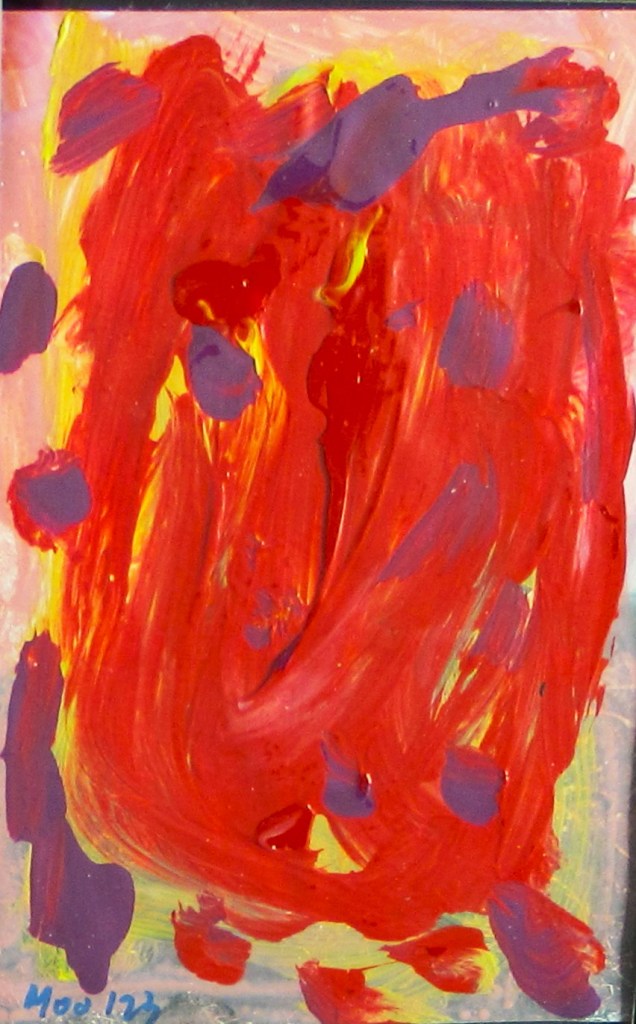
Cover Painting

Pale Face by Moo

Back Cover Synopsis

            What if you walked into a church in a foreign country and came face-to-face your dead father? In People of the Mist, Nemo, orphaned as a baby after the suicide of his unmarried mother, seems called to visit Oaxaca, Mexico, the city of the returning dead. Upon arrival, he visits the town’s main cathedral only to encounter his adoptive father, a man he had buried years earlier. Confused by what he thinks is a realistic vision, he seeks the help of a local witch doctor to explain his mirage. The shaman seems to hold the answer and presents him with a broken medallion. He challenges Nemo to find the other half, promising the quest and discovery will reveal the real purpose of the young man being called to Oaxaca.

Brief Biography

Roger Moore, is an award-winning teacher, researcher, poet, and short-story writer. His accolades include being a CBC short story finalist, as well as winning multiple awards from the WFNB. Born in Swansea, Wales, he now lives in Island View, NB, Canada. Between 1995 and 2001, he taught multiple classes in Oaxaca, Mexico, where he first encountered the Mixtec codices.

Click here to view on Amazon

B & W

B & W

black words     white page

thoughts

floating in space

airs and graces

the world’s wind

blowing through

freshening     cleansing

cotton clouds     silky sky

that one word

waiting

to be spoken

that one thought

soon to be borne

out from the dark

a new existence

brightens

blinds with its light

Click here for Roger’s reading.


“If you look at a page of poetry, the slim words are couched in the empty whiteness of the page.” John O’Donohue, Anam Cara, p. 69.

Good Friday

Good Friday

Crucifixion and Death

1

Now is the hour of his parting,
such sweet sorrow, they say,
but not on this day.
Yet we’ll meet again, sang Vera Lynn,
don’t know where, don’t know when.

There he lies, helpless, on the street.
Why is that man in blue
kneeling on his neck?
“I can’t breathe.”
Can’t anyone hear his cries?
Is there anybody out there listening?

Watchers stand round and watch.
Someone makes a video on a cell phone.

Who gifted him this gift,
this parting gift he never chose.
Everyone who follows him
and tries to walk in his shoes
knows he had no choice.
They know he didn’t choose.

2

Do you feel the baton stab into the guts?
The plastic shield’s edge slash into the face?
The knee come up, no ifs, no buts?

Eyes water from tear gas and pepper spray.
Thunder flashes crack and roll, deafening
ears, taking years from marchers’ lives.

Did you follow him through Jerusalem?
Did you walk in his footsteps, step by step?
There is a green hill far away, or so they say.

The cameras rolled as they cuffed him
to his pavement cross, men in blue smiled,
winked at each other, watched him fade.

His loss was not their family’s loss.
Just another loser tossed beneath the bus.
The watchers watched and nobody made a fuss.

They stood and stared and nobody cared
until cell phone videos hit the tv screens.
 Now it’s fake news, whatever that means.

The believers will believe what they’re told.
You can’t put a price on what he was losing,
on the many things that others have already lost.

3

Leg-irons and chains:
that’s what remains from his journey here.

Iron, cold iron, splintered, burning wood.
A death bed on the sidewalk
his last will and testament.

A flaming cross lifted him to the skies,
that cross burning before his eyes.

Before he goes, we must double-check:
whose is that knee upon his neck?

“Let me breathe, let me breathe.
Take away your knee.
Justice, why hast thou forsaken me?”

Commissioner, forgive them.
They didn’t know what they did,
when all around the dying man
men closed their eyes and ears,
buried their heads, and hid.

4

Good Friday in Island View:
a foot of snow fills the streets,
empties the churches.
The Easter Weekend lurches
towards its predestined end.

But how do you end
two thousand years of hurt,
four hundred years of persecution,
of cruelty and neglect?

How do you end
eight minutes and forty-six seconds,
with that black man lying there,
choking, a white man’s knee on his neck.

He died in the shade
of orders that were given and obeyed,
orders that should never have been made.

The Rover’s Return

The Rover’s Return

The eternal return to The Rover’s Return,
renovated, again and again, but filled
with the ghosts of Ena Sharples and others
who walked this cobbled street before,
and every episode more or less the same,
though décor, characters, accents change
and life becomes ever more complicated
from episode to episode, the street slang
changing slightly, and ageing characters
ageing more and more as time goes by,
and yet the trumpet’s martial sound,
the rhythms of the northern brass bands,
the first of those accents to break the plum
in the mouth snobbery of Oxford English
and the BBC’s domination of the language,
and ‘hey, Mr. Oxford Don, me no graduate,
me immigrate,’ echoing round the abandoned
buildings where the working class once worked,
and the elderly were cared for by their friends
and neighbors, not tossed into care homes,
and abandoned to their fate, as they have been
so often of late, and all things change, in time
with the clocks that tick-tock forward, their clock
work everlasting, and the pigeons still there,
and those crazy chimney pots, and that cat,
slithering down the roof, and the rovers still roving,
then returning, once again to the Rover’s Return.

Click here for Roger’s reading.

Comment: For more than sixty years I have listened to Coronation Street and some things have never changed, the trumpeter from the Brass Band, the rain on the cobbles, the memories and ghosts that linger among brickwork and paint. It takes me back to my childhood, when ITV was the upstart channel that dared to challenge the might of the mighty, one might almost say, the almighty BBC. And now, here in Island View, I turn away from the color and recall the old black and white sets, with their selection of two channels, one of them advert free, and their scheduled times of programs, not the TV blaring twenty four hours a day and two hundred channels available at the touch of a button.

It’s all one sentence, though I had to stop and take a couple of breaths while reading it. My good friend and fellow poet, Jane Tims, has called me ‘the master of the long sentence,” and I do love long sentences, especially when I am in rant mode, like now. But I am also very much aware of other friends that warn me that “your sentences are too long. They are too complicated. I don’t understand them. Write shorter sentences.” OMG, FFS. LMA* – 4 – UAW** – IMHO.

Translation of unusual terms: LMA* = Leave Me Alone. UAW** = You aRe Wrong.

Acknowledgements: My quote from the poem, inaccurate, and from memory, is from John Agard, whose poetry I love. I acknowledge now his poem and its influence upon me. I too am no Oxford don, and I too am an immigrant. His wonderful reading of the full poem can be found here. John Agard, Oxford Don.

Ides of March

Ides of March

Sometimes, as the sun goes down, the shadows close in.
You can sense real people, half-hidden in the mists
rising up from the ground. You shiver in their presence.

They fought a battle here, according to legend.
Legends never lie, though they hide away the facts,
as these mists hide those fallen warriors, brought
back to life, in the half-light, and thirsting for warm blood.

In the distance, blood flows staining the evening sky.
When the hairs on your neck rise up as wraiths, you take
to your heels and run to the place where you left your car.

Westbury White Horse, Badbury Rings, Maiden Castle –
such places are haunted with those whose spirits never left,
never moved on. They stayed here, defending the defenseless,
spirited warriors, never saying die, not even when dead.

Close by, at the hill’s foot, someone has built an altar
crowned by a small, carved cross. Who put those flowers on it?
Who came to bless the peace of those who dream and wait?

The Ides of March have come once more. Now they have gone.
Like all those other Ides before them, like all those years,
those seasons, those warriors. Come and gone. Or not gone,
as you stand there, sensing their spirits, living on and on.

Click here for Roger’s reading.

Comment: The Ides of March – March 15 this year, two days before St. Patrick’s Day. “The Ides of March are come.” “Ay, Caesar. Come but not gone.” William Shakespeare. Julius Caesar. The Ides always seem such a precious time. Sandwiched between St. David (Wales) on March 1 and St. Patrick (Ireland) on March 17, and all so close to the Equinox and the start of spring. It is snowing outside my window as I type. About four inches / ten centimeters down and more to come. But, with the lengthening of the daylight hours and the arrival of spring, we hope the snow won’t last too long.

World Within

World Within
Anam Cara, p. 15

I have rediscovered a world within me,
a secret world where I walked as a child,
a world that nobody else has ever seen.

When I was young, that world absorbed me.
In it, I went round and round on roundabouts,
and travelled high and low on swings and
swing boats, with their rough ropes.

Alas, as always, there were rainy days.
Then the sun would wear his hat but I knew
he would come out later and join my play.

Sometimes, in the summer, thunderstorms
would roll around and rattle our corrugated roof.
Dai Jones’ cows would rush through the field,
seeking shelter from the wind and rain.

In those days, every cloud had a silver lining.
I weathered tough times, waiting patiently
for the sun to return and light up the world.

One day, I don’t remember when, someone,
I don’t know who, slammed the door and shut
me out from that world. I spent my whole life
searching for it. At last, I have found it again.

Click here for Roger’s reading.

Waiting for Godots

Waiting for Godots

What do authors do when they send manuscripts to agents or presses? They have several choices. For example, they can listen to the sound of silence. Listen carefully to the paining above. What does it say to you? Absolutely nothing. Quite. It doesn’t communicate. It’s the sound of silence.

Another choice, they can read and re-read Beckett’s Waiting for Godot. Alas, in this case there are many Godots out there and all of them are super-busy gazing at their navels – and I don’t mean oranges. Some indulge in the wonderful world of “Mirror, mirror, on the wall…” and we all know what the answer is to that question. And we know what happened to Narcissus when he saw himself in the river water. Or have we forgotten? Our failure to share cultures is also a sound of silence – two solitudes, gazing at each other, neither one having anything in common with the other one, except maybe the weather. And we can’t always agree on that.

A third choice, they can climb into their dustbins, Queen’s English for garbage cans, and stand there waiting for someone to put the lid on so they can go back to sleep. Allusion / elusion – you don’t know what I am talking about? Well, maybe we are living in two separate solitudes. It wouldn’t surprise me in the least.

A fourth choice, they can take up painting, and scribbling, and drawing, and doing all sorts of things. But, if the phone rings and you don’t recognize the number – don’t pick up the phone. It’s probably a fraudulent scam call. And if you don’t know the e-mail address, put it in Spam and then block it. It’s probably some bot from another country trying to trap you into giving them your bank account details and signing your savings away. Whoever it is or they are , I doubt if it’s an agent or an editor!

On Being Welsh – Dydd Dewi Sant

On Being WelshDydd Dewi Sant

On being Welsh
in a land ruled by the English

 I am the all-seeing eyes at the tip of Worm’s Head.
I am the teeth of the rocks at Rhossili.

I am the blackness in Pwll Ddu pool
when the sea-swells suck the stranger
in and out, sanding his bones.

Song pulled taut from a dark Welsh lung,
I am the memories of Silure and beast
mingled in a Gower Cave.

Tamer of aurox, hunter of deer, caretaker of coracle,
fisher of salmon on the Abertawe tide,
I am the weaver of rhinoceros wool.

I am the minority, persecuted for my faith,
for my language, for my sex,
for the coal-dark of my thoughts.

I am the bard whose harp, strung like a bow,
will sing your death with music of arrows
from the wet Welsh woods.

I am the barb that sticks in your throat
from the dark worded ambush of my song.

On Being Welsh – short stories – Amazon and Cyberwit

On Being Welsh – poems included in my selected poems (1979-2009)

Cherry always listened to my readings

Click here to here Roger’s reading on Anchor
– On Being Welsh

My Teenage Self

My Teenage Self

What advice would you give to your teenage self? In one word – grow up. Useless advice really, because it happens, whether we want it to or not. That said, I have lost so many young rugby players that I coached or played with, to driving accidents and other misfortunes, sometimes self-inflicted via alcohol or drugs, that to say grow up – please! – is so important.

Each morning I read the obituaries in the local newspaper. Afterwards, I look back over the path I have journeyed. If I had perished at the age of the current ‘missing person’ – say, 45 – 50 – 55 – 60 – I think of all that I would have missed in those intervening years. Then I grieve for all that they will have missed in the life that should have lain ahead of them.

“Don’t cry over spilt milk” – Old Welsh Proverb. And no, we mustn’t cry over what is lost. We must celebrate what has been achieved, Dylan Thomas (1914-1953), one of Wales’s greatest Anglo-Welsh poets, dead at 39 – what other glory may have lain ahead of him? Garcilaso de la Vega (1501-1536), one of Spain’s purest and most innovative poets, dead at 35. What more might he have written in an extended lifetime? Federico Garcia Lorca (1898-1936), executed, many say tortured and murdered, at the age of 38. Think of the theatre, the poetry, the Gypsy Ballads, the songs of a dark love – what more did he have, hidden inside him, that was never allowed to spread its wings and fly out into the light of day?

So, I would give to my teenage self, the same advice that I would give to any teenager – grow up – please, grow up, don’t go too soon, – and please grow into that unique and wonderful being that you have the potential to be.