Naval Gazing

Bistro Cartoon Naval Gazing


Naval Gazing

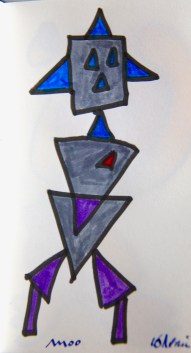
Of course I haven’t spelled it incorrectly. Just look at those three ships, not to mention the ‘bell-bottom blues’ jeans my alter ego wears in this apology for a selfie. And yes, of course, the protagonist is navel gazing, too. We all do it from time to time. We have to. We need to know who we are and what we are all about. As Cesar Vallejo wrote, a long time ago: “Hay golpes en la vida, yo no s锑there are setbacks in our lives, I don’t know.’ How do we deal with these sudden setbacks? That depends on each of us: our background, our culture, our ability to bounce back from nowhere and nothing to set ourselves upon the true path again. Man is stronger than he thinks he is, while woman is even stronger than man. Strength: it exists in many forms and holds many meanings. Sure, it means the amount of weight we can lift. But it also means the amount of weight and cares we can carry and how long we can carry them for. And that is where women are so strong.

Every so often, we must all navel gaze. We must look at ourselves, not in the mirror, but in the depths that live within us. I am in navel gazing mode right now. To a certain extent, I have lost my way and I feel very strongly I must find it again. So I sit and think and look inside myself and search and wait with great patience for the light to arrive and  enlighten me once more. It will come. I am sure of that.

Yesterday

Yesterday, a lovely lady read me
my biopsy results.

She poured a bitter drink
into a poisoned chalice
and offered it to me.

It was my personal Gethsemane,
a cup from which I was forced to drink.

I sat there in silence, sipping it in.
Darkness wrapped its shawl
around my shoulders.

‘Step by step,’ she cautioned me,
‘it’s like walking on stepping stones.’

I opened my eyes, but I could no longer see
the far side of the stream.

This poem opens my book A Cancer Chronicle (available on Amazon). It refers to the moment, three years ago, when my urologist confirmed that indeed I had prostate cancer and that, yes, it needed treatment. “Hay golpes en la vida, yo no sé”. The cartoon, I hesitate to call it a painting, was completed on the ninth day of September, two months after my treatment ended. I sat in the kitchen at home, looking out at the mountain ash, watching the birds as they swarmed the tree in search of nutritious berries. Then I made the cartoon. I called it Naval Gazing. I might just as well have called it  “Hay golpes en la vida, yo no sé”.

How we deal with  such golpes / setbacks / blows defines us as human beings. I have spent much time recently encouraging others, and they must all remain anonymous, to confront their demons, call them out, and overcome them in as fair a fight as is possible. Today, I too sit in the dark, watching the snow fall, watching the birds scurrying to and from in search of sustenance. I too am searching, once again, for meaning, for light, for the energy to continue. It will come. When it does, I will embrace it with both hands and start all over again, picking up life’s threads from where I left them. Then, once again, I will see the far side of the stream.

Yesterday is the opening poem in my book A Cancer Chronicle. It is available on Amazon.

Yesterday
audio recording

Insomnia

IMG_0114

Insomnia

Mine was at its worst in Moncton in 2015. I was committed to eight weeks of radiation treatment, and after two weeks, I slept restlessly, if at all. Some of the other residents of the hospice were worse off than me. They got up at all hours of the night and paced the floors downstairs, nursing their wounds, both mental and physical, searching for the peace and the sleep that eluded them. I never went down to join them. My case was different. All cases are slightly different. In spite of this society’s attempts at social engineering, each of us is an individual and we deal with our own problems in our own way.

In my case, the need to pee during the night dominated my sleep. I would sleep in ninety minute cycles, then get up and visit the bathroom, then return to bed for another ninety minutes. Sometimes, I was lucky and the cycles went for two hours, or two and a half hours. I rarely got more than three hours sleep. Upon returning to bed, I would often just lie there, remembering, thinking, musing, hoping, waiting for sleep to come. Often my cycle would reject the sleep I needed, and I just lay there waiting until I was ready to pee again. These were not great times. Luckily I never fell asleep so deeply that I wet the bed. Some did, but I was one of the lucky ones and managed to keep my bedding clean.

During this time, I learned to divide the night into segments. I thought of the segment that ran from 10:00 pm to 3:00 am as an uphill climb with the initial joy of dropping off to sleep tempered by the knowledge that the urge to urinate would soon be upon me. The segment from 3 am to 4 am was the plateau at the top of the hill: I rarely slept during this period and would look frequently at my clock while the minutes ticked by. Sometimes I would turn on the light and just watch the second hand throbbing slowly round. It was like watching sand sift through an hour glass, or water sift through the fingers: uncontrollable, unstoppable, life just slipping away. I had plenty of time to think and much to think about. I relived my life during those eight weeks and a lot of it was unpleasant as I blamed myself for the situation I was in.

At 4 am, the universe shifted, and I was able to relax and slide downhill into the Land of Winking, Blinking, and Nod. With the urges of the earlier segments fading, I would often get two sound sleeps at this stage, one from 4 to 6 and the other from 6-8. If I was lucky, I would sleep from 4-7, or even 4-7:30 am. These were bonus nights and I awoke after a three hour sleep session to find myself greatly refreshed.

Three years after my treatment, many things have returned to normal However, those sleep patterns have not changed that much. I no longer feel the need to urinate at such regular intervals, but I still dip in and out of those same sleep cycles. They have become a part of my system. The easy part, tired, sleeping from bed-time to about 2:30-3:00. The lying awake, anywhere between 2:30 – 4:30, then the relaxing slip into dreamland, for the last part of the night.

The good thing is that my dreams have changed. I am no longer chased by the ghosts of times past who pace through my night, awake and asleep, to prove that my suffering is due to past moments of childhood iniquities discovered in soulful daily examinations  induced by a consciousness of minute sins demanded by the weekly confessional. Now, I dream of many things, of shoes, and ships, and sealing wax, of cabbages and kings, and if the sea is boiling hot and whether pigs have wings. This is much more fun: I find I can now control my dreams, re-think them, and re-write the endings. In my waking periods I do just this, and my dreams adapt and change and become more pleasant as I fall back into sleep. This has turned into a time of great creativity: but that is a tale for another day.

Diagnosis

IMG_0457

Diagnosis
(sonnet)
posted apparently a year ago today

Diagnosed with a terminal illness
called life, I know it will end in death.
For more than seventy years, that end
has lived within me, walked beside me,
sat at my bedside, and shared my sheets.

We have shared so many things: laughter,
joy, victory, defeat, the soul’s dark night,
the winding ways of fortune’s labyrinth.
When cancer called, we faced it together,
and life won out for a little while longer.

Hand in hand, we are together again,
our ménage à trois, engaged in a three
-legged race, blindfolded, unsure of who,
what, why, where, and especially when.

Shadows

img_0182

Shadows

My front door stood open,
but I thought I’d left it
closed.

I tip-toed in and called:
“Is anybody there?”

Echo answered
‘… there, there, there …”
then silence.

I walked
from room to room,
startled by shadows.

I opened doors,
looked under the table,
searched behind chairs.

Nothing. No one.
The house stood
still and empty,

save for the fear,
the silent fear,
that lurked
like a remembered cancer
and occupied each room.

First published on this blog, Shadows, 27 April 2017. Here now with some minor changes and a voice recording.


Chronotopos


img_0195

Chronotopos

Chronotopos

A dialog with time and space.

But what is time? A river flowing? A long line leading from our beginnings to our end? Alpha and Omega? An instant held between finger and thumb and so swiftly forgotten? A dream we dream when we are awake. Or asleep. And which is the real dream, waking or sleeping? Sleeping or lying awake?

And what is space? This house in which Billy lives? The garden Billy watches from his window? What is Billy’s town? His district? His county? His province? His region?

And how does Billy relate to his “time” or his “place” and what is this being called “Billy”, this dream Billy dreams, this post-amniotic ocean of life in which Billy floats?

Billy dreams he is male. When he reads Carl Jung he learns a large part of him is female. Billy thought he was masculino / macho / male, yet when a large part of him is femenina / hembra / female, he’s no longer sure what he is.

Billy has ten fingers yet he uses only two to type. Two fingers manipulating twenty-six letters and Billy turns his black-and-white keyboard world upside down when he thinks his subversive thoughts and types them onto the page.

Time and place, male and female: Billy lay on his side in hospital and the young urologist shot him full of female hormones so his prostrate cancer would not takeover his inner organs and destroy his life.

Place and time: Billy lies awake at night and shapes disturbing dreams, dreams he never before dreamed of dreaming.

Billy senses the end is drawing near.

He fears it. Yet he loves it. He loves it because it’s his and nobody else’s.

In Billy’s beginning is his end.

Beginning and end: both belong to him.

Time and space, so sacred to Billy’s life … they will continue with or without him.

Billy may not be there to bear witness. But he has been here and parts of him will remain embedded in the mind of each and every one of those who knew him.

On an unusually Odd Sunday at Corked: raise a glass to Billy’s name when he is gone. Leave an empty glass on the table for Billy and he will be back.

Friday Fiction: Big Blue Sea

IMG_0024

Friday Fiction
6 April 2018

Big Blue Sea

bad story I shout … because anger is stronger than fear … and I can’t analyse this story … I can’t look at it objectively … lucidity fails me … because I’ve been there … and because this story takes me back … returns me to that dark tunnel of the machine’s mouth … back to those flashing lights … back to the clacking teeth of the surgical saws … back to my own biopsies … those invasive surgeries … so deliberately concealed … so little understood … back to the memories of my mother … lying there … silent … needles taped to her arms … motionless but moving … ceiling lights casting orange shadows over African violet bruises on her arms … I communed with her in silence … my spirit seeking her spirit … in a wordless dance of two spheres … bonded by a common gravity yet circling suns … each in a different universe … spheres that would never again meet … not in this life … not in this dance … a beach … she was … with the tide running out … abandoned … empty … and nobody told me … nobody … said … a … word … as I sat there … and now … as I sit here … I find … I cannot write a word …

 … yet when I dream … I revisit these scenes … or do they drop round to visit me … returning like dream-ships in the night … white sails flashing beneath the moon … pale figures restless on spider-fine cordage … and the sequence a black-and-white conjunction of something just beyond my fingers … shy sparrows that I reach out for … yet cannot quite grasp … nor can my night mind exceed them …an Easter flower on a white-clothed altar … flickering candles snuffed out between finger and thumb … dark ghosts of spirits spiraling … surreal images dredged up from the unconscious and paraded at the tide-mark edge of the semi-conscious mind … only to be flayed by the rays of the rising sun and scattered into a million diamond drops that cling to the eye-lashes … and I remember looking at the pastel-paint walls of her hospital room … or looking out at the place I parked the car … beneath her hospital window … and a black dog played in the car park … ran round in circles … chasing its tail … as my dreams chase their tails and weave their willow-wand images in and out of my Mind’s flawed flower basket … weird this fishing weir … these circled sticks netting dreams on the open sea … as a dream-catcher traps them at the window and holds them … stopping them from coming in … and they perch like chirping sparrows in search of breadcrumbs … welcome on the window-sill … singing their mourning chorus … and no … I will not mourn … I cannot mourn her passing … for she is long gone now … I watch the last bus … the last train … pulling out of the station … and me in my dreams abandoned on the platform … and the train pulling away … like a sailing ship … bearing her to her final holiday … a cruise across the big blue sea …

Book Burnings

Skeleton

The Island View Book Burnings 

“Nobody gives a f*ck about your f*ckin’ books,” Jess said, as Jim spoke about the joys of his collection and what he intended to do with it. “Believe me, nobody wants those f*ckin’ books.”

Jim didn’t believe her at the time. But she was right.

Once upon a time, Jim had three great web pages. They took years to build and to consolidate. They also enjoyed great popularity and had many visitors. The first was taken down by the people who ran the website, they never told him why. The second became obsolete, almost overnight. Jim couldn’t add to it, and one day, it just wasn’t there anymore. The third one disappeared. Jim lost his voice, his photos, his videos, his feeds, his work and his identity. Planned obsolescence: the touch of a button, a click on the delete key, and great chunks of identities vanished forever. What is it with this world?

The Angel of Death came and knocked on Jim’s door. “All you have I own,” he said. “All this will come to me.”

“Then you can have it now,” Jim replied. Next day, he lay the foundations for a fire in his backyard.

I am ready, Jim thought, I’ll build a bonfire, sit on top like Guy Fawkes, and I’ll burn myself, like a Buddhist Monk, along with all my soon-to-be orphaned and hence unwanted books.

First came Jim’s papers: 53 banker’s boxes of documents, records, and papers he had taken for recycling. Ten seventy-five liter bags of intimate letters, signed papers, early handwritten versions of poems and stories he had fed into the shredder and left out for the garbage men. Nineteen boxes of books he had delivered to the charities who collect such things.

Books: they had fornicated in the dark and overflowed Jim’s shelves with their off-spring. A thousand Jim had given away. Three thousand remained. Jim thought the process was too slow. At the first sign of rain, when the woods were less dry, and would not flame at the slightest spark, Jim decided he would burn them all.

Bureaucrats: they deleted the country’s scholars, they eliminated all the scholarship that did not tally with their crippled and crippling minds, they refused to sanction what their oh-so-limited intelligence couldn’t understand … soon, Jim would wave his magician’s wand and he and his life work would disappear in a single act of academic and cultural suicide.

Jim had already shredded his manuscript copy of Flores de poetas ilustres (1603). Nobody spoke Spanish. Nobody could read the hand-writing. The Flores of 1609 swiftly followed. Jim had copies of five of the six known manuscript versions of the Heráclito Cristiano. Who wanted to read such things? Jim decided to commit them all to the flames along with his autograph copy of the Naples manuscript, the one written by an amanuensis (and who the hell in these days knows what an amanuensis is?) and corrected by the original poet, Quevedo, whose name nobody can now pronounce.

Jim’s sorry to say that these pieces will mirror the fate of the Evora manuscript and those autograph manuscripts from the Biblioteca de Menéndez y Pelayo in Santander that have already gone.

Jim also has copies of all the early manuscripts of Quevedo’s novel, the Buscón, and they too are destined for the flames. Who cares? If people cannot pronounce the author’s name, how can they read the manuscripts of what is probably Quevedo’s greatest work? Written in 1601, published illegally by a bookseller in 1629, targeted by the Spanish Inquisition, his authorship at first denied, then defended by the author … Jim has copies of all that correspondence between poet and priest and Inquisitor, but who now cares? It can all go.

Facsimiles, too, will flare into flame. Who cares? Who now knows what a facsimile is? The ancients buried their warriors with grave gifts of horses and armor, jewels and food … photocopies, facsimiles, microfiches, microfilms, they will all go with Jim to the fire. Jim shall sate the Angel of Death with everything he owns, unless that being stays Jim’s hand or carries him away before he can light the match.

I will grieve.

Does anyone else give a damn?

Diagnosis

img_0122

Diagnosis
(sonnet)

Diagnosed with a terminal illness
called life, I know it will end in death.
For more than seventy years, that end
has lived within me, walked beside me,
sat at my bedside, and shared my sheets.

We have shared so many things: laughter,
joy, victory, defeat, the soul’s dark night,
the winding ways of fortune’s labyrinth.
When cancer called, we faced it together,
and life won out for a little while longer.

Hand in hand, we are together again,
our ménage à trois, engaged in a three
-legged race, blindfolded, unsure of who,
what, why, where, and especially when.

Y Ddraig

IMG_0094.JPG


Kingsbrae 15.2
15 June 2017

Y Ddraig

“Here there be dragons!”
The old maps used to say.
A sea-serpent decorated those maps,
a kraken, perhaps, or another monster
drawn from the depths of the unconscious.

In Wales there used to be dragons.
Old massive bones rose to the surface,
long ago, and there were skulls
and other artefacts lurking in the coal seams
that snaked through dark mines.

The fear of dragons is still within us.
We know they can fly in from nowhere,
setting fire to the crops, burning the houses,
killing people in an unequal battle in which
one party can fly while the other
can only run and hide,
or else burn publicly in the open streets,
Guy Fawkes figures in their multiple bonfires,
flaring in those deadly white phosphor flames.

Bonfires and bone-fires:
I have also seen the Cancer Dragon
growing within the human body
and burning the poor patient alive,
from the inside out.

Y Ddraig Coch:
the Red Dragon of Wales:
long may he stay on our flag
and rule the skies from his flagpole.
Those who wish for the dragon’s return
yearn indeed for sadder, madder, darker days.

Comment: Another ‘raw’ poem, but one that I have been thinking about for some time. It was driven from the back to the front of my mind by Carlos’s photo of the dragon in Kingsbrae Gardens. Carlos is my photographer and travels far and wide, taking photos that he then shares with me. I am very grateful to him for this sharing. I usually work my photos on the IMac, but here I am working with a PC that I am only just beginning to understand. There are so many new things happening that it is difficult to keep pace with them all. Oh yes, and this poem is an allegory [a representation of an abstract or spiritual meaning through concrete or material forms; figurative treatment of one subject under the guise of another, definition from dictionary. com], but I am not sure that I know what the hidden meaning actually is.

Battle Axe

img_0199

Battle Axe

Grim-faced, ageing,
wrinkles bone-deep
sculpting her skin
into unsightly waves,
a grimaced frown,
much practiced,
worn as a mask
to keep the world at bay.

Over her shoulder,
the mail-pouch slung,
brimful of letters,
bills, in all probability,
their content unknown
until the recipient’s
thumb or pocket knife
slits open the envelope
and reveals the secrets.

She carries more secrets.
They bob along in the streams
that flow beneath her skin
where joy and sorrow mingle.

Tomorrow, the surgeons
will perform their biopsy
and search out those secrets.
For now, she walks
with her eyes cast down,
unwilling  to meet
my all-seeing gaze.