Monkey loves walking behind the gorillas. The gorillas break and enter: and when they do, monkey simply points and gorillas do their thing: it’s that simple …
Monkey has a code word that he took from his computer course. “Delete!” he says with delight and the gorillas delete whatever he points to.
Monkey loves burning other people’s books. He also loves deleting parents especially in front of their children, and deleting children in front of their parents can be just as exciting.
The delete button excites monkey: maneuvering the mouse tightens his scrotum and he feels a kick like a baby’s at the bottom of his belly as he carefully selects his victim and “Delete!”
The gorillas go into action: ten, twenty, thirty, fifty, seventy years of existence deleted with a gesture and the click of an index finger pointed like a gun.
Some days, monkey winds himself up like a clockwork mouse. Other days he rolls over and over with a key in his back like a clockwork cat.
Monkey is growing old and forgetful. He forgets where he has hidden the key, pats his pockets, and slows right down before he eventually finds it and winds himself up again.
One day, monkey leaves the key between his shoulder blades in the middle of his back.
All day long, the temple monkeys play with the key, turning it round and round, and winding monkey’s clockwork, tighter and tighter, until suddenly the mainspring breaks
and monkey slumps at the table no energy, no strength, no stars, no planets, no moon at night, the sun broken fatally down, the clockwork of his universe sapped, and snapped.
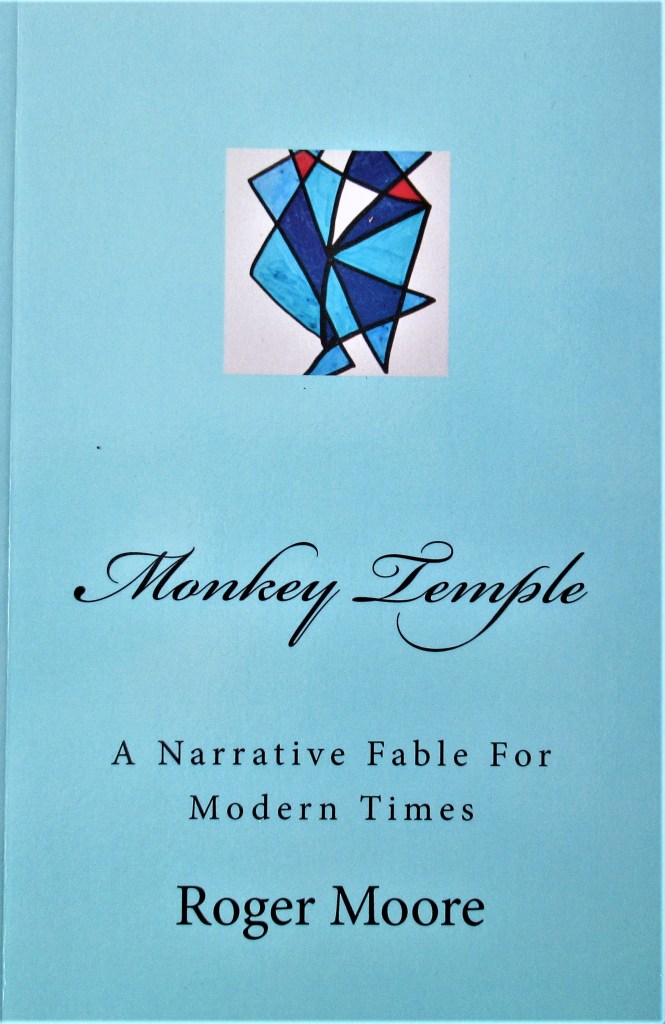
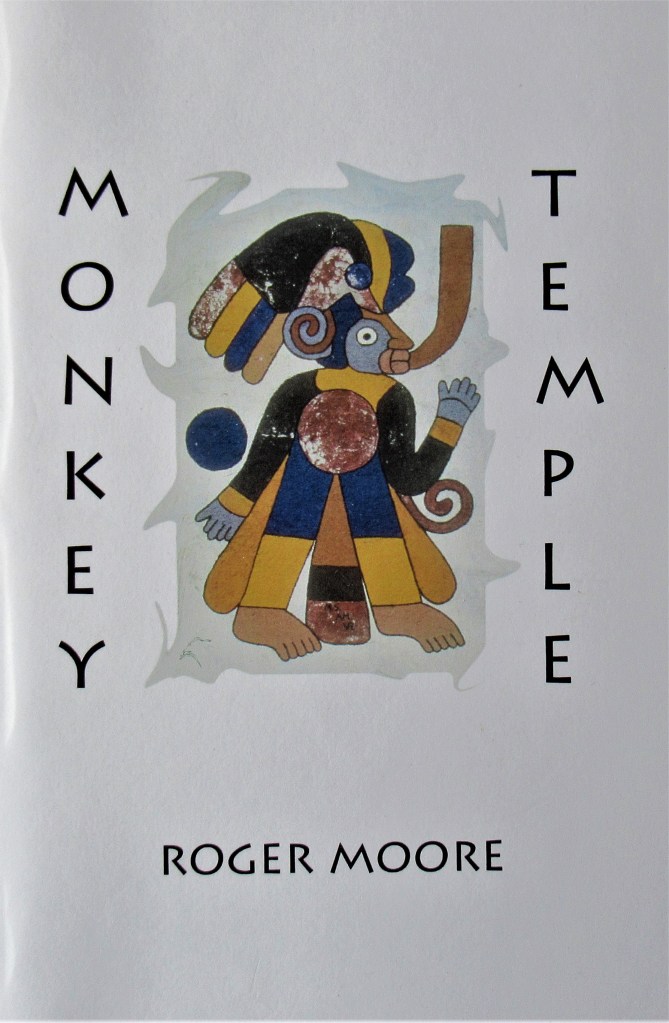
Comment: Monkey Temple is A Narrative Fable for Modern Times written in verse. The poems show strong links to Surrealism and Existential Philosophy. They portray the upside-down world of Carnival and out line Monkey’s Theory of the Absurd in a dystopian world that mirrors that of George Orwell’s Animal Farm, LaFontaine’s Fables, the esperpento of Valle-Inclan, and the witty conceptismo of Francisco de Quevedo. This is a walk through the jungle of the Jungian innermost mind. But watch out for those monkeys: they bite.
Timothy heard his older brothers moving from room to room, searching for him. He knew they would find him but for now he had found refuge beneath his grandfather’s double bed. It was dark under there in that sepulchral space. He had placed his grandfather’s enormous Royal Doulton chamber pot between himself and the door so that the dog would not pick up his scent, run to his hiding place, and lay the Judas lick upon his cheek.
His grandfather had forgotten to empty the chamber pot. Dark urine splashed on Timothy’s hands and sleeves as he squeezed behind the giant china pot that overwhelmed his nose fills with his grandfather’s nocturnal vapors.
The voices got louder as his brothers climbed the stairs and approached the bedrooms on the upper floor.
“Where is he now, drat him?”
“Don’t worry, we’ll find him.”
“And then he’ll be for it.”
“I’ll beat him with the little red brush they use for cleaning the fireplace.”
“That will teach him.”
Timothy was familiar with those threats, especially the little red brush.
He remembered the fox the hounds killed at his feet, one sunny morning a year before. He cycled down the lane outside his family’s summer cottage. The fox limped along the side of the lane, saw the boy on his bike, but too tired to run from him, continued limping in the roadway. Timothy got off his bike, leaned it against the rough stone country wall, and watched the fox. Its tail, speckled with mud, dragged behind its low-slung body, sweeping the ground. Timothy observed the twigs and thorns protruding from its black-tipped orange redness.
Timothy walked towards the fox. It tried to move away from the boy but collapsed and lay at the edge of the lane, flanks heaving, tongue lolling out through the white strings of thick foam that choked the muzzle and streaked saliva on the forequarters.
The hounds came from nowhere, an incoming, barking tide that rounded the corner and rushed towards Timothy who froze with a fright that pressed him against the wall. Sun-warmed stone jutted sharp edges into his back. As he stood there, unable to move, a rough hand came over the wall and grabbed him by the shoulder. He felt himself hauled upwards. The flint points dug into his back and he yelped as the firm hand drew him over the top of the wall to safety.
“Get out of there, you stupid boy, or the hounds will have you.”
Timothy hid his face in the farmer’s rough homespun shirt. He shuddered as the dogs bayed and growled and scrapped and scratched. Then the fox, it must have been the fox, let out a high-pitched yap and whine and the pack gargled itself into a drooling, slobbering sort of silence. The farmer pushed Timothy’s face away from his shoulder and forced his head towards the spot where the hounds, on the other side of the protective barrier, rubbed their ears into the dead fox’s torn and bloodied body.
“That’s what they’d have done to you, my boy. Never come between a pack and its kill.”
Timothy watched a member of the hunt staff pull a knife from his jacket. The foxhunters broke into cheers and howls of pleasure when the man severed the fox’s brush and held it on high. The farmer thrust Timothy towards the Master of Hounds.
“Here, blood him, Master, he was in at the kill.”
The Master of Hounds opened his mouth to flash a smile filled with pointed, foxhound teeth. He stooped, dipped his fingers in the still warm fox blood, and streaked a smear across the boy’s face.
“There,” he said,” you’re blooded now. One of us, eh what?”
The mingled scents of fox and hound and blood and death and urine and feces made a heady mixture and Timothy started to hyperventilate. His breath came hard in his throat and, as he struggled to breathe, tears rolled down his cheeks.
Timothy feels safe in his secret hiding place beneath his grandfather’s bed. He can hear his brothers’ taunts and calls as they search for him, but they haven’t found him yet. Sticks and stones may break my bones, he whispers, but names will never hurt me. But names do hurt. Tiny Tim they call him and ask him where he hides his crutch. I don’t limp, Timothy once replied. When he said that, one of his brothers, Big Billy, kicked Timothy as hard as he could with the toe of his boot, just above the ankle. Timothy screamed with pain. You’ll limp now, said Big Billy, and his other brothers found the joke so funny that they all called kicked Tiny Tim at every opportunity. Limp, Timmy, limp, they chanted as they chased him round, limpTiny Tim, Tiny Timmy.
“He’s not up here,” one of his brothers called out.
“Must be out in the garden, the coward, we’ll have to hunt out there for him,” another replied.
“Can’t run, can’t hide,” said Big Billy. “Get the dog, we’ll track him down.”
The voices finally faded. Protected by the barrier of his grandfather’s cold but intimate body waste, Timothy curled up like a fox in his den and fell asleep. He dreamed of the proud brush of a tail flying in the wind, of a warm stone wall, drenched in sunlight, and of a farmer’s strong, all-protecting arm.
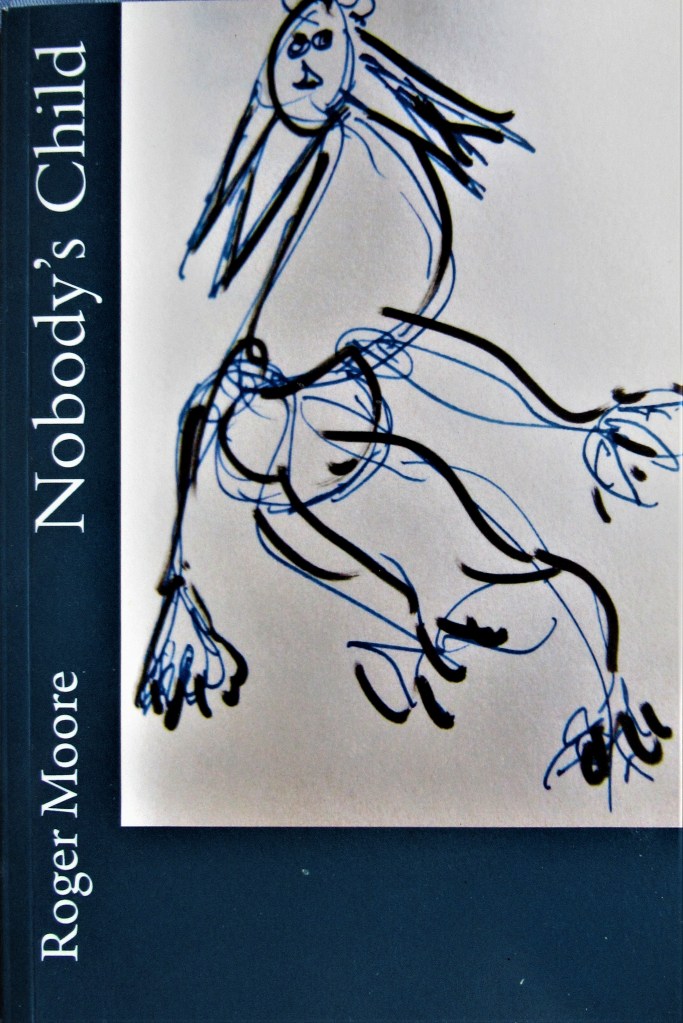
Comment: I have written several versions of this story, some longer, some much shorter, some in the first person singular, some in the second person. In all of them, the word-play on the little red brush (fox and fireplace) is paramount. This particular version occurs in my short story collection, Nobody’s Child available on line. Sometimes a story will not leave me alone. It wanders around, takes slightly different twists and turns, and new images and scenes emerge, as they do in this particular piece. Alas, I didn’t have a photo of a fox, so I used a photo of three plump pigeons hiding, you might even say ‘cowering away’, from a hungry hawk circling overhead while they hid in a crack in a wall in Avila, Spain. It always surprises me to know how many people (and animals) flee from what Robbie Burns called “man’s inhumanity to man”.
Spotify Don’t forget to scroll down to appropriate audio episode.
Cave Paintings Cantabria
Who painted these pictures on the walls of night’s cave? This grayish hand, fingers flexed, outlined in black soot, that deer dancing, those bears, horses, bison, running?
Did they come from nowhere, plucked from nothing but the artist’s memories of what he saw as the ice age faded and heat and warmth returned to warm his world? Drawn from life, without doubt. Unless these Neanderthals were truly creating art from a literal vacuum with nothing new invented since according to Picasso. And he should know.
Imagine them as sounds, as letters from distant relatives, as colored vowels scored on the blocks of a child’s first alphabet set. Sit and stare. Watch flames flitter over sharp shapes. See life enter the drawings as flimsy light flickers over the cave walls’ dips and bumps.
Once seen, never forgotten. Not just the paintings, but also the clammy cave damp, the red hanky draped over a pocket torch to imitate firelight, the drip of water, slow growth of limestone deposits growing into stalagmite and stalactite. Such things flit in and out of my mind like owls or bats, drop in on my sleep wake me with predatory beaks and claws, calling for my skull’s shut doors to open wide, to let them in, and to bring them back to life.
Comment: The picture comes from an ash-tray my parents bought at the Cuevas de Altamira, in Santillana del Mar (Cantabria, Santander as it was known then) in 1963. We visited many cave sites in Cantabria including Puente Viesgo, where we saw the sooty hands. Back then, the caves had only just been opened. At Altamira, a young lady came to greet us. We asked her if we might view the caves and she whistled loudly. Her husband came down from the fields where he was working. He took a large iron key from his pocket, opened a huge door set in the rock, and in we went. One light bulb illumined the inner chamber. Only a small segment had been dug out. We reclined on a rocky bank. He doused the electric light, took a torch from his pocket, and covered it with a red pocket handkerchief. He moved this back and forth to imitate firelight and immediately the whole wall came to life and the animals moved in the flickering light. Pure magic. Unforgettable. We were the only people there. Four of us. A few years later, you had to book an appointment and a place. Within six years, the caves were closed as the heat of human bodies raised the cave temperatures and caused the paintings to deteriorate. I was so fortunate, so privileged, to see those paintings in what was almost their pristine state. In 1991, I visited the facsimile of the caves built in Madrid. I paid my money, went in, sat down, and came out crying for all those things we had lost, for all that beauty that had been denied.
Late evening, low light, fox in the distance, photo through windows, two crows bombing him, fox on the run. A lovely sequence. Before the fox came, a hawk circled the lawn. Then came the crows. Then I saw the fox. Sorry about the quality of the photo: best I could do under the circumstances.
Just to say that this is a fine ending to a wonderful day. My fellow artists (Anne, Caitlin, Chantal, and Dan) are fantastic. Evening meal in he Garden Cafe was superb, as usual. Individual tables, suitably spaced. I had a lovely lunch with Geoff and Jeff. Many thanks for the welcome welcome you have all given me.
After the evening meal, we did a live reading on the porch, from One Small Corner and Tales from Tara. That was so much fun. To cap the day, I called my beloved and she told me that all was well and that Stars at Elbow and Foot (Selected Poems, 1979-2020) had arrived safely in Idlewood. Oh frabjous day, calloo callay, he chortled in his glee.
Spotify Remember to scroll down to correct audio episode.
GBH on the TCH
She climbs up from the river where she’s been drinking. She ripples tawny, red, and orange across the TCH.
As quick as a fox, they say: black socks, brush winter-thick held high and proud, as quick as a shadow melting into dark woods on the highway’s far side.
Her cub follows close behind, but he’s not quite as quick. A passing car tries to swerve only to grind him into the gravel.
Sudden, that fox-stink, still clinging to my nostrils like a slow-motion death, dreamed at night, frame by bitter frame, until a life-time of silence seals the lips of parted lovers.
Click on the link below to peruse my books for sale.
I opened the car door and he ran across the parking lot and jumped into the back seat.
“Where have you been?” I asked. He thumped his great tail, sniffed, and licked my hand.
As we drove home, he thrust his head between the seats and placed his paw upon my shoulder. Then he licked my ear and the side of my face.
I pulled into the garage and let him out of the car. He raced to the end of the drive, surveyed the neighborhood, and drilled an invisible pee into the snow.
I whistled, and he ran back to the door, whimpering and scratching, impatient. I held the door open and he bounded in. “You’re back home now,” I told him.
He ran to the cat’s bowl and lapped some water, scoffed her kibble, and lay down in his usual place. At night, he lies beside me in bed, a fluffy spoon carved into my body’s curve.
In the morning, he walks through the kitchen and doesn’t make a sound. The cat senses he’s there and bristles and hisses at rainbow motes dancing in the sun.
He’s sitting beside me now, head on my knee, as I type these words, one-handed, because I’m scratching him in his favorite spot just behind his ear.
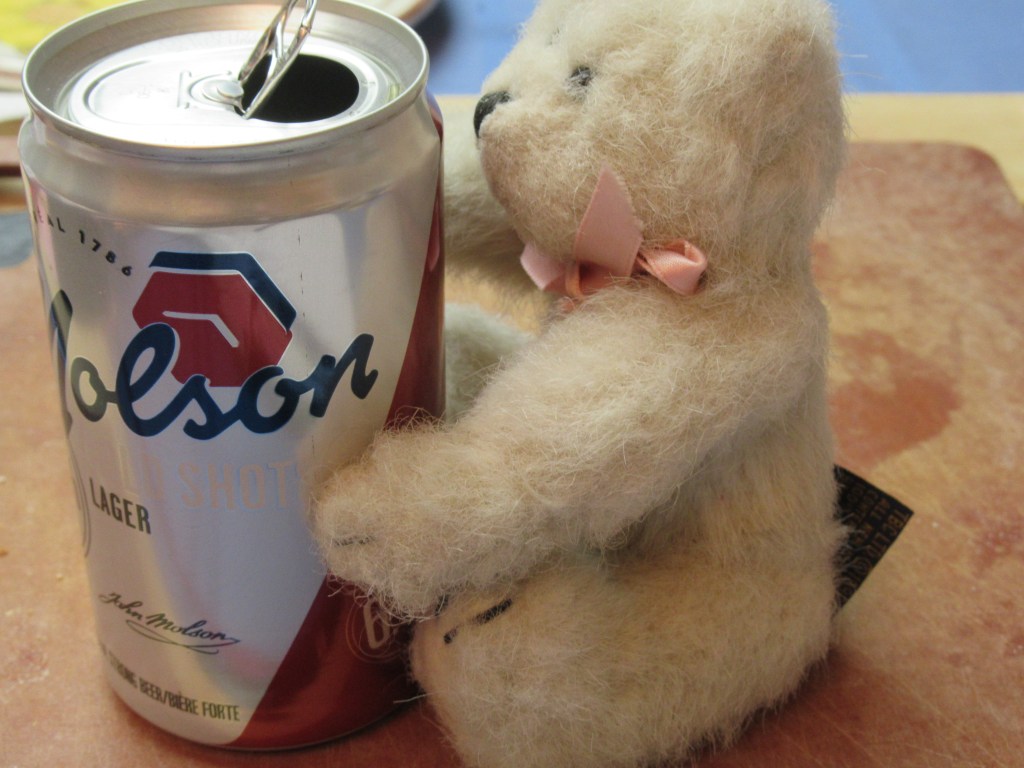
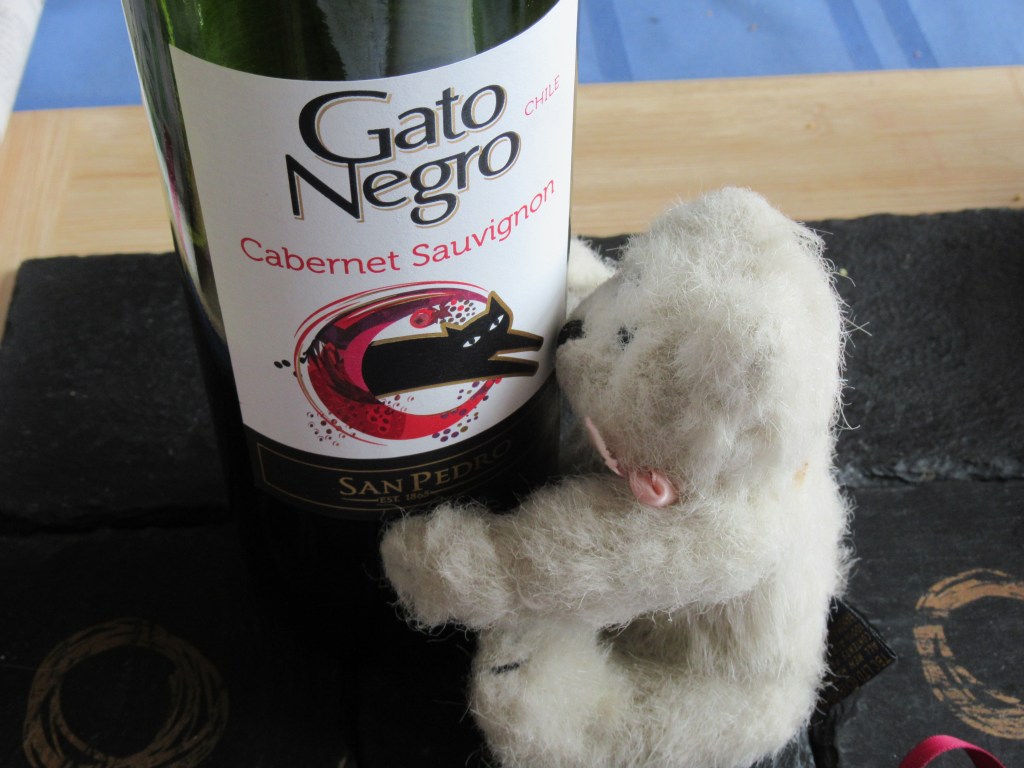
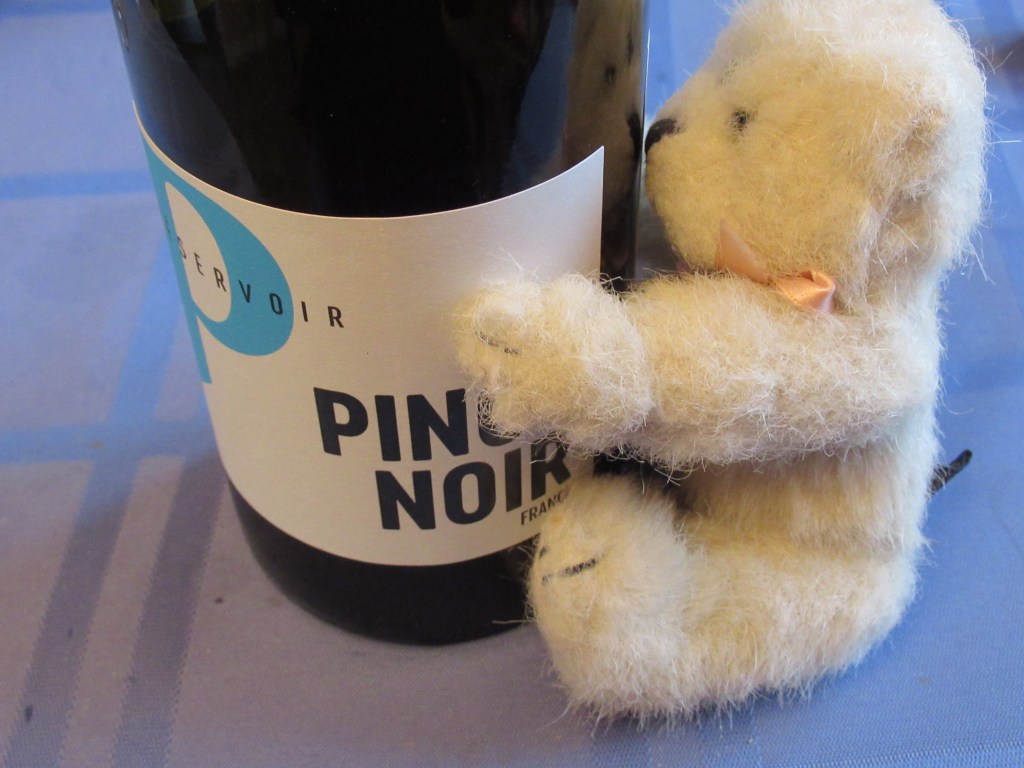
Basil decided he liked beer, especially in small tins. The news says that many teddy bears have become addicted to alcohol in the course of the pandemic. What the Strolling Roans call Teddy’s little helper, or Basil’s in this case. I do hope he’s all right.
Basil swears he likes cats. “Look,” he says. “She’s reaching out to me.” I am worried that she’s coming to give him a nasty scratch. Am I worried? Of course I am. I thought Basil was a tee-tee-tee-total bear. I think he’s trying to break in.
Suddenly, I am not so sure. I think he has been talking, in secret, with one of my friends, whose name we will not mention. Couldn’t be him. How could he talk when … (comment removed by MI6, or equivalent).
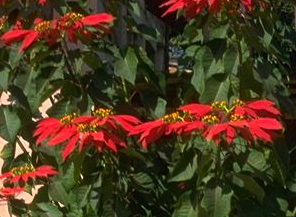
Poinsettia is called nochebuena in Oaxaca. It also means ‘Christmas Eve’ in Spanish.
Spotify: Remember to scroll down to the appropriate audio episode.
Nochebuena
Nochebuena / Christmas Eve: last year, a star fell down the chimney and landed on the poinsettia. The cat and the dog stood up to deliver new versions of their Christmas vision. Birch bark: ghosts on the snow bank turned white in the moonlight as they danced, so slender and so bright.
This year an obsidian knife hacks through my mind slicing it into two uneven pieces. Snowflakes invade its split personality. Thin ice spreads across glacial fires. Incarcerated birds sing deep in my rib cage. A child’s world: with its lost toys lies buried beneath fresh snow.
Tears freeze in my eyes, drip from my eyelashes, and fall to the earth as stars. Soon I will be an enormous sunflower, trapped in this wet clay rag of a body.
If I sit here in silence will the world, like a garden growing wild, go on without me? The flowers in my yard close their mouths and refuse to answer.
Babs held the cat in her arms. The vet slipped the needle into the shunt he had inserted into the animal’s paw and the tiny wind of life gusted from the cat’s fragile body. The struggle ceased. The cat’s head settled and her tongue protruded, just a little, in that beloved and well-known gesture. It was all over.
Babs had found that lump, hard, but smaller than a pea, on New Year’s Day. The next day, she carried the cat to the vet where they took blood samples and ran tests. The vet’s assistant called later that afternoon. A lymphoma, she said, small but deadly. Steroids might help. They would give the cat a 40% chance at a life that would get more difficult, in spite of any known treatment. The alternative was to bring her back in and put her down now, that very afternoon. Babs looked at the cat: highlights strayed through her fur and her bright eyes sparkled like sunshine on a lake.
Throughout January the steroids went in and the cat glistened and grew fat. At first, Babs saw no sign of the lump but by Robbie Burn’s Day it was back. Babs started to count the days: January 31, February 2. The lump grew larger.
Three years before, on Valentine’s day, Babs had salvaged the cat from the SPCA where she languished, abandoned in a cage. The cat was a stray, half feral, taken in from the streets and subject to who knows what sort of treatment and feeding in its infancy. Babs wondered if it was in those days of neglect that the cancerous seed took root? Or did those seeds come later, when the cat wandered the garden and fed off the wild life, mice and voles, and drank from the streams that flowed through the killing fields with their fertilizers, their weed killers, their nutrients, and their poisons?
“What are we doing to ourselves,” Babs wondered as she sat at the kitchen table and sipped a cup of tea. “Was my cat the canary in my coalmine, doomed to warn me of what’s to come? Will my own system be invaded then poisoned with cancerous growths? Will I be subject to that stumbling, downward road that leads in the end to an inevitable death?”
She lay awake that night alone in the bed wondering in what ways cancer might ravage her body. How long would chemotherapy keep her alive? Who would be there for her, who would hold and comfort her, who would slip that releasing needle into her veins when her time came?
Babs ran her fingers over her body as she imagined herself sliding day by day down that slippery slope that leads to the grave. Then she caught her breath, her heart raced, and her blood turned to ice as her fingers tripped against the colony of killers: three small hard lumps that nested in her soft breast.








 rogermoorepoet