Why?

Different bird, same question: why? This one is from one of the beaches on the road to North Cape, PEI. Why, indeed?

Why?

In the mud nest jammed tight against the garage roof,
tiny yellow beaks flap ceaselessly open.

The parents sit on a vantage point of electric cable,
mouths moving in silent encouragement.

A sudden rush, a clamour of wing and claw,
a small body thudding down a ladder of air
to crash beak first on the concrete.
  “Why?”

 “Wye is a river.
      It flows through Ross-on-Wye
      and marks the boundary
      between England and Wales.”

And the swallows perch on the rafters
watching their fledgling
as it struggles on the floor:
the weakening wings,
the last slow kicks of the twitching legs.
“Why?”

“Y is a crooked letter
     invented by the Green Man of Wye.”

Comment: This is the original poem, written back in the eighties, wow, that’s forty years ago. I included it in my first poetry chapbook, Idlewood (published, 1991). It was a slim volume, dark green color, typed and photocopied, very humble, but MINE! A couple of years ago I wrote a prose poem, sort of flash fiction, in one of my Welsh sequences and included the story as part of the text. It came to me as a memory yesterday morning, and I posted it on Facebook. Here now is the story. Hopefully, you have just read the poem: I hope you liked it but, as I know all too well, de gustibus non est disputandum. I would like to know if you prefer the poetry to the prose. Please let me know, pretty please?

Why?

“Where are you going?” I ask. “To see a man about a dog,” my father replies. “Why?” I ask. “Hair of the dog,” his voice ghosts through the rapidly closing crack as the front door shuts behind him. “Why?” I cry out. I recall the mud nest jammed tight against our garage roof. Tiny yellow beaks flap ceaselessly open. Parent birds sit on a vantage point of electric cable, their beaks moving in silent encouragement. A sudden rush, a clamour of wing and claw, a small body thudding down a ladder of air to crash beak first on the concrete. “Why?” I ask. The age-old answer comes back to me. “Wye is a river. It flows through Ross-on-Wye and marks the boundary between England and Wales.” The swallows perch on the rafters watching their fledgling as it struggles on the floor, the weakening wing flaps, the last slow kicks of the twitching legs. “Y is a crooked letter invented by the Green Man of Wye,” my grandfather says. “Why?” I repeat. “I want to know why.” Silence hangs a question mark over the unsatisfied spaces of my questioning mind.
Queen’s Gambit

I always hated Queen Pawn openings 1. P-Q-4 – P-Q4. 2. P-QB4… the poisoned pawn.

Queen’s Gambit
the poisoned pawn

Openings are so important.
They should be magnets
drawing you in,
but sometimes they’re whirl-pools
dragging you down.

You try to hold your breath,
but you must breathe and let go,
you must go with the flow and sink
to whatever awaits you in the deep.

Down there, it’s a different world.
Light breaks its alternate shadow,
and you are the light in the darkness,
down there, where no sun shines.

You are the glow-worm,
glowing where no stars glow.
You are the line, the sinker, the hook,
the bait, the temptation that encourages
your opponents to sacrifice their own peace,
 to join you, to swim, or to drown.

Comment: To take or not to take, that is the question. It’s a long time since I read Hamlet or played competitive chess. I have forgotten many of the ins and the outs, the traps and the snares, the devils that hide in the details of ‘yes’ or ‘no’. Sometimes we must just take a chance and play by the seat of our pants. Sometimes we must try to recall all the nuances and shades of meaning. And we all know how one step leads to another and how a misstep leads to one disaster after another. Not to win or lose, but to play up, play up, and play the game. Says who? I don’t find those words in my favorite chess book: Chess for Money and Chess for Blood. The poisoned pawn, indeed: and a throw of the dice never eliminates chance / un coup de dès n’abolira jamais le hasard. Go on, take the pawn, throw the dice, I dare you.

Crosswords

Couldn’t find a picture of a cross-bill, so I found some genuine humming birds instead. Listen carefully: you can hear them hum.

Crosswords

I wander a vacant, black and white wonderland
of empty, accusing, crossword puzzle squares.
Most mornings, I sit at the kitchen table, head in hands,
puzzled by the news and the crossword puzzle’s clues.

Outside my window, crossbills squat on the feeder,
squabbling, heads turned sideways, blinking,

and winking sly eyes. A yellow-bellied sapsucker hops
over syrup-sticky squares. His hand-carved chess board

glistens as feasting flies swarm beneath the sun.

My own thoughts are rooted in a stark, new reality.
They walk wordless through threatening spaces where
unmasked people wander grey, concrete streets or walk
in shops, in the opposite direction to arrows,
painted on the floor to guide them.

Cross-words, cross-purposes:
why do some people obey the current laws
while others ignore them and risk their health
as well as the health of others by doing what
they damn well please, in spite of the scientists
who beg them to do otherwise?
Like the puzzle’s clues: I just don’t know.

Comment: Well, last year was a year like no other that I can remember. It is so easy to dismiss it as an aberration, but we shouldn’t do that. Hopefully next year will be better. But it might get worse. Let’s look on the bright side and hum along with the song the humming birds are humming: “Yesterday is history, today is still a mystery, but what a day it’s going to be tomorrow.” I still can’t workout how or why some shoppers just head up the shopping aisles, walking or pushing their carts in the wrong direction. Nor how they can stand for five minutes at a time choosing a breakfast cereal, one hand on the handle of their angled carts, another poking at the cereal boxes, and the aisle totally blocked. I also love the people who still handle every apple in the box before choosing just one of them. For apple you may substitute grapes, pears, avocadoes, tomatoes. Oh the joys of ageing in an age of skepticism and pandemic. Mind you: if life is, as Albert Camus always insisted, absurd, or if it is, as Calderon told us, nothing but a dream, I guess none of it matters anyway. Il faut imaginer Sisyphe heureux / we must believe that Sisyphus is happy!

A Thought for the New Year

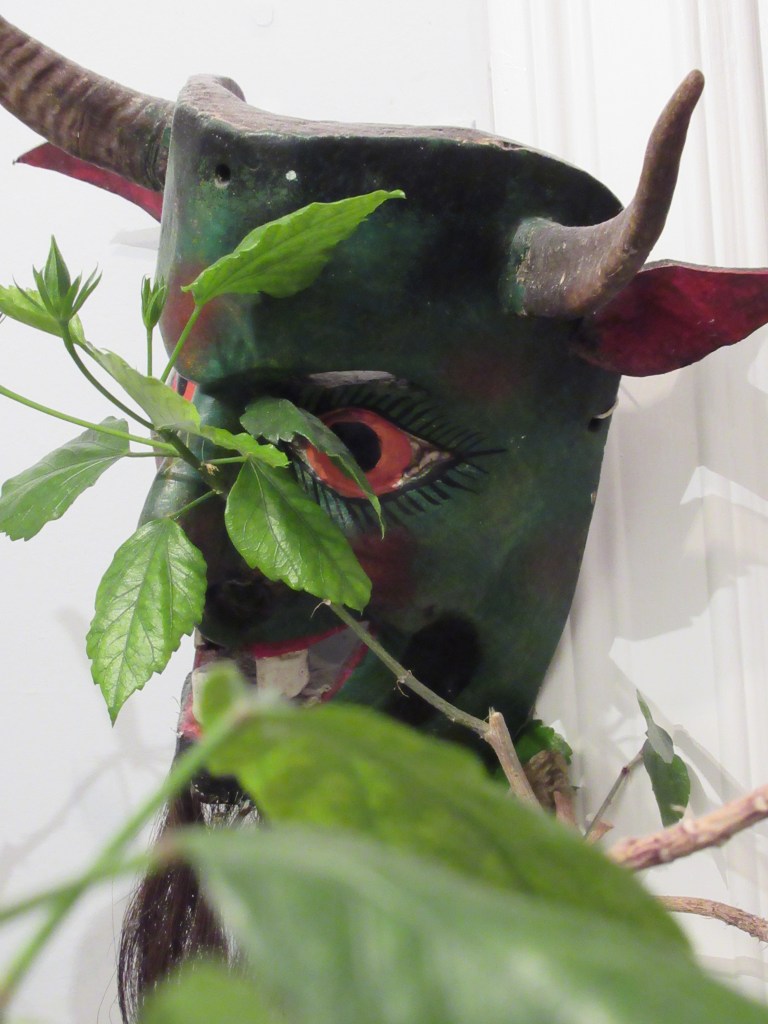
Couldn’t find a photo of Don Quixote so I attached this instead. A suitable symbol for Brexit!

A Thought for the New Year

“Sábete, Sancho, … Todas estas borrascas que nos suceden son señales de que presto ha de serenar el tiempo y han de sucedernos bien las cosas, porque no es posible que el mal ni el bien sean durables, y de aquí se sigue que, habiendo durado mucho el mal, el bien está ya cerca.”
Miguel de Cervantes : Don Quixote de la Mancha.

“Know this, Sancho, … All these squalls that beset us are signs that the weather will soon clear up and better things will come to us, because it isn’t possible for good or ill to endure, and from here it follows that, these ills having lasted so long, good times are now close.”
My translation.

Comment: This quote was sent to me by Marina, my close friend from Avila, with whom I have maintained contact, even though it is now twelve full years (2008-2020) since we last saw each other and talked, except on Messenger. Break ups and lost and absent friends and families: it seems to be the story of my life. And how could it be otherwise when one is a migrant who emigrates and immigrates and passes on and through, rarely resting in the same place for long? I guess it is also the story of the Intelligentsia: those whose learning and understanding and life experience moves them out from one place and into many others. Cualquier tiempo pasado fue mejor / any time from the past was better. Hiraeth: the knowledge that the past is lost, save in our minds, and can never be recovered, even though sometimes we wish so badly to do so. The Intelligentsia: always dissatisfied, both with the past which they can never recreate and which they view through the pink lens of nostalgia and with the present which is never as beautiful as that pastel pink past, that in reality probably never existed. Toda la vida es un sueño y los sueños sueños son / The whole of life is a dream and dreams are just dreams, and nothing more (Calderon de la Barca).