Y Ddraig

IMG_0094.JPG


Kingsbrae 15.2
15 June 2017

Y Ddraig

“Here there be dragons!”
The old maps used to say.
A sea-serpent decorated those maps,
a kraken, perhaps, or another monster
drawn from the depths of the unconscious.

In Wales there used to be dragons.
Old massive bones rose to the surface,
long ago, and there were skulls
and other artefacts lurking in the coal seams
that snaked through dark mines.

The fear of dragons is still within us.
We know they can fly in from nowhere,
setting fire to the crops, burning the houses,
killing people in an unequal battle in which
one party can fly while the other
can only run and hide,
or else burn publicly in the open streets,
Guy Fawkes figures in their multiple bonfires,
flaring in those deadly white phosphor flames.

Bonfires and bone-fires:
I have also seen the Cancer Dragon
growing within the human body
and burning the poor patient alive,
from the inside out.

Y Ddraig Coch:
the Red Dragon of Wales:
long may he stay on our flag
and rule the skies from his flagpole.
Those who wish for the dragon’s return
yearn indeed for sadder, madder, darker days.

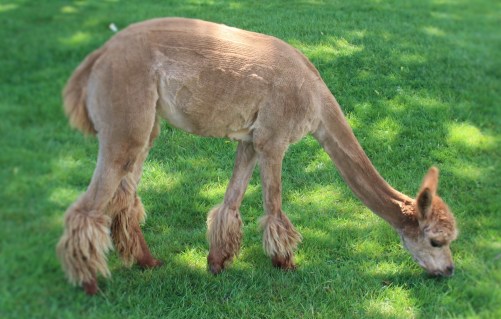
Comment: Another ‘raw’ poem, but one that I have been thinking about for some time. It was driven from the back to the front of my mind by Carlos’s photo of the dragon in Kingsbrae Gardens. Carlos is my photographer and travels far and wide, taking photos that he then shares with me. I am very grateful to him for this sharing. I usually work my photos on the IMac, but here I am working with a PC that I am only just beginning to understand. There are so many new things happening that it is difficult to keep pace with them all. Oh yes, and this poem is an allegory [a representation of an abstract or spiritual meaning through concrete or material forms; figurative treatment of one subject under the guise of another, definition from dictionary. com], but I am not sure that I know what the hidden meaning actually is.

Creativity: Thursday Thoughts

IMG_0070.JPG

Creativity:
Thursday Thoughts
Kingsbrae 15.1

15 June 2017

The KIRA experience has been very kind to me. It has enabled me to spend time writing and thinking without the necessity of worrying about the daily rituals and necessities of everyday life. In addition, the daily conversations with the other artists in residence have kept my mind focused on the process of creation and this has allowed me to study how I am creating. As many on this blog have noticed, I have been very productive during this residency, and there are several reasons for it. I would like to share some thoughts and ideas with you.

Journal: On 2 March 2017, I received an e-mail telling me that I had been accepted for the arts residency at Kingsbrae. As most of you know, I keep a journal and write in it every day. On 3 March 2017, I started my Kingsbrae poetry sequence. I began by reading the entirety of the Kingsbrae web page and then watched the Kingsbrae Garden videos online. Then I began jotting down in my journal poems and snippets of poems, creative thoughts, metaphors, images,  and ideas. By the time I came to Kingsbrae, I had 90 proto-poems in place. Since they were taken from photos and videos, and were not written in situ, I saw them as prototypes, rather than as the real thing.

The Journal as Poetic Quarry: I look on the journal as a poetic quarry. It contains many stones, some tiny, some larger, some useless, and some very precious indeed. One part of my poetic journey here at Kingsbrae is to go back over these stones, turn them over one by one, discarding the dross, and concentrating on the precious material that has lain there waiting to be re-discovered. Now that I am on site, it is easier to distinguish between those essential words, the ones that really count, and the lesser words, the ones that can be dismissed. This sifting process needs time and thought, and that is exactly what the residency has given me. Writing tip: keep a journal. Mark in red those passages that contain seeds of poetry, images, metaphors, rhythms etc. Return to them when you have the time to do so. Time and space are essential: a time in which to work and a space in which to work. Without these two things , we are lost as writers. ‘I don’t have time,’ you think. Ask yourself: ‘what is more important than a little time each day, spent on yourself and your writing?’ As writers, we MUST indulge ourselves with those two little gifts, time and space. An hour a day is more than enough: find that hour, use it. Ten to fifteen minutes a day is enough to keep us ticking over: if we can’t find that ten minute space, then we are unfortunate indeed.

The Revision Process: As I develop as a writer (and believe me, I am still developing), I realize that the ability to recognize good writing is one of the most important skills that we possess. Re-reading is one thing. Distinguishing the great (oh yes, there are great thoughts and metaphors in those journals), from the good, from the average, from the futile and meaningless is a key skill. All of us have wasted precious time on an idea that just didn’t work. We have worried at it like a dog at an old bone, drooling, gnawing away, growling at ourselves and the bone, getting no nourishment. Leave those ‘dead’ ideas, those ‘dead’ metaphors. Move on to the good ones asap. Our writing time is precious: don’t waste it. Learn to recognize the good and workable from the lesser writings that waste our time.

The Creative Process: “What is this life if, full of care, / we have no time to stand and stare?” This is the first line of one of W. H. Davies’s poems. The Kingsbrae Residency has given me time to stand and stare. It has also given me time to sit and stare. Emptying myself of the daily drudge, I have been able to allow light and inspiration to enter my mind and fill me with creativity. I have discovered that there are ways to do this: meditation, an open mind, an emptiness within that slowly fills, and, above all, carpe diem, the ability to recognize that moment and seize it and exploit it. None of the above is unique to me. If we are at all creative, we are all faced with a simple choice: to develop our creativity or to let it wither. Most of us are too ‘busy’, in the worst sense of the word, to allow ourselves the time we need to create. This is a process we must reverse. We must return to self time, thinking time, emptiness time, metaphoric creative time.

The Value of Art: The modern corporate businessman’s mind is of the type that knows the price of everything and the value of nothing. As a result, we have the tendency, as artists, to fall into the ‘price’ mold rather than the ‘value’ mold. If we do not stop and think, if we do not find the time to create, if we do not search for the absolute values that are represented by our art and our creativity, then we count the pennies, add up the costs, and look at the price. Nobody said art was facile. Nobody said that creating the time and space in which we could create would be easy. This residency has convinced me of one thing: that without that time and space, we are nothing but drones, workers, lifeless puppets, going through the motions as other people pull the strings, lacking the spiritual wherewithal … We must stand up for creativity, for being different, for doing things differently, for being ourselves. We must stop being digitalized consumers and become, or continue to be, active, thinking creators. The world needs creativity and art. It needs people who stop and think. It needs people who think differently. It needs artists and creators. It needs us. What we do as artists and creators is precious and valuable. Never doubt it. Never forget it.


Kingsbrae Creations

Chaos


Kingsbrae 14.4
14 June 2017

Kingsbrae Creations

Carlos Carty has recorded me as I sat reading some of my poems out loud. He has also put some of them to music. I think of it as mood music, because he captures meaning from tone and voice and then adds a music he has created to match the emotions expressed in the poem. We have recorded six poems so far and I list them below. Just clink on the links and turn your volume up. Carlos and I hope you enjoy these Kingsbrae Creations, one of the many results of our collaboration here at Kingsbrae and KIRA. Here are the poems, click on their titles to access to voice readings and musical accompaniment.

Giving Back

Word Blooms

Scent & Touch

Small Corner

Yellow Bird

Love


Peace

img_0207


Kingsbrae 14.3
14 June 2017

Peace

Everywhere I go, distractions.
I-phones bleep, fingers touch
screens, instant news breaks
sound waves on an endless
shore, noise, more noise, car
radios, heavy metal, hard rock.

I must flee now to the gardens.
I must seek out the robin’s song,
find the liquid notes of the water
thrush, search for the oriole’s
magic voice, the cardinal’s
colorful chorus. Not for me the
cheap tweet of the twitter-verse:
better by far the soulful summer
sounds of the natural universe.


Wordless Wednesday

IMG_0007.JPG

Kingsbrae 14.2
14 June 2017

Wordless Wednesday

All sound has run dry in my
song-sparrow throat.
Words and music no longer flow.
They need eaux de vie,
the waters of life.

Water from a bucket, perhaps,
though I cannot stoop to fill,
nor carry it, without spilling.

A hosepipe, then, though I need
to bend to make the connections
and turn the tap on, and alas,
I am too old and stiff to bend.

Rain, perhaps, though today
it must fall from a cloudless sky.
Who could pray for rain on a day
like today, with sun warming earth
and flowers and my old bones
basking, wordless in the warmth.

I long for the word drought to end.
Silent I shall sit and wait for the word
-well to fill itself with those spiritual
waters flowering and flowing deep within.


“Don’t Get Off the Bus!” Wednesday Workshop

IMG_0061.JPG


“Don’t Get Off The Bus!”
Wednesday Workshop
Wednesday 14 June 2017

Journal: Roger Moore had the honor and pleasure of addressing the artists in residence at KIRA / Kingsbrae last night. He gave a brief biography of himself then stated that he did not consider himself to be a poet, the honor of the name is too high. He is, he stated, above all a writer. He began writing poetry at an early age, but was always put off by the lack of understanding shown by his contemporaries. Such slogans as “He’s a poet, but he doesn’t know it,” chanted endlessly, made him hide his poetic talent. In 1962, however, in his last year in school, he entered the Stroud International Festival for Religious Drama and the Arts and won first prize for a sonnet he wrote for that competition. This confirmed , in his own mind, that he could write and he continued to do so.

He attended Bristol University from 1963-1966, studying Spanish (Honours) and French. While at Bristol he published some 30 poems with the university’s literary review, the Nonesuch Magazine. He also wrote a weekly column in the student newspaper reporting on cross-country running in winter and athletics in summer. He began an MA in the University of Toronto in 1966 (completed in 1967) and decided to stay in Canada and work for his PhD (17th Century Spanish poetry). His encounters with the Toronto literary circles were not satisfactory and he realized that neither his style nor his subject matter were suited to the CanLit of the Canadian art scene. He hid again until 1977 when Fred Cogswell published Last Year in Paradise, Roger’s first poetry book, in the Fiddlehead Poetry Book series. By now, Roger had completed his doctoral thesis and published Towards A Chronology of Quevedo’s Poetry with York Press in 1976. From 1973-1977 Roger was first the Editorial Assistant and then the Assistant Editor of the International Fiction Review (University of New Brunswick). This position allowed him (a) to revise the submissions of writers whose first language was not English; (b) to translate articles from Spanish to English; and (c) to himself submit articles and reviews to the magazine. One of his first translations was of an article by Enrique Anderson Imbert, the Argentinian writer. Roger’s academic writing and editing is a different story and will be told at another time.

In 1979, Roger took his first workshops in creative writing at St. Thomas University  with Norman Levine, the Canadian Short Story writer. Norman Levine inspired Roger with a new taste for creative writing and he started writing short stories at this stage. He also started attending the Maritime Writers’ Workshops at UNB working with Patrick Lane, Susan Musgrave, Richard Lemm (twice) and Erine Moure. Roger was now submitting regularly to Canadian Literary magazines and his poetry was published first in Poetry Toronto (by bpnichol),  and then in Poetry Canada Review, The Fiddlehead, ARC, Ariel, the Cross-Canada Writers’ Quarterly, and in some twenty other Canadian literary magazines. In 1986, his second poetry collection, Broken Ghosts, was published by Goose Lane (Fredericton). Roger’s mother died in 1987 and his father followed in 1989. The poems he wrote at this stage were collected together and were awarded the Alfred G. Bailey Award for Poetry by the Writers’ Federation of New Brunswick in 1989. A second collection again won the Bailey in 1994, but neither of these collections were considered worthy of  publication by the multiple Canadian presses to which Roger sent them.

In 1991, Roger was the Atlantic Provinces Director for the League of Canadian Poets. He started, with JoAnne Elder, the Writes of Spring at St. Thomas University, and this continued for three years. The Writes of Spring was designed as a gender balanced, language balanced reading event in which eight poets participated. The reading group consisted of four men and four women, four of whom were Francophones and four Anglophones. These bilingual readings gave a wonderful insight into the poetry that was being written at the time within the province of New Brunswick. Roger started self-publishing his poetry in limited edition chapbooks at this time and gave his works to the participants and audiences in this series. He published six chapbooks this way: Idlewood, In the Art Gallery, Daffodils, Secret Garden, Iberian Interludes, and On Being Welsh.

In 1999, Roger chaired the third Atlantic Association of Universities’ Teaching Showcase at St. Thomas University. He edited the proceedings with Denise Nevo and they were published by Mount Saint Vincent University Press. Denise suggested that Roger might publish his poetry with MSVU and declared herself willing to edit and publish any work he might care to submit. This most fruitful collaboration with a wonderful lady who was also an outstanding editor allowed Roger to publish six more poetry books between 2000 and 2012, namely, Sun and Moon (Poems from Oaxaca), Though Lovers Be Lost, Fundy Lines (Prose Poems), At The Edge of Obsidian, Obsidian 22, and Monkey Temple. Roger continued publishing chapbooks and Dewi Sant (with the Central New Brunswick Welsh Society) and M Press of Ireland were among those that appeared, while Land of Rocks and Saints (Poems from Avila) was published by Nashwaak Press (Stuart Donovan) in 2008.

2015 saw three books appear in print: Stepping Stones (in collaboration with David Brewer of Rabbittown Press), Systematic Deception (in collaboration with Randi Drake of Ottawa), and Triage, his last poetry chapbook. In August 2016, John Sutherland, a member of one of Roger’s writing groups, introduced him to CreateSpace / Amazon / Kindle, and since then eleven books have been published online: Monkey Temple, Though Lovers Be Lost, Bistro, Sun and Moon, Obsidian’s Edge, The Empress of Ireland, All About Angels, Avila (Cantos y santos y ciudad de la Santa), Iberian Interludes, A Cancer Chronicle, and Nobody’s Child. Bistro (Flash Fiction), Avila (in Spanish), A Cancer Chronicle, and Nobody’s Child (short stories) are new, while the other seven titles have all been expanded and revised. Bistro was one of three finalists (and the only independently published book) in the New Brunswick book Awards (prose fiction) in 2016 (results announced, May 2017).

This Wednesday Workshop / KIRA Artist’s Report has two concealed messages. The first is that writing, like all creative activities, is a long apprenticeship (in the words of Fred Cogswell). The second is that if you want to travel from Halifax to Vancouver, you must stay on the bus. Quite simply, if you get off at Fredericton or Quebec City, Or Montreal or Toronto, and if you stay in one of those cities and don’t get back on the bus, you’ll never arrive at Vancouver. So: writers young and old … stay on that bus. Persist with your work. Never give up your dream. Never give in. Looking back from the vast old age of seventy-three, I realize now how easy it would have been to admit defeat and stop writing at so many stages of my writing career. I kept going and I encourage, nay URGE, any writer / creative artist reading this either to stay on that bus or to climb back on board. Quite simply, the world needs us and the world needs our poems, our paintings, our sculptures, our music, our encaustics,  and our stories.

Icarus

IMG_0220

Kingsbrae 13.4
13 June 2017

Icarus

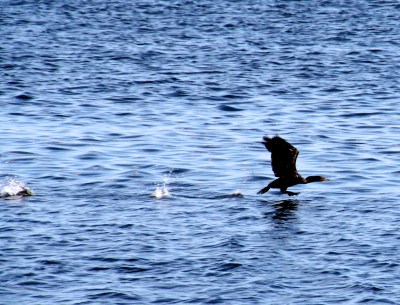
Such a miracle,
those first steps
of the sea-bird’s flight,
lurching his launch
over troubled water.

That first step heavy,
the second lighter,
and the third
scarcely
a paint brush
pocking the waves.

Deep within me,
I sense the need
to fly, to soar, to rise
high in the sky
and seek the sun.

I don’t care
if the sun’s heat
melts the wax
that binds my wings
and sends me
tumbling down,
a shooting star
falling
from the firmament.

A second sun,
I’ll be,
stunning in my sunset,
burning a glorious
path to death in my decline.

Myth Magic

IMG_0486

Kingsbrae 13.3
13 June 2017

Myth Magic

This old world, born again,
renewing itself before my eyes.
My hands reach out to touch it
and I feel it grow beneath my fingers,
so soft, so sensitive,
and my memories as wild
as the delicate deer that tumble
and run to enter the gardens
and plunder red roses
from the holy of holies.

Some days, the warm earth
trembles as those old gods walk again,
Orpheus, Pan, Diana by moonlight,
Narcissus perishing by the pond.

 In our Secret Garden,
Robin song still haunts and enchants me.
Echo calls back from a not-so-distant past
and her voice lingers among birdsong,
soft and long.

Aurora Borealis

img_0359

Kingsbrae 13.2
13 June 2017

Aurora Borealis

Some nights,
when you close your eyes
and open your ears and mind,
the miracle happens.

The sky breaks apart,
explodes in color,
and all the hard slabs
in your little child’s
paint box
become liquid assets,
covering the sky
from top to bottom
in a curtain of chroma
that saturates the mind
with its trickle
-down luminosity.

Pity the poor stars
on nights like these,
their beauty, like
love’s labors,
lost, as we drift,
our senses set free
in this amniotic,
shapeless sea:
bound by music,
song and light.

Chronotopos

IMG_0066 (2)

Kingsbrae 13.1
13  June 2017

Chronotopos

plant a plant
deep its roots
rooted in fine soil
potting soil in a pot
firm the fingers
the spot well-chosen
in a flower bed
in a pattern
in an empty space
in a growing garden
within a larger garden
in an old estate
in a small town by the sea

Russian doll puzzle
garden after garden

(one a secret
with its birds and voices
lost in the hedgerow
and the echoes
of secret meetings
watched only by the guardian
the robin that watches)

planted and replanted
unfolding flowers
in a sunshine world
in a state of grace
hope and handicraft
hand in hand
with faith and belief
and everything planned
to take advantage
of this time and this space

these words so simple
these thoughts so complex

Comment: I began this poem on  10 March 2017. It formed part of my initial poetry sequence with Kingsbrae unseen, save for videos and photos of the gardens and their history, viewed on the Kingsbrae website. As I have grown into the KIRA experience, or perhaps I should write ‘as the Kingsbrae experience has blossomed within me’, so I have found these words prophetic, yet strangely inadequate, in the way all words are inadequate when tides flow, days flourish, and ideas blossom, sometimes in that formless world between sleep and dream where reality is something for which the writer reaches out but finds it is beyond the fingertips and just out of reach. As my Judo instructor told me, a long time ago:

“The more you strive,
you cannot reach it.
The hand cannot grasp it,
nor the mind exceed it.
When you no longer seek it,
it is with you.”