Writing Memories 3

image5 (6).jpeg

Writing Memories 3

Module 1.2 Disasters:

Last Sunday, the first module was titled Triumphs and Disasters. I have separated them here. My first thought for Disasters came in the form of a poem.

Age of Spillage

Fingers turn to butter, permit cups to slip,
flying saucers to take off, to stall and crash,

their broken bodies resting in peace and pieces
on kitchen floor, waiting to be picked up and buried.

Worse: bottle tops screwed up tight refuse to open.
Plastic wrapping, flagrant in its defiance,

wages its guerrilla war against ageing,
uncoordinated arthritic fingers.

Tongue-twisters twist tongue and tones and speech,
filling mouths with glottal stops and threadbare words.

The rib cage is a cupboard barren and bare.
So many slips between palate, teeth, and lips.

So many precious things dropping to the floor.
I cannot always bend and pick them up,
not even with my new mechanical claw.

Commentary: Nothing wrong with this as a poem. It’s fun to experiment, though, and poetry takes up more space than prose. This is the prose poem, or prose passage, or flash fiction piece, take your pick.

Age of Spillage [Prose 1]

Fingers turn to butter, permit cups to slip, flying saucers to take off, to stall and crash, their broken bodies resting in peace and pieces on kitchen floor, waiting to be picked up and buried. Worse: bottle tops screwed up tight refuse to open. Plastic wrapping, flagrant in its defiance, wages its guerrilla war against ageing, uncoordinated arthritic fingers. Tongue-twisters twist tongue and tones and speech, filling mouths with glottal stops and threadbare words. The rib-cage is a cupboard barren and bare. So many slips between palate, teeth, and lips. So many precious things dropping to the floor. I cannot always pick them up, not even with my new mechanical claw.

Commentary: I liked this transcription. The changes came easily and are very few. A little expansion there and there, but not much. The challenge for me then became the desire to reach out from my private world to the world of the workshop. I felt that to do that, I needed to add some material, specifically I wanted to highlight and intensify some sensations.

Age of Spillage [Prose 2]

    Fingers turn to butter but taste of nicotine, garlic, and soap when I bite my nails. My fingers encourage cups to slip, flying saucers to take off, to run out of energy, stall and crash, their broken bodies resting in peace and pieces on kitchen floor, waiting to be picked up, one by one, and buried in the waste bin. Arthritic fingers grown clumsy now struggle with bottle tops and glass containers screwed up so tight they refuse to open, even when soaked under the hot tap. I stick those jars in door jambs, lid first, closing the door with one hand, and twisting the jar with the other. Sometimes jars slip and crash to the floor, often with a portion of the contents spilling out. I hate these onion style plastic wraps, gathering together in layer after layer of wrapping. Flagrant in their defiance, they wage a guerrilla war against these ageing, uncoordinated fingers. I am often forced to use a knife, but a knife can slip or twist so easily. Occasionally, blunt, it will not even penetrate indomitable, multi-folded Saran wrap. On the telephone, names and numbers turn into tongue-twisters that twist tongue, tone and words, filling my mouth with glottal stops and threadbare speech. At times like these, my rib-cage becomes a Mother Hubbard’s cupboard, barren and bare, empty of all feelings, save panic. I reverse my numbers, putting them the wrong way round, calling by mistake so many unknown people. So many slips between plate, teeth, and lips. Multiple precious items drop to the floor. I cannot always bend to pick them up, and I cannot easily grasp them, not even with my new mechanical flexi-claw.

Commentary: This is the version I read on Sunday. I quite liked it at the time, but I now find the telephone passages at the end to be intrusive. I may  well cut them out and concentrate on touch. I wanted the telephone ‘in’ to exemplify sound, but on second thoughts it should probably be a fresh piece on its own. I could easily incorporate sound, the crash of the jar, the splintering of breaking glass, and even smell, the rich scent of the jar’s contents, into the touch section.

“We have no time to stand and stare” but true art demands that we sit, stare, look, listen, think, re-think, write, re-write. Remember too that some results are delayed and that impatience is the worst enemy of art. Don’t transport your paintings while the pain is still wet and don’t pull your carrots up early to see if they are actually starting to grow.

Addendum: Participaction … don’t think about it, do it.

Fingers slip across the telephone key board, pressing the wrong numbers or punching them in in the wrong order. Strange voices reply from the other end. This morning a woman spoke to me in a language I didn’t understand, Then a man came on the line and yelled at me in broken English to “Go away! Go away! Leave alone!” I imagined him tearing the telephone from his wife and berating her for this call from a foreigner. Often, I am too clever for my own good. I think I recall the right number for a friend, but when  punch it in, I find I have reversed two of the figures. I hear other people doing that when they call me: “Sorry, I say. I think you have the wrong number.” “Is that 472 …?” they query. I say that it isn’t and they say sorry and end the call. Then they call me back immediately and get the same answer. I hate running through my list of callers to get to the name that I want to call. But that’s what I have to do most days now. At least I don’t run into so many wrong numbers. And as for answering the phone … well … I am tired of robot calls, especially around election time. I am fed up with telephone surveys. I am driven crazy by the little men, I assume from their voices that they are little, who call me in the middle of the night or wake me early in the morning to tell me that my computer needs repair. “Suh, suh, we have discovered a werry nasty wirus [sic, or should that be sick] on your computer. Give me your password and let me in to your computer and I will repair it instantly. ” I have had calls from the telly-phony tax men who tell me the RCMP are about to knock on my door and arrest me if I don’t immediately give them my VISA Card number, passwords, and send them, right now, the $7,200 I owe them in taxes. I have grown to loathe the harbor boat hooter that announces I have won a cruise from Florida to Mexico on a super cruise ship …. that is probably a rusty tug boat that will take me twice around the harbor, be declared un-seaworthy, and leave me stranded miles from anywhere and paying a fortune to get myself home … and all I have to do is … Click! I think it’s the marketing surveys that really get my goat though. I am no expert, but I have read up on surveys and designed some myself. What I love-hate about telephone surveys is the lack of real choice, the forced direction in which they push you, the pre-determined result on which the designers are fixated. I know it’s a waste of time, but I occasionally indulge: “On a scale of 1-5, where 5 is good and 1 is poor, how would you rate … ” I explain that the question and the ratings do not work, but they are adamant that I must answer from 1-5. Yes, they understand that it can’t really be done, but yes, it must be done, because that’s what they are paid to do. O tempora o mores … “O tempora o mores” is a Latin phrase that translates literally as Oh the times! Oh the customs! but more accurately as Oh what times! Oh what customs! or alternatively, Alas the times, and the manners (Wikipedia). Oh boy, what an enjoyable rant. “Enough, no more. It is not as sweet now as it was before.” (Shakespeare).

Commentary: And that is another way to create. You find the splitting point in an already written narrative and, realizing that you have two narratives, not one, you divide the passage, rewrite the offending portion, and come up with something equally original, slightly different, and, in this case, hopefully funny. I leave that to the reader to judge the effect of the humor. The writing technique, however, is well worth recognizing, studying, and pursuing. One further point: sometimes it is necessary to be cruel to be kind. Splitting the earlier piece (oh cruel world) leads to the creation of two quite neat pieces (oh happy days).

By all means use these pieces and ideas as a prompt for your own memory writing. If you do, remember the suggestions I made earlier (and copy below). And, above all, have fun.

Suggestions for the writing exercise included in each module:

Write a prose memoir, just reminiscing.

Use 1st, 2nd, or 3rd person narrative.

Choose 6-12 words from the reading and expand on them using associative fields.

Write from an image or a metaphor.

Journal style: automatic writing, but try to select the gems.

Letter style: write to a friend.

image3 (6).jpeg

Writing Memories 1

image5 (3).jpeg


Writing Memories 1
Saint John Free Public Library
10 March 2019

Subtitle: Thoughts and exercises on the role of memory as we grow and age.

Remember: we are not just writers, we are re-writers.

About Words:

Words strain,
crack and sometimes break, under the burden,
under the tension, slip, slide, perish,
decay with imprecision, will not stay in place,
will not stay still. (T. S. Eliot, Burnt Norton)

About Effort:

That was a way of putting it—not very satisfactory:
a periphrastic study in a worn-out poetical fashion,
leaving one still with the intolerable wrestle
with words and meanings. (T. S. Eliot, East Coker)

About Revision:

Every attempt
is a wholly new start, and a different kind of failure
because one has only learnt to get the better of words
for the thing one no longer has to say, or the way in which
one is no longer disposed to say it. (T. S. Eliot, East Coker)

Introduction:

As promised, I will present here, over the next week, my thoughts and comments on the writing workshop that took place in Saint John on Sunday, 10 March 2019. The workshop began with the above words from T. S. Eliot. They can be used for contemplation about the difficult art and craft of writing. They can also be used as prompts from which writers can develop their own creative and poetic philosophy.  There is more indeed, much more, than the simple splashing of ink upon the page. Yet we all begin with that first splash of ink, that first letter drawn with finger from the computer keyboard, or thumbed on the I-Pad.

Where do writers go next? That is the question. In this workshop, with its series of thematically linked writing models and prompts, I will try and answer some of those questions. More important, perhaps, all participants will have time to think, time to write, and time to read what they have written to a sympathetic audience.

The workshop’s structure is simple: five modules of 30 minutes each. After the third module, there will be a ten minute break. The last two modules will be followed by a question and answer session that can be prolonged for as long as participants wish.

Alas, I am not familiar with the writers in this group and therefore have not prepared individual exercises for each person’s needs. Forgive me for this lapse. What I have done is to draw up some generic hints and some typical models from which participants are free to select what suits them best. But first some notes on the writing you will be asked to do.

Suggestions for the writing exercise included in each module:

Write a prose memoir, just reminiscing.

Use 1st, 2nd, or 3rd person narrative.

Choose 6-12 words from the reading and expand on them using associative fields.

Write from an image or a metaphor.

Journal style: automatic writing, but try to select the gems.

Letter style: write to a friend.

Writing Levels:

Since I am unfamiliar with you as individual writers, here are four generic writing levels. Choose one and write from within that level. By all means work your way through the levels, if you wish to do so, one level per module.

Beginning Writers: Just write, using the prompts to help you get your own words and experiences and memories on the page. Don’t be afraid to ask me, or more experienced writers in the room, for help.

Intermediate Writers 1: Try and concentrate on writing about one or two senses within each exercise.

Intermediate Writers 2: Try and combine two or three senses within each exercise.

Advanced Writers: Use the prompts as you will and concentrate on imagery, metaphors, letting the language doing the work, and combining or mixing the senses. Also, please share your experiences (positive and negative) with other writers in each mini-group.

Reading and discussion:
         NB Change tables and seek new people in mini-groups after each module. Ideal size of mini-groups is 3-4 people.
We need to learn how to share, and how to accept very diverse opinions, some of which may be good and some of which may be bad.
Don’t just talk to old friends: discover and make new ones.
Listen to the comments and accept them or reject them after you have thought about them. Don’t argue. Don’t explain. Don’t defend your writing. Just listen and see how others read and see and understand your work.
As you read and listen, learn from the other writers, how they write, how they read, how they express themselves.
We are all in search of our own very personal and elusive voice: you won’t find your voice unless you use it. Remember: use it or lose it.

Invitation and Reminder:

By all means comment on this workshop and its modules. Module 1, with some polishing and though, will appear tomorrow.

image3 (5).jpeg


KIRA 1

IMG_0170


KIRA 1

Our first full day at KIRA, and it’s not over yet.

Last night we had our first dinner together, courtesy of Kingsbrae Garden Café. Wonderful food and a dessert to live for. All of the participants gathered around the table and we were graced with the presence of Mrs. Lucinda Flemer. Conversation was lively, with each of us defining our position and interests in various art forms ranging through painting, print-making, poetry, photography, short stories, and memoirs.

After dinner, we discussed the nature of the retreat itself. This centered on several areas: Establishing Goals, Towards a Shared Experience, Building a Creative Community, and Managing Expectations. We discussed an agenda for this morning (Monday) and agreed upon an action plan for our first day. We also agreed that we would achieve what we could during the first day and then change, as necessary, if change were needed. The main things: be flexible, be creative, talk together, work together, support each other, and cater, small group, to each individual.

This morning we discussed the creation of a personal time and space for writing. Each one spoke of where and when they wrote. We made some suggestions as to how time and place might be achieved, even during a busy working day. We then spoke about journals, pocket notebooks, hard work versus inspiration, and the need to recognize gems when we created them. Genius is 99% perspiration and 1% inspiration. The hard yards must be put in at the beginning. Before long they will no longer be hard. The idea of the artist as a traveler was discussed. We are all making similar journeys, but we are all on different points along the way. Many of us were helped in our beginning days, and we in our turn must now help others.

We then worked on specific goals for each person, facilitators and participants. This was very person-specific. We agreed upon a schedule for Blue Pencil Cafés and gave the first ones later in the afternoon. We finished with a ten word exercise, courtesy of Jeremy Gilmer. Write a ten word story. We took time off to write and then ended the session by reading our efforts to each other. Great fun and a good time was had by all.

My own BPC went very well. More about that later, perhaps. It went on much longer than I expected and we both had great fun looking at a poem in all it’s different shapes, meanings, and possibilities. Tonight, we have our first set of readings and we will see how they go. The BPC material, reworked, should be ready for later. Again: it will be fun and words, thoughts, and ideas, will creatively take wing and fly.


KIRA Video

IMG_0087


Kira Video

So, our July project, a video of the first KIRA poet reading his KIRA poem, is now completed. I read One Small Corner at KIRA and Geoff Slater, Jeff Lively, and Cameron Lively added video to verse in this blend of magic. Thank you so much: I really appreciate this visual rendition of my words. So much so, that for once, I am at a loss for words. I will just let the video speak for itself and myself. Just click on the link below and you will be transported to KIRA and Kingsbrae Gardens on a magic carpet. swift and smooth.

KIRA Promotional Video

Our September / October project is to inaugurate the first KIRA Boutique Retreat (Creative Writing). This will run from September 30 to October 6. I will be one of the facilitators, along with Geoff Slater, the artistic director at Kingsbrae and Jeremy Gilmer, this year’s writer in residence (July 2018). For a description of my own stay at KIRA last year (June, 2017), click on the first link. Click on either the second or the third link below for more information on KIRA and the Boutique Retreat.

KIRA: an intensive creative experience WFNB, August 5, 2017).

 KIRA – Kingsbrae Garden

KIRA Boutique Writing Retreat

KIRA & so much more


IMG_0052

KIRA & so much more

KIRA & Kingsbrae Gardens are so much more than an outdoor adventure. They offer a journey into yourself, an exploration of your inner depths, a Jules Verne voyage into the interior of the world that you are: the artist, the creator, the truly spiritual person that you are capable of being.

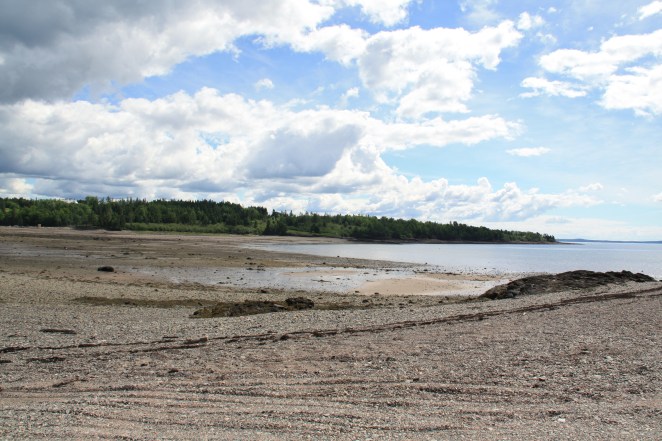
How do I know? Because I have been there. I have walked those beaches, explored those shores, got my feet dirty in the Passamaquoddy mud, climbed those hills, viewed those islands from both sides. I have been out to sea to see those whales, have crossed the Old Sow from side to side, have imagined myself as a pirate for the shortest of times, crawling my sailing ship around the whirlpool, listening to its sucking sound, watching the seals as they rose from the depths, the sea gulls as they dropped from the skies.

Within the gardens, I have touched those secret places, grasped the flowers, crushed the leaves of herbs between sightless fingers and raised those perfumes to blind nostrils. I have also breathed in the scents of salt borne on a sea wind caressing the cheek, smoothing the brow, bearing away the cares of city and suburb.

Renewal is here and now. It is the sea wind’s kiss, the suck of mud, between the toes, barefoot, the rise and fall of tides, the ocean’s life forced into our lives and floating our cares and despairs away. Nothing of the city lurks here to ambush us, unless you bring it with cell phone, computer, texting, and the dull, grey air that will soon be vanquished and whisked away by the breeze, terns, gannets, the seal’s nose breaking through the sea’s surface, the deer crossing the road, demanding their right of way.

At the end of my own residency in KIRA (June, 2017), I tried to summarize my thoughts about the experience. To read them for yourself, click on this link: Residency, June 29, 2017. I was invited by the Writers’ Federation of New Brunswick to write about my stay. To read that, please click on this link: KIRA: an intensive creative experience WFNB, August 5, 2017).

To find information about your own potential residency at KIRA, click on this site KIRA – Kingsbrae Garden or this one KIRA Boutique Writing Retreat.

 IMG_0464


Life-Long Learning

IMG_0068 (2)

Life-Long Learning
KIRA & Kingsbrae Gardens

It’s hard to believe I could be back with my friends at KIRA & Kingsbrae by the end of next month. What an honor and a pleasure to be invited to help facilitate the first KIRA Boutique Retreat on Creative Writing. Geoff, Jeremy, and me … we will make a truly creative dream team. We are working out the details as I type this.

My task will be to work with poets and short-story writers. I have just successfully completed two online courses from the School of Creative Writing at the University of Toronto, my  Canadian Alma Mater (MA, PhD). Kerry-Lee Powell offered the first course: Writing Short Fiction II, while the second course, Poetry II, found me studying with Sachiko Murakami.

Life-long learning is so important. Over my life, I am not that old at seventy-four, I have learned that it is the ability to change, to adapt, to learn new things, that marks us out as creative people. Since my escape from imprisonment in the Ivory Tower of Academia (aka retirement), I have ventured into several new worlds, including that of online learning. My two most recent online courses from U of T now stand alongside an online course from Humber College on novel writing. Alas, this course did more to confirm that I wasn’t really a novelist at heart. As we live, we learn. I have now laid aside my three embryo novels to concentrate on my stronger areas: poetry and short stories.

Along with these online courses, I have been through the give (offering) and take (participating) of multiple creative writing workshops. So much knowledge gained. I have also enjoyed several positions as academic editor, associate editor, editorial board member, of multiple national and international publications, in English, French, and Spanish. In each of these new adventures, there was so much to learn.

Now I have the chance to return some of that acquired and accumulated knowledge to others who, like me wish to practice their life-long-learning skills. The unique KIRA combination of conversations, selected workshops, one-on-one talks, round-the-table discussions, evening talks, and readings will open many horizons to writers old and new, and not least to myself. As I live, I learn.

Round-the-table discussions: The Spanish have a wonderful term for this, de sobremesa. This refers to the discussions that take place, around the dining table, when the meal is done and everyone is comfortable in each other’s company and multiple conversations flow.

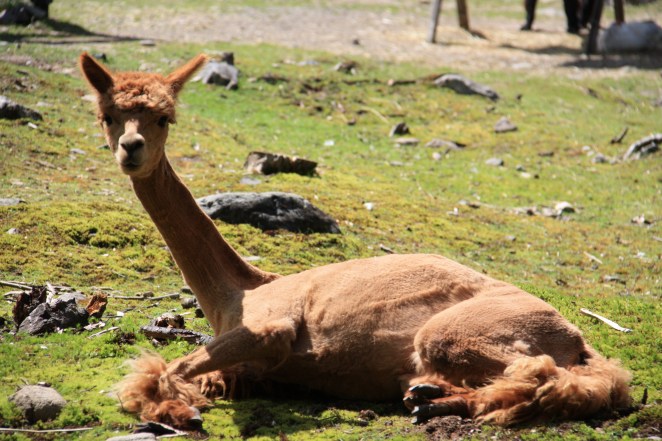
As for KIRA itself, I look forward to returning to my conversations with the land, the sea, the flowers, the birds, the statues, the alpacas … I love talking to them in Spanish … and the rowdy, old peacock who squawks his joy at evening, when the sun goes down. And don’t forget those Indian Runner Ducks: Beatrix Potter talked to them … and so did I … in fact, in Beatrix Potter’s case, one of her own Runner Ducks, possibly a distant cousin to those at Kingsbrae Gardens, became better known as Jemima Puddleduck. Who knows? Between poetry and painting, you too may find your own version of Jemima PuddleduckPaco the Alpaca, perhaps?

IMG_0124

IMG_0084

KIRA: The three standing stones, though I think of them as talking statues. I stood in the middle between them, closed my eyes, opened my mind, and listened to the magic as the breeze blew through them and sang secret songs to the music of their stone flutes. They filled me  with the sound of their ancient voices, their poems and stories, the magical mysteries of their myths. Come and visit and I’ll show you how to stand still and listen to what the stones have to say. When you allow that poetry to flow through you, you’ll never suffer from writer’s block again!

Writing at KIRA

39948917_706398923049634_3046174897211441152_o (1)

BOUTIQUE WRITING RETREAT
SUNDAY SEPTEMBER 30 – SATURDAY OCTOBER 6

This KIRA Boutique Retreat invites former KIRA Resident Artists (Roger Moore (June, 2017) and Jeremy Gilmer (July, 2018) to blend their knowledge and skills with those of the Kingsbrae Artistic Director, Geoff Slater, in a unique Artistic Retreat, tailored to the needs of each participant.

KIRA Boutique Retreats offer a series of one-on-one and small group encounters within the glorious surroundings of the KIRA Residence.

The KIRA Boutique experience includes scheduled one-on-one interviews with each of three instructors, Blue Pencil Cafés, small group workshops (according to demand), lively meal time discussions, and evening readings and talks by facilitators and participants.

The secret of these unique KIRA Boutique Retreats is the unbeatable ratio of participants to facilitators within a small, welcoming artistic community.

Your KIRA Boutique Experience may also include the wonders of whale-watching, the award-winning gardens at Kingsbrae, special events at the Kingsbrae Gardens, the beauties of the resort town of St. Andrews, and the outstanding gourmet food of the  Kingsbrae Garden Café.

As a participant, you can enjoy the solitude of your 20’ x 20’ artistic studio or you can join in the artistic discussions launched by our expert facilitators.

RETREAT FEES:

The KIRA Boutique Experience costs $750 for a six night residency.

This includes:

1. 6 nights accommodation in the beautiful KIRA residence.
2. 2 meals a day.
3. Tailor-made writing workshops (on demand).
4. Blue Pencil Cafés, one-on-one interviews with the facilitators.
5. Round-table artistic discussions at meal times.
6. Evening talks and / or open reading sessions.

Facilitators:

Geoff Slater, Artistic Director, Kingsbrae Garden / KIRA.

Roger Moore, award winning poet and short story writer, KIRA (June, 2017).

​Jeremy Gilmer, CBC finalist (short story), KIRA (July, 2018).

Please contact Mary Jones to sign up.

Phone 506-529-8281

PLEASE FEEL FREE TO SHARE THIS EVENT

Click here for the direct link to  KIRA and Kingsbrae.


Curse of Cursive

IMG_0004 (2)

The Curse of Cursive
Wednesday Workshop
8 August 2018

It appears we will no longer teach cursive writing in our schools. Instead, we will teach our children to print. I will not pass judgement on this decision. Quite simply, my handwriting has always been bad. Very bad. I have never worked out why, but I suspect that it is because I think very quickly and my hand tries to keep up with my brain, and the result is the scrawl that I call my handwriting.

I type with two fingers, too, and stare at the keyboard as I am doing so. I tried to follow a typing course one year. I worked at it for two months. At the end of that time, I tried my touch typing examination and managed a rate of 78 words a minute with an accuracy of  82%. I did the same test with my trusted two fingers: 114 words a minute accuracy rate 98%. Oh dear. I still type with two fingers and I still write badly and no, my thoughts have not slowed down.

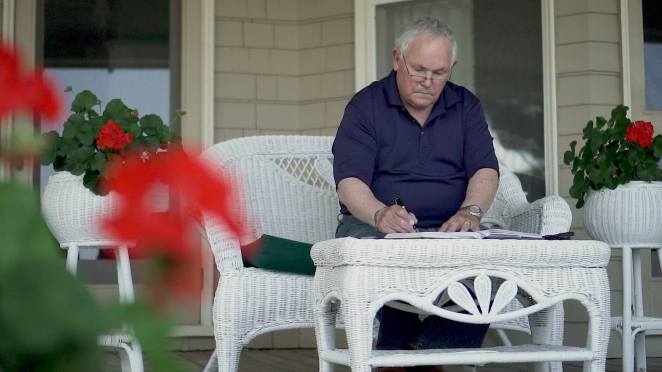
Just glance through the above photograph, taken from the journal I keep everyday. “Almas de Violeta,” it reads, “an early poetry book by Juan Ramón Jiménez, the Nobel winning poet, was first published in violet ink. I have a copy of his complete works, Obras completas, in which these early poems still appear in purple, or violet rather, to match the color of the title. He published in green ink too, but personally I prefer the purple. Bruised clouds on an evening sky, dark depths of a rainbow glow, Northern Lights singing at the deep end of their scale … or just a desire to be different … slightly different, as if that one thing, the color of my ink, might tip the scales and turn me from mediocre to celebrity with a wave of a violet wand or the click of a pair of ink-stained fingers.”

Now, wasn’t that easy! And there’s so much personality in tone and color, ebb and flow, the link of a poet to the words on his page.

Once, in a faraway library in a distant, magical land, I was studying an autograph manuscript, written by Francisco de Quevedo (1580-1645). The hand-writing began very steadily. Then I noticed a red dot or two on the page. Then a larger stain. Our poet was a notorious drinker. The letters grew large and loopy. The paragraphs sprawled. Punctuation marks and accents, slashed and splashed, and missed their targets. By the end of his evening, with his bottle surely empty and gone, I could just about make out what the good man had written.

When I turned the manuscript folio, from recto to verso, it was a new day and the original handwriting was back, small and neat. I have noticed the same phenomenon when I write late at night. Unreadable words, occasional wine splutters, spelling and grammar mistakes, disjointed readability … but the thoughts and the ideas are still there, still clear. Sure, I need a bit of hard work to interpret some things, but that’s the curse of the cursive, I guess.

Revisions: Wednesday Workshop

IMG_0486

Revisions
Wednesday Workshop
27 June 2018

Below are the texts of a poem that I am attempting to revise. Any comments on the text(s) or the revision process will be welcome.

In Absentia 1
Princess Squiffy

I hear her voice, delicate, distant. I
run to the sound, jump on the table in
my usual spot by her plastic plaything.
She isn’t there. He is and he’s talking.

I can see him, smell him. I hate him, his
other sex perfumes, but there he is and
when he stops talking, I can hear her voice.

I move to his talk box. A shadow, I
can’t quite make it out, then her voice again.
My whiskers stiffen, I lean forward, sniff,
but no smell. She has no smell, and scentless,

I cannot sense her, I bristle, she calls
me by my favorite names, mews, and I mew
back in reply. But I can’t smell her. There’s

no sense of touch … is this the hell all cats
will suffer … shadows on a screen, a voice,
haunting, memories shifting and dancing,
nothing solid … just shadows and absence?

Problems:
Repetition of scents / smells, there, voice (4), plus avoid all cats

Solutions:
Seems easy to tidy up … but … how do I end the poem with I hate him? Would it make the poem stronger? It would man a total rethink and restructure. 

In Absentia 2
Princess Squiffy

I hear her voice, delicate, distant. I
run to the sound, jump on the table in
my usual spot by her plastic plaything.
She isn’t here. He is and he’s talking.

I can see him, smell him. I hate him, his
other sex perfumes. He stops talking. I
can hear her warm, sweet words: where can she be?

I move to his talk box. A shadow, I
can’t quite make it out, then her tones again.
My whiskers stiffen, I lean forward, sniff,
but cannot sense her. I bristle. She calls

me by my favorite names, squeaks, and I mew
back. There’s no sense of touch, of her presence.
Is this the way we all will suffer? Wood

burns. Firelight flickering, shadows on
cave walls, long gone memories revived to
haunt us. Are these the torments held in hell?
Will dark shapes shift on half-lit screens? Will the

memories of loved ones come back to taunt
us, haunt us?  Will there be nothing solid
in the afterlife, just outlines and absence?

First Revision:
I quite like it, but it has become much longer and the cat’s voice has either been conflated with the human voice at the end or it’s an exceptionally intelligent cat, knowing all about Plato,  unless those can pass as feline memories because she was in the cave with him.

In Absentia 3
Princess Squiffy

I hear your voice, delicate, distant. I
run to the sound, jump on the table in
my usual spot by your plastic plaything.

You are not here. He is. I can hear you
talk. I stalk to his noise box. I see a
shadow, moving, but I can’t make it out.

My muscles first tense, then stiffen. I sniff,
lean forward, but find no trace of female
smell. I cannot sense you. You call me by

my favorite names, mew at me, and I
respond. Shifting shadows, your haunting tones,
memories dancing to the music of

your absence. I can’t eat. I bristle when
he laughs. Where are you, my love? He doesn’t
care for me the way you do. I loathe him.

Second Revision:
This is much shorter, builds up to the proposed new ending, eliminates the repetitions, and replaces hate with loathe, a very catty sound. However, I have lost the ending that I liked so much: the suggestion of Plato’s Cave has now been lost. So, let’s head to Plato’s Cave.

In Absentia 4
Plato’s Cat Cave

Princess Squiffy

I hear her voice, delicate, distant. I
run to the sound, jump on the table in
my usual spot by her plastic plaything.
She isn’t there. He is and he’s talking.

I can see him, smell him. I hate him, his
other sex perfumes, but there he is and
when he stops laughing, I can hear her voice.

I move to his talk box. A shadow, I
can’t quite make it out, then her voice again.
My whiskers stiffen, I lean forward, sniff:
she has no smell. I bottle-brush my tail.

Envoi
by Plato

Firelight flickering, shadows on walls,
distant voices echoing, memories
perched on our shoulders, night owls hooting.

Is this the hell we all will suffer, shapes
shifting on a screen, voices taunting us,
memories dancing to half remembered
melodies, nothing solid, shadows, absence?

Third Revision:
This poem has now changed shape and direction. I quite like it but it is dependent on a knowledge of Plato’s Cave. Does the cat belong in Plato’s Cave … I think of Kipling’s Just So story The Cat that Walked … perhaps it does. Perhaps it doesn’t.

Decision Time:

Playing around with the text was fun. The text moved in several directions and now I must choose my final direction.

Comments on any of the versions or on the revision process I used will be very welcome. And yes, nothing perishes. My poems, like my cats, have nine lives (well, four in this case, with possibly a fifth to come).

My Favorite Book

img_0196

My Favorite Book

Last night, my writing group threw the table open for discussion on ‘my favorite book’. I listened as each member of the group came up with a title or two and then chose a book that was ‘the favorite’. When my turn came, I was last, they all turned to me, but I remained silent for a long time and then: “I can’t do it,” I said. “I bet it’s got windmills in,” one person remarked, thinking of my propensity of frequently quoting Cervantes’s Don Quixote as a model when literary discussions arise. Indeed, Don Quixote might be my favorite book, but is it?

Let us begin with the concept of book. Is a book something contained between two covers or could it be a series of books? For example, does one choose between The Chronicles of Narnia or must one select The Lion, The Witch, and the Wardrobe over The Silver Chair? Is one free to choose The Lord of the Rings, or must one prefer The Two Towers, say, to The Return of the King? By extension, where exactly does The Hobbit stand, as a book, in book form, in relationship to the later and longer series? Or The Silmarion? Again, can we roll them all together, a series of books under the cover of one book, a favorite book?

The idea of favorite author versus favorite book then surfaced and we discussed Georgette Heyer, John LeCarré, equally loved and loathed, Jane Austen, the Bronte’s, J. K. Rowling, and William Shakespeare. The mention of Shakespeare led us into plays as reading material and plays as performance, and performance as on stage or on film. One of our members loved Shakespeare on film and TV, but didn’t like reading Shakespeare, because it was ‘difficult to read and needed the interpretation of the actor for the meaning to come across’. This same person did not like LeCarré’s books, but was very appreciative of his work on film. Where does George Smiley begin and Alec Guinness end, one asks? How can we separate the character from the actor? Applied to James Bond, who is James Bond? Is he Sean Connery (totally unique and my personal favorite), Roger Moore (better for me in the role of Simon Templar, The Saint), or one of the later and newer actors who have taken over the role? By extension, should James Bond be played by a black actor (why ever not I ask?), and could (oh horror of horrors!), a female actor take over that role (I’d love to see it … “I’m Bond. Jane Bond!”)?

This led us into the art of the narrative and the relationship between book as narrative and film as narrative. Clearly they are two different forms of media, but how do they influence each other? The book obviously comes first. We can talk of the seventeenth century novel, but it is difficult to talk of the seventeenth century film. So, the linear narrative of the book comes first and then that book is turned into a film. However, a film contains its own narratives structures and these include multiple points of view, split screens, flashbacks and time distortions, and a multiplicity of other devices among which the actual scenic impact is of the utmost importance. For most of us, the nineteenth century novel (no radio and no television for entertainment in those days) is long drawn out and very slow moving. We miss the instantaneous impact of screen and TV with the breaks for advertisements and the time to recharge our coffee cups and snacks. This leads us to our own attention spells as readers and our own demands for the instant gratification of a thrill a minute. “Hook them on page one and addict them by page three,” one person commented to many nods from around the table.

But the mention of Don Quixote also takes us into other areas. In this age of bi- and multi-lingualism, do we prefer to read our books in one language rather than in an another? Don Quixote in Spanish or French or English? And which translation? There are some twenty translations of Don Quixote into English. Is one preferable to another? Which is more accurate in the terms of a translation? Which reads more easily in terms of a re-creation in artistic form of the original? Should we prefer an English-English translation to an American-English translation? And where oh where is the Australian, Indian, Pakistani, South African, Canadian, Irish, or Welsh translator who will justify that famous text in his own country’s rendition of what used to be called the King or the Queen’s English?

Don Quixote, according to the great Spanish literary critics, is a book for the three ages of life. Readers should read it when they are young, when they are middle aged, and when they are approaching old age. Why? Because one’s reading and understanding of the book changes as one grows older. If this is true, then can we not expect to have books that we preferred at an earlier age in life, The House at Pooh Corner, for example, or The Wind in the Willows? And what about our early teens (adolescence), our early twenties (university years)? The idea of our being able to choose a ‘favorite book’ becomes less and less clear as we open up our minds to the broader horizon of tastes that change as we age and mature.

You will have noted that, with the exception of Shakespeare, we concentrated on the twin ideas of fiction and narrative, be it in word or on the screen. What about poetry? Five major critics met at the Modern Language Association of America’s meeting held one year in the University of Toronto and held a panel discussion in which they discussed why and how they had been attracted to the foreign language that they had studied. In four of the five cases, it was the poetry of the language, not the theatre or the narrative, that had pulled them in. Last night, we did not discuss poetry.

When we bring poetry to the table, we open a different discussion. We rarely read and appreciate ‘books of poetry’. With a few notable exceptions, it is individual poems and poets that attract our attention, rather than entire books or collections. And what is it about poetry that attracts us? Surely, it is the power, not of situation nor of action, but of language. It is the sheer power of language and the thrill of words that draws us to poetry. Perhaps that is why, in an age of impatience, we have less time for immersion in the magic spell of words and their undercurrents of subtle meanings. As a friend of mine said to me, the day before yesterday, “I started your poetry book, Obisdian’s Edge, but it was too deep for me, too difficult. I gave up on it. I needed something simpler to read.”

Comment: This article should be read in association with an earlier piece in this blog (15 July 2016) on My Top Ten Books.