Buried Alive

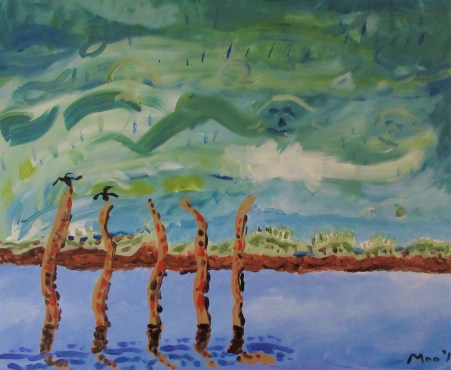
IMG_0688
Buried Alive
Anonymous we are,
never holding land or cattle,
lucky to own our own houses.Some castle
this rented row house
in a winding valley,
two rooms up
and two rooms down,

tin bath in the kitchen
filled with hot water
for when the shift ends.

After supper,
beer for a coal-dust throat,
then the wife, and sleep.

Next day,
a knock on the window,
a pulling on of clothes,
clogs clattering on cobbles,
a tin box sparse with food,
then down to the dark pit
of whatever mine has agreed,
at a price, to bury us alive.

Commentary: So much in this one. Very difficult to write. And a tribute to Rita McNeil’s It’s a working man I am,  two lines from the end. How long did it take me to write? Five minutes or less. Unless you count 200 years of coal mining (in South Wales alone), seventy-five years living and learning to write, and sundry workshops and exercises that have enabled me, just once in a while, to catch the butterfly as it flutters, although it never flies underground.

My Welsh Granny

IMG_0452


Poem for the Welsh grandmother
I never really knew

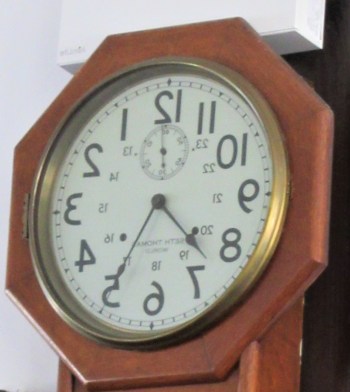
Six o’clock! The cuckoo whirrs its clockwork arrow
from the dark wood of its ambush and the flight
of my granny’s forgotten youth flashes before my eyes
to be buried among the trees. Cats! I can still count
her 1, 2, 3 cats, each one lapping milk from its saucer.

If I close my eyes, I can recall her house, her clothes,
her hair, the very bend of her body bowed over
the ironing board in the kitchen and everywhere,
the sweet and sour smell of white fish bubbling
on the stove for the cats’ supper. The cuckoo clock
strikes again. Each one wounds, the last one…?

Who knows what the last one will bring? Life’s
bitterest blows perhaps? Or missing memories
restored and with them, my granny’s own lost beauty,
with her standing upright, like some glorious flower
illuminated by a sunbeam in the wood’s dark depths.

International Day

14633208_10207317214799871_1242532105939959170_o

International Day
St. Mary’s Street

To be Welsh in Cardiff on International Day
is to be decked entirely in red from deep
between your ribs where the Red Dragon
throbs pumping its blood through the Arms
Park along with your heart and bright blood
surges as you wear your scarlet jersey like
a flag as you step onto the grass ready to play.

You shed your grey hairs like a sheep
sheds its coat on the Wenallt or Caerphilly
Mountain or the Brecon Beacons and Boyo,
you know you’re unbeatable. So come
the four corners of the world to Cardiff
with a rugby ball and they shall be defeated,
ground into the Arms Park mud, humiliated.

Dewi Sant


IMG_0899 (2).JPG

Dewi Sant
Cathays

 To be Welsh in Cardiff on St. David’s Day
is to walk the dogs through Blackweir Gardens
and to nod with the daffodils as they step
their stately minuet under the trees.

Wet paths wander through rain‑speckled woods
and the fish are born blind in the gardens’ stream
on account of the coal that drifts its black silt
like fine, powdered night‑time down from Taffs Well.

Under their umbrellas, the fishermen dream
of sewin and perch; the bubbling waters
swirl faster today because of the rain that fell
last night in the Rhondda where a word‑storm

brought closure of pit after pit and each loss
cut colder than a volley of hail as King Coal
tumbled from his mining‑valley throne.

Yet still the daffodils sway, the fish are born blind,
and the Taff’s black waters swirl restlessly on
past unemployed fishermen to Severn and sea.

Swansea

IMG_0898 (2).JPG

Swansea

To be Welsh in Swansea is to know each stop
on the Mumbles Railway: the Slip, the Rec,
Singleton Park, Blackpill, West Cross, Oystermouth,
the Mumbles Pier. It’s to remember where single
lines turn double by Green’s ice‑cream stall.

It’s to know where the trams fall silent, like dinosaurs,
and wait without grunting for one to pass the other.
As you wait you can hear the winter roar of the rugby
crowd or St. Helen’s summer “click” of ball on bat.

Today the tide is out and the nets are golden with starfish
as if a night sky stretched across day’s horizon.
Mudflats rule the bay beyond the sand, and banana boats
ride the distant waves, waiting for the tide to turn.

When it does, the Mumbles Railway has been sold
to a Texas millionaire and the brown and yellow busses
no longer run to Bishopston, Langland, Caswell,
Pyle Corner, Pennard, Three Cliffs, Ilston, Rhossili:
sweet names of sea and sand where my father fished
for salmon bass, his thin line cast defiantly at a rising sea
that would smash the walls of the sandcastles I built to last
forever, unaware that time’s rising tide would breach
their defenses, leaving them in ruins on the summer
beaches where I dreamed my buoyant boyhood away.

Commentary: The Mumbles Pier from Limeslade. This is the first water color painted by my father’s brother, my godfather after whom I received my second name. He took up painting after he retired and became a quite accomplished amateur water colorist. He gave me four of his water colors, I particularly wanted this, his first, and the later ones are excellent, especially the award-winning paintings, of which I have one.

Rhondda Fawr

IMG_0689


Rhondda Fawr

To be Welsh on the coalfield
is to speak the language of steel and coal,
with an accent that grates like anthracite ‑‑
no plum in the mouth for us; no polish,
just spit and phlegm that cut through dust and grit,
pit‑head elocution lessons hacked from the coal‑face.

We sing arias and deep, rolling hymns
that surge from suffering and the eternal longing
for a light that never shines underground
where we live our lives and no owners roam.

Here “gas” and “fall” mean violent death
and the creaking of the pine pit‑prop is a song‑bird
suddenly silent in its cage warning of danger
soon to be upon us…

… words and music stop in our throats
as up above us the sad crowds gather.

Featured Image -- 7454

Village Bully

IMG_0114 (2).JPG

Village Bully
Pyle Corner,
Bishopston

“Shall I thump you one?” he asked.
And the fist that removed five teeth
from an opposition player hovered near my face.

He was always like that with smaller men:
a punch, an elbow, a kick, a threat so loud…
yet people his own size frightened him.

Many times I saw him back down from larger boys
and when someone was bigger,
well, that was always another story!

I’ll never forget him though: superb
against Cubs, Brownies, and Girl Guides,
but when the real Boys came to play,
why, he had one of his off days.

We called him “the million-pound body
with the one-shilling brain.”

Hate drove him. He lived off it, thrived on it,
until one day he discovered that the face
he really hated was staring back at him
every morning when he shaved.

He went downstairs, put his head in the oven,
and turned on the gas.

Sheep

IMG_0126 (2).JPG

Sheep                               

Wales is whales to my daughter
who has only been there once on holiday,
very young, to see her grandparents,
a grim old man and a wrinkled woman
who wrapped her in a red shawl
and squeezed her and hugged her
till she cried herself to sleep
lunging for lack of space and air,
suffocating in a straitjacket
of warm Welsh wool so tightly bound.

So how do I explain the sheep?
They are everywhere, I say.
On lawns, in gardens. I once knew
a man, a friend of my father’s,
whose every prize tulip was devoured
by a sheep, one single sheep
who sneaked into the garden
on market day when they left the gate ajar.

Sheep are everywhere, I say, everywhere.
I remember riding on a passenger train
and seeing sheep leering like tourists
peering from dark coal wagons travelling
God knows where and bleating
fiercely as we passed them by.

In Wales, I say, sheep are magic.
When you travel to Paddington
on the train, just before you leave Wales
at Severn Tunnel Junction,
you must lean from the carriage window
and loudly call “Good morning, Mister Sheep!”
and if the one you greet looks up,
why, provided you’re good and quiet
for the rest of the journey,
your mum and dad will buy you
something nice in London.

My daughter shows disbelief. And “Look
at that poster there:” I say, “a hillside
of white on green, and every sheep
as still as a stone,
and each white stone a roche moutonnée.”

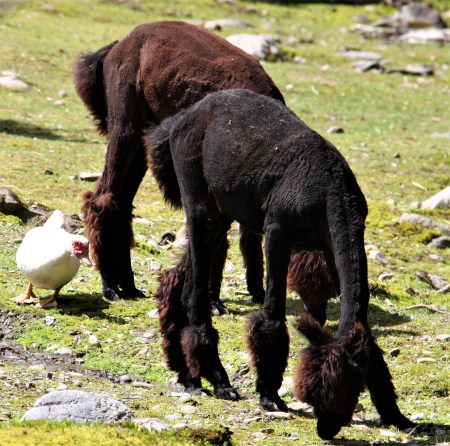
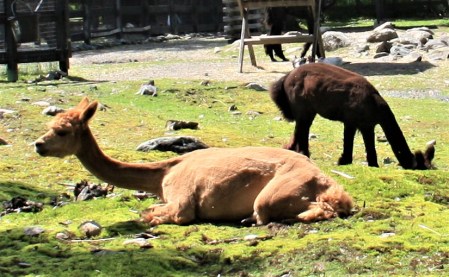
Commentary: I couldn’t find a Welsh sheep in my photo collection, so I used this photo of Pre-Columbian Incan sheep substitutes instead. Llamas is probably a Freudian slip or a typo for lambs. See: there’s reason for everything and a link between all things, even llamas, vicuñas, and alpacas, like this pair from Kingsbrae Garden Barber Shop Shorn Quartet. The other two from the Barber Shop Alpaca Quartet are around somewhere. I’ll go and look. Ah yes, here they are. Listen carefully, and you may hear them sing.

IMG_0119 (2).JPG

Sunday in Wales

IMG_0795.JPG

Sunday in Wales

To be Welsh on Sunday in a dry area of Wales
is to wish, for the only time in your life,
that you were English and civilized,
and that you had a car or a bike and could drive or pedal
to your heart’s desire, the county next door, wet on Sundays,
where the pubs never shut and the bar is a paradise
of elbows in your face and ribs and the dark liquids flow,
not warm, not cold, just right, and family and friends
are there beside you elbow to elbow, shoulder to shoulder,
and the old ones sitting indoors by the fire in winter
or outdoors in summer, at a picnic table under the trees
or beneath an umbrella that says Seven Up and Pepsi
(though nobody drinks them) and it serves as a sunshade
on this Sunday evening when the sun is still high
in the summer sky and the little kids tumble on the grass
playing soccer and cricket and it’s “Watch your beer, Da!”
and the gymnasts tumble over and over the family dog
who hides beneath the table and snores and twitches until
“Time, Gentlemen, please!” and the nightmare is upon us
as the old school bell, ship’s bell, rings out its brass warning
and people leave the Travellers’ Rest, the Ffynnon Wen,
the Woodville, the Antelope, the Butcher’s, the Deri,
the White Rose, the Con Club, the Plough and Harrow,
the Flora, the Pant Mawr, The Cow and Snuffers,
the Villiers Arms, the Cricketers, the Mexico Fountain,
the Church (the one with handles on the prayer books),
God Bless them all, I knew them in my prime.

Comment: In the old days, when there were twelve counties in Wales, each county voted whether or not to permit the consumption of alcohol in public houses (pubs) on Sunday. Those counties who forbade Sunday drinking were called ‘dry’ and the others, who permitted it, were called ‘wet’. I remember hearing about the rush from Sunday Chapel Services in dry counties as the church-goers headed over the border into the wet counties where they could fill up in the proper fashion. The pubs listed at the end of the poem are all in the Swansea or Cardiff area, and yes, I have visited them all. The poem was designed to be read in a single breath … at quite high speed and in a Welsh accent. Alas, it takes me more than one breath now and I, like the ageing church-goers, must stop a couple of times as I wend my way down Memory Lane, from the dry to the wet.

Chronos


IMG_0687 (2)

Chronos
(700 BC & 1933 AD)

tub-thumped these clouds
grey-framed skylights
gathering sky

corralled on coral
this ship’s figure-head
mouth open to speak
a foghorn
her bare breasted
Scylla & Charybdis
lighthouse lights

goat-legged beach-comber
wandering a lug-worm beach
avoid those places
where the sea-weed

water the father
earth the mother
false union
engendering an egg
waves breaking
their broken marriage

cyclical the sickle
ticking rocks to sand
time personified