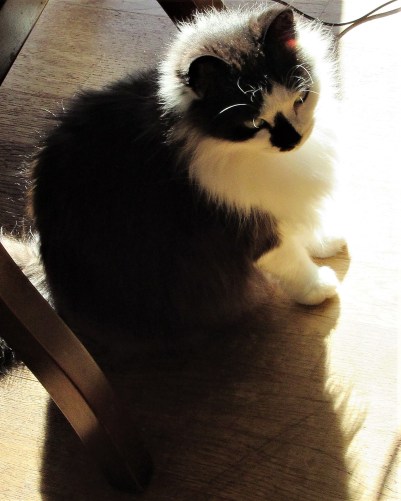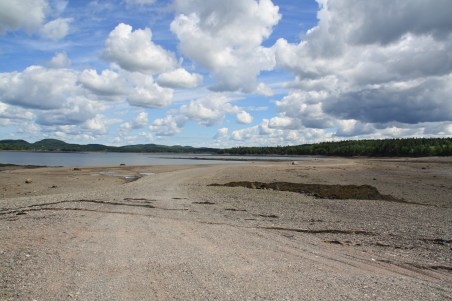
Poinsettia

img0137_1


Poinsettia

     You can sense it, you can feel it, the alert spirit that guards this room. Walk in there at your peril. No, don’t. Just stand at the door and observe the poinsettia. You bought her a real one, a year ago, but she forgot to water it and when you visited, leaves and flowers, had crisped and dried, withered and perished. You even found cigarette butts stubbed into the pot’s powdery earth. You bought her another one, this time an ever-lasting, artificial flower, scarlet blossoms of silk with yellow-dotted plastic beads. Today a feather-duster breeze cleanses and enriches the leaves, replenishing their faded splendor. Motes rise, their dancing angels of dust hovering, suspended in a sunbeam that picks out their supple luxury. Their fiery tongues cry out to you from their green plastic pot in this empty room. The plant throbs with a startling vibrancy in this early morning light that enlivens piano keys, table top, and the polished, wooden chair arms you cleaned yesterday.  The poinsettias seem to wring butterfly hands as they gently flap in the breeze from the open window where thin lace curtains twitch, shaping the sunlight into light and shade. Her ash tray sits by the radiogram and awaits her return. That last cigarette, lipstick staining the filter, stubbed out and cold, waits for a companion. Later today, you will go to the hospital and visit her. You do not want to enter this room for its guardian spirit demands solitude and silence. You do not wish to create a disturbance, yet something moves you, and you walk over to her flower. A film of grey cigarette dust rises once more from the silk poinsettia, disintegrates, and dances before you. You bend your head to the silken surface and feel dry leaves brush their butterfly kiss across your cheek as you breathe in the ashen smell of stale tobacco.

Whisky

IMG_0067

Whisky

     Dry energy bristles through your body, tangible electricity, I dare not touch you. Sparks fly through your hair and light up pillows and sheets. Plugged into your flesh and blood, those instruments of life and death and in-between flicker and will not stand still, will not take appropriate measurements in the way doctors and nurses predict or want. Stranded on your beach of bleached white sheets, you are smaller than a seal, an otter, perhaps, a sea-urchin, or a star-fish, struggling in the high-tide mark, not with the sun and wind that dry you out, but with the sands of a time that is ticking away from you, filtering through your fingers, fleeing from your grasp. Your hair ruffles. Your forehead wrinkles. Your gaze sharpens. You have the hunting eyes of the unhooded hawk, or those of a peregrine falcon fixed on its prey, yet you cower like the land-bound beach-bird that he hunts. You are burning up, devoured in your own interior inferno. You slap at my hand as I take a risk and try to place it on your forehead to offer you consolation. What is it? I ask. What do you want? Shall I go and get the nurse? The doctor? You shake your head, your eyes flash, the air sizzles, and you whisper something, too low for me to hear. I put my ear closer to your lips. Your voice: coarse sandpaper over the soft balsa wood frame of a plane that will strive, one day, to grow wings, to take flight, to be a bird. Whisky, you whisper. I just want whisky.

IMG_0136

Swansea Bay

IMG_0055


 Swansea Bay

            My childhood in Swansea: a mixture of seaside and sand. Walking over the bridge at the Slip to reach the dunes at high tide, the fish nets at low tide, the dog ever before me, running fancy-free, chasing yellow-beaked gulls that swoop low, mewl, and lead him on and on, past bundles of bathers’ clothes in summer, and the dog lifting his hind leg, visiting each pile, marking them, one by one, a squirt at a time, and us denying we know the dog, not ours, we say, then beg for the empty pop bottles, taking them back to the vendors, pocketing the cash back on the bottles until we have enough for an ice-cream, a grown-up wafer, not a childish cornet, or a go on the swing boats, and the dog comes with us, gets sea-sick, air-sick, hangs his head over the wooden sides drooling thick saliva as we wait for the bump and grind of the wooden bar that will slow us down in spite of us pulling on the ropes, harder and harder, until we swing higher and higher into the heavens, and the sands dwindle into nothing, and the dog throws up, and the man who handles the swing boats calls us bad names, as we run away, across the sands, ‘I’ll tell your dad,’ he shouts after us, but he never does, and the dog wanders loose across the sands to drink salt water and throw up again, and yes, I remember the starfish, their golden triangles winking wet in the sunlight as they hang from their netted firmaments, and we walk out along the concrete sewer pipes that pour the town’s waste, the town, and not the city, never for me a city, and how could it be a city when so many uncles and aunts lived on Town Hill and my father worked in Town Hall, and Swansea Town were the Swans, and they played soccer on the Vetch Field, the old hanging ground for the town jail, never the city jail, and the Mumbles Railway ran its electric trams out from Swansea Docks to the quarries by the Mumbles Pier, and we took that train, sat on the top deck, The Slip, Singleton Park, Blackpill, the Mayals, West Cross, Oystermouth, where last year, after a hundred years of absence, wild oysters finally returned, the pollution from Copperopolis, the largest copper mining and smelting town in the world, finally drained from Swansea Bay and the waters now clean enough to keep those oysters alive in their cultured oysters beds at Oystermouth, on Swansea Sands, below Oystermouth Castle with its ruined walls where we went once, but I remember nothing about it, nor Swansea Castle, in the old town centre by Castle Street, its ruined walls banned with their Keep Out signs and Danger, but the warnings themselves enough to invite us in, except we knew we’d be beaten if anything happened and we were caught and everyone knew everyone in Swansea Town then,  and somebody would surely bear the tale to our parents or grandparents,  but that’s enough of that, and its’ out of the tram and across the wooden planks of the Mumbles Pier, out to the end where the old men throw their lines into the sea and sit and wait and hope, pulling on cigarettes, Players Nay Cut for preference, as they watch swirling waters, taking sips, like old men everywhere, from secret bottles in brown paper bags that cause them to wipe their lips with the back of theirs hands and cough with pleasure, waiting for God knows what to come along and tickle the end of their line, and out there, at the end of the world, the lifeboat house with its slipway and the lifeboat, launched only in the roughest weather when the tall ships founder or the small boats are blown away, out into the sea, that twinkles now with its wrinkled old man’s face as it moves back and forth beneath wind and sun, and everyone is smiling in the summer warmth, though it’s cold where the wind blows off the sea, and it’s into the corners away from the wind, or into the pavilion where the arcade games wait for our money, and it’s ‘please, please, one more go’, as the small metal arms armed with their claws, clutch at toys and dolls, and furry animals, and the fighter planes come swooping down in their practice arcs and yes, I am a gunner again, fighting my Battle of Britain in a spinning turret with a mobile gun-sight, and time and my money run out and it’s ‘ please, please, one more go’, and my head is spinning, as the turret is spinning, and the world is spinning on its axis as memory’s spider spins its web of illusion, delusion, and time rolls backward on the station clock, as the tram rolls up and we track our tired way back home, past Oystermouth, West Cross, Blackpill with its little Roman Bridge, Singleton Park, the Recreation Ground, St. Helen’s, to the Slip, where we boarded in he first place, and home we go via the fish-and-chip shop in the road at the bottom of our street, and all adventures end as we open the front door, calling out ‘we’re home’, and the smell of warm salt and vinegar soaks through the newspaper binding the delicacies we have brought to placate the gods who wait in silence for our return.

Cardiff Arms Park

IMG_0296

Cardiff Arms Park

I have the match program from 1938, Wales vs New Zealand. My father was at the game, alongside my grandfather. Both had played upon the sacred turf at Cardiff, for Swansea, believe it or not. I also have the program from the New Zealand game in 1953, both Welsh wins. I often visited the Arms Park and I saw the Springboks play there in the rain (1961) and Zeland Newydd in 1963.

“A rose by any name would smell as sweet,” wrote William Shakespeare. But would my grandfather have seen and smelled that rose, or my father, or me?

My grandfather played amateur rugby, as did my father. I, too, played amateur rugby and coached as an amateur as well. Money never changed hands. I never sold my name, nor my status. I was, and still am, convinced by the amateur code. Born in Swansea, play for Swansea, the All Whites. Born in Cardiff, play for Cardiff, at the Arms Park. Sure, players sometimes came down from the Rhondda on the local bus. Cliff Morgan did, from Porth, a mere 15 miles away. So did so many others. But Cas Newydd boyos rarely played for Cardiff and were never really welcome in Caer Dydd.

Whoever they were, wherever they came from, they travelled to Cardiff Arms Park. Not to the Millennial. Not to the Principality.

Sorry, William. Or should I call you Willy, or Bill? A rose by any other name does not necessarily smell as sweet. And Cardiff Arms Park is not the Millennium, nor is it the Principality. The Queen’s is not the King’s. Nor is the Angel the Woodville, or the Angel, Islington.

The world goes on, and on. Things change. We shouldn’t regret past things. Things that are in the past are in the past and in the past they must remain, as the words remind us in the Flower of Scotland. But there are traditions. And memories. And some old memories and battles are never forgotten. Nor should they ever be. Y Ddraig Coch Cymreig, the golden daffodil, the Red Rose, Twickenham or, as some call it, Twickers or HQ. And don’t forget the Load of Hay outside Paddington Station: some things will never change.

As for Saturday’s rugby international (Wales at home to England), I will put my heart firmly on Wales, but I will put my money on England. That way, if Wales win I will be ecstatic, and if England win, I will earn enough money from my bet to drown my sorrows. Either way, I will imagine my grandfather, and my father, watching with me, together again at the old Arms Park, and I know that, whatever the result, we will all be happy, all three of us, just to be back together, and to be watching the game in spirit.

Family Album

IMG_0061

Family Album

I recall him early in the day, carving his field into brown-tipped waves, with his two sheep dogs  running loose beside the enormous cart-horses that give him the horse-power, huge, born to labor and the plough, as they create their own steam in the morning mist, so cool, but stay clear of their hooves, huge hooves, iron shod hooves, hooves that will break a leg or stove in the dog’s ribs as if he were a rowing boat crushed against an Atlantic rock in the fast ebb-tide of the local bay, and watch out for them in the stable where they lean together, side by side,  like the oxen twins, Bright and Lion, out at King’s Landing, and like the oxen they munch their hay and stomp their feet and blow hot air out through their nostrils, almost in unison, their sweet-smelling breath sugaring the air, and the bright hay surrounding them, prickly and tickly, and leaving its speckled rash on arms and legs and necks …  and I thresh in dream-memories, flailing from harvesting remembered brightness beneath a star-filled sky, gathering memories, ordering them into vital bundles, and every package a re-creation of everything that I was, and am, and ever will be, and those who come after will find less of myself, yet more, much more, than this empty snowball of flesh, which sits here at the table, pen in hand, scribbling the words that begin and end it all, the tell-tale words that blindly bind and knot the ties that tie me in place, forever, between these lines, between these covers, and I jot down supplements that will supply fresh blood to the memories of my rapidly fading life … how long will I hold on to them, those memories, those moments of glory, those seconds that turn into minutes, then hours, and  the hours stringing themselves together to form days and weeks  as memories gnaw away the years, as a mouse gnaws away at a cheese, with jagged teeth until all that is left are sad photos of unnamed, unremembered people floating in the family photograph album like the one that my grandfather once gathered, and glancing from page to page I know no one even if the name is written there, his wonderful copperplate standing out beneath the photograph, ‘my sister Betty, aged two’, ‘my cousin David, aged ten months’, ‘my grandmother’s father’s sister’s cousin by marriage’, and there she is, this anonymous being, riding in the sidecar of a motorbike, and the photo all speckled and brown, like a hen’s egg, waiting in its egg-cup for the silver spoon that will bring it magically to life, a real life, not the false life of a forged memory that floods through my mind, so young, they are, so small, so pretty, all of them, so dashing, so handsome, even in their old-fashioned clothes, and now they are here, their spirits trapped in this photograph, floating ghosts in the half-life of a sepia snap, and will this be the afterlife for all of us, these snaps, taken in an instant, and then lasting, at first for hours, and then, forgotten and laid aside, then surfacing in another country, held by another hand and viewed by foreign eyes that do not know and will never understand … how can they ever understand?

Divorce


IMG_0146.JPG


Divorce
Rage, rage …

Sometimes you wake up in the morning and you realize that you can do no more. So what is it about family split-ups, the pain and ugliness of a disputed divorce, the glue coming unstuck in an already unstable marriage, a financial settlement that satisfies nobody and splits and impoverishes both sides of a divide?

And how do you bridge that divide when you are friends with father, mother, children and the wounds are so deep that everyone of them wants out, whatever the costs and whatever it takes? And what is it about the deliberate wounding of each by the others, the permanent scars that will never heal over, never be stitched over, no matter how hard a third party tries?

And what right does a third party (fourth party, fifth party, sixth party) have to step in and try to force issues?

And what is it about lawyers, when too many guests gather around the Thanksgiving turkey and the knives are out for everyone to take the choicest cuts and what’s left now but a skeletal carcass, no flesh on the bones, and the guests all hungry still and their empty bellies rumbling for more, more, more … and this isn’t Oliver Twist, “Please sir, may I have some more?” though everyone is heading for the poor house and the beadles are also gathering by bedlam’s door with their handcarts and dogs and the full enforcement of a blue-serge law made to twist and torment, though I have never understood the law, especially when it is left in the hands of lawyers, for “the law, dear sir, is an ass”, a striped ass at that, black and white like a zebra, though grey and costly in the areas that matter most.

And what is there to do but rant away about the injustice of it all, the size of the checks and now you must check-out the food banks, the soup kitchens, the meals on wheels, the charity eating and boarding houses, because there’s no more roof over the head and the house is sold and the incomes are split and the children are more-or-less cared for, though rather less than more, and the dog is turfed from his dog house and the pussy cat booted from her feathered bed.

Rant, I say, rant and rage away, rage, rage against the dying of friendship and the death of love, because that’s all you can do in this blood sport where even the spectators are spattered with the refined frenzy of friends turned into fiends and foes, and this is a protest, a rant against love that doesn’t stand the course of time, against families that break up, against a society that breaks them up, drives wedges and scissors between people once bound by the puppet strings of love, against relationships that can no longer continue, against the rattling of dead white bones in empty cupboards where the skeletons dance their way into legal daylight and the spectators call for more, more, more, more blood, more money, more blood money, and the engagement diamond is a blood diamond now, a tarnished garnet, and where is the Little Old Lady of Threadneedle Street, that spire inspired needle that will stitch their world back together, and stitch you back together when you have been shocked out of your own ruby-sweet rose-tinted world and torn into little bits in their oh-so-bitter one, the biters bitten and those bitten biting back in return, a new world this world of snapping turtles, turtles standing on the back of turtles, and turtle after turtle all the way down until this carnival world wears its dead clown mask and turns turtle in its turn …

I dreamed all of this last night and woke up this morning and realized … I love them all, but  I can do no more.


IMG_0198.JPG

Billy


IMG_0165.JPG


Chronotopos

A dialog with time and space.

But what is time? A river flowing? A long line leading from our beginnings to our end? Alpha and Omega? An instant held between finger and thumb and so swiftly forgotten? A dream we dream when we are awake. Or asleep. And which is the real dream, waking or sleeping? Sleeping or lying awake?

And what is space? This house in which Billy lives? The garden Billy watches from his widow? Billy’s town? His district? His county? His province? His region?

And how does Billy relate to his “time” or his “place” and what is this being called “Billy”, this dream Billy dreams, this post-amniotic ocean of life in which Billy floats?

Billy dreams he is male. When he reads Carl Jung he learns a large part of him is female. Billy thought he was masculino / macho / male, yet when a large part of him is femenina / hembra / female, he’s no longer sure what he is.

Billy has ten fingers yet he uses only two to type. Two fingers manipulating twenty-six letters and Billy turns his black-and-white keyboard world upside down when he thinks his subversive thoughts and types them onto the page.

Time and place, male and female: Billy lay on his side in hospital and the young urologist shot him full of female hormones so his prostrate cancer would not takeover his inner organs and destroy his life.

Place and time: Billy lies awake at night and shapes disturbing dreams, dreams he never before dreamed of dreaming.

Billy senses the end is drawing near.

He fears it. Yet he loves it. He loves it because it’s his and nobody else’s.

In Billy’s beginning is his end.

Beginning and end: both belong to him.

Time and space, so sacred to Billy’s life … they will continue with or without him.

Billy may not be there to bear witness. But he has been here and parts of him will remain embedded in the mind of each and every one of those who knew him.

On an unusually Odd Sunday at Corked: raise a glass to Billy’s name when he is gone.

Leave an empty glass on the table for Billy and he will be there.

Okay

IMG_0286.JPG

Okay

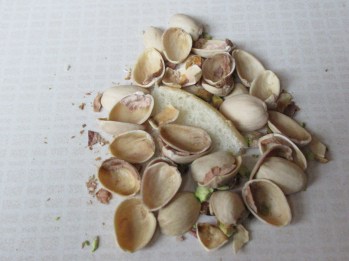
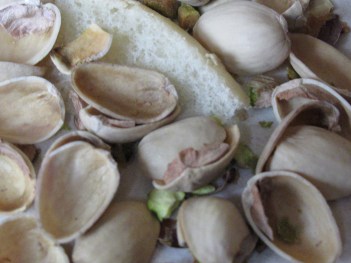
So, I felt sorry for the squirrel, I admit that. But I didn’t bring him into the house. Nor did I open the door and let him in. Honest. Maybe it was the cat. She’s been watching him all day. Yes, that’s it. It was the cat. She saw him out there in the cold, felt sorry for him, slipped open the screen door and let him in. I could believe that. But no, I don’t know how those nutshells got there. Of course it wasn’t me. You know I’m allergic to nuts and no, that wasn’t me sneezing. It must have been the cat. Or the squirrel. Have you looked for him? I bet she’s round here somewhere. Why are you always blaming me for everything?

IMG_0288.JPG


Evidence? I don’t call that evidence? What are you accusing me of anyway? And no, I didn’t leave that tiny crust of bread in the nut pile. Must have been the squirrel. You know I like bread. Squirrels don’t like bread. I bet she left it there. Or the cat. What do you mean: it couldn’t have been the cat? How do you know she didn’t jump up on the counter and eat all those nuts? You’re just guessing and you want me to look bad. She does jump up on things, I’ve seen her do it. She’s always good when you’re around.  She’s not so good when I’m here on my own. That’s why I call her Vomit. I know she doesn’t throw up on your chair, but she throws up on mine. I bet she organized all this, just so I would get the blame.

What do you mean, you’ve left it up to the jury? What jury? You’re no taking me to court for this. Are you? Seriously? I can’t believe you’d find a jury willing to convict me on the suspicion that it might have been me, not on the sort of circumstantial evidence you’re presenting in those photos. And no, I’m not doing lie-detectors or DNA. The jury’s out there now? I don’t believe you. You can’t bring a jury home, to this house, to convict me of the crime of eating your pistachios. Can you? What do you mean: look out of the window? Oh no! You can’t be serious.

IMG_0285.JPG


Love me

IMG_0290.JPG

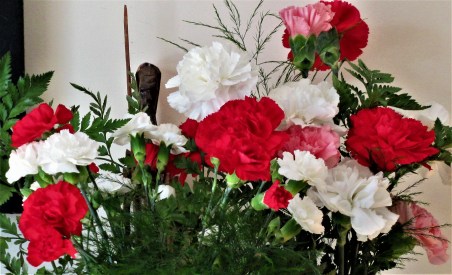
Love me …  love my cat. I think she’s bemused by the sudden smell of all those flowers. She didn’t like the snow yesterday, either. Hands up all those who did. Ah yes, all the students and teachers who had their tenth snow day. No wonder the internet was so crowded all day long. It wasn’t that easy to get on and off but it was so easy to lose the connections. Speaking of connections, yet another circular debate is going round and round the Brexit roundabout in London today. That’s London, England, not London, Ontario. Oh the sea, oh the sea, thank God it still flows between Brexit and me. You’ve got to love it though, especially on St. Valentine’s Day: all those basket cases putting all their eggs into one little Brexit basket. They remind me of a set of Oaxacan donkeys, blinkered and blindfolded, walking round all day in circles, trying to grind the maguey or to draw water from an artesian well (una noria). It’s a thankless task at the best of times, but an incredibly tiring one when there’s a drought and a dearth of clear-thinking and intelligence. Round and round and round they goes, and when they’ll stop, nobody knows. Wow, I’m glad I got that off my chest: now I can enjoy Valentine’s Day with my beloved and my cat. As for Valentine’s Day: say it with flowers.

IMG_0294.JPG

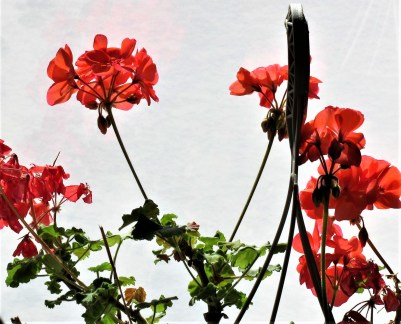
Here are the geranium, a little bit winter-struck, still red-hearted and perky in the post-storm sunshine. I always marvel at how they  settle down, go all green-leafed, then start to blossom again: a miracle of love and kindhearted attention.

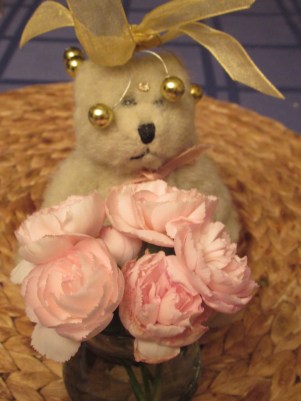
IMG_0296.JPG

And here’s Don Quixote keeping vigil just behind the carnations. Oh Brexiteers, he stands on guard for thee. He’s very quiet though. Not sure about anything, except the need to guard the flowers from fear, fire, and foe. He’s a good man, is Alonso Quijano el Bueno. He doesn’t round round in circles and lose sleep over uncounted and uncountable, slaughtered sheep. Speaking of which, the Welsh are campaigning for Welsh Lamb. They do not wish their products to be labelled with the Union Jack, but with the Red Dragon of Wales, Y Draigg Coch Cymraig. I hope I’ve got that right: it’s been so long. Meanwhile, speaking of love, Northern Ireland is talking divorce from the UK and a renewed marriage with the south. Scotland is talking love-talk with the Europeans and muttering about separation (was it really 1606?) from the Union. And Plaid Cymru is once again flexing it’s separation muscles. For how much longer, in the current state of division, will we be able to talk of a United Kingdom? Valentine’s Day: it’s best to be off with the old love before you are on with the new. Yet there’s mucho flirting going on between many possible future partners, even while undying love is being spouted across the various negotiating tables. The Queen of Hearts rules on Valentine’s Day: “Off with their heads!” Oh dear, whatever will the little caterpillar say, let alone Malice in Blunderland?

And the cat came back. Thank heavens. I cannot imagine Valentine’s Day without some flowers, my beloved, the cat, and a great deal of love and understanding. May the joys of red flowers and open hearts (not the surgical kind) be with you this day, and may you find a ray of sunshine to sit in for the rest of what still promises to be a stormy and snow-filled winter.

IMG_0293.JPG


Copperopolis

IMG_0192.JPG

Copperopolis

Mountains and craters on the moon look like this:
scarred, barren landscape, scabs of a dead industrial
revolution that created the largest copper smelting
plant in the world. Labourers strove for a living,
but met early with death. Rows of tiny, brick hutches
where families crowd, breeding like rabbits. Back
yards with greenhouses, cracked flagstones, allotments
where life-saving vegetables grow, and a chicken-coop
for the occasional egg worshipped after childbirth.
I remember it well. The garden walls adorned with
broken glass, set in concrete, so nobody could take
food from the garden, or steal the precious hens.
Washday on Monday, when furnace dust had settled
after the day of rest. Clothes hung out on Tuesday,
stained with the industrial waste that clogged bays,
fields, and farms. Summer and Fall, my father walked
shoeless to school, worked hard to buy himself winter
shoes. He sanctified footwear for the rest of his life.
He studied hungry, slept famished, and awoke to hunger
and cold. Born into poverty, we were rich in love.
My father broke out, scaled those walls, got odd jobs,
went to night school, educated himself, became someone.
He wanted the world for me. But my hands were too small
to grasp the enormity of what he had achieved and who he was.
He aimed for the stars, failed, but scraped his wings on the moon.
I cut my teeth on broken bottles and never wanted to leave.