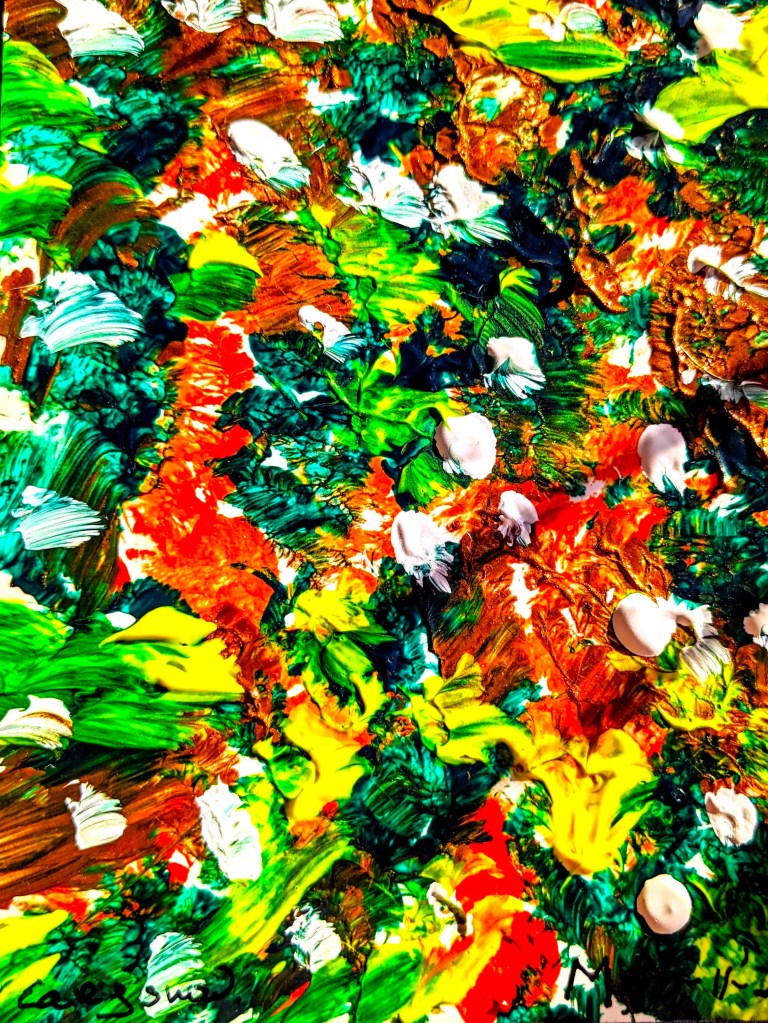
Hope Springs Eternal

Hope Springs Eternal

Easter Sunday and the world is reborn. Early, this year, yes. March 31. But all too often in April we see the snow disappear and look out on watch for the geese. Some have flown through, just a few. We search for the flowers, and one or two are pushing upwards in the garden beneath our window. I see a green fuzz on the crab apple trees on our front lawn and the same sign of green around the tops of the tallest birch trees. The crows are flying in pairs, sharing the same branch, and huddling shoulder to shoulder. And yes, the world feels good. Our world. The little world of Island View.

There’s something special about the Equinox. We can feel it in our bones and in the bones of Old Mother Earth. The standing stones of Stonehenge have measured the Equinox for thousands of years, as have the stone circles that can be found all over the British Isles. Even in our garden, in Island View, we know when and where the sun will rise above the ridge as, each morning, we predict the kind of day.

But, when I look to the world beyond my world, the signs of spring are few and far between. I remember swimming in the sea at Pwll Ddu every Easter, on Easter Sunday. When I look at the news, the beaches of my Gower childhood are now polluted. Signs – Caution – Do not enter the water – abound. The boat race took place a day or two ago (depending on when you are reading this). For the first time in 190 years, the winning team was told NOT to throw their coxswain into the water, nor to enter the water themselves in that glorious after-splash of famous victory. The waters of the Thames are so polluted that serious illness might occur. “Oh Thames, flow gently while I sing my song.”

“Denial ain’t just a river in Egypt.” I don’t know who said that, but I echo those words. Where are we going? Why are we going there? What can we do about it?

I look at the Easter Message – Northern Hemisphere – the spring rebirth. The world reborn in flowers. I look at the news – or do I? I no longer want to look at the news. I no longer want to read about the shipping disasters, the environmental catastrophes, the mass shootings, the road rage, long term Covid, misinformation and disinformation, fake news, wars and rumor of wars.

I love the Spanish word – ensimismado meaning to go into oneself. So, I go into my little world, into myself. I retreat into poetry and painting. I try to recreate my childhood world as I knew it, as I still want it to be – full of love, trust, goodness, kindness, softness, beauty, and, above all, faith, charity, and hope.

Marx once said “Workers of the world, unite.” But fewer and fewer people are working. A song of the sixties said “You alone know what is right, lovers of the world, unite.” Now I put out my own cry – “Creatives of the world, unite.” Let us join together to creatively build a better world and to fill it with joy, light, faith, hope, and charity. And the greatest of these, my dear friends, is charity.

Ice Flow

Ice Flow

Free fall, then scree on the road
to Wolastoq. with the fresh air
speaking to the rock face
in a long-forgotten tongue,
broken words metamorphosing
into fragmented scree at rock-foot.

Just for a moment we glimpse
the ancient water in the stone,
catch the flow of winter words.

The January sun, low in our eyes,
heavenly glory glancing off rock
to give earthly joy, golden beams
highlight damp, glistening slate.

Afternoon frost, water and rock,
polished into ice-maiden tears
that dance their sparkling way
and are held for a moment
in a vision that will last forever.

Comment:
Such beauty in silent things, ice, rock, sky. But learn to listen and perhaps you will hear them talking, one to the other. One day, you too may share their words of wisdom.

Change

1

Change

Waters rise, tides get higher,
streams wash roads away.
grey, rainy skies, day after day.

Temperatures drop down at night.
Water turns to ice. Northern Lights
burn bright, set the sky alight.

I forget my gloves. Fingers, cold,
fumble at buttons, and my zip
is not the easy zip of old.

My life cries out for change,
but change is out of reach.
I change the things I can arrange.

Some days I’m weary and sore.
Most days I can do no more.

2

Change

Waters rise, tides get higher,
streams wash roads away.
Grey, rainy skies, day after day.

Temperatures drop down at night.
Water turns to ice. Northern Lights
burn bright, setting the sky alight.

I forget my gloves. Fingers, cold,
fumble at buttons, and my zip
is not the easy zipper of old.

Some days I’m weary and sore.
Most days I can do no more.

My life cries out for change,
but most changes are out of reach.
I change the things I can arrange.

Comment:

I decided to change my format today and go back to the left margin alignment, rather than the central alignment that I usually use for poetry. Your comments on the adjustment would be welcome. I have included both formats so you can see how the poem flows in each one. As for this poem – a rhyming sonnet, wow!

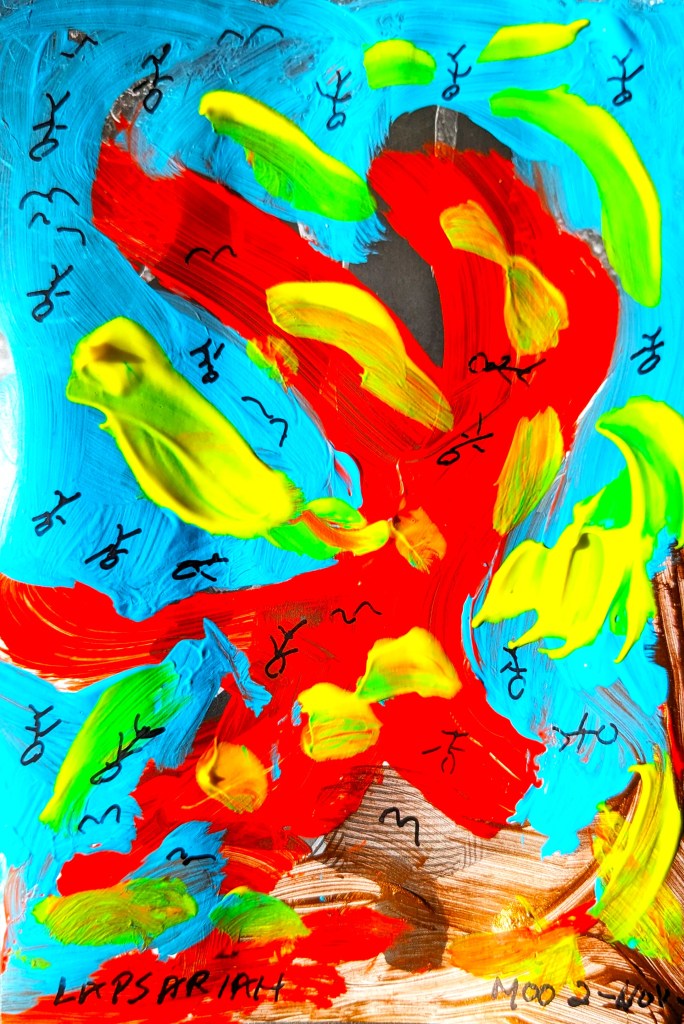
Moo’s painting, executed late last night, is his way of showing how rage can suddenly build and, like a runaway river, suddenly and unstoppably break out. It is extraordinary how his paintings so often mirror my moods and word flows.

Do you have a favorite place you have visited? Where is it?

Daily writing prompt
Do you have a favorite place you have visited? Where is it?

Do you have a favorite place you have visited? Where is it?

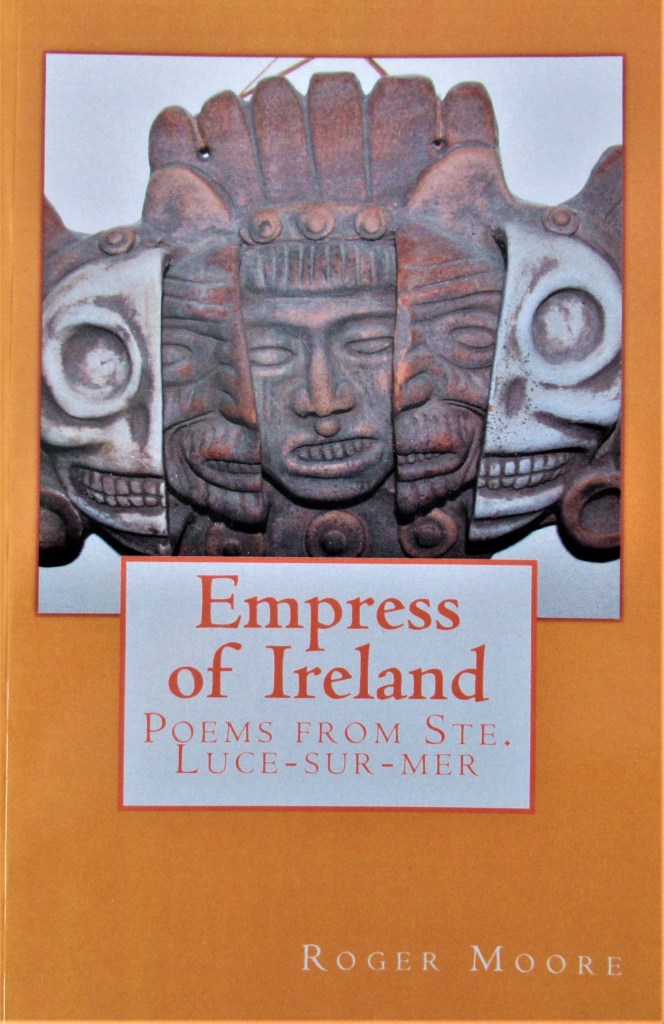
Just one place? So difficult to choose. I have been very lucky in my travels. I haven’t gone far, but I have tried to go deep, returning to the same places again and again. One place I often visited was St. Luce-sur-Mer in Quebec. It is a wonderful little town on the banks of the St. Lawrence River. The sunsets are sheer marvels and the views of the Northern Lights across the bay are just outstanding. Site of the wreck of the Empress of Ireland, it is filled with mystery and memories, as is the nearby Rimouski. Ste. Luce sur Mer would be my third choice.

Oaxaca, Mexico, would be my second choice. The city itself, capital of the state, is packed with history. I taught there for a couple of weeks (maximum six) every year from 1995-2001 and every time I returned I found something different and more mysterious. The dancing and music in the capital, the cascades of fireworks flowing down the facade of a church, the Christmas Cribs that grew day by day as people added to them, the incredible food, and above all the people – dancing in the Zocalo on Sundays to the music of the State Orchestra, crowding the markets with color, and the markets themselves, the scents of peppers, coffee, chocolate – to visit Oaxaca, in those days, was to visit the heart of Mexico. Imagine sitting beneath the tree that Hernan Cortes had sat beneath when he visited Oaxaca just after the Conquest of Mexico City – Tenochtitlan – and talked to the Mixtecs and Zapotecs of the Oaxaca Valley. And the codices – wonderful – I cannot say enough in praise of Oaxaca.

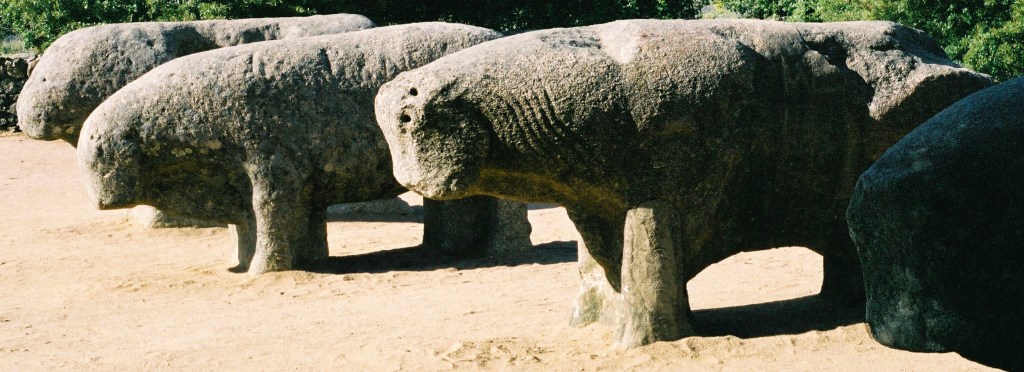
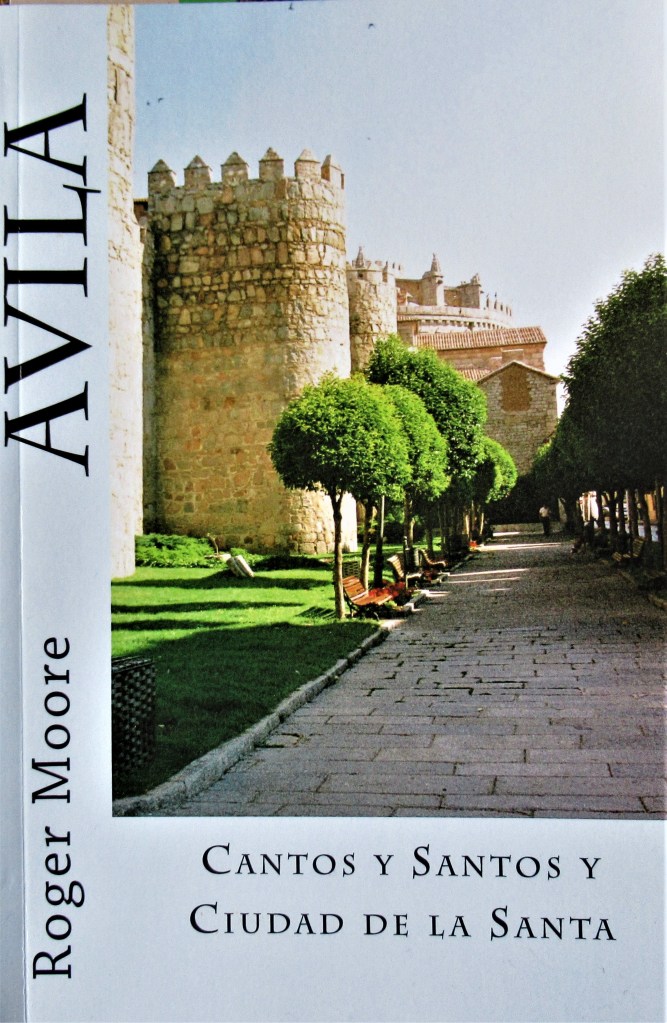
My number one choice: Avila. The lead photo shows the Toros de Guisando. Pre-dating Christianity, these four stone bulls – verracos – were often used as boundary markers by the Vettones who lived there before the Romans. One of these four bulls bears, carved into its side, the marks of one of the Roman Legions that passed this way. The countryside around Avila has to be seen to be believed. The walled city itself is a wonderland – three kilometres of walls, 9 gateways, a Cathedral that shows an enterprising mixture of styles, museums, libraries, squares, and a welcoming people who make you one of the family. I visited here for four summers, 2005-2008, staying for between 6 and 8 weeks on each visit, and always residing in the same place, El Rincon, close by the Mercado Chico.

My Knapsack

My Knapsack

Throughout my childhood,
I carried a knapsack on my back.
Into it I stuffed my darkest secrets.
Along with all my dirty washing
they filled every cranny and nook.

Words of hate, carved into my life-slate,
shuffled and cut, but unchanged,
unchangeable, remained engraved
on the tombstone I took from above
 the hole I dug to bury the casket
in which I hid the shards of my heart.

On a rainy day, when push came
to shove, I left my childhood home
to wander the world, alone, on my own.

I walked to the station, boarded a train
and never went back home again.

At journey’s end, I left my knapsack
and its contents in the luggage rack.
I never want to see them again.

Comment:
“Pack up your troubles in your old kit bag, and smile, smile, smile.” My maternal grandfather used to sing me this song from WWI. “While you’ve a Lucifer to light you fag, smile, boys, that’s the style.” I wonder how many people now remember what a Lucifer is, let alone a ‘fag’, in that sense of the word. It has, of course, morphed into many other meanings, some of them not necessarily pleasant. I remember my grandfather, standing in the kitchen, before the coal fire, and saying “I remember when Wills’ Woodbines were a penny a packet.” Wills’ is still with us, but may not be for much longer. I can’t remember when I last saw a Woodbine. I certainly never smoked one, in fact, I never ever smoked at all. But as for that kit bag aka knapsack aka backpack aka rucksack, well, put all your troubles in it, tie them up tight, and take it somewhere safe where you can leave it and forget about it, and then start life again. “Good-bye old friend, I am on the mend. And that’s the end.”

As for the painting, by my good friend Moo, that shows The Fall – Pre-Lapsarian / Post-Lapsarian – when all the devils, demons, and black angels were tumbled out of Paradise and abandoned to the depths below, where, alas, they still roam. So, if you meet any of them along the way, shove them in that old kit bag and get rid of them too. You’ll feel much better afterwards.

The Banks of the Seine

Banks of the Seine

Gnawing at the carcass of an old song,
my mind, a mindless dog, chasing its tail,
turning in circles, snapping at the fragment
of its own flesh, flag-flourished before it,
tournons, tournons, tournons toujours,
as Apollinaire phrased it, on a day
when I went dogless, walking on a mind-leash
before the Parisian bouquinistes who sold,
along the banks of the Seine, such tempting
merchandise, and me, hands in pockets,
penniless, tempted beyond measure,
by words, set out on pages, wondrous,
pages that, hands free, I turned, and turned,
plucking words, here and there, like a sparrow,
or a pigeon, picks at the crumbs thrown away
by pitying tramps, kings, fallen from chariots,
as Eluard wrote, and me, a pauper among riches,
an Oliver Twist, rising from my trance, hands out,
pleading, “Please, sir, can I have some more?”

Comment:
This is a fusion / confusion, if you like, of The Kingston Trio’s song – The Seine – with a quote each from Guillaume Apollinaire – Alcools – and Paul Eluard – Il ne m’est Paris que d’Elsa, and Francisco de Quevedo’s – El Buscon – and a tip of the old chapeau nouveau to R. S. Thomas and Charles Dickens. Fools rush in, I am afraid, where angels fear to tread. Go on. Rush right in. Sort it all out. I double-dog dare you – and thank you for that one, Jude.

Dark

Dark

The lights went out suddenly,
leaving me in the dark.
A cloudy night, not a spark
of starlight to light my way.

My search for candles was slow.
I found them, struck matches,
and sat at the table watching
light catch and flames glow.

A war baby – bombs, blackout
curtains, diminished light, all
are present in my DNA, and yet,
I fear the dark above all.

Like a moth, or a high plane
caught in a searchlight,
I struggle to escape from twin
siren calls: fire and light.

I sat and waited for power
to return. An hour, two hours,
three, four. Then I couldn’t wait
any more. I climbed the steep,
wood hill that led to bed.

At the top of the stairs
a plea for light filled my head
and a plea for the return
of light formed the focus
for long-forgotten prayers.

Comment:
We lost power for 15 hours a couple of weeks ago. One moment we were sitting there, after supper, ruminating quietly, with the lights on. The next, we were sitting in the dark. We found a flashlight – light but no warmth. Then moved on to candles. Candles need matches. When the ingredients were ready, we struck the matches to light the candles. These were the first three we lit.

We are so lucky. Sure, it was an awkward night. But it was only fifteen hours. We talked about the homeless, their poverty, often in the middle of such wealth, the poor who have homes, but who cannot afford to light them or heat them, the innocent victims in war zones, powerless in every sense of the word, deprived of light, heat, water, plumbing, sanitation. Our prayers that night included them as well – all of them.

Magnolia

Magnolia

She stands there, at the garden gate, waiting for me.
I can see the scene, the flower beds, the magnolia
bleeding, in Wales, its soft, spring snow of ivory pearls.

Some fall on her head, crowning her with a beauty
more precious than frankincense or myrrh. Petals
also perch their pure, ermine cape on her shoulders.

She walks towards me, eyes shining, arms open.
Then, the vision fades and she drifts away, leaving me
alone, my face bathed in the tears of her passing.

For pass each other by, we did. Ships in the night,
trains rushing through a tunnel of darkness, bathed,
for an instant, in the constellation of a station’s light.

Now, when I try to go back and to recreate that scene,
I find an empty garden, fallen leaves, and winter’s cold.

Comment:
I have been struck recently by the number of published articles that speak of post-Covid loneliness and the difficulties of re-establishing old friendships that fell by the wayside, let alone establishing new ones. It seems to get harder and harder, as we age, to leave our post-Covid isolation, to get out of our new comfort zones – sometimes so limited and limiting – and to make new friends. As we age, our minds go backwards and we return to earlier days and happier memories. Yet all too often those memories are tinged with the sepia sadness of old photos, from a non-digital age, faded and stained.

On Writing Poetry

On Writing Poetry

I sit here writing poetry
and, head in hands, I cry
at all the things I’ve left unsaid,
and then I wonder why
I wasted so much time on things
that perished before my eye.

Outside the night is dark and cold
and shadows flit and filter by.
I know that I am growing old,
that soon my story will be told,
and when it ends, I’ll die.

I know that death is not the end,
yet I do not want to die.
I want to paint the autumn trees,
the clouds that float on high,
with evening lights that stain the sky.

But rhyming is not all I do.
I’ often write in prose, with words
that wound and sow dark seeds
that root and flourish, grow like weeds,
and nourish other people’s needs.

Alas, I know not what I do,
nor yet what I have done,
nor when, nor where, the seeds
were sown, nor if they aided anyone
to turn away from the dark inside
and walk in the light of the sun.

Candles

Candles

Candle-light

Three candles burn at my table.
Outside,
the night wind howls like a dog
and scratches its pelt on my roof.

The wind has torn
branches from the trees
and polished the evening frost
until it sparkles
like eighteenth century silver.

A moth circles and sizzles
in a sacrifice of flame.

I keep my vigil at night’s altar
and place a wrinkled palm
into the candle’s liquid flame.

Put out a candle, put out a child.
Who would put out a dog
on a night like this?

Outside,
playing tag between dark trees,
the wind runs wild.