My Favorite Pen

IMG_0395.JPG

My Favorite Pen

This is my oldest Mont Blanc fountain pen. I must have bought it in 1986 when I traveled to London to attend a Spanish Golden Age seminar at one of the university colleges. I can’t remember which, though I do remember the seminar was on someone called Francisco de Quevedo. We met like spies, my pen friend and I, on the steps of the British Museum. I had never met him before, so he carried a specific book under his arm, one of Quevedo’s I think, by which I would recognize him. We lunched together at an Italian Trattoria, whose name also escapes me, and we discussed the ways of that ancient Hispanic world and our own research upon it. I paid for our lunch from my travel funds. I had a sabbatical that year and had arranged a short tour of four or five British universities in my search for knowledge. After lunch, he took me back to his London college and I sat and absorbed wisdom from 2:00 until 5:00 pm.

After the seminar, walking back to the nearest tube station, I passed a shop that had this Mont Blanc in the window. I went in and bought it. On the spot. No second thoughts. Then I caught the tube to Paddington station. While waiting for the train back to Cardiff, I sat in the station bar and ordered a pint of beer. A well-dressed man, slightly older than me, asked if he could join me. I said yes. He sat down and began to talk. He told me how to commit suicide by slashing my wrist with a knife.  There were many incorrect ways to do it, he explained. But only one right way, if you wanted to be successful. He rolled up his sleeve and showed me his collection of scars that ran crisscross and welted over his left wrist. Failed attempts, he said. But I’ll get it right next time. I wouldn’t want you to make the same mistakes as me, if you decided to try it.

Must go, I told him. My train’s about to leave. I left the remains of my pint on the table, looked back, and watched him finishing my beer. Good job I didn’t spit in it, I thought. Then I realized that I probably had, one way or another. I boarded my train and 90 minutes later I was back in Cardiff. No more post-war, coal and steam engines, a diesel this, powerful, fast, and smelly. It reduced the former four hour journey to much, much less than two. Cafeteria style, the train carriage offered a table top for every four seats. I opened my new pen and wrote in the pocket journal I had bought for the trip.

So many memories. But I don’t remember the names of either of these two men. I do recall those scars, though, deep and ridged, crisscrossing like railway tracks. Every time we clicked over a junction or a cross track I shivered and my writing wiggled on the page.

IMG_0396

Trains (2)

IMG_0032


Another Kind of Train

Stuffy, you said. I can’t breathe. Early morning mist scratched pale finger nails down your bedroom window. Grey faces glanced in, grimaced and scowled. Damp and slippery, the window frame, when I opened the sash. What time is it?  Before I could answer, you demanded more milk for your tea. I left you there, in bed, went downstairs to the kitchen and brought back milk. Then you wanted more sugar.

Shut the window, you said. It’s cold. I’m shivering. Puppet on a string, I raised my cord-bound feet and danced at your command. I went downstairs, fetched more sugar, came back, and left the Western Mail on your bed. You never opened it. On the front page, a picture of the last passenger engine, green and rusty, from the GWR (Great Western Railway). It used to run from Swansea to Cardiff to Paddington in London. Now it pulls a line of filthy coal trucks. Covered in dirt, rain, steam and dust, I couldn’t make out the name or the number.

Passengers on trains speeding to different destinations, we didn’t have enough time, you and I. We were always tied up our separate thoughts. As we flashed by, platform lights blazed in the night beneath fiery stars, scarce glimpsed in the artificial lighting. Windows glowed in deserted waiting rooms, shattering the darkness. Sometimes we stopped at these stations, watching as other passengers came and went.

We rattled over so many cross-tracks, without ever knowing why, yet I have never forgotten the rhythm of wheels on tracks, slowing, accelerating, running at full speed, the telephone wires looping up and down, the cattle in the fields grazing peacefully, then occasionally looking up as we passed. We rarely talked. I guess we had so little of substance to say. The trivia was too trivial and the big questions went unspoken, unanswered to this day. Noses in the Dandy or the Beano or Woman’s Weekly, we flashed past so many railway signals with their pointed mechanical warnings.

High Street Station, Swansea. The terminus ad quem. The nec plus ultra. The Great Western Railway’s Pillar of Hercules. In my dreams, I stand by the buffer stops, alone, knowing that you will never be aboard any train I may go to the station to meet.

Pen Friends

IMG_0376 (2).JPG

Pen Friends

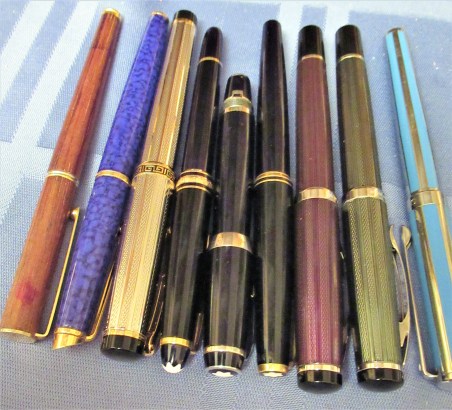
A writing day, today: so, spoiled by choices, even though some of those choices have grown wings and flown away. Pen friends and mood pens: I think I’ll begin with … and they are color coordinated for ink … this one … but you’ll never know which I chose … Maybe it will be my Waterman’s: speckled blue, second left. I do love pens: so essential to write with. Cursive hand-writing too, no longer taught in schools. It has become my secret code: nobody can read it.

But do you remember when pen friends really were pen friends and you wrote long letters to people in France, or Spain, or Germany, so they could practice their English and you could practice whatever language they spoke? I can remember playing postal chess with some of my pen friends. A move per letter and each letter taking a week or more to arrive. A full game with a pawn ending could take years! Did anyone ever meet their pen friends, I wonder? I know I did. I think of the immediacy of today’s online dating sites and I sometimes sigh for the old days. Courting by fountain pen … the slow and solemn can-can of two tortoises in the Carnival of Animals by Saint-Saens.

I write every day in a hand-written journal and have done so most days since 1985. I also keep a pocket notebook for odd moments, usually when I am outside in Mactaquac, or Funday National Park, or on Prince Edward Island, or at the beach in Ste. Luce-sur-mer, or beach-combing in Passamaquoddy. If I manage to write anything decent, I transfer these written ‘gems’ to the computer, where I revise and re-work. My poetry is almost always penned, but short stories usually go straight onto the computer, as do the novels, I have written three, though ideas and plans for stories and chapters do appear in the journals. I have come to think of the journals as a quarry and a memorandum, the computer as a workshop.

Come to think about it, I have, in the not-so-distant past, given workshops and seminars on just this topic. It is a very useful and informative subject, especially for beginning writers. With it comes the statement that (a) we must learn to recognize good writing when we see it; (b) we must learn to recognize, and reject, poor and weak writing; and (c) we must realize that we are not writers, we are re-writers. I always recommend people to keep their early drafts. Our tendency as re-writers may well be to revise out the energy and spontaneity of the original. This usually happens when the high-school policeman (thank you, Ted Hughes) steps into our brain and lectures us on how to write properly and correctly. If we lose that initial emotion, we must re-re-visit the original flow and try to recapture it recapture it in the re-re-write. Now here’s a good question: how many re-re-re’s can we get in there?


Whisky

IMG_0067

Whisky

     Dry energy bristles through your body, tangible electricity, I dare not touch you. Sparks fly through your hair and light up pillows and sheets. Plugged into your flesh and blood, those instruments of life and death and in-between flicker and will not stand still, will not take appropriate measurements in the way doctors and nurses predict or want. Stranded on your beach of bleached white sheets, you are smaller than a seal, an otter, perhaps, a sea-urchin, or a star-fish, struggling in the high-tide mark, not with the sun and wind that dry you out, but with the sands of a time that is ticking away from you, filtering through your fingers, fleeing from your grasp. Your hair ruffles. Your forehead wrinkles. Your gaze sharpens. You have the hunting eyes of the unhooded hawk, or those of a peregrine falcon fixed on its prey, yet you cower like the land-bound beach-bird that he hunts. You are burning up, devoured in your own interior inferno. You slap at my hand as I take a risk and try to place it on your forehead to offer you consolation. What is it? I ask. What do you want? Shall I go and get the nurse? The doctor? You shake your head, your eyes flash, the air sizzles, and you whisper something, too low for me to hear. I put my ear closer to your lips. Your voice: coarse sandpaper over the soft balsa wood frame of a plane that will strive, one day, to grow wings, to take flight, to be a bird. Whisky, you whisper. I just want whisky.

IMG_0136

Swansea Bay

IMG_0055


 Swansea Bay

            My childhood in Swansea: a mixture of seaside and sand. Walking over the bridge at the Slip to reach the dunes at high tide, the fish nets at low tide, the dog ever before me, running fancy-free, chasing yellow-beaked gulls that swoop low, mewl, and lead him on and on, past bundles of bathers’ clothes in summer, and the dog lifting his hind leg, visiting each pile, marking them, one by one, a squirt at a time, and us denying we know the dog, not ours, we say, then beg for the empty pop bottles, taking them back to the vendors, pocketing the cash back on the bottles until we have enough for an ice-cream, a grown-up wafer, not a childish cornet, or a go on the swing boats, and the dog comes with us, gets sea-sick, air-sick, hangs his head over the wooden sides drooling thick saliva as we wait for the bump and grind of the wooden bar that will slow us down in spite of us pulling on the ropes, harder and harder, until we swing higher and higher into the heavens, and the sands dwindle into nothing, and the dog throws up, and the man who handles the swing boats calls us bad names, as we run away, across the sands, ‘I’ll tell your dad,’ he shouts after us, but he never does, and the dog wanders loose across the sands to drink salt water and throw up again, and yes, I remember the starfish, their golden triangles winking wet in the sunlight as they hang from their netted firmaments, and we walk out along the concrete sewer pipes that pour the town’s waste, the town, and not the city, never for me a city, and how could it be a city when so many uncles and aunts lived on Town Hill and my father worked in Town Hall, and Swansea Town were the Swans, and they played soccer on the Vetch Field, the old hanging ground for the town jail, never the city jail, and the Mumbles Railway ran its electric trams out from Swansea Docks to the quarries by the Mumbles Pier, and we took that train, sat on the top deck, The Slip, Singleton Park, Blackpill, the Mayals, West Cross, Oystermouth, where last year, after a hundred years of absence, wild oysters finally returned, the pollution from Copperopolis, the largest copper mining and smelting town in the world, finally drained from Swansea Bay and the waters now clean enough to keep those oysters alive in their cultured oysters beds at Oystermouth, on Swansea Sands, below Oystermouth Castle with its ruined walls where we went once, but I remember nothing about it, nor Swansea Castle, in the old town centre by Castle Street, its ruined walls banned with their Keep Out signs and Danger, but the warnings themselves enough to invite us in, except we knew we’d be beaten if anything happened and we were caught and everyone knew everyone in Swansea Town then,  and somebody would surely bear the tale to our parents or grandparents,  but that’s enough of that, and its’ out of the tram and across the wooden planks of the Mumbles Pier, out to the end where the old men throw their lines into the sea and sit and wait and hope, pulling on cigarettes, Players Nay Cut for preference, as they watch swirling waters, taking sips, like old men everywhere, from secret bottles in brown paper bags that cause them to wipe their lips with the back of theirs hands and cough with pleasure, waiting for God knows what to come along and tickle the end of their line, and out there, at the end of the world, the lifeboat house with its slipway and the lifeboat, launched only in the roughest weather when the tall ships founder or the small boats are blown away, out into the sea, that twinkles now with its wrinkled old man’s face as it moves back and forth beneath wind and sun, and everyone is smiling in the summer warmth, though it’s cold where the wind blows off the sea, and it’s into the corners away from the wind, or into the pavilion where the arcade games wait for our money, and it’s ‘please, please, one more go’, as the small metal arms armed with their claws, clutch at toys and dolls, and furry animals, and the fighter planes come swooping down in their practice arcs and yes, I am a gunner again, fighting my Battle of Britain in a spinning turret with a mobile gun-sight, and time and my money run out and it’s ‘ please, please, one more go’, and my head is spinning, as the turret is spinning, and the world is spinning on its axis as memory’s spider spins its web of illusion, delusion, and time rolls backward on the station clock, as the tram rolls up and we track our tired way back home, past Oystermouth, West Cross, Blackpill with its little Roman Bridge, Singleton Park, the Recreation Ground, St. Helen’s, to the Slip, where we boarded in he first place, and home we go via the fish-and-chip shop in the road at the bottom of our street, and all adventures end as we open the front door, calling out ‘we’re home’, and the smell of warm salt and vinegar soaks through the newspaper binding the delicacies we have brought to placate the gods who wait in silence for our return.

Butterfly


img_0160

Butterfly 

     Un-mown the front garden, the grass long. Like hay, no flowers in the borders, how could there be when nobody can bend down to plant them? They want me to mow the lawn, but I can’t. I call a man who has an industrial mower, a hay-maker, and he comes and does the job, front and back, within half an hour. Even with a scythe, it would have taken me a couple of days.

The magnolia tree leans low across the red-brick wall that separates the house from the street. White butterflies, its petals, blown on the wind, and its perfume regaling our noses of the waft of the wind. We leave the ground floor windows open during the daylight hours so we can take in the thick, rich, delicate scent.

     Pale and delicate, a cabbage white butterfly floats into our yard from the road. The roses are not yet in bloom, more thorn than rose. A sudden gust blows the butterfly across the garden and it shreds its snow-white wing upon a thorn: sudden shriek of white against wall and grass.

     Looking back, remembering  how I cast her ashes over the sea, thoughts pound in my head like waves on that Gower beach. Each word is a grinding of small pebbles. Mother, you are a swift river of blood contained within my skin and bones.

Cows

IMG_4757 (2).jpg

Cows

Underneath the bungalow, we find a secret space so small that only the young ones can crawl there. We go after coins that drop through the floorboards of the verandah and we hide there, in that cool, dark grave space, when we wish to be neither seen nor heard. At the far end of the bungalow, in a larger space beneath the floor, Nana has her refrigerator. This space, similar to ours, is where she keeps the thick cream off the bottled milk when she wishes to turn it into Devon Clotted. Here, too she places the jellies when she wants them to set. We have neither running water nor electricity, just the cool beneath the floorboards. We do have two water tanks, one a square, red-rusted, cast-iron tank that collects the rain-water off the roof, the other an old iron-bound wooden barrel that connects to a downspout outside the backdoor.

They have built me a swing in the backyard and on sunny days I throw my head back, thrust my legs forward, and squint at the summer sky through half-closed eyes, as the old folk push me. “Higher,” I cry out. “Higher.” We don’t have a push lawn-mower, though we occasionally borrow one from the neighbors. We do have a scythe, a sharpener, and a pair of bill-hooks. I have never forgotten that head down, half-shuffle of the scythe man using his scythe: one step sideways, swing, feet together, one step, swing. I loved the sweet smell of the fresh-cut grass as I played the grim reaper in the backyard, always with a grin.

I lived in the bungalow for the whole of one summer. I guess my mother had been placed in some hospital or other for the duration of the fine weather. Nobody talked about her and I never knew what was wrong with her or when she was coming back. It was all a mystery, wrapped in stealth and secrecy. Her absence was a pain in my side, a thorn in my heart, and I still don’t know what happened to her.

I slept in the back bedroom with my Nana in her big double bed. I slept on the far side, next to the outside wall. At night I would often hear the cows as they munched away at the grass and wandered through our un-fenced yard. I say ‘I slept with my Nana’ but in actual fact I fell asleep long before she came to bed, often when the sun was still high in the sky. She always got up early in the morning to prepare breakfast for the men and lunch for my uncle, who worked in town and usually took the early morning bus.  My Nana was up and dressed by the time I woke up, so I rarely saw her in bed.

Some nights I woke up during the night, needing to pee. I never liked using the Royal Doulton chamber pot that squatted coldly beneath the bed, especially if she was in the room. We had no indoor plumbing, nor running water, as I have said, and apart from the rainwater the only tap was at the far end of the bungalow field, a long way away, and all but rainwater had to be fetched by hand in large tin cans that we ferried, empty, to the end of the field and brought back, full, at the end of our excursions to farm, local shop, or beach.

Those cows that wandered through our yard at night really frightened me. We would meet them in the lane some times, a noisy, dusty, flowing, multi-colored tide that flooded the pathway and forced us walkers into the next field, if there was a gate close by, or high into the hedge, if there wasn’t a gate. The one black and white cow in the herd really filled me with fear. She had a crooked horn, had gored a dog, and had kicked out at several of the local residents, injuring at least one of them quite badly, a broken leg, I think. That cow had an evil reputation, especially when, isolated from the herd, she meandered around on her own.

When I wanted to pee, I preferred to walk outside, to the outhouse, rather than use the chamber pot. I would grope my way out of the bedroom, turn right, drop down the steps into the kitchen, and slide back the bolts on the door. Then I would half-open that door and peep out, listening carefully for any sound of the cows tearing out the grass with their teeth, or rumbling gently as they chewed the cud, churning it over and over. I would sniff the night air, and if I sensed a cow in the vicinity, I would pee through the narrow crack of the open door and swear in the morning, when someone found the little puddle, that it wasn’t me, that it must have been the cows.

One quiet night, I walked bravely out into the dark and stepped right into a cold cow pat that lay just outside the back door like a landmine, waiting for my unwary feet. I still remember the cow-manure’s soft squish as it sifted upward through my toes and rose to assault my nose. After I had gone pee, I wiped my foot again and again in the long grass beside the outhouse, then placed it beneath the water-spout from the rain barrel, trying to flush it clean before I crept back into bed.

That was the night I left the back door open. Next morning, my Nana woke us all up with a series of long, loud screams and squeals. The black and white cow had wandered through the open door and ended up in the kitchen where my grandmother had come face to face with it in the early morning light.

A cow in the kitchen, that really spooked me and I still have dreams, nightmares, really, of a herd of cows invading the bungalow, breaking down the doors, and climbing in through the windows, and me all alone, trapped in my bed, shivering ferociously, squeezing myself, trying desperately not to go pee.

Family Album

IMG_0061

Family Album

I recall him early in the day, carving his field into brown-tipped waves, with his two sheep dogs  running loose beside the enormous cart-horses that give him the horse-power, huge, born to labor and the plough, as they create their own steam in the morning mist, so cool, but stay clear of their hooves, huge hooves, iron shod hooves, hooves that will break a leg or stove in the dog’s ribs as if he were a rowing boat crushed against an Atlantic rock in the fast ebb-tide of the local bay, and watch out for them in the stable where they lean together, side by side,  like the oxen twins, Bright and Lion, out at King’s Landing, and like the oxen they munch their hay and stomp their feet and blow hot air out through their nostrils, almost in unison, their sweet-smelling breath sugaring the air, and the bright hay surrounding them, prickly and tickly, and leaving its speckled rash on arms and legs and necks …  and I thresh in dream-memories, flailing from harvesting remembered brightness beneath a star-filled sky, gathering memories, ordering them into vital bundles, and every package a re-creation of everything that I was, and am, and ever will be, and those who come after will find less of myself, yet more, much more, than this empty snowball of flesh, which sits here at the table, pen in hand, scribbling the words that begin and end it all, the tell-tale words that blindly bind and knot the ties that tie me in place, forever, between these lines, between these covers, and I jot down supplements that will supply fresh blood to the memories of my rapidly fading life … how long will I hold on to them, those memories, those moments of glory, those seconds that turn into minutes, then hours, and  the hours stringing themselves together to form days and weeks  as memories gnaw away the years, as a mouse gnaws away at a cheese, with jagged teeth until all that is left are sad photos of unnamed, unremembered people floating in the family photograph album like the one that my grandfather once gathered, and glancing from page to page I know no one even if the name is written there, his wonderful copperplate standing out beneath the photograph, ‘my sister Betty, aged two’, ‘my cousin David, aged ten months’, ‘my grandmother’s father’s sister’s cousin by marriage’, and there she is, this anonymous being, riding in the sidecar of a motorbike, and the photo all speckled and brown, like a hen’s egg, waiting in its egg-cup for the silver spoon that will bring it magically to life, a real life, not the false life of a forged memory that floods through my mind, so young, they are, so small, so pretty, all of them, so dashing, so handsome, even in their old-fashioned clothes, and now they are here, their spirits trapped in this photograph, floating ghosts in the half-life of a sepia snap, and will this be the afterlife for all of us, these snaps, taken in an instant, and then lasting, at first for hours, and then, forgotten and laid aside, then surfacing in another country, held by another hand and viewed by foreign eyes that do not know and will never understand … how can they ever understand?

Forgetfulness


IMG_0225.JPG

Forgetfulness

a lone dog tied out in the rain
a lost German Shepherd barking at stars and moon
grass growing through plastic flowers on a grave
a name eroded by the sand paper wind
a solitary sea bird carving its name on a cloud
a sea gull slicing the sky with its wing
unwashed dishes sunbathing in the sink
a knife and a fork side by side not speaking
the bike with a flat tire growing dust by the door
the kite’s face locked in the prison of the tree
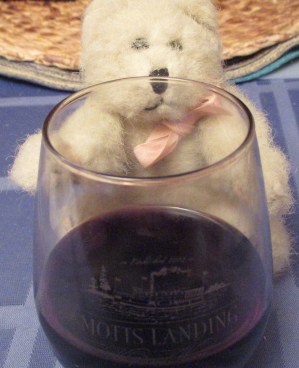
a teddy bear sitting by a forgotten glass of wine

Forgetfulness is also me and my blog. I have been writing elsewhere all week, preparing two manuscripts for a competition. It’s been a long slog: gathering the material, organizing it, structuring it, revising it, polishing it, cutting unwanted material, searching for valid replacements.

Tuesday I had the honor and the pleasure of working with a local high school in their  creative writing program. I am no longer a part of the Writers in Schools Program (WiSP), so this was a freebie. I came, I sat, I talked. And then I drove home again. I answered questions from the students on my life as a writer. It was very interesting for me as some of the questions were sharp and pertinent. How do you deal with writer’s block?   Do you write by hand or on the computer? Where do you get your inspiration? Hopefully my responses were of some interest to the students who gathered to listen. The one question I expected to field was never asked: “How much do you earn as a writer? The answer of course is very little, if anything. I write for pleasure, not for money, and I have never been published by a major press.

According to TWUC, the Writers’ Union of Canada, the average earnings of a writer in Canada are $12,500. Subtract the millionaire big earners (e.g. Margaret Atwood, David Adams Richards, et al) and most writers earn considerably less. Poets are traditionally at the bottom of the pay scale and I am principally a poet. The transition from print to digital also has everyone running in different directions. Personally, I like writing. I don’t like the marketing, advertising, selling of myself and of my books.  In fact, I now self-publish and give my books away. There’s very little money in it, but I enjoy myself and my friends seem to appreciate the gifts I give them.

Unless you are a ‘top draw writer’, working with a large, established company, you are unlikely to earn much money from your creative writing. In fact, many writers make their money from workshops, fellowships, grants, residencies, retreats, and things like that. I took a different direction. I chose to be an academic / teacher / researcher (full time) and a writer on a part-time basis. The academy kept food on the table for my family. The writing was always in addition to the mainline job. Retired now, I can dedicate myself to writing full-time, and that is just what I am doing.

Writing: so many meanings, so many ways to write. I blog, I maintain a journal, I write e-mails, I post to Facebook, I write poems, short stories, and I have written three unpublished (and probably unpublishable) novels. Also on two separate occasions, I have run a weekly sport’s column (athletics and rugby) in local newspapers. I have written academic books, translations, book reviews, peer-reviewed articles, and I have maintained, with the assistance of my beloved, an online bibliography and an online searchable data base. I have also helped edit some fourteen academic journals during my time as an academic. In my editing career I have been an editor, a co-editor, an associate editor, an assistant editor, an editorial assistant, and a book review editor, as well as sitting on the editorial and / or advisory boards of a handful of magazines. I have managed to do this in three languages (English, French, and Spanish). So, what exactly do I say when people ask me “What do you write?”

I am also a fan of the following statement, though I cannot remember where I first heard it. “We are not writers, we are re-writers.” This is certainly true of my editorial roles in academic magazines, for I have done a tremendous amount of rewriting and revisions for the people who have submitted their work to the magazines I was helping. So, there it is, in a nutshell … except for one thing, I have been involved in so many writing experiences, that I have forgotten many of them. Forgetfulness: the theme of today.


Dawn

IMG_0169.JPG

Dawn

I turn over in bed. The light on my neighbor’s garage has come on. It is triggered by movement and I get out of bed to see if the deer are back and crossing his yard. But no, it is not the deer, it is the paper-man, up early to deliver the news. He turns in the yard at the bottom of the street and his headlights flood my room with light as he drives up the road.

6:20 am. I go back to bed. The moon is a thin silver arc. It climbs out from its hillside bed and leaves the forest to scale the early morning sky. Today, the sun will rise at 7:49 am. Until then, this silver sky fish will follow Venus and Mars as they march across my window. On clear mornings I watch them as they move from frame to frame. A double window, with 24 panes of glass in four groups of six panes each. I lie in bed and count them in those sleepless hours before I feel the need to rise. I start with groups of 3 going 3-6-9-12-15-18-21-24. Then I go back down again 24-21-18-15-12-9-6-3.

I think of my father counting the dots on the wall as the sun moved slowly across the walls of his house in Rhiwbina. Then I too play games with the window panes, counting them one by one, then two by two, then three by three, then four by four. It is, I suppose, the magic of counting sheep. First, you count their legs, and then you divide by four. Venus and Mars grow brighter as the sky lightens a little bit more. The moon changes from a clouded orange to a shining silver. I play a new game, counting the window panes in Spanish, then French, and finally in my “use it lose it, long-abandoned” Welsh. I am no longer sure of the order of the numbers, so, when I hit a road bump, instead of stopping, I follow the language pattern and invent.

Dawn: what a funny time, what a funny word, so many funny meanings “and suddenly, it dawned upon me”. Here the dawn walks uphill towards me. It slowly fills the sky with light. The planets shine, then moon and planets disappears as, at 8:09, that first ruddy ray splits the darkness and lands rosy-red upon my bedroom wall. The planet’s dance has ended. The flirtatious moon has come and gone. Time now to end all games and to wash and dress and face reality. February 1: it is the dawning of the Age of Aquarius. Venus, Mars and moon dance through my mind, moving to a different tune.