Keys

IMG_0841 (2).JPG


Keys

“Thirty-four doors and a key for each door,
sometimes two, and that’s only for the outside.
No master keys back then. A key for each lock,
if you please, and each door locked every night.
It’s still quite the task, a real responsibility. They
kept a turnkey, in those days, a full-time employee
whose job was to keep the keys and remember
which key fitted each door. Was it a double turn,
a single turn, a dead-bolt? The turnkey knew them
all. He also understood the interior doors and had
to wind the clocks, open and close cabinets, cloak
rooms, kitchens, desks, cupboards, drawers.

Others kept their own keys, and we often dismiss
them as lackeys, especially if they were black,
but they held the key to everything. Locksmiths
too, they could remove locks, take them apart,
cut keys, no job for a flunky. It took a smart man
to be a turnkey. He needed training, patience,
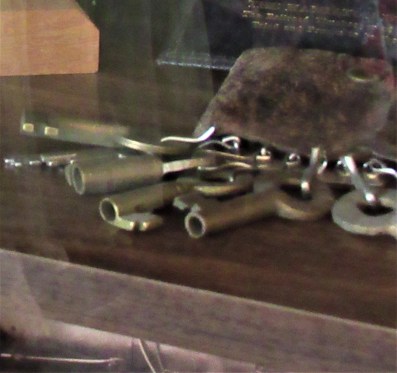
skills, knowledge, strength. Huge railway keys:
he knew how to look after them as well. Have you
seen the size of those old, brass carriage keys?”

Unveiling

image1 (36).jpeg

Unveiling
McAdam Railway Station
Sunday, 30 June 2019

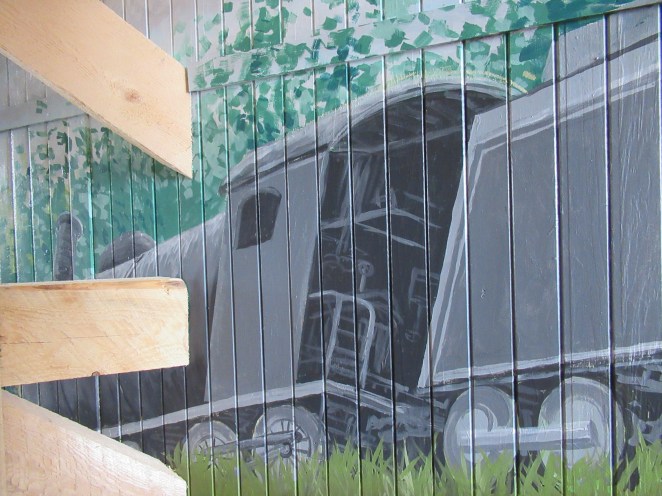
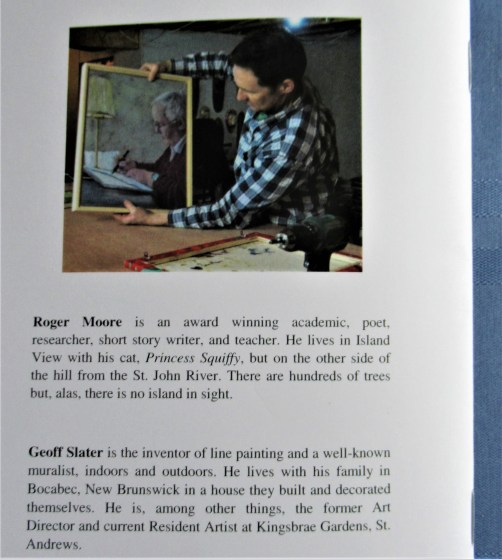
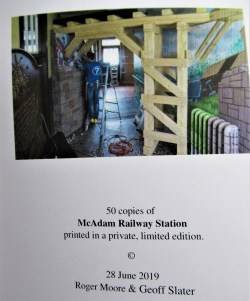
Today at 1:00 pm is the unveiling of Geoff Slater’s mural and diorama at McAdam Railway Station. In celebration of the Event, Geoff and I put together a little chapbook of poems on McAdam illustrated with two drawings of the railway station, , a photo of Geoff working on his mural, and another of him framing a portrait of yours truly, painted by Ruby Allan and framed by Geoff.

IMG_0849.JPG

We are hoping for a nice group of people to attend the unveiling. There will also be a summer fashion show with some of the leading station ladies present.

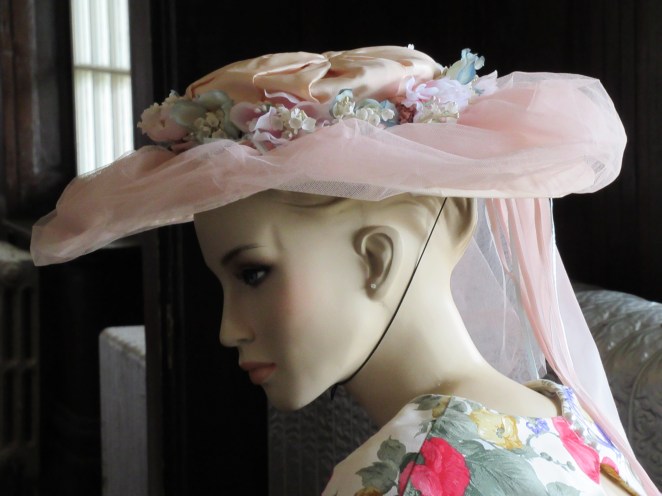
IMG_0835.JPGI am sure a great time will be had by all and everyone is invited. Of course, not everyone will turn up, but I am sure that these two beautiful ladies will be there.
IMG_0836.JPG

The Joy of A New Book

IMG_0915 (2).JPG

The Joy of a New Book

Very little to beat it actually, the joy of receiving and opening a new book, especially when it is one you have written yourself, in cooperation with a group of friends. In this book are the twenty-four (24) poems that I wrote for McAdam Railway Station.

IMG_0921 (2).JPG

I went to McAdam to watch Geoff working on his mural and installation (diorama). While there, I heard stories about the railway and started to write them down in stanza form. While I did write them, most of them were based on stories and anecdotes heard or overheard while the guides were guiding the tourists round the site. This is indeed a limited edition. We originally intended to print only 50 copies, but when we heard that there might be up to 300 people at the unveiling of Geoff’s mural, in McAdam, at 1:00 pm, Sunday, 30 June, 2019, we doubled the number of books we printed. I will be donating the majority of the 100 to McAdam Railway Station Historical Association. They can either give them away or sell them to help fund and support the impressive restoration work they are doing.

IMG_0923 (2).JPG

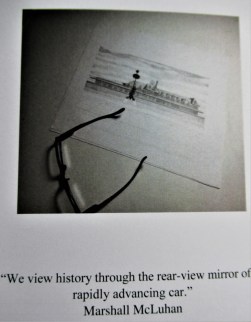
“We view history through the rear-view mirror of a rapidly advancing car” … and writing these poems was a veritable journey back into the past. Geoff left his glasses by his half-finished drawing, and that’s when the idea of linking McLuhan to Moore to McAdam occurred. Several of the poems focus on my own experiences of railway stations. Travel by train was a frequent choice in my childhood and  I went almost everywhere by train. A local in-town train ran from the station at the end of our road and I often took it when visiting friends, shopping in town, or following the local soccer team, Cardiff City, aka the Bluebirds. As a result, much of the imagery within the poems involves my own knowledge and love of trains, while the narrative structures themselves are often based on those overheard words.

IMG_0919 (3).JPG


We wanted a photo of Geoff and me on the back cover and I discovered this one in my files. The portrait was done by Ruby Allan, my fellow artist in KIRA (June, 2107). She painted Roger Writing in the Red Room from a photo taken by another KIRA resident artist, Carlos Carty, the Peruvian pipe, as I was working at the desk in my room. Geoff framed the portrait and Mrs. Lucinda Flemer gracefully allowed it to be hung over the desk in the Red Room at KIRA, an honor for which I am exceedingly grateful. What a nice way to put our pictures on the cover of our book! If you are down McAdam way this Sunday, 30 June, drop in and see us. We’ll be there. Books and all.


Westbury White Horse

th.jpg

Westbury
White Horse

Winter in Somerset. No trains from Frome.
They sit in the engine sheds, boilers frozen.

Clare drives me to Westbury, in Wiltshire,
the neighboring county. She leaves me there

and I stand on a platform as white with snow
as Westbury White Horse towering above.

People arrive, flapping their arms, stamping
their feet, walking around trying to stay warm.

Finally, to shouts, cheers, and laughter, a train
arrives, its boiler successfully thawed. People

rush forward, open doors, claim their seats.
It’s a corridor, not a compartment train.

“Is this the eight-fifteen to Temple Meads?”
I ask the porter. “Nope,” he says. “That wll

be arriving later.” “When?” “About ten
or eleven, I expect.” “What train is this?”

“Ah, now this is the six-thirty to Bristol.
Running about two hours late. Better be quick.

The guard’s waving his flag. She’s about to leave.”
I open a door, climb on the train.  All

the seats are taken. I stand in the corridor,
shivering, all the way to Temple Meads.

Growing Up

IMG_0817 (4).JPG

Growing Up
in Brynmill

They drag the kids kicking and squealing
from childhood’s universe into an older
world of smoking and drinking, forbidden
fruits stolen after Christmas dinner when
drowsy grown-ups’ eyes are turned away.

Why do bigger boys follow smaller ones,
buying their sisters’ kisses then thrusting
their fingers into little girls’ knickers, or
invading Woolworth’s and tucking stolen
goods in shirts with their buttons undone?

The games they play: offering a little girl
a cigarette  or a sweet while two boys
wait behind the garden gate with a sharp
knife to  press against the victim’s throat.

My Welsh Granny

IMG_0452


Poem for the Welsh grandmother
I never really knew

Six o’clock! The cuckoo whirrs its clockwork arrow
from the dark wood of its ambush and the flight
of my granny’s forgotten youth flashes before my eyes
to be buried among the trees. Cats! I can still count
her 1, 2, 3 cats, each one lapping milk from its saucer.

If I close my eyes, I can recall her house, her clothes,
her hair, the very bend of her body bowed over
the ironing board in the kitchen and everywhere,
the sweet and sour smell of white fish bubbling
on the stove for the cats’ supper. The cuckoo clock
strikes again. Each one wounds, the last one…?

Who knows what the last one will bring? Life’s
bitterest blows perhaps? Or missing memories
restored and with them, my granny’s own lost beauty,
with her standing upright, like some glorious flower
illuminated by a sunbeam in the wood’s dark depths.

Flower-power


IMG_0902 (2).JPG

Flower-power
or
Why should the young kids have all the fun?

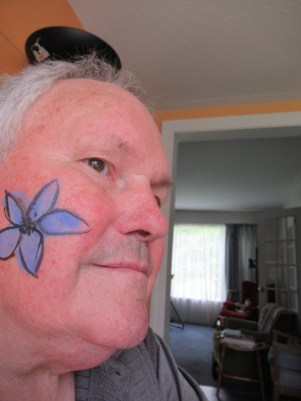
So it’s children’s day at the local supermarket. As I push my shopping cart through the door, I see the face-painter with a young girl sitting before her, getting her face painted. Behind the willing victim, several young children wait, shuffling their feet in expectation. I go out to the car park, unload my cart, and push it back to the supermarket.
As I park my cart, I see that the line-up has disappeared and the face-painter sits alone, cleaning her brushes. I walk up to her table and ask “How much?”
“It’s free,” she tells me. “It’s children’s day.”
“Will you paint my face?” I ask her.
“You’re not a child,” she looks at me in astonishment.
“No, I’m not,” I reply, “but I’m in my second childhood.”
I pull out the chair and sit down.
“I’ve got some photos on my phone, or I can try and paint whatever you would like. Would you like to see some pictures?”
“No, thanks. Just  look at me and paint what you think I would like.”
“What are your favorite colors?” she looks at me and smiles.
“I don’t have any favorite colors, but I always avoid green, yellow, and gold.”
“Oh, well, how about a nice flower?”
“Great!” I say.
One of the trolley boys who return the shopping carts in great convoys walked by.
“You need a mirror,” he says, “so people can see themselves.”
“Great idea, stay here, I’ll go and get one.”
“Don’t worry. I’ve got a mirror in the car. I’ll have a look when I get there. Meanwhile, it’s a surprise. I’ll put a photo up on my blog when I get home.”
“Promise?”
“I promise.”

IMG_0903.JPG

I gave her my blog address and I kept my promise. Unlike many people I know, I usually do.

IMG_0903 (2).JPG

Commentary: with many thanks to Emily, the face-painter, who treated my second-childhood with humor and dignity. As I said to her at the time, ‘why should the young kids have all the fun?”


Dewi Sant


IMG_0899 (2).JPG

Dewi Sant
Cathays

 To be Welsh in Cardiff on St. David’s Day
is to walk the dogs through Blackweir Gardens
and to nod with the daffodils as they step
their stately minuet under the trees.

Wet paths wander through rain‑speckled woods
and the fish are born blind in the gardens’ stream
on account of the coal that drifts its black silt
like fine, powdered night‑time down from Taffs Well.

Under their umbrellas, the fishermen dream
of sewin and perch; the bubbling waters
swirl faster today because of the rain that fell
last night in the Rhondda where a word‑storm

brought closure of pit after pit and each loss
cut colder than a volley of hail as King Coal
tumbled from his mining‑valley throne.

Yet still the daffodils sway, the fish are born blind,
and the Taff’s black waters swirl restlessly on
past unemployed fishermen to Severn and sea.

Dreamer

IMG_0826 (3)

Dreamer
Maindy Road
Cardiff

Dressed in clothes spun from the thinnest of air
I gave my dreams to any who would listen.
“A gift,” they called it, “for words.”

Yet, when the winds blew wrong
my words changed to smoke that stained
or flames that blistered and scarred.

My tongue twisted and forked until lies
lay heavy in my mouth and my words
were weighed down with hooks, and sinkers.

My life became a night-mare ridden full‑tilt
at a windmill with a great wooden sail.
On certain nights, when the sky was sprinkled

with seeds of living gold, I rose upwards
to the moon and my words become stars;
on lesser nights, I lay broken in the gutter.

Bristol Temple Meads

IMG_0678 (2)

Bristol Temple Meads

Bristol Temple Meads

“Temple Meads, Temple Meads.”
Passengers on the platform shuffle
rearrange themselves to get closer
to opening carriage doors. Steam
hisses out from the engine in great
white and grey clouds. He gets out
asks a porter, “Is this Bristol Central?”
“No, son. This is Temple Meads.”
The young boy gets back on the train.

Next stop, Bath. “Is this Bristol?”
“No, son. This is Bath not Bristol.
You should have got off at the last stop.
You’ve over-run your ticket mate.
There’s a fine for that and you’ll have
to buy a new one to get back to Bristol.”

“But I asked them if it was Bristol Central
and they told me it wasn’t.” “Playing silly
buggers they was, son. Bristol Temple
Meads is Bristol Central, well, sort of.
And you’ll have to change platforms.
Go to the ticket office, over there, tell them
what happened, and maybe, just maybe,
they’ll let you take the next train for free.”

Commentary: Funny place, Bristol Temple Meads. I heard lots of funny things, all told in a West Country accent, or fluent Bristolese, while I was passing through there. Loved confusing passengers, they did, but more about that later. As for accents, well, the West Country accent and the Bristol accent are very different, but neither go well into prose, “coz, thee’ll never git a gurt big ‘ead like thine in a tiny l’il ‘at like this.” Thank you, the Wurzels. And as for reading and writing accents, click here.

Bristol Temple Meads
[Prose]

“Temple Meads, Temple Meads.”
The train slows, comes to a halt with a hissing of steam and a shuddering of brakes. Passengers waiting on the platform shuffle towards the edge of the platform, re-arranging themselves to get closer to opening carriage doors.

A young boy, not yet a teenager, gets out carrying his grand-father’s overlarge suitcase in his hand.
“Is this Bristol Central?” he asks a porter.
“No, son. This is Bristol Temple Meads.”
The young boy gets back on the train along with the other Bristol passengers who are travelling to Bath.

When he gets there, the young boy gets out of the train and again approaches a porter. “Is this Bristol?”
“No, son. This is Bath not Bristol. If you wanted to go to Bristol, you should have got off at the last stop.”
“But I asked if it was Bristol Central, and the porter told me it wasn’t. So I got back on the train.”
“Playing silly buggers he was, son. They’re like that in Bristle. Bristol Temple Meads is Bristol Central, well, sort of. He should have told you that.”
“What can I do now?”
“Well, you’ve over-run your ticket, mate. You’ll have to pay extra for coming on to Bath. And you’ll need a ticket to get back to Bristol. But it’s Temple Meads, mind. Don’t let them fool you again.”
“I won’t.”
“And you’ll have to change platforms. Tell you what, just go to the ticket office, over there, tell them what happened, just like you told me, and maybe, just maybe, they’ll take pity on you and let you take the next train for free.”

A question: Is the piece better in poetry or prose? Each version serves a different purpose, but I think the narrative rules. I’ll welcome any opinions you care to share.