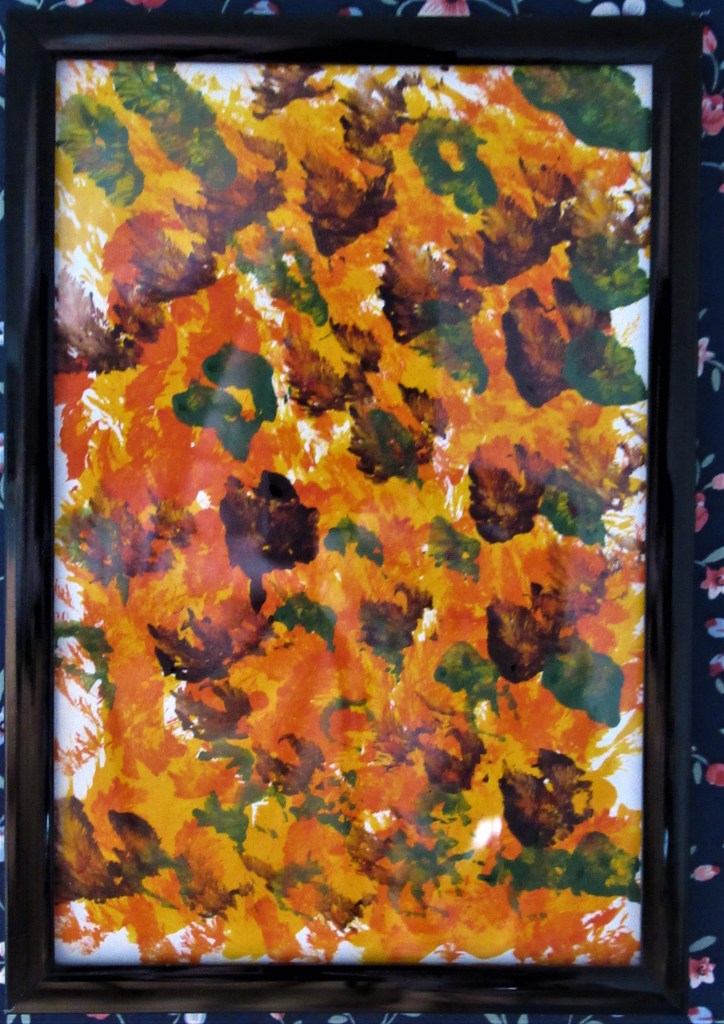
Suit of Lights


Suit of Lights

I am a man of straw
shivered by raw winds,
frosted by the cold
enveloping this enigmatic body,
dry bones set rattling.

I walk with two sticks,
a stick man then,
not just a sick man,
as broken as this broken body,
old sack of out-muscled blood.

When the magic hour
descends, earth glows
with a different light,
and my world is transformed,
translucent, bright.

A touch of the almighty,
this beauty suddenly
surrounding me,
blessing me,
and all my doubts,
with this suit of lights.

Click here for Roger’s reading on Anchor.
Suit of Lights


Clichés

Clichés

I buried myself in an ice-cube.
I dug in so deep that nobody
could find nor touch me.

“Hurt yourself,” I told myself,
“hurt yourself
so badly that nobody
will ever be able to hurt you
again.”

Clichés:
cutting off your nose
to spite your face,
shooting yourself
in the foot, arm, or leg,
self-destructing
in so many ways,
and all clichés.

And me, alone,
everything cut off,
torn down, worn away,
visible, some days,
yet untouchable,
locked away
in this frozen land
where warmth
never flows
and winter
holds sway.

Click here for Roger’s reading on Anchor.
Clichés

Gambit 1

Gambit 1

She’d been there.
She’d have walked
those waxed floors,
looked down at her feet
to see her face distorted
in the elbow-grease
of sheen and shine.

Alone, she was, all alone,
abandoned.
Tonight, on her birthday,
I feel the chill hand
of her sorrow
clutch my heart.

Who can reach in,
who can melt the iceberg
rising beneath my ribs?
Who can warm chilled bones,
charm lost feelings
back into throbbing life?

Gone, all gone,
lost, forgotten, forsaken,
abandoned
on those same ice floes,
where she walked on thin ice,
with the darkest depths
calling out to her from far below.

Click here for Roger’s reading on Anchor
Gambit 1

Comment: My mother, had she lived, would have celebrated her 109th birthday. Watching Episode One of The Queen’s Gambit, I was overwhelmed by what my mother must have felt, all those years ago, when she lost another child. Did she actually feel and think in manner portrayed above? I’ll never know now.

Sisyphus

Sisyphus

Long gone, those good old days, dead and gone,
their centers collapsed in on themselves
unable to hold on to time’s hands
circling the clock of ages, that timeless rock.

Beyond these days, long days when light will fail
to enlighten, eyes will be dimmed, the burden
will grow heavier and even more heavy
with life lying in wait, to weigh us down,
always lying, and the lies themselves
more rocks added to the pile we must carry.

Carrying them is one thing. Rolling them up
this endless hill only to have them roll down,
again and again, forcing us to stoop once more,
not to conquer, but merely to live our lives,
to journey onwards, relentlessly, to endure
from the beginning of the end until the last,
and we must endure, will endure to the last.

“Il faut imaginer Sisyphe heureux.”
Albert Camus

Click for Roger’s reading on Anchor.
Sisyphus


Quilting

Quilting

A man among many women,
I sit silent, feeling their eyes
explore my flesh, my stitches.

I need glasses now for delicate
needlework. To thread a needle
the workshop leader has a gadget.

It passes from hand to hand,
ties the perfect quilter’s knot.
My grandpa’s canvas sewing kit,

World War One Vintage, served him
before the mast and in the trenches.
From it, I take a small looped wire.

I remember when I could see and he
could not, hence his need for me
to thread the needle and knot the knot
that he could no longer knot.

Now I choose my tiny patches,
join them, stitch them into a square
and, ironed out, into the quilt.

We must sign them, and I do.
My name and little sayings
in Spanish, Latin, and Welsh.

The leader asks me to translate them
then writes the meanings down.
“Beautiful work,” she tells me.

“Where did you learn to sew?”
I close my eyes, sew my lips tight.
Some secrets I’ll never let go.

Click for Roger’s reading on Anchor.
Quilting

Comment: I wrote this after reading the section entitled Quilt in M. Travis Lane’s book A Tent, a Lantern, An Empty Bowl (Windsor: Palimpsest Press, 2019). Poems that could double as paintings, proclaims the paragraph on the back cover. I have no such talent. My own poem is more of a memoir in the form of a narrative sequence. To each his or her own, or, in the modern parlance, to all their own. And a poet must do what a poet can do, each of us adding our own little offerings to the great sea that is poetry.


Grief

Grief

Grief leads us to the cliff’s edge.
It hardens our features,
brings tears to our eyes,
or turns our hearts into stones,
hard as rocks, cement blocks
that feel nothing.

Sometimes it pushes us
over the edge and we fall,
down, down, into a darkness
that never, ever seems to end.

Friends desert us.
Food is fruitless and fallow.
Our table top is a desert,
barren and bare,
with a lone and level
patchwork cloth that stretches
into far-reaching Saharas,
Gobi wastes of endless sand.

Who will resurrect the dying heart?
Who will hold it in their hands
and bring it pulsing back to life?
If you won’t do it for yourself
nobody else will care to try.

Think of the happy times,
the times when the sun shone,
the earth was warm,
and your life was a walk
in a garden full of flowers.

Then feel the sharp stones
beneath your feet and know
that joy and sorrow,
laughter and tears,
sun and clouds and rainbows too
will always grow
to lighten the lives
of all of us who dwell below.

Click for Roger’s reading on Anchor.
Grief


The Way

The Way

Old Roman Road
Puerto del Pico


I sought the way and thought
I had found the way, but now
I feel I have lost my way.
Long walked I in shadow and sun,
hard Roman road beneath my feet.

Then I found bleached beach sand,
heard the sea-gull’s piercing sound,
walked sun-path, moon-path, bright
across a shimmering bay and knew
that by chance I had found my way.

Then came the way of ice and snow,
Hudson Bay parka, the ski way,
the snow shoe way of winter boots,
and still I believed, eyes wide open
that I knew I was still on the way.

Now my feet are old and slow.
Blood runs cold, bones ache,
head spins, heart is an ambush,
lungs throb and clutch at air,
head in hands I sit in despair,
hoping to be found,
draped over a shoulder,
brought safe to flatter ground,
comforted, and set again on my way.

Click for Roger’s reading on Anchor.
The Way

Sound of Absence

Sound of Absence

It’s a lonely walk round the animal park,
the petting zoo with its animated young,
goats, sheep, llamas, alpacas, all of them
greedy and alert, ears pricked, eyes open,
munching away, hand-fed by the visitors.

Only the wind moves the swings today.
We walk in silence, but don’t stay long.
That little body that swung the swings,
those little feet that raced from place
to place at such a bewildering pace…

they are not here. We watched them board
the plane, fly up into the sky, head west
and home, and now we, the old folk,
abandoned, hold hands, and walk alone.

Click here for Roger’s reading on Anchor.
Sound of Absence


Portrait of Moo

Moo by Fin

Finley has left. She has left me with a selection of her art and instructions to ‘show it to the world’. S o, here we have the Portrait of Moo by Fin. I guess many of you don’t know who Moo is, but don’t worry about it, neither do I and Fin has been busy for three weeks, trying to work it out for herself. Oh dear – what can the matter be? Finish the song for yourself, if you remember it in any of its many versions.

Meanwhile, I go back to my old friend, Robbie Burns, with whom I spoke only yesterday. He spoke to me through my eyes and, as I sat there talking, I digested his words of wisdom: “Ah would some power the giftie gie us to see ourselves as others see us.” The giftie gie us is, as you well know, the Scottish dialect for what comes out in Standard English as the gift give us.

So that’s how Fin sees Moo. When I next meet him, if he cares to show up chez nous, I will show him Fin’s portrait and ask him what he thinks. Until then, his identity – and I am assuming he is a he not a she – must remain a mystery as mysterous as this mysterious painting that appeared on my desk.