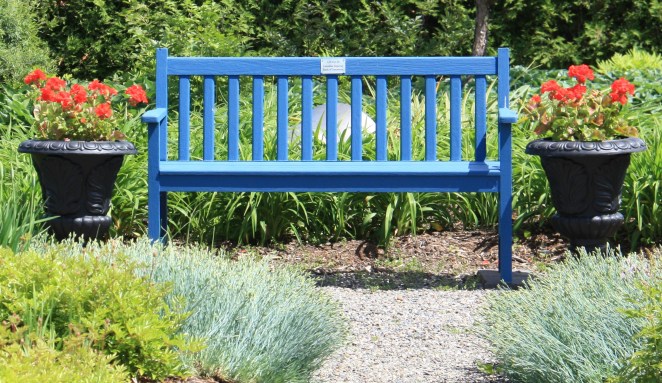
Sandman 2

IMG_0052.JPG
Kingsbrae 17.1
17 June 2017

Sandman 2

The sandman brings sand
to put in the sandwiches
we have packed for the beach.
It’s as coarse and fierce as salt
flowing through an hourglass,
or red sand in an egg-timer,
not clockwork and wound,
but the sort you turn upside
down. Sand: it counts each
minute of each day, turns
minutes into hours, hours
into days, sands the stone
block of our lives, like a sculptor,
into smaller, more manageable
shapes and chunks. Sand sticks
to our clothes, makes us wash
our hands and brush ourselves
thoroughly before we sit down
to eat the sand that has sneaked
into the lunch-time sandwiches
we brought to nibble on the sands.

Comment: This is another example of the effects of a rewrite that takes place in a different time and place. The original of this poem appeared in the blog on my father’s birthday, 17 May 2017. Sandman 1 can be see by clicking on the title. A quick comparison shows how the themes have changed an meaning has been deepened in the later version, Sandman 2, published above. I am intrigued by the differences caused by a change of time and place.  There is room for still more development in this poem. It will be un to see Sandman 3, if it evolves further.

Pinot & Palette

weir 2.png

Kingsbrae 16.5
16 June 2017

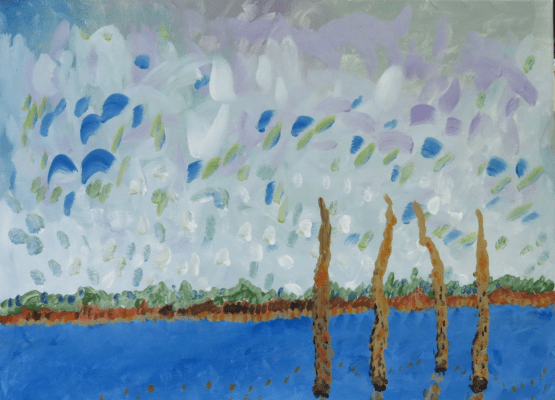
Pinot & Paint

“Slap it on,” says the instructor,
“the sky first, various shades of blue,
darker at the top, lighter down below,
by the horizon line you dribble
across the bottom third of the page.
Add some white to lighten the blue
and maybe a little touch of yellow.
Now the landline, on the horizon,
brown first for the rocky shore,
a rub of green for foliage and trees.
Now, for the sea, take blues,
light and dark, mix them with a touch,
yellow, green and lighten them
a little with a touch of white.
Next come the cedar weir poles,
dark down below where the high tide
soaks them, lighter on top, use red
and yellow and a touch of orange.
Remember the shadows, and don’t
forget the way the poles are reflected
in the water, use broken lines for that,
matching colors. When you’re done,
just sign your name in the corner.
Finish your wine and cheese, now,
tell me: wasn’t that so much fun?”

Comment: We, the resident artists of KIRA, went to Geoff Slater’s workshop / studio to join in his Friday afternoon Pinot & Palette painting session. This was a two hour extravaganza with two glasses of wine, a cheese plate with bread and pickles, an empty canvas that we were obliged to fill, and a palette of acrylic paints with which to fill it. Geoff, the artistic director at Kingsbrae Gardens, led us step by step (as sequenced above) through ‘how to paint a picture’. The subject he chose for us was a fishing weir from Passamaquoddy Bay. He began by giving us a history of the weirs (click here for the appropriate poem) and their uses by the Passamaquoddy peoples and then he led us step by step through the painting process. At the end of the afternoon, the participants saw their paintings held up for all to see. They were mounted in a standard frame that highlighted the art as art. At the session’s end we parted with a great gift: our paintings, done by ourselves, and a deeper understanding of the history of the local region, the workings of the fishing weirs, and a deeper knowledge of how to paint. All in all it was a wonderful experience.

Weir

IMG_0233

Kingsbrae 16.4
16 June 2017
Weirs

Weirs are where the were-wolves
bay at midnight as they dance on
cedar weir-poles, stars above them,
the herring trapped, swimming
silent circles beneath the waves
while the white horses, prancing,
dancing, avoid bridle and bit and
the saddle’s leather shame placed
over wild, bucking backs, no blind
-folds here, just dumb fish, circling,
their DNA hard-wired for what
Vikings called their weird, or fate.

Stand Off

IMG_0170.JPG

Kingsbrae 16.3
16 June 2017

Stand off

Yesterday,
a raven and an eagle,
bald-headed,
faced off on the ice.

They stared at each other,
necks tucked into
hunched shoulders,
feathers fluffed,
otherwise unmoved,
unmoving.

Each dared the other
to make himself vulnerable,
to stretch out his neck
for the dead fish lying
beside the ice hole
they both guarded.

It seemed as if
they were waiting
for the opening whistle
that would send them
head to head
in mortal combat.

Immobile combatants.
Slow dance of moving ice,
cracked and crackling.
Sudden swift sparring:
a dance of death.

This Old Man

IMG_0067.JPG

Kingsbrae 16.1
16 June 2017

This Old Man

This old man, with his bundle of memories
carried on his back like a snail carries his shell,
a broken record, he played, with the gramophone needle
stuck in a groove and the same tales repeated.

The ancient  mariner who lives in his brain
stops people in the street and retells
the old story: life’s doldrums where
no winds blew and his ship just drifted,
with no wind to bring it home.

Then blew the wind of change, and suddenly
the sun was just as warm as it was in his youth.
The sea became blue again.  Flowers flourished
brighter, stronger. Birds chirped in the trees.
Light grew bright and he felt beauty return to
the new-born world of his second childhood.

Comment: My journal tells me that I wrote the original version of this poem on Friday, 21 April 2017, and posted it to my blog on Sunday, 23 April 2017 . Today’s rewrite changes the structure and tone of the poem and illustrates how time and place can influence any previously generated word sequence. For time and place we can also substitute attitude and change of heart, as Ludwig Wittgenstein suggests. More important, perhaps, our attitude and outlook can change with the weather and the state of our digestion. This is the same poem, then, written by the same person, on two different days. Or was it the same person? My stay at this residency would suggest that perhaps the person has changed along with his attitude, his outlook, his digestion, and the weather.

This Fragile Light

IMG_0021

Kingsbrae 16.1
16 June 2017

This Fragile Light

This fragile light
filtering through
the early-morning mind
filled as it still is
with night’s dark
shadowy dreams
their dance demonic
or perchance angelic
as light rises and falls
in time to the chest’s
frail tidal change
the ins and outs
of life-giving breath

Bright motes these birds
at the morning feeder
feathered friends
who visit daily
known by their song
their plumage
their ups and downs
as they dazzle and spark
breaking the day open
with their chorus of joy

Comment: According to my journal, this poem was written on Saturday, 25 March 2017, and is number 32 in the Kingsbrae Cycle that I started on 3 March 2017. I posted it to the blog on 26 March 2017 and you can view it and the earlier comments by clicking here. This Fragile Light is art of the Kingsbrae Cycle in tone and mood. It didn’t need to be rewritten in situ, and I repost it in its original form. From now on, this pattern of a repetition of earlier posts together with a rewriting of earlier poems and the creation of new ones will be the central pattern of the Kingsbrae poems. What will change are the pictures accompanying the photos.


Beachcombers

IMG_0055.JPG

Kingsbrae 15.4
15 June 2017

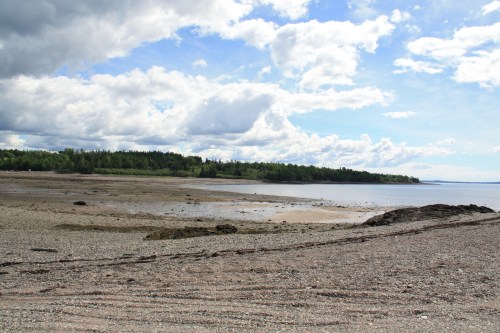
Beachcombers

Low tide on the island,
the bay haloed with silence.
Wading in the distance,
tourists and school kids,
shapes wading in shallows.

Soft footprints, my past,
through a seascape of echoes:
sand at the Slipway
and
rocks at Pwll Ddu.

Another sea now,
and a similar shoreline;
same light in the sky
as, barefoot, the bathers
still hop and still stumble
over sharp pebbles.

Time walks backwards
and fills me with sorrow.
Ghosts of my mother,
my father, lost brothers.

Clouds cover the sun:
so sudden the tear-tang,
salty on tongue


Eyeless in Kingsbrae

IMG_0150.JPG

Kingsbrae 15.3
15 June 2017

Eyeless in Kingsbrae

There’s warmth in a color,
and heat’s visible to the touch.
Shocking pink has a different
feel beneath the fingers,
and it has no name that you
and I, sighted, would ever know.

They push me, blindfolded,
around the garden. Gravel’s
crunch beneath the wheels
sharpens my inability to know,
to be sure of shadows and shapes
that are no longer there.

The ones who push me talk
and tell but cannot show.
How could they hold a rain
-bow before my eyes or
explain those lights that
crisp and crackle in the sky,
a visible Niagara Falls
with fairy lights
dancing up and down?

And those glorious choirs,
angel voices rising, falling,
grasping my eye-lashes,
trying to pry my eye-lids open.

Oh song of songs, and the singer
deaf to his own sublimity.
Oh dealer of false cards,
fingerless pianist, and dancer
shuffling on amputated stumps.

Y Ddraig

IMG_0094.JPG


Kingsbrae 15.2
15 June 2017

Y Ddraig

“Here there be dragons!”
The old maps used to say.
A sea-serpent decorated those maps,
a kraken, perhaps, or another monster
drawn from the depths of the unconscious.

In Wales there used to be dragons.
Old massive bones rose to the surface,
long ago, and there were skulls
and other artefacts lurking in the coal seams
that snaked through dark mines.

The fear of dragons is still within us.
We know they can fly in from nowhere,
setting fire to the crops, burning the houses,
killing people in an unequal battle in which
one party can fly while the other
can only run and hide,
or else burn publicly in the open streets,
Guy Fawkes figures in their multiple bonfires,
flaring in those deadly white phosphor flames.

Bonfires and bone-fires:
I have also seen the Cancer Dragon
growing within the human body
and burning the poor patient alive,
from the inside out.

Y Ddraig Coch:
the Red Dragon of Wales:
long may he stay on our flag
and rule the skies from his flagpole.
Those who wish for the dragon’s return
yearn indeed for sadder, madder, darker days.

Comment: Another ‘raw’ poem, but one that I have been thinking about for some time. It was driven from the back to the front of my mind by Carlos’s photo of the dragon in Kingsbrae Gardens. Carlos is my photographer and travels far and wide, taking photos that he then shares with me. I am very grateful to him for this sharing. I usually work my photos on the IMac, but here I am working with a PC that I am only just beginning to understand. There are so many new things happening that it is difficult to keep pace with them all. Oh yes, and this poem is an allegory [a representation of an abstract or spiritual meaning through concrete or material forms; figurative treatment of one subject under the guise of another, definition from dictionary. com], but I am not sure that I know what the hidden meaning actually is.

Creativity: Thursday Thoughts

IMG_0070.JPG

Creativity:
Thursday Thoughts
Kingsbrae 15.1

15 June 2017

The KIRA experience has been very kind to me. It has enabled me to spend time writing and thinking without the necessity of worrying about the daily rituals and necessities of everyday life. In addition, the daily conversations with the other artists in residence have kept my mind focused on the process of creation and this has allowed me to study how I am creating. As many on this blog have noticed, I have been very productive during this residency, and there are several reasons for it. I would like to share some thoughts and ideas with you.

Journal: On 2 March 2017, I received an e-mail telling me that I had been accepted for the arts residency at Kingsbrae. As most of you know, I keep a journal and write in it every day. On 3 March 2017, I started my Kingsbrae poetry sequence. I began by reading the entirety of the Kingsbrae web page and then watched the Kingsbrae Garden videos online. Then I began jotting down in my journal poems and snippets of poems, creative thoughts, metaphors, images,  and ideas. By the time I came to Kingsbrae, I had 90 proto-poems in place. Since they were taken from photos and videos, and were not written in situ, I saw them as prototypes, rather than as the real thing.

The Journal as Poetic Quarry: I look on the journal as a poetic quarry. It contains many stones, some tiny, some larger, some useless, and some very precious indeed. One part of my poetic journey here at Kingsbrae is to go back over these stones, turn them over one by one, discarding the dross, and concentrating on the precious material that has lain there waiting to be re-discovered. Now that I am on site, it is easier to distinguish between those essential words, the ones that really count, and the lesser words, the ones that can be dismissed. This sifting process needs time and thought, and that is exactly what the residency has given me. Writing tip: keep a journal. Mark in red those passages that contain seeds of poetry, images, metaphors, rhythms etc. Return to them when you have the time to do so. Time and space are essential: a time in which to work and a space in which to work. Without these two things , we are lost as writers. ‘I don’t have time,’ you think. Ask yourself: ‘what is more important than a little time each day, spent on yourself and your writing?’ As writers, we MUST indulge ourselves with those two little gifts, time and space. An hour a day is more than enough: find that hour, use it. Ten to fifteen minutes a day is enough to keep us ticking over: if we can’t find that ten minute space, then we are unfortunate indeed.

The Revision Process: As I develop as a writer (and believe me, I am still developing), I realize that the ability to recognize good writing is one of the most important skills that we possess. Re-reading is one thing. Distinguishing the great (oh yes, there are great thoughts and metaphors in those journals), from the good, from the average, from the futile and meaningless is a key skill. All of us have wasted precious time on an idea that just didn’t work. We have worried at it like a dog at an old bone, drooling, gnawing away, growling at ourselves and the bone, getting no nourishment. Leave those ‘dead’ ideas, those ‘dead’ metaphors. Move on to the good ones asap. Our writing time is precious: don’t waste it. Learn to recognize the good and workable from the lesser writings that waste our time.

The Creative Process: “What is this life if, full of care, / we have no time to stand and stare?” This is the first line of one of W. H. Davies’s poems. The Kingsbrae Residency has given me time to stand and stare. It has also given me time to sit and stare. Emptying myself of the daily drudge, I have been able to allow light and inspiration to enter my mind and fill me with creativity. I have discovered that there are ways to do this: meditation, an open mind, an emptiness within that slowly fills, and, above all, carpe diem, the ability to recognize that moment and seize it and exploit it. None of the above is unique to me. If we are at all creative, we are all faced with a simple choice: to develop our creativity or to let it wither. Most of us are too ‘busy’, in the worst sense of the word, to allow ourselves the time we need to create. This is a process we must reverse. We must return to self time, thinking time, emptiness time, metaphoric creative time.

The Value of Art: The modern corporate businessman’s mind is of the type that knows the price of everything and the value of nothing. As a result, we have the tendency, as artists, to fall into the ‘price’ mold rather than the ‘value’ mold. If we do not stop and think, if we do not find the time to create, if we do not search for the absolute values that are represented by our art and our creativity, then we count the pennies, add up the costs, and look at the price. Nobody said art was facile. Nobody said that creating the time and space in which we could create would be easy. This residency has convinced me of one thing: that without that time and space, we are nothing but drones, workers, lifeless puppets, going through the motions as other people pull the strings, lacking the spiritual wherewithal … We must stand up for creativity, for being different, for doing things differently, for being ourselves. We must stop being digitalized consumers and become, or continue to be, active, thinking creators. The world needs creativity and art. It needs people who stop and think. It needs people who think differently. It needs artists and creators. It needs us. What we do as artists and creators is precious and valuable. Never doubt it. Never forget it.