Tell us about a time when you felt out of place.

Daily writing prompt
Tell us about a time when you felt out of place.

Tell us about a time when you felt out of place.

A harder prompt might have been “Tell us about a time when you felt you really belonged”! On the outside looking in is the story of my life.

On the Outside Looking In …

            I walked home on my own. As usual. I’d hated the church Christmas party with all its trumped-up noise, childish games, and artificial gaiety.
            The priest, formidable yet effeminate in his long black skirted robe, had made us sit in a circle on the floor, legs crossed. He stood inside that circle and placed a bar of chocolate on the wooden boards. Then he walked around the group and whispered a word in each boy’s ear. 
            “You must wait until you hear your secret word,” he explained. “Then one of you, when I speak that word, may claim the chocolate bar,” he stared at us, large, horsey teeth, black hair streaked with grey, eyes golden, fierce, like an eagle’s, beneath bushy eye-brows. “When you hear your secret name, you must grab the chocolate bar. Understood?”
            I had come to the party on my own as both my parents worked. The mums and dads who had brought their offspring to the party leaned forward in keen anticipation. The boys all nodded.
            “Are you ready?” The priest watched us as we nodded and then he shouted “Alligator!”
            Nobody moved.
            “Elephant!” The boys shuffled forward, like inch worms, hands twitching, fingers flexing and grasping.
            “Tiger!” A sigh emerged from multiple mouths. Some of the boys licked their lips.
            “Lion!” One boy moved, but the priest shooed him away. “Sit down. That wasn’t your word.”
            “M-m-mouse!” The boys heaved, a sea-wave about to crest and break.
            “I do love this game,” said the priest to the parents. “And so do the boys, don’t you boys?”
            “Yes, father …” came the chorus.
            “Monkey!” All the boys leapt into springy action. They dived, crawled, leaped to their feet, ran … a surging heap of boyhood writhed on the floor as the chocolate bar was torn apart and the long-awaited fights ensued.
            All the boys moved, except me. I just sat there.
“I said ‘Monkey,’” the priest frowned at me. “That’s your word. When I say ‘Monkey’, you join in with the others and fight for the chocolate.”
            I shook my head.
            “Have some Christmas fun. Join in the game.”
            I again shook my head.
            “Why not?”
            “You’re just mocking us.  I want to go home,” I stood up and walked away. I stopped at the door and turned and saw the priest glaring at me while a mound of boys continued to scrummage on the floor.
            As I walked home, it started to snow. Not the pure white fluffy snow of a pretty Merry Christmas card, but the dodgy, slippery mixture of rain, snow, and ice pellets that turned the steep streets of that little seaside town into an ice rink. I turned up the collar of my coat, bowed my head, and stuffed my hands into my pockets. Two houses before my own, I stopped in front of our neighbor’s house.
The window shone like a beacon in the gathering dark. I drew closer, pressed my nose against that window and looked in. A Christmas tree, decorated with lights, candles, more decorations, a fire burning on the hearth, two cats curled up warm before the fire, presents beneath the tree, stockings hanging from the mantelpiece. For a moment, my heart unfroze and I felt the spirit of Christmas. Then I thought of my own house. Cold and drafty. No lights, no decorations. No fire. The snowball snuggled back into my chest and refused to melt.
            When I got home, our house stood chill and empty. My parents were out at work and the fire had died. Nothing was ready for Christmas. I sat at the kitchen table, took out my colouring book and began to draw. When my mother came home, I showed her my drawing.
            “Very nice,” she said without looking up.
            “But mum, you haven’t really seen it.”
            She blinked and stared at the picture. This time, she saw the Christmas tree and the lights, the cats and the candles, the decorations and the presents. But she never noticed the little boy standing outside the house in the falling sleet, peering in through the window.

Share a lesson you wish you had learned earlier in life.

Daily writing prompt
Share a lesson you wish you had learned earlier in life.

Share a lesson you wish you had learned earlier in life.

I wish I had learned earlier how hard it is to grow old and how difficult it is to prepare for it. My first serious rugby injury, age 16, torn cartilage in left knee. Doctor’s advice: give the game up now. Later, you’ll regret it if you don’t. My response: I’m tough. 60+ years later, my left knee still creaks and I rub ointment in every morning. My second serious rugby injury, age 20, damaged lower back. Doctor’s advice: give the game up now. You’ll regret it later if you don’t. My response: I’m tough. 60 years later, my back really hurts. I rub ointment in every morning, take pain killers, and stretch. Same with hips, from kicking! One of my rugby friends, about the same age as me, has two knee replacements, one shoulder replacement, and one hip replacement. If he’s not the $6,000,000 man, he must be pretty close.

But there is a story beyond that story. I was sent to a series of boarding schools and no, I didn’t go there willingly. In the summers, I travelled abroad to learn foreign languages that were foreign to others but became familiar to me. I never saw my grandparents as they aged. Often, when they died, I was in school, or away on the continent. I never understood the ageing process. I never witnessed the natural decay of those whom I loved. I never learned that lesson. When I left university, I emigrated, and the same sequence happened with my parents. I was never there when it mattered. I was always somewhere else. And when I was there, I heard the usual litanies: “This never happens when you are not here. It’s your fault.” Or else, “this wouldn’t have happened if you had been here.” Told to me by a close relation at my mother’s funeral. I flew back home, though it was never really my home, to be present for that.

But what is the lesson that I wish I had learned earlier? Alas, there is not just one lesson, but a series of lessons. How to deal with the ageing process. How to face sickness and ill health in age. How to face diminishment with grace and humor. How to accept the natural process that occurs whether we want it to or not. How to face the gradual decline in someone, close to you, your life companion whom you really love. How to face the fear of passing (FOGO to some) and how to pass that lesson on to our own young ones. How to face my own end and how to die with as much dignity as possible.

King Canute

King Canute

I imagine King Canute, sitting on his throne,
at the seaside, surrounded by his court
as he tries to turn back the rising tide.
Or is he just proving that it can’t be done?

In vain we struggle against the rising waves.
We piss into the wind and try to drown
the thunder with our pitiful, impoverished farts.

Some preachers preach that we are immortal,
but mortal we are, facing such adversaries
as wind, rain, thunder, and the rising tide.

Who nailed us to this cross of cloudy doubt?
I hear crass crows cawing for tomorrow, but
it never comes, and if it does, it becomes today.

Today we must count the cost of every footstep
that leads us again into the Darkest Ages,
and back to the Stone Age, sent there by a rain
of unstoppable destruction, unleashed in our pride.

Share a story about the furthest you’ve ever traveled from home.

Daily writing prompt
Share a story about the furthest you’ve ever traveled from home.

Share a story about the furthest you’ve ever traveled from home.

Once upon a time, I lay in the sea, at midnight, in Brandy Cove, and I watched the moonlight lap over the waves as I lay there. I began to relax and felt the moon rise. Then I rose up with it, just like Cyrano de Bergerac, and I rose, rose, rose, up into the sky until I was level with the moon.

Was this the furthest I have traveled from home? No.

Once upon a time I climbed with Don Quixote and Sancho Panza upon the back of Clavileño and I rose up, up, up into the skies until I danced among the seven sisters, the Pleiades, and counted them, one by one. Sancho told me they were little goats, all colored differently. “And look,” he said. “That’s the earth, down there, as small as an orange pip.”

Was this the furthest I have traveled from home? No.

A long time ago, I visited Stonehenge and marveled at the temple my ancestors had created there to tell the time and worship the sun. Seven thousand years ago, they told me. I closed my eyes and dreamed I was back there with them, digging the post holes and raising the stones.

Was this the furthest I have traveled from home? No.

I also visited Hengistbury Head in Dorset. There I discovered the scrapes the Reindeer People had scratched in the chalky soil nearly ten thousand years ago. Older than Stonehenge, I lay down in the rocky soil high above what is now the English Channel. My mind went back in time. The waters slowly receded and I saw green grass where herds of reindeer crossed the meadows that still attached Albion to the mainland of Europe.

Was this the furthest I have traveled from home? No.

Once upon a time, I truly traveled and visited Avila. I wandered among the ancient ruins of the pre-Christian monuments. There I stroked the granite of the Toros of Guisando, and watched the ever-lasting storks as they nested in the towers of all the churches. I also walked the Roman Road at the Puerto del Pico. When I ran my hands over the bodies of the verracos, I marveled upon how far away from home I found myself, and how small the world really was.

Was this the furthest I have traveled from home? No.

Once upon another time, I really traveled, this time by plane. I flew to Oaxaca, Mexico, and went back a thousand years or more in time. I read the Pre-Columbian Mixtec Codices, climbed the temples, visited the tombs, consulted a witch doctor, drank mescal, ate chapulines, and entered a world beyond my world.

Was this the furthest I have traveled from home? I no longer know. But I do know that el mundo es un pañuelo – the world is a handkerchief, as the Spanish say. Yes indeed. It is a small, small world. Alas, too many people are blowing their noses into it right now and I see and grieve for this, even when I am at home.

Coal Face

And Every Valley

And every valley shall be filled with coal.
And the miners will mine, growing old
before their time, with pneumoconiosis
a constant companion, and that dark spot
on the grey slide of the sidewalk a mining
souvenir coughed up from the depths
of lungs that so seldom saw the sun
and soaked themselves in the black dust
that cluttered, clogged, bent and twisted
those beautiful young bodies into ageing,
pipe-cleaner shapes, yellowed and inked
with nicotine and sorrows buried so deep,
a thousand, two thousand feet down,
and often so far out to sea that loved ones
knew their loved ones would never see
the white handkerchiefs waved, never
in surrender, but in a butterfly prayer,
an offering, and a blessing that their men
would survive the shift and come back
to the surface and live again amidst family
and friends, and always the fear, the pinched
-face, livid, living fear that such an ending
might never be the one on offer, but rather
the grimmer end of gas, or flame, or collapse,
with the pit wheels stopped, and the sirens
blaring, and the black crowds gathering, and
no canaries, no miners, singing in their cages.

Comment: A friend wrote to me about the closing of the pits in Nottinghamshire and how the mining communities had suffered, were still suffering, and might never recover. This poem is the first one in a sequence on the mine closures in South Wales and other mining communities. Poems For the End of Time – the book is available here.

Low Ebb

Low Ebb

We have been apart too long, my love,
night’s dark corridor lying between us
and neither of us approaching the other
when doors close and blinds are drawn.

The way to the heart of the matter is not
an easy path to walk, not any more.
Our secret ways and dreams lie cold
upon chill, empty sheets and pillows.

Each day the tide revives the beach,
flowing out, abandoning its wet debris
for the sun to perform its magic: fresh
seaweed drying above warm sand.

Sea-birds bury their beaks, writing claw
letters as crabs burrow, dig deep, waiting
for the tide to return and re-create
its alternate reality of dreamy waters.

Half of my bed performs its nightly duty.
The other half lies cold, empty, lonely.
No sea-life wanders there, not even in
my most creative dreams of sun and sand.

Comment: The loneliness of old age is compounded by many factors, including ill-health, sleeplessness, and the need to sleep in separate rooms. How many homeless people suffer that loneliness, and more, and at ages much less than ours? And then there’s the distress of trying to live in poverty, to survive from day to day, with safety net that will not protect us, if we chance to fall. A sad world then, as Polly Toynbee points out in today’s Guardian.


What TV shows did you watch as a kid?

Daily writing prompt
What TV shows did you watch as a kid?

What TV shows did you watch as a kid?

Well, first of all I want to define the age group that outlines the meaning of ‘kid’. Here’s one definition: What age range is a kid? Children (1 year through 12 years) Adolescents (13 years through 17 years. They may also be referred to as teenagers depending on the context.) If we start with the 1-12 year old age group, then I can safely say I had no favorite TV shows as a kid, quite simply because during those years, we didn’t have a TV. Ipso facto, not having a TV, I couldn’t watch one.

That said, our first family TV was bought by my maternal grandfather in June, 1953. It was very small, black and white, very grainy, and was the only one on the street where he lived. I remember all of us crowing into the sacred room where the TV stood and watching the Coronation of Queen Elizabeth II. I was 9 years old at the time. I don’t remember much about the Coronation, but it was my first TV show.

Early TV. In the beginning, there were black and white sets. The BBC had only one channel. It came on from 12 noon until 1:30 or 2:00 pm, then shut off until 5:00 pm when it opened for evening programming until 9:30 pm or 10. I was safely tucked into my bed by then. And since I visited my grandparents at odd times, I rarely saw any TV shows. I do remember Sooty, a hand puppet, hitting Harry Corbett, the puppet-master, with a hammer (!), and I have vague visions of Muffin the Mule, a string puppet, dancing on a piano.

By the age of nine, I had been removed from my first boarding school and was attending my second. There were no television sets in boarding schools in those days. So, guess what? There were no favorite programs. In the holidays, with both parents working, to make enough money to send me to boarding school, as they so frequently told me, I often spent time with aunts and uncles (no TV) or with my paternal grandmother (no TV). The bungalow was our favorite summer residence, and that didn’t even have running water or electricity, let alone a TV set. It had one radio, an item of religious importance, that ran off a battery, and was for the sole use of my uncle. It sat on a high shelf and was untouchable. One bungalow in the bungalow field actually had a telephone, and that was only used for emergencies.

So, in the age group I am writing about, age 1-12, I rarely, if ever, saw a TV set and I certainly had no favorite programs. Radio programs, yes. But that is a different story, one that tells of a single radio in the dormitory, to the sound of which, eight or ten or twelve boys, in rows of beds, fell asleep to the sound of music. It also tells of prowling masters who would enter the dorms and switch the radios off. I will not go into the horrors of boarding school life during those formative years. I have done that elsewhere. But the shows that I remember were all true life horror shows where real flesh and blood, in the 6-12 age group, suffered appallingly, at the hands of older boys and brutal masters. But those shows, and I remember them well, were never seen on TV and were denied vehemently by the perpetrators, boys who had been bullied in their turn, and masters who claimed they were only doing their duty and making men of us. Men, indeed, and an adulthood that I, among many others, never wanted to enter.

What change, big or small, would you like your blog to make in the world?

Daily writing prompt
What change, big or small, would you like your blog to make in the world?

What change, big or small, would you like your blog to make in the world?

Looking around me and seeing the way that the world I know is so totally divided, and knowing that words and ideas will bounce off people’s backs like rain off a duck’s back, I do not expect my blog to make any changes, big or small, to the world. Would I like it to? Yes, I would. But whether it will or not is a different question.

My blog consists of several elements. Let us start with the poetry. If I can reach out and touch somebody with one or more of my poems, then I will be very happy. This is, after all, a poetry blog. And part of that blog is a continuing discourse on creative writing and poetic creativity. If one of my articles / posts on creativity can help one person, just one, to improve their creativity, then I will feel justified with all the hard work and thought I have put into the posts.

I also write about Discourse Analysis, the meaning of words and texts. In our current, doubt-ridden world, it is often the loudest voice that carries the most weight, and he wildest ideas that get the most attention. I always remember that still, small voice that comes after the fire and the thunder: “What doest thou here, Elijah?” Alas, I am not an Elijah, nor am I a prophet, nor am I out to make a profit. But if someone, somewhere, recognizes my voice as a still, small, voice speaking a little bit of sense in this wilderness of wild words, then I will be satisfied. My creative prose comes next. It is mostly composed of flash fiction, memoirs, and short stories. If I can bring tears or laughter to the eyes and the heart of just one reader, then again I will feel that I have done my work.

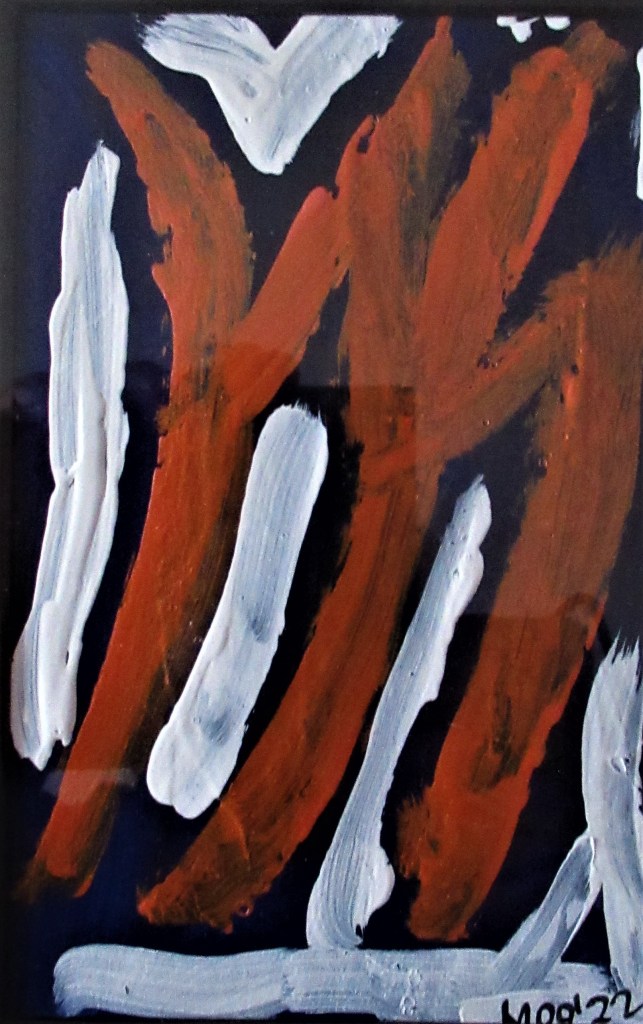
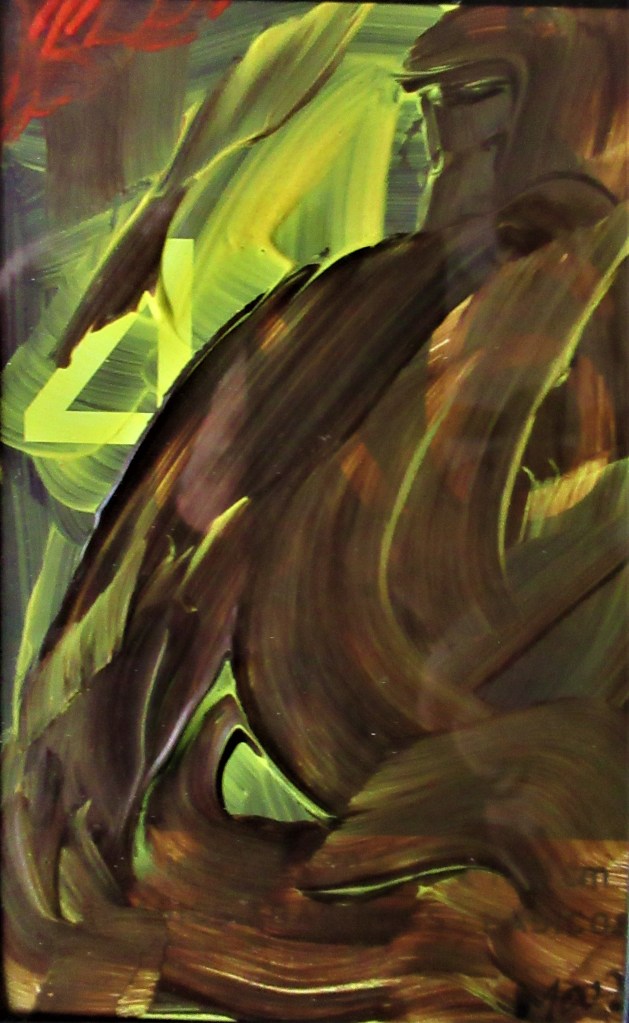
Then there is my art work. I have always been told that I am useless at art. Mind you, I think those people came from the same school of thought that told me, as a teenager, that I would never go to university – except on a train. However, I discovered Matisse and his words ‘making meaning out of color and shape’. Then came Dali – ‘I don’t know what it means, but I know it means something.’ Out of those words have come cartoons and paintings, some funny, some sad, and all of them unique. Again, if one reader / viewer finds joy in them, then I will be happy. And if my own work persuades one battered, belittled artist that he or she can paint, create, make meaning out of color and shape, then I will have achieved the minor miracle of helping to change someone’s life for the better.

As for these prompts, I have only just started to be prompted into doing something. Why? I am not sure why. I just think that I have a different view of the world from most people. If I can offer that alternative view of reality, a joyous reality, I might add, to one, or maybe even two people, then once more, I can feel that yes, my blog has made one, small change to the world around me. And I cannot ask for more than that.

Meanwhile, I think of the studies I did on the Spanish Civil War (1936-1939). The right kept moving further right. The left kept moving further left. The middle ground where discourse, creative thinking, and debate can flourish, slowly vanished. Then, when positions and thoughts became so deeply entrenched that there was no room for mainoeuvre / manouver / maneuver, whichever way you wish to spell it, then shooting broke out and people went to war and found, all too often, their often-violent deaths. I would not wish that fate on any person, government or country. If just one person would read that powerful and bitter history, and learn from it, then the world might be a better place.

To talk to one person at a time, that’s what I want from my blog. Then I want that person to talk to another person, and the third one to a fourth, and so on and so forth, until we have established, one person at a time, a linked chain that may, just may, be long enough and strong enough to help lighten the darkness and head off the dangers into which we seem to be steering.

Write about a random act of kindness you’ve done for someone.

Daily writing prompt
Write about a random act of kindness you’ve done for someone.

Write about a random act of kindness you’ve done for someone.

Sir Alex Ferguson, one of soccer’s greatest managers, once said that it wasn’t the victories he remembered, but the defeats. So it is with my own coaching career – it’s the losses I recall. Same thing with random acts of kindness. There have been many, too many to count. I will not paper my e-walls with glowing memories of past kindnesses. But what about those random acts of kindness I failed to do? Here’s one of them.

            Crave More: I hate those words. I always choose a cart with the shop’s name on the handle. I can handle that. I can’t handle a shopping cart that screams Crave More at me every time I stoop down and place another item in the wire grid. If stores were honest, they would inscribe their shopping carts with a sign that said Think More, Crave Less, and Save Your Money. I bet that would quickly cut into profits.

            Anyway, there I was, in La-La-Land, leaning on my cart, still half asleep, when this ghost drifted towards me. “Help me,” it said. “I’m hungry. I need food.” I woke up from my dream, looked at the ghost, tall, skeletal thin, cavernous eyes and cheekbones protruding, gaps in the teeth, grey face drawn and lined. The single word “Sorry” came automatically to my lips. Then I felt shame. I looked at him again. “I only carry plastic.” The excuse limped heavily across the air between us. I saw something in his eyes, I knew not what, and I turned away.

            Then, as I walked away, I added 100 lb of muscle to the scarecrow frame. Took forty years away. Filled his body with joy and pride, and remembered how he played when I used to coach him, hard and fast, but true. I ran my hand through the card index of former players that I had coached. I knew their moves, and attributes, the way they played the game, their stronger / weaker side, their playing strengths, their weaknesses. I remembered him holding up the Champion’s Cup. But I couldn’t remember his name.

            I pushed the cart all over the store in a frantic search for him. I went to the ATM and took out cash. I could hand it to him. I could tell him he had dropped it. I went through a thousand scenes. I could invite him to the snack bar. I could tell him to buy what he needed and follow me to the check out lane where I would add his purchases to my cart. I looked everywhere. He was nowhere to be seen.

            A single opportunity. One chance. That’s all we get. Miss it, and we blow the game. Take it, and we win the Championship and hold up the Cup.

How would you describe yourself to someone who can’t see you?

Daily writing prompt
How would you describe yourself to someone who can’t see you?

How would you describe yourself to someone who can’t see you?

Well, that would depend on why they couldn’t see me. “Those who have eyes, but cannot see.” Many have stood beside or before me, looked into my eyes, as I looked into theirs, and never saw me. “The most difficult role in the play is that of the fool,” said Don Quixote, “for he who would play the fool must never be one. So many people saw me deliberately playing the role of the fool and forgot the above quote. They also forgot what Antonio Machado wrote: “The eye you see is not an eye because you see it, it is an eye because it sees you.” And there you have it: why would I bother describing myself to people of that ilk, so stupid and blind with their own limited wisdom, that they couldn’t see me anyway.

Keenan’s Well, by Seamus Heaney, is a wonderful poem. It tells us about Rosie Keenan, his blind from birth neighbor, who played the piano and sang all day. She let them touch her books, like books of wallpaper, and feel the letters of braille by means of which she was able to read. They allowed her to touch their faces with her oh-so-sensitive fingers, and she said she saw them, as well as knowing them by their voices. When he read her a poem about Keenan’s well, she told him that she, blind from birth, ‘could see the sun shining at the bottom of it now.”

How would you describe yourself to someone who can’t see you? I wouldn’t waste my time and energy trying to do so.