Heroes

IMG_1203 (2)

Heroes

In 1898, when Spain lost Cuba, they lost the last vestige of their world-wide Empire and were forced to turn back in on themselves. Miguel de Unamuno, along with other artists from the Generation of ’98, turned to the concept of intra-historiaHistoria / history means the great historical events, battles and conquests, kings and kingdoms (how male it all was!). Intra-historia / intra-history meant the every day lives that ordinary people led, lives that had remained basically unchanged for centuries, except when the men who made history rode through.
Do the small things in life: that’s all most of us can do and have done, throughout the centuries. And we are the true heroes, certainly of intra-history, you and I, and people like us, because we have worked all our lives at our daily tasks, we have brought up our children, we have made the small, micro-world which we inhabit into a better place. Intra-history is dedicated to the house-wives and the house-husbands, heroes all, who have done those small things in life, walked the dogs, fed the chickens, milked the cows, gone out to work, day after day, to put food on the table, delivered and brought up the children, looked after the sick, assisted the dying on their departure from this world, buried them, and given them peace. Heroes all, especially in these times of troubles, I salute you. 
Nurses, health care workers, pharmacists, ambulance drivers, supermarket workers who allow us to bring the food to the table, care-givers, cleaners, garbage men, street-workers, heroes all, I salute you. It is time the ‘little people’ reclaimed their world and took it back for the REAL people, the real heroes.
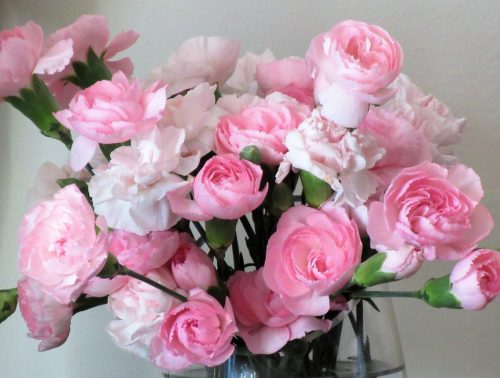
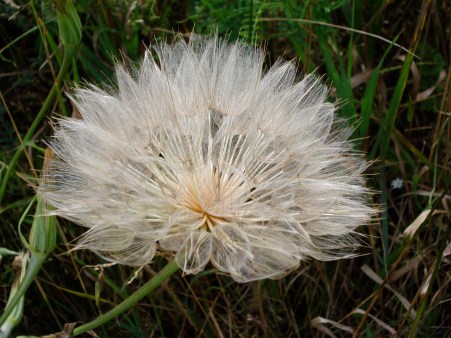
So, my heroes, be brave, battle on, and accept this floral tribute.
cropped-img_0172.jpg

Why?

IMG_0446

Why?

“Where are you going?” I ask again. “To see a man about a dog,” my father replies.  “Why?” I ask. “Hair of the dog,” his voice ghosts through the rapidly closing crack as the front door shuts behind him. “Why?” I cry out.

I recall the mud nest jammed tight against our garage roof. Tiny yellow beaks flap ceaselessly open. Parent birds sit on a vantage point of electric cable, their beaks moving in silent encouragement. A sudden rush, a clamour of wing and claw, a small body thudding down a ladder of air to crash beak first on the concrete.

“Why?” I ask.

The age-old answer comes back to me. “Wye is a river. It flows through Ross-on-Wye and marks the boundary between England and Wales.” The swallows perch on the rafters watching their fledgling as it struggles on the floor, the weakening wing flaps, the last slow kicks of the twitching legs.

“Why?” I ask.”

Y is a crooked letter invented by the Green Man of Wye,” my grandfather says.

“Why?” I repeat. “I want to know why.” Silence hangs a question mark over the unsatisfied spaces of my questing mind.

Comment: A golden oldie. We would all like to know why. But there are no answers. Just riddles cast, like two trunk-less legs of stone, on the sands of time. Nothing beside remains. Yet still we ask the age old question? Why? And still we get the age old answer from the ageing masters who rule our childhood lives and teach us everything they know: “Because.”

Funny Old World


UNADJUSTEDNONRAW_thumb_2731

Funny Old World

It’s a funny old world,
this word-world of mine,
where one day
I am whirled off my feet
and the next
my toes seem to be set
in concrete.

Meaning?
I throw the question out,
a bone to the dog,
wet food for the cat,
sun-flower seeds for the chipmunk,
but there’s no reply.

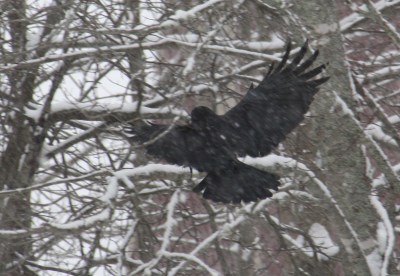
Only the crows,
black-winged monarchs
destined to wear
a weighty crown,
cry out their anguish,
longing for the day
when they’ll come back to earth
and rule again.

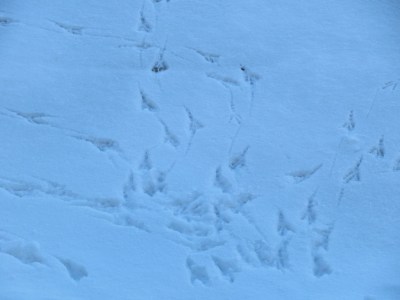
Comment: A golden oldie, really. What indeed does it all mean and is survival the only thing that matters? For many of us, including the cats and the dogs and the birds in the garden “munchies in and munchies out, that’s what life is all about.”  And indeed it is. Some days I just look at the crow’s feet on the lawn or those growing beside my own and my beloved’s eyes and “What’s it all about, Alfie?” I ask myself.  It’s certainly a time when I question so much: my values, my life-style, my memories, the whole of my life, where I have been, where I might be going, the things I have done and left undone. My thoughts err and stray like lost sheep and then I realize that really, deep down, it doesn’t matter. Whether I am here, or not, the crows will continue to fly over the garden. The crows will leave their little footprints in the snow, and whether they like it or nor, crow’s feet will continue to grow in the corner’s of the old folks’ eyes, in spite of all the beauticians and all the rejuvenating lotions in the snake oil promises of this oh-so-beautiful world.

Keeping Score


IMG_1337 (2)

Keeping Score

(‘… we blossom and flourish
like leaves on a tree
and wither and perish …’)

In the beginning was the number,
and that number was one:
number one.

Place it on the chessboard,
square A1,
bottom left corner,
black.

Next door,
on square B1,
white,
place number 2.
Next door,
C1,
place number 4.

The D1 square
claims number 8.
The players are abandoned
to their fate.
16 perch
on square E1.

32
land next door,
what fun,
and crowd into
square F1.

Square G1
sees 64
and H1
numbers
128,
each number a person,
forsaken of late,
and left to perish
in a perilous state.

Black on the left,
white on the right,
the numbers will soon rise
out of sight.

That’s just the start,
the first rank done.
Now we can really
have some fun.
A bean counter’s work
is never done.

H2 = 2-5-6.
Now we’re really
in a fix.

G2 = 5-1-2.
Whatever are we
going to do.

F2 = 1-0-2-4.
Now we’re rattling
up the score.

E2 = 2-0-4-8:
why did we procrastinate,
enjoying ourselves,
rich, young and wealthy,
thinking everyone
hale and healthy,
encouraging them
to drink and party.

D2 = 4-0-9-6.
‘What’s this?’
They cried.
‘It’s just the dead ones,’
we replied.
“Surely there can’t be
many more?”
We said we really
couldn’t be too sure,
though we all wished
it was somewhat fewer.

Body bags are not too pleasant,
laid out in rows,
or curved in a crescent.

“C2?”
We were asked
by a man in a surgical mask.
“8-1-9-2,”
came the reply,
“and there’s lots more
yet to die.”

“B2?”
“I’ll have to tell you later,
when I’ve checked
my calculator.”

We punch the numbers,
one by one.
Keeping score is so much fun.
“8192
multiplied by 2
gives us
1-6-3-8-4.”
“My God,” he said.
“How many more?”

A2
multiplies by two
the numbers laid out
on B2.
“We’re sorry,” we said,
“the news ain’t great:
now we’ve climbed to
32 thousand,
seven hundred
and sixty-eight.”

Don’t bother to give us any thanks.
We’ve got to calculate six more ranks.

Maybe when we get to square H8,
the dying will decelerate.
Then maybe we can celebrate.

Until then we’ll just keep score
and hope there aren’t too many more.

Learning Disabled Learning Troubled

alebrije2

Learning Disabled Learning Troubled
by
Victor Hendricken
 

Like separate lives, they flow through our weekly meets.

The many speakers, special to their cause,

Marking trails with wise words and images

That surely we can follow through dense forest,

Where new growth, vibrant, verdant,

Fertilized by wisdoms, fed by lore,

Shines and sparkles to ever light our way.

They tell us who they are,

And hint at what we may become.

Guided by their telling,

Senses stir, touched by feelings

Long lost or never known

And yet we ask for more.

No stopping here, no rest from task.

Reflection does make wealth of all the learning,

So the last day is the first,

While still we reach, unending in our thirst.


Expectations of discovery:

Telling stories in old age,

Hoping to discover who we are,

Or who we might have been

Had we not been ourselves as we are now.

More than mental beings, physical too.

Bodies wracked by desire, not for human flesh,

But something sinister, demanding, unclean almost,

Liquid in form or hazy blue and drifting,

Wild in its ability to bring ecstacy

To crazed senses and convulsed parts.

We talk, confused by dialect

Long lost or perhaps newly made

That speaks of different times,

When different rivers ran and winds were not so cold.

And yet we tremble to recapture words

That tell our passing and the greatness that we might have been

But for our special needs.


Readers we are not, but thinkers and doers,

Now there shines a bright star.

But wild it is, yet tamed with nectar of the gods

In white coats with sealed bottles at their will,

And small round pebbles of human kindness to dispense.

Lethargic no; sleepless yes!

And still our thirst, never satisfied,

Coyly beckons to the spring.

Until at last, letters dancing

Like eggs, scrambled, with dots of pepper laced.

We close our eyes and listen

And hear the world conform, at last.

Though weary, we who hear so well,

Cannot raise the glass, or read the words

So simply carved upon our epitaph of stone.


Many have come calling,

None remained, none returned.

Yet through it all one stayed;

A beacon, to light the way through confusion,

Bringing us home through the darkness

Of our ignorance and of our bliss,

Where vision, too often blurred by regularity,

Sees not the forms that cast the shadows,

Nor the minds that hold the forms.

For we too are human, with needs,

Unique, special, and starving to be met.


How can we say without saying,

Do without doing?

What magic cleverly spins its charm

To turn the chore from task to deep desire,

So that, without seeming to accede,

Demands are met, and institutions no longer risk.

Answers are oft found in their own questions.

But questions must be disassembled,

Stripped, laid bare to each their naked parts;

Abundant clues that lead to hidden corridors of knowing

Reveal, upon examination, answers that flow

From the tips of fingers to places inside,

Where decisions are dreamed and voiced.

There, nestled in the gut, close by the heart,

Feelings are born, expressions lived.


Look to the question,

And, in the very asking find the answer.

Who educates?  Evaluates?  Decides?

Is it how well I did, or how good I am?

Did I get to play a part and why not?

Choosing is as real on the inside, as it is on the out.

Comment: I am posting some poems and texts by friends. This poem is the first on the list, written by my good friend Victor Hendricken. Congratulations, Victor: You’re #1 on the hit parade!

Fragile

PEI + bockle 2008 059

Fragile

Snow flakes fall fragile
strength in numbers
not in each morsel
falling rom grey skies

a word to the wise
there is no health
nor strength nor wealth
each one of us fragile

one puff of wind
a sudden gust
and we are gone
turned into dust
when that voice calls
go we must

Comment: I sat here looking out of the window. I didn’t mean to write a sonnet, especially such an unstructured one. Then, poetry, like life, sometimes just happens. A sudden gust and the sky filled with snowflakes. Light and airy, winter fairies floating across the lawn, not settling, scurrying on. I blinked, looked again: the wind had dropped and they had gone. Now they’re back, wind-blown, and in a flurry. Just passing through. How many in a minute, in an hour, in a day? Anonymous, no name, the numbers game: some days that’s all we can play.


Hibiscus

IMG_1777 (2).JPG

Hibiscus
Day 26 CV-19

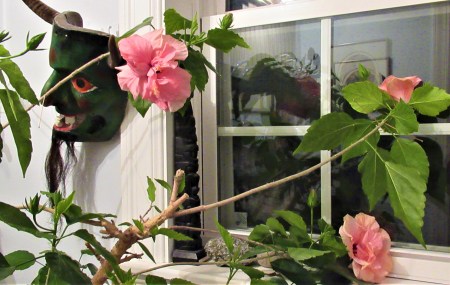
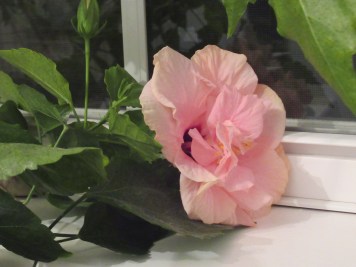
The hibiscus lives downstairs. We bought it years and years ago. A tiny plant in the florist’s shop, we brought it home. When we placed it here, by the window, we were horrified to see it was covered with tiny spider mites. Gradually, in spite of all our efforts, it lost its flowers and then, one by one, its leaves. After Clare had magicked the spider mites away, she nourished that one last leaf. “If that goes, the plant goes,” she told me. “It cannot survive without leaves.” It took time and daily care and attention, true TLC, but a second leaf appeared, and then a third. Now, each winter, it puts out flowers and fills the room with joy and light.

IMG_1776 (2).JPG

More important, in these dark times it fills us with hope and the knowledge that however bad things may appear to be, we can hang on, we can survive. We can be present in every second that we are given and that we can, and must, enjoy every moment to the full. Condemned to a certain death, our hibiscus survived to remind us of the miracle of life, for life is stronger than death, and hope is stronger than despair, and spring and summer are stronger than winter, even if it seems to be ‘our winter of discontent’.

IMG_1774


CV-19 Week 3 Day 3


IMG_1337 (2)

CV-19 Week 3 Day 3
A Change of Scene

Nothing serious happening with this change of scene, but this morning I put Phillip Larkin on one side and turned to a new book, Neil Sampson’s Apples on the Nashwaak (2019). This may be just the read you need in times like these. An excellent foreword locates the text of Neil’s narrative poem(s) in the long line of European narrative poetry. Neil’s introduction places his text in his own life on the land where he lives and wanders in Upper Durham, above the Nashwaak River. The text itself places us, as readers, in the long successions of repeated lives and deaths that mark the early settlements in New Brunswick, Canada. And yes, we have passed this way before, for better or for worse.

This is not a re-statement of ‘mal de todos, consuelo de tontos‘ / shared ill’s are a fool’s consolation. The colored apples on the stark tree that adorns the cover are a statement of hope, long term hope, even among the bleakness of difficulties, tragedies, and deaths. Like it or not, these things happen, and yes, there are survivors. Hopefully, there will always be survivors. And thus we must always live in hope. It is one of the threads that come through Neil’s poetry.

Only four trees are still alive.
The last of that first
generation
ponder existence and being
unable to walk
— no chance of pilgrimage —
have seeded their hope of redemption,
in Self.

Sounds like us, tucked away at home for three weeks and three days now ‘unable to walk’ outside and with no immediate ‘pilgrimage’ in sight or ‘hope of redemption’. Yet we sit here, un-suffering, following the news on television and radio, talking with friends on the telephone, reaching out to loved ones, near and far, on Skype, e-mailing and encouraging fellow un-sufferers, house bound, like us, ‘Children / hugging the chimney, // warm long after / the embers had died’.

Wait! In the orchard!
There’s One who’s come to call.
Those four pioneers
cankered with rot;
bark-skinned, limbs,
thin, draped in swags
of moss —

they know
who He is.

Enough for now, Neil. I shall read your book today and perhaps tomorrow, and then I will move on with head held high and hope in my heart. Thank you for your words. They are doubly meaningful at times like these reaching out to us with comfort, love, and understanding, and warming our hearts.


Outrageous Fortune

IMG_1186 (2)

Outrageous Fortune

When the Black Dog descends it is difficult to see beyond the latest slings and arrows. Everything hurts and everybody hurts you. “Sticks and stones may break my bones, but words will never hurt me.” But they do. They gouge into the brain, splinter the mind, and leave us gasping for air, mouths open like landed, stranded fish.
How do we stop the hurt? We hurt ourselves more, much more, and then what they do to us can never ever be as bad as what we have done to ourselves. That cut-throat razor, that pop-gun with the cut cord, that carving knife, that finger stuffed into the electric socket … why, they ask, why did you do it? Head down, in silence, I know the answer, but I will not tell them.
They send me to doctors with fancy names who ask strange questions that I fudge or will not answer. They take my family’s money and then write reports and say that ‘his behavior is quite normal for a child of his age’.
Have they checked the scars on my mind, the black holes in my heart? Does the local priest who tells my parents that all is well also tell them about what happens in and out of church, in and out of school? I think of the city watch walking on the castle walls: “Nine o’clock and all’s well!”
Hurt yourself, I say. Hurt yourself so badly that nobody else will ever again be able to hurt you.