Don’t hold your breath

IMG_0718 (2).JPG

Don’t Hold your Breath 

    Two small gnomes camped last night, one in each of my lungs. All night long they played their squeeze-box, wheeze-box concertinas, never quite in unison. Sometimes they stamped their feet and my body rattled with their dance. Their wild night music caught in my throat and I coughed unmusical songs that spluttered and choked, while I lay awake counting sheep and window panes and struggling with my future and my past.

    An east wind rattled my window whistling a sad song as it herded flocks of stars from one constellation to another. Wind and stars followed the westering moon’s slim finger nail as it scratched at the sky. The planets danced to the rhythms of the accordion music playing in my chest, and the sky’s planetarium folded and unfolded its poker hands of silent cards marked with my fate.

    Black jack, bright jack, one-eyed jack: what do I care when fate’s cards tumble onto the table and I count their spots. Forty card baraja, fifty-two card standard, Tarot, or any of the many others, what do we believe and why? I pluck runes from a velvet bag and shuffle and cut multi-colored cards. I survey the skies, cast dice and I Ching pennies … The fault is not in our stars, but in ourselves, that we are underlings, I mutter, not believing a word of what I say.

    I look in the mirror and see myself as I am. Grey, ageing, diminished, withering … yet proud of who I am and where I’ve been. Upright, in spite of all my failures. Proud because of all the small things that I have achieved. Who am I? What have I done? Where am I going? The eternal questions thrust at the shadows in my silvered morning mirror. Silent, it grins grimly back.


F-F-F-Forgetting

IMG_0486

F-F-F-Forgetting

    The apps and programs that no longer work. The computer files you can no longer access. The photos that vanish leaving a blank space in the album.
Now your memory goes on the blink and you forget faces and voices, friends, phone numbers, addresses, street names, the houses where people live, when to turn, where the best parking spots are, how far you can walk, where you were really going, and what you were sent out to buy.
Snow banks don’t help: that banked-up whiteness, that sticking out of the car’s snout into traffic, that stretch of your neck peering round corners. How many number plates have vanished into those white mists? How many cars? How many phone numbers have you forgotten?
You have forgotten the birthdays of your closest family and friends. When was your father born? When did he die? When and where did you bury him? Did you actually scatter his ashes or did someone else do it for you? When was your cousin born? When did he die? How close were you at the beginning, in the middle, and at the end? What color were his eyes, his hair? Did he even have any, hair, I mean of course?
What happened to that carton of eggs you abandoned in the store? Do you remember buying it, let alone leaving it there? How about your brothers, their faces, the sound of their voices? Did your own voice change when you emigrated?
Have those who live in Australia forgotten that they are Welsh? Do they speak like Australians, now, or do they still have those rich Welsh voices and rhythms that nobody in Wales ever wanted because they made us stand out when we moved, unwanted, to England? How many times have we, the Welsh, heard those threatening words: why don’t you go back home to Wales. Countless times, no doubt. In fact you have forgotten how many and you have forgotten so much.
Do you remember the parking spot in which you left your car? Do you recall your number plate or what model your car is, or what color?
“What day is it today,” you ask, for the second or third time. “I’m sure I know you,” you say to a friend who stops to talk to you in the shopping mall, “but I’m sorry, I can’t remember where we met and I can’t remember your name.”

IMG_0452

Butterfingers

IMG_0730 (2)

Butterfingers

My fingers turn to butter, but they taste of nicotine, garlic, and soap when I bite my nails. These butterfingers encourage cups to slip, saucers to fly off, run out of energy, stall, and crash to the kitchen floor where they lie in broken pieces, resting in peace, waiting to be picked up, one by one, and buried in the waste bin.

Arthritic fingers, grown clumsy now, struggle with bottle tops and glass containers screwed up so tight they refuse to open, even when soaked under the hot tap. I stick those jars in door jambs, lid first, closing the door with one hand, and twisting the jar with the other. Sometimes it slips and crashes to the floor, often with a portion of the contents spilling out.

I hate layer after layer of plastic wrapping. Flagrant in its defiance, it wages its guerrilla war against these ageing, uncoordinated fingers. I am often forced to use a knife, but a knife can slip or twist so easily. Occasionally, blunt, it will not even penetrate indomitable, multi-folded Saran wrap. So many slips between plate, teeth, and lips. Multiple precious items drop to the floor.

I cannot always bend to pick them up, and I cannot easily grasp them, not even with my new mechanical claw.

Miracles

IMG_0790 (2)

Miracles

Waking in the middle of the night, meandering along a moonbeam, making it safely to the bathroom without tripping on the rug in the hall, managing to pee without splattering the floor, the seat, the wall, or my pajamas, climbing back into bed, staring at the stars’ diminishing light until I manage to fall back to sleep. Listening to birdsong in the morning, walking to the bathroom without bruising my left arm against the door latch, shaving without cutting my face, getting in and out of the shower with neither a slip nor a fall and without dropping the soap, drying those parts of my body that are now so difficult to reach, especially between those far-off toes that I no longer see with regularity, pulling my shirt over those wet and sticky patches of skin still damp from the shower, negotiating each leg of my pants hanging on to the arm of the rocking-chair so I won’t fall over,  tugging the pulleys of the plastic mold that allows each sock to glide onto my feet, hoping my toe-nails, uncut for so long, will not catch in the wool and that the heel will end up in the right spot, forcing swollen toes into shoes now much too small, hobbling to the top of the stairs and lurching down them, one step at a time, with my stick in one hand and the balustrade in the other … always on guard for the quick, unsuspected rush of the cat, the edge of the steps, the worn patches where my cane might catch or slip … one more step, and I’ve made it down. The first of today’s many miniature miracles.

A Chill Wind

IMG_0192

A Chill Wind

computer programs
no longer function
buy a new app

word files
no longer
accessible
without a new app

photos that vanish
leaving a blank space
a new app
will bring them back

memory blinks
goes blank
brain farts
friends say

forgetting
phone numbers,
words misplaced
Freudian slips

“What day is it today?”
she asks
for the second
or third time.

“I’m sure
I know you,” she says,
“but I can’t remember
your name.”

Flickers

10151178_277751725719138_1332118377692813633_n.jpg

Flickers
(1613 & 2019)

a watch spring
this cuckoo-clock heart
fully wound up
time’s ticker flickering
waiting to strike

black hole its beak
poked the world’s fabric
shredded into ribbons
robin’s nest torn
storm-tossed onto lawn

constant this love
its warm ashes lingering
searing holes in shoe soles
soul-sick with yearning
bright bonfires burning

metaphor and meaning
real and imagined
hammering on chimneys
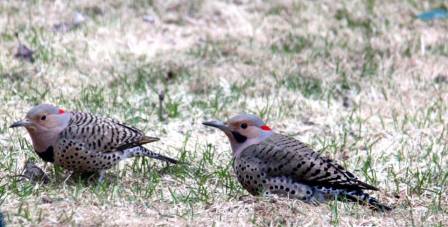
territorial flickers
spring heartbeats drumming

losers of somethings
winners of others
wings lofting upwards
light above darkness
all creature comforts

a spring need to nest
an old man’s need to rest

10150582_277751602385817_3902308875883985667_n.jpg

Palsy


IMG_0288

Palsy
(1817 AD)

starts with a twist
a palsied twitch a nod
more movement

slow loss of grip
bottle-tops won’t open
things fall to the floor

twist and twitch
turn into shakes
bad vibes not good

words tripping
on not off tongue
stumbling over teeth

vitality extinguished
a dullness in the eyes
a cork-screw turning in

bland the writing
both erased
chalkboard and page

dry honey tunnels
yellow calcined skull
empty hexagonal cells

this lone bee searching
for a special something
it can no longer find

Writing Memories 10

image3 (5)


Writing Memories 10
Module 5.1 Generation Next 

We have now arrived at our last module: the happiness brought to us by our children and grandchildren. I refer to this as Generation Next. When we emigrated to Canada, our parents stayed behind in what I am now beginning to call the Untied Kingdom. If we were lucky, we saw each other every two years or so. Life’s realities have not changed all that much, and once every two years or so is when we see our daughter and granddaughter. The big difference, of course, is Skype. The social media breakthrough now allows us to see and talk and share on a regular basis. This is wonderful. So, where do we begin with Generation next? With a poem, of course.

Yellow [Poem 1]:

Sunshine and daffodils: my grand-daughter
paddles in the kitchen sink. Her mother
washes feet and dishes. “Sit,” Finley says,
and “stand,” following the words with actions.

Now she says “Yellow, yellow,” as daffodils
fill the computer screen to shine in that
far-off kitchen five hundred miles away
by road, but immediate by Skype.

“Yellow,” Finley repeats, “yellow.” Soon
in that distant province where spring arrives
so much earlier than here, she will see
daffodils dancing their warm weather dance,

tossing their heads to gold and yellow trumpets,
fresh, alive, and young in the soft spring breeze.

Commentary: Amazing how children grow and develop. When Finley first came to visit us, her vocabulary was limited and she would select one word and preach it like a preacher leaning out from her Sunday pulpit. Yellow was such a word. Yellow bananas, yellow birds, yellow daffodils and, of course, yellow jello. Is there really any other color for jello? I tried to convert this poem into prose, but it didn’ change much.

Yellow [Prose 1]:

Sunshine, floating dust motes, and the ever-present scent of daffodils: Finley, my grand-daughter paddles in the kitchen sink, rainbow bubbles from the washing-up liquid, with its hint of fresh green apples. Her mother washes Finley’s feet first, then the dishes. “Sit,” Finley says, and “stand,” she follows the words with suitable actions. Sink water swirls and bubbles as she stamps her feet with the slurp of a washing machine, drubbing old clothes. “Yellow,” she says, “yellow,” as once again my St. David’s Day daffodils fill my nostrils with their heavy perfumes and the computer screen with their brilliant golds to shine in that far-off kitchen five hundred miles away by road, but immediate by I-Pad.  “Yellow,” Finley repeats, “yellow.” Soon in that distant province where spring arrives so much earlier than here, she will walk into the garden, hear the robin’s song, and see the daffodils dancing their warm weather dance, tossing their heads to wind-sound through green leaves and yellow trumpets, fresh, alive, and young, fanned by the scent-bearing, soft spring breeze.

Commentary: Some padding, yes, and an attempt o expand the scene and include more varied details, but a success? I am not sure. Right now, I don’t know that I have captured what I wanted to capture. Maybe it is time to rethink everything and start yet again. Before we do, let’s return to the theme of yellow.

Her Shadow [Poem 2]:

Grubby marks remain where her nose rubbed up
against the window pane. Excited she

stood there, watching birds perched on the feeder.
“Finch,” I pointed. “American Goldfinch.”

“Yellow,” she cried out with joy, “Yellow.” Her
tiny hands plucked at air, catching nothing.

Her nose, all wet and runny, left damp, snot
stained letters, her signature, on the cold

glass. That’s how I remember her. Still the
window stays unwashed and her shadow
often comes between me and the morning sun.

Commentary: We all witness them, those moments when time seems to stand still and we see eternity in a grain of sand, or in a stain on the window pane. And what pain we suffer when the little culprit leaves and the house returns to the now unaccustomed silence that reigned before the enthusiastic arrival of Generation Next. The next poem concentrates on the sense of emptiness, and no I will not retouch these poems. They are just where I want them to be.

Empty [Poem 3]:

Empty now the house, clean the floors where she
spattered food and scattered her toys, polished

the tables, grubby no more, where small hands
clattered fork and spoon, her breakfast not wanted.

Empty the bathroom, the tub where she bathed.
Dry the towels, full the toothpaste tubes she

emptied in ecstasy. Where now her foot
-prints, her laughter and tears, the secret

language she spoke that we never understood?
Empty too my heart where, a wild bird, she

nested for the briefest time, then flew, yet
I possess her still, within my empty hands.

Commentary: We have all shared such moments and they will vary for each of us. You have had them too. Write bout them, preserve them, catch them and imprison them in the lines on the page that form prison bars for words. Keep them. They are as valid as photographs and just as powerful. In fact, with the proliferation of selfies and the gradual disappearance of the hand-written word, they are probably even more powerful than the ephemera that, like butterflies or one day moths, flutter and flitter through the anonymities of our digitalized world. And now, may the light of the poetic and prosaic muses shine upon you and bring you a wealth of inspiration, for my journey is over and this workshop is done.

Writing Memories 9

IMG_0425.JPG


Writing Memories  9

Module 4.1: Love in Old Age

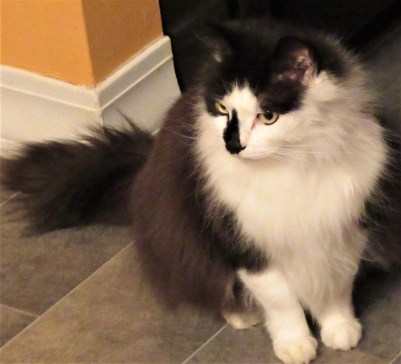
We discussed love in old age, how it happens, how it continues, how it changes with age, how important it is. As usual, we began with a poem and, since Princess Squiffy, aka Vomit, features in the above photo, I will begin with a speech, or maybe it was a rant, I overheard when my beloved was away in Ottawa and I was talking to her on Skype. I knew the cat talked, but I didn’t know exactly what she was thinking until I heard this.

Poem 1:

In Absentia
Princess Squiffy

“I hear your voice, delicate, distant. I
run to the sound, jump on the table in
my usual spot by your plastic plaything.

You aren’t here. He is. I can hear you
talk. I stalk to his noise box and see a
shadow, moving, but I can’t make it out.

My muscles first tense, then stiffen. I sniff,
lean forward, but find no trace of female
smell. I cannot sense you. You call me by

my favorite names, mew at me, and I
respond. Shifting shadows, your haunting tones,
memories dancing to the music of

your absence. I can’t eat. I bristle when
he laughs. Where are you, my love? He doesn’t
care for me the way you do. I loathe him.”

Commentary: Since these are the cat’s words, not mine, I do not think it would be right to alter them in anyway. Therefore they must stand as they are. Oh dear. Meanwhile, we must contemplate the love we have for animals, so important as we age. And yes, I love my cat, and my dog, and my false, stuffed Koala Bear, and my old goat, even though I am well aware that yes, Goats do Roam.

Poem 2:

Lost
for my beloved

My body’s house has many rooms and you,
my love, are present in them all. I glimpse
your shadow in a mirror and feel your
breath brush my cheek when I open a door.

Where have you gone? I walk from room to room.
When I seek, I no longer find. When I
knock, nothing opens. Sometimes I am scared
to enter a room because I know you’re
in there. I hear your footsteps on the stair.

Your voice, some days, breaks the silence, whispers
my name in the same old way. How can it
be true, my love, that you have gone, that you
have left me here alone? I count hours,
days, clutching dust motes, finding no solace
in salacious sunbeams and troubled dreams.

Commentary: I wrote this poem while my beloved was away in Ottawa, visiting our granddaughter. We Skyped regularly and it was during one of those Skyping sessions that the cat ranted the first poem. Love in old age takes many shapes, even for a poor little pussy cat. I guess I’ll just have to live with it.

Poem 3:

Le mot juste
for my beloved

Le mot juste, the exact word that sums it all up,
catches the essence of the thing painting it with care.

Seven colors stripe the rainbow sky, each with its name:
it seems so simple, but the world is changing every day.

Think color. Think blind. Think color blind. Imagine
the world we see reduced with failing eyes to grey scale.

Think flowers now, roses, daffodils, a hollyhock,
hydrangeas, hyacinths, hibiscus, poinsettia,

or the scent of early morning grass as it falls
beneath the blade. I look across the breakfast table

and see my wife of fifty years, a teenager reborn,
walking towards me in the café where we first met.

I search my mind for the words to describe her,
but I can no longer find le mot juste.

Commentary: What more can I say? I tried to rewrite this, but it is “so hard to recapture that first, fine, careless rapture” (Robert Browning). And I am many things, but certainly not a wise old thrush, singing each song twice over, though I wrote the above twice over, as you will see.

Le mot juste [Prose 1]:

Le mot juste
for my beloved

Le mot juste, the exact word that sums it all up, catches the essence of the thing painting it with care. Seven colors stripe the rainbow sky, each with its name: it seems so simple, but the world is changing every day. Think color. Think blind. Think color blind. Imagine the world we see reduced with failing eyes to grey scale. Think flowers now, roses, daffodils, a hollyhock, hydrangeas, hyacinths, hibiscus, poinsettia, or the scent of early morning grass as it falls beneath the blade. I look across the breakfast table and see my wife of fifty years, a teenager reborn, walking towards me in the café where we first met. I recall the café’s noise, the taste of the coffee, sugared, with cream, its bitter-sweet smell, the pink tip of her tongue testing her lipstick the hot, salt bite of melted butter on toasted crumpets. But when I search my mind for the words to describe her, I can no longer find le mot juste.

Commentary: No way, José. Great ideas, but they don’t cut it. Just stick to the original.

Poem 4:

Still
for my beloved

She moves more slowly up the slope, pushing
against the hill’s shallow grain. I know so
well her swaying grace of old, but now she
shuffles with the drag-foot limp of the aged,

and aged she has, like a good wine in an
oaken cask. Her beauty still lingers in
my memory, lodges in my mind and
still I see her as she was, and for me

still is, beautiful in body, mind … slim,
graceful, a joy to hold and behold. Her
eyes still sparkle and she bubbles still with

a champagne thrill that draws me to her, and
still she enhances each room she enters,
filling me, body, soul, with warmth and light.

Commentary: It is so difficult to watch other people age. It’s hard enough to work out what is happening in our own bodies and minds, but it is even harder to imagine what other people are going through. I look back on my grand parents, my parents, my own ageing process. Then there were cats, dogs, friends. I blinked twice and our daughter was suddenly entering middle age. My beloved and I have been together for fifty-eight years, fifty-three of them, married, here in Canada. So many memories. So much love. Sometimes words fail me. How can I say any more?

image5 (4)