Bistro 8 Flash Fiction

Fear of the Hawk

IMG_0085.JPG

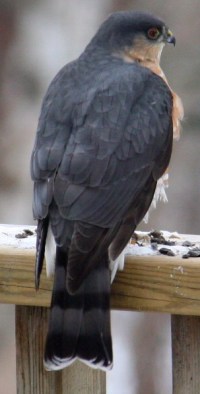
The hawk glides in on silent wings. He sits on top of the hydro pole and surveys his empire watching for the slightest weakness. Bored, he takes a step into space and drops the weight of his body onto a gangplank of fragile air. He opens his wings and speeds the feathered arrow of his passing across Frank’s garden.

CBC reports another incident. This time, Frank’s son’s regiment is involved. The boy hasn’t e-mailed his father for seventy-two hours now and Frank’s worried about him. The father thinks of his son making all those patrols among today’s smiling friends. These friends may well turn out to be tomorrow’s scowling foes. Frank knows that every day something bad may be coming, but neither he nor his son knows how or when.

Outside in Frank’s garden, the morning sun carves charcoal lines of shadow. Light dances and reduces the snow to tiny islands of white that float in a rising sea of grass. What remains of winter is no longer smooth, but dimpled and wrinkled, glowing with a million tiny dots of color. From the cloudless sky, an occasional snowflake parachutes down, cross-wise, like a feather.

A military robin, nonchalant in the sunshine and bright in his scarlet uniform, steps his sentry duty across advancing grass.

The predator comes from nowhere, makes contact, talons first, lifts the robin, and slams him into the ground. A single prolonged shriek emerges from the robin’s beak. The sharp-shinned hawk tightens his grip. Claws clench, the robin’s movements weaken and his eyes glaze over. The hawk’s eyes throw a defiant light challenging the space before him. One final spasm, a last quick twitch, and the robin is gone, one wing dragging, borne skywards in triumphant claws.

Frank opens the door to the garden and walks to the killing field. A white tail feather and several bright beads of blood mark where the robin surrendered his life. Silence reigns around the place of execution.

A flutter of feathers beneath the silver birch catches Frank’s attention.  A red-tailed hawk lies there with the wind ruffling its plumage. Frank walks to the bird and turns its body over with his foot. He examines the gashes beneath the left wing where the crows’ marauding beaks have punched their way through to the white bones of the rib cage and into the heart. No wonder the crows were making so much noise earlier this morning, he thinks.

He walks to the garage, fetches a spade and places the blade beneath the corpse. Then he carries it to the back porch and sits down beside it on the step while he talks to the hawk. What shall I do with you? I can’t just throw your body into a plastic bag and leave it for the garbage men, or can I?  No, I’ll have to dig another grave and bury you in the garden.

Frank has buried so many bodies at the garden’s foot. When he lost his wife and daughter to a highway tractor that swerved into the vehicle they were driving, he scattered their ashes beneath those trees. He still prays there daily and tells them all the news. Burials: he’s done them before and he’ll do them again. He thinks of his son and the lack of emails. He hopes all is well, but he fears that any day now he may receive that fatal call.

The ground’s still hard, but he’ll be able to scratch a shallow grave, a scrape, if nothing more. It will be enough to keep the neighbor’s cat at a distance and to deter stray dogs. Never two without three, he thinks as he walks to the garden’s foot and starts to dig.

The digging done, he returns to the back porch and sits on the step. From there, he watches the sunlight playing touch and go with the early oven birds that scratch among the dead leaves.

Somewhere, high above, another hawk casts its shadow across the lawn.

Inside the house, the telephone shrieks like a dying robin.
 

Obsidian’s Edge 17

5:00 PM
Home thoughts

1

Nochebuena / Christmas Eve:
last year, a star fell down the chimney
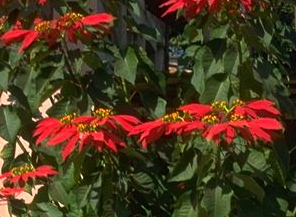
and landed on the poinsettia.

IMG0034_1.jpg

The cat and the dog stood up to deliver
new versions of their Christmas vision.

Birch bark: ghosts on the snow bank turned
white in the moonlight as they danced,
so slender and so bright.

IMG_0033.JPG

An obsidian knife hacks through the mind
carving it into two uneven pieces.
Snowflakes invade its split personality.
Thin ice spread across glacial fires.

Incarcerated birds sing in the rib cage.
A child’s world: with its lost toy
buried beneath fresh snow.

IMG_0039.JPG

2

Last night tears froze in my eyes
and fell to the earth as stars.

Now I am an enormous sunflower,
trapped in this wet clay rag of a body.

IMG_0103.JPG

If I lie here in silence
will my world go on without me?

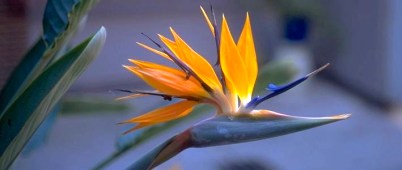
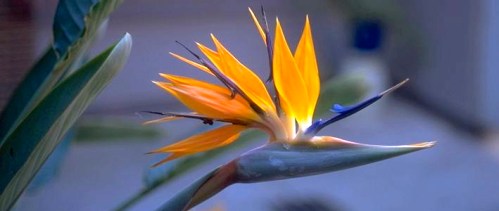
The bird of paradise opens his eye,
all querulous with sunshine,
and watches me waiting.

IMG0051_1.jpg

Re-Writing or Writing? 2

IMG_0130 (1)

As one of my friends mentioned recently, writing is indeed a lonely profession. However, it is essential to define what we mean by writing, for that one word covers so many different things from shopping and laundry lists to twitter, tweets, e-mails, and blogs to journals, poetry, prose poems, flash fiction, short stories, novels, to skits, plays, ads, film scripts etc etc … clearly the one word WRITING covers a vast area of understanding and its associations vary in each of these forms. While some of parts of the creative process used in writing is lonely work, some parts are clearly social, hence social media, and demand a different thought process, and a different response and a set of different needs for a response. A writer, for example, does not (and should not) expect instant gratification from the preliminary version of a laundry list, a sonnet, or a short story, whereas one might expect (and hope for) a quick response from an e-mail sent to a friend in a sequence of e-mail exchanges.

In the same way that writing has so many different connotations, so does the act of revising. Some acts of writing need revision, others don’t. Social media is fraught with danger because it is all too often instant thought written down and fired off, sometimes in the heat of the moment. With no live facial expression to guide and no tonal variations to shape the recipient’s response,  there is much room for misunderstanding as writer and reader may well (and often do) attach different meanings to what appear, on the surface, to be the same words.

“Shooting from the lip”– this neat phrase illuminates the perils of the politician on the high wire of the televised interview. There have been many such instant responses, words shot out on the spur of the moment, instantly regretted, and endlessly debated, described, retracted, revised, doctored and spin, span, spun. Fortunately for most writers, their words are rarely exposed to the publicity spotlight that picks out each possible meaning and rarely is the everyday writer banished to the fiery flame.

My motto, for many years, rather than shooting from the lip, has been “think before you ink.” This means thinking out the possible ramifications of any combinations of words before putting them down on paper. Once the words are written, “think before you ink” takes on the meaning of a review and a double think before clicking the send button and allowing the selected combination to wing its way towards the intended and unsuspecting reader. Long ago, Horace (65 – 8 BCE) wrote that nescit vox missa reverti / a word once spoken can never be recalled. We ignore his warning at our peril: for his words still hold true. For me, the necessity of thinking about that word, before it is spoken, before it is written, before it is sent, is paramount.

This brings me to my central idea: if we are serious, deep-thinking, creative writers, rather than instant action, social media, quick response specialists, then thought and revision are necessary parts of our writing skills. Unfortunately, revision also presents the writer with another set of problems. T. S. Eliot has expressed the problem of choosing the right word in the right place better than anyone. He writes

Words strain,
crack and sometimes break, under the burden,
under the tension, slip, slide, perish,
decay with imprecision, will not stay in place,
will not stay still.

And that is only one among many of the writer’s problems: which word to choose and what exactly is the right word in the right place. The examination and re-examination of the words we use is an exercise in itself. If we write rhyming poetry do we stick with the easy rhyme, the first one that comes into our head? Do we shuffle and cut the rhyme scheme, change the order of the sentences, search and re-search for le mot juste, the one that adds meaning and rhythm as well as rhyme? I would like to think that we do, but I know that all too often we take the easy way out. I know I do. And the words themselves are like shifting sands, drifting, moving around, changing their potentialites, not standing still.

And what if we decide to revise? Are we, as revisers, the same poets who penned the initial thought? In other words, do we feel the same way now as we did when we initially put pen to paper? By extension, what do we gain when we revise and what do we lose? I would answer those questions first by referring back to Heraclitus who, according to Plutarch, wrote that it is not possible to step into the same river twice, nor can one come into contact twice with the same person for people and states of mind may well change between meeting and meeting, and people are rarely ever quite the same. For Heraclitus, as the waters flow, so the river changes, and it is never the same river, even though you think it is. For T. S. Eliot, on the other hand,

… every attempt
is a wholly new start, and a different kind of failure
because one has only learned to get the better of words
for the thing one no longer has to say, or the way in which
one is no longer disposed to say it.

Clearly, then, revision is fraught with peril and this is why some people prefer to preserve their thoughts in the original state of inspiration and never revise them. To revise or not to revise: the choice is yours. In my case, revision is always a part of the writing process. In that sense, I think of myself not just as a writer, but also as a re-writer. In that second guise, I revisit my work regularly, re-reading, re-thinking, and, where I deem it necessary, re-writing as well.

Obsidian’s Edge 16

4:00 pm

Siesta
&
Dream

IMG0051_1.jpg

1

Sweet wet bark bleeds until sack-
cloth binds the wounded rowan.

Claws trapped in the sacking, the sap-
sucker family points accusatory beaks.
They have fluffed up their feathers.

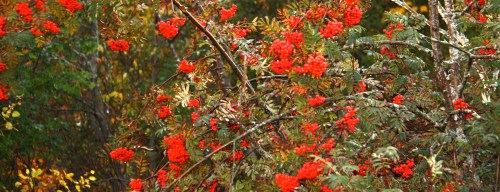
Red beads on the mountain ash: the young girl
offers me a rosary of bright red berries.

IMG_0157.JPG

Bitter on the tongue,
sunset’s first flourish tinting my dream.


2

Tochtli gnaws at the moon’s white skull.
Murciélago exits his cave with night
tightly wrapped beneath his wings.
Tezcatlipoca: a stone knife in an iron hand.

At the cathedral’s shallow edge,
the golden tree bends like a rainbow,
exposing its roots as the end draws near.

Cycle upon cycle: dead men’s gifts,
these spirits walking over night’s waters.

The dream cat’s round green eye
staring out of the window,

willing this willow pattern world

cat and bat 094.jpg
to end its cat and mouse game:

IMG_0177
darkness within darkness.

Bistro 7 Flash Fiction

Discards

IMG_0143.JPG

Toni walked in, scowling, and strode straight up to Nando who leaned against the bar with a glass in his hand.
“You son of a bitch,” he said and swung his fist. One of the patrons, an ex-bullfighter quick on his feet and even quicker to spot a threat, stepped between them.
“Enough!” He shouted as he parried the blow.
“Are you mad?” Nando put his drink down on the bar.
“Me? Mad?” Tears ran down Toni’s angry face and his breath came in short, sharp gasps. “You’re the one who’s mad. You’re the one who’s screwing her.”
“Screwing who, for God’s sake?”
“Raquel, dammit. You know: my girl. What are you doing here anyway? Waiting for her?”
“Waiting my turn; like everyone else. And I expect they’ll call my number pretty soon.”
“You got a ticket?”
“Of course. I always get a ticket. Why?”
“Because I want her before you get her. Here, give me your ticket.”
“No way.”
“I’ll buy it off you.”
“No way.”
“Why don’t you dice for it?” The ex-bullfighter sensing the possibility of both a truce and a bit of fun broke into the conversation. “I’ll be the judge.”
“Cards?” Nando raised his eyebrows.
“Done,” Toni dabbed at his face with a grubby hanky. “But win or lose: you’re still a son of a bitch.”
“Not if I win.”
The crowd made room for the two men at the bar and Nando asked for a green cloth and a pack of cards. Shuffle and cut. Deal. Frowns and smiles. The patrons looked on in expectation and shouted and groaned with each discard. Every so often, a number was called out and a man stood up, gave his ticket to the barman, handed over some money, and went upstairs.
They played the best of seven hands. Tied at three hands each, sweat drops beaded down both their faces. The ex-bullfighter roared approval with every card and checked each discard. The patrons crowded round shouting their approval in bullfighting terms.
“¡Música! ¡Olé!” They chorused as they clapped their hands and stamped their feet.
“Number 69,” the barman roared.
Nobody moved and a silence fell over the room.
“69,” the barman’s voice repeated, a hard stone cast into the silence.
“Well, I guess that’s me,” Nando rose to his feet, put his hand in his pocket, and drew out his number.
“Son of a bitch …” Toni’s voice rose above the uproar. “I’ll get you for this!”
“”What’s it all about?” A new bass voice rose above the crowd noise. “What’s happening here?” Pedro, the owner stood behind the bar, beside the barman.
“I’m next. That’s all.” Nando waved his ticket.
“He wants my girl,” Toni screamed. “I’ll get him … ” Toni struggled through a sudden thicket of arms to get at Nando.
“And who’s your girl?” Pedro’s deep bass voice rose up and conquered the room.
“Raquel,” Toni stood there, defiant.
“Raquel?” The owner of the deep bass voice sounded incredulous. “Raquel? Raquel!” He shouted. “Raquel, get your ass down here.”
Silence.
All eyes turned to the staircase behind the bar.
A beautiful, dark-haired, brown-eyed woman walked slowly into the room.
“This Raquel?” The owner’s voice shuddered in disbelief. “My wife? The woman carrying my child?”
Toni and Nando stood there, staring eyes, mouths open.
“Get out,” the owner said. “I never want to see either of you here in my bar again.”
He drew a battle-field green Glock 21 from an inside pocket, pointed it at them, and shouted: “Run!”
Toni and Nando ran from the bar, their tails between their legs.


Re-Writing or Writing?

IMG_0130 (1).jpg

I think of myself as a writer, but when push comes to really thinking about it, I am indeed a person who re-writes and re-vises continuously. In order to do this, it is necessary to read and re-read. If a word, or even a comma, in a poem troubles me, then it is a sign that something is wrong, somewhere. Whenever I am faced by this sensation that “something is wrong”, then I re-read, re-think, re-plan, re-vise, re-visit and re-write.

I try to re-work and re-think by asking myself (a) what is missing and (b) what can I add and (c) how am I linking things and (d) am I over-complicating and (e) what is the burning heart of the matter and (f) what am I really trying to say and (g) have I managed to actually say it. If the answer to any of these questions raises even more questions, then it’s back to the drawing board. No: a re-writer’s life is not an easy one.

I usually keep my early variants to poems (and other prose works) in chronological order and I find it useful to go back to that first precious moment of inspiration. Did I stay true to it? Did it change? How? Was the change for the better or for the worse? Occasionally, re-writing takes the original spirit right of the piece. It is sometimes very, very hard to re-write that inspiration back in, without re-turning to the original. If I am in difficulty, I will re-write from a different point of view: another person speaking, perhaps, or in prose, or as a stream of consciousness. This exercise, and that should probably be written in the plural, will either present me with a viable alternative or confirm me in (a) my original wording or (b) a new form of wording. Another simple (relatively speaking) exercise is to check for structure, theme, metaphor, and wording: are they all neatly tied together and well-linked?

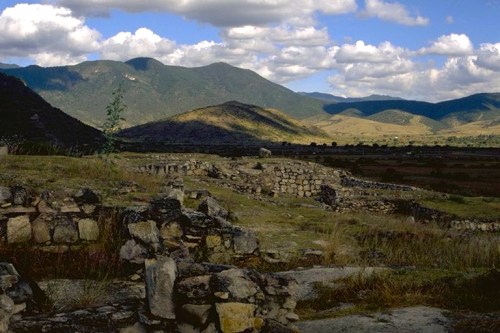
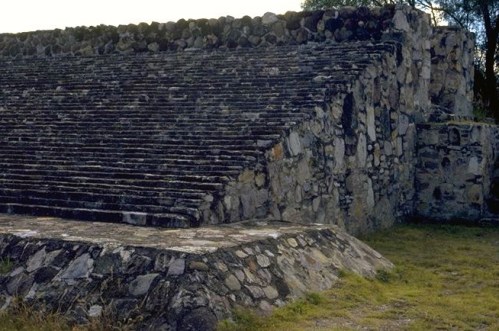
This happened to me today with Obsidian’s Edge 14 & 15. Neither of my many attempts at taking Dainzú and placing it into words on a page felt right. Something was missing. But what? I couldn’t put my finger on what was going wrong. I spoke with Jiminy, my friendly Cricket Conscience, and he asked me several questions that I couldn’t answer. Luckily, I was able to choose the TV Show option phone a friend, so I did.

My friend too was troubled by these poems and said that I hadn’t managed to produce anything that seemed to express my better poetic self as he knew it. We talked out several possibilities. “Perhaps you need a lizard,” he said. “It’s a dry, dusty landscape. It can sit on a wall. But don’t worry: you’ll think of something.”

When I put the phone down, I went back to work. Sure, I was struggling with OE 15, but when I checked back to OE 14, I saw that I had been struggling with that too, but without realizing it. What to do? First, I tried writing about the lizard; then I tried adding water and lack of water; then I re-wrote from the point of view of the old lady in the poem. This certainly felt better. Then I shifted images from OE 15 back into OE 14. Then I re-wrote OE 14 from the point of view of the old woman. The poem started to feel better.

The secret, I think, is for me to relax, to be myself, to let the poem flow into me, and then to let it flow out again. I must remember not to force my writing, but to let it flow, and to continue writing as I want to write while paying attention to the small details of which I am becoming more and more aware every day. We are all creative — or we wouldn’t be here, reading this: we must let that creativity flow.

Friends are essential. Writing groups are useful. But the real secret is to develop and polish our own creativity. We must also learn to develop our own voices and to have confidence in those creative sparks that dwell within us. It is only by entering and re-entering that personal creative space that we can write and re-write in the way we really want. And we must have courage: the courage to tear down the wall and free that which is within and let it roam, un-fenced and at will. Like the cattle, like the dogs, like the wind-blown dust my old lady will see and feel, sandpaper on her skin, in the next version of her poem.


Obsidian’s Edge 15

3:00 pm

Old Woman
@

Dainzú

IMG0067_1.jpg

5

Sandpaper wind
polishing the land
erasing its identity
as barefoot
over dust and stone
the old woman
feasts her heart
on a banquet of song.

A rag-bag her body
stitched together
by memories and bone.

IMG0064_1.jpg

6

She shows me fear
in these grey shadows
dancing their dust
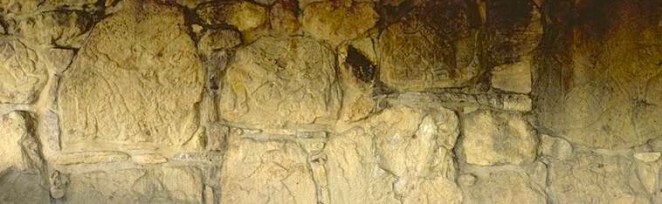
beneath carved rocks.

IMG0055_1.jpg

7

Abandoned now,
visited only by ghosts,
this resurrected ball park.
Buried beneath their stones
its heroes,
the men who wooed her.

I look at carved faces.

Which one captured
her flowering heart,
pierced it with an arrow,
and scarred her name
forever
letter by letter
on the face of this rock
?

Obsidian’s Edge 14

2:45 pm

Old Woman
@

Dainzú

IMG0054_1.jpg

 1

Dusty paths
meander beneath
a drifting sun.

Shiftless ruins
cloak the land
in worn-out
shadow rags.

IMG0072_1 2.jpg

Scrawny cattle
herded by an old man
and his sly-eyed dogs:

the old woman,
threatened,
stoops and picks up
a handful of stones.

Moving targets:
dust and shadows of dust.
So much stone and sand
sifted through the hand
and trodden underfoot.

3

In the distance,
a low mound
covered with grass and weeds:

IMG0056_1.jpg
her family’s ancestral home,
its bountiful community
abandoned to the wilderness,
to the wild thorn
thrusting its spear
through her mortal heart.

Weed-filled walls,
empty houses, ruined fields.

4

Wise old woman
with her hands full of stones:

that first rock
freed from her fist
booms thunder
off the sheep
in a  wolf-skin’s
cowardly frame.


Let the candles melt


The title is a line from one of Nandita’s poems. I thought it was a striking image and would make a great start to a new poem. I told Nandita this and she and I agreed to  write a duet together. This is the first time I have written a  “duet”  with someone else. I hope it won’t be the last … Nandita is a very talented lady and a gifted poet. Click on the following link for her blog. It’s well worth a visit or two or three.

mananunleashed.wordpress.com


Your face your name
flicker in the candle flame
Your words your voice
burning with grace and poise

bruised clouds on the evening sky
  my arid heart awaits your rain
A burst of silver lining before I die
a soothing balm to my aching pain

your shadow on my mind
        how can we be so blind
Your name in my heart
beating like a chained beast

curled up like a dog
asleep at your feet
Let your senses awaken
let dreams and reality meet

Spent match this candle
Light another one from my mantle
let love be heartfelt
let the candles melt


Bistro 6 Flash Fiction

Crazy Glue

Late last night, a fallen star grazed by the lamp-post. A bouquet of golden sparks flew from an iron tree and sanctified the gutter. The gas lamps sputtered patiently in uniform rows. A scarecrow stuttered into the limelight and shook my hand. She was wearing my grandmother’s Easter bonnet, with all the flowers renewed, but she couldn’t keep my heart from last winter’s left over crumbs. Suddenly a tulip thrust through the concrete. It became as red as a robin and flew into the lounge bar of a public house. The bronze leaf necklace circling my throat filled with a flow of springtime song. My heart stood upright, a warped piano in my breast, and my skeleton tarried at the corner to play knuckle-bones with the wind. Torn butterflies of news fluttered round and round and kissed my eyelids when they closed. Yesterday’s horoscope winked its subversive eye and called to the hermit in his lonely cell: “Look out for the stranger with the tin can alley smile. Tie your heart to the tail of the first stray dog that comes whistling down the street and follow it home to the empty house that breathes in and out, moving thin membranes of memory.”

IMG_0167 2.JPG
That’s where I now live. Upstairs, downstairs, a lonely route I tread while the wind at the window scratches tiny notes. Something breaks loose in the confines of my mind and walks beside me. My twin brother stalks through this silvery sliver of splintered glass, this simian mirror wrinkling our troubled suits of skin. I glimpse the old moon’s monkey face through a broken window. Jagged and thin, it wanders like an itinerant snail, cobbled with clumsy clouds. Once, I descended the playground slide in a shower of sparks. A vagabond in a paving stone sky, I rumbled across metal cracks, a knapsack of nightmares humped on my old man’s back. Tell me: when the snail moves house, who stores the furniture he leaves behind? The hermit crab lurks naked on the beach, seeking new lodgings. Who killed the candle and left us in darkness?

IMG_0186.jpg
Two eyes in limbo watch me roll this snowman’s belly of flab across an unknown, clouded room where yesterday I got lost in the mirror. I know how to swim, but I would have drowned, except the light was too shallow and my feet touched bottom when I let the wheels down. I swam on and in looking for a deserted island on which to build my idle sand castle dreams. Two people said they saw my reflection swimming like a goldfish in the silver of that secret space. They said I stared back out at them with circles of longing ringing my eyes; but I laughed when they said they had seen me, for when I looked in the mirror this morning to shave, I just wasn’t there. My razor dragged itself over an empty space and its sharpened blade scraped white music from the margin of a cd rom that spun on edge like dust rings round a vanished planet. Now there is a black hole where my passport photo used to thrive. Someone plucked me from the circle and cut me out in the dance last night. Today I’m looking for a scrapbook in which to stick myself with crazy glue that never, never, ever comes undone.