KIRA

IMG_0452.jpg

KIRA

Kingsbrae International Residence for the Arts has appointed five artists who will work in residence at Kingsbrae and Kingsbrae Gardens (St. Andrews, New Brunswick), from June 1 to June 28, 2017. The artists who will work in Kingsbrae in June are Carlos Carty (Lima, Peru, musician), Anne Wright (Ottawa, multi-media), and Elise Muller (Muskoka sculptor). They will be joined by two New Brunswick artists, Ruby Allan (Fredericton, painter), and Roger Moore (Island View, poet). Note that KIRA is making a special effort to encourage New Brunswick artists. Full details are in the link above.

The selected artists met face to face on a video conference call and discussed some of the work that they could do in common: more about this later. Suffice to say for now that joint workshops on different forms of creativity are being planned. While the residency will be an excellent time for individual work, each participant has a specific project to be undertaken during our time at St. Andrews, there will also be time for the interchange of creative ideas and for readings and workshops within the local artistic community.

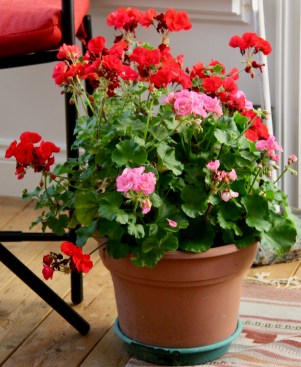
My own project will be to establish a Bakhtinian poetic dialog with my time (June) and my place (Kingsbrae, St. Andrews).  This follows the ideal of the Bakhtinian chronotopos, as outlined in my earlier post Alebrijes or Inspiration, and I plan to use my time to reflect upon and write about both St. Andrews and the Kingsbrae Gardens. I intend blogging regularly throughout the month of June and I look forward to posting photos and cartoons to accompany my poems and the journal that I will maintain throughout my stay. My blog is located at rogermoorepoet.com.

Further to this project, I hope to establish a rapport, much along the lines of my poems on Monet at Giverny, between myself as poet and Kingsbrae Gardens as a subject for poetry. Giverny and Monet at Giverny 1-4/16, Monet at Giverny 5-8/16, Monet at Giverny 9-12/16, and Monet at Giverny 13-16/16 offer a model for some of the art work I would like to accomplish.

Each artist will have studio space. Should you visit St. Andrews in June, please consider not only visiting Kingsbrae and its beautiful gardens but also dropping by to meet us as we work to accomplish our artistic tasks. I, personally, will be very happy to meet and talk with visitors to the residency who are interested in the daily workings of my art.

 

Walker

img_0380-2

Walker

It’s as good as a walker, this shopping cart.
I set my heart on finding one and when I do
I hang on to the handle and goad myself
onward, up the supermarket ramp.

I hate it when people to see me like this,
body and confidence broken by my fall.
For when I fall there’s no safety net,
no security, just an old man lying hurt.

A leaf on a tree, I shake in the breeze.
I pause for thought, catch my breath,
then struggle forward, caught like a high-
wire dancer in the spotlight, my heart in my

mouth, trying not to look down, or fall,
struggling on, fighting the good fight.

Hastings

IMG_0138.jpg

Hastings

A cloud on the horizon
no bigger than a small boy’s hand
turns into a sail and then
a sailing fleet,
an armada of hostility
sailing towards our shores.

Shield upon shield the shield wall
binds itself together,
becomes impregnable

Loud the clamor,
the raising of voices,
the heavens split asunder
by a sharp hail of arrows,
closer the enemy now,
and arrows become spears
their sharp heads
tumbling from the turbulent sky.

Fate hangs now on a single arrow
protruding from the royal eye.

Faith falters.
The shield wall, firm at first,
breaks now and the house carls,
one by one,
fall like corn
beneath sharpened blades,
to wither and die as all men die.

My Favorite Book

img_0196

My Favorite Book

Last night, my writing group threw the table open for discussion on ‘my favorite book’. I listened as each member of the group came up with a title or two and then chose a book that was ‘the favorite’. When my turn came, I was last, they all turned to me, but I remained silent for a long time and then: “I can’t do it,” I said. “I bet it’s got windmills in,” one person remarked, thinking of my propensity of frequently quoting Cervantes’s Don Quixote as a model when literary discussions arise. Indeed, Don Quixote might be my favorite book, but is it?

Let us begin with the concept of book. Is a book something contained between two covers or could it be a series of books? For example, does one choose between The Chronicles of Narnia or must one select The Lion, The Witch, and the Wardrobe over The Silver Chair? Is one free to choose The Lord of the Rings, or must one prefer The Two Towers, say, to The Return of the King? By extension, where exactly does The Hobbit stand, as a book, in book form, in relationship to the later and longer series? Or The Silmarion? Again, can we roll them all together, a series of books under the cover of one book, a favorite book?

The idea of favorite author versus favorite book then surfaced and we discussed Georgette Heyer, John LeCarré, equally loved and loathed, Jane Austen, the Bronte’s, J. K. Rowling, and William Shakespeare. The mention of Shakespeare led us into plays as reading material and plays as performance, and performance as on stage or on film. One of our members loved Shakespeare on film and TV, but didn’t like reading Shakespeare, because it was ‘difficult to read and needed the interpretation of the actor for the meaning to come across’. This same person did not like LeCarré’s books, but was very appreciative of his work on film. Where does George Smiley begin and Alec Guinness end, one asks? How can we separate the character from the actor? Applied to James Bond, who is James Bond? Is he Sean Connery (totally unique and my personal favorite), Roger Moore (better for me in the role of Simon Templar, The Saint), or one of the later and newer actors who have taken over the role? By extension, should James Bond be played by a black actor (why ever not I ask?), and could (oh horror of horrors!), a female actor take over that role (I’d love to see it … “I’m Bond. Jane Bond!”)?

This led us into the art of the narrative and the relationship between book as narrative and film as narrative. Clearly they are two different forms of media, but how do they influence each other? The book obviously comes first. We can talk of the seventeenth century novel, but it is difficult to talk of the seventeenth century film. So, the linear narrative of the book comes first and then that book is turned into a film. However, a film contains its own narratives structures and these include multiple points of view, split screens, flashbacks and time distortions, and a multiplicity of other devices among which the actual scenic impact is of the utmost importance. For most of us, the nineteenth century novel (no radio and no television for entertainment in those days) is long drawn out and very slow moving. We miss the instantaneous impact of screen and TV with the breaks for advertisements and the time to recharge our coffee cups and snacks. This leads us to our own attention spells as readers and our own demands for the instant gratification of a thrill a minute. “Hook them on page one and addict them by page three,” one person commented to many nods from around the table.

But the mention of Don Quixote also takes us into other areas. In this age of bi- and multi-lingualism, do we prefer to read our books in one language rather than in an another? Don Quixote in Spanish or French or English? And which translation? There are some twenty translations of Don Quixote into English. Is one preferable to another? Which is more accurate in the terms of a translation? Which reads more easily in terms of a re-creation in artistic form of the original? Should we prefer an English-English translation to an American-English translation? And where oh where is the Australian, Indian, Pakistani, South African, Canadian, Irish, or Welsh translator who will justify that famous text in his own country’s rendition of what used to be called the King or the Queen’s English?

Don Quixote, according to the great Spanish literary critics, is a book for the three ages of life. Readers should read it when they are young, when they are middle aged, and when they are approaching old age. Why? Because one’s reading and understanding of the book changes as one grows older. If this is true, then can we not expect to have books that we preferred at an earlier age in life, The House at Pooh Corner, for example, or The Wind in the Willows? And what about our early teens (adolescence), our early twenties (university years)? The idea of our being able to choose a ‘favorite book’ becomes less and less clear as we open up our minds to the broader horizon of tastes that change as we age and mature.

You will have noted that, with the exception of Shakespeare, we concentrated on the twin ideas of fiction and narrative, be it in word or on the screen. What about poetry? Five major critics met at the Modern Language Association of America’s meeting held one year in the University of Toronto and held a panel discussion in which they discussed why and how they had been attracted to the foreign language that they had studied. In four of the five cases, it was the poetry of the language, not the theatre or the narrative, that had pulled them in. Last night, we did not discuss poetry.

When we bring poetry to the table, we open a different discussion. We rarely read and appreciate ‘books of poetry’. With a few notable exceptions, it is individual poems and poets that attract our attention, rather than entire books or collections. And what is it about poetry that attracts us? Surely, it is the power, not of situation nor of action, but of language. It is the sheer power of language and the thrill of words that draws us to poetry. Perhaps that is why, in an age of impatience, we have less time for immersion in the magic spell of words and their undercurrents of subtle meanings. As a friend of mine said to me, the day before yesterday, “I started your poetry book, Obisdian’s Edge, but it was too deep for me, too difficult. I gave up on it. I needed something simpler to read.”

Comment: This article should be read in association with an earlier piece in this blog (15 July 2016) on My Top Ten Books.

Writing Groups: Thursday Thoughts


img_0186

Writing Groups
Thursday Thoughts
11 May 2017

We write in solitude.

We cannot group-write with a second person suggesting the second word and a third person, the third word. This leads only to the Third Word War or the Third Word Whore, as some would express it.

To write is to be alone. It is to sit alone before a blank page and watch it slowly fill with the black ants that we form into thoughts. With pen or pencil we trace the Morse Code SOS of our Mayday signals. We gather them into groups, press them between cardboard covers, and we send them out to sea in little bottles. Then we sit back and wait, hoping to contact intelligent and compatible life that will approve our efforts and perhaps offer to publish our writing.

We must not confuse the act of writing with the act of sharing.

In many cases, to share is to seek approval. But this is not always true. We sometimes share in the hopes that a listener will suggest improvements to our writing. I think of this as ‘sharing from weakness’. We are unsure of our sharing self and we seek confirmation and reinforcement. We also seek the reassurance that the second person or the third actually has a better vision than the writer and can improve that writer’s offering. How confident are we in our own writing when we constantly look for approval?

Sometimes, our sharing is in an act of defiance. We organize our black ant army. We form it into battalions. We launch them at the enemy and “Take that you bastards,!” we think as we read out our thoughts. Occasionally, our sharing is an act of self-praise. We know it’s good and we want others to realize just how good this piece is and how good we are. Auto-homenaje (Spanish): an act done in praise of oneself.

The act of sharing can be private and confidential. This is when we gather with a group of friends to share our thoughts and creations. This is most useful, in my opinion, at the beginning of a writer’s career. Writers have to become independent. They have to learn to shake off the shackles of doubts, second and third opinions, and the rewriting that comes from the mind of an outside reader. Writers have to learn to stand alone and to write alone. This is where the public reading comes in.

To read in public, as in an open reading given before an audience of unknown faces, is a different proposition. We are relatively confident when we share with our friends. We are not so confident when we read in public. We must be confident in ourselves and our words if we are to stand before strangers and expose ourselves, our strengths and our weaknesses, to those who may not love us and some who may actually hate us, looking for any defect, any chink in our written armor.

Beyond writing, yet enclosed within it, is the writer’s desire to be recognized and published. If we are writers, we want our works to be known and read. We want to be published. Even when we know we are not ready to be published or worthy to be seen in print, we like to imagine ourselves preparing that great tome or slender volume of verses that one day will project us into the realms of glory when it finally sees the light of day.

Yet we cannot publish alone. Or can we? Desk-top publishing on our own computer is easy to do. Format the work, print it out, take it to the photocopy machine, copy it multiple times, staple the resulting pages together and we have … a book. But are we satisfied with those morsels of paper that we hand out to our friends? Some people are, many are not.

Let us look at an alternate route: we hand the book over to a press that edits the writing, does all the copying work for us, chooses a cover, binds the book, gives us twenty free copies, and hands us an enormous bill … some are happy with that; again, others are not.

Let us examine another route: we find an online company that will do all (or most) of that for free. All we have to do is market our work … again, some are happy with that; others are not.

Mal de todos, consuelo de tontos. This is a delightful Spanish phrase. It means that when everyone is travelling in the same ship of sorrows, only fools are consoled by the fact that we all share the same fate. Perhaps that’s why writers gather together in groups and perch, like autumn swallows preparing to migrate, on chairs in a drawing room at somebody’s house or gather together in a disreputable, but cheap, coffee house to read, discuss, share, and endlessly talk about the works that never get published.

“You just got rejected? What a pity. I just did too. Let’s compare rejection letters. Paper your walls with them, my friend.”

The carrot that we all seek is the pot of gold at the rainbow’s end that contains the winning lottery ticket: a letter from a publisher offering to publish the book we have written. An Old Welsh Recipe for rabbit pie begins with these wise words: “First catch your rabbit.” The same wisdom must be applied to writers: “First, write your book.”

When the book is written, to the satisfaction of the writer, then, only then, let the networking begin. Then we can reach out to the community. Then we can read in public. Then we can seek out that elusive publisher and follow our own thirty-nine steps to success.

Bu, in the meantime, remember, never forget, we write in solitude.

Help!


img_0372

Help!

The world turns full circle
and my mother is on the phone.
It’s four AM. “Help me!” she cries,
from the far side of the Atlantic.

Her ship is sinking fast and she’s
nine sheets to the wind.
“I’ll stick my head in the oven,”
she says, “and turn on the gas.”

What can I say? What can I do?
She makes so many threats.
She’s crying “Wolf!” and her words
now bounce off this duck’s back.

Yet still I wake at night to hear
her whispered words, and they still
chill with their razor’s edge of
“Help me! Help! Please help!”’

Hyperbole: Wednesday Workshop

img_0177

Hyperbole

It is no exaggeration to say that Hyperbole is one of the most exciting and fascinating aspects of rhetoric.

At its most basic, hyperbole means exaggeration. When we start to explore the term, however, it means oh so much more.

Looking up synonyms for hyperbole, for example, we find the following: exaggeration, hype, metaphors, overstatement, amplification, coloring, distortion, embellishment, enlargement, magnification, PR, big talk, embroidering, laying it on thick, making a mountain out of a molehill, tall talk.

But let’s not stop there. Merriam Webster offers this as a definition: The representation of something in terms that go beyond the facts. “Enough food to feed a whole army” is a common example of hyperbole. Here are some more suggested synonyms, with a few overlaps: caricature, coloring, elaboration, embellishment, embroidering, embroidery, exaggeration, magnification, overstatement, padding, and stretching. Related words include: amplification, enhancement, fabrication, misrepresentation, fudging, hedging, hype, puffery, plum-mcduffery, and superlative.

The Power Thesaurus suggests that there are over 263 synonyms for hyperbole. It offers 14 pages of them. Here is the start of page one:

exaggeration / image, parallel, flower

overstatement / exaggeration, adornment, coloring

metaphor / exaggeration

embellishment / exaggeration, excess, decoration

distortion / exaggeration

magnification / exaggeration, fancy, line.

We could go on and on and on with this, world without end, secuale seculorum, for ever and ever, and all that, without exaggeration. The point is clear, we have more than enough definitions here to fill several rather large books and clearly, without being too catty about it, it would take at least nine lifetimes to read and understand them all.

Meanwhile, hyperbole possesses an adjective: hyperbolical. This is sometimes confused with the term hyperbolic which in turn is occasionally confused with the term hyperbollocks, as in the saying: “this article is, without embellishment or exaggeration, a load of hyperbollocks.”

Chuck Bowie comments: “Down the road, I hope we get to see your take on how to employ this useful tool without reducing the document to caricature.”

Roger Replies: Thank you for your comment, Chuck. I think that the application of hyperbole to a literary text or an image within a text depends entirely on the individual author. As authors and human beings, even in our daily speech and our interactions with other people, we can and do exaggerate. How we apply hyperbole to our structures and stories and characters is very individual. Clearly there must be a balance between emphasis (potentially good) and over-exaggeration (potentially bad, but with strong potential for parody and comedy), but so much depends on the individual situation. A stylistic analysis of each instance will reveal if the hyperbole is excessive. However, in my opinion, that necessitates the presence of a text, rather than a doctrinal theory about ‘how to do it’. The easiest way might be to analyze a text or two and see how hyperbole functions in specific circumstances. Certainly, as you so rightly note in the above comment, hyperbole can be used for comic purposes, as I have done in my article. Its overuse can both be criticized and parodied. An interesting study, with the seeds of a doctoral thesis planted therein, would be to demonstrate how, in Don Quixote, Cervantes moves from a hyperbolic parody of his character to a truer understanding of the essential dynamics of the main characters’ essential personalities. If I were fifty years younger, I might start that doctoral thesis.  Alas, within the self-imposed parameters of  this blog, there is neither time nor space. We can continue this conversation at our leisure. Thank you for responding.

Cramp

Chaos

Cramp
(Jackpine Sonnet)

Late last night, lying in bed,
cramp laid siege to my lower limbs.
I crawled out of that bed and stretched,
left leg, right leg, in the bathroom.

Aching still, the fear of more cramp
to come weighed heavy on my mind.

I didn’t want to wake my wife
with panic and alarums, so I slept
in the spare bed in the other room.

A great round moon sailed its pale-
faced boat on a sea of silent clouds.

I lay on the life raft of my bed
and prayed for cramp to stay away
and for the mattress to keep me afloat.

Clare


img_0265-2

Clare

She moves more slowly
up the slope,
pushing against the hill’s
shallow grain.

I knew so well her
swaying grace,
but now she shuffles
with the drag-

foot limp of the aged,
and aged she has,
like a good wine in
an oaken cask.

Her beauty still stays
in my memory,
lodges in my mind and
I see her as

she was, beautiful
in body, slim,
graceful, a joy to hold
and behold.

Her eyes still sparkle
and she bubbles
still with a champagne
joy that draws

me to her, and still she
enhances each
room she enters, filling
it with light.

Lost

img_0363

Lost

My body’s house has many rooms and
you, my love, are present in them all.
I see you here and there, glimpse your
shadow in a mirror, and feel your breath
brush on my cheek when I open a door.

Where have you gone? I walk from room
to room, but when I seek, I no longer find,
and when I knock, nothing opens. Afraid,
sometimes, to enter a room, I know you are
in there. I hear your footsteps on the stair.
Sometimes your voice breaks the silence.

It whispers my name in the same old way
I remember … how can it be true, my love,
that you have gone, that you have left me
here alone? I count the hours, the days,
and snatch at sudden straws of hope,
embracing dust motes to find no solace
in the sunbeams, salacious as they are,
that drag me from my occasional dreams.