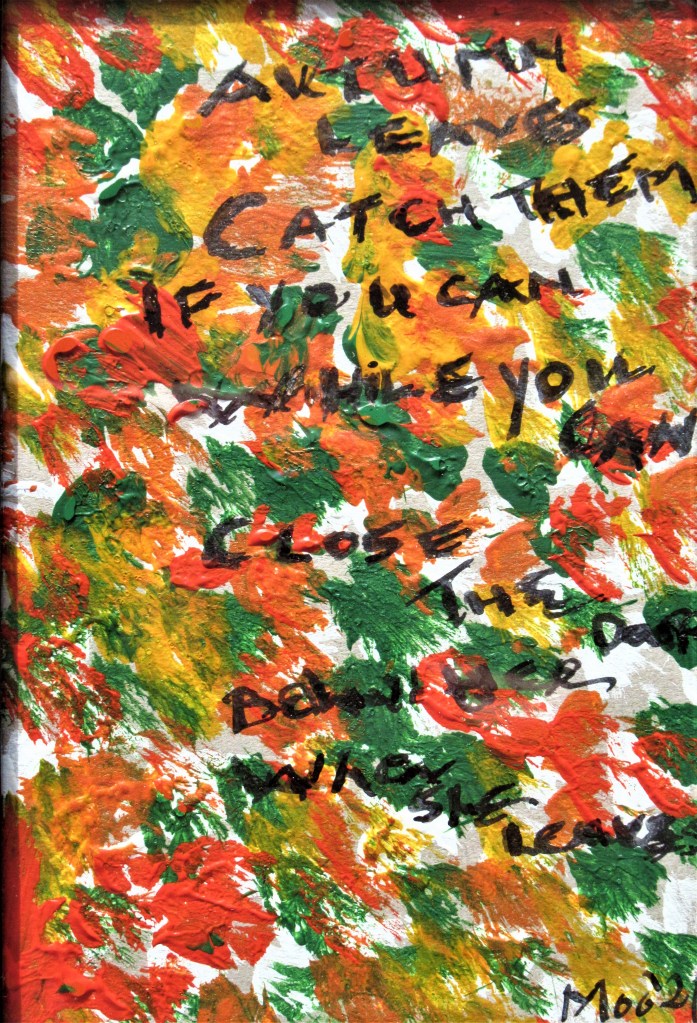
What is the most important thing to carry with you all the time?

Daily writing prompt
What is the most important thing to carry with you all the time?

What is the most important thing to carry with you all the time?

Things I carry with me

            That old black cast-iron stove, wood-fired, that baked the best ever breads and cakes and warmed the bungalow on cold, summer mornings. The Welsh dresser with its age-blackened rails that displayed the plates, and cups, and saucers. The old tin cans that ferried the water from the one tap located at the end of the field. Full and wholesome, its weight still weighs me down as I carry it in my dreams. The Elsan toilet from the shed by the hedge and the shovels that appeared, every so often, as if by magic, as my uncle braved the evening shadows to dig a hole on the opposite side of the field, as far from the bungalow as possible.

            The outhouse at the end of the garden. The steps down to the coal cellar where they went when the sirens sounded, to sleep in the make-shift air raid shelter, along with the rats and mice that scurried from the candles. The corrugated iron work shop in the garden where my uncle built his model ships, the Half-Penny Galleon and the Nonesuch. The broken razor blades I used to carve my own planes from Keil Kraft Kits, Hurricanes and Spitfires, an SE5, and once, a Bristol Bulldog. Twisted and warped, they winged their ways into nobody’s skies, though once we built a paper kite that flew far away in a powerful wind and got tangled in a tree. The greenhouse from which I stole countless tomatoes, red and green. Kilvey Hill towering above the window ledge where the little ones sat when there were more guests than chairs in the kitchen. The old bombed buildings across the street. The bullet holes in the front of the house where the Messerschmidt strafed us.

            The old men spitting up coal dust from shrivelled lungs. The widows who took in lodgers and overnight travelers. The BRS lorries, parked overnight, that littered the street. The steep climb upwards into those lorries. The burrowing under dirty tarpaulins to explore the heavy loads, and many other things. The untouchable, forbidden drawer where the rent money waited for the rent collector’s visit. The old lady, five houses down who, when the shops were shut, sold warm Dandelion & Burdock and Orange pop for an extra penny a bottle.  The vicious, snub-faced Pekinese that yapped fierce defiance from the fortress of her lap. The unemployed soccer referee who on Saturdays walked five miles to the match and five miles back just to save the bus fare, his only financial reward. My father’s shadowy childhood. His first pair of shoes, bought at five years old, so he wouldn’t go barefoot to school. 

            Wet cement moulded onto the garden wall, then filled with empty bottles to be smashed when the cement set solid. The coal shed where the coal man delivered the coal: cobbledy-cobbledy, down the hole. The outside toilet with its nails and squares torn from yesterday’s newspaper. The lamp-lighter who lit the lamps every evening as the sun went down. The arrival of electricity. The old blackout curtains that shut in the light and shut out the night. The hand rolled fabric sausage that lay on the floor by the door and kept the heat of the coal fire in the kitchen. The kitchen itself with its great wooden chair drawn up by the fire. That chair: the only material possession I still have from that distant past.


Hearth and Soul

Hearth and Soul

The kitchen – hearth and soul of the house. Here we gather, sit around the table and talk our hearts out. But here, in Island View, we have a kitchen, a gathering, but no hearth, and hence no real heart around which the household revolves.

In spite of that, old habits die hard. I remember the old coal fires in Swansea. My grandmother’s house in the Hafod, with a kitchen in a separate room from the stove, with a huge cast iron fire-place where cookpots and kettles could be hung or nestled into the coals. My grandfather’s house in Brynmill, where kitchen and hearth were separated, but the fire-place still held its magic. Banked in at night, those fires gave warmth and light ar hyd a nos and then they we resurrected the next morning.

We have a woodstove here in Island View, but we rarely light it as the fine particles make breathing difficult after a while. We keep it for emergencies. This winter we lit it when the temperatures dropped to -40C, with the wind chill factor, and heat pump and electric furnace needed assistance.

Warmth, comfort, the family gathered, the wisdom of the old folks shared with the young, and the passing on of traditional melodies. All the old memories and thoughts, the wishes and desires, the hiraeth too, handed down, from old to young. Everybody was welcome and everyone had his or her special place.

Such memories tug at the heart strings – hearth strings. Anyone who shares them with me will know what I mean.

Swansea

Swansea

To be Welsh in Swansea is to know each stop on the Mumbles Railway: the Slip, Singleton, Blackpill, the Mayals, West Cross, Oystermouth, the Mumbles Pier. It’s to remember that the single lines turn double by Green’s ice-cream stall, down by the Recreation Ground, where the trams fall silent, like dinosaurs, and wait, without grunting, for one to pass the other. It’s to read the family names on the War Memorial on the Prom. It’s to visit Frank Brangwyn in the Patti Pavilion and the Brangwyn Hall. It’s to talk to the old men playing bowls in Victoria Park. It’s to know that starfish stretch like a mysterious constellation, at low tide, when the fishnets  glow with gold and silver, and the banana boats bob in the bay, waiting to enter harbour, and the young boys dive from the concrete pipes without worrying about pollution.  But when the tide turns, the Mumbles Railway has been sold to a Texan, the brown and yellow busses no longer run to Pyle Corner, Bishopston, Pennard, Rhossili, sweet names of sand and tide, where my father’s ghost still fishes for salmon bass, casting its lines at the waves as they walk wet footprints up the beach to break down the sand-castle walls I built to last forever at Brandy Cove and by the Slip on Swansea sands.

Click here to listen to Roger’s reading on Anchor.

On Being Welsh – Dydd Dewi Sant

On Being WelshDydd Dewi Sant

On being Welsh
in a land ruled by the English

 I am the all-seeing eyes at the tip of Worm’s Head.
I am the teeth of the rocks at Rhossili.

I am the blackness in Pwll Ddu pool
when the sea-swells suck the stranger
in and out, sanding his bones.

Song pulled taut from a dark Welsh lung,
I am the memories of Silure and beast
mingled in a Gower Cave.

Tamer of aurox, hunter of deer, caretaker of coracle,
fisher of salmon on the Abertawe tide,
I am the weaver of rhinoceros wool.

I am the minority, persecuted for my faith,
for my language, for my sex,
for the coal-dark of my thoughts.

I am the bard whose harp, strung like a bow,
will sing your death with music of arrows
from the wet Welsh woods.

I am the barb that sticks in your throat
from the dark worded ambush of my song.

On Being Welsh – short stories – Amazon and Cyberwit

On Being Welsh – poems included in my selected poems (1979-2009)

Cherry always listened to my readings

Click here to here Roger’s reading on Anchor
– On Being Welsh

Warm in the Kitchen

Warm in the Kitchen

This early morning, the only warm place in the house is the kitchen, close to the fire, with all the doors closed. The black-out curtains from the Second World War are still in place and hang languidly over ill-fitting windows that let cold air into the house. They must be pulled back in preparation for that first glimpse of day-light. Your elders move in and out, letting in the cold air as they open and close the doors at either end of the warm space where the fire is just taking hold.

Your grandfather banked it overnight with black sea-coal and then he raked the fine, grey ash, with its still smouldering lumps of charcoal, into a warm mound, ready for paper, kindling, coal, and the match. He has also placed a newspaper over the fireplace to create a draft. If the fire doesn’t catch soon, he will throw some sugar onto the embers to aid the blaze. The fire will suddenly flare into life and the room will be quickly warmed. In the meantime, the kitchen, though warmer than anywhere else in the house, is still slightly chilly because the damp night cold has invaded and made everything wet and slick.

It’s great when you’re at your grandparents’ house, but when we are back in ours, my father and mother always leave early, to go to work.

When I was younger, they had to feed me, but I soon learned to make my own breakfast from whatever I found in the fridge. Now I can use a frying pan. I fry bacon first, and then, when I have plenty of bacon fat, I fry bread, eggs, sausage, black pudding, kidneys, tomatoes, mushrooms, and anything else I can find, including laver bread.*

Before I know it, I have become a latch-key kid and, when I am hungry at home, I fry myself an all-day breakfast: eggy-bread or fried egg-with-its-hat on doused in HP sauce for lunch, all washed down with tea to which I add condensed milk and sugar.

But this morning, they have made breakfast for me: porridge. “Porridge, porridge, skinny and brown, / waiting for breakfast when I come down.” And I hate porridge, especially burnt porridge, with a passion, and yes, they’ve burned the porridge again. I hold a cup of hot tea in my hands. I breathe in the steam and it loosens up my chest. The china cup warms my fingers. I prod at the porridge, feed some to the canine mouth that dwells unseen beneath the table, and stuff myself full of toast. Whatever I eat, when the food is inside me, I feel much, much warmer and now I am ready for the rest of the day.

*Laverbread Bara lawr in Welsh: edible Gower sea-weed, a delicacy often called Welsh Caviar.

Reflections

Reflections

What do we really see
when we look in the mirror?
Do we see our real selves
or do we see the sad distortions
of our diminishment?

The Fairground on the Recreation Field
in Swansea used to have a hall of mirrors.
You handed over your three-penny bit,
not the silver one your granny gave you
so you would have good luck always,
then you walk up the wooden stair,
and there you are, staring at yourself.

Fatter, thinner, shorter, taller,
a half-and-half version,
thinner at the top
and so much fatter at the bottom,
like those old Christmas figures
you could flick, but never roll over.
Giggle city: and hysterics ruled.

Or did they?
So sad to think that, back then,
I saw myself as I am now:
forehead larger, fatter one end,
thinner at the other
with shriveled shanks,
wasted muscles.

And the Fairground brain scan?
Well, it didn’t exist. Thank God.
What is there now within my skull?
Just a crackle of old, dead leaves,
a rat-filled attic of dried memories,
a sand-bag of half-forgotten thoughts.

I remember sitting there,
at the Slip on Swansea Sands,
with the summer ending,
thinking about going back to school,
watching the tide creep slowly in,
wondering what life was all about.

Click here for Roger’s reading on Anchor.
Reflections

Moment

Moment
St. Patrick’s Day

So soft, so subtle, this moment,
when land and sea reach out
and touch each other,
sea hand offered for the land
to raise up and kiss.

The Equinox draws near.
This is the moment when sun and moon,
day and night are equal.
It is the moment when the world
seems to stop, then moves again
in another direction,
from winter’s darkness into daylight
and the spring’s delight.

And still I live in hopes to see
the land of my birth once more,
the land of my fathers
where my father and mother met,
the land where I first saw daylight,
felt the land reach out to the sea,
felt the joy of the sun-licked sea kiss,
saw daffodils dance on the shore,
and swans swimming on the sea.

“And still I live in hopes to see…
Swansea Town once more.”

Click here for Roger’s reading on Acorn.
Moment

Teeth WFNB 5 March 2022

Teeth WFNB
5 March 2022
This is the story I was reading last night when Island View suffered its brief power outage and I was cut off from the WFNB Zoom reading. My apologies for the break in communications. First the text and then the live reading.

Lunchtime.
            I open a can of tom8to soup and heat it on the stove. I slice the remains of yesterday’s loaf of bread into one-inch cubes and fry them in olive oil and garlic. Tom8to soup with croutons. Then I put two slices of bread in the toaster. My father will only eat toast soaked in butter and layered with Marmite when he eats tomahto soup.
            “Lunch is ready,” I call out.
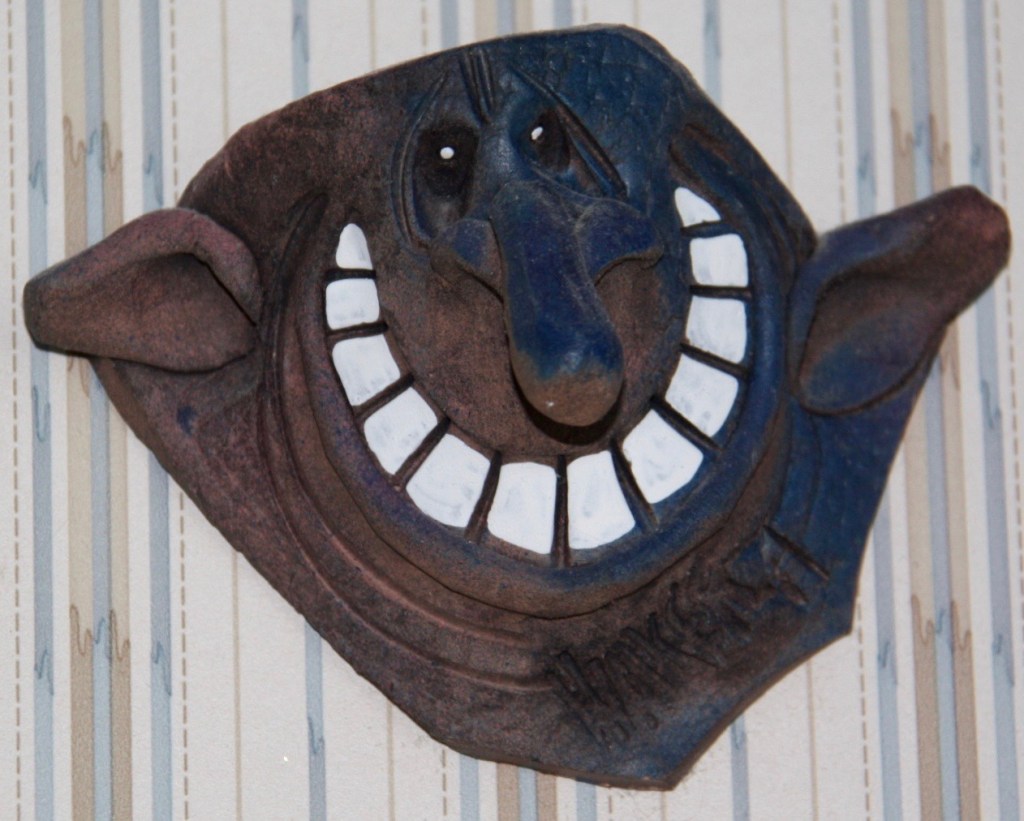
            The black American Cocker Spaniel, bought by my mother in a moment of madness, by telephone, unseen, camps in the kitchen. It nests at the far end of the table, by the stove, and defends its territory with warning growls and a snapping of yellowed teeth. I do my best to avoid the dog.
            “Dad, your lunch is ready,” I call out, a little bit louder. Dog, as my father calls it, growls and clatters its teeth. It has hidden a treasure in the folds of its old, gray comfort blanket, and guards it with the fierce, loving worry of a dragon protecting its golden hoard.
            My father enters the kitchen just as I place the soup on the table.
            “I’m not ready to eat,” my father growls. Put it back in the pot.”
            “What’s wrong, dad? I thought you were hungry.”
            “My teeth,” my father mumbles through a mouthful of pink gums. “I can’t find my teeth.”
            “Where on earth did you put them?”
            “I don’t know. If I knew where I’d put them, I wouldn’t have lost them.”
            My father circulates round the kitchen opening drawers, lifting saucepan lids, and shaking empty yogurt pots to see if they’ll offer up the rattling sound of lost teeth.
            “I can’t find them anywhere. I can’t eat lunch without my teeth.”
            “But it’s only soup, dad, tom8to soup.”
            “I don’t like tom8to soup. Your mother always made tomahto soup. Why can’t you be more like your mother?”
            “Sorry, dad. I’ll call it tomahto soup, if that will make you feel better. But it’s still made out of tom8toes.”
            “Don’t be so sarcastic. Help me find my teeth,” my father stomps towards the stove and Dog growls fiercely from its blanket as it guards its treasure.
            “Take that, you dirty dog,” my father pokes Dog in the ribs with his stick and Dog howls and spits out what it is chewing.
            “There they are,” my father’s voice trembles with excitement. He bends down, picks up his teeth, still hairy from the blanket and bubbly from Dog’s saliva, and pops them into his mouth. “That’s better,” he says, sitting down at the table. “Now I can enjoy my lunch.”

Click on this link for a ‘live’ reading of the story,
complete with Welsh accent.

Daffodil Day

Daffodil Day

Daffodils

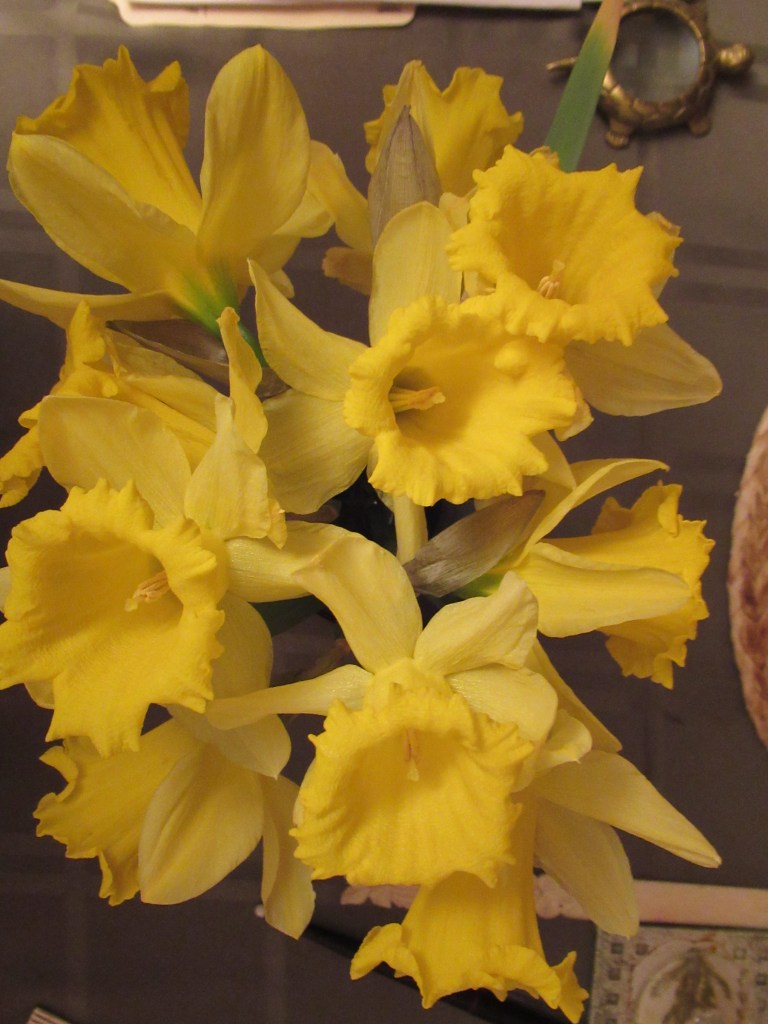
For ten long days the daffodils
endured, bringing to vase and breakfast-
table stored up sunshine and the silky
softness of their golden gift.

Their scent grew stronger as they
gathered strength from the sugar
we placed in their water, but now
they have withered and their day’s done.

Dry and shriveled they stand paper-
thin and brown, crisp to the touch.
They hang their heads:
oncoming death weighs them down.

Click here for Roger’s reading.
Daffodils

On Being Welsh

On Being Welsh

On being Welsh in a land ruled by the English
Dydd Dewi Sant Hapus

             I am the all-seeing eyes at the tip of Worm’s Head.
I am the teeth of the rocks at Rhossili.
I am the blackness in Pwll Ddu pool
when the sea-swells suck the stranger
in and out, sanding his bones.

Song pulled taut from a dark Welsh lung,
I am the memories of Silure and beast
mingled in a Gower Cave.

Tamer of aurox, hunter of deer,
caretaker of coracle,
fisher of salmon on the Abertawe tide,
I am the weaver of rhinoceros wool.

I am the minority,
persecuted for my faith, for my language,
for my sex, for the coal-dark of my thoughts.

I am the bard whose harp, strung like a bow,
will sing your death with music of arrows
unleashed from the wet Welsh woods.

I am the barb that sticks in your throat
from the dark worded ambush of my song.

Click here for Roger’s reading.
On Being Welsh