Monologue: Sun & Moon

IMG_0211.jpg

Monologue

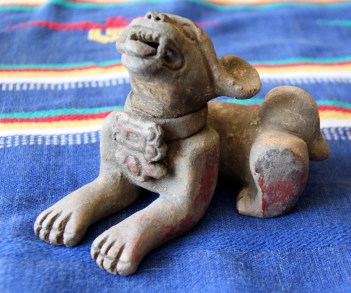
 Mono means Monkey in Spanish. Monkey is one of the day names in the Mixtec calendar. 
Monologue, then, is Monkey, talking, perhaps to himself.

“They broke our walls,” Mono whispered, “stone by stone.
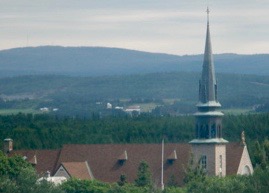
A new church they built, on the land they stole from us.
Red was its roof from a thunderstorm of blood.
The white bones of their lightning scattered us like hail.

They ripped out our tongues and commanded us to sing.
Carved mouths were ours, stuffed with grass.
Stone music forced its way through our broken teeth.

Few live now who can read the melodies of our silence.
We wait for some sage to measure our dance steps:
treading carefully, we walk on tiptoe.

A + cross  these stepping stones of time.”


Note: I am working on Sun and Moon. It will be ready for publication on Amazon and Kindle some time this week. Monkey Temple, Though Lovers Be Lost, Bistro, and Empress of Ireland are now available for review or purchase on Amazon and Kindle.

Casa Rosa: Flash Fiction

IMG_0193 (1).jpg

Casa Rosa
            Rosa placed four glasses on the bar, poured three fingers of Cuban rum into each glass, produced as if by magic from under the old wooden bar two old‑fashioned bottles of Coke, and threw one ice-cube into each glass. She filled the glasses with a foaming, bubbling liquid that didn’t quite spill over the edge.
“Aren’t you going to join us for a drink while we wait?” Danny asked Rosa.
In reply, Rosa poured a large glass of dark rum, scowled ferociously, and chugged it. We gazed in wonder as it vanished silently down the dark tunnel of her throat. Rosa held out her hand and Danny placed a one hundred dollar bill in it. Rosa poured herself another drink.
“I thought they shut you down last week,” Larry took a careful sip from his glass. He preferred wine really, New Zealand Pinot Grigio for preference, and this in Spain where the white wine flows like water and drowns you in an instant.
Rosa downed another glass of rum and looked at the boys over the rim of the glass. They were so young and innocent. In what might be generously called the imitation of a knowing wink, she covered a porcine eye with a flabby eyelid.
“Only one policeman,” Rosa winked again. “Very young, he was, quite pretty really, and in civilian clothes. I might have fancied him myself, a long time ago,” she paused, poured herself some more rum and drank it. “‘Special duty,’ he said, and showed me his ID.”
“What did you do?” Larry sounded interested. He might have been taking notes for his next book.
“I invited him to sample my newest acquisition,” Rosa tightened her lips in what might pass for a smile. “You can all sample him yourselves later, if you want. He’s quite attractive.”
Danny proposed a toast to the latest acquisition, the savior of the human race. He hummed as he sipped cautiously at his Cuba Libre. Danny and Larry clinked glasses with Rosa and I allowed my glass to join them.
We sat for a moment in silence, our elbows rising and falling as we sipped, or pretended to sip, our drinks while waiting for permission to ascend the stairs.
Rosa waddled over to the wall and fiddled with the dimmer switch. The room became even darker and a red light flashed on and off as a soft and suggestive wailing noise came from the jukebox. “Better have some music,” she said. “I’ve got a feeling you might be in for a long wait.”
Danny looked around. The door and the open street were to his left. People walked constantly past the entrance, glanced in, and saw us boys sitting there, waiting.
Larry sat motionless, staring straight ahead, looking for inspiration. He inspected his feet. They were resting, about a foot above the ground, on a dull, brass foot rail that ran the length of the bar. Down there, on the floor, lay paper serviettes, cigarette butts, shells from peanuts, heads of shrimp, crusts of bread, all the debris of men who spend Sunday in a certain type of bar and throw what’s left of their meal on the floor at their feet.                   Suddenly, Larry raised his feet from the bar and cursed.
In the space between the foot rail and the bar, where his feet had been resting, a large cat, foaming and spitting, ran towards him. Behind it, red eyes glowing, white teeth snapping at the end of the cat’s tail, was the largest rat Larry had ever seen. It was at least twice the size of the cat.
“Jesus Christ,” he cried.
The cat pursued by the rat raced beneath the arch of Larry’s lifted legs and vanished into the street.
Rosa didn’t blink.
“Chinese ship in town, from Shanghai,” she said. “Lots of big rats around. What you expect?”
Loud cries from the exterior marked the animals’ exit. Two loud pistol shots followed almost immediately and a very young man ran into the bar. It was Luis. He wore the uniform of the local police and held a still-smoking gun in one hand with his police identity card in the other.
“You’re all under arrest,” he screamed.
“Don’t be so silly, Luis,” Rosa smiled at him. “She’s upstairs, waiting for you. I knew you’d be here early tonight. Look, if it will make you more comfortable, I’ll close the bar.”
The young man put away his badge and nodded.
“Get them out of here, Rosa,” he said, dismissing us with a gesture of his hand. “Back door. And tell them never to say a word. Or else …” He waved his gun towards us, blew the smoke from the end of the barrel as if he were John Wayne in a cowboy movie, then tucked the pistol back into its holster.
Rosa nodded and waddled to the front door, turning off the lights as she went.
Danny, Larry, and I looked at Luis, nodded agreement, pressed our index fingers to our sealed lips, ran out the back door, and vanished into the night.

Empress: A Survivor Contemplates

15 May 2002 Pre-Rimouski 141.jpg

A Survivor Contemplates
the Crucifix on the Point
Ste. Luce-sur-mer

Christ of the Rocks
hanging here on the point
from the crucifix
with your open eyes:

do you see, out at sea,
where gray waves cover
the graveyard of the Empress,
at rest, her passengers,
caressed beneath shallow waters.

They have gone on before me,
those friends I numbered,
their piercing eyes
lie covered now.

Splayed toes:
last night’s footprints
erased by wind-blown
dust and sand.

 Dry crunch of skull and skeleton
crushed underfoot by sea boots
ascending, descending
the beach’s gentle slope.

Unknown,
these lands around me:
emitte lucem tuam /
send forth Thy light!

 Unexplored,
these mountains that surround me:
ipsa me deduxerunt /
such things have led me on.

 Unsolved,
these mysteries that confound me:
in montem sanctum tuum /
unto Thy holy hill …
in nomine Patris /
… in the name of the Father.

 I wander from grave to grave,
reading the headstones:
quare me repulisti? /
why hast Thou cast me off?

Coarse grass weaves bindweed
with columbines combining.

Incessant mourning of glove grey
morning doves,
drawing tears from dawn’s face:
quare tristis incedo? /
why do I go sorrowful?

 Verdant stems,
unsophisticated flowers,
weeds dark between stark
granite stones.

 Names!
Whose names?
My long lost brothers’ names,
Eric, Phillip, Peter,
not yet carved in stone:

 non in tabernacula tua /
not yet in Thy tabernacle.

 This churchyard,
will it always be
as steady as a headland
even in a storm?

 Here, the terrestrial
centre is stable:
quare tristis es, anima mea? /
why art thou sad, oh my soul?

 The ark on the waters
moves from side to side,
lulled by the sea waves,
up and down.

 On the altar,
a gilded chalice,far from the far flung
malice of the sea:
quare conturbas me? /
why dost thou disquiet me?

Empress: A Survivor Lights a Candle

Empress 233.jpg

A Survivor Lights a Candle
During the Latin Mass for the Dead
Before the Main Altar
at the Sanctuaire Sainte-Anne
Pointe-au-Père

I am afraid of fire:

 in principio erat verbum /
in the beginning was the word.

 I am afraid of the loud voice of the match
scratching its sudden flare,

narrowing my pupils,
enlarging the whites of my eyes:

 et lux in tenebris lucet /
and light shines in darkness.

Booming and blooming,
igniting the soul’s dark night.

Voice of fire:

et Deus erat verbum /
and the Word was God.

 Flourishing to nourishment,
flames whispering on the flood:

omnia per ipsum facta sunt /
all things were made by Him.

Wool and water,
this sodden safety blanket;
and what of the cold plush

of the pliant teddy bear,
the staring eyes of the doll:

et tenebrae eam non comprehenderunt /
and the darkness comprehended it not.

The lashes of their eyes
bound together with salt water,

they were doused in a silken mist:

hic venit in testimonium /
this served as a witness.

 Still the patterns pierce my sleep,
hauling me from my opaque dreams,

holding my wrists in this sailor’s double clasp:

 non erat ille lux /
he was not the light.

Oh! Curse these dumb waters rising!

“Not a hair on your head
shall be harmed!” he said,
hauling my sister up by her hair

only to find her staring eyes
belonging to the already dead:

et mundus eam non cognovit /
and the world knew her not.

Night waters rising.

The moon raising
its pale thin lantern glow:

et vidimus gloriam ejus /
and we saw His glory

 shining forth
upon the waters’
mirrored face.

Dark Night of the Empress

15 May 2002 Pre-Rimouski 035.jpg

Dark Night of the Empress

 Her cooled lights drowning now,
fires subsiding, dying under rising waters.

Grit and river-bottom clog the dream:
eyes and mouths wide open, faces blurred.

 Seaweed: mermaid’s hair
drifting slowly before the eyes;

the cold tide sucking in at ankle and heel,
pulling them down.

 Celluloid fictions,
black and white films,
their mouths stretched in a silent scream.

What became of the photographers,
of the men and women who stood their ground
clicking their cameras in unison
as the ship went down?

News!
The air breaks apart:
delirious with dots and devious dashes.

 The lighthouse light goes round and round.

It points a finger of silence at the collier
looming silent through the mist.

What price the black pearl in the oyster?

 What price the nightmare,
cleanly wrapped in transparent plastic,
desperate fingers tearing the see-through
fabric from the face?

 Salt water dashed on mouth and lips,
this dream:
sharp bows, wet rocks, and a tugging tide.

Toys and boys and dolls and girls
and men and women,
their bodies disgorged untidily,
their useless limbs
flopping at the sea’s foamed edge.

 Last night,
mist shredded itself on the sea-cradled headland.

This morning, the spring tide is a gentle hand
erasing life’s autographs from the witnessing sand.

Silence after the storm:

a pocket full of posies
gathered into a dreamless sleep

they have all fallen down ….

Empress of Ireland

15 May 2002 Pre-Rimouski 109.jpg

Photo: Museum and Monument to the Empress of Ireland, Pointe-au Père, PQ.

M Press of Ire

 Background and Dedication

The poems that have come together to form the M Press of Ire were begun in Ste. Luce-sur-mer, Quebec, in May 2002.

It was off shore from Ste. Luce, in the early hours of the morning of the 29th of May, 1914, that the Empress of Ireland collided with a Norwegian collier whose bows had been strengthened for ice-breaking. There were approximately 15 minutes between the moment of impact (1:55 am) and the moment the ship caught on fire and sank (2:10 am). Although the disaster has received little international attention, more passengers were lost in this incident (840) than in the loss of the Titanic (832) or of the Lusitania (791).

I read these poems, for the first time, at the University of St. Thomas at Houston, Texas. The Virginia Tech shootings took place on Monday, 16 April, 2007, and I read these poems on Wednesday, 18, April, 2007, while memorial services were taking place on university campuses all over North America. I dedicated that reading to the victims and survivors of the shootings. I now re-dedicate these words to all those who have been touched by sudden loss, shock, and / or grief, and especially to those who have suffered loss under extraordinary circumstances.

Introduction

I first heard those voices in the cries of the sea birds on the beach at Ste. Luce.

Borne on the wind, over the sigh of the waves, they seemed high-pitched, like the voices of children, or of men and women in distress. These were lost voices, the cries of people alone and frightened by the dark. I heard them calling to me.

That night, there were knocks at my cabin door and finger nails scratched at my window. Tiny sounds, almost beyond the range of human hearing: the snuffling of puppies when they turn over in their sleep and tug at each other, whimpering in their dreams.

“Who’s there?”

I started from my sleep. But there was only the wind and the waves as the tide’s footsteps climbed a moonbeam path to ascend the beach. When I walked on the sand next day, at low tide, there was a whispering behind my back. Little voices crying to be set free.

“Who’s there?”

A lone gull flew past my head and battered itself against the wind’s cage with outraged sturdy wings. That night, the mist descended. The church stepped in and out of its darkness and shadows gathered, persistent, at my door.

I walked out into the night and I saw a lone heron mobbed by gulls. It was as if an adult, surrounded by clamoring children, was standing guard over the beach. Then I saw the shadows of little children searching for their parents, the shapes of mothers and fathers looking for their off-spring, lost in the tide mark, among the seaweed and the grains of sand.

Beyond them, on the headland, the church stood tall above the shadows. I saw family survivors, their lips moving in supplication, kneeling before the granite cross that stands above the sea. As I approached, they turned to me, opened their mouths, mouthed silent words, then disappeared.

When I went back to bed, faces and voices visited me in my dreams. When I got up next morning, they came to me in the speech of birds hidden in the foliage, in the words dropped by the osprey’s wing, in the click of the crab’s claw as he dug himself deeper into the sand.

“Release us! Speak for us! Set us free!”

The words of the Empress of Ireland are not my words. They could never be my words. Foundered words, they are, rescued from the beach, and dragged from the high tide mark filled with its sea weed, carapace, charred wood, old rusted iron, and bright bone of long dead creatures polished by the relentless action of wind, sea, and sand.