Recycling

Books

Recycling

“You never know when you might need it,” my
grandfather said, finger-nails cracking red-
waxed parcel string. Bright sealing wax rained down
on the tablecloth, covering it with hard,
scarlet chips. Wax cracked, tight knots emerged.
One by one, my grandfather first loosened
them, then sought the string’s free end, following
it along its snaking way from knot to
knot. Like Theseus following his twine
through the labyrinth below the palace, my
grandfather mused, hesitated, followed
the clues given him by the knotter’s mind.
Set free from its parceled knots and lashings,
he looped the string around his fingers and
tied the twine into a tight bow that he
stowed away for future use. Reef knots, slip
knots, sheep-shanks, bowlines, bowlines-on-the-bight,
he showed me how to tie them all. He taught
me too how to never tie granny knots.
“Never cut string with a knife: untie knots,”
strict his advice. I follow it today.

Commentary:
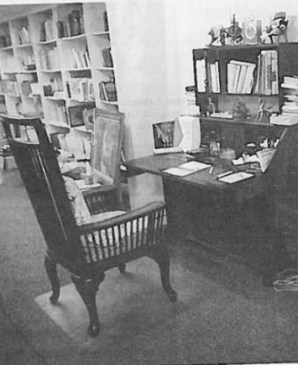
The photo shows my grandfather’s chair sitting before my basement desk where I write and store my books. I used to climb up the back of this chair when I was a tiny child, and blow on the bald spot on his head while he was asleep. Such memories nesting in the attic corner of the dormant mind. One day, I will write about that. Oh: I just did.

Inundation

DSC01055

Inundation

Seven flashes of light, then raindrops start
falling, one, two, followed by a curtain
dragging its damp dishcloth wetness over
windows, walls. It pocks the river’s troubled
face. Rising waters surpass all levels
from former floods. Water pours into homes,
floods basements, climbs stairs. Drowned branches scratch at
second floor windows as they float by.  Old
people evacuate their houses, are
boated to higher ground, beloved pets
upon their laps, boxed and caged. Men wonder
when this will end while older people shake
their heads, saying that they have never seen
anything like it. Overhead the storm
gathers strength. Rain tumbles, bubbling in
brooks that slide downhill filling the river.
Grand Lake now extends from Freddy to Saint
John. Why has it come to this? What can we
do to appease the mindless river gods,
fall on our knees and pray, if so, for what?
Last year we suffered drought, forest fires,
wells running dry, wild life dying of thirst.
This year it is death by inundation.
Rain continues. Thunder rolls. The wind gets
up and drives waves high against house windows.
Lightning carves fresh scars across dark clouds.
We shuffle our feet, accepting our fate
with grimaces, hugs, kisses, and sad smiles.

Darning Socks

F1030024 2

Darning Socks
(for Angela Wink)

My grandfather taught me how to darn socks.
I sat beside him by the fire and placed
a grey, wooden mushroom inside the sock,
stretching the sock wool to expose the hole.
He chose his colors with care, bright yellows,
oranges, reds, sky blues, anything that
stood out against the sock’s dark drabness. If
the socks were thin, he split new wool, pulling
it into individual strands that
he would draw through tongue and lips, wetting them
so they would thread with ease through the needle.
Curled wool threaded, I would cross-hatch the sock’s
hole, slowly forming a life raft that I’d
fill with colored wool. All my life, I have
darned socks, sewn buttons, mended my sweaters.
I always use bright colors, to my wife’s
dismay. Then, I know who did the darning,
and when. I still have my grandad’s First World
War sewing kit, all wrapped up in his signed
canvas wrap with his needles and some wool.
It’s lovely just to touch where his hands touched.
I still see dark blood traces where he pricked
his thumb, and where he sewed up wounded friends.

Commentary:

This poem comes from a comment, made by Angela Wink, on yesterday’s post. Such exchanges are precious and help create new memories. Thank you Angela.

Thursday Thoughts: On Water

fundy 05 mist+wolfepipers 081

Thursday Thoughts
03 May 2018
On Water

In the seventy-fourth year of my life,
sitting on the car in Mactaquac Park,
waiting for my wife to walk down the slope
to where I’m writing, a warm wind today,
sunshine, the river still rising, more rain
called for tonight, another inch or more,
that’s twenty to thirty millimeters,
you can hear from here the restless waters
powering the dam’s dynamos, creating
great creamy waves to wash over coffee
colored waters fathered upriver with
their splintered debris wafted from waters
still gathering strength in the north where snow
melts steadily while the stormy sky builds
clouds, and weathermen forecast thunderstorms
yet to descend and overflow our streams:
sitting safely I fear for those downstream
who deal with flooded basements, water pumps,
animals in distress, destruction come,
no sanctuary save in flight, wood, mortar,
brick promising no safety, no respite
from rising waters and eternal rain.

Commentary:

In the great flood of 1973, we lived on the Woodstock Road in Fredericton. We watched the river waters rising. Luckily they stopped on the other side of the road from where we were living and didn’t cross the road. This year we live out of town on the other side of the hill away from the river. Each time we drive into town we see the river waters and measure how they rise. Our hearts go out to those folk who are forced to evacuate their homes. We find it hard to believe that the waters are now at the levels they reached in 1973 and may, in some places, exceed those levels by a meter or more.

Next weekend, Word Spring, the spring meeting of the Writers’ Federation of New Brunswick, is scheduled to take place in Quispamsis. Yesterday, the people of Quispamsis found themselves on flood alert and were told to prepare for instant evacuation. It rained last night and more rain is expected. While it may not rain here in Island View, the catchment area of the St. John River, the Rhine of North America, is enormous. Any rain falling in the north of the province may affect the river. The snow is still melting from the deep woods and clear cutting along the river banks has, according to some, affected the ground’s ability to retain water.

All in all, a difficult situation and one that is forecast to last for another week or ten days. More details can be found here:

http://www.cbc.ca/news/canada/new-brunswick/homes-cottages-flooded-1.4645225?cmp=news-digests-new-brunswick
Downsizing

img_0136

Downsizing

a double sword
this clearing out
of odds and ends

the library diminishing
book by book
so many memories
slipped between the covers
dust-bound now
yet springing so quickly
back to life

sorrowful not sweet
these multiple partings
from people I will never see again
save in my dreams

I think of book burnings
so many heroes
going up in flames
fire their beginnings
fire their ends

fire the means of forging
the Omega and Alpha
of the book world
that surrounds us

fire encircling us
death’s bone fires
consuming us
outside and in

Dog Daze

IMG_0040 (2)

Dog Daze

 the sad dog hounds me
sends me spinning
sets me back on my heels
makes me chase my tail
and snap at shadows
as they ghost
through my mind

memories deceive
desperate I lap
at licks of false hope
a shifting salt field
that increases my thirst

driving me on and on
deeper into ragged clouds
and the storm that lays waste
to the dog daze of my mind

Friday Fiction: Sentences

IMG_0010

Friday Fiction
27 April 2018
Sentences

“Use lots of verbs to catch the reader’s attention. Keep your sentences short.”

… people don’t like long sentences … life sentences … things like that … though death sentences may be short, ugly, and brief … unless there’s a power shortage when you’re sitting there all wired up … or they’ve watered down the drugs in the tube they attach to the needle they put in the shunt already plugged into your arm …

… you’ve read the news … seen the pictures … if you live close enough you may even have stood out in the street with a candle and your friends watching the power shortage hit downtown … district lights flickering off … road lights shutting down … big blankets of blackness … as they put all available electricity into the power circuits that lead to the electric chair …

… use short sentences … like the one they read to me when I was six … then they locked me away in a boarding school for twelve long years … until I was eighteen … I ran away … again and again … they beat me … again and again … short sentences … ‘hold out your hand’ … ‘pull down your pants’ … bend over that chair’ … six of the best … no verb in that one … yet the words still strike a note of fear into those who have been publicly humiliated and flogged in a boarding school dining room … in front of all the boarders … and the day boys as well … ‘don’t cry’ … ‘little baby’ … ‘mother’s pet’ … ‘mummy’s darling’ … blubbing like a baby … and this at six years old … or seven … or eight … lashed on hands or backside by a grown man wielding a bamboo cane …

“Keep those sentences short.”

“Bend over.”

“Place your hands against the wall.”

“Don’t cry like a baby.”

“Take it like a man.”

Thursday Thoughts: Cricket


IMG_0027

Thursday Thoughts
19 April 2018
Cricket

            Street cricket. Played on cracked tarmac. The wicket: three sticks whitewashed on to the high stone wall of our cul-de-sac street that backed on the railway yards. The wall the boundary. And the neighbor’s front yards. Six and out if you hooked and hit behind the wicket and over the railway wall. You also had to retrieve the ball yourself. Game stopped until you climbed the wall, looked down at the rail yards thirty feet below, and shouted until someone emerged from a workman’s hut to find the ball or throw it back.

            No worker … no ball … no game. Then you had to run out of your street, down the main road, up the hill for two streets, beg permission at the locked rail yard iron gates: “Please, mister, can I go get my ball?” Then run all the way back down the railway lines to where the waiting players hung over your own street wall, shouting and cheering. Search for the ball among shiny rails, shunting rails, rusty rails, dandelions, thistles, and nettles, avoiding rolling stock and the occasional shunting engine. Find the ball. Try unsuccessfully to throw it back over the wall to the waiting hands. Try again. No good. Wall too high. Carry ball back to iron gates. Thank gate man politely so you can come back next time. Return ball to game. Game continues, rain or shine. Unless it’s real rain. The Lissingdowne / Pissingdown type. If so, run for nearest house and shelter by fire in kitchen.

            Basic rules. Six and out if you hit it over the railway wall. Two runs and fetch the ball yourself if you hit it into the to bomb buildings at square leg, next to the railway wall. No fielders there. Banned territory. Still piled with grass-overgrown bombed bricks and debris. Fragile, crumbling walls still still liable to tumble. Cellars that might open up. Low walls that might collapse. Four and out in a neighbor’s front yard. Some were nice and didn’t mind. Watch out for the old witch with the garden gate. If you hit her window, even with a tennis ball, she’d be out quick as a flash, steal your ball, and wouldn’t give it back. Otherwise, it was single-batsmen. Run the runs and walk back from singles. One hand, one bounce. Tip and run once you’d scored twenty. One hand off the wall if you didn’t clear it for a six and out. Out if your fox terrier got the ball and ran round and round in circles with it in his mouth. Damn difficult to catch. Also his sharp, terrier teeth might puncture the ball. Damned dog. Lost ball and stopped match if the dog ran into the house and gave the ball to your gran who was saving it for tennis.

            Cricket, in those days, was civilization. It had survived the bombing raids that missed the railway yards and bombed the bomb buildings. It had survived the machine-gun fire from the fighter-bombers that had strafed the street leaving bullet-holes, still un-repaired, in walls and shattering the glass of now-mended windows. It gave us a sense of rule and law, for the rules were strict and nobody broke them and stealing runs in tip and run was legal and not a crime.

            Cricket: a small, bright window on the back-street where I lived, a window filled with happiness and light, even when it’s over the wall and six and out, or the dog runs away with the tennis ball, or the ball vanishes down a mysterious rabbit-hole in the bomb buildings and slides down to someone’s ruined cellar.

            Game’s over. The Tests Match is on. The one primitive, tiny black-and-white screen in the street lights up with flickering figures and we sit around on the floor watching real men playing the real game on a grassy field in a fairy-book world, a world that most of us back-street boys and girls will never know or see, but that comes over to us as a dream of reality on this old black-and-white tv.

Wednesday Workshop: Vis Brevis


IMG_0068 (2)

Wednesday Workshop
18 April 2018
Vis Brevis

Rain. Persistent rain. Cornish mizzle that chills and wets. Basque chirrimirri penetrating flesh and bone. Low cloud blankets buildings, wraps itself round the windshield. Clings with the tenacity of Saran wrap. Visibility variable, now clear, now a muffler round the car’s headlights. Darkness gathered, still gathering. Lights moving, cars moving, the road moving, blending first with the lights then with the shadows, shape-shifting.

Down the hill now, out of the city lights, into the countryside. The road changing, patches and potholes, lights flickering in and out, darkness and light. Small animals of light, the potholes, shimmering, bumping by. Another pothole, moving, turning from side to side, a pothole with a ringed tail and two tiny eyes. A baby pothole, misses the front wheels, not the back. One dull, dry thump.

What were you doing there, in the middle of the road? Why alone? Why no mother, no brothers? Why so small? I didn’t mean to … I didn’t want to … Why me? Why now? If only …

Light breaks through the darkness clouding my mind. Memories: the driver on the road to Kincardine, chasing a jackrabbit, trapped in the headlights, a Belgian Hare, dodging down the middle of the country road. Laughing, the driver, with the joy of his hunt. Then: one dry thump. The car stopped, the hare, still twitching, held by its long ears, shown as a trophy at the car window, then thrown in the trunk. Memories: two lads in a half-ton, on a back road by Grand Lake. A sunny Sunday. Spotting the ground hog at the roadside. Driving at it with the truck. Swerving to hit it. The joy and laughter in their faces, looking back. One dry thump. The ground hog, front half viable, spine fractured, back legs paralyzed, dragging itself with its forearms to the roadside, dropping into the ditch.

Legend tells of the man who met Death in Cairo. Death looked surprised to see him. “What are you doing here?” he asked. Fear filled the man. He ran, packed his bags, left Cairo with its vision of Death. Travelled to Bagdad. Met there with Death, who welcomed him. “Why were you surprised to see me in Cairo?” the man asked. “Because we had a meeting here in Bagdad, tonight,” Death replied. “And I didn’t know if you’d show up.”

“Every morning, at day break,
oh Lord, this little prayer I make,
that thou wilt keep thy watchful eye,
on all poor creatures born to die.”

Dylan Thomas wrote those words in his poetry play for radio, Under Milkwood. All poor creatures born to die. That’s us. That’s you and me. We don’t know how, or why, or where, or when. And it doesn’t matter. That’s the whole point: it doesn’t matter. Our death is born with us, walks with us, lives inside us, and one day will take us, each of us, we poor creatures born to die. What matters is that we live while we can, rejoice while we can, thrive while we can, think while we can, write while we can …

Enlightenment came last night, at the darkest, wettest of times. It followed me home and crept with me into my bed. I thought of all the creatures found each spring morning, their lives cut short at night along the sides of our New Brunswick roads: deer, porcupine, squirrels, groundhogs, foxes, domestic and feral cats, dogs, skunks, and yes, one, very special, baby raccoon, a tiny raccoon, so small as to be almost invisible in chirimirri, mizzle, and mist.

His spirit came to me in the under-blanket dark, wrapped itself warm around me, and brought me comfort. “You too,” he whispered. “You too. But not just yet. My work is done. I can go now. But you still have lots of work to do. Remember: Vis brevis, ars longa,”  his raccoon spirit nuzzled me and I reached out and patted him. Then both of us settled down to dream our different dreams of a life and death that is surely nothing but a game of touch and go.


Scrambled Eggs

img_0363

Scrambled Eggs

The door to her father’s house opened before Tiggy could raise the brass knocker.

“At last,” said her father. “You’re just in time to cook breakfast. Come in. Come in,” He stood aside to let her pass and she pecked a kiss at his cheek as she hurried by, overnight bag in the hand closer to him. Tiggy held her breath as she went. She knew the smell emanating from her father would be as ripe as it was during her last visit, if not worse.

“I’ll make you breakfast in a moment, dad. I’ll just take these upstairs first.”

When she came down, her post-drive ablutions completed, she went straight to the kitchen. Her father sat at the breakfast table, restless fingers playing the piano of the table top in arrhythmic Morse Code messages.

“At last,” her father muttered. “Where have you been?”

“Just tidying up, dad,” Tiggy smiled. “You know it’s a long drive.”

“I want scrambled eggs. On toast. Make them like your mother used to.”

Tiggy thought of the dry overcooked eggs her mother used to scrape out of the burnt-to-a-crisp saucepan and sighed. Her almost-liquid, cordon bleu divinity was the real thing. Scrambled eggs, indeed. And so much salt. More like bacalao, dried salt cod with a little bit of turmeric to make it look like scrambled egg.

Tiggy picked up a saucepan. Filthy. She went to the sink and started to scrub.

“You don’t need to do that,” her father said. “It’s clean.”

“It’ll be cleaner when I’ve finished, dad. Don’t you worry.”

“Here,” her father handed her some plates. “You night as well wash these as well. They were clean enough for your mother but they won’t be good enough for you.” Greasy films layered the plates where yesterday’s bacon had solidified. Hard lumps of egg stuck to the cracks that road-mapped the plates’ surface.

“I’ll look after it, dad. You sit down and rest. I’m home now.”

“At last,” Tiggy’s father grunted.

Tiggy took in her father’s face. He had put on weight and veins ran red and blue tattoos across the unshaven surface. He breathed with difficulty, but she knew he angered with ease.

Tiggy looked for the end of the roll of paper towels she had bought on her last visit. When she found it, she dried saucepan, plates, and cutlery, putting the saucepan on the stove and laying cutlery and plates neatly in a space she created on the cluttered table. Her father pushed his setting aside and struggled to his feet.

“Here, let me help you.”

“That’d be great, dad. You do the toast, I’ll get the eggs,” Tiggy walked to the fridge, searched in vain for some butter, and carefully selected three large brown eggs.

Her father followed her to the fridge.

“Here, use up this cracked one,” he handed her a brown egg with a large fissure that mapped a thin contour from big end to little end.

Tiggy reached for the egg. She grasped it and felt the cold icy creep of the army of white maggots that seethed along the line. She shuddered and the egg slipped from her fingers and dropped to the kitchen’s flagstone floor where it shattered. A rich, ripe stench arose and ghosted through the air to tickle Tiggy’s nostrils. Her stomach heaved.

Having washed her hands, she cracked each egg individually into a saucer, inspected it, then poured it into the saucepan. Next, she took a wooden spoon from the drawer and started to blend the eggs.

Meanwhile, her father sat back down at the table, toast forgotten, and recommenced his Morse Code messages.

Tiggy opened one cupboard, then another, in search of bread. Finally, she found the remains of a sliced loaf in a dark corner and brought it out into the light. The first slice she extracted from the bag was a painting from Picasso’s Blue Period, the second, a breeding ground for mold, but the third might be salvageable …

“Don’t worry,” her father said. “Just scrape the blue stuff off. It’ll be fine. I eat it all the time.”

“You can’t eat that,” Tiggy threw the bread in the garbage. “I’ll just serve you the eggs on the plate.”

When they were cooked to her father’s satisfaction, Tiggy scraped the dried-out eggs from now charred saucepan. They landed on her father’s plate with a harsh, unforgiving sound.

“Lovely,” he said, licking his lips. “Just like your mum’s.”