Wednesday Workshop: Codification

IMG_0068 (2)

Codification
Wednesday Workshop
30 May 2018

For me, it is vital to see how others read and interpret my work … what comes across, what doesn’t, how things are understood and read, sometimes in the same way, sometimes in different ways. It is always easy to pick out some favorite phrases. However, deciphering, interpreting, and then reacting to, a poem’s inner code, is a very different matter.

I love the cut and thrust of dialog … I was at our Tuesday night writing group meeting last night from 7-9:30 pm and we had a great time, back and forth across the table pecking, like wild birds perched on a literary feeder, at each others’ texts. My own texts are thickly layered and highly codified and I have become very interested in the theory of literary codification.

My own ideas are a development of those of Northrop Frye as he expressed them in The Great Code. When we lose our common code, to what extent do we need to explain a private one? This is of great import to Frye’s studies on William Blake, perhaps (in spite of his seeming simplicity in certain poems) one of the most difficult of English poets.

Perhaps the answer lies in Karl Jung’s theories on the racial subconscious: that we all share deep, (human) racial symbols that transcend words and often appear as symbols and images. If this is true, then we communicate, at a non-speech level, through metaphor and symbol, and that is more powerful and outreaching than linear language, however well and clearly codified it may be.

This emphasis on symbol, image, and metaphor leads us, of course, into surrealism, free writing, concrete poetry, sound poetry, and all those efforts to abandon the linear and reach into the subconscious roots of ‘that which binds us together as human beings’ … in my humanistic theories, to find the links that behind is more productive than the reinforce the fears and misbeliefs that separate. Alas, not everyone thinks that way in the literary world, and private codes can easily be used as wedges to force people apart.

We need codes, preferably codes that we can share. The question is, how explicit would we be, as writers, in explaining those codes? How closely should we imitate the writing codes of other people?

The eternal mystery of Aladdin’s Lamp: “New codes for old.” And don’t forget the magic words “Open Sesame.”

Ah, the joys of codification.

Commentary
This is my first post for some time, ten days in fact, 20 May. No excuses other than other commitments: to the WFNB, to my online poetry course, to my physical writing workshops, to my own creative condition … I am creating furiously at present. Codification is something that has interested me for some time: the Biblical Code, The Western Tradition, Courtly Love, the Icy Fires of Petrarchism, Romanticism,  Impressionism, Expressionsim, Surrealism. Modernism, Post-Modernism … the -isms, once started, are apparently endless. All of these -isms spiral round the ideas of verbal codes. In codification, I would like to start a discussion on what these codes are, how they affect us, what do they mean, especially when they can be so totally personal. By all means, join the discussion: what do you mean by codes? How do you use them? How do you interpret the codes of other people?

Fear

IMG_0094

A List of Fears
(exercise: tick all that apply)

of failure
of success
of inadequacy
of being caught short
of being found out
of the blank page
of revealing intimate details
of feeling stupid
of typos or punctuation or bad grammar
of presumption
of being laughed at
of new things or old things
of something borrowed
of new topics or new methods
of research or hard work or perfection
of rejection or dejection or ejection
of losing yourself or finding yourself
of caring or not caring
of the unknown or the unknowable
of peer pressure
of speaking out loud
of being unable to write like …
of being wrong or right
of political or social consequences
of free speech
of hurting others
of being misunderstood or understood
of large or small audiences
of clothing or mechanical failure
of starting or finishing or writer’s block
of having nothing to say
of having nothing worthwhile to say

fear of fear

Commentary:
Last Saturday, in Quispamsis, I facilitated a two hour workshop on things that writers fear. I began with a list of all the things that I have feared at various times during my writing career. This morning, I turned, with great trepidation, those fears into the list poem I reproduce above.  If you wish to discuss any of these fears, or add other fears of your own to the list, and remember, this is a list of writers’ fears, then please do so. I will be happy to enter into a dialog.
As for the fear of feeling stupid, I often offer this small piece of advice. It has been known to comfort those who actually have a fear of feeling stupid. (1) buy a small fluffy toy, preferably a Teddy Bear, that will fit into your pocket or purse. (2) christen that small fluffy toy with the name of Stupid. (3) you carry Stupid around with you all day knowing that you can put your hand in your pocket or purse and feel Stupid all day and nobody is going to know or care.
The moral of the story is this: when you can laugh at your fears, you fear them no more. And remember: you can stop feeling Stupid whenever you want to.

Sun Worship

IMG_0018

Sun Worship

Worship the sun
as it rises over the hills
from whence cometh
its golden glory.

Trees and their forest,
forces older by far
than this Christian god,
walk in darkness
until touched by the sun.

Worship the sun ropes
that tie you to your daily work,
rejoice in your bondage,
for no man kills
to glorify the sun.

Sun, my father and my mother,
sunshine that floods my spirit
and enlightens my world,
here, before sunrise,
I raise my voice in a song
praising you, and your strength,
the life you give, the death
you will one day bring.


Two Dogs and a Deer

IMG_0040 (3)

Two Dogs and a Deer
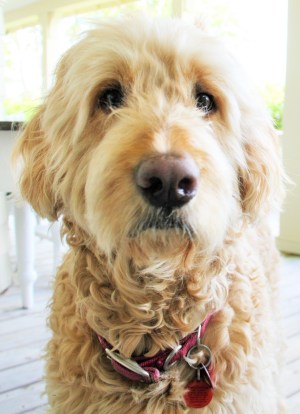
(Cherry, Hanna, Jasper, and Lucinda)

Two dogs and a deer:
the deer, heart in mouth,
bounding away from the lawn
seeking cover in the trees.

The gold dog bounding too,
a rocking-horse bounce,
from back to front, lurching,
falling behind the black dog,
the latter, smooth as a train.

The enemy having fled,
shoulder to shoulder they return,
across the green grass of the field,
the victors, side by side, panting,
sides heaving, triumphant, grinning.

What heartbreak as these memories
fade and fall behind. Long may they
linger in my dreaming mind.

Heart

IMG_0040 (2)

Heart
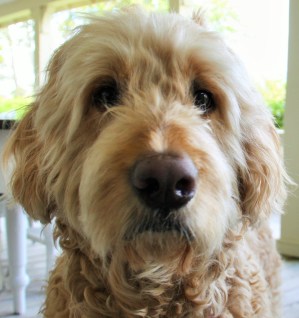
(sonnet for Hanna and Cherry)

club-foot the pigeon feet
burned off by frost and lime
cracked this egg shell in its cup
the world’s heart overflowing

this silver spoon carved from milk
-tops pecked by morning birds
who placed it in my mouth

song of the blackbird
sung from the corrugated iron roof
where he whistles his virtuosity

playing cards placed face down
who holds the jolly joker
with his floppy cap and jingling bells
who holds the red ace key to my heart


Words

IMG_0127

Words

Waxing gibbous:
gibberish to most, or jabberwocky.
How now the moonraker
dragging the village pond for gold,
or the witch on her ducking-stool
accepted by God if she drowns,
but burned alive if she survives
and the Omnipotent rejects her?

Words rise and fall like trout to flies.
In words, out words, taboo words,
code words, the ebb and flow words
that see conversational tides
rising and falling, waning gibbous
beneath a failing lexicon, sacrificed
at the altar of barbaric speech to appease
the new gods and falsify the old:
nuance, shades of meaning, language,
meta-language, para-language,
raised, a supercilious eyebrow,
that lip curled in the snort of a sneer.

Rain

IMG_0130

Rain

Parched, the dry brown grass,
taut the earth, tighter than a drum.
Footsteps echo a rhythmic, hollow sound:
marimba music with death tones.
No joy in the barefoot beat of heel and toe.

For months now, no rain has fallen.
The fire crackle is feared in the forest.
Elsewhere, trees catch and the woodlots blaze.
What good are showers, dry thunder clouds,
building, always building, but never releasing
the surging tide that this commonwealth needs?

We yearn for a thick blanket of cloud to gift us
with the long, slow soak of an English spring.
The grass speaks out with its many tongues,
each as sharp as a blade, and calls for rain,
for liquid to pour down from the sky and end
the dryness of drought. We need to fill the wells,
to let the streams overflow with the bounty of water.
We need the green, green grass: not this baked,
bare, arid crunch and crumble of taut brown earth.

Roger

IMG_0067

Roger
Writing in the Red Room at KIRA

I sit at my desk in the Red Room
overlooking Passamaquoddy Bay.

Minister’s Island peeps through
its bandage of low, thin mist.

Sunshine illuminates me
as, pen in hand, I write in my book.

Timeless, that photo, these words.

I will sit forever by that window,
deep in thought, writing in sunshine.

Return to KIRA: Thursday Thoughts

IMG_0087.JPG

Return to KIRA
Thursday Thoughts
27 July 2017

“You cannot step in the same river twice,” according to Heraclitus. And he was perfectly correct. Yesterday I returned to KIRA. But it wasn’t the same. How could it have been?

Geoff, Hanna, and Cherry met me at the door. Geoff shook my hand, Hanna gave me a big hug, and Cherry pushed her wet nose into my crotch. Some things don’t change and one of them is a favorite doggy’s greeting. Mary sat at her desk just inside the door and she got a big hug too.

One Small Corner, the book that I wrote while at KIRA in June was in my hand. I had a signed copy for each of them. They also had a present for Clare and I: lunch at the Garden Café, courtesy of KIRA and a trip there on KIRA’s latest acquisition, a new golf cart, driven by Hanna. We were early for our lunch booking and Geoff suggested a quick tour of the gardens since Clare hadn’t seen them.

We all climbed into the Golf Cart, Mary and Hanna in front, and Geoff, Clare and I on the back seat, looking back as KIRA slowly vanished behind us. Another quote: “History,” said Marshall Macluhan, “is like looking at the past through the rear-view mirror of a rapidly advancing car.” This is a wonderful metaphor for my feelings at the time.

I had just met the young lady who had inherited my room, the Red Room, and my studio, #1. Neither the room nor the studio belonged to me anymore. They were now closed spaces, occupied by another. It didn’t hurt. It didn’t drive a spear through my still suffering heart. It did, however, underline that the waters of the stream had moved on and were not the same.

The gardens had changed too. Gone were the splendiferous rhododendrons of June, present were the multitudinous colors of Late July. The tiniest alpaca, born just before I left at the end of June, was now a sturdy one month old, larger and much more self-contained. Moe was a month older too as he sat on the roof of his shelter and nickered away at the world in general. Our lunch table was reserved for 12:30 and we would see them all later, parading on the lawn.

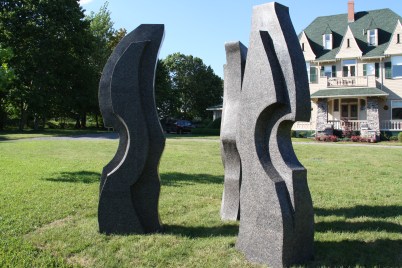
The gardens were fuller now than they were in June: more flowers, more blossoms, more color, more people, more children, more hazards for Hanna to slow for as we made our way back to the Garden Café, past the Sensitivity Garden and the Therapy Garden, past the Labyrinth and the Maze, past the Dutch Windmill, past all those magnificent sculptures … new sculptures had appeared … the blue piano wasn’t there earlier … this month’s artist had erected a new piece in the Secret Garden … change was all around me … and I viewed it from the backward-facing seat of a slowly advancing Golf Cart.

We had lunch in the shade beneath the apple tree. I looked around for Carlos, certain that he and his shadow were both close by … but I could hear no pipes. I spoke to Clare in Spanish, just to hear that language once again, but Carlos still didn’t appear. How could he? The river had flowed on and he was back with his family in Brazil.

Friends dropped in at the table to chat: Brad, Tim, Stefan, Mikah …lunch came and went speeded on by reminiscences and plans. After lunch, we visited the exhibition put on in the Garden Café by the latest group of resident artists. We admired the pencil drawings, loved the paper-maker and her art, and were wowed by the rug hooking and the photographs …

I thought of our own exhibition, held in the same place in June. We had our paintings, courtesy of Anne and Ruby, our sculptures, thanks to Elise, but the silence of July’s exhibition had been broken by the sounds of Carlos’s pipes and the viva voce reading of my own poetry. We were not a silent group, but a noisy, head-banging, drum-beating, piping, singing set of selfie-videophiles … the river had flowed on.

Ghosts of our voices clung to the back porch when we returned to KIRA. Hanna and Mary returned to their duties. Geoff, too, had things to accomplish. We met with two more of the new resident artists and complimented them on their skills. Then we slipped silently away to join the river of traffic that flowed down Water Street and up and away and back again to Island View.

Yes, I enjoyed myself. Yes, I will return again in August for I have promised to do that. But each trip will be different and no two trips will ever be the same, for old man river … well …he just keeps flowing along …

IMG_0080

IMG_0087 (2)

IMG_0092