Structure in the Short Story

img_0177

Structure in the Short Story
Wednesday Workshop
30 November 2016
Posted: 4 December 2016.

I just attended, with one of my writers’ groups, a writing workshop offered by a guest speaker. Our speaker threw out some interesting ideas on structure in general and structure in the short story in particular. The first comment he made was “Are you sure that your novel is not a short story and vice versa?” He then suggested that often beginning writers run out of steam because their novels are not really novels but are short stories that need cutting, rather than expanding.

He followed this up by suggesting, and I made no notes so I write from a memory that fails me more often than it used to, that a short story should have a structure that runs something like this:

stasis > key occurrence > end of old world (stasis broken) > beginning of new reality (the world upside down) > quest (the search for  new balance) > climax (when all the events of the crisis come together) >  the moment of truth (when the central character is faced by a decision) > the choice (the protagonist chooses) > pay-off for protagonist (order is restored and the protagonist is changed or confirmed by his choice) > pay-off for readers (who see that change and are themselves changed by looking at the same old world through different sight and a new knowledge or insight gained).

 One of the group members circulated his notes from the workshop and summarized the idea rather more succinctly:

The first thing I remember … in any story, the main character has to be changed at the end from what s/he was in the beginning.

The other item was the list of elements in a story: Stasis, Trigger, Quest, Surprise, Critical Choice, Climax and Resolution.

            Clearly this is a theoretical structure, but many short stories follow it or versions of it. Through this structure, our speaker suggested, there often runs a leitmotiv and this can provide a thematic unity that also holds the story together. Returning to this thematic unity and writing selectively from within it, can often produce the desired change in reader and protagonist. Equally clearly, there is no length to this structure and the resulting story may be very brief or suitably enlarged.

According to our speaker, the character of the protagonist is very important and the key aspects of the protagonist’s character must be clearly drawn, right from the start. The protagonist must also go through some sort of change as the story and the protagonist’s character both develop. Place is also important and the protagonist should be linked into a place and preferably a time. The protagonist in the short story is, after all, in a dialogue with his time and his place (his chronotopos, as Bakhtin would phrase it).

This is certainly a prescription for short story writing, one of many prescriptions, I might add. A quick search turns up another definition, this time of a five-point narrative arc offered by Mark Flanagan:

“Sometime[s] simply called “arc” or “story arc,” narrative arc refers to the chronological construction of plot in a novel or story. Typically, a narrative arc looks something like a pyramid, made up of the following components: exposition, rising action, climax, falling action, and resolution.”

            Flanagan continues with a definition of each moment in the story. Exposition reveals the characters and the setting. Rising action is a complication that hinders the protagonist. Climax is the point of highest stress or tension. Falling action is a releasing of the pressure and the resolution ties up all the loose ends. (Taken from this site)

http://contemporarylit.about.com/od/literaryterms/g/Narrative-Arc-What-Is-Narrative-Arc-In-Literature.htm

Lope de Vega, the Seventeenth-century Spanish playwright, suggested a simplified three-part structure: situation > complication > unfolding / dénouement. Of course, the complications may be multiple, resulting in an action that runs situation > complication > further complications > complicating the complications > even more complications > even more complicated complications > and then the final unraveling of the ‘by now very twisted’ plot. An even simpler two-part definition, also from Spain’s Seventeenth-century, offers us the dual structure of a ‘world in disorder’ > ‘a world in order’ — how the characters progress from disorder to order is up to you as a writer.

Of course, the author may decide NOT to tie up all the loose ends and re-order the world to perfection. When this happens, we may have a dystopia: the disaster continues; or we may have an open ending that prompts the reader to wonder what might happen or what might have happened. As for ‘beginning at the beginning,’ there are also stories that begin in the middle (in media res) and then go backwards in time before going forwards again. This raises the awkward question: how short is a short story? I won’t attempt to answer that one here.

Whether you describe or prescribe, there are many possibilities in the world of short story telling and it is always the story that counts. If it is good, then perceived structural flaws that go against these prescriptive methods may well become a prescriptive structure for another future writer. Interior monologue and dream, for example, linked thematically but not necessarily linked in time and space, may well distort or destroy yet another structural format, that of the three classic unities of time, place, and action. these, incidentally, are expanded into four by the great Spanish playwrights (among others, I am sure) who add unity of theme to the other three.

Robin Grindstaff, in an online article entitled “Narrative Arc: what the heck is it?”, available at

http://robbgrindstaff.com/2012/03/narrative-arc-what-the-heck-is-it/

suggests yet another simplification and reshaping, of the narrative arc idea.

“Think of narrative arc as a bell curve. It starts at a point on the lower left hand side of a graph, rises in a curve to a peak, and then drops back down again. The standard narrative arc is often referred to in terms of the three-act play: a beginning, a middle, and an end.”

            This is not unlike the structure outlined by Lope de Vega, except for the fact that ‘middle’ is a rather inadequate term for the multiple complications outlined in the Lope de Vega model. This statement may be a little unfair as Robin Grindstaff goes on to outline the complications that may occur in the second act in the following fashion:

“In act two, the main character must try to overcome the conflict presented by the inciting event. The character wants something, has a goal in mind. The conflict and tension of the story rise, and obstacles are thrown in the path of the character to prevent her from achieving her goal. The character faces these obstacles on her way to overcoming the conflict. The obstacles get bigger, more difficult, and the character may be on the verge of defeat or surrender. At this point, the character must make a critical decision or a moral choice that changes the direction of the story.”

            Clearly the ‘obstacles that are thrown’ compare favorably with Lope’s consistent throwing of obstacles and ‘middle’ therefore becomes a euphemism for ‘complications.’ Act three allows for the climax and resolution of the story and this includes character change or ‘death in defeat’ and tragedy. I recommend this article very strongly, as it goes way beyond the outline I have offered thus far and clarifies many features of the narrative arc.

In fact, Grindstaff then references Nigel Watts, Write a Novel and Get It Published, and outlines an eight-point narrative arc that runs

stasis > trigger > quest > surprise > critical choice > climax > reversal > resolution.

 This runs a close parallel to the circulated list (quoted earlier) of seven elements:

 Stasis > Trigger > Quest > Surprise > Critical Choice > Climax > Resolution.

 The main difference being the insertion of a reversal between the climax and the resolution.

So, we have now established an narrative arc, or a pyramid, with 2, 3, 4, 5, 6, 7 or 8 steps included within it. This is all very prescriptive: do it and you will succeed. My greatest fear then becomes the gate-keepers, those anonymous figures who sit on shadowy selection committees, place ticks in appropriate boxes, and judge the quality of writing by consensus in committee. I can hear them now: “#7 is missing. There’s no reversal. Reject!” “I don’t like #5. The choice isn’t critical enough. Reject!”

As writers, we must remember that all these arcs and numbers are just theories. The most important thing is the command ‘Take up thy pen and write’! All the theory in the world does not produce a good short story or a good novel. In fact, the opposite may be true: too many rules may stifle our narratives at birth or choke them to death My advice: know your theories, then smash them into little pieces and create the new structures, the new formats, the next new great piece of writing that will lead you, as a writer, to boldly go where no writer has gone before.

 Blessings, happy writing, and follow your creative instincts.

Dream of Oaxaca

IMG_0165.JPG

Dream of Oaxaca

I can bring you a Bird of Paradise, but I cannot bring you the sounds and smells of Oaxaca. The pungent odour of the first drops of rain falling into dry dust, the tang of waxen candles burning in the cathedral’s dark, the high notes sung at the altar by the old woman, dressed in black, who sings each day, on her knees, before the golden images in Santo Domingo: these sounds and smells defy any words I can pen. Nor can I place on the page the bustle of the abastos, the bickering of rooftop goats, the barking and growling of the dogs who patrol the azoteas at head-height and snap at your ears.  Other things escape me: the salty taste of sweat, the heat and heaviness of the midday sun as its hammer falls vertical from the sky, the sandpaper touch of hand-hewn stone, cobbles hard beneath the feet, the visual impact of the revolutionary bullet holes still scarring the church where Benito Juárez got married and reminding the tourists that violence in Mexico is never far away. The silk smooth threads that run through the vendor’s carpets contrast violently with the harsh sharp tares still lodged in hand carded wool. Colors and scents: coffees and chocolates blending and blended in the open air-market, the spice stall with a hundred different kinds of peppers, the golden yellow flower of the gourd — flor de calabaza — as it floats on the surface of spiced soup or lolls luxurious upon Oaxacan cheese or tortilla and quesadilla. Such things are the substance of daily reality: I remember them well, but I cannot gift you with their taste, nor their smell, nor their sound. At night, strings of fireworks hang down the cathedral’s towers and, at the spark of a match, these castillos as they call them, burn. Cataracts of light flicker and flow as rockets claw upwards into the sky to knock on the doors of the slumbering gods. A bull’s head, attached to a wooden frame, bears fireworks that crackle and spurt fire as the bull charges at the gathered crowd. Sparks char cotton and wool, young girls shriek and flee, a striped, carved tiger emerges sparkling from the shadows and his eyes light up with another set of fires … But there is always something missing from these words. How much can I describe? How much am I forced to leave out? How close can I get to an imagined reality that is more imagined than real, more creation than memory? I live in a world that has forgotten poetry. I live in a world that has laid aside the great myths and replaced them with a media that misleads and falsifies. I live in a world in which the power and glory of words is used not to delight and educate, but to manipulate. I live in a treacherous world of lies and deceit, the world of Descartes’s evil genius, for not everything is as it seems to be and the people have been misled. But this world of ours is old, and older, darker powers than ours still dwell on this earth: a pinch of salt thrown over the shoulder, index finger and thumb pinched into a magic circle that wards off the evil eye, the traditional hunchback – el jorobado –, carved from jade, who packs our cares and troubles into his hump and carries them away … as I have been carried away, on this tide of creation that ebbs and flows, a virtual sea, a wave of autumn leaves that washes up to my door, then falls asleep, golden, brown, peaceful in the vacuum that is left by the wind’s sudden absence. So, for a while, after you have read these words, avoid all shadows, do not step on the black lines that divide sidewalk and pavement into squares, do not crush the elf’s dry bones hidden in a fallen leaf, avoid black cats, make sure the crow flies on the correct side of the road …  then find a quiet corner of the street where the leaves dance to the wind’s tune, and fall asleep to re-create your own life in dreams.

Questions

img_0141-2

Questions

I hear her voice, delicate, distant and I run to the sound, jump on the table, and sit in my usual spot just beside her play thing, but she isn’t there. He’s there, damn it, talking away on that little black thing with buttons. I can see him, smell him. I hate him, his other sex perfumes, his heavy-footed shuffle, his loud voice, his walking-sticks. I run when he approaches, run and hide myself away, making myself small, fitting under furniture where he can’t get at me, trying new places, new spaces …

Downstairs in the basement is good. He has problems with the stairs – shuffle, shuffle, clump, clump – and I get plenty of warning. Not that he ever comes downstairs to the basement. There’s nothing down here for him and I can sit here and snooze and dream and wait for my darling to come back. She will come back. I know she’ll come back. I know she’ll never abandon me, like she’s abandoned him. I am faithful, I can wait.

Besides which, I am training him. It takes time, but he’s beginning to understand that he must do things my way now. I chat him up for food and whisk myself around his legs and down comes the kibble, like manna from heaven. He often spills the food, so I get extra bits, nipping in quickly while he searches for a broom or a dustpan, or that noisy sucking thing I hate so much. That’s not just him, I run when she uses it too: it hurts my ears. And my feelings: I think they’re shooing me away because they don’t want me near. Not that I want to be near him, oh no.

I stay away from the upstairs and the bedroom while he’s here alone. Sometimes we meet on the stairs when I have completed my ablutions, but I give a little shimmy and scoot and leave him star-struck and stranded. He’s just not quick enough. He’s not cruel, mind. He doesn’t kick me or hit me with his stick or anything like that. I just don’t like men. I remember that other man, the one that beat me before she came to the place with all the other cats and cages and took me home. I think all men are like that first man, if you give them the chance, and I’m not giving this one a chance, not until I’ve trained him properly. And he isn’t trained yet. I wonder how long I’ve got?

There he is, hanging on to that little black thing, and when he stops talking, I can hear her beloved voice. It’s distant and a little bit tinny, with a sort of echo, and there are other sounds in the background that I can’t quite make out, but it’s her, I’d know her anywhere, and I whimper and scratch, and he puts down a hand in my direction, but he doesn’t tempt me, and then he holds that black thing down and she calls me by my favorite names and I sit there, silent, and gaze into space, remembering her touch, her gaze, her hand upon my neck, my back … no, I won’t let him that near me, not yet.

Yesterday, he sat at her place by the table and turned the picture machine on. Then shadows appeared and her voice came out of the machine. The shadows moved and played and people chatted back and forth and I didn’t understand it, I just didn’t understand. My whiskers stiffened and I sat there and bristled. The machine was warm and I snuggled up to it, behind the flat piece, where I could listen but he couldn’t quite touch me, even though he stretched out his hand. And she called my name, again and again, but I didn’t move, I just sat there and sat there, waiting.

Then I came to the front of the machine where the shadows danced and her voice was stronger. A shadow, I couldn’t make it out, then her voice again, my whiskers stiffened, I leant forward and sniffed, but no smell, it was her voice, and the shadow shifted the way she does, but they had no smell, and scentless, I could not really sense her, I bristled and she called me, called me by my favorite names, and mewed, I mewed back.

But I couldn’t smell her, and there was no sense of touch … is this the hell all pussy cats will suffer … shadows on a screen, a haunting voice, memories shifting and dancing, no touch, no hugs, no sense of smell … and nothing solid … just shadows and absence … and a sense of chill … forever and forever?

Absence Makes the Heart: Flash Fiction

img_0294

Absence makes the heart
Flash Fiction

 Time on my hands: so precious these moments alone, with my wife gone away to visit our daughter and our grand-daughter. I didn’t want her to leave me here alone. But I thought she needed the break, the space, and I also thought the women needed time together without the troublesome presence of a man. So many ideas flow back and forth when the man isn’t present, ideas that women share and debate, female anxieties that they will not discuss in front of the male, questions of children and development, teething and first words, actions and reactions, left-handedness and right-handedness, backwards and forwards skills that they will not discuss with the same comfort if the man is there.

I miss her. The sun filters through the kitchen and the autumn leaves store up sunlight like an old precious wine before they fall. Wine: I sip slowly at this bottle filled with life and sunshine, bottled sunshine they call it in Spain, sol embotellado, and I know that although I am alone, my friends are there, at the end of the telephone line. I can call them if I need them and anyway, they call me often or drop in once or twice a day to make sure I am okay. If I walk around the block or knock on their doors I know I will be greeted with warmth, an arm around the shoulder, the offer of a meal.

Thanksgiving is near. I already have two invitations for dinner and another lady, much lonelier than I am, has offered to buy the Thanksgiving food, bring it round, and cook it for me. She will also clean up after wards and leave the house cleaner than when she arrived. Can you believe it? I get company, companionship, and no, they are not the same thing, a cooked meal, and a house clean all together. It’s like winning the lottery.

But really, I prefer this solitude, my adventures with the cat, my slow stroll, not through the autumn woods, but through the leaves of this book. I like exploring my own mind, linking myself now to the self I was when I first read these pages and yes, there have been crises, and there will always be crises, and this is not a crisis, not yet anyway.

I remember when I was in boarding school. First day back from the holidays, I would draw a railway engine, and a train track, and I would number the days until the holidays came around again. For the first few days, I would cross off each day. Then, one day, as the new routine took control of my mind, I would forget to do so and the days would all blend into each other.

The new routine: get up earlier than usual. Go down and feed the cat. Make sure the cat had water. Change the kitty litter and make sure that her litter box is clean. Hoover around the litter box and pick up all the spilled litter. Place used litter in the garbage. Put the cat garbage on one side ready for Monday morning when the garbage men come around. Finish with the cat. Wash hands carefully. Then wash them again.

Downstairs I go. I put the kettle on and debate what I shall have for breakfast. Tea or coffee? Cereal or eggs? Muffins or toast? Breakfast for one is so simple. I take the easy route. Green tea with honey, no milk, no sugar. Some yogurt. Some grapes.

I sip my tea and thumb the pages of Carl Jung’s book, The Undiscovered Self.  I love her and miss her so much, but I am glad she has gone. Her absence allows me to re-discover my own presence. I learn about myself once more. I remember who I am and what I am and how I survive when I am on my own, abandoned, set adrift to fend for myself.

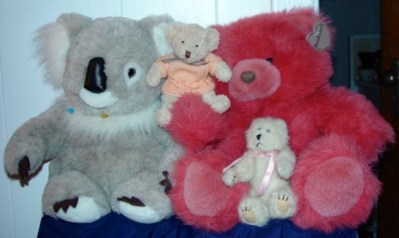
I get up from the breakfast table, look around the house, and find my Teddy Bear. The cat will not come near me, so Teddy it is. I set him on the table next to me and tell him all my news. Then I tell him what is happening on the news. Together, we sit and wait for the phone to ring. If she doesn’t call soon, I’ll call her myself. But not yet, not just yet: I’m still discovering my undiscovered self.

In Absentia 4

img_0141-2

In Absentia 4
Kibble

I pick up the cat’s bowl with the claw and place the bowl by the cat food. No kibble. So, holding the blue plastic measuring spoon in one hand I take my two canes and balance the spoon between my right thumb and the cane handle. Then I limp down the corridor to the laundry room where I store the kibble. I fill the measuring spoon from the packet, reseal the bag, pick up my canes and wedge the now full measuring spoon back between thumb and cane handle. The cat mews happily and runs out between my legs. I lurch and … disaster … the spoon slips from my arthritic fingers and the kibble forms neat, rolling patterns on the floor.

What can I do? I think immediately of the Dyson and limp into the hall where I have left it. I extend the handle, hold the handle with my right hand, cane and all, and push the Dyson down to where the cat is feasting. I plug the Dyson in and switch it on. One rumble from the Dyson and the cat abandons the kibble and seeks the safety of the basement. I manoeuvre the Dyson toward the cat food but the Dyson is in carpet mode. It beats the floor and will do nothing but push the kibble before it. I push the kibble into a neat pile and leave it there. As I turn the Dyson off, the garden kneeler catches my eye. I go to fetch it and balance it against my leg, kicking it forward so it won’t catch against my canes and trip me.

I have brought the cat’s bowl with me this time and I kneel before the kibble. Then I start picking the pieces up, one and two at a time. My back aches from the slow bending and twisting and my heart is breaking as I consider my own stupidity. Hot tears of frustration prick at my eyes and I blink them away. This operation is so long and so slow. I slip forward and place my hand palm down on the kibble. My palm is sticky with sweat and I raise a handful of kibble as I push myself up. This I scrape into the cat bowl. Using this new technique, I transfer the kibble stuck to my hand first to the cat bowl and then to the measuring cup.

It’s time to get to my feet. I cannot heave myself up on the garden kneeler’s handles and hang on to the cat food: too much risk of a second spill. I have leaned the claw against the all with my sticks so using both hands on the kneeler handles I struggle to my feet. As I do so, I knock both canes over. Now they are lying flat on the floor with the claw. The canes have a rubber tip and if I stand on the edge of it, the cane will rise in the air like magic. I do this twice. Then I use the canes to grasp the claw and the claw, now in my possession, to raise the cat food. Success!

I struggle my unbalanced way down the corridor, place my sticks on the counter, put the right amount of kibble into the cat’s bowl and, with the cane, lower the cat’s food to the floor. I glance at my watch. This operation has taken me fifteen minutes, half of which I have spent kneeling on the floor. I call the cat. The cat appears. I reach for my canes. The claw falls to the floor. I grab for it and knock down one of my canes. The cane strikes the cat who is greedily feeding. The cat jumps away and spills her water all over the floor.

I stand there, horrified. Hot wet tears of humiliation trickle down my face.

Teddy Bears FFF

Empress 077.jpg

Teddy Bears
Friday Fast Fiction

Now they sleep in separate rooms in single beds each tucked in with a monogrammed teddy bear.
He likes to cuddle his, keeping it warm, tucking it carefully under the bedclothes. He calls it Ready Teddy, and his favorite game, especially in summer, is to hold his teddy bear by one back leg and say in a loud voice “Ready, Teddy, GO!”
At the word “GO” he hurls his teddy bear skywards and takes great delight in the fate of a sleeping fly, pinned against the ceiling and squashed. His delight doubles if one of the pointed waves of ceiling paint impales the fly and leaves it squirming there, buzzing impotently. This means target practice and he hurls Ready Teddy, “GO, GO,” skywards again and again until the unfortunate fly, falling like a condemned angel, tumbles back to earth.
She still follows the same ritual as when they were sleeping together in the same bed. First she pummels the pillows, fluffing them up with sideways movements of the hands. Next, she lays them on the bed and beats them flat. Then she picks them up and plays them like a concertina, pushing them together then stretching them out again. As for her teddy bear, she likes to discipline it, to beat it into shape. Once upon a time, it made noises and let out little squeals and squeaks, but the constant violence has silenced its sound box.
When they slept together she often took her teddy and beat it against her husband’s head. He would wake from the deepest dream head a-throb, ears and cheeks stinging, as she flailed him with her teddy and struck him blow after blow. When his headaches grew worse, they decided to sleep apart. He felt it was better and safer that way.
Last night, she sleepwalked into his room, and sat on the side of his bed. She clasped her teddy by the feet, a rabid Rottweiler with a rag doll, and thumped her teddy’s head against her husband’s face again and again.
The sleeping tablets had made him drowsy and slow to wake. His wife kept up the barrage until he finally woke, eased the teddy bear from her grasp, and walked her back to bed
On the way back to his own room, he checked into the bathroom and examined his face in the mirror. Blood seeped from his nostrils. He had bruises under his left eye and his cheeks glowed red where veins had broken near the surface
Next morning, he sat at the breakfast table, his grandfather’s First World War magnifying mirror in his hand, and examined his face. The ice pack had taken effect and he looked less damaged now. He reached for the color correction cream in the packet beside him and read the directions with care. Then he placed a tiny drop of the magic serum onto the paintbrush and worked the correction cream over the marks on his face. He watched them disappear one by one. Now he would be ready to face the world.
He stared into the magnifying mirror gazing deeply into his own eyes. Was that how it had happened? Or had their first child really fallen downstairs, banging her little head on each wooden step at eighteen months old?
The inquest had been inconclusive, his wife held blameless. They had remained childless after the trial.
Was that a blessing or a curse?

Apologia FFF

IMG_0146.jpg

Apologia
Friday Fast Fiction

                   Late last night, I opened Alistair Macleod’s book The Lost Salt Gift of Blood and I re-read the first story. I was soon dabbing my eyes with a tissue and blowing my nose.
This morning, I want to destroy everything I have written. I know I don’t possess the verbal and emotional genius of the great writers and I sense that I will never be able to write like them. Graduate school taught me to be passive, not active, and to write impersonally, choking every emotion when I write. Academia also taught me how to kiss and how to run away with my thirty silver pence. “Never challenge the status quo,” my professors told me. “Learn the rules and disobey them at your peril.”
But here, in this private space where I create and re-create, there are no rules. The enemy is not clear any more and the fight is not one of black against white. It is rather a choice between diminishing shades of grey, and all cats are grey in the gathering dark that storms against my closing mind. Should I destroy all my writing? I won’t be the first to do so; nor would I be the last. And I won’t be the first or the last to destroy myself either. Intellectual, academic, and creative suicide: as total as the suicide of the flesh.
I carry on my back the names of those who have gone on before me as if they were a pile of heavy stones packed into a rucksack that I carry up a steep hill, day after day, only to find myself, next morning, starting at the bottom once again. But this is not the point: the point is that if I cannot write like the great writers, how can I write?
I think of Mikhail Bakhtin and his cronotopos, man’s dialog with his time and his place. I have no roots, no memories, and that is where my stories must start: in the loss of self, the loss of place, the loss of everything. I was uprooted at an early age, soon lost my foundations, was sent into exile, and only survival mattered.
I look at the first page of one of my manuscripts. My writing manifesto is clear before me: “And this is how I remember my childhood,” I read. “Flashes of fragmented memory frozen like those black and white publicity photos I saw as a child in the local cinema. If I hold the scene long enough in my mind, it flourishes and the figures speak and come back to life.”
I am aware of the words of T. S. Eliot that “every attempt / is a wholly new start, and a different kind of failure / because one has only learned to get the better of words / for the thing one no longer has to say, or the way in which / one is no longer disposed to say it” (East Coker).
Are my stories an exercise in creativity or are they a remembrance of things past? How accurate is memory? Do we recall things just as they happened? Or do we weave new fancies? In other words, are my inner photographs real photographs or have they already been tinted and tainted by the heavy hand of creativity and falseness?
The truth is that I can no longer tell fact from fiction. Perhaps it was all a dream, a nightmare, rather, something that I just imagined. And perhaps every word of it is true.
I no longer know.

St. Christopher: Flash Fiction


F1040003.jpg

St. Christopher

“Well,” I said to Luis, “if you wade through that river and get yourself soaking wet when there’s a perfectly good bridge to walk on, you’re stupid. That’s all I can say.”
He didn’t reply and we both stood there, glaring at each other. Then I looked down at the cobbled road that led to the bridge. The stones, turned on their edges and woven into herring bone patterns, looked as though they had been there since the beginning of time. The bridge was clearly the work of the Romans rather than the Devil, the Devil’s Bridge, as the locals called it, built by the Devil himself and joining the two banks of a river that God had placed there to separate one side from the other.
“I’m going over the bridge,” I said.
“And I’m wading through the river, however deep it is.”
“It’s not that deep,” I replied. “It’s only up to the waists of the fishermen in their waders. You’re not taking that much of a risk.”
“It’s not a question of risk. It’s a question of honor and loss of honor.”
“What do you mean, loss of honor?”
“You know what I mean. I have lost my honor and somehow I must win it back.”
“By wading across a river, barefoot, with your clothes on, when there’s a perfectly acceptable bridge set here especially for pilgrims?”
“If necessary, yes; that’s what I must do.”
“Necessary?” I exclaimed. “There’s nothing necessary about it. You’re just being stubborn; and stupid.”
“I don’t think I’m being stupid.”
“I’m beginning to wonder if you are even thinking.”
Luis looked at me, hard, then started down the little path that led to the river.
“I give up,” I said. Then I turned away and walked to the bridge. I stopped when I was half way across and looked back. Luis had descended to the riverbank. He was talking with a young child who stood there, gazing at the moving water. Then I watched him as he picked up the child, placed him on his shoulders, and waded slowly into the river.
There was a sudden shout from one of the fishermen, and a washerwoman, washing her linen on the far side, to which Luis was headed, ran to where Luis was forcing his way slowly through the waters with the child on his shoulders.
“My son,” she cried out. “¡Hijo mío! Where is he taking you?”
“Everything’s fine,” Luis shouted back. “He just wants to visit his mother and I’m bringing him across.”
Just then, Luis stepped into a pothole in the river. He stumbled and the child almost fell from his shoulders. Luis staggered for a pace or two, then straightened up and continued across the river.
“A saint,” the child’s mother called out. “You stumbled yet did not fall: you must be a saint.”
“St. Christopher has come back to us,” another washerwomen crossed herself and the two of them knelt. I looked at Luis, wading through the river, and I knew for certain that if he wasn’t mad now, he soon would be. I watched as he reached the shore and handed the child over to its mother. She asked for his blessing, but he shook his head and refused to bless her saying that he was neither a priest nor a saint but just a poor sinner who could give a blessing to no one.
I walked down to the end of the bridge and waited for Luis to catch me up. Ahead of us, the cobbled road led to the church and to another cruz de harapos. We walked forward together, him with his wet clothes and his watery footprints, and me with my clothes all dry. When we got to the stone cross in front of the church, Luis stopped and gazed at it, raising his eyes up from the base and looking up towards the heavens. Then he moved forward, climbed onto the cross’s plinth, and stood there, just below the level of the stone arms. Three of the washerwomen had followed him. One was the mother of the child that Luis had carried across the river and her child was beside her.
Luis turned to face the cross. Then he raised his arms above his head, jumped upwards into the air, and clung on to the cross with both hands, his feet suspended about six inches above the ground.
“What do you think you’re doing?” I asked him.
“I’m hanging myself out to dry.”
“You can’t just hang there.”
“Why not? Jesus did.”
“You’re not Jesus.
“And the cross isn’t wooden and nobody has nailed me.”
“You’re going mad,” I told him.
He raised his eyes skywards muttering a prayer and refused to look down at me.
“Father,” he said. “Father: why hast Thou forsaken me?”
The three women stood at the foot of the cross, gazing at Luis who was hanging there, dripping his drops of water onto the stone.
“Send someone to fetch the local priest or the doctor,” I said to one of them. “This man’s gone mad.”

Casa Rosa: Flash Fiction

IMG_0193 (1).jpg

Casa Rosa
            Rosa placed four glasses on the bar, poured three fingers of Cuban rum into each glass, produced as if by magic from under the old wooden bar two old‑fashioned bottles of Coke, and threw one ice-cube into each glass. She filled the glasses with a foaming, bubbling liquid that didn’t quite spill over the edge.
“Aren’t you going to join us for a drink while we wait?” Danny asked Rosa.
In reply, Rosa poured a large glass of dark rum, scowled ferociously, and chugged it. We gazed in wonder as it vanished silently down the dark tunnel of her throat. Rosa held out her hand and Danny placed a one hundred dollar bill in it. Rosa poured herself another drink.
“I thought they shut you down last week,” Larry took a careful sip from his glass. He preferred wine really, New Zealand Pinot Grigio for preference, and this in Spain where the white wine flows like water and drowns you in an instant.
Rosa downed another glass of rum and looked at the boys over the rim of the glass. They were so young and innocent. In what might be generously called the imitation of a knowing wink, she covered a porcine eye with a flabby eyelid.
“Only one policeman,” Rosa winked again. “Very young, he was, quite pretty really, and in civilian clothes. I might have fancied him myself, a long time ago,” she paused, poured herself some more rum and drank it. “‘Special duty,’ he said, and showed me his ID.”
“What did you do?” Larry sounded interested. He might have been taking notes for his next book.
“I invited him to sample my newest acquisition,” Rosa tightened her lips in what might pass for a smile. “You can all sample him yourselves later, if you want. He’s quite attractive.”
Danny proposed a toast to the latest acquisition, the savior of the human race. He hummed as he sipped cautiously at his Cuba Libre. Danny and Larry clinked glasses with Rosa and I allowed my glass to join them.
We sat for a moment in silence, our elbows rising and falling as we sipped, or pretended to sip, our drinks while waiting for permission to ascend the stairs.
Rosa waddled over to the wall and fiddled with the dimmer switch. The room became even darker and a red light flashed on and off as a soft and suggestive wailing noise came from the jukebox. “Better have some music,” she said. “I’ve got a feeling you might be in for a long wait.”
Danny looked around. The door and the open street were to his left. People walked constantly past the entrance, glanced in, and saw us boys sitting there, waiting.
Larry sat motionless, staring straight ahead, looking for inspiration. He inspected his feet. They were resting, about a foot above the ground, on a dull, brass foot rail that ran the length of the bar. Down there, on the floor, lay paper serviettes, cigarette butts, shells from peanuts, heads of shrimp, crusts of bread, all the debris of men who spend Sunday in a certain type of bar and throw what’s left of their meal on the floor at their feet.                   Suddenly, Larry raised his feet from the bar and cursed.
In the space between the foot rail and the bar, where his feet had been resting, a large cat, foaming and spitting, ran towards him. Behind it, red eyes glowing, white teeth snapping at the end of the cat’s tail, was the largest rat Larry had ever seen. It was at least twice the size of the cat.
“Jesus Christ,” he cried.
The cat pursued by the rat raced beneath the arch of Larry’s lifted legs and vanished into the street.
Rosa didn’t blink.
“Chinese ship in town, from Shanghai,” she said. “Lots of big rats around. What you expect?”
Loud cries from the exterior marked the animals’ exit. Two loud pistol shots followed almost immediately and a very young man ran into the bar. It was Luis. He wore the uniform of the local police and held a still-smoking gun in one hand with his police identity card in the other.
“You’re all under arrest,” he screamed.
“Don’t be so silly, Luis,” Rosa smiled at him. “She’s upstairs, waiting for you. I knew you’d be here early tonight. Look, if it will make you more comfortable, I’ll close the bar.”
The young man put away his badge and nodded.
“Get them out of here, Rosa,” he said, dismissing us with a gesture of his hand. “Back door. And tell them never to say a word. Or else …” He waved his gun towards us, blew the smoke from the end of the barrel as if he were John Wayne in a cowboy movie, then tucked the pistol back into its holster.
Rosa nodded and waddled to the front door, turning off the lights as she went.
Danny, Larry, and I looked at Luis, nodded agreement, pressed our index fingers to our sealed lips, ran out the back door, and vanished into the night.

Print: Wednesday’s Workshop

IMG_0154.jpg

Print, Printing, and Prints
Wednesday Workshop

Tuesday evening’s Gents Night Out started with John and I, on our own, and after our usual jovial salutations, we talked about putting things into print.

Print

John visited me last week and guided me through the placing of Monkey Temple on CreateSpace at Amazon. Then, when it was up, he talked me through the placing of the same text on Kindle. Now both are available online. He has read Monkey Temple and was kind enough to give it an online review (and a 5 star rating). He tells me it is his favorite among my books. Julie Gordon, another good friend from an online writing course we shared, has also read Monkey Temple, and she gave it another 5 star review, so it is doing well. Only one poem from Monkey Temple has appeared on this blog, Monkey’s FAQs. With it already in print, I may add an occasional poem to the blog, but I will not run through the whole text.

Though Lovers Be lost is also available on Amazon. John’s teaching was good, as I told him in our conversation, and I put TLBL up on my own. However, it is not yet available on Kindle, but it will be available soon. Now, Though Lovers Be Lost has appeared here on the blog in toto, so, if you, dear reader, have followed the blog and would like to contribute a review online … well, I would be very grateful.

Printing

I am just tidying up The Empress of Island and that manuscript, together with the flash fiction of Bistro, should go up on Amazon very soon. Two separate books, I should hasten to add. Again, with the amount of text from both that I have posted on this blog, if you have followed them, then please consider posting a review.

John himself is preparing yet another novel for publishing. We discussed the timeline and the structure of this novel, his twentieth, or twenty-first. He is trying to schedule gaps in the text of five years and ten years and is working out a plan to have all the characters age over those time spaces, not an easy task, as you can imagine, but then, John is a very good novelist. He gave me a signed copy of his novel, The Caroline, available online at Ex Libris, and Clare and I will be reading that, one after the other, if not together. You can find John on Amazon at John K. Sutherland, incidentally. You can find me most easily under my name and the book title: Roger Moore: Monkey Temple … that gets me every time. If you just type in my name, there is more 007 material than even James Bond and 100 secretaries could account for, all paid On Her Majesty’s Most Secret Service.

Prints

 A knock at the window of The Second Cup, right behind me: John points over my shoulder, it is Kevin, come late, with the most attractive … now, you really don’t know what I am going to say next, although you think you do, … nine week old Habanese puppy in his arms. Of course, she can’t come in, so we go out to greet her. What a darling … I refused to touch her. Puppies are catching and I don’t want to catch one: too much bending and house training at my advanced and creaky age. If I can’t tie up my shoelaces, I can’t clean up after a poo-pee — that’s the French for a puppy, la poupée, oh no, my mistake, a poupée is a little doll — just what Kevin’s puppy is.

Kevin left the dog in the car — in the shade, windows down to give air circulation, cool evening — John and I lectured him — he didn’t need the lecture –. and we discussed Kevin’s week. Things are going well and he is juggling work, writing — he is finishing his first manuscript and has a contract — wow! — I look forward to giving news of the publication of his book on a future Wednesday Workshop — and he’s also working on a new and very secret PROJECT — about which we can say nothing except ssssh!

Footprints

Kevin didn’t want to leave the poo-pee in the car for too long, especially since she was fond of climbing her way into the driving seat — remember Clyde? — oh no, not another Clyde! — and so we all soon made footprints. Alas, Chuck’s were covered with dust and sand and we didn’t see him this week. He is busy with a building project and also with his fourth novel — The Underwater Road — for which he, too, has a contract. His other novels are doing well. I have only read Steal It All … but I must say that Chuck Bowie is a master of mystery and intrigue, as I said on my online review.

So, this Wednesday’s Workshop is a potpourri: lots of announcements, friendships, changes in momentum, new editions, and new additions, and not so much literary criticism and theoretical musings. Ah well, life’s often like that.

See you all next Wednesday!

A question and an answer

Question: I am curious if you’ve ever had any of your short stories/poetry published in any lit. mag? I’m wondering because I am travelling down that publishing avenue and looking for advice when pitching to literary magazines. Although the general consensus seems to be that it’s a wholly tough market to get into!
Tales from the Trunkhttps://trunktalessite.wordpress.com/

Answer: I have published about 135 poems in literary magazines, mainly in Canada. This happened mainly in the ’80’s and ’90’s when the market was probably a little bit easier to break into. I have also published 14 or 15 short stories (and won some awards and honorable mentions, same with poetry, too, incidentally).  It seems to me that there are two distinct ways to go: (1) Submit, submit, submit: paper your walls with reject slips, keep going, keep improving, no matter what, don’t give up, ever. You must be stubborn and believe that your work is worth continuing with and BETTER than what those who are rejecting you think it is. Mind you: listen to them, keep reading, check your markets, revise your work in accordance to what editors think (if they make suggestions), and, above all, be as stubborn as a mule or worse. I did that for years and then I started to take route #2: (2) Go Indie and publish your own work. With route #1 behind me, I knew who I was and what I was writing. If other people didn’t like it, that was their problem. Sure: I am a Welshman, writing in English, in Canada, about Spain, Mexico, and Wales … duh … so, as they keep telling me, it’s just not marketable. Why not write about the Maple Trees turning red and Maple syrup … duh … going Indie led me into two further directions. (A) I published my own collections, paid for them myself and, in a fit of pique, gave them away free to my friends, “because my poetry is too precious to sell for money”! NB I had a full time job and could afford to do this. (B) I am now publishing via CreateSpace (Amazon.com). This is for free and easy to do. There are other options out there. Some ask you for cash up front …. I wouldn’t pay for their services. Others are free and excellent. I also recommend Smashwords or is it Wordsmash? Anyway, it’s also free and you can control where your books go and what they do. I chose Amazon because I had a persuasive friend who talked me through the process. If you have someone who can talk you through the process, any process, of publishing online, that helps. If you have a writing group THAT IS HONEST WITH YOUR WORK — that is essential. You must have some reliable readers who can step up and say: “No, that is not up to your usual standard” or “No, you can do better than this.”Good luck and best wishes, and yes, if I can answer your questions and help, I most certainly will.