Juggler – Juglar

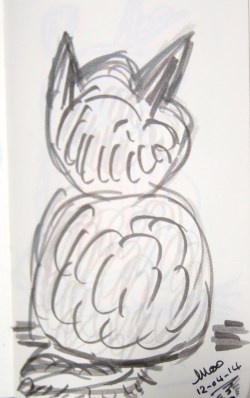
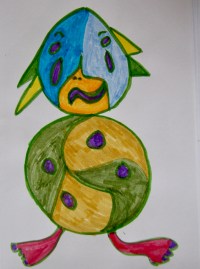
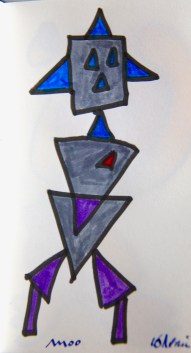
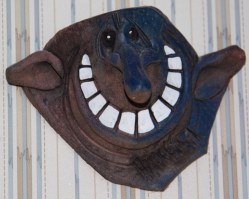
Juggler / Juglar
17 June 2018

This is the audio of the reading.  Click on the audio, then click on the text and read while you listen. Or listen, then read. Or just listen. So many choices and so much fun.


Here is the text.

https://rogermoorepoet.com/2016/10/18/juggler/

Monkey’s Book Burnings

img_0181

Monkey’s Book Burnings
16 June 2018

Monkey’s Book Burning
(Remembering Cervantes’s Scrutiny of the Library
and Ray Bradbury’s Fahrenheit 451)

Who burnt Monkey’s books?
Who took them from their shelves,
evicted them into the courtyard,
built them into book stacks, like hay,
then applied gasoline, and a lighted match?

Monkey watches in horror
as smoke and flame devour his beloveds.
He tries to approach, but the fire is too hot.
One book jumps out from the smoke, still smoldering,
and monkey snatches it and carries it away beneath his coat,
the fire burn branded into its cover,
the skin still sizzling on monkey’s hand.

How many books were burned that day?
How many monkeys now walk in the woods,
trying to re-create their lives,
circulating their memories by word of mouth?

Moth is to candle as book is to flame.
Monkey runs his hand in and out of the candle.
He recalls the bonfires in the streets.
He coughs through the throat burn of smoke.
He touches the blistered scars of flame.


Wednesday Workshop: Voice Recordings

IMG_0027

Wednesday Workshop
13 June 2018
Voice Recordings

To be Welsh on Sunday

I am continuing today with my experiments with voice recordings, something that interests me very much. As I said earlier, my voice changes with audience and mood, and early morning, in Island View, with the microphone and Princess Squiffy as an audience, and the window open so the cool morning air can circulate before the heat of the day, is not the best way to induce mood, well, not in this reader anyway.

When I made the recording, I was reading from my book  Though Lovers Be Lost  (available on Amazon) my head was slightly turned away from the laptop’s built-in speaker, and, as a result, the reading is not as loud as I would have liked. It is also a little bit fast. I don’t mind the speed of it: when I was younger I would read this poem in a single breath, all 90 seconds or so of it. Now I need many breaths to get though it successfully. Ah, a young man’s fancy turned to dust …

I will do a retake of the poem, not on my laptop, but on my IMac, and I will add that later, below the first recording which will appear just below this introduction. Then I will add the text. Yesterday I offered text, then reading. Today I offer the reading first. That allows the listener to listen first and then read the text OR to start the audio recording and then follow the text as it is being read. This is a Wednesday Workshop and this is all part of my workshop experiments in reading. Wonderful fun and highly recommended. Thank you for being here with me and remember, your comments are more than welcome, they convert a workshop from a soliloquy into a dialog.


Second recording to follow

To be Welsh on Sunday

To be Welsh on Sunday in a dry area of Wales is to wish, for the only time in your life, that you were English and civilized,  and that you had a car or a bike and could drive or pedal to your heart’s desire, the county next door, wet on Sundays, where the pubs never shut  and the bar is a paradise of elbows in your ribs and the dark liquids flow, not warm, not cold, just right, and family and friends are there beside you  shoulder to shoulder, with the old ones sitting indoors by the fire in winter or outdoors in summer, at a picnic table under the trees or beneath an umbrella that says Seven Up and Pepsi (though nobody drinks them) and the umbrella is a sunshade on an evening like this when the sun is still high  and the children tumble on the grass playing soccer and cricket and it’s “Watch your beer, Da!” as the gymnasts vault over the family dog till it hides beneath the table and snores and twitches until “Time, Gentlemen, please!” and the nightmare is upon us as the old school bell, ship’s bell, rings out its brass warning and people leave the Travellers’ Rest, the Ffynnon Wen,  The Ty Coch, The Antelope, The Butcher’s, The Deri, The White Rose, The Con Club, the Plough and Harrow, The Flora, The Woodville, The Pant Mawr, The Cow and Snuffers — God bless them all, I knew them in my prime.

Photo Credit: Princess Squiffy, my favorite listener. She never complains, but she rarely stays awake.

On Being Welsh

IMG_0040 (3)

Cherry
A careful listener

On being Welsh in a land ruled by the English

 I am the all-seeing eyes at the tip of Worm’s Head;
I am the teeth of the rocks at Rhossili;
I am the blackness in Pwll Ddu pool
when the sea-swells suck the stranger in and out,
sanding his bones.

Song pulled taut from a dark Welsh lung,
I am the memories of Silure and beast
mingled in a Gower Cave;
tamer of aurox,
hunter of deer,
caretaker of coracle,
fisher of salmon on the Abertawe tide,
I am the weaver of rhinoceros wool.

I am the minority,
persecuted for my faith,
for my language,
for my sex,
for the coal-dark of my thoughts.

I am the bard whose harp, strung like a bow,
will sing your death with music of arrows
from the wet Welsh woods.

I am the barb that sticks in your throat
from the dark worded ambush of my song.

Commentary:

Continuing with the audio experiments of the last couple of days, here is my voice recording of On Being Welsh. This poem can be found, along with several other Welsh poems, in Though Lovers Be Lost, available on Amazon.

Comments on the readings are very welcome. For my regular readers, if you have a favorite poem of mine that you would like to hear, just let me know and I will record it, specially for you!


I am indebted to my friend Jeremy Gilmer for this second reading of On Being Welsh. We will be collaborating on the creation of sound files and posting contrasting readings of various poems to see how different voices and rhythms change sound and meaning in poetry. Hopefully, this is the first in a longer series.


On Reading

IMG_0040 (2)

(Today’s photo: Cherry … she was a very obedient dog and always listened carefully. Sometimes she actually obeyed.)

On Reading

Yesterday, I posted an audio of me reading Monkey Presses Delete. I received some e-mails about this reading and realized that reading into the microphone, alone, without an audience, had crated a ‘new voice version’ of the poem. I thought about it overnight and came to the conclusion that my public readings are dictated by two things: (1) my own mood and (2) audience reception. Audience reception is, in itself, a double thing (a) how they perceive me before I even open my mouth (especially if I am an unknown quantity to them) and (b) how they perceive me as I use my performing and reading skills to manipulate them. And no, I am not a passive reader of my poetry, but a very aware and active one.

So, I rethought my relationship to Monkey Presses Delete, and re-recorded it this morning. The second reading is very different, as you will hear. Virtually the same poem, virtually the same poet, but a very, very different reading. I will be very interested to read and / or hear your comments on these two audio variations.

Monkey Presses Delete
(Take 2, Monday, 11 June 2018)

Fear

IMG_0094

A List of Fears
(exercise: tick all that apply)

of failure
of success
of inadequacy
of being caught short
of being found out
of the blank page
of revealing intimate details
of feeling stupid
of typos or punctuation or bad grammar
of presumption
of being laughed at
of new things or old things
of something borrowed
of new topics or new methods
of research or hard work or perfection
of rejection or dejection or ejection
of losing yourself or finding yourself
of caring or not caring
of the unknown or the unknowable
of peer pressure
of speaking out loud
of being unable to write like …
of being wrong or right
of political or social consequences
of free speech
of hurting others
of being misunderstood or understood
of large or small audiences
of clothing or mechanical failure
of starting or finishing or writer’s block
of having nothing to say
of having nothing worthwhile to say

fear of fear

Commentary:
Last Saturday, in Quispamsis, I facilitated a two hour workshop on things that writers fear. I began with a list of all the things that I have feared at various times during my writing career. This morning, I turned, with great trepidation, those fears into the list poem I reproduce above.  If you wish to discuss any of these fears, or add other fears of your own to the list, and remember, this is a list of writers’ fears, then please do so. I will be happy to enter into a dialog.
As for the fear of feeling stupid, I often offer this small piece of advice. It has been known to comfort those who actually have a fear of feeling stupid. (1) buy a small fluffy toy, preferably a Teddy Bear, that will fit into your pocket or purse. (2) christen that small fluffy toy with the name of Stupid. (3) you carry Stupid around with you all day knowing that you can put your hand in your pocket or purse and feel Stupid all day and nobody is going to know or care.
The moral of the story is this: when you can laugh at your fears, you fear them no more. And remember: you can stop feeling Stupid whenever you want to.

Looking Back

Empress 048

Looking Back

Looking back on a wonderful weekend, the WFNB WordSpring in Quispamsis, I remember the highlights.

  1. Picking up Kerry-Lee Powell and driving with her to Quispamsis. Never has the road seemed so short, and rarely has time passed so quickly. Whether it’s our shared Welsh roots or the course I took with her online at Toronto, we had so much to talk about.
  2. Arriving to find so many friends and all of them so willing to help with books and luggage and getting me to my room. Special mentions: Jeremy Gilmer‘s hug on arriving, Zev Bagel‘s offer to help with luggage, Chuck Bowie‘s warm presence and guiding hand, Cathy Fynn‘s hug and firm control of registration and checking in, and many others, some of whose names will appear bit by bit.
  3. Settling into the room was easy.  Then it was a case of preparing for the first workshop (The Sense of an Ending) that started at four and was due to run until five. I went early to the room and met the participants as they arrived. My first surprise: Barb Fullerton, another member of our online Toronto course, announced her presence with a warm smile and greeting. We had chatted online for eight weeks and now she was here at my workshop. Wonderful. Starting the spring conference with a workshop on endings seemed very inappropriate, until I remembered my T. S. Eliot: “In my beginning is my end …” The circularity of time and the intricate relationship of the end to the middle to the beginning … it made a great central theme for the workshop.
  4. The group was composed of many excellent writers and I was able to mention many of them by name. In addition to  some of those already highlighted above [Chuck, Jeremy, Kerry-LeeZev, Chuck] , Ana Watts, Jane Tims, Neil Sampson, and Terry Armstrong stood out and I urged people to circulate during the mobile, inter-active session, meet these writers, and talk to them about their undoubted finishing skills.
  5. Time passed too quickly and we found that an hour was not enough. No problem, I checked with Cathy and we kept going for another fifty minutes in a seamless transition of lengthened workouts.
  6. Friday night passed in a flurry of conversation in the hotel restaurant, coffee house, and bar. Chuck (the TWUC Atlantic Representative) introduced me to Marjorie Doyle, the Chair of TWUC and our guest speaker for the banquet, and we held a delightful, wide-ranging conversation on literary values and travels in Catalonia.
  7. Saturday morning saw the advent of my second workshop, this one entitled The Black Ink of Fear. This workshop was by request and I was more than a little afraid of how I would handle it. I circulated my own Fear Document  and invited people to read it. Victor, my Australian friend, found his sheet was upside down and amazed the room by standing on his head, to much applause, as he read it the right way up. This clearly broke the ice and we employed Chaos Theory to good effect by doing absolutely nothing in Chaotic Fashion and getting everywhere.
  8. Lunch was a delightful selection from Chef’s Table (Sussex) and Chuck Bowie played a major role in keeping me a seat (I arrived late) and getting me settled (thank you again, Chuck).
  9. Worn out after lunch, I missed the afternoon’s sessions and took to my bed in traditional Spanish fashion enjoying a well-earned, rather extended siesta from 2-5 pm.
  10. Supper was at 6:00 pm and I was truly honored when Jeremy Gilmer read my poem Inundation that I wrote on May 6, just when the St. John River flooding was at its worst downstream below Fredericton. We dedicated our thoughts and prayers to the people in Saint John and Quispamsis still affected by the now diminishing waters. It was a double honor when I was invited to say a traditional Welsh Grace, in Welsh, followed by an English translation: “Thanks be to the lord for good food and even better friends.”
  11. My weekend’s activities were not yet over and I received an award (3rd place in the David Adams Richards’ Prose Competition for my short story collection Devil’s Kitchen). I read in a thick Welsh accent a short piece of Flash Fiction from this collection, called Teeth. For some strange reason that I could not fathom, the room was highly amused by this true story of domestic bliss.
  12. Saturday night and we retired to the bar where a small group of us Marie, Louise, Angèle, John, Andrea, and I stayed up and sang to John’s marvelous harmonica and guitar music until one thirty am. Contrary to malicious rumors spread by unknown sources, not mentioned by name, we did not sing rugby songs, but a marvelous mix of Irish ballads, Newfoundland songs, Acadian and French chansons, and contemporary songs by internationally acclaimed singers, many of whom might not, midnight being long past, have recognized their own music.

Alas, all good things must come to an end. Later that Sunday morning, we made our sad farewells and Kerry-Lee and I headed back down the road to Fredericton where we arrived after what what seemed to be about five minutes driving (at well below the speed limit). I dropped Kerry-Lee off then stopped at the Happy Baker for cakes and croissants. These I presented to my beloved for Mother’s Day. We shared them over hot coffee … and that was that.


Teeth

img_0181
Teeth

Lunchtime.

Tiggy opens a can of tom8to soup and heats it on the stove. She slices the remains of yesterday’s loaf of bread into one inch cubes and fries them in olive oil and garlic. Tom8to soup with croutons. Then she puts two slices of bread in the toaster. Her father will only eat toast soaked in butter and layered with Marmite when he eats tomahto soup.

“Lunch is ready,” she calls out.

The black American Cocker Spaniel, bought by Tiggy’s late mother, in a moment of madness, by telephone, unseen, camps in the kitchen. It nests at the far end of the table, by the stove, and defends its territory with warning growls and a snapping of yellowed teeth. Tiggy will not go near the dog.

“Lunch is ready,” Tiggy calls out, a little bit louder. Dog, as they call him, growls and clatters its teeth. It has hidden a treasure in the folds of its old, gray comfort blanket, and guards it with the fierce, loving worry of a dragon protecting its golden hoard.

Tiggy’s father enters the kitchen as she places the soup on the table.

“I’m not ready to eat. Put it back in the pot.”

“What’s wrong, dad? I thought you were hungry.”

“My teeth,” he mumbles through a mouthful of pink gums. “I can’t find my teeth.”

“Where on earth did you put them?”

“I don’t know. If I knew where I’d put them, I wouldn’t have lost them.”

Tiggy’s father circulates round the kitchen opening drawers, lifting saucepan lids, and shaking empty yogurt pots to see if they’ll rattle.

“I can’t find them anywhere. I can’t eat lunch without my teeth.”

“But it’s only soup, dad, tom8to soup.”

“I don’t like tom8to soup. Your mother always made tomahto soup. Why can’t you be more like your mother?”

“Sorry, dad. I’ll call it tomahto soup, if that will make you feel better. But it’s still made out of tom8toes.”

“Don’t be so sarcastic. Help me find my teeth,” Tiggy’s father stomps towards the stove and Dog growls fiercely from its blanket as it guards its treasure.

“Take that, you dirty dog,” Tiggy’s father lashes out at Dog with his stick and cracks it across the head.

“Dad, stop that. It’s not Dog’s fault.”

Dog howls and spits out what it is chewing.

“There they are,” Tiggy’s father bends down, picks up his teeth, still hairy from the blanket and bubbly from Dog’s saliva. He pops his teeth into his mouth.

“That’s better,” he says, “now I can enjoy my lunch.”

Comment:

I included this short story, first published here on my blog on April 13, in Devil’s Kitchen, my new story collection that received third prize in the Writers’ Federation of New Brunswick David Adams Richards Award for prose this year. I will probably read this tonight, at the awards ceremony that follows the banquet here in Quispamsis. It’s a beautiful morning, with sunshine streaming through my bedroom window. Hopefully a full day of sun and warmth will help decrease the already diminishing flood waters that have struck this area of the Lower Saint John River Valley.

Thursday Thoughts: Fear

IMG_0147

Thursday Thoughts
10 May 2018
Fear

Tomorrow I drive to Quispamsis to give a writers’ workshop on Fear. How do I tell the participants that I am afraid? I am afraid of the journey there by road. I am afraid of stray moose and deer, fleeing from the flooding, and standing, frightened, by the roadside, ready to panic and run at the car. I am afraid of getting lost, of losing my way, of being stranded in unknown streets with no outlet, no exit, no easy way home.

How do I tell them I am afraid of them. I am afraid of their knowledge. Many of them will know more than me. They are all unknown quantities, blank faces at present, with tumble dryer minds full of churning ideas, ideas that I have never had nor met. I am frightened. I have it in my head to call in sick, to say I am no longer available, to say I cannot come to orchestrate the music that I myself composed.

Stage fright, I suppose, these pre-conference  nerves that battered me all last night with their owls’ wings, leaving me sleepless, turning and tossing, cringing at my own lack of everything that I will tell them they should have.

Fear: a black monster that hides beneath the bed. I dare not leave arm or hand above the blankets in case the monster emerges and bites off the hand that feeds it with more fears. Fear: the shadow in the corner, looming over the bed, shaking me by the shoulder as I lie there, tormented. Fear: the jaws that bite, the claws that snatch, the hand that holds me by the ear or the scruff of the neck and drags me back into a shadowy past where monsters dwell and flicker in the candlelight, growing larger as I walk down white-washed halls.

Enough, no more: I am just as afraid now as I was before. Sleepless tonight, too tired tomorrow to care, I will leave early, hope for the best, wind my way carefully through deer strewn roads and perilous paths. When I get lost, and I probably will, I will ask the way. And all the time I’ll sing my favorite travel song: ‘I know where I’m going’ … even if I don’t.