Au Revoir

Au Revoir

Au Revoir

Commentary:

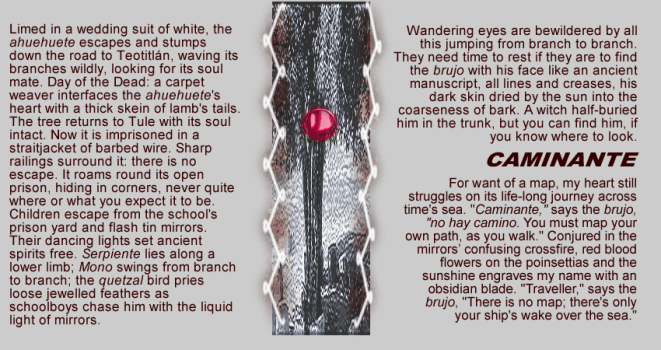
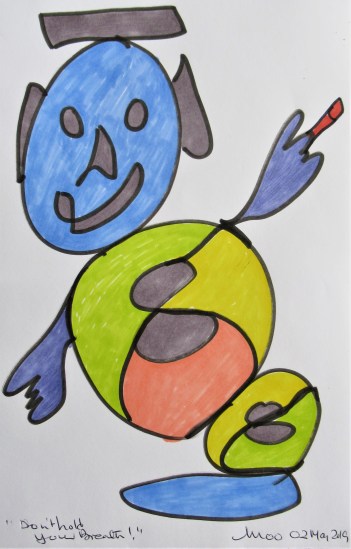
This construction (verbal and visual) dates back to my visits to Oaxaca, Mexico (1995-2001). So many friends, so many happy relationships, and then the world turned and I never went back. I remember doing yoga early in the morning on the azotea. Zopilote, the turkey vulture, wings motionless, flew high above the world, the sun lighting up his wings with its fiery flame. Zopilote, aka Trickster, the bird who stole fire from the gods and brought it back to earth so women could make men their morning chocolate over the old wood stoves or open fires. Or was that all a myth, fake news as some would say today when everything we touch is fake? So much has been lost, destroyed. So much beauty, verbal and visual, has been laid aside, destroyed, and forgotten. Au revoir, good-bye, will we ever see it again? Adieu, goodbye, we will never see it again, it’s gone for good. So much meaning in these brief French phrases, synonyms in English, yet carrying such different meanings in French.

Amarrada nuestra barca a otra ribera … Antono Machado wrote those words. We will awake one morning, he suggested, to find our boat moored on the other side of the river between life and death. And so we will. But in our daily lives, we try to ignore that fact. We seize the day, drowning our sorrows in a sea of forgetfulness: for tonight we’ll merry, merry be, we sing, but tomorrow we’ll be sober. Or will we? And nowadays, who cares anyway? As Seamus Heaney writes “my friends and neighbors, let it flow. We’ll be stood no rounds in eternity.”

Yesterday, I met a man in a wheel chair sitting outside the store where I was shopping. He asked me if I could spare some change and I told him I only carried plastic (true). Then next man who approached gave him a cigarette. My beloved was sitting in the car and I gave her a five dollar bill from the parking money and asked her to give it to the man in the wheel chair. So: how did we feel? Good for an act of charity? Bad for not responding immediately? Terrible that we see people living in poverty in a supposedly rich country? Fearful that one day the money would run out and that we too would be out there, begging for money, grateful for a cigarette, a hand out, a helping hand … happy for anything that would help postpone the inevitable end?

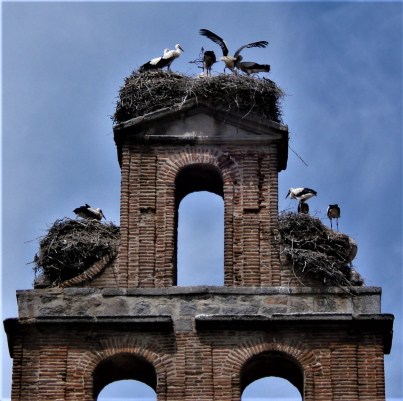
And then there was the bird that fell don the chimney and perished in the fireplace. We never even knew he was there until we found his feathers and his body, lifeless among cold ashes. So which is it to be: au revoir or adieu? Or even worse, the middle finger, the scowl, and the old ‘screw you’?

Free

IMG_0624 (3).JPG

Free
Flash Fiction

            I am as free as my father was free. He was free to walk on his walker, as far as he could go down the street. Free to walk in the wind and the rain. Free to sit on his neighbor’s wall when his legs and back got tired. Free to sit there, although it was raining, until he had recovered his strength and energy. Free to get soaked so badly that he caught a cold. And the cold was free to turn into bronchitis and the bronchitis was free to turn into pneumonia and the pneumonia was free to perform its assassin’s work as it tried to kill him. But my father was still free and strong enough to call the doctor and the doctor was free enough to call at the house and visit my father and write him a prescription for an anti-biotic that would free his body from the pneumonia that was free to leave when its time was up and it felt ready to go. Pneumonia, the old man’s friend, they used to call it, sitting there, in my father’s lungs, muttering away to him, day after day, louder at night, and my father slowly getting stronger and the pneumonia growing weaker until one day it left and freed my father from his immediate ills. Then my father was free to get up or to stay in bed. Being a free man, he chose to stay in bed all day and to listen to the radio and to read a book and when he got bored with reading he just lay there and counted the lines on the wall “one, two, three…” and “one hundred and seventy five” he told me one day when I was free to visit him, “though I have lost count once or twice and have had to start again from the very beginning. And the sun gets up at 7:03, and strikes the third line at 7:53 … and goes around the wall 33 lines a minute; and leaves that third line from the right at a 3:15 …” And there he stayed, day after day. But he was free. And sometimes the home help came and sometimes she didn’t, for she too was as free as the birds in the garden. And sometimes she remembered to buy him some food and sometimes she didn’t. And she was free to come and go, free to remember or forget. And my father was free to mumble or complain or grumble, though he rarely did. And he was free to eat, so long as there was food in the house. But I went there I often saw that the cupboard was bare and my father had neither milk, nor eggs, nor bread nor cereal, nor tea nor butter. And all those people, those acquaintances, those friends, they too were as free as the sea-gulls in the sky. But to find the time to set my father free from the hunger and thirst he seemed predestined to freely suffer, they were never free enough for that, not even at Christmas.
Neither was I.

Friday Fiction: Finding Fault

IMG_0169

Finding Fault
Friday Fiction

It wasn’t your fault. You look at yourself in the mirror and see your tear-stained cheeks. Your red eyes look back out at you and you lose yourself in them, swimming desperately as their still ponds down you with tears.

“Stop hammering at the door,” you yell at him. “Stop hammering.”

Open the door,” he shouts, stammering in his rage. “Open this door.”

Thank God you locked it is what you think. Thank heavens you kept the key. And here it is in your hand, so it can’t fall down to floor and be hooked away, under the door, so that he can open the door and come at you again. He is shaking the door handle now, rattling it, shaking it like he said he’d shake you.

“I’ll shake you till your teeth rattle,” that’s what he said. And you know he meant it. You could see it in his eyes. You were just too quick for him. That’s all. Just too quick. He raised his walking stick to beat you and you slipped away, in a flash. Just like that. He was too slow to catch you. His one chance came in the kitchen. Once you were out of there, out of that trap, you were up the stairs, into your bedroom. You shut the door, slammed it shut, and turned the key in the lock. Then you relaxed for just a second and that was enough to set you crying. Thick, heavy tears ran down your cheeks. Sobs shook your chest and rattled your bones. You heard him clumping up the stairs, one foot at a time. Clump. Clump. Then he was at the door again. A big, bad wolf, huffing and puffing.

Open this door,” he shouted. “You wicked child.”

“I’m not wicked,” you said.

“Wicked,” he shouted. “Wicked. Just like your father. You should never have been born.”

You placed the bedroom chair against the door, just under the door handle. Then you wedged your father’s sandal under the door.

Earlier, down in the kitchen, you had taken the bread knife and started to cut the bread. But the knife was blunt. So you sharpened it, scraping it up and down against another knife blade, like you’d seen your dad doing. Trying to make it sharp. Then you started to cut the bread. And that’s when he appeared screaming at you.

“Put that knife down.”

“Why? You asked.

“Because I’m telling you to.”

“That’s not a very good reason,” you said.

“You cheeky girl. I’ll shake you till your teeth rattle.” That’s what he said. And then he raised his stick. Red in the face, he was going to hit you. He wanted to hit you with his stick. Only he couldn’t. You were too quick. You went left, then right, then ducked under his outstretched arm as he lost his balance. You ran into the corridor and up the stairs.  You hear him now puffing outside the locked door.

“Open this door now, you wicked child.”

You move away from the door and move to the window. No escape there. You’re on the second floor. No way down. Where’s dad, you wonder. Where’s my dad? He went out shopping. Said he’d be back soon. Where is he? You hear the old wolf as he keeps huffing and puffing, pounding at the door.

“You’ll never come to my house again,” he screams.

“I don’t want to, grampy,” you scream back. “I hate you.”

You wicked girl. You’re worse than your father, you wicked girl.”

Just then, you hear the front door open. The old wolf backs away from the door. You feel a release, a wave of comfort sweeps over you.

“Dad,” you shout. “Dad.”

“She’s wicked,” you hear your grampy say. “Wicked. You have to beat her. Chastise her. Drive the devil out from her soul.”

“What on earth are you on about?” your father asks. “What’s happening here? Look, go down to the kitchen and make a cup of tea. I’ll talk to the little one and try and make some sense out of this.”

Wicked. She’s never coming to my house again.”

Clump. Clump. You hear his footsteps fade away on the stairs.

“Has he gone?”

“Yes. You can come out now.”

You remove the sandal, you turn the key in the lock, you open the door, you jump into your father’s arms ….
“Daddy, daddy …”

“Now tell me what happened.”

It was all his fault,” you say. “Daddy, I didn’t do anything. It was all his fault. He tried to beat me with his stick. He told me he’d shake me till my teeth rattled. I was so frightened. It wasn’t my fault, dad. Honest. It wasn’t my fault.”

Thursday Thoughts Ubi sunt …

IMG_0576 (2).JPG

Thursday Thoughts
Ubi sunt …

Ubi sunt qui ante nos fuerunt? Where are they who went before us? As St. Augustine is said to have written: O homo, dic mihi, ubi sunt reges, ubi sunt principes, ubi imperatores, qui fuerunt ante nos… “O man, tell me, where are the kings, where are the princes, where the emperors, who had been before us” {Wikipedia]. Many philosophers have written on this theme, and many poets, including Villon in his famous ballade “Mais où sont les neiges d’antan?” Where is last year’s snow? Cervantes also echoes the theme with this slight variation “No hay pájaros en los nidos de antaño.” There are no birds in last year’s nests.

IMG_0573 (3).JPG

Goran Haven, Cornwall, July, 1966. I was waiting to receive the results of my final exams from Bristol University. Clare and I decided to spend a week in Cornwall and ended up in Goran Haven. When we came back, I made her a book of photos from the trip with hand-written poems beneath them. I discovered that book the other day and was taken back to a time when I wasn’t even thinking of coming to Canada. Fifty-three years later, looking at these photos, I ask myself ubi sunt … where did those days go? All those days, the old country, and everything that went with our youth … ubi sunt?

IMG_0574 (2).JPG

Same thing happened when I visited McAdam Railway Station: wonderful memories of all the steam trains of my youth. And those railway names: Great Western Railway [GWR], London Midlands Scotland [LMS] , London North Eastern Railway [LNER]. So many things that I can never forget: the smell of the old steam engines, the sound of their wheels going clackety-clack, the taste of smoke and ash when I thrust my head out of the window, in spite of the sign that said, Do not lean out of the window, the feel of those worn cloth seats beneath the fingers, and the sense of excitement and joy when an empty corner seat begged to be sat in. Something else I’ll never forget: the cold taste of a Cadbury’s Milk Flake stuck in an ice-cream on a warm summer’s day.

IMG_0570 (3).JPG


Westbury White Horse

th.jpg

Westbury
White Horse

Winter in Somerset. No trains from Frome.
They sit in the engine sheds, boilers frozen.

Clare drives me to Westbury, in Wiltshire,
the neighboring county. She leaves me there

and I stand on a platform as white with snow
as Westbury White Horse towering above.

People arrive, flapping their arms, stamping
their feet, walking around trying to stay warm.

Finally, to shouts, cheers, and laughter, a train
arrives, its boiler successfully thawed. People

rush forward, open doors, claim their seats.
It’s a corridor, not a compartment train.

“Is this the eight-fifteen to Temple Meads?”
I ask the porter. “Nope,” he says. “That wll

be arriving later.” “When?” “About ten
or eleven, I expect.” “What train is this?”

“Ah, now this is the six-thirty to Bristol.
Running about two hours late. Better be quick.

The guard’s waving his flag. She’s about to leave.”
I open a door, climb on the train.  All

the seats are taken. I stand in the corridor,
shivering, all the way to Temple Meads.

Growing Up

IMG_0817 (4).JPG

Growing Up
in Brynmill

They drag the kids kicking and squealing
from childhood’s universe into an older
world of smoking and drinking, forbidden
fruits stolen after Christmas dinner when
drowsy grown-ups’ eyes are turned away.

Why do bigger boys follow smaller ones,
buying their sisters’ kisses then thrusting
their fingers into little girls’ knickers, or
invading Woolworth’s and tucking stolen
goods in shirts with their buttons undone?

The games they play: offering a little girl
a cigarette  or a sweet while two boys
wait behind the garden gate with a sharp
knife to  press against the victim’s throat.

Dies Irae

IMG_0139

Dies irae

Nowhere has she found peace, save
in the dregs at the bottle’s bottom.
She solves life’s dilemmas with single
malt or grape’s blood fresh-plucked.

Doctors tell her that she must stop drinking,
not stoop to conquer yet another bottle.
The remedies they suggest will never suit her.
Family and friends lecture her in vain. 

She knows she will not live forever,
that one day a higher power will call.
So she opens another bottle of Scotch,
just a drop before she goes. She falls

to the floor, and lies asleep. Three still
born babies cover her with their love
to keep her warm. “Sleep well,” they say,
“you’ll find greater peace in eternity.”

Commentary: Another poem that was not easy to write. The last line is a tribute to Seamus Heaney and his poem, Yellow Bittern, the inspiration for this one. “You’ll be stood no rounds in eternity.” In the literary theory of Intertextuality, texts talk to texts and a series of interlaced textual dialogs move across time and space. Hablo con mis ojos a los muertos, I speak through my eyes with the dead, as Francisco de Quevedo said in the 17th century. He was reading Seneca, another great writer born in Spain, when he wrote those words.
I restructured this poem three times. I began, following Seamus Heaney, with the first person singular [I]. Then I changed it to the second person singular [you], but you, in English, can never approximate to the intimacy of tu [versus vous] in French, or the multiplicity of [versus usted, vosotros, vosotras, ustedes} in Spanish. Finally I settled on the third person and settled on she [rather than he]. I guess when  a woman loses three children, she is entitled to lose herself in a bottle of Scotch and shut out the world.

Buried Alive

IMG_0688
Buried Alive
Anonymous we are,
never holding land or cattle,
lucky to own our own houses.Some castle
this rented row house
in a winding valley,
two rooms up
and two rooms down,

tin bath in the kitchen
filled with hot water
for when the shift ends.

After supper,
beer for a coal-dust throat,
then the wife, and sleep.

Next day,
a knock on the window,
a pulling on of clothes,
clogs clattering on cobbles,
a tin box sparse with food,
then down to the dark pit
of whatever mine has agreed,
at a price, to bury us alive.

Commentary: So much in this one. Very difficult to write. And a tribute to Rita McNeil’s It’s a working man I am,  two lines from the end. How long did it take me to write? Five minutes or less. Unless you count 200 years of coal mining (in South Wales alone), seventy-five years living and learning to write, and sundry workshops and exercises that have enabled me, just once in a while, to catch the butterfly as it flutters, although it never flies underground.

Dewi Sant


IMG_0899 (2).JPG

Dewi Sant
Cathays

 To be Welsh in Cardiff on St. David’s Day
is to walk the dogs through Blackweir Gardens
and to nod with the daffodils as they step
their stately minuet under the trees.

Wet paths wander through rain‑speckled woods
and the fish are born blind in the gardens’ stream
on account of the coal that drifts its black silt
like fine, powdered night‑time down from Taffs Well.

Under their umbrellas, the fishermen dream
of sewin and perch; the bubbling waters
swirl faster today because of the rain that fell
last night in the Rhondda where a word‑storm

brought closure of pit after pit and each loss
cut colder than a volley of hail as King Coal
tumbled from his mining‑valley throne.

Yet still the daffodils sway, the fish are born blind,
and the Taff’s black waters swirl restlessly on
past unemployed fishermen to Severn and sea.

Bristol Temple Meads

IMG_0678 (2)

Bristol Temple Meads

Bristol Temple Meads

“Temple Meads, Temple Meads.”
Passengers on the platform shuffle
rearrange themselves to get closer
to opening carriage doors. Steam
hisses out from the engine in great
white and grey clouds. He gets out
asks a porter, “Is this Bristol Central?”
“No, son. This is Temple Meads.”
The young boy gets back on the train.

Next stop, Bath. “Is this Bristol?”
“No, son. This is Bath not Bristol.
You should have got off at the last stop.
You’ve over-run your ticket mate.
There’s a fine for that and you’ll have
to buy a new one to get back to Bristol.”

“But I asked them if it was Bristol Central
and they told me it wasn’t.” “Playing silly
buggers they was, son. Bristol Temple
Meads is Bristol Central, well, sort of.
And you’ll have to change platforms.
Go to the ticket office, over there, tell them
what happened, and maybe, just maybe,
they’ll let you take the next train for free.”

Commentary: Funny place, Bristol Temple Meads. I heard lots of funny things, all told in a West Country accent, or fluent Bristolese, while I was passing through there. Loved confusing passengers, they did, but more about that later. As for accents, well, the West Country accent and the Bristol accent are very different, but neither go well into prose, “coz, thee’ll never git a gurt big ‘ead like thine in a tiny l’il ‘at like this.” Thank you, the Wurzels. And as for reading and writing accents, click here.

Bristol Temple Meads
[Prose]

“Temple Meads, Temple Meads.”
The train slows, comes to a halt with a hissing of steam and a shuddering of brakes. Passengers waiting on the platform shuffle towards the edge of the platform, re-arranging themselves to get closer to opening carriage doors.

A young boy, not yet a teenager, gets out carrying his grand-father’s overlarge suitcase in his hand.
“Is this Bristol Central?” he asks a porter.
“No, son. This is Bristol Temple Meads.”
The young boy gets back on the train along with the other Bristol passengers who are travelling to Bath.

When he gets there, the young boy gets out of the train and again approaches a porter. “Is this Bristol?”
“No, son. This is Bath not Bristol. If you wanted to go to Bristol, you should have got off at the last stop.”
“But I asked if it was Bristol Central, and the porter told me it wasn’t. So I got back on the train.”
“Playing silly buggers he was, son. They’re like that in Bristle. Bristol Temple Meads is Bristol Central, well, sort of. He should have told you that.”
“What can I do now?”
“Well, you’ve over-run your ticket, mate. You’ll have to pay extra for coming on to Bath. And you’ll need a ticket to get back to Bristol. But it’s Temple Meads, mind. Don’t let them fool you again.”
“I won’t.”
“And you’ll have to change platforms. Tell you what, just go to the ticket office, over there, tell them what happened, just like you told me, and maybe, just maybe, they’ll take pity on you and let you take the next train for free.”

A question: Is the piece better in poetry or prose? Each version serves a different purpose, but I think the narrative rules. I’ll welcome any opinions you care to share.