Rain

Empress 005 (2)

Kingsbrae 20.4
20 June 2017

Rain

Hand in hand, we walk
beneath black umbrellas.
Grass beneath our feet is wet
and water seeps through
our shoes, soaking our socks.

Cold and numb in spite of the date
(the summer solstice draws near),
my ears strain against the pitter
-patter of falling rain to catch
the nearby robin’s song.

He has mislaid his voice
and I can no longer translate
his liquid notes into soul music
that might lighten mind and day.

Clouds gather and empty themselves
over our umbrella-covered heads.
In spite of damp and dark that rule,
thoughts abound and hop around,
like frogs in a summer pool, while
light bulbs explode in my brain.

Blockhouse

fundy-05-mistwolfepipers-081

Kingsbrae 19.4
19 June 2017

Blockhouse

We have become comfortable together.
We sit, food untouched on the table,
and play catch-up with our lives.

I tell her about my writing problems
and she tells me about her hopes and
fears for the future now her partner’s
walked out and left her for a younger girl.

Later, I sit in the car while she walks
on the headland by the blockhouse.

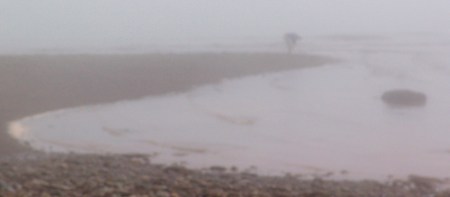
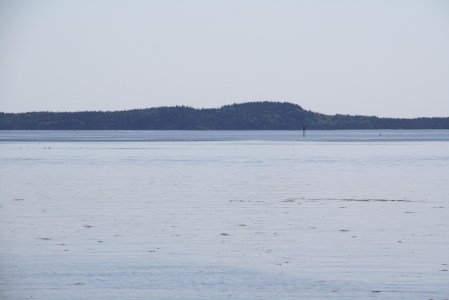
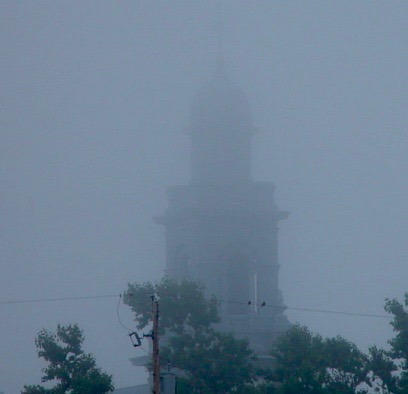
Mist covers Passamaquoddy Bay.
There was a time when I thought
she might walk out into that mist
and fade away, but she was strong.

Now I watch her walk away and
know that she’s really here to stay.

Waves

IMG_0013

Kingsbrae 19.2
19 June 2017

Waves

Some nights,
the stars leave
their constellations
to walk alone.

The planets, too,
grow tired of company
and shine in solitude.

Where now the Zodiac
and Plato’s Platonic
dance of the spheres?

Who knows why a man
will one day walk out of the house,
and never return?

Who knows why a woman
will abandon her children,
turn her back on her lover,
and look only at the wall?

I only know this: that the tide
is composed of multiple waves,
and that each one lives and dies,
alone on the beach.

Three Visitors

img_0221

Kingsbrae 18.3
18 June 2017

Three Visitors

The first one knocked on my door,
called out my name, knocked again.
I got out of bed, opened the door,
looked out: but the corridor was empty.

The second one stood in the corner,
calling, calling … I tried to answer
but I couldn’t unseal my lips. “No,”
the visitor said. “No. Don’t go.”

Lips and throat dry, tongue tied,
I lay in my bed.

My third visitor was David,
and I knew he was dead.

Insomnia

IMG_0147

Kingsbrae 18.2
18 June 2017

Insomnia

When the gate-keeper sleeps,
who will open the gate?
Dreamland lies before us
but the gate is closed.
Where now is the gate-keeper?

How many sheep must we count
before the gate-keeper comes?
What will we do if he doesn’t arrive?
Must we just stand here and wait?

The sheep grow weary before our eyes.
They age and become frail.
Who now will count the motionless flock?
Where is the gate-keeper? Who will open
the gate that leads to the land of dreams?
Who will open the gate?

This Old Man

IMG_0067.JPG

Kingsbrae 16.1
16 June 2017

This Old Man

This old man, with his bundle of memories
carried on his back like a snail carries his shell,
a broken record, he played, with the gramophone needle
stuck in a groove and the same tales repeated.

The ancient  mariner who lives in his brain
stops people in the street and retells
the old story: life’s doldrums where
no winds blew and his ship just drifted,
with no wind to bring it home.

Then blew the wind of change, and suddenly
the sun was just as warm as it was in his youth.
The sea became blue again.  Flowers flourished
brighter, stronger. Birds chirped in the trees.
Light grew bright and he felt beauty return to
the new-born world of his second childhood.

Comment: My journal tells me that I wrote the original version of this poem on Friday, 21 April 2017, and posted it to my blog on Sunday, 23 April 2017 . Today’s rewrite changes the structure and tone of the poem and illustrates how time and place can influence any previously generated word sequence. For time and place we can also substitute attitude and change of heart, as Ludwig Wittgenstein suggests. More important, perhaps, our attitude and outlook can change with the weather and the state of our digestion. This is the same poem, then, written by the same person, on two different days. Or was it the same person? My stay at this residency would suggest that perhaps the person has changed along with his attitude, his outlook, his digestion, and the weather.

“Don’t Get Off the Bus!” Wednesday Workshop

IMG_0061.JPG


“Don’t Get Off The Bus!”
Wednesday Workshop
Wednesday 14 June 2017

Journal: Roger Moore had the honor and pleasure of addressing the artists in residence at KIRA / Kingsbrae last night. He gave a brief biography of himself then stated that he did not consider himself to be a poet, the honor of the name is too high. He is, he stated, above all a writer. He began writing poetry at an early age, but was always put off by the lack of understanding shown by his contemporaries. Such slogans as “He’s a poet, but he doesn’t know it,” chanted endlessly, made him hide his poetic talent. In 1962, however, in his last year in school, he entered the Stroud International Festival for Religious Drama and the Arts and won first prize for a sonnet he wrote for that competition. This confirmed , in his own mind, that he could write and he continued to do so.

He attended Bristol University from 1963-1966, studying Spanish (Honours) and French. While at Bristol he published some 30 poems with the university’s literary review, the Nonesuch Magazine. He also wrote a weekly column in the student newspaper reporting on cross-country running in winter and athletics in summer. He began an MA in the University of Toronto in 1966 (completed in 1967) and decided to stay in Canada and work for his PhD (17th Century Spanish poetry). His encounters with the Toronto literary circles were not satisfactory and he realized that neither his style nor his subject matter were suited to the CanLit of the Canadian art scene. He hid again until 1977 when Fred Cogswell published Last Year in Paradise, Roger’s first poetry book, in the Fiddlehead Poetry Book series. By now, Roger had completed his doctoral thesis and published Towards A Chronology of Quevedo’s Poetry with York Press in 1976. From 1973-1977 Roger was first the Editorial Assistant and then the Assistant Editor of the International Fiction Review (University of New Brunswick). This position allowed him (a) to revise the submissions of writers whose first language was not English; (b) to translate articles from Spanish to English; and (c) to himself submit articles and reviews to the magazine. One of his first translations was of an article by Enrique Anderson Imbert, the Argentinian writer. Roger’s academic writing and editing is a different story and will be told at another time.

In 1979, Roger took his first workshops in creative writing at St. Thomas University  with Norman Levine, the Canadian Short Story writer. Norman Levine inspired Roger with a new taste for creative writing and he started writing short stories at this stage. He also started attending the Maritime Writers’ Workshops at UNB working with Patrick Lane, Susan Musgrave, Richard Lemm (twice) and Erine Moure. Roger was now submitting regularly to Canadian Literary magazines and his poetry was published first in Poetry Toronto (by bpnichol),  and then in Poetry Canada Review, The Fiddlehead, ARC, Ariel, the Cross-Canada Writers’ Quarterly, and in some twenty other Canadian literary magazines. In 1986, his second poetry collection, Broken Ghosts, was published by Goose Lane (Fredericton). Roger’s mother died in 1987 and his father followed in 1989. The poems he wrote at this stage were collected together and were awarded the Alfred G. Bailey Award for Poetry by the Writers’ Federation of New Brunswick in 1989. A second collection again won the Bailey in 1994, but neither of these collections were considered worthy of  publication by the multiple Canadian presses to which Roger sent them.

In 1991, Roger was the Atlantic Provinces Director for the League of Canadian Poets. He started, with JoAnne Elder, the Writes of Spring at St. Thomas University, and this continued for three years. The Writes of Spring was designed as a gender balanced, language balanced reading event in which eight poets participated. The reading group consisted of four men and four women, four of whom were Francophones and four Anglophones. These bilingual readings gave a wonderful insight into the poetry that was being written at the time within the province of New Brunswick. Roger started self-publishing his poetry in limited edition chapbooks at this time and gave his works to the participants and audiences in this series. He published six chapbooks this way: Idlewood, In the Art Gallery, Daffodils, Secret Garden, Iberian Interludes, and On Being Welsh.

In 1999, Roger chaired the third Atlantic Association of Universities’ Teaching Showcase at St. Thomas University. He edited the proceedings with Denise Nevo and they were published by Mount Saint Vincent University Press. Denise suggested that Roger might publish his poetry with MSVU and declared herself willing to edit and publish any work he might care to submit. This most fruitful collaboration with a wonderful lady who was also an outstanding editor allowed Roger to publish six more poetry books between 2000 and 2012, namely, Sun and Moon (Poems from Oaxaca), Though Lovers Be Lost, Fundy Lines (Prose Poems), At The Edge of Obsidian, Obsidian 22, and Monkey Temple. Roger continued publishing chapbooks and Dewi Sant (with the Central New Brunswick Welsh Society) and M Press of Ireland were among those that appeared, while Land of Rocks and Saints (Poems from Avila) was published by Nashwaak Press (Stuart Donovan) in 2008.

2015 saw three books appear in print: Stepping Stones (in collaboration with David Brewer of Rabbittown Press), Systematic Deception (in collaboration with Randi Drake of Ottawa), and Triage, his last poetry chapbook. In August 2016, John Sutherland, a member of one of Roger’s writing groups, introduced him to CreateSpace / Amazon / Kindle, and since then eleven books have been published online: Monkey Temple, Though Lovers Be Lost, Bistro, Sun and Moon, Obsidian’s Edge, The Empress of Ireland, All About Angels, Avila (Cantos y santos y ciudad de la Santa), Iberian Interludes, A Cancer Chronicle, and Nobody’s Child. Bistro (Flash Fiction), Avila (in Spanish), A Cancer Chronicle, and Nobody’s Child (short stories) are new, while the other seven titles have all been expanded and revised. Bistro was one of three finalists (and the only independently published book) in the New Brunswick book Awards (prose fiction) in 2016 (results announced, May 2017).

This Wednesday Workshop / KIRA Artist’s Report has two concealed messages. The first is that writing, like all creative activities, is a long apprenticeship (in the words of Fred Cogswell). The second is that if you want to travel from Halifax to Vancouver, you must stay on the bus. Quite simply, if you get off at Fredericton or Quebec City, Or Montreal or Toronto, and if you stay in one of those cities and don’t get back on the bus, you’ll never arrive at Vancouver. So: writers young and old … stay on that bus. Persist with your work. Never give up your dream. Never give in. Looking back from the vast old age of seventy-three, I realize now how easy it would have been to admit defeat and stop writing at so many stages of my writing career. I kept going and I encourage, nay URGE, any writer / creative artist reading this either to stay on that bus or to climb back on board. Quite simply, the world needs us and the world needs our poems, our paintings, our sculptures, our music, our encaustics,  and our stories.
Icarus

IMG_0220

Kingsbrae 13.4
13 June 2017

Icarus

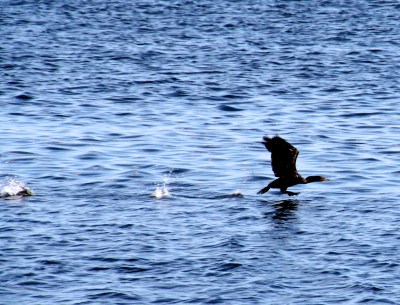
Such a miracle,
those first steps
of the sea-bird’s flight,
lurching his launch
over troubled water.

That first step heavy,
the second lighter,
and the third
scarcely
a paint brush
pocking the waves.

Deep within me,
I sense the need
to fly, to soar, to rise
high in the sky
and seek the sun.

I don’t care
if the sun’s heat
melts the wax
that binds my wings
and sends me
tumbling down,
a shooting star
falling
from the firmament.

A second sun,
I’ll be,
stunning in my sunset,
burning a glorious
path to death in my decline.

Aurora Borealis

img_0359

Kingsbrae 13.2
13 June 2017

Aurora Borealis

Some nights,
when you close your eyes
and open your ears and mind,
the miracle happens.

The sky breaks apart,
explodes in color,
and all the hard slabs
in your little child’s
paint box
become liquid assets,
covering the sky
from top to bottom
in a curtain of chroma
that saturates the mind
with its trickle
-down luminosity.

Pity the poor stars
on nights like these,
their beauty, like
love’s labors,
lost, as we drift,
our senses set free
in this amniotic,
shapeless sea:
bound by music,
song and light.

Carlos Carty

IMG_0134 (2)


Journal: Carlos Carty addressed the group of resident artists tonight. Carlos is from Lima, Peru, but he has lived for the past few years in Brazil. He told us how, at the age of 15, he had discovered music while still in school. It was, he said, love at first sight. However, musical instruments were expensive and not easy to obtain, so he learned to play rhythms and music on throwaway things, empty boxes, plastic and glass bottles, material that could be re-cycled. He was self-taught and has had few lessons. However, his explorations have led him to the Pan Flute, the Andean flute, the Chinese (or sideways) flute, and to many of the myriad flute-like instruments that are played in the Andes in general and in Peru in particular.

Carlos is interested in all types of music and would love to be a full-time musician, dedicated exclusively to his music. However, he has a family to look after and music alone will not keep food on the table. This was a problem shared by all the artists in residence. He then told us of some of his difficulties. He also told of his preference for his own people’s traditional music. This music existed before the Incan Empire and long before the arrival of the Spanish conquistadores who laid his land and his people to waste. Part of Carlos’s musical experiments have centered on restoring a melodic happiness to a Peruvian traditional music that is, by nature, sad. Add to this his ability to create music from all types of recyclable material, and you will see Carlos as an innovator. His own compositions demonstrate this innovative spirit and he happily blends any and all types of music to the traditional music as he searches for new ways in which to express himself, his moods, and his emotions.

With regards to KIRA and the Kingsbrae experience, Carlos stated that six months ago, while thinking about his application to KIRA, he realized how important it was to write down his ideas and focus on the elements that made him the musician that he is. From these cogitations arose his ideas on the eclectic nature of music and the necessity to recycle not just music, but the means by which music is made. Music, for Carlos, comes as an imitation of nature. It is the sound of water, of rocks knocking against each other. It is the sound of the wind through grass and reeds, the beating of wood on stone. He also spoke of the various waves of immigrants who came into Peru. The African slaves, in their moments of leisure, expressed themselves in sound, sounds made from the very materials with which they were laboring. This too became a part of Peruvian music.

One of the reasons why Carlos loves the flute is that it is one of the world’s most ancient instruments coming after the percussion of wood on rock and taut animal skin or shells. Flutes go back many thousands of years, to ancient Greece, among other places, and they are the world’s original instruments and bind all cultures together via the international language of music.

Many questions followed Carlos’s presentation. Most of them centered on a clarification of one thing or another. However, thanks to Anne Wright, a very productive theme was introduced: the relationship between North American aboriginal music (especially the first nations peoples of Canada) and the traditional music of other aboriginal American people. This theme merged into the question of identity, loss of identity, and the attempt to recover that lost identity, especially in the current age when so many differences are so easily erased. Language, culture, identity, music … they are all tied closely together. Carlos is an excellent ambassador and has the personality to explore and develop such links as these. Perhaps there will be further room to develop these contacts at a later date.