Thursday Thoughts: Divorce

IMG_0138

Thursday Thoughts
19 July 2018
DDD
[Divorce, Division, Dissent)

Sometimes you wake up in the morning and you realize that you can do no more. So what is it about family split-ups, the pain and ugliness of a disputed divorce, the glue coming unstuck in an already unstable marriage,  a financial settlement that satisfies nobody and splits and impoverishes both sides of a divide? And how do you bridge that divide when you are friends with father, mother, children and the wounds are so deep that everyone of them wants out, whatever the costs and whatever it takes? And what is it about the deliberate wounding of each by the others, the permanent scars that will never heal over, never be stitched over, no matter how hard a third party tries? And what right does a third party (fourth party, fifth party, sixth party) have to step in and try to force issues? And what is it about lawyers, when too many guests gather around the Thanksgiving turkey and the knives are out for everyone to take the choicest cuts and what’s left now but a skeletal carcass, no flesh on the bones, and the guests all hungry still and their empty bellies rumbling for more, more, more … and this isn’t Oliver Twist, “Please sir, may I have some more?” though everyone is heading for the poor house and the beadles are also gathering by bedlam’s door with their handcarts and dogs and the full enforcement of a blue-serge law made to twist and torment, though I have never understood the law, especially when it is left in the hands of lawyers, for “the law, dear sir, is an ass”, a striped ass at that, black and white like a zebra, though grey and costly in the areas that matter most. And what is there to do but rant away about the injustice of it all, the size of the checks and now you must check-out the food banks, the soup kitchens, the meals on wheels, the charity eating and boarding houses, because there’s no more roof over the head and the house is sold and the incomes are split and the children are more-or-less cared for, though rather less than more, and the dog is turfed from his dog house and the pussy cat booted from her feathered bed. Rant, I say, rant and rage away, rage, rage against the dying of friendship and the death of love, because that’s all you can do in this blood sport where even the spectators are spattered with the refined frenzy of friends turned into fiends and foes, and this is a protest, a rant against love that doesn’t stand the course of time, against families that break up, against a society that breaks them up, drives wedges and scissors between people once bound by the puppet strings of love, against relationships that can no longer continue, against the rattling of dead white bones in empty cupboards where the skeletons dance their way into legal daylight and the spectators call for more, more, more, more blood, more money, more blood money, and the engagement diamond is a blood diamond now, a tarnished garnet, and where is the Little Old Lady of Threadneedle Street, that spire inspired needle that will stitch their world back together, and stitch you back together when you have been shocked out of your own ruby-sweet rose-tinted world and torn into little bits in their oh-so-bitter one, the biters bitten and those bitten biting back in return, a new world this world of snapping turtles, turtles standing on the back of turtles, and turtle after turtle all the way down until this carnival world wears its dead clown mask and turns turtle in its turn …

I dreamed all of this last night and woke up this morning and realized … I can do no more.

Lullaby

IMG_0124

Lullaby
Wednesday Workshop
11 July 2018

One of my close friends asked me if I would write her a lullaby. Without a moment’s hesitation, I said “Yes, of course”. Like a fool, I rushed in where no angel would ever care or dare to tread. I sat down and straightaway started to write.

The first thing I discovered was that a lullaby has to rhyme. I couldn’t write one unless it went bumpety-bumpety-bump + rhyme. I wrote several of those and they were all awful. Well, I thought so anyway, and I couldn’t imagine any young child willingly go to sleep while having an adult leaning over them and chanting at them.

The next thing I found out: it’s not easy to write poems, even a lullaby, for other people. Why not? It took me some time to understand that while I write poetry from within myself, heart, stomach, and gut, the lullaby I was writing was not written for me, but for a second person who was not me. What would this friend like to read? How would they like it to sound? By extension, there were not two people involved: I was also writing for an unknown child whom I had never seen. I didn’t know their likes and fancies, nor what would fill them with fear, nor what would successfully send them off to sleep. This three-way traffic was unnerving.

Third problem: a lullaby is a cliché and is filled with clichés. Close your eyes. Sleep, baby, sleep. I will rock you. More important, perhaps, the clichés are not just verbal, they live in the rhymes as well: sleep, deep, keep.

My telephone talks with other writers led me to the theory that rhythm was what mattered. Rhythm, comfort, rhyme, gifts, and the allaying of fears. So easy to write, so hard to fulfill, especially in an age of instant communication. As I wrote, so different formulae marched through my head. I recalled the lullabies my parents and grand-parents sang for me, apparently not very successfully, I was a terrible infant at bed-time. I have more memories of being set to bed, often without supper rather than being sang to in bed. Then there was boarding school (age 6) and the faceless matrons in comfortless dormitories where, more often than not we cried ourselves to sleep. Hush little baby don’t you cry.

So, rhythm, rhyme, nonsense words, dream worlds where everything is good. Along with traditional lullabies like All through the night / Ar hyd a nos, my head filled up with reminiscences of Dylan Thomas, and in the evening, when the sun goes down, / I ask a blessing on this town, and Federico García Lorca, La luna vino a la Fragua / The moon came to the forge.

So much happening. So much laundry passing through the washing-machine of my mind where the waters churned away and rhymes were soaped, rhythms were bleached, ideas were blended and rinsed. I wrote five. I am not sure of any of them. They certainly kept me awake most of last night, syllable counting on my white woolly sheep-fingers, that brought no sleep. I tried counting my blessings too, but that didn’t work either.

Question: does anyone actually want to read my lullabies to keep a child awake? If so let me know. You might persuade me to post one or two.


Fear

IMG_0094

A List of Fears
(exercise: tick all that apply)

of failure
of success
of inadequacy
of being caught short
of being found out
of the blank page
of revealing intimate details
of feeling stupid
of typos or punctuation or bad grammar
of presumption
of being laughed at
of new things or old things
of something borrowed
of new topics or new methods
of research or hard work or perfection
of rejection or dejection or ejection
of losing yourself or finding yourself
of caring or not caring
of the unknown or the unknowable
of peer pressure
of speaking out loud
of being unable to write like …
of being wrong or right
of political or social consequences
of free speech
of hurting others
of being misunderstood or understood
of large or small audiences
of clothing or mechanical failure
of starting or finishing or writer’s block
of having nothing to say
of having nothing worthwhile to say

fear of fear

Commentary:
Last Saturday, in Quispamsis, I facilitated a two hour workshop on things that writers fear. I began with a list of all the things that I have feared at various times during my writing career. This morning, I turned, with great trepidation, those fears into the list poem I reproduce above.  If you wish to discuss any of these fears, or add other fears of your own to the list, and remember, this is a list of writers’ fears, then please do so. I will be happy to enter into a dialog.
As for the fear of feeling stupid, I often offer this small piece of advice. It has been known to comfort those who actually have a fear of feeling stupid. (1) buy a small fluffy toy, preferably a Teddy Bear, that will fit into your pocket or purse. (2) christen that small fluffy toy with the name of Stupid. (3) you carry Stupid around with you all day knowing that you can put your hand in your pocket or purse and feel Stupid all day and nobody is going to know or care.
The moral of the story is this: when you can laugh at your fears, you fear them no more. And remember: you can stop feeling Stupid whenever you want to.

Thursday Thoughts: Fear

IMG_0147

Thursday Thoughts
10 May 2018
Fear

Tomorrow I drive to Quispamsis to give a writers’ workshop on Fear. How do I tell the participants that I am afraid? I am afraid of the journey there by road. I am afraid of stray moose and deer, fleeing from the flooding, and standing, frightened, by the roadside, ready to panic and run at the car. I am afraid of getting lost, of losing my way, of being stranded in unknown streets with no outlet, no exit, no easy way home.

How do I tell them I am afraid of them. I am afraid of their knowledge. Many of them will know more than me. They are all unknown quantities, blank faces at present, with tumble dryer minds full of churning ideas, ideas that I have never had nor met. I am frightened. I have it in my head to call in sick, to say I am no longer available, to say I cannot come to orchestrate the music that I myself composed.

Stage fright, I suppose, these pre-conference  nerves that battered me all last night with their owls’ wings, leaving me sleepless, turning and tossing, cringing at my own lack of everything that I will tell them they should have.

Fear: a black monster that hides beneath the bed. I dare not leave arm or hand above the blankets in case the monster emerges and bites off the hand that feeds it with more fears. Fear: the shadow in the corner, looming over the bed, shaking me by the shoulder as I lie there, tormented. Fear: the jaws that bite, the claws that snatch, the hand that holds me by the ear or the scruff of the neck and drags me back into a shadowy past where monsters dwell and flicker in the candlelight, growing larger as I walk down white-washed halls.

Enough, no more: I am just as afraid now as I was before. Sleepless tonight, too tired tomorrow to care, I will leave early, hope for the best, wind my way carefully through deer strewn roads and perilous paths. When I get lost, and I probably will, I will ask the way. And all the time I’ll sing my favorite travel song: ‘I know where I’m going’ … even if I don’t.

Recycling

Books

Recycling

“You never know when you might need it,” my
grandfather said, finger-nails cracking red-
waxed parcel string. Bright sealing wax rained down
on the tablecloth, covering it with hard,
scarlet chips. Wax cracked, tight knots emerged.
One by one, my grandfather first loosened
them, then sought the string’s free end, following
it along its snaking way from knot to
knot. Like Theseus following his twine
through the labyrinth below the palace, my
grandfather mused, hesitated, followed
the clues given him by the knotter’s mind.
Set free from its parceled knots and lashings,
he looped the string around his fingers and
tied the twine into a tight bow that he
stowed away for future use. Reef knots, slip
knots, sheep-shanks, bowlines, bowlines-on-the-bight,
he showed me how to tie them all. He taught
me too how to never tie granny knots.
“Never cut string with a knife: untie knots,”
strict his advice. I follow it today.

Commentary:
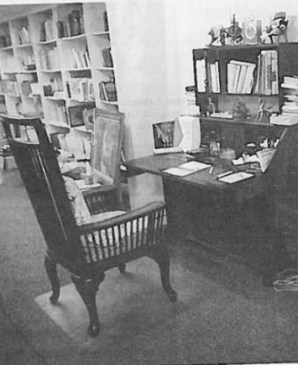
The photo shows my grandfather’s chair sitting before my basement desk where I write and store my books. I used to climb up the back of this chair when I was a tiny child, and blow on the bald spot on his head while he was asleep. Such memories nesting in the attic corner of the dormant mind. One day, I will write about that. Oh: I just did.

Poetry


img_0189

Poetry

“Poetry gives permanence to the temporal forms of the self.”
Miguel de Unamuno.

That is what my writing is all about.
Those temporal forms, fluttering and changing.
Butterflies, they live for a day or two,
perch and flourish, spread their wings,
excel for a moment, catch our attention,
blown by a sudden gust, tear their wings on a thorn,
perish in the blink of an eye, cluster and gather,
reborn in dusty ditches, congregate on bees’ balm,
smother Cape daisies and black-eyed Susans,
shadows shimmering, butterflies by day,
fireflies lighting up the night, terrestrial stars
floating in their forest firmament, hackmatack,
black oak, bird’s eye maple, silver birch, fir,
impermanence surrounds us, dances beneath stars,
sings with robins, echoes the owl’s cry through woodlands,
poetry, the elemental soul, our words capturing nothing,
turning it into eternity, holding it for the briefest moment,
then letting it go. Island View: my dialog with time and place.

Be Leaf

IMG_0135

Be Leaf

An autumn leaf,
brown crisp flaked from a tree,
floats breeze-blown
into my mind’s-eye corner
and settles down to sleep.

What joy to lie there
forgotten by the madcap
rush of televised folly,
false news filmed, fake news
hustled and bustled
by a burgeoning wind of change.

No science now, no truth,
no facts, no knowledge,
just news, fake news, false news,
the word pack shuffled and reshuffled,
each verbal insult dealt and redealt,
true falsehoods peddled
by tinker men and tailors who stitch
words to meanings,
while the real truth
lies dead and safely buried:

a leaf among leaves, lying forlorn,
forgotten beneath autumn trees.

Dog Daze

IMG_0040 (2)

Dog Daze

 the sad dog hounds me
sends me spinning
sets me back on my heels
makes me chase my tail
and snap at shadows
as they ghost
through my mind

memories deceive
desperate I lap
at licks of false hope
a shifting salt field
that increases my thirst

driving me on and on
deeper into ragged clouds
and the storm that lays waste
to the dog daze of my mind

Wednesday Workshop: Balancing the Books


15 May 2002 Pre-Rimouski 035

Wednesday Workshop
25 April 2018
Balancing the Books

Two days ago, I wrote the following lines to one of the writing groups of which I am a member.
“Today, 23 April 2018, is World Book Day. We not only celebrate the world of books, but also the death date of three great authors. Miguel de Cervantes, William Shakespeare, and the Inca Garcilasso de la Vega. Three great writers, two continents, two languages, three if you include the Quechua from which the Inca Garcilasso translated his Comentarios Reales. The Inca Garcilasso didn’t actually translate the Comentarios Reales, for the originals were part of an oral tradition in a culture that lacked handwriting. Hence they were never written down. His mother was an Incan Princess and his father a conquistador. His mother kept the Incan culture and memories alive and it was from the oral traditions of his family (one side of it) that the Comentarios Reales were born. It was recognized in its day as one of the greatest books to come from one of the first outstanding writers with indigenous roots. Hence his place on the pedestal alongside the other two greats. All three died on 23 April 1613, the same date, but not the same day. Two different calendars were present in Europe: the old Julian and the more modern Gregorian … same date, but thirteen days apart.”
I knew long ago that I did not have the strength and stamina to make a living as a professional writer. I knew too that I could not put my beloved and my family through the strain of maybe, or maybe not, surviving financially on a creative writer’s income. I wanted to be an artistic writer, a poet above all, art for art’s sake, not just a commercial writer, writing adverts for a living, or pandering to the lusts of the baying evening newspaper crowd.
In order to support and care for my family I had to make money and balance the books. Rather than writing full time, therefore, I chose a career in academia. My career as an academic led to 90 research articles, mainly in my specialized field of Golden Age Spanish Literature, 70 book reviews, the publication, in book form, of part of my doctoral thesis, and an online bibliography, prepared initially thanks to the loving care of my beloved, and now turned, thanks to the Harriet Irving Library at the University of New Brunswick, into a searchable data base.

In addition to my normal course load, I also committed to twenty-five years of unpaid, voluntary overload teaching. I did this in order to maintain a small, understaffed program in a tiny Maritime university. I also had a long-term coaching career (Rugby) at club, provincial, regional, and national levels, and a commitment, at various times, to various editorial positions in 14 local, regional, national and international journals. My creative writing career has understandably suffered because of this commitment to research, teaching, editing, and coaching. In spite of that, while researching and teaching full-time, I was still able, with the help of family and friends, to publish 10 poetry books, 11 poetry chapbooks, 12 short stories and 130 plus poems in 20 Canadian (and other) journals. There was very little money in any this, other than my salary as a tenured professor, and I know only too well that to have been a full time, creative writer and to have maintained a house and a family without recourse to a second career would have been impossible.
Now that I have retired from university teaching, I can finally engage full time in creative writing. In my part-time creative writing career, maintained while I worked in academia, I kept a journal and made sure I spent at least one hour a day writing creatively, even if I had to get up early to do so. This resulted in a couple of poetry books with small presses and later a series of self-published poetry books that doubled with various festivals and other writing sequences. My poetry books never sold well, and there is very little money in poetry anyway, so when I started self-publishing, I determined to give my books away to friends and well-wishers who were interested in what I was writing. In retirement, I discovered CreateSpace and I now have thirteen books up on Amazon and Kindle. However, I am a writer and an academic, not a salesman and a marketing manager. As a result, I haven’t marketed myself and no, I haven’t sold many books. Self-promotion does not appear to be my strong point.
Last year, as Canada reached it’s 150th birthday, a birthday that ignores the fact that the country has existed for much longer than 150 years and that our indigenous people have lived here for 10,000 years or more, without any spectacular celebrations, questions were asked to selected writers about our Canadian Culture. What do we love most about Canadian Culture, was one such question. I gave the following brief answer: “Canadian Culture allows a person like myself, born in Wales, and speaking English, French and Spanish, to live and write in Canada about Wales, England, France, Mexico, Spain, and my adopted homeland. However, the literary and cultural industry boasts of our international character while almost totally ignoring me and writers like me. Those who guard the gates of the literary world ignore the self-published (often referring to us as adherents to what they term the ‘vanity press’) and they constantly belittle and put down those who have not progressed in the ways that they, as literary gate-keepers, find acceptable.”
Do I care? Of course I care. That is why I am writing this and why I will continue to write. Will anyone read this and take any notice? I doubt it. Will anyone take any action as a result of this tiny pebble cast into a Great Canadian Lake? I really, really doubt it. I can see the shoulder shrugging now as the eye-brows raise themselves slightly and the reject piles beckon. Will literary Canada keep staring at its own belly button and congratulating itself on its wonderful cultural opportunities for self-expression in writing? I guess it will. Will things change for artists on the periphery, for struggling artists, for artists like myself who with great difficulty have fought throughout their lives to continue with their creative writing while balancing the family books? I doubt it very, very much indeed.
But I am here, as others are here. Together, we have a voice. I would like it to become a  very powerful voice. This voice has long been side-lined by the literary establishment and the institutions. But we are many. And I too have a dream: it is that one day, we independent publishers, we self-publishers, will raise up our voices, and one day we will be heard.