Lullaby

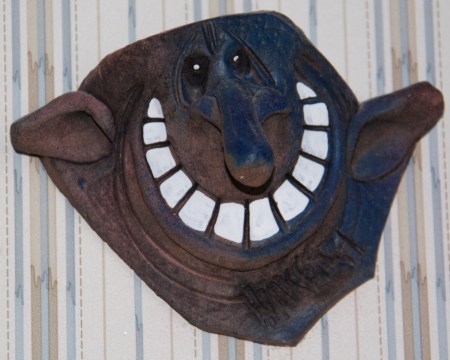
IMG_0124

Lullaby
Wednesday Workshop
11 July 2018

One of my close friends asked me if I would write her a lullaby. Without a moment’s hesitation, I said “Yes, of course”. Like a fool, I rushed in where no angel would ever care or dare to tread. I sat down and straightaway started to write.

The first thing I discovered was that a lullaby has to rhyme. I couldn’t write one unless it went bumpety-bumpety-bump + rhyme. I wrote several of those and they were all awful. Well, I thought so anyway, and I couldn’t imagine any young child willingly go to sleep while having an adult leaning over them and chanting at them.

The next thing I found out: it’s not easy to write poems, even a lullaby, for other people. Why not? It took me some time to understand that while I write poetry from within myself, heart, stomach, and gut, the lullaby I was writing was not written for me, but for a second person who was not me. What would this friend like to read? How would they like it to sound? By extension, there were not two people involved: I was also writing for an unknown child whom I had never seen. I didn’t know their likes and fancies, nor what would fill them with fear, nor what would successfully send them off to sleep. This three-way traffic was unnerving.

Third problem: a lullaby is a cliché and is filled with clichés. Close your eyes. Sleep, baby, sleep. I will rock you. More important, perhaps, the clichés are not just verbal, they live in the rhymes as well: sleep, deep, keep.

My telephone talks with other writers led me to the theory that rhythm was what mattered. Rhythm, comfort, rhyme, gifts, and the allaying of fears. So easy to write, so hard to fulfill, especially in an age of instant communication. As I wrote, so different formulae marched through my head. I recalled the lullabies my parents and grand-parents sang for me, apparently not very successfully, I was a terrible infant at bed-time. I have more memories of being set to bed, often without supper rather than being sang to in bed. Then there was boarding school (age 6) and the faceless matrons in comfortless dormitories where, more often than not we cried ourselves to sleep. Hush little baby don’t you cry.

So, rhythm, rhyme, nonsense words, dream worlds where everything is good. Along with traditional lullabies like All through the night / Ar hyd a nos, my head filled up with reminiscences of Dylan Thomas, and in the evening, when the sun goes down, / I ask a blessing on this town, and Federico García Lorca, La luna vino a la Fragua / The moon came to the forge.

So much happening. So much laundry passing through the washing-machine of my mind where the waters churned away and rhymes were soaped, rhythms were bleached, ideas were blended and rinsed. I wrote five. I am not sure of any of them. They certainly kept me awake most of last night, syllable counting on my white woolly sheep-fingers, that brought no sleep. I tried counting my blessings too, but that didn’t work either.

Question: does anyone actually want to read my lullabies to keep a child awake? If so let me know. You might persuade me to post one or two.

 

Friday Fiction: Sentences

IMG_0010

Friday Fiction
27 April 2018
Sentences

“Use lots of verbs to catch the reader’s attention. Keep your sentences short.”

… people don’t like long sentences … life sentences … things like that … though death sentences may be short, ugly, and brief … unless there’s a power shortage when you’re sitting there all wired up … or they’ve watered down the drugs in the tube they attach to the needle they put in the shunt already plugged into your arm …

… you’ve read the news … seen the pictures … if you live close enough you may even have stood out in the street with a candle and your friends watching the power shortage hit downtown … district lights flickering off … road lights shutting down … big blankets of blackness … as they put all available electricity into the power circuits that lead to the electric chair …

… use short sentences … like the one they read to me when I was six … then they locked me away in a boarding school for twelve long years … until I was eighteen … I ran away … again and again … they beat me … again and again … short sentences … ‘hold out your hand’ … ‘pull down your pants’ … bend over that chair’ … six of the best … no verb in that one … yet the words still strike a note of fear into those who have been publicly humiliated and flogged in a boarding school dining room … in front of all the boarders … and the day boys as well … ‘don’t cry’ … ‘little baby’ … ‘mother’s pet’ … ‘mummy’s darling’ … blubbing like a baby … and this at six years old … or seven … or eight … lashed on hands or backside by a grown man wielding a bamboo cane …

“Keep those sentences short.”

“Bend over.”

“Place your hands against the wall.”

“Don’t cry like a baby.”

“Take it like a man.”

Honey Pot

img_0181

Honey Pot

 silently
from the top board
he steps into space

a flying bomb
a heat-seeking missile
a depth charge
on a mission

knees tucked into chest
arms clasped tightly
around knees
he plunges towards
his chosen target

floating on surface
open-mouthed
gazing at the sky
dreaming his lazy way
across the summer pool

mission accomplished
he explodes
beside the floater’s head

ah
the perfect
honey pot


Nobody’s There

IMG_0055

Nobody’s There

 Reality:
a red brick
sitting on the master’s desk
in the ivory tower
of a Cotswold Manor.

The history master enters,
sees the brick,
sizes it up,
seizes it
and, without looking,
hurls it at the window.

Summer term:
the days are warm.
The windows are open.

End over end,
the brick tumbles
through blue air
to land with a thud
on the quad’s black tarmac
right at the feet
of the school pastor.

He looks around.
There’s nobody there.
The brick must have
materialized
out of thin air.

The pastor shrugs,
stoops down,
picks up the brick,
puts it in his briefcase,
and carries it away.

“Here endeth
the first lesson:
Book of Brick.”


Chalky

Avila 2007a 039


Chalky

 Dead accurate he was
with a piece of chalk,
hit you wherever you sat:

“Bonk!”
right between
the eyes.

 “Pay attention, boy.”
“I was paying attention, sir.”
“Then repeat what I just said.”

 And the boy repeated it,
word for word.

 “Sorry.
Here, have a peppermint.”
“No thank you, sir.”
“Guess and how, then.”

 He put his hand in his pocket
and pulled out a handful of coins.

Sooner or later
we all tried,
but nobody ever guessed
how much money
he held in his hand.

Painting

untitled


Kingsbrae 10.4
10 June 2017

Painting
for
Geoff Slater

I took a line for a walk.
It was
as disobedient as
an untrained puppy on a leash,
as crazy as a kite
in a wind-filled sky,
as joyful as
a schoolboy when they cancel school,
as easy as
pie when the R is squared.

The dog walks round in circles,
gets my legs caught in his leash.
The kite, all twisted strings,
comes tumbling down a ladder of sky.
The apple pie is a pulled-up sheet,
folded double, and I am a child again,
trapped in my boarding school bed.

“Color me now,” my painting cries
and I fill the spaces between the lines:
blue for happiness, blue for hope;
yellow for the lion mane of the sun;
red for the redbreast;
brown for the worm;
and green for schoolboy freedom
at the end of term.

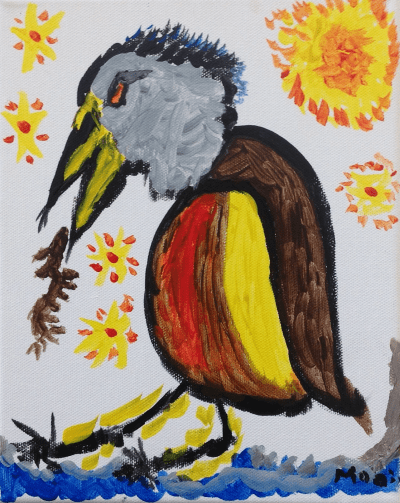
Journal: I had the great pleasure of working with Geoff Slater this afternoon. He sat me down at his painting table, alongside all the children, and gave me a palette, brushes, water, cleaning paper, and a rainbow of paint. Then he placed an easel and a canvas before me and put an apron on me to protect me from the paint. “Go for it,” he said. I looked at a field of white … and I remembered … “Drawing is taking a line for a walk” … so I drew a line, first a beak, and then a head and an eye, then I added wings, and legs … it was wonderful. The children were laughing with me and I was slapping the paint around with great delight. “Let me see, let me see,” they cried. And then, when they saw it: “What is it?” It was even more fun when I started to fill the spaces between the lines. This is, or was, the first time I have ever placed paint upon a canvas. In my old age, I have started to paint. “Is it a worm or a fish?” they asked. “Is the bird going to eat it?” “Is the bird spitting it out?” Such curiosity … and even I didn’t know the answers. “What’s the bird’s name?” asked one little girl. “Eagle-eye,” said the other. “And the worm’s called Squirmy,” added a third. “Are they talking?” another chimed in. “Yes,” I said. “I think they’re friends and they’re having a chat.” What fun. We left the painting out in the sun to dry … and now I don’t know where it’s gone. Let me know if you see it, anyone.

Nobody’s Child

IMG_0466.jpg


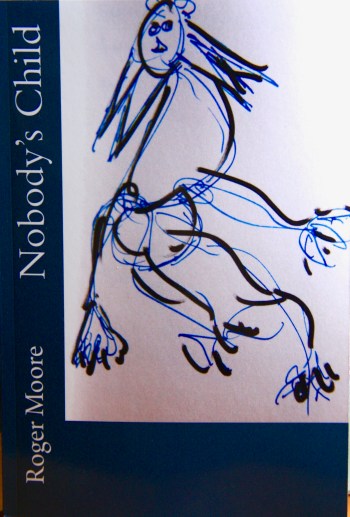
I ordered Nobody’s Child on Monday and it arrived on Thursday, two days after A Cancer Chronicle. Two books, two days apart. Wow. Nobody’s Child is a collection of short stories and Flash Fiction that deals with some difficult topics. A couple of the shorter pieces have appeared on these pages and will be familiar to the followers of this blog. Most of the material is new, some of it, very recent. Some of the stories have been published, others have received awards and honorable mentions. A shortened version of the collection, under the same title, was given an Honorable Mention in the David Adams Richards Fiction Prize of the Writers’ Federation of New Brunswick in 2016.

Let the fiction begin: “… so this is earth day and we light candles in our house and turn off the telly and the computers and sit there reading and writing, watching each other through the flicker of the candle flames, and listening to the sounds of the house, such subtle sounds, the creak of the siding, the click of a door, a blind moving in the room overhead, the tick of the grandfather clock in the hall … and the smoke rises from the candles and makes dark patterns in the stillness of the air … and yet, through the blackness, the bleakness of the candle smoke, a hand reaches out and holds me by the nape of the neck, and thrusts me back into a past which once again has come back to haunt me …”

Nobody’s Child    is available on Amazon.

Moonshine: FFF


fundy-05-mistwolfepipers-081

Moonshine
Flash Fiction Friday
Friday, 5 May 2017

Here, on the wharf, in Santander, I stand in the shadow cast by the Customs House and gaze at the moon path sketched out over the water. “Over the mountain, over the sea, that’s where my heart is longing to be.” I taste the bitter salt of homelessness and know that I will never belong in this world and that I will never find a place to call my own. Back home, I have a black and white television and a black and white dog. Here I have nothing. Back home, when I am home, I am a latch key kid. My parents leave for work at seven in the morning and my mother gets home about five every night. Those ten hours on my own are mine to do what I like with: but I must account for them. “What did you do today, dear?” And everything I say I do is checked. Did I make the beds? Did I do the laundry? Did I finish the ironing? Did I wash and dry the breakfast dishes? Did I clean the house from top to bottom?

Sometimes I strip and stand in front of the mirror in their bedroom and look at my naked body. It’s not much to look at. Once I stood there with the carving knife in my hand and deliberately cut myself across the ribs, just to feel the pain and watch the blood flow down. Other days I play cards against myself. That way one part of me always wins, but then the self I play against is always doomed to lose. Sometimes I wage battles with toy soldiers, moving them up and down across the carpet in front of the fire. Occasionally, I throw a soldier in the fire, just to watch him perish.

Sometimes I just sit on the back of the settee and press my forehead against the cool window. The rain is cold and cools the window pane. I know the sky is crying and sometimes I think I know why. I’ll go back to my boarding school soon. There, we are taught to be isolated and to live in isolation. The bullies will come and they will bully me. I have not grown much over the holidays and I know they will be even bigger, and even stronger, and even faster. I don’t want to go home. I don’t want to go back to that school. I don’t want to be bullied and abused. The masters cane me and the older boys beat me and the bullies force me to do things, unspeakable things, things that I don’t want to do. I have tried to run away but someone always brings me back and then they beat me for running away. “Don’t be a coward,” they say, “take it like a man.” And I do.

I look across the water. How beautiful is the Bay of Santander beneath the moon. I look up at the hills, at Peña Cabarga, at the hills from whence cometh my salvation. My grandfather walks towards me over the waves. He helps me choose stones and pebbles, helps me to fill my pockets with them. He takes me by the hand and gives me courage. He and I walk down the slip way, hand in hand, and then we walk out across the moon path and into the sea.

Three Bears Wood

IMG_0156

Three Bears Wood

Nobody has seen them,
those three bears,
nor naked nor clothed.

So who now walks
in
Three Bears Wood?

Who now stands
where he once stood
in
the shadow of the trees?

Sometimes
he walks there
in
his dreams.

What magic power
puts him back there
beneath the trees?

What ghosts does he see,
what words does he hear,
what dreams does he dream
in
Three Bears Wood?

Scarecrow

IMG_0085

Scarecrow

Flash Fiction
Friday, 21 April 2017

            Sometimes at night I hear nocturnal animals walking across the lawn outside my bedroom window. Intruders in the garden, they rattle the feeders, walk dark through the woods, and sometimes howl at the coyote moon. My heart pumps sudden blood, rapid, through my veins and toes and fingers twitch as I toss around, restless, in my bed.

            Below me, in the hall, the grandfather clock ticks the night away. I stitch myself up in my dreams, count the black sheep in the family, and iron old ghosts upon the ironing board until they are as flat as the white shirts we wore in boarding school on Sundays.

            If I close my eyes, they rise up before me, those Sunday shirts, flapping their arms, and mouthing their apologies for the sorry life they made me lead. No, I didn’t need to spend those days praying on my knees before the stations of the cross. Nor did I need to ask forgiveness for all the transgressions pulled from me, like teeth, in the weekly confessional.

            Marooned in a catholic cul-de-sac, I went around and around in rigid circles like an academic puppet trapped in the squared circle of an endless syllogism. Who locked me into this labyrinth of shifting rooms where sticky cobwebs bind windows, doors, and lips? Why does the razor blade whisper a love song to the scars crisscrossing my treacherous wrist? Who sealed my lips and swore me to secrecy?  And why?

            A tramp with a three-legged dog, I sleep beneath a pier at midnight and watch the waves rolling up the summer beach to catch me out. Sometimes I steal a deckchair, place it at the edge of the sea and bid the tide to cease its climb. The moon winks a knowing eye and the waves continue to rise. Toes and ankles grow wet with wonderment and I shiver at the thought of that rising tide that will sweep me away to what unknown end?

            Last night I wrapped myself in a coward’s coat of many-colored dreams. My senses deceived me and I fell asleep in a sticky web spider-spun by that self-same moon that hid among the clouds and showed her face from time to time. My fragile fingers failed to unravel all those knots and lashings and I was a child again walking the balance beam that led from doubt to knowledge.

            A thin line divides the shark from the whale and who knows what swims beneath the keel when the night is dark and the coracle slides sightless across the sea? I gathered the loose ends of my life, wove them into a subtle thread, and made myself a life-line that would bind my bones and lash my soul to my body’s fragile craft.

            What could I possibly have dreamed as I paraded the promenade a stone’s throw from the barracuda? I crossed my fingers and the beggar at the gate rolled up his sleeves and bore witness to my penitential wounds.

            “How many times,” he asked, “can you pay those thirty silver pence? Don’t they lie heavy on your eyes and heavier on your heart?”

            “Indeed they do,” I answered. “Yet the debt must be paid, but I don’t know how, and where, and when, and to whom?”

            Carnivorous was the carnival he promised and he turned my small world upside down. With coals for eyes and a carrot nose, a scarecrow descended and devoured my town in a clash of flashing teeth. Beneath the waves, the conga stamped its sudden feet of flame. A sea parrot scraped its red and yellow beak against a rainbow of crusty, feathered rage. I awoke to the dog’s sudden tongue in my mouth: an invasion of salt, saliva, and wet, crumbling biscuit.

            That night I opened a bottle of Scotch and drained it dry. I took no prisoners. Around me, the dead and dying licked their wounds as they sank lifeless to the bottom of the glass.

            “Hickory-dickory-dock,” said the mouse as he ran up the grand-father clock. But that particular clock stopped long ago, at midnight, when the Queen of Hearts tied a dead rat to the pendulum, the house slipped sideways, and my heart was filled with woe.

            This morning, fresh snow. The garden basks white beneath pale sunshine. The back porch bears no footprints. The raccoon has abandoned me and chipmunk and squirrel have turned their backs. Today, the scarecrow will scare those nightmare crows away and not a memory will survive to haunt my waking dreams.