Puppet

IMG_0133

Puppet

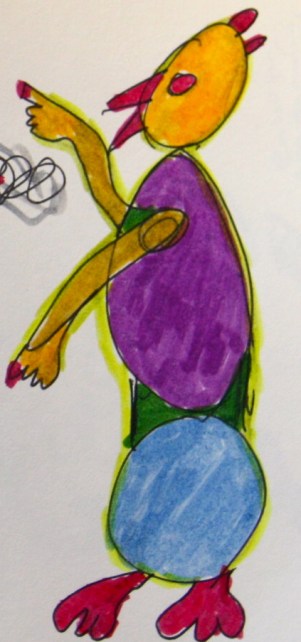
Animated earth,
puppet of mud and blood,
my soul within you
feels soiled
by this pitiless sky.

On my back,
in the gutter,
I gaze upwards
at glittering stars.

Do they know
I’m down here?
And if they know,
do they look down
their astral noses
when they write
my horoscope,

my horror-scope
of late.

When daylight loses itself
in night’s dark weave,
what remains,
but souvenirs and dusty
photos of moments
I alone recall?

Memories cling like mud
to my match-stick frame,
and me in the gutter,
a man, right now,
in nothing else
but name.

Contract: Flash Fiction

IMG_0178 3

Contract

The door to the Principal’s office opened just as Tammy approached, hurrying because she was late for class. Tom, her Department Head, stepped out and stood in her way.

“Tammy,” his tongue swiveled around his thin lips in nervous fashion. “I’m just talking with the Principal about your new contract. Come in,” he extended his arm and shepherded her towards the open door.

“Not now,” Tammy replied.  “I’m late for class. “Can’t it wait?”

“Strike while the iron’s hot,” Tom showed teeth yellowed from tobacco. “We’ve got a great deal for you. Come in, come in.”

Tammy found herself face to face with the Principal.

“Tammy, my dear, we’re so proud of you,” the Principal flashed a row of crocodile teeth, two of them gold-capped. “I have some papers for you to sign.”

“But, I’m late for class and …”

“I know, don’t worry. This won’t take a moment,” Tom winked at her as he and the Principal led her towards a typewriter that sat on the desk with a blank page and two carbon copies inserted in it.

“Here, at the bottom of the page, just sign here,” Tom pointed.

“But it’s a blank page. I can’t sign a blank page,” Tammy stammered in response.

“You’ll see it when it’s typed and signed,” the Principal assured her. You can always change it later.”

“Can’t I come back after class?”

“I’m afraid not,” the Principal frowned. “I have an important meeting in half an hour, with the school board, and you’ll still be in class. This must be signed now if it’s to get board approval.”

“But you said … you said I’d only be here for a year …”

“We’re very pleased with you,” the Principal flashed the sunshine of his teeth. “We want to keep you here.”

“Very pleased,” said Tom. “This is a first class, independent school run, as you well know, on a non-profit basis. Only the children of the rich and privileged come here to study,” he paused. “And some of them come here because of you. That’s why I’m recommending you for this new and improved contract. I signed my first three-year contract this way, didn’t I?” he looked towards the Principal.

“You did indeed,” said the Principal. “And just look where you are now: Head of your Department.”

“A three-year contract …” Tammy blinked and ran her tongue over her lips. “I wasn’t expecting that. I thought a year … thank you … but …”

“No buts. Jobs are scarce nowadays, particularly in your field,” Tom looked at his watch. “Time’s getting on. You don’t want your students walking out of your class, do you? Here you are now: just sign here,” he handed her the pen he held in his hand.

“You’d better be quick,” the Principal said. “This offer may not be here tomorrow and … my goodness, look at the time. You are running late.”

“Sign,” Tom told her. “I signed and I never regretted it. Remember, we can always change the wording later.”

“Drop in after class,” the Principal smiled. “It will all be approved by then and you can read it and we’ll modify what you want.”

Tammy sighed and signed.

The Principal and the Department Head ushered her to the door.

“Hurry,” they exhorted. “Run. You don’t want to be late.”

Tammy ran to her class.

The two men watched her go. Then they went back into the office, shook hands, and grinned at each other.

Tammy never saw that contract. She stayed at the school for three more years, as she had promised, but in all that time she never got a pay raise and the not-for-profit school board never allowed her to join the employees’ health and pension plan.

Were you the one … Flash Fiction

IMG_0240

Were you the one …

… were you the one who awoke that morning at my side and heard with me the hammer blow fall on an echoing anvil in Oaxaca, in the central square when the rope slipped off the church bell and the priest and an altar boy, an acolyte dressed in black and white with a nut brown face, climbed into the church tower and when the priest said “now” the little boy struck the hammer against the bell’s anvil and “again” said the priest, and “again” and the cracked church bell lurched into its hourly cry of grief and morning, seven blows on the anvil, and a stray dog barked at those domestic birds whose beaks dug deep for the sun at dawn on our neighbor’s rooftop …and a cockerel cried out in the early morning, “cock-a-doodle doo, wake up you sleepy heads, wake up, do,” and the roosters found daylight buried in parched earth, and brought it skyward shining on their beaks, as thin cracks sprang out from the egg-shell sun like crazy paving as the yellow yolk of sunshine crept out from the cobbles down in the street and the Russian egg cup, doll after doll, unfolded daylight as the hammer’s silver spoon descended once more on this frail, egg shell world as our dreams shattered … and where now are those dreams of moonlight raked from a village pond as the orange spilled its life-blood to fill our crystalline goblets with its thick rich morning liquid as fierce and sweet as sunshine sacrificed on a branch and rain from a far-off cloud speckled the tree outside our window with radiance and a thousand rainbows all held in tiny diamonds that balanced and swayed at the branch’s edge then trickled and fell to form freckling pools between the cobblestones and even there the arco iris was multiplied, again and again, a thousand times … and the restaurant next door, with its semi-circular rainbow scarf and below it a painted deer on a decrepit wall, and Cuauthemoc was here, his burnt feet held to the fire that burns within us all, and that mangled man was nothing more than a string quartet of flesh and bone created from a ball of dough and baked in the oven in an earthenware dish with currants for eyes, a raisin for a belly button, lemon rind for a mouth, orange peel for hair, while the white bones stared stark naked from the burnt-out flesh at the end of his perished feet … and the man in the mirrored moon held up his hand to trap the wind as a falling leaf settled in the secret web between index finger and thumb and the cat’s cradle on his fingers bound us together like birds in a spun metal cage … the sparrow’s mighty choir chirped at the roof of the circus tent and animals ran wild all goosey, goosey gander, up and down, and nowhere can I now find my lady or her chamber, for they have gone, and with them went all hope, and hope being lost I ran in circles on the sand, my one foot dragging me inwards, and drawing me closer, ever closer to the rising tide, as night overwhelmed day, and dark soldiers invaded the shadowed beach, and where, oh where, did my little dog go, the dog I lost when he chased a seagull out into the bay and into the quicksand and he never came home and here I am alone in my loneliness wandering like a lost dog in ever-decreasing circles, round and round the central square, without you now, one step, two steps, and who will now tickle me under the chin with a buttercup, and who knows if I’ll ever eat butter again, as the tide climbs higher and the sea grass on the dunes is smooth and brown and cuts like glass with its withered, distorting mirrors of stark, staring eyes standing out in welcoming doorways with dark hands and even darker voices calling me in, again and again “are you looking for love, my love?” and yes, I am, I do seek love, I have always sought it, but I have sought it out in the open street, in the open square, in the fresh air, or indoors, where incense and candles burn, and the sun of god is nailed to his lump of wood or chained to his pillar and the Roman soldiers raise their whips to their lips and their kiss is the kiss of death, and I still search for love and my long lost dog as black eyes penetrate from the blackest paint where Satanic witches spoon salt soup between wrinkled lips, dark open holes for their mouths, and their eyes gouged pits in slatted, wooden faces, and they hover over the deaf man’s table in La Quinta del Sordo or stand shoulder to shoulder with Adam and Eve next door in Hieronymus Bosch’s bourgeois hell of furnace, flame, and factory, where the hot flesh catches fire as the feet are turned to the flame and Cuauthemoc burns, the whole world burns, and my soul catches fire as factories swarm with sparks of black imps, burning, dropping from the skies like fire-flies tumbling in a satanic dance, falling away from the heavenly meadow, lighting a way to the skies and the devil, too, is lost and bewildered, a Guy Fawkes impaled on his wooden stake at the bonfire’s tip and it’s November the Fifth, and the whole world is full of spinning star-sparks burning their Van Gogh holes through the black velvet fabric of the dark night of my still-suffering soul …

Comment:
This is a re-write of what I posted earlier today. It is the same piece but it is slightly shorter, more polished, and better focused. It also now has a clearer narrative line with less jumping between metaphors and a cleaner, clearer sequence.

Claustrophobia

IMG_0291.jpg

Claustrophobia

“I’ve got to get out of here.”
“Why?”
“I can’t breathe.”
“Where are we going?”
“Anywhere.”
“Are we going to Gran’s?”
“Why not? Yes. Pack your bag.”
“What about Dad?”
“What about him?”
“Aren’t you going to tell him where we’re going?”
“No.”
“Why not?”
“Because he doesn’t care. If he cared, he’d be here.”
“Maybe he’s had an accident?”
“He didn’t have one last night, or the night before. He just doesn’t care.”
“We can’t just go …”
“We can.”

She called a cab and when it came, they turned the lights out in the house, and shut the front door behind them. Then they got into the cab. The cabbie turned to her and spoke over his shoulder.

“Merry Christmas, and where would you be going, Ma’am?”
“The station.”
“Bus or train?”
“I don’t care. They’re both the same.”

The cabbie shrugged and pulled away from the kerb. The bus station was closer and that’s where the cabbie left them. Mother and son stood there for a moment, under the station lights, looking at the coaches that squatted there, parked in regular lines. Then, mother and son, they walked into the ticket office.

“What time does the next bus leave?”
“Where do you want to go?”
“Home.”
“Where’s home?”
“Swansea.”
“The next bus for Swansea leaves in twenty minutes.”
“We’ll take it.”
“Single or return?”
“Single. Two tickets.”
“You should buy a return ticket; it’s cheaper.”
“We’re not coming back. Not this time.”
“How old’s the boy?”
“Seven.”
“He can travel half price.”
“One and a half then, singles.”

It was December 23rd, her own mother’s birthday. Mother and son sat together on the dark, empty bus. The cold seats chilled them as they waited  in silence. The boy looked out the window and coughed.

“Will Grampy be there to meet us?”
“No.”
“Doesn’t he know we’re coming?”
“No.”
“Does granny know?”
“No.”
“Mum, why are we going?”
“It’s granny’s birthday today. We’re going to give her a surprise.”

Two hours later, the bus deposited them in Swansea. The night had filled with heavy clouds and promised snow.

“Can we take a cab. mum?”
“There’s none here. We’ll have to walk.”

They walked side by side down the well-known streets. Christmas lights adorned the shops and they walked through alternate pools of light and darkness.

“Mum, I’m tired.”
“Give me your bag. We’re nearly there.”
“But mum …”
“I can carry both. Hold on to my arm.”

They kept on walking. After a while, they stopped beneath the streetlight outside the old family home and looked up into the street light’s glow. The first snow-flakes danced down.

“Can we go in now, mum? I want to see Gran and Gramps.”
“You go in. I’ll be with you in a moment.”

She watched her son climb the steps to the front door. He lifted the old brass knocker and banged it down. After a moment, the front light came on and the door opened a crack. She stood beneath the street lamp, inhaling, taking the chill air deep into her lungs. She felt the tight bands in her chest start to loosen. For the first time since this time last year, she felt free

Warning to the reader:
Raw material, still under revision, and probably needs lots of revising. I look forward to your comments. In some ways, this is my take on A Child’s Christmas in Wales. Not quite how Dylan Thomas saw it; more a sort of … well, you work it out for yourself!

Clouds

15-may-2002-pre-rimouski-224

Clouds

And you, in bed,
turning your back to me,
pushing me away,
even in sleep,
as I snuggle for warmth
and, above all, comfort.

Blankets don’t touch
the cold I feel,
deep in my body.
I reach for you,
but you’re locked
in your dreams.

A grunt or two,
a muffled snore,
a half-whistling sound,
sometimes, a cry.

Last night you
called out
“Help!”

I hauled you back
from some black pit
where sharp-clawed devils
reached out in your dreams
to snatch you from me.

Today it’s my turn
to call for help
as I face a horizon
filled with black clouds
that gather above me
refusing to disperse.

Secret Garden 4

IMG_0137.jpg

Secret Garden 4
Pause for Thought

My love, are you my muse?
Or do I write to amuse myself?
I don’t know any more.

I only know for sure
that every second is precious
here in our secret garden
where we cultivate these creative
moments when the world stands
still and our breathing makes
light of the void within us.

Right side, left side: who cares
what’s dominant when our bodies
are tuned like strings on a lute
and you blend with that blood-
red body space beneath my ribs
until my heart beats to your rhythms,
Princess of Paradise, fair of face.

We must never permit these memories
to fade. All too soon chaos will serve us
its tainted apple, tunneled by surging
worms, dark-serpent heralds fore-
telling death’s angel, the night to come,
and the cold of our ultimate separation.


Monkey Throws Away the Keys

img0046_1

Monkey Throws Away the Keys

Monkey is tired of writing reports
that are never read.
He is fed up with frequently asked
questions and their unread answers.
To every lock, there is a key.
Monkey looks at the red and gold
locks of the last orang-utangs
and wonders how to unpick their DNA.

Monkey would give his kingdom
for a key, a key, a little silver key:
the key to a situation, the key to a heart,
the office key, the key to the door,
at twenty-one, the keys of fate,
the Florida keys, the key to San
Francisco’s Golden Gate,
a passe-partout, a skeleton key,
the key to Mother Hubbard’s
cupboard, where she hides dry bones …

On the last day, when monkey leaves work
he takes a lifetime of keys
and throws them down a deep dark well.
As they halve the distance to the water,
he listens to the sound of silence
and wonders if they’ll ever hit the bottom.

Apologia FFF

IMG_0146.jpg

Apologia
Friday Fast Fiction

                   Late last night, I opened Alistair Macleod’s book The Lost Salt Gift of Blood and I re-read the first story. I was soon dabbing my eyes with a tissue and blowing my nose.
This morning, I want to destroy everything I have written. I know I don’t possess the verbal and emotional genius of the great writers and I sense that I will never be able to write like them. Graduate school taught me to be passive, not active, and to write impersonally, choking every emotion when I write. Academia also taught me how to kiss and how to run away with my thirty silver pence. “Never challenge the status quo,” my professors told me. “Learn the rules and disobey them at your peril.”
But here, in this private space where I create and re-create, there are no rules. The enemy is not clear any more and the fight is not one of black against white. It is rather a choice between diminishing shades of grey, and all cats are grey in the gathering dark that storms against my closing mind. Should I destroy all my writing? I won’t be the first to do so; nor would I be the last. And I won’t be the first or the last to destroy myself either. Intellectual, academic, and creative suicide: as total as the suicide of the flesh.
I carry on my back the names of those who have gone on before me as if they were a pile of heavy stones packed into a rucksack that I carry up a steep hill, day after day, only to find myself, next morning, starting at the bottom once again. But this is not the point: the point is that if I cannot write like the great writers, how can I write?
I think of Mikhail Bakhtin and his cronotopos, man’s dialog with his time and his place. I have no roots, no memories, and that is where my stories must start: in the loss of self, the loss of place, the loss of everything. I was uprooted at an early age, soon lost my foundations, was sent into exile, and only survival mattered.
I look at the first page of one of my manuscripts. My writing manifesto is clear before me: “And this is how I remember my childhood,” I read. “Flashes of fragmented memory frozen like those black and white publicity photos I saw as a child in the local cinema. If I hold the scene long enough in my mind, it flourishes and the figures speak and come back to life.”
I am aware of the words of T. S. Eliot that “every attempt / is a wholly new start, and a different kind of failure / because one has only learned to get the better of words / for the thing one no longer has to say, or the way in which / one is no longer disposed to say it” (East Coker).
Are my stories an exercise in creativity or are they a remembrance of things past? How accurate is memory? Do we recall things just as they happened? Or do we weave new fancies? In other words, are my inner photographs real photographs or have they already been tinted and tainted by the heavy hand of creativity and falseness?
The truth is that I can no longer tell fact from fiction. Perhaps it was all a dream, a nightmare, rather, something that I just imagined. And perhaps every word of it is true.
I no longer know.

Rapping the Blues

Rapping the Blues
(for Julie G.)

Have you ever felt blue?
Blue  like a Smurf,
I mean totally blue,
so blue that the blues
were all made for you?

IMG_0182 2.jpg

 Wittgenstein
that wise old man
gives the blues a rap.
He says anyone can
change his point of view
and stop feeling blue.
It all depends
on your point of view.

IMG_0178.JPG

He says “face the music,
take a chance,
teach yourself
to sing and dance.”

IMG_0178 2.JPG

“Don’t look in the mirror,
don’t look inside:
the things in there
are why you cried.
Take a look at life
from another side.”

IMG_0178 3.JPG

“Talk to yourself,
make the point:
don’t let your nose
get out of joint.”

IMG_0178 4.JPG

“Inside us all
there’s a trinity:
a you and a me
and a he and a she.
But three’s a crowd
when they shout out loud
even when they say
‘No Blues allowed.'”

But I’m telling you
what he said to me
and that’s the way
it’s gonna be.

IMG_0181.JPG

There’s a silver lining
to every cloud,
and when the sun shines
we sing out loud.

So dance in the rain
when you’re feeling blue
and make that sun
come shining through.