Doing Time

IMG_0687 (3)

Doing Time

Time bends like a boomerang,
flies away,
comes flying back to
the thrower’s hand.

Endless this shuffle.
Unmarked days
drop off the calendar.

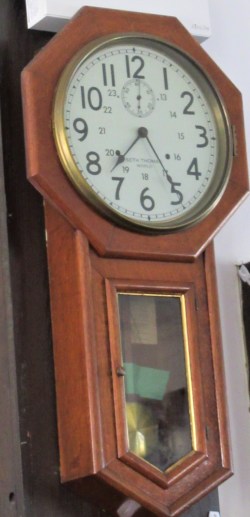
Hands stop on the clock.
The pendulum
swings back and forth
but nothing else moves.

‘As idle as a painted ship
upon a painted ocean.’

Yet the seas seem to move,
the winds seem to blow,
the sails seem to swell,
while our garden
fills with birds
and squirrels,
light and dark.

Morning ablutions.
Each day is a twin
of the day before.
Like wise each week.

The TV screen fills up
its washbasin of tired
looking faces bore us
with their endless wisdom.

Time hands heavy:
an albatross around the neck,
or an emu, an ostrich,
a flightless dodo,
an overweight bumble bee,
too heavy to fly.

Comment: An interesting article that I read today suggests that the lock down is bending time out of shape and that we need to adapt our minds and our body clocks to a new temporal reality. Seconds hang heavy. Days present the same routine. The routine makes the divisions between each day seem irrelevant. This is what my Spanish friend and teacher, the poet José Hierro, meant when he wrote about his time in jail as a political prisoner after the Spanish Civil War: “El tiempo aquí no tiene sentido” / time in here has no meaning.

A similar effect is noticed by those of us who were imprisoned in boarding schools from an early age. The first day back, we draw a railway train at the beginning of a long track and we number each day from the beginning of term. Then we cross off the days, one by one. Often, before the first week is even over, we forget about counting the days: they are all the same, lookalikes with a rhythmic similarity that sends us to sleep as routine takes over and we sleepwalk through life.

How important is time? How important is it to distinguish Monday from Wednesday, Friday from Thursday, this Saturday from a week on Sunday? It becomes less and less important. The TV chatters on and on. The shows we follow illuminate our days. I turn on the radio at five on Friday for Cross Country Check Up, which airs on Sunday. I go without breakfast and don’t even notice that I haven’t eaten. I make a cup of coffee and it sits there on the table with the cup of tea that I forgot to drink this morning. Each time I take my tablets, I write that fact down so that later in the day, I can check that I have actually taken them. The notes mount up and the bottles of tablets run down. Each mandarin orange has a tiny key and I wind those oranges up so they will go tick-tock as I eat them. My Teddy Bear has an alarm clock between his legs and a flashlight in his ear so that I can tell the time on cloudy nights when I can no longer see the Platonic dance of the rotating stars.

Beaver Pond

IMG_1304 (3).JPG

Beaver Pond at Mactaquac
for my beloved 

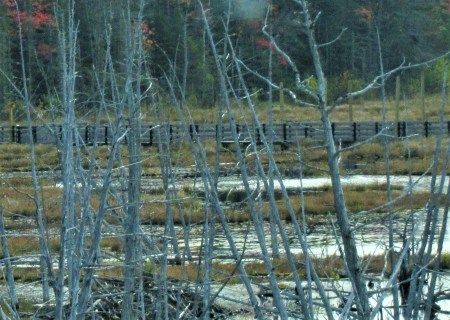
Beaver Pond, Mactaquac, on a fine spring day:
so sad to sit here knowing you can no longer
walk the trail. I remember the sun on your hair,
white, a flag of surrender to old age besieging
your mind and body. It cannot be seen on the board
walk where you stopped to commune with newts,
frogs, birds, fish, ducks, and the great blue heron
you disturbed. Remember? He rose from the reeds
with an anguished cry and a crack of mighty wings.

The wind in Island View is chill today, not a day
for walking in the wild. Monday: men arrive in a truck
and haul our garbage away. So much detritus,
such a mess at the roadside as winter ends and spring
brings thoughts of freedom to roam beyond spells
of ice and snow. Memories: I pack them into a green
green plastic bag and stuff them in the dustbin.

I want to be free. I want you to be free. I want to sit
and watch you wander, like you did last summer
contemplating the multiple meanings of grass, sun,
bird-song, herons, ospreys, beavers, their lodge,
this dam they constructed, this pond in which
they swim, nocturnal creatures, who live far away
from this lock-down and from our silent visits banned.

IMG_1318 (3)

Lamplighter


img_0218

Lamplighter

When I was very young, many of our streets still had gas lamps.  The lamp-lighter would appear in winter around three or three-thirty to light those lamps. I remember him walking up the street with his long pole over his shoulder, moving from lamp to lamp. We had one outside our front door. He would turn on the gas, then light the lamp from the lighted wick at the end of his pole.  Sometimes he carried a ladder with him. Then, every so often, when the lamp needed tending, he would climb the ladder and adjust the wick. These gas lights were not very bright but they stood out like light houses between stretches of darkness and we would walk from pool to glowing pool, as if they were stepping stones leading us up the hill to home. We all knew the lamplighter and he would often wave to us as we sat in the front room window to watch him walk by. We rarely saw him in the mornings when he came back to turn off the lamps. We were all tucked safely into our beds. I remember that I wanted to be lamplighter. Later I realized that there are many ways to light a lamp and spread brightness through the world. When I qualified as an academic and a teacher, I became a lighter of a very different set of lamps.

IMG_0262

Comment: I discovered this prose poem in an old and dusty manuscript. I can’t even remember when I wrote it. Prose poems: I discovered Charles Baudelaire’s Petits Poèmes en Prose in a small bouquiniste along the banks of the Seine when I studied French in Paris during the school year I spent in France, 1962-63. I have always loved his prose poems and I have always wanted to write some of my own. That I did, and then promptly forgot about them, is one of the wonders of my creative life. How could I forget these creations? Funny: reading what I wrote back then takes me straight into the front room in my grandmother’s house in Brynmill. She would sit in the bay window playing eternal games of patience and together we would eat grapes, peep at the cards, wait, we didn’t know for what, and watch the light slowly fade. Nobody ever told me my grandmother had cancer. She died from it one day when I was away at school and when I came home for the holidays, she just wasn’t there. Her chair and her table were still there, but her warm presence, her loving kindness, had all gone. I never had a chance to properly say good-bye to her. Maybe these belated words will serve that purpose.


Scars

IMG_1095 (2)

Scars

It’s just a tiny splinter, lodged in my little finger. I take a needle from my sewing kit, put on my glasses, and break the skin around the small black spot in an effort to dig the splinter out.

Suddenly, the vision changes and I am back in my grandfather’s house. My father has bent me over his knee and is jabbing at the splinter in my thumb with a needle from my mother’s sewing kit.

“Hold still,” he pushes me down with the elbow of his left arm, then thrusts the needle again and again into the now bleeding spot on my thumb. “Hold still. Stop wriggling.”

“You’re hurting me.”

“Good.”

My mother comes into the room and inspects my thumb.

“Put your glasses on,” she tells my father. “At least you’ll be able to see what you’re doing.”

“Ow, ow!” I struggle with each piercing thrust of the needle but my father only holds me tighter.

Back in the present, I can hardly see this other splinter, let alone pull it out of my little pinky. I have broken the skin, so I place a band aid over the spot. Hopefully, the plaster will draw the splinter out, it usually does, quite painlessly. I put my sewing kit away and check my right thumb. My age-old splinter, still in there, winks its little black eye back at me from beneath the tear-filled eyelid of its tiny white scar.

We bear so many scars. Not all of them are visible.

Comment: So my granddaughter decided that she could polish up and improve my drawing notebook (top photo). And she did. Proof positive that a red pen in the hands of a young lady can work wonders. The thin red line of life, that link that joins us generation to generation, stretches back to times that only I can remember, stretches forward into times that I will never see. I wonder what my grandfather thought when he sat on his chair by the old Welsh fire and I climbed up, onto his knee. “Grandpa, tell me a story.” And he always did: “Once upon a time …  there was a thin red line …” And look, there’s my grandfather’s old chair down in my basement in Island View, New Brunswick, Canada. It’s a long way from my grandfather’s old home in Swansea. Just think, I used to climb up on the back of that chair, while he was sleeping, and blow on the bald spot on the back of his head … one long thin red line of inherited mischief …

18581930_1306791786107970_4016640231053970709_n-1

Keeping Score


IMG_1337 (2)

Keeping Score

(‘… we blossom and flourish
like leaves on a tree
and wither and perish …’)

In the beginning was the number,
and that number was one:
number one.

Place it on the chessboard,
square A1,
bottom left corner,
black.

Next door,
on square B1,
white,
place number 2.
Next door,
C1,
place number 4.

The D1 square
claims number 8.
The players are abandoned
to their fate.
16 perch
on square E1.

32
land next door,
what fun,
and crowd into
square F1.

Square G1
sees 64
and H1
numbers
128,
each number a person,
forsaken of late,
and left to perish
in a perilous state.

Black on the left,
white on the right,
the numbers will soon rise
out of sight.

That’s just the start,
the first rank done.
Now we can really
have some fun.
A bean counter’s work
is never done.

H2 = 2-5-6.
Now we’re really
in a fix.

G2 = 5-1-2.
Whatever are we
going to do.

F2 = 1-0-2-4.
Now we’re rattling
up the score.

E2 = 2-0-4-8:
why did we procrastinate,
enjoying ourselves,
rich, young and wealthy,
thinking everyone
hale and healthy,
encouraging them
to drink and party.

D2 = 4-0-9-6.
‘What’s this?’
They cried.
‘It’s just the dead ones,’
we replied.
“Surely there can’t be
many more?”
We said we really
couldn’t be too sure,
though we all wished
it was somewhat fewer.

Body bags are not too pleasant,
laid out in rows,
or curved in a crescent.

“C2?”
We were asked
by a man in a surgical mask.
“8-1-9-2,”
came the reply,
“and there’s lots more
yet to die.”

“B2?”
“I’ll have to tell you later,
when I’ve checked
my calculator.”

We punch the numbers,
one by one.
Keeping score is so much fun.
“8192
multiplied by 2
gives us
1-6-3-8-4.”
“My God,” he said.
“How many more?”

A2
multiplies by two
the numbers laid out
on B2.
“We’re sorry,” we said,
“the news ain’t great:
now we’ve climbed to
32 thousand,
seven hundred
and sixty-eight.”

Don’t bother to give us any thanks.
We’ve got to calculate six more ranks.

Maybe when we get to square H8,
the dying will decelerate.
Then maybe we can celebrate.

Until then we’ll just keep score
and hope there aren’t too many more.

Fire and Flame

IMG_1571 (2)

Fire and Flame

The world is on fire.
Someone, somewhere
lit a match.
The world exploded.

Someone, somewhere
sneezed into their sleeve.
the world collapsed.

A match in the lungs:
the whole world burning.

Intelligence, give me
the exact name of things:
corona virus, vaccine, air
that’s pure,
drinkable water,
a new, fresh world
for my daughter
and her daughter.

It isn’t the cough
that carries you off.
It’s the coffin
they carry you off in.

I wish I could spare them
from all this slaughter.

Rain

Empress 048

Rain

And on top of it all,
squall after squall,
rain falls on us all.

It ends the snow, that’s true,
but it dampens me and you.

I’m getting old, my toes are cold,
my hands are cold, I’m getting old.

Arthritis has me in its grasp.
Some days I can only wince and gasp.

Today’s the day when Teddy Bears
stay upstairs.

They won’t get dressed,
they want to rest.

They deserve a holiday they say.
It’s not a picnic day today.

And on top of it all,
squall after squall,
the rain continues to fall.

IMG_0144


Easter Sunday

IMG_1776 (2)

Easter Sunday

Easter Sunday: such a joyful day.
Last night the deer came out to play.
Good Friday’s snow is going away.

The Queen’s ‘Happy Easter’ was said at home.
The Pope held mass all alone in Rome.
I’m writing this poem and I’m home alone.

We’re locked down at home and so is the cat.
This morning she threw up her food on the mat,
three hoicks and a yuck and then a wet splat!

The snow is melting. The sun’s in the sky.
Rain is forecast and the river is high.
Let’s hope I stay well: I don’t want to die.

I know that I’ll die, sooner or later,
but if at all possible, let it be later,
‘cos I’m not quite ready to meet my creator.

Maybe he’s like me, with a tear of sorrow
for all things undone and left till tomorrow.

I do hope he’s a procrastinator
not a ‘do-it-right-now’ style of dictator.


IMG_1336 (2)


Hibiscus

IMG_1777 (2).JPG

Hibiscus
Day 26 CV-19

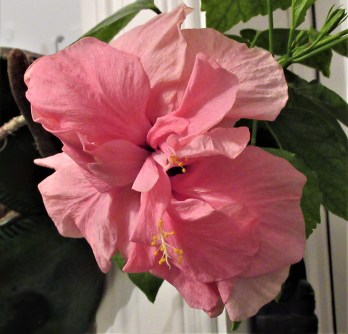
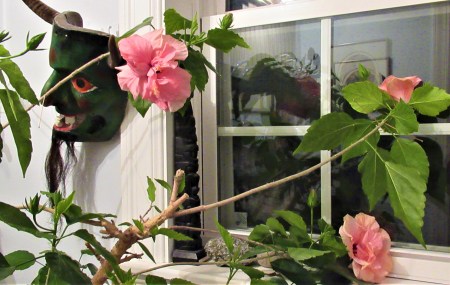
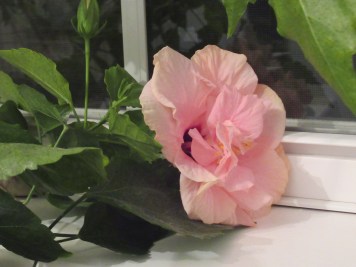
The hibiscus lives downstairs. We bought it years and years ago. A tiny plant in the florist’s shop, we brought it home. When we placed it here, by the window, we were horrified to see it was covered with tiny spider mites. Gradually, in spite of all our efforts, it lost its flowers and then, one by one, its leaves. After Clare had magicked the spider mites away, she nourished that one last leaf. “If that goes, the plant goes,” she told me. “It cannot survive without leaves.” It took time and daily care and attention, true TLC, but a second leaf appeared, and then a third. Now, each winter, it puts out flowers and fills the room with joy and light.

IMG_1776 (2).JPG

More important, in these dark times it fills us with hope and the knowledge that however bad things may appear to be, we can hang on, we can survive. We can be present in every second that we are given and that we can, and must, enjoy every moment to the full. Condemned to a certain death, our hibiscus survived to remind us of the miracle of life, for life is stronger than death, and hope is stronger than despair, and spring and summer are stronger than winter, even if it seems to be ‘our winter of discontent’.

IMG_1774


Self Isolation Day 21

IMG_0638

Self-Isolation Day 21
Bakhtin’s Chronotopos
Man’s dialog with his time and place

Chronos / time + Topos / space = chronotopos: the time and space within which we live.

Chronos: this morning, when I woke up, I moved back into my own time and space. But what is my time? It was 5:45 am when I awoke, so was that my time? I stayed in what the Spanish call the duermivela, that drowsing dream-world in which we all wander, half-conscious. I stayed there until I decided to get up at 7:45 am. Was that my time? Well, yes,  all of that is / was my time. But time extends further than that. Real time is static and only exists in this second as I type the s of second, but look how it has flowed or flown. So my time drifts backwards into a knowable and then an unknowable past. I knew my parents, and my grandparents. But I know nothing of their childhood, their war days (WWI and WWII), their courting, their marriages. Their time is time lost for me. Sure, I can invent it, renew it, recreate it … but it can never be mine. All I can possess is this Second when I preSS the S key, a Second that haS already flowed paSt me, flown and gone. The same with future time. It is there, stretching out before me, for how long, I do not know. It is not yet mine, and when I come to possess it I will only posses it, really possess for those precious Seconds when I inhale, or exhale, or press the S key. And now I have bewitched you, and your concept of time, and your keyboard will never be the same.

Topos / Place: so what is my place? When I awoke this morning, it was the kennel-cave of the bed in which I hibernate each night. Then it morphed into the bathroom where I dressed and prepared for the day. After that, I walked downstairs. Descending the stairs, a step at a time, feeling for the steps with my cane, as I do, I find that each step is my place. Luis de Góngora, one of my favorite Spanish poets, wrote, a long time ago that “Cada pie mal puesto es una caída, / cada caída es un precipicio”each footstep, badly placed, is a fall, / each fall is like tumbling down a precipice. Ipso facto, I must take care not to fall each time I place my foot on a stair, and each stair, therefore, is my concentrate of time, and this moment of time manufactures my space.

Then there is my breakfast place, my office place, my work place. Time spent in each of these spaces is a link backwards and forwards, past, present, and future all inexorably bound in each passing second that I live.

But there are other spaces, spaces in which time flows at a different rate in objective time (the thirty minutes you spend in the dentist’s chair) and subjective time (the hours and hours those thirty minutes take to pass as each second limps by, like a three legged tortoise with gout). hen there is creative time: and creative time, especially on the computer, leads us into a different space, a sort of hyper-space, in which we hover between this place (the place of the office and the house) and that place (the place in which we create our visions and dream our dreams). Lost in that creative hyper-space we drift in a timeless amniotic sea where all time is one and all places are one and we are the masters and mistresses of our own creative universe. Y aquí, as my good friend José Hierro once told me, el tiempo no tiene sentido / here time has no meaning.

Jane Tims wrote these words to me today. “The idea that some of our words will live on, on the page… I wonder where our WordPress and Facebook words will reside in 300 years? Will some antiquities student make the headlines having managed to upload the forgotten words of people who wrote about the days of the coronavirus?”

My reply: “These are very true words, Jane. It looks like you have gifted me with the topic of tomorrow’s blog! Thank you.”

Indeed, the online medium is so ephemeral and can be wiped out in seconds. Tweets can be erased, changed, and altered. Written words and written histories have also been erased and wiped out. In our brave new world, the truth changes from day to day with no vital record attached to it. Historians always say that the conquerors write history … and when they do so they usually destroy the writings of the conquered. I think of all those Mexican Codices, destroyed by the Spanish priests on their arrival in Mexico as the works of the Devil. We know so much from the surviving ones, for example the history of Ocho Venado, born in 1063 and sacrificed in 1113 in accordance with the fifty two year annual cycle. Only five Mixtec codices now survive, one, the Vindobonensis, still bears the scorch marks from when it was plucked from the flames that were meant to devour it. Man’s inhumanity to man. How much have we lost? How much are we losing? How much will we retain? And what is truth …?

As for us and our chances of survival, another good friend of mine, the poet and philosopher José María Valverde once wrote of nosotros, los pobres poetas de hoy, destinados a ser polvo seco de tesis doctoralwe poor poets of today, destined to become the dry dust of doctoral theses. In spite of all this, it is our fortune and our duty to exist within our time and our space, to live letter by letter, painfully tapped on the keyboard, and to engage in our dialog with our own time and space, for that my friends is all we have, the single instant of that one letter S.

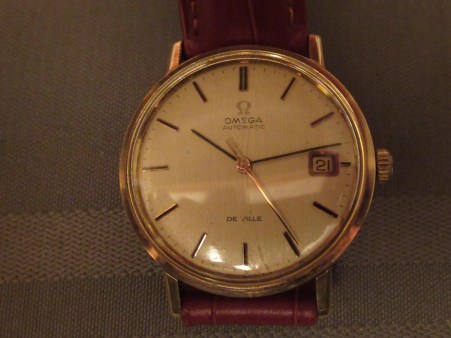
Comment: The watch in the photo belonged to my father. I wind it up and wear it on his birthday every year. It now measures my time, as it once measured his, and its place, at least once a year is on my wrist. Its function is to tell me the time. One day, it will do the same for my daughter, and then my granddaughter and they too will have their dialog with their own time and place.