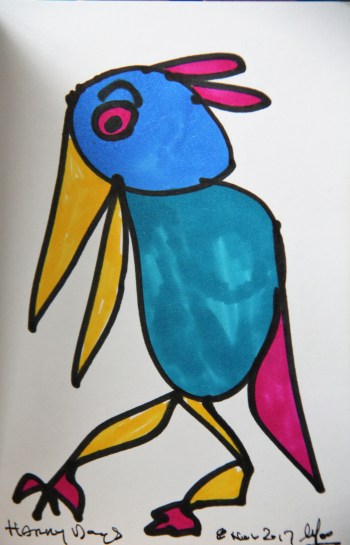
Revision
“We are not writers, we are re-writers.” I do not remember who said this, but it is extremely well said. We write, yes. But then we rewrite, sometimes obsessively, again and again. But how does that rewriting process take shape? Why do we rewrite? How do we rewrite? And what do we do when we re-write? These are all vital questions.
Mechanical revisions and rewrites
This, for me, is the search for typos, punctuation errors, mis-spellings, grammar corrections, that sort of thing. Yes, we can rely on a (reliable?) editor and a not so reliable spell-check, but the editor usually costs money. Or we can learn to do it ourselves, which is what I recommend very strongly.
Grammatical revisions and expression checks
These are usually a little more difficult to deal with. Do the verb tenses check out? Are subject and verb clearly delineated? Does the wording make sense, not just to us, but to the outside reader? A second pair of eyes is always useful at this point. Also, a sense of distance from the text is useful. Leave it a day (or two) and come back to it later when he creative rush has fled the system.
Structural revisions 1
Whenever we do a structural revision, it is essential to check that the revision ties in with the rest of the piece and that we maintain consistency throughout. A simple example: I decide, on page 77 of my novel, to change my main character’s name from Suzie to Winnie. Clearly, her name has to be consistent, both backwards (1-77) and forwards (77 onwards). While this is obvious, other changes, taste, color of hair, color of eyes, height, weight, tv program preference, may not be so easy to check and double-check. But it must be done.
Structural Revisions 2
This is where we must pay attention to the vision in the re-vision. We must ask the question, what does the poem / story / chapter / text want to say? What is it actually about? Often, in the flush of creation, we write words (actions, thoughts, emotions) on the page and they flow like water from a fountain. It’s a wonderful feeling. Later, during the re-vision process, we must ask ourselves, again, deep down, what do these words mean, what are they trying to say? This is actually a slightly different question from what am “I” trying to say?
The speaking / writing voice may want to say something, but the words (and characters and actions) themselves may want to say something else. Now we are faced with a dilemma: do we write what we want to say or do we follow the intricate word-path growing from what we have written? As a beginning writer, I did the former. As a more mature (and I hope, a slightly better writer) I now do the latter.
The result is often a piece that is radically different from it’s starting point. When you listen to what the story / poem / text / characters etc are telling you and when you follow words and characters, then structure changes, paragraphs switch places, thoughts move around, expressions change. We are no longer forcing words into our meanings, we let the meanings grow out of the words. This is particularly important in short story telling and the writing of poetry. It is vitally important to the novel where any inconsistency must have a relevance to the development of action, plot and character. It is also a totally different approach to the meaning of re-vision.
Summary
I realize many writers may have difficulty accepting these points. Those trained originally in the academic world, in particular, will respond negatively to the idea of the words ‘not being forced into the correct academic shape by the quasi-omnipotent academic mind’ aka Constable Thesis Editor. However, the more creative a writer is, the more that writer will respond to the creativity that lies within both the creator and the creation that has appeared on the page and, as writers, we must never lose sight of that creative act, for it is one of the most truly wonderful things that we can do.




 rogermoorepoet