Pibroch

img_0385img_0385

Pibroch

This morning, the bailiff, Mr. Kovdrop,
evicted the two gnomes from my lungs.

Landlord Bodie placed an ad on Kiji
then rented the free space in the left lung
to a tiny piper who took up residence by my heart.
This piper piped a pibroch, sad to play,
on his worn and wheezy bagpipes.

A pack of miniature wolves infiltrated
the midnight forest flourishing in my other lung.
When the pibroch played, they pointed their noses
at that spot in my throat where the full moon
would have been, if she could have broken in.
They mingled their howls with the bagpipes caterwaul
and I lay awake all night with my heart beating
arrhythmic suspicions on its blood red drum.

The drum played, the pibroch wailed, the wolves howled
and my body lay scarred by an absence of moon and stars.

Intertextuality: Wednesday Workshop

Intertextuality

Intertextuality is the dialog that takes place between texts or as Merriam-Webster explains it: “the complex interrelationship between a text and other texts taken as a basic to the creation or interpretation of the text.”

Often we write from an intertextual perspective when we respond to other writers and their thoughts and imagery. This is why, in the creative process, reading can be as important as writing. Reading expands our vocabulary. It reinforces some of our own opinions and challenges others. Without reading, we are lonely rocks in sunless seas.

To be creative, we need to be aware of what others are writing and how they view the world we inhabit. When we read creatively we read with an eye to improving our creativity and our structures. We look for new ideas, new images, new words, new ways of expressing our thoughts.

Often we think we are being original when in fact we are re-processing, just as I am now, the ideas of other people. Given the nature of modern media, we are not always aware of all the multiple sources of our material: telephone, twitter, blogs, radio, television, newspapers (less and less), books, chapbooks, magazines, e-sources, lectures, chat groups, Facebook, and general conversations with other people who are also unaware of their sources. Thus ideas abound, float in the air, circulate and recirculate, submerge and resurface, shift their shapes and colors.

As writers we dip into that enormous moving mass of current and past culture and creativity and we choose our narrative lines, our characters, our structures, our images, our metaphors. As Jean-Baptiste Poquelin, better known as Molière, once wrote, “Mes idées? Je les prends où je les trouve.” My ideas? I take them from wherever I find them.

Imitation is the best form of flattery. Indeed it is. We cannot, however, borrow wholesale and just copy. Miguel de Cervantes borrowed the first five chapters of Don Quixote (the first sortie) from an earlier entremés entitled El Entremés de los romances. For a very long time, critics thought that Cervantes was the author of both pieces: they are very similar. However, even a quick analysis also shows that they are very different. The language of the entremés is much older while the conversion of theatre into narrative distinguishes them at a very basic level. Cervantes borrowed: but in borrowing, he adapted, he changed, he took the old form and converted it into something new and completely original. Nevertheless, we are still aware of the origins of the great novel that has many other borrowings woven into its fabric.

So, we indulge in intertextuality when we engage in a dialog with other texts and ‘borrow’ from other authors. To be original, we have to take that borrowing and turn it into something entirely different, something that becomes a part of ourselves and no longer exists as a part of that other text. Intertextuality is not copying. If we take a text in its entirety, if we ‘copy’, then we must acknowledge the source. However, when we indulge in a dialog with a text, when we transform a text, when we are ourselves transformed by a text, then that is a totally different situation. Think of the links between Akira Kurosawa’s 1954 film, The Seven Samurai, and its offspring, the 1960 western entitled The Magnificent Seven. They are very similar in so many ways … and yet they are so very different.

While intertextuality refers more to the larger elements of character and narrative structure, it also exists at the level of metaphor and image. Sometimes, without thinking, we use metaphors that we have heard before. Often we like the sound of a group of words, shuffle them around, and come up with a new meaning for them, a new metaphoric reality. This too is intertextuality.

At its best it is a very valuable addition to our creative tool kit.

While on the topic of creativity, let us spare a thought for our needs for creative time and space. We cannot create when we lack the blessings of time and space. Creativity is greatly hindered when we go hungry and need to complete back-breaking work just to sustain our lives and feed our families. Our relative wealth and leisure is a blessing: without them, we would be floundering in the pre-industrial world of subsistence farming, working at manual labor from dawn to dusk.

Let us spare a thought too for those oral societies that existed when people could not write. Or those early societies in which only the few, the happy few, were educated to the level at which they could actually read and write.

Intertextuality is a blessing, not a curse. Use it wisely, use it well.

Comment: I would like to thank Meg Sorick who suggested that I expand an earlier conversation that we had on the topic of Intertextuality. If you have other literary topics that you would like me to investigate, please suggest them to me and I’ll see what I can do.


White Wolf

img_0407

White Wolf

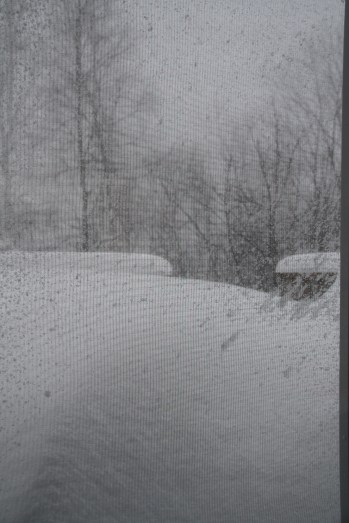
The white wolf of winter
exits her den-warmth and
shakes cold from her coat. Snow
flies, whitening the world.

She points her nose skywards,
clears her throat until
cold winds howl a chorus:
crystals, crunchy crisp.

We cower behind wood
walls, peer out through steamed
up glass. The white wolf draws
near. She huffs and she puffs.

The snow drifts climb higher,
blotting out the light. Night
falls, an all-embracing
Arctic night of endless

snow snakes slithering on
ice-bound, frost glass highways,
side roads and city streets.
Outside, in the street lights’

flicker, snow flies gather.
Thicker than summer moths,
they drop to the ground, form
ever-deepening drifts.

Our dreams become nightmares:
endless, sleepless nights, filled
with the white wolf’s winter
call for even more snow.

Footpaths

IMG_0220

Footpaths

Such a miracle:
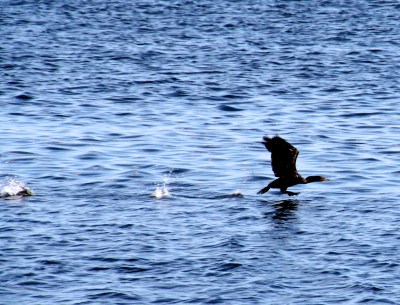
the first steps of the cormorant’s flight
taken over water.

That first step heavy,
the second lighter,
and the third scarcely a paint brush
pocking the waves.

The need to take flight
lies deep within me.

“Journeyman,”
the Spanish poet wrote,
“there are no footpaths
across life’s sea,
just a wake to show
the way you came.”

Like a ship at sea
or a seabird over the waves
I leave white water in my wake
to show where I have been.

Sun and Moon 11

IMG0076_1


Sun and Moon 11

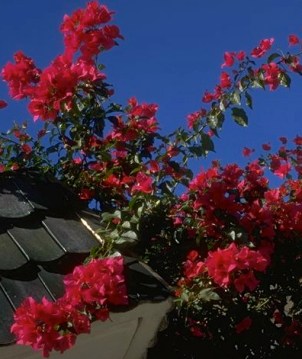
nochebuena[1] – a star spreading crimson fire
girasol – bright mirror to his golden face
colibri – hovering on a whirr of wings

am I less than a flower or a bird?

if my fingers could grow feathers…
if my face could sprout petals and leaves…

hollow bones whistle a sad song
the sailor lost at sea
the wanderer asleep in foreign soil

both far from home

[1] Nochebuena / Poinsettia; girasol / sunflower; colibri / humming bird.

Two Gnomes

img_0162

Two  Gnomes

Two small gnomes
have set up camp
in my lungs.

All night long
they play their squeeze
box, wheeze box concertinas,
never quite in unison.

Sometimes they stamp
their feet and dance.
Their wild night music
catches in my throat
and I cough up
unmusical songs
that splutter and choke.

An east wind blows
outside my window.
It whistles and groans
as it herds the stars
from left to right.

The stars chase
the westering moon.
The planets dance
to the rhythms
of the accordion music
playing in my chest.

Comment: Raw poem, raw sore throat. I wish this flu on nobody. And yes, I had my flu shot, so the flu bug probably mutated and created a version just for me. This is also an “I need sympathy poem” so, moan and groan … splutter and cough, breakfast’s ready and I’m off.

Sun and Moon 10

img_0165


Sun and Moon 10

Sun thrusts his fierce face
through night’s dark window
his voice booms out like a golden gong

“What have you done with my child?

curled and flaming his orange corona
head lucent with a coronet of radiance and fire
his eyes sweep night beneath day’s rug

New Moon pales and fades in a corner
Serpent escapes through a crack in the wall


Sun and Moon 9

img_0165

Sun and Moon 9

Old Woman walks within a cloister of stars
the heavens arched above her like a peacock’s tail

she chants the garland of her rosary
pearls she sheds from her cratered eyes
stringing them like counters across night’s throat

beauty she calls forth
beauty fresh and youth renewed
flushed with virgin pride
she steps into her jewelled boat
and sails across a sea of crystalline sky

she enfolds the cardinal’s wings in a cage of moonbeams
“Sing!” she whispers
she rocks a new born baby in her arms
the night is hushed with lullabies


Sun and Moon 8

img_0165


Sun and Moon 8

draped across night’s blackboard
stars and constellations all erased

my black angel bruised by the dark
the world’s feathered wonder reduced to shadow and ash

what dreams are these?

feathers against night’s window
an angel of darkness descending a steep stairway
tumbling through the night

who’s dreams are these?


Sun and Moon 7

img0137_1

Sun and Moon 7

Old Woman weaves a crinoline from stars
she plucks roses from the void and turns them into haloes
nochebuena blossoms on the perfume of her breath

the cardinal’s song is a crimson voice hidden among leaves
mercurial in the moonlight
Old Woman coils her relentless cage

one by one the cardinal’s tunes are imprisoned
a butterfly impaled on a moonbeam
the last note of his song