9:00 PM
Mass in the Courtyard
St. Cecilia’s Day

1
Straw
waiting in the manger
fine layers of sand
silted sorrow
strewn across the yard
eleven musicians
shaking the same traditional
salt and pepper tune
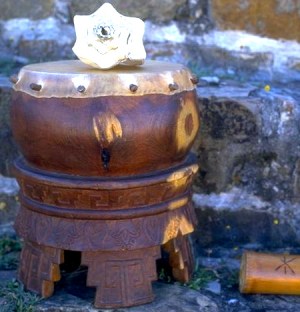
conch pipe and drum
over and over and over
again
2
a mass without mescal
a meal without wine
a day without sun
dark face of thunder
a stranger
pouring for a stranger
brown hands
offering grace
Tom Thumb sips
minuscule cups
thin paper crumbling
pinched between
finger and thumb
mescal’s fierce fire
burns a fiery ball
searing
throat and belly
3
candle light sputters
shadows on name-
forgotten half-
remembered faces
ancestors
long-buried
walk among shadows
fading flowers
gathering freshness
a cross
a crowded room
4
black blades
paper cuts
sharpened
blades of grass
thin
ribbons of blood
tongue slit open
ready for sacrifice
cactus pierces lips
mustache of thorns
5
stones under flowers
so heavy
a moonbeam,
slips its knife
between
a vow to forget
a memory that survives
living forever
6
shoe-less the people
standing on temple steps
noses ears lips
pierced
thorns
drawn from cactus
thrust through flesh
7
eyes of Tlaloc
Tecolote beaked and ready
the hole in the sacrificial frog
fills with fresh blood
round bundles wrapped
and tied with large knots
8
Christ
stripped from this flower
-ing cross and re-
placed by red roses
town’s beating heart
el corazón del pueblo
mass in the courtyard
St. Cecilia’s Day


Extraordinary imagery, Roger! There is just so much to think about and enjoy here.
LikeLiked by 1 person
Thanks, Tanya. The Catholic ritual inside the church, the pagan ritual outside on the church steps. To see a witch doctor light a small fire and burn copal (Oaxacan traditional incense) on the steps of the Christian temples fascinated me. Of course, many of the churches were built on the site of the destroyed temples using the old temple stones. This leads to the recognition of the holiness of place and the duality of religion: that the old and the new can be celebrated together. I hope a small piece of that mingling of religions comes through in the poems.
LikeLiked by 2 people
Absolutely. A lot of “church” rituals take influence from “pagan” rituals. They certainly are not found in the New Testament, but rather, were pulled from the traditions of various people groups over time. That makes this piece even more fascinating for me.
LikeLiked by 1 person
Roger, I almost always have to read these offering two and sometimes three times to see what lies behind the words. The words are one thing: they set the scene, but the pictures derived from those words and the way they are put together brings the story to life.
LikeLiked by 1 person
Thanks, John. I have tried to knit the metaphors together in such a way that a pictorial narrative emerges from them. Since you are (re-)creating those pictures in your own mind, an inter-active relationship develops: writer > words/metaphors/pictures > reader. This means that the narrative you read is not necessarily the one I intended you to read as your pictures, although prompted by me, are not necessarily mine. The more intense the pictures you get and the more meaningful, the better and the stronger the poetry.
LikeLike