Full House

IMG_1173 (3).JPG

Full House

Full house: echoing footsteps, shadows,
everywhere, a litter of toys, crayons,
colored pages, jigsaw puzzles, Barbie
and Ken found at the back of a shelf.

Memories: pinned to the fridge, found
in strange places, an almond on my chair,
a drawing in my notebook, a message,
unintelligible, scrawled on shopping lists.

That peremptory voice calls my name
and I drag myself from sleep, only to know
it was a dream, netted up from slumber’s
dark midnight sea. I drift off again and

see her again, opening the bedroom door,
calling, calling, ever present in voice,
song, and dervish dance, such energy,
round and round, bouncing on my bed,

rolling the exercise ball across the floor,
oblivious to danger, harm, the perils of
unbalancing, stumbling, slipping, falling,
aware of the need for sticking plaster

comforts littering thighs, knees, calves,
feet arms, elbows, where ever instant
attention calls for instant, urgent treatment.
I will always remember the ambushes

that rolled off the tongue, phrases way
beyond the skills of a four-year old. What
if her mother is a lawyer, the youngster
shouldn’t control that sort of language.

She remembered so much from her last
visit. We thought she would have forgotten
us, but no, she remembered where almost
everything was hidden, out of sight but

no longer out of reach. Just a little bit taller,
stronger, more determined, faster, so fast
and loud we could not keep up. This morning
I awoke to the silence of an empty house.

Ghosts

IMG_1055 (2)

Ghosts

My grandfather would wheeze, then cough, as he leaned on the old black dresser in the Welsh kitchen with its vast, cast iron fireplace. “As black as the hobs of hell,” he would say, and “as warm as our kitchen.” It was full of nooks and crannies where pasties and pies could stay warm, soup cauldrons could hang from iron chains, and copper kettles could whistle wild tunes and call us all to endless cups of tea. Sergeant-major tea: so strong and filled with so much sugar that a tea-spoon could stand upright and never fall over. Gassed in the First World War, my grandfather was always out of breath and each time he coughed, he brought up a tiny part of his lungs. “One day,” he announced between wheezes, “there’ll be nothing left.”
Twice a day, my grandfather would roll up the newspaper and brandish it like a conductor’s baton. The first time would be when I came home from school and it was time to do my homework. The second time would be after supper when it was time for me to go to bed. Each time he rolled up that newspaper, he would tap it gently on the dresser to get my attention, and then he would speak those famous words: “Let battle commence.” I would fight to escape to the street to play with my friends. I would fight to stay on my feet and I never, never wanted to go to bed. I hated to be entrenched alone, upstairs, in the cold shadows of that ghostly no-boys-land where I could hear mice and rats scuffling behind the dugout walls and smell the sour smells of old age and illness that stalked my dreams.
“Up the wooden hill to Bedfordshire,” my grandfather would sing, conducting with his baton and pointing to the stairs. I was never afraid of him. He was dark, strong, tall, and very gentle, a great man in his own right, one of those tall men who would always stoop to help a little child. If I was too troublesome, he would start to cough. And if he started to cough, the pink phlegm would come and he’d spit it into the red and blue polka-dot handkerchief he always carried. The pink phlegm caused consternation and in the ensuing panic, I would bolt for the stairs, go up to my room, undress, put on my pajamas, and bury myself in the vast double bed I shared with my grandmother. My grandfather’s bed was in the middle room downstairs. I didn’t realize then, as I do now, that he could no longer climb those stairs up which I scuttled.
After a while, I left of my grandfather’s house and went back to live with my father. One day, my grandfather, as he prophesied, coughed too much and that was the end of him. After the funeral, my father took me back to see my grandmother. Aunties and uncles, cousins, family friends that I didn’t know, neighbors known and unknown, spilled over the house in an invasion of tears and grief. After the friends had gone, my father and I decided to leave and the family gathered on the doorstep to wave us goodbye. I waved back to them all. “Goodbye,” I shouted. “Goodbye aunties, goodbye uncles, goodbye grandmother.” I paused. My grandfather stood there waving to me. “Look: there he is. I knew he couldn’t have gone.” I pointed and waved. “Goodbye grandfather!”
“Don’t be stupid. He’s not there,” my father said. “He’s dead.”
“I can see him,” I said. “He’s there. I can see him.”
“He’s not there. He’s dead.” Tears ran down my father’s face.
Sitting here, writing these words, I can still  see my grandfather, standing on that doorstep, waving goodbye. And I can still feel my father’s long dead, shadowy hands reach down, grab me by the shoulders and shake me, shake me, shake me, until I too am crying and the ghosts of my milk teeth are again rattling in my head.


IMG_1063 (2).JPG


Things

18581930_1306791786107970_4016640231053970709_n-1

Things I carry with me

            That old black cast-iron stove, wood-fired, that baked the best ever breads and cakes and warmed the bungalow on cold, summer mornings. The Welsh dresser with its age-blackened rails that displayed the plates, and cups, and saucers. The old tin cans that ferried the water from the one tap located at the end of the field. Full and wholesome, its weight still weighs me down as I carry it in my dreams. The Elsan toilet from the shed by the hedge and the shovels that appeared, every so often, as if by magic, as my uncle braved the evening shadows to dig a hole on the opposite side of the field, as far from the bungalow as possible.

            The outhouse at the end of the garden. The steps down to the coal cellar where they went when the sirens sounded, to sleep in the make-shift air raid shelter, along with the rats and mice that scurried from the candles. The corrugated iron work shop in the garden where my uncle built his model ships, the Half-Penny Galleon and the Nonesuch. The broken razor blades I used to carve my own planes from Keil Kraft Kits, Hurricanes and Spitfires, an SE5, and once, a Bristol Bulldog. Twisted and warped, they winged their ways into nobody’s skies, though once we built a paper kite that flew far away in a powerful wind and got tangled in a tree. The greenhouse from which I stole countless tomatoes, red and green. Kilvey Hill towering above the window ledge where the little ones sat when there were more guests than chairs in the kitchen. The old bombed buildings across the street. The bullet holes in the front of the house where the Messerschmidt strafed us.

            The old men spitting up coal dust from shrivelled lungs. The widows who took in lodgers and overnight travelers. The BRS lorries, parked overnight, that littered the street. The steep climb upwards into those lorries. The burrowing under dirty tarpaulins to explore the heavy loads, and many other things. The untouchable, forbidden drawer where the rent money waited for the rent collector’s visit. The old lady, five houses down who, when the shops were shut, sold warm Dandelion & Burdock and Orange pop for an extra penny a bottle.  The vicious, snub-faced Pekinese that yapped fierce defiance from the fortress of her lap. The unemployed soccer referee who on Saturdays walked five miles to the match and five miles back just to save the bus fare, his only financial reward. My father’s shadowy childhood. His first pair of shoes, bought at five years old, so he wouldn’t go barefoot to school.

            Wet cement molded onto the garden wall, then filled with empty bottles to be smashed when the cement set solid. The coal shed where the coal man delivered the coal: cobbledy-cobbledy, down the hole. The outside toilet with its nails and squares torn from yesterday’s newspaper. The lamp-lighter who lit the lamps every evening as the sun went down. The arrival of electricity. The old blackout curtains that shut in the light and shut out the night. The hand rolled fabric sausage that lay on the floor by the door and kept the heat of the coal fire in the kitchen. The kitchen itself with its great wooden chair drawn up by the fire. That chair: the only material possession I still have from that distant past.

Alphabet

Chaos

Alphabet

So everything is now as yellow as the yellow alphabet.
Bellow below cello, above fellow, saying “Hello,” jello,
always yellow, nobody eats orange jello, mellow, sello
or sellotape, tellow, as in “Tell old salt …” pronounced
“tellow salt” … so many verbal adventures, scales falling
from young eyes, and old ones as wello,
and the melody of music in tone,
on tongue, wonder in the eyes of everyone,
golden yellow, hair high-lighted in the early morning sun.

Commentary:

An endless jumble of words, all joined together rhythmically and linking one thought to another in a succession of jumps that wander from here to there and back again. Team tag: each one of us chosen for a moment, teased, played with, abandoned, picked up again, delight in each adventure.
My party tricks are e-cards, typing on the computer, her name, my name, the alphabet, her mother’ name, another name, and then another. Coloring is my trick too, and finding empty pages that can be followed with color and scrawl and everything that turns the blank page from a wilderness to a new world covered in endless manufactures of meaningful, meaningless scratches.
Joy in small things.  Albert Camus’s theory of the absurd present in almost every moment of the day. Moments that stretch into eternities, eternities seen in a grain of sand. Dw i mwynhau … what do I enjoy? These timeless moments, these glimpses back into my family’s past, Dych chi mind am dro? … these walks into my DNA’s future. Nach ydw: no, I will not be here. But tiny segments of my existence, words and phrases of my Welsh grandfather’s DNA and language, they will be here. Recycled. Again and again. Somehow. Somewhere. Forever. What more could I ask?

Ghost Train

IMG_0251

Ghost Train

Old fair grounds, I remember them well, the coconut shy, the dodgems, the swing boats, what the butler saw, the bearded lady, the tunnel of love, the ghost train … with its skeleton that loomed out of the darkness, the spider webs that draped themselves over your face unless you ducked, the witch on her broomstick, cackling, the flashing lights, the eerie voices,  the laughter, the screams …

… I arrived early so I could sit in my usual place. I watched the men enter, tapping hesitant, unsteady, slow, leaning heavily on sticks. I saw the women bald and beautiful , naked skulls hidden beneath hats and head scarves. Haunted looks lurked behind staring, wide-open eyes as the outpatients waited for something to leap out and frighten them, not spider webs and skeletons,  but the ghastly visions of tubes, pills, chemo, needles, all the paraphernalia that tortured them first time round.

The annual check-up seems so much easier. Blood tests, screenings, fervent hopes that the devil in the detail, horned, fork-tongued, cloven hoofed, red tailed, hasn’t been hiding, like a wayward ghost, in the small print of blood tests, scans, urine samples, all too ready to break free, leap out and beat us once again into submission.

The ghost train: has that cancer really gone or could it come back, condemning us once more to hospice or ward, to chemo and radiation, to the knife, or to other things more radical?

I sniff the double hospital smells of despair and ill-health, of hope and cures for all those ills, and I am there again, arms folded across my chest, lying motionless on that moving bed of bleached white sheets, heading slowly into that tunnel that smells of polished steel, where machinery coughs and starts and stops as flashing lights whirl their cadences of kill or cure above my troubled head.

Tunnel of love or ghost train? I guess I’ll soon find out.

IMG_0265

Crow’s Feet


img_0146

Crow’s Feet

So many meanings, so many possibilities. I remember them round my grandmother’s eyes, wrinkles, laughter lines, crow’s feet. And then there are the real crows, sauntering, swaggering, two roadside hops, and take off. So bold, that sometimes they will stand there and defy you and your car, refusing to fly, but always leaving their footprints, crows’ feet in the snow.

We have a family of seven. They own our garden. Visit us every day. Check us out. Nothing like the whistle of the wind in their pinions as they sweep low over our roof, summer and winter, all year round. We belong to them, not them to us.

IMG_0147

Crows: such shadows, hovering  in our minds, casting their shadows over our lives and our deaths, for ‘the coward dies a thousand deaths, the hero dies but one’ and down, deep down, we are all cowards, in one way or another, and the crows await each one of our thousand deaths.

Bullfight

f1000018.jpg

Bullfight

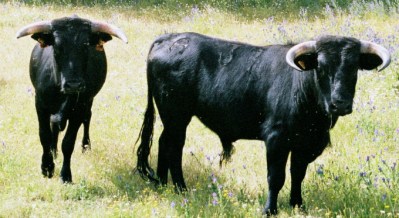
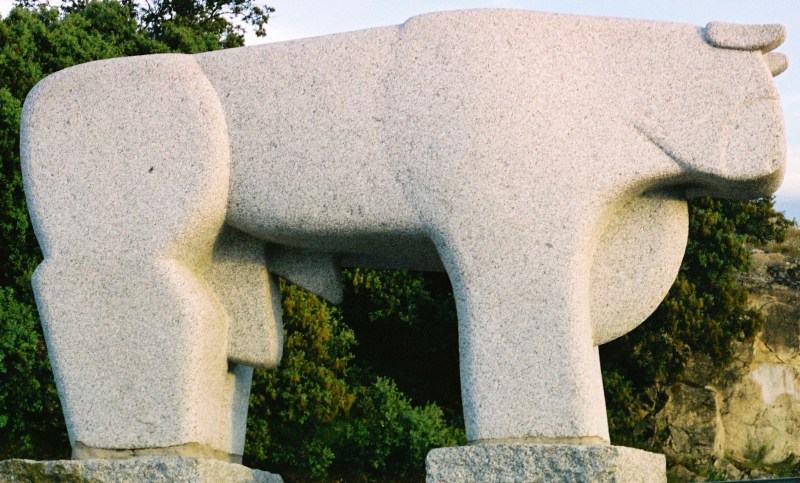
The above photo shows novillos, young bulls, on a bull farm in Salamanca, Spain, bred for the bull ring. They are tested in the farm’s private bull ring and the best and bravest are saved for the bull ring. A series of computer programs tests them at six month intervals to see if they are bull ring material.

Spain is divided on bull fighting with Catalonia banning the bullfight while Castilla and Andalusia are ardently in favor of the three, thousand year old tradition. The Spanish flag, in Castille, comes with a fighting bull, in the centre, replacing the coat of arms.

Many opinions exist abut bullfighting, bull running, and the whole tradition of blood sports. I will not state my position. But I will leave you with a piece of flash fiction, perhaps a short story. Each of you, if you wish, may play the game, click on the Bullfighting link, and decide for yourselves where you, and I, stand. Warning: not for the faint of heart … go on, be brave, remember the toros bravos who have perished in the ring.

F1040014.jpg

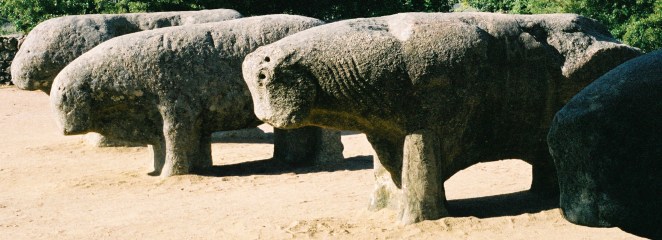
Los Toros de Guisando, mentioned in the Quixote, prehistoric stone bulls, verracos, Celtic carvings from the Province of Avila, Spain. The Roman legions carved their names into these stone bulls. Below, a modern bull, also from the province of Avila. I must, at this point, mention my friend Juanra, who took me to see these monuments and encouraged my interest in his wonderful province. Juanra, te lo agradezco, no sabes cuanto.

F1040010.jpg


Bottle House 2


IMG_0257

The Bottle House 2

Here, as promised, is the bottle house 2. This time we visit the chapel, and what a lovely spot it is, as you will see, if you are brave, play the game, and click on the next link to the bottle house 2 The last time I visited, rain was falling, not heavy rain, but a light sprinkle that set the skies free and watered gardens and flowers. I should have some photos of the gardens too. If I have, I will post them. I promise!

IMG_0265.JPG

Breakdown

Breakdown.png

Commentary:

This was the first time I had been to the baths in Oaxaca. These came highly praised  by family and close friends and the combination of mist, steam, and herbs, combined to loosen the body and soothe the soul. The Mixtec baths and massage are very highly regarded, incidentally, and one can go to the equivalent of sweat lodges in order to enjoy a day at an ancient historic spa. The masseur himself was incredible. I lay face down initially. When he want to turn me over, he got a bucket of cold water, threw it over me and flipped me in mid-air as I reacted to the ice cold water. Hard to believe now. I also remember having to buy a small bar of paper-wrapped soap. And locking my valuables up in a little chest to which only he had the key. These baths feature in my novel, People of the Mist. Unpublished, alas, but I may get around to revising it one day. All I need is some encouragement!


Beaver Pond

IMG_0072.JPG

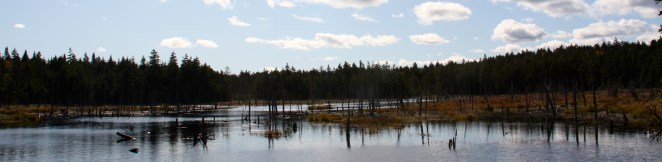
The Beaver Pond at Mactaquac

Oh-oh, wrong Beaver Pond. That’s the Beaver Pond in Fundy National Park. Naughty, naughty! So, if you want to see the REAL Beaver Pond at Mactaquac, you’ll have to click on one of the links and see where it leads. “Oh what a tangled web we weave, when first we practice to deceive” … except this isn’t the first time I have made a mistake, and no, I wasn’t trying to deceive anyone. This is fun, though. I’ll be interested to see what you think of this little sequence. Let me know.