El Brujo

cropped-dsc02710-1.jpg

El Brujo (Solace 5 & 6)

5

I light the gas stove and run water from the tap into the coffee pot. Some things, especially the stupid ones,  are so automatic.  I am in a dream state, still half asleep, not thinking, half-dreaming, still influenced by the mescal. I turn off the tap and open the fridge. I take out a plastic bottle of cold water and pour into an open saucepan that I place on the gas.

Thoughts tumble through my head, night thoughts, crazy thoughts, hallucinations fuelled by last night’s mescal.

… the man in the moon now wears my father’s face … he perches like a scarecrow on the dead stick of a returning rocket … and the Mexicans  launched a rabbit to the moon before the Americans ever went there, well, a rabbit to the sun anyway, and he put it out and caused the moon to be formed, moon-raker, moon-maker, jack rabbit, rabbit pie in the sky … and the second sun sizzling, then put out, staring now, like a blinded eye … death’s face simmering in the stew-pot moon and everyone doomed as the white rabbit scuttles down his narrow escape tube and back into his burrow … high flames flicker on zopilote’s wings and bring an end to darkness … Zopilote, the Trickster, the bringer and bearer of the sun’s early morning fire … Lucifer, the morning star, the bearer of light, a new star rising among star-crossed generations … red scars of tulips, casting shadows on white-washed wall, twisting shadows, shadows dancing as they struggle to take shape … three women, dancing in the limelight, and the old man, standing there, wringing his hands, then vanishing, a soap bubble, borne away on the wind that catches children’s balloons and floats them away, up into the air … to where the returning warriors play their hummingbird games around the sun, returned from their death like all the dead, here in Oaxaca, are said to return … and the people placing food and drink on altars in their homes for their dearest beloveds to return once a year … down the moonlight’s marigold path, to feast and be fêted by their families … all the dead … returned …

“All the dead …?”

But this is nonsense: I can’t believe I saw my father last night. I couldn’t have seen him. I buried him a long time ago, a long way away. What did I see then, a living man, a man who looked like him? But he was wearing the suit in which I buried him. It had to be my dad.

I just don’t understand. There must be someone I can ask, a priest, an elder, someone who knows all about the local customs and what happens here. I can’t believe it was him. Do things like that happen? I’ve got to find out, I’ve got to know. There’s so much I want to know.

6

A solitary bell that hangs in the tower of the church of St. James.  Every day, an altar boy climbs the tower steps, with a hammer in his hand, kneels beside the bell, and beats it. The bell lurches into life and lets out the cry of a struck anvil in a hot forge where the farrier tends the horse’s hoofs. Six times the hammer strikes to warn the parishioners to hurry along, because morning mass is imminent.

A sudden urge to go to mass sweeps through me. I dress quickly, hurry down to the courtyard, and meet Mario, the handyman.

Buenos días, señor.”

Buenos días, Mario.”

“It’s peeg day, señor.”

“So it is. I won’t forget,” I slip out of the front gate and hurry down the street.

Outside the church door, two young people squat on the ground in front of El Brujo, the local witchdoctor. The young man, eyes closed, threads a cactus thorn through his lips. Dark blood oozes and El Brujo catches it in a little earthenware bowl. Beside him the young girl carries a flower-filled basket on her head. The aroma of the incense El Brujo burns on his fire tickles my nostrils.

            … light are the flowers … heavy cruel stones lie beneath them and weigh the basket down … twelve girls in floral dresses stand outside the church of the Soledad… they pick up their baskets … place them on their heads … hand on hip, one arm swinging free they wait for the high priest to bless them … then they start their pilgrimage … twelve girls … twelve churches … each will leave a floral tribute in a church … the twelfth … the petitioner … will continue to the cathedral .. alone … the petitioner frames a question as she waits for the blessing … will her mother live? … and her lips whisper an answer … please let my mother live …perhaps …  if   her brother sheds enough blood … if her daughter carries a heavy enough weight for long enough …

            El Brujo looks at me and snaps his fingers. I shake my head and my dream flees. El Brujo closes his eyes and hums a rhythmic chant. I walk past the group and enter the church.

Codex

Ay Ay Ayeres

Codex (Solace 3 & 4)

3
Down below, in the courtyard, the handy man wakes me as he tumble dries a TV ad in the washing machine of his song sparrow throat. He gargles with gravel and churns stony lyrics skywards until they grate at my bedroom window and drag me from my dreams.

My ears fill up with a crackle and roar. Wave after wave of sunlight breaks over the azotea. Blind with music, deaf with light, I am awash in the sea-surge rhythm of this surfacing sun. My dreams break up like biscuits and between my fingers I feel a sandstorm of crumbs.

Morning blows fresh colours into each corner of my waking mind. An early breeze shakes cobwebs and dust from my brain. New visions crawl out from the vellum codex I left open last night on my table. Red and green gods wearing black and white masks crawl through spaces still alive in my mind. Sometimes they move when the eye doesn’t watch them, but when I concentrate, they freeze in intimate poses. I link them with lines and arrows and vow that my life will never again be scarred by their secretive smiles.

The red glare of the day’s first rocket climbs its ladder of sky to smash at the gods’ front door. A second rocket draws me back to daylight. Awake, I lie there, counting. A third explosion is much closer. The fourth rocket surges skywards and the fifth and sixth rockets are two fiery giants exploding above my apartment. I pull back the bed clothes and swing my legs over the side of the bed. My day has begun.

4

The codex lies open on the dining room table I use as a desk. I scan the interpretation I made late last night, transferring the visual to verbal.

“Two breasts: one green, one yellow, symbolic of the hill where the church stands; the church itself bi-coloured, strong stone walls, a spire. A large red heart symbolic of the love we bear for you, our masters. Two feet walking the path of enlightenment you opened before us are accompanied by two hands pointing the way. The feet below the heart; the hands above the heart, like wings; and the heart becomes the body of the new place you have built for us. And in the heart is our sacred symbol: the Earthquake, a sign of leadership and power used only by those of Royal Stature and the Noblest Blood. Attached to the heart is the Numeral One which means Lord of the Earthquake; for you are Number One in our Hearts. Attached to the heart is a speech scroll showing felicitous words of praise; below it is the sacred earthworm, and beneath that the serpent head of wisdom and the flint knife promising strength through sacrifice.

But be wary: for our symbols are double-edged! The colors of the hill are divided, as the hill is divided, showing strife and division. The church is on top of the hill, for the symbol has conquered the people, and the people are starving, subject, and destroyed. The feet are pointing in opposite directions, for the people are stalled. They have no forward movement, nor will of their own, for they are conquered by the sword and not by love. And the hands are pointing in opposite directions; for the right hand knows not what the left hand is doing. And the hands are reversed showing anguish and distress. The sign of the heart is the sign of the disembodied heart, torn from the heaving chest of the vanquished and thrown to the dogs. The sign of the earthquake is also the sign of movement. And that movement is a bowel movement. And one movement in the middle of the sacrificed heart is the victor excreting on the vanquished and treating them with scorn and contempt. The scroll protrudes from the nether part and says that the victors are speaking words of excrement, that verbal diarrhoea issues from their lips. And the serpent has no feathers; it cannot fly. It is as a snake treacherous and bitter, crawling on the ground. The head of the serpent is two tongued and tells of treachery and of deceit. The flint is attached to a heart; it speaks of the heart that is as hard as flint, knowing no mercy. And at the end that heart will receive no mercy in its turn.”

Figures on the codex page take on a fresh life. They walk and strut, nod their heads, move their limbs. The sun climbs in the sky. Shadows shorten. Footsteps march steadily across the page from right to left. I blow a kiss to the piggy-back bride and she waves back.

Too much, too early. I reach for the remains of last night’s bottle of mescal and gulp them down. Order is restored. The cartoon figures go back to sleep. Normality, whatever that may be, returns.

Dream World


img0073_1


Dream World (Solace 2)

2

… dream worlds circle outside my bedroom window … starry sky … two full moons floating, one real, one mirrored in the glass …  inside the bedroom, tulips inscribe red gashes on white-washed walls … sharp fingernails scrape across paint, blood red shadows trickle down to the floor …

… above the azotea, the temples of Monte Albán string out their sheets on the sky’s washing-line, glowing in the moonlight … against a background of granite and stucco, trenchant shadows sculpt dancers into grotesque, pipe-wire shapes as they struggle to escape their carved imprisonment …

… priests in long black robes gape at the night sky. From their sanctuary in the observatory, they plot how they will persuade the people to believe the future they will foretell as night’s giant finger herds the wild-cat stars …

… three young women walk at an angle up the temple steps … when they reach the top, a moonbeam holds them in its spotlight and they wax with the full moon’s beauty …  the doorway to an unclosed grave opens its crocodile jaws and the three women descend the temple steps, ageing as they walk … at the temple’s foot, they enter the tomb’s dark mouth … an old man in a faded grey suit walks behind them … the grave swallows them all, burying them in the hidden depths beneath the mound …

… dreams back themselves into a cul-de-sac, a wilderness of harsh black scars … an ancient Aztec god catches Rabbit by his ears and throws him against the second sun that sizzles in the sky … his sharp teeth burrow, burying themselves deep in the sun-fire’s light … the second sun loses its glow and turns into the moon’s cold stone …  the rabbit’s skull simmers in the new moon’s dwindling pool …

With a clicking of claws, knitting needles come together to pluck me outwards from my dreams and upwards towards death’s golden guillotine that floats in the sky. The moon sharpens its knife edge on the keening wind and sets my blood tingling. I want to be free, free from those nightmares, those nocturnal visions that rise up from the past and stalk me as I lie in bed.

Drowsing, I long for the alarm clock to shuffle its pack of sleepless hours and to waken me with its piercing call as it tears me from these winding sheets, these grave clothes in which I lie. I wait for the sun to shine into my window.

Hair of the Dog

IMG_0040 (3)

Hair of the Dog

I awoke to the dog’s tongue licking my hand. When I moved, he jumped off the bed, ran to the door, turned and barked. The hall clock chimed six times, early for me to get up, but I did because I needed a pee. The dog followed me into the bathroom, whimpering. Street noises seemed louder than usual. The dog started barking again and a voice called out from the hall below.
“Anyone home?”
The dog clattered down the stairs woofing wildly. Still in my pajamas, I looked over the balustrade to see the milkman standing below.
“Hello,” he said. “The door was open and I just dropped in to see if everything was all right. Where’s your mother?”
“In bed, asleep,” I dug with my index finger at the sleepy crackling gathered in the corner of my eye.
“Not if I know her,” the milkman said. “She’s run off again and taken a bottle with her. You’d better get dressed.”
I scowled at the milkman, went back upstairs, and looked in my mother’s bedroom. Her red flannel nightie lay in a heap on the floor by the unmade bed, with its rumpled sheets and pillows all higgledy-piggledy. The bed felt cold beneath my fingertips and the clothes she had worn the day before had gone.
“I’ll get dressed,” I shouted. “I’ll just be a moment.”
“Sure,” the reply floated up the staircase.
“You’re right,” I said to the milkman as I met him at the bottom of the stairs. “She’s gone.” The first rays of sunshine touched the stained-glass windows above the door, and fragmented colors danced with dust motes, turning the milkman’s white uniform into a harlequin suit of lights.
“Not the first time she’s gone AWOL,” the milkman winked at me.  “She’s got quite the reputation round here. You’d better go out and find her. I bet she’s in the park with the others. That’s where she goes when the mood takes her. I see her sometimes when I’m in the milk float. I’d take the dog, if I were you. He’ll find her. He usually does.”
The dog whimpered as we got to the end of the drive. I checked my watch: 6:30 AM. The early sun slowly sliced through the morning’s damp creating rainbows in the mist. I shivered.  The milkman waggled his fingers in a silent good-bye and his electric milk float hummed then lurched out into the street with a clinking of bottles.

I stood at the roundabout at the corner and didn’t know which way to go.
“Find mum,” I said and patted the dog’s head. He wagged his tail, put his nose down, turned right, and set off down the main road towards the city center.
Shadows danced on the lower ironwork of the locked park gates. A child’s swing creaked gently in the breeze. The dog sniffed at the gates, lifted his leg on them, gave them a generous squirt, then put down his nose and tugged at the leash.
I followed the dog as he went past the gates and pulled me towards a hole in the hedge, just large enough to squeeze through. The dog whined with excitement and pawed at the gap. I followed pushing aside the bushes.
The dog whined again and tugged me towards a sort of mound that lay on the nearest park bench. Newspapers offered scant warmth to the body that they covered. A hand hung down and the dog licked it frantically. I touched that hand and the dog’s lick joined us in an unholy matrimony. Beside the sleeping figure on the bench, an inch or two of what appeared to be whisky huddled at the bottom of a forty-ounce bottle. Other empty bottles lay on the wet grass, like spent cartridges, some of them pointing at the woman’s head.
Shuffling feet had worn down the grass where the woman lay. I saw traces of blood on bandages and empty syringes. Some needles had been wiped on the pair of torn pink panties that peeped out of the grass.
The dog continued licking at the woman’s hand then stopped, pointed his nose at the sky and let out a single, piercing howl.
I shook my mother’s shoulder.
“Mum, Mum,” I called, but she didn’t move. She was locked in a land where I dared not follow her. I took out my cell phone and called the police.

They arrived with a park attendant who opened the gates and let their car in. They took one look at my mum and called for an ambulance. When it got there, the ambulance men examined my mum, said she was alive, put her on a stretcher, and carried her to the ambulance. I told them I wanted to accompany my mum to the hospital.
“Not with that dog, you don’t,” the driver replied. He got in, started the engine, turned on the siren, and pulled away.

I took the dog home, called for a taxi, and it took me to the hospital. When I got to the room in which they had caged her, she was unconscious. She never woke up.
I buried what was left of my mum ten days later, after the autopsy.


Free

IMG_0624 (3).JPG

Free
Flash Fiction

            I am as free as my father was free. He was free to walk on his walker, as far as he could go down the street. Free to walk in the wind and the rain. Free to sit on his neighbor’s wall when his legs and back got tired. Free to sit there, although it was raining, until he had recovered his strength and energy. Free to get soaked so badly that he caught a cold. And the cold was free to turn into bronchitis and the bronchitis was free to turn into pneumonia and the pneumonia was free to perform its assassin’s work as it tried to kill him. But my father was still free and strong enough to call the doctor and the doctor was free enough to call at the house and visit my father and write him a prescription for an anti-biotic that would free his body from the pneumonia that was free to leave when its time was up and it felt ready to go. Pneumonia, the old man’s friend, they used to call it, sitting there, in my father’s lungs, muttering away to him, day after day, louder at night, and my father slowly getting stronger and the pneumonia growing weaker until one day it left and freed my father from his immediate ills. Then my father was free to get up or to stay in bed. Being a free man, he chose to stay in bed all day and to listen to the radio and to read a book and when he got bored with reading he just lay there and counted the lines on the wall “one, two, three…” and “one hundred and seventy five” he told me one day when I was free to visit him, “though I have lost count once or twice and have had to start again from the very beginning. And the sun gets up at 7:03, and strikes the third line at 7:53 … and goes around the wall 33 lines a minute; and leaves that third line from the right at a 3:15 …” And there he stayed, day after day. But he was free. And sometimes the home help came and sometimes she didn’t, for she too was as free as the birds in the garden. And sometimes she remembered to buy him some food and sometimes she didn’t. And she was free to come and go, free to remember or forget. And my father was free to mumble or complain or grumble, though he rarely did. And he was free to eat, so long as there was food in the house. But I went there I often saw that the cupboard was bare and my father had neither milk, nor eggs, nor bread nor cereal, nor tea nor butter. And all those people, those acquaintances, those friends, they too were as free as the sea-gulls in the sky. But to find the time to set my father free from the hunger and thirst he seemed predestined to freely suffer, they were never free enough for that, not even at Christmas.
Neither was I.

Doing This for Mom

img_0161

Doing This For Mom

“I have to go pee,” Cindy got off the long-distance bus when it pulled into the lay-by on the way to Heathrow Airport airport, broke away from her mother and her grandfather, and ran to the washroom.

“What’s up with her, Tiggy?”

“I don’t know, dad. She just wants to go pee, I guess.”

“You shouldn’t let her go in there alone. Go in with her. Go on. But wait, look what I’ve got for you,” he pulled a wad of fifty pound bills out of his pocket, licked his thumb, and slowly counted them. “Eighteen, nineteen, twenty. Here: one thousand pound. Cash.”

“That’s wonderful dad. You’re very generous, but I can’t take our money. Put it back in your pocket.”

“I know things aren’t going that well for you, now you’re on your own. Take the money.” He waved the cash at Tiggy, but she pushed his hand away.

“No dad. I can’t take your money. You need it more than we do. We’ll survive.”

“Not on your own, you won’t. Not without help. Here, take it.”

“Listen, dad: I’ve seen how you are living. Hand to mouth. Why don’t you sell the car? You know you can’t drive anymore. You’ll save on the insurance. Sell now, while it’s still working. Throw in a thousand pound sterling and you can have taxis galore for the next couple of years. You can shop when you want. You won’t have to rely on unreliable friends …” Tiggy watched a tear squeeze out of her father’s left eye and slide down his cheek. “Don’t cry, dad. You know I’m right.”

“I’m not crying,” he wiped his cheek with the back of his hand. “Some dust blew into my eye. Look, there’s Cindy. Take the money for Cindy. Please. And tell her to sit beside me on the bus.”

“I’ll ask her if she wants to sit beside you,” Tiggy hesitated. “But I won’t tell her. You can’t buy her affection with money, dad. It takes more than cash to rebuild a broken family. I thought you knew that.”

“Hold this,” Tiggy’s dad thrust the money at her. “I’ve got to go to the washroom. I don’t want to go in there carrying this,” leaning heavily on his stick, he limped towards Cindy as she emerged from the rest area, but she skipped quickly away and out of his reach

“Cindy,” Tiggy grasped her daughter’s arm. “When we get back on the bus, will you sit by your grandfather?”

“No,” Cindy’s face was grey, set in stone. Her nose was a hawk’s beak, fierce in her rejection.

“Why not?” Tiggy asked.

“Grampy doesn’t love me, he hates me,” Cindy ground her teeth. “He never wants me back in the house again. He told me so. That day he banged on my bedroom door. He hates me. And I hate him too,” Cindy’s chest heaved and her breath came faster. “He was always trying to open the bathroom door when I was in the shower, and he peeped at me through the keyhole …” Cindy gulped. “He was always rattling the bedroom door and trying to get in.”

“But Cindy, why did you never tell me about this?”

“I was frightened. He threatened to beat me. Then he said he’d give me money if I was good. Is that the money?” Cindy looked down at the dollars in Tiggys’ hand. “I don’t want it.  Give it back to him. Or throw it away.”

Tiggy strode towards her father hen he returned. “It’s blood money,” she said. “Cindy’s told me everything. You’re just laundering your soul.”

The driver tooted his horn and the passengers returned to the bus. Cindy got on first and took her seat by the window. Tiggy followed her and sat beside her. Tiggy’s father, hesitated, hauled himself in, then slumped by the window in the seat on the other side of the aisle. They all gazed out of their respective windows as the bus pulled away.

About half an hour later, Tiggy needed the washroom. She picked up her purse and headed to the back of the bus. As soon as she left, her father got up and lurched into the seat next to Cindy.

“Cindy,” he tapped her on the shoulder.

“Leave me alone,” she stared out of the widow.

“Cindy, you must listen to me. Cindy, your mother’s ill. She needs an operation.”

Cindy sat, a silent stone. Then: “An operation? How do you know?

“She told me.”

“She didn’t tell me.”

“She thought you were too young to know. Families don’t tell everything, you know. Look, take this money. Not for you, for her. Keep it a secret. Give it to her when you’re on the plane. It’ll help pay the fees. Take it now. While she’s gone. I won’t offer again.”

“You hurt me, grandpa.”

“You hurt me too.”

“You were always watching me.”

“I wanted to see you. I’ve only seen you twice in ten years. What did you expect me to do.”

“Be nice.”

“I did my best.”

“It wasn’t very good.”

“It’s the medicine. I get moods.”

“Is that what will happen to mom?”

“It might. But money for the operation will put everything right. Here,” he put the money in Cindy’s lap. “Sorry.”

“You should have said so before.”

“Can we be friends?”

“No. Now go.”

“Look after your mom,” The old man struggled to his feet and stumbled back to his seat.

When Tiggy returned from the washroom, she looked for her daughter and saw her on the other side of the aisle, next to her grandfather. They were both sitting upright, very stiff, not touching, staring straight ahead into the distance. Tears shone in Cindy’s eyes and a wad of bright new fifty-pound notes bills stuck out of the pocket of her jeans. Tiggy saw her daughter’s jaws clench and un-clench but she didn’t  hear the half-swallowed, mumbled words.

“I’m only doing this for mom.”

Commentary: An old story revived and revised. Let me know if you like it.

Okay

IMG_0286.JPG

Okay

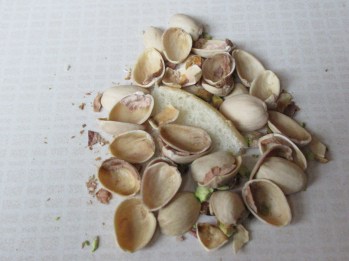
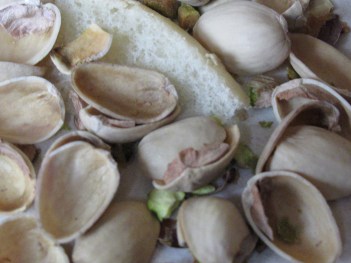
So, I felt sorry for the squirrel, I admit that. But I didn’t bring him into the house. Nor did I open the door and let him in. Honest. Maybe it was the cat. She’s been watching him all day. Yes, that’s it. It was the cat. She saw him out there in the cold, felt sorry for him, slipped open the screen door and let him in. I could believe that. But no, I don’t know how those nutshells got there. Of course it wasn’t me. You know I’m allergic to nuts and no, that wasn’t me sneezing. It must have been the cat. Or the squirrel. Have you looked for him? I bet she’s round here somewhere. Why are you always blaming me for everything?

IMG_0288.JPG


Evidence? I don’t call that evidence? What are you accusing me of anyway? And no, I didn’t leave that tiny crust of bread in the nut pile. Must have been the squirrel. You know I like bread. Squirrels don’t like bread. I bet she left it there. Or the cat. What do you mean: it couldn’t have been the cat? How do you know she didn’t jump up on the counter and eat all those nuts? You’re just guessing and you want me to look bad. She does jump up on things, I’ve seen her do it. She’s always good when you’re around.  She’s not so good when I’m here on my own. That’s why I call her Vomit. I know she doesn’t throw up on your chair, but she throws up on mine. I bet she organized all this, just so I would get the blame.

What do you mean, you’ve left it up to the jury? What jury? You’re no taking me to court for this. Are you? Seriously? I can’t believe you’d find a jury willing to convict me on the suspicion that it might have been me, not on the sort of circumstantial evidence you’re presenting in those photos. And no, I’m not doing lie-detectors or DNA. The jury’s out there now? I don’t believe you. You can’t bring a jury home, to this house, to convict me of the crime of eating your pistachios. Can you? What do you mean: look out of the window? Oh no! You can’t be serious.

IMG_0285.JPG


Sleepless in Island View

IMG_0197.JPG

Sleepless in Island View

I thought nothing could be worse than my current financial situation, until I saw the government shut down in the States and realized how little some very special people earned per month. It’s hard to believe that a hard-hearted government deprived them of even that basic amount for five weeks. I still can’t understand the callous remarks and harsh words of the billionaires who determined that scenario of horror and scandal. “I can’t see why they are using food banks.” “For those on furlough, it’s just one big vacation with pay at the end of it.” “They don’t have to worry, they’ll get their money back.”

My own financial situation is very different. I am on a fixed retirement income that is much, much less than what I used to earn, but sufficient to keep me alive and well. No, I cannot afford Caribbean Cruises. Nor can I have long term winter stays in sunny climes, Mexico or Arizona, or some sultry-sunny palm-tree graced island set among golden sands in a ring of sapphire sea. Summer vacations are out and I haven’t taken a plane for five years or a summer vacation for four. More, as the stock exchange wobbles, my savings decrease. As my savings grow less, the price of food rises higher and our heating bills soar. As the cost of living rises higher, I have more difficulty making my income stretch to the end of each month. Inflation doesn’t help: prices go up, but my income stays the same or steadily diminishes. There is no way, short of winning the lottery, that I can replenish it. And yet still I am blessed, for I have reasonable health, food on the table, and enough (according to my financial adviser) to survive for a little while yet.

Sometimes I wake at night and cannot get back to sleep. Shadows visit me and bad dreams stretch just out of reach of my fingers. So many things might go wrong. So much is out of my control. So many people, friends, relations, colleagues, acquaintances are hurting in so many ways. I work with friends who are suffering with cancer. I stand by friends who are going through the pangs of divorce and separation. I witness the suffering of the survivor in long term marriages when one of the partners fails. These things gnaw away at the central roots of my being. What if …? I say and the shadows gather closer, chattering like sparrows and cawing like rooks and ravens.

Fear: so easy to sow, so hard to put the seeds back into the bag, especially when they have rooted.

I am lucky. I sleep with two Teddy Bears. One, the small one, bears the name of Ted. The other is called Hairy Fred. Ted is an old battered bear. He traveled with me when I used to travel and is a well-bred voyager. Hairy Fred is a more recent acquisition. A lady made him from an old fur coat and yes, he is very hairy. Ted wears a flashlight in his one ear and a clothes peg in the other. Don’t ask: don’t tell. When the night grows dark and a waning gibbous moon sweeps stars from the sky, these two teddies bring warmth and comfort. Beside my bed, Paddington Bear stands on guard. He can stay there. I am not having him in bed with his yellow Wellingtons and his Duffle coat. Besides which he is a rather hard teddy and not a soft one. Blueberry, Rose, and Pierre Bear sit on the cabinet. waiting their turn. When it gets cold and the north wind howls like a wanton wolf, one of them will get the invite and then we’ll have the perfect Three Bear or Four Bear or Five Bear Night. Until then, I may continue sleepless, in Island View.

Even tho it was Xmas


IMG_0150


Even though it was Christmas

I am as free as my father was free. He was free to walk on his walker, as far as he could go down the street. Free to walk in the wind and the rain. Free to sit on his neighbor’s wall when his legs and back got tired. Free to sit there, although it was raining, until he had recovered his strength and energy. Free to get soaked so badly that he caught a cold. And the cold was free to turn into bronchitis and the bronchitis was free to turn into pneumonia and the pneumonia was free to perform its assassin’s work as it tried to kill him. But my father was still free and strong enough to call the doctor and the doctor was free enough to call at the house and visit my father and write him a prescription for a free anti-biotic that would free his body from the pneumonia that was free to leave when it’s time was up and it felt ready to go. Pneumonia, the old man’s friend, they used to call it, sitting there, in my father’s lungs, muttering away to him, day after day, louder at night, and my father slowly getting stronger and the pneumonia growing weaker until one day it felt free to leave and freed my father from his immediate ills. Then my father was free to get up or to stay in bed. Being a free man, he chose to stay in bed all day and to listen to the radio and to read a book and when he got bored with reading he just lay there and counted the dots on the wall “one, two, three…” and “seventy five thousand, one hundred and forty three,” he told me one day when I was free to visit him, “though I have lost count once or twice and have had to start again from the very beginning. And the sun gets up at seven-oh-three, and strikes the third dot at seven fifty-three … and goes round the wall thirty-three dots to the minute; and leaves that third dot from the right at a quarter past three …” And there he stayed, day after day. But he was free. And sometimes the home help came and sometimes she didn’t, for she too was as free as the birds in the garden. And sometimes she remembered to buy him some food and sometimes she didn’t. And she was free to come and go, free to remember or forget. And my father was free to mumble or complain or grumble, though he rarely did. And he was free to eat, so long as there was food in the house. But when I went there to visit him I often saw that the cupboard was bare and my father had neither milk, nor eggs, nor bread nor cereal, nor tea nor butter. And all those people, those acquaintances, those friends, they too were as free as the sea-gulls in the sky. But to find the time to set my father free from the hunger and thirst he seemed predestined to freely suffer, they were never free enough for that.

Neither was I. Even though it was Christmas.

Even though it was Christmas
Voice Recording


This story is dedicated to all who spend time alone this Christmas, be they street people, homeless, or merely forgotten and neglected. Please consider sharing this story. And if you know someone who is alone at this time of the year, please phone them or visit them.


Cricket

IMG_0236


Cricket

            Street cricket. Played on ancient, cracked tarmac. The wicket: three sticks whitewashed on to the high stone wall of the cul-de-sac where my grandmother lived. It backed onto the wall that cut us off from the railway yards that led into High Street Station. That wall was the boundary, as were the neighbor’s front yards. Six and out if you hooked the cricket ball and hit it behind the wicket and over the railway wall. And you had to retrieve that ball. Lost ball stopped play and play stopped until you went across the bombed buildings at square leg, for a right-handed batsman, climbed the railway wall at its lowest spot, looked down at the rail yards forty feet below, and shouted until someone emerged from a workman’s hut to find the ball and threw it back.

            No worker … no ball … no game. Then you had to run out of your street, down the main road, up the hill for two streets, beg permission at the locked railyard iron gates: “Please, mister, can I get my ball?” Then run all the way back to where the waiting cricketers hung over your own street wall, by those bombed buildings, shouting and cheering. Search for the ball among shiny rails, shunting rails, rusty rails, dandelions, thistles, and nettles. Avoid the occasional shunting engine, with the driver leaning out of the cab and screaming warnings as the steam hisses out from the engine, brakes squeal, and wheels slowly clack on crossing tracks. Find the ball. Try unsuccessfully to throw it back over the wall. Try again. No good. Wall too high. Carry ball back to iron gates. Thank gateman politely so you can come back next time. Return ball to game. Game continues, rain or shine. Unless it’s real rain. The pissing down type. If so, run for nearest house and shelter by fire in kitchen.

            Other rules. Six and out over the railway wall. Two runs and fetch the ball yourself if you hit it into the bomb buildings at square leg, next to that railway wall. No fielders there. Too many loose bricks and too much scattered debris. Fragile walls still wobble or crumble warning you of cellars that might open up. Low walls that might collapse. You score four and out if you hit the ball into neighbor’s front yard. Some neighbors are nice and don’t mind. But watch out for the old witch whose fenced off garden is guarded by a gate.  If you hit her window, even with a tennis ball, she’ll be out quick as a flash, and steal your ball or stick a knitting needle in it, old spoil-sport. Otherwise, it’s single batsmen. You run your runs and walk back from singles. One hand one bounce, and tip and run once you’ve scored twenty. Much more difficult to stay in and everyone gets a chance to bat. One hand off the wall if you don’t clear it for a six and out. Dog stops play if your fox terrier gets the ball and runs around in circles, chasing its tail, with the ball getting soggy in his mouth. Damned dog. Damn difficult to catch. Lost ball stops match if dog runs back into the house and gives the ball you stole in secret back to your gran who was saving it for tennis.

            Cricket, in those days, was civilization. It had survived the bombing raids that missed the railway yards and bombed the bomb buildings. It had survived the machine-gun fire from the fighter-bombers that had strafed the street leaving bullet-holes, still unrepaired, in walls and shattering now-mended windows. It gave us a sense of rule and law, for the rules were strict and nobody broke them and stealing runs, touch and go, in tip and run was a skill and never a crime.

            Cricket: a small, bright window on the back-street where I lived, a window filled with happiness and light, even when it’s over the wall and six and out, or the dog runs away with the tennis ball, or the ball vanishes down a mysterious rabbit-hole in the bomb buildings and slides down to someone’s ruined cellar.

            Game’s over. The real Test Match is on, England versus Australia, though we live in Wales. The one primitive, tiny black-and-white tv screen in the street lights up with flickering figures and we sit around on the floor watching real men playing the real game on a sunny field in another world, the world, the world of black and white that many of us, us backstreet children from a ruined neighborhood, will never be allowed to know or see.