Bistro 3 Flash Fiction

Blind Date

You couldn’t see the holes the doctor drilled in my head when he thought he was a woodpecker. You were oblivious to the bland, black splinters sprouting from my fingers and my neck. Unseen and unheard, the ladder-back drowsed its feathered siesta as peace descended to the cluttered attic of my mind. When push came to new love, the bluebird couldn’t find the old silver ring I borrowed from the curtains. How could you care about its failure to sparkle in the sun? When you ran your fingers through my hair, you cut yourself on a feather’s edge and my shirt rose up in the air and flapped with sudden writing, as red as blossoming flowers. You sensed their crimson dampness, but couldn’t see the petals turning skywards to a pallid moon. The clockwork mouse ran down the tower. The clock struck the chaos of a universe at sixes instead of sevens and we knew we two would never be one. You tapped with your white stick on the sidewalk, but before you drove away, you told me to keep my pity for falling leaves, for sparrows in winter, and for the defenseless chickadees who quest at the feeder and leave in fear of the kitchen cat with her dogged stealth: a game of paws and pause, crisp and silent through the green hair of the grass.

Hare and Pair

Hare and Pair
With photos
by
Clare

IMG_0174.JPG

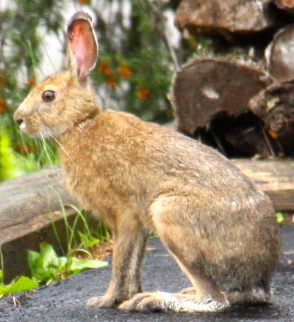
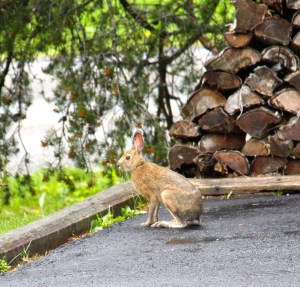
“Hare is the Lord of all he surveys and none can dispute his right … ”

Some do, mind, in spite of hare’s propaganda, for  moose, raccoon, deer, Northern Goshawks, owls, and the neighborhood dogs, though these are usually kept on a leash, all make eyes at hare as he sits there, on the edge of the lawn, seemingly unafraid.

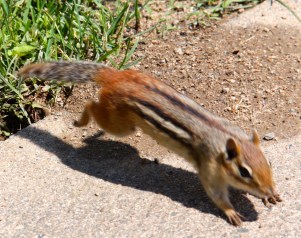
Hare can run. He can run very fast. He thinks he is the fastest there is. So he just sits there.
“I AM the fastest,” he boasts, and none can gainsay him.

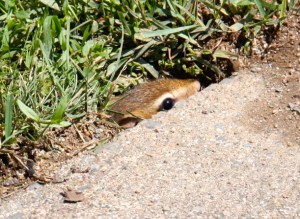
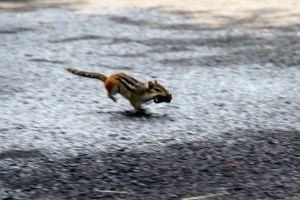
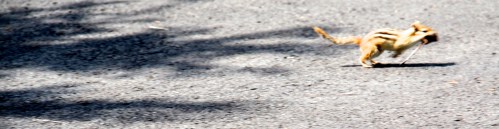
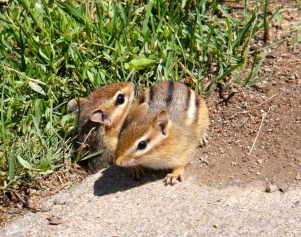
Chipmunk knows he’s not the fastest. Mind you, he’s not that slow either, over short distances. Chipmunk is fast, but he’s also very, very cautious.

IMG_0140.JPG

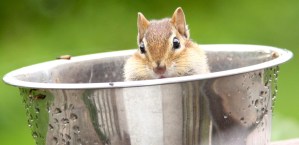
“”Is the coast clear?” he asks.”I’ll just pop my head out and have a little look.”

IMG_0144.JPG

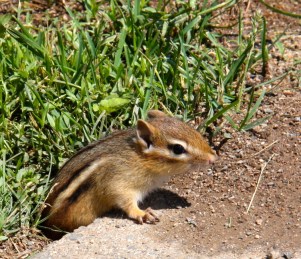
“Coast’s clear, dear. Heave ho, and out I go.”

IMG_0135.JPG

“No one about. Weather looks nice. I’ll just go for a little run.”

IMG_0153.JPG

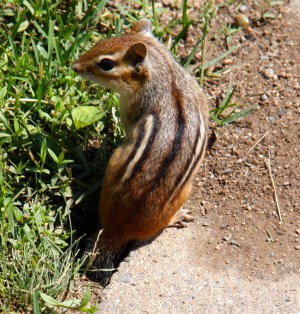
“Off I go. Won’t be long, dear.”

IMG_0159.JPG

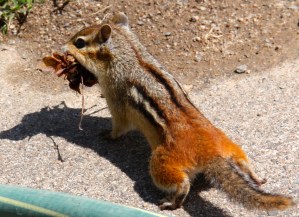
“I’ve found something nice, dear. Some fresh new bedding. I’ll bring it home.”

IMG_0160.JPG

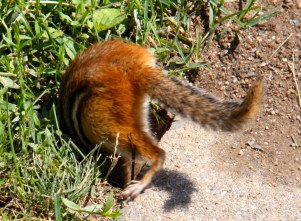
“I’m on the way, dear. Pop that kettle on. Stretching like a long dog: I’ll soon be home.”

IMG_0149.JPG

“Oh darn it! Forgot the groceries. I’ll have to go out again.”

IMG_0171.JPG

“Wow! Some nice little goodies stuffed in my cheeks!”

IMG_0146.JPG

“Hello, dear. I’m back. Give us a kiss.”
“Come in then. Kettle’s boiled. We’ll have a nice cup of tea.”

IMG_0130.JPG

It will soon be all quiet on the southern front. The chipmunks have all gone. But the hare just sits and likes to stare. So he’s still there.


IMG_0174.JPG

If a picture tells a thousand words,
this photo essay is 12,280 words long.


Bistro 2 Flash Fiction

Bistro

LJ sat at a table in a dark corner of the Bistro. He held a plastic bag in his hands and moved what looked like dried brown fava beans, one by one, through his fingers. A priest at prayer, his lips moved in a silent mantra as he counted the beans: ” … twenty-seven, twenty-eight, twenty-nine.”

Robin and Will watched him closely, looking for the telltale signs that would announce LJ’s return to his former life.

Same-sex couples danced through the Bistro. They avoided this one corner that formed an oasis of severity amidst the gaiety and noise of Carnival celebrations.

“How much does he remember?” Robin looked at Will.

Will shrugged and the two men exchanged worried glances.

A whooping conga of men dressed in garish, feathered costumes that revealed more than they concealed, approached the table where the three friends sat. The conga came to a stop in front of them.

“Now what have we here?” The leader asked. He turned to his followers flashing a white, toothy smile.

“Let’s see what you’ve got, darling,” he reached towards LJ’s plastic bag.

“Don’t touch him,” said Robin, rising to his feet.

Three large men broke away from the line and two grasped Robin while the third put his arms on Will’s shoulders and held him in his chair.

“I’m warning you,” Robin said.

“Shut it,” said the leader.

LJ closed the plastic bag that held the twenty-nine fava beans and put it in is breast pocket, next to his heart.

“Don’t put them away, darling, they look delicious,” the leader grinned his enormous grin. He was a big man, not tall, but broad and heavy. “Give them to me, I want to eat one. C’mon, I’ll just pop it in my mouth and suck it.”

The Conga crowd roared their approval.

LJ got to his feet. He was a small man, but wiry. The night-fighter, they had called him. He was the one who slipped out at night through enemy lines and knifed the sentries. One hand over their mouths, one hand on his knife, all sounds extinguished till they relaxed, lifeless, then that one quick twist of the knife and the ear-lobe severed as the dead man was lowered to the floor.

“Wanna dance?” The conga leader wiggled his hips and ran his tongue over his lips, then puckered a little kiss.

LJ’s face turned red, the veins engorged, and his eyes stood out. Nobody saw him move, nobody ever saw LJ move. He grasped the Conga leader’s windpipe with his left hand and drew him forward until they were locked eyeball to eyeball. LJ’s night-fighter knife lay flat across the man’s jugular.

“LJ, no,” Robin screamed. “Not thirty.”

LJ kept staring at the man he held. His knife disappeared.

“You’re not worthy,” he said, leering into the Conga leader’s purpling face.

Will and Robin breathed a sigh of relief.
Bistro 1 Flash Fiction

Babs

It was March the First, St. David’s Day.

Babs held the cat in her arms. The vet slipped the needle into the shunt he had inserted into the animal’s paw and the tiny wind of life gusted from the cat’s fragile body. The struggle ceased. The cat’s head settled and her tongue protruded, just a little, in that beloved and well-known gesture. It was all over.

Babs had found that lump, hard, but smaller than a pea, on New Year’s Day. The next day, she carried the cat to the vet where they took blood samples and ran tests. The vet’s assistant called later that afternoon. A lymphoma, she said, small but deadly. Steroids might help. They would give the cat a 40% chance at a life that would get more difficult, in spite of any known treatment. The alternative was to bring her back in and put her down now, that very afternoon. Babs looked at the cat: highlights strayed through her fur and her bright eyes sparkled like sunshine on a lake.

Throughout January the steroids went in and the cat glistened and grew fat. At first, Babs saw no sign of the lump but by Robbie Burn’s Day it was back. Babs started to count the days: January 31, February 2. The lump grew larger.

Three years before, on Valentine’s day, Babs had salvaged the cat from the SPCA where she languished, abandoned in a cage. The cat was a stray, half feral, taken in from the streets and subject to who knows what sort of treatment and feeding in its infancy. Babs wondered if it was in those days of neglect that the cancerous seed took root? Or did those seeds come later, when the cat wandered the garden and fed off the wild life, mice and voles, and drank from the streams that flowed through the killing fields with their fertilizers, their weed killers, their nutrients, and their poisons?

“What are we doing to ourselves,” Babs wondered as she sat at the kitchen table and sipped a cup of tea. “Was my cat the canary in my coalmine, doomed to warn me of what’s to come? Will my own system be invaded then poisoned with cancerous growths? Will I be subject to that stumbling, downward road that leads in the end to an inevitable death?”

She lay awake that night alone in the bed wondering in what ways cancer might ravage her body. How long would chemotherapy keep her alive? Who would be there for her, who would hold and comfort her, who would slip that releasing needle into her veins when her time came?

Babs ran her fingers over her body as she imagined herself sliding day by day down that slippery slope that leads to the grave. Then she caught her breath, her heart raced, and her blood turned to ice as her fingers tripped against the colony of killers: three small hard lumps that nested in her soft breast.

Obsidian’s Edge 6

10:00 am
Dark is her Shop

IMG0014_1.jpg

1

I buy two liters of white mescal,
cheap and rough,
without the second brewing:
fire water, not smooth.

Two liters:
she sells them in
an old Coke bottle
she’ll seal with cellophane,
and a rubber band.

Six worms I buy.
Bedraggled fighters
dragging smoky trails
as they plummet
through a yellow sea.

2

In the shop next door
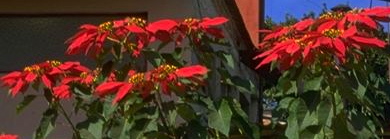
I buy poinsettias.
When I get home,
I put them in a vase
and watch them watching me.

Red poinsettias:
bloodstains scratching
a white-washed wall.

IMG0034_1.jpg

Misshapen gems
in a ceramic prison,
their beauty
breaks me down:
decimated words,
worlds
born from mescal.

3

The eyes I see
are not eyes
because I see them:
they are eyes because

… twin brown ovals …

they watch me
as they float in a liquid mirror
within the upraised glass.

4

Outside,
beyond the balcony,
sun blood melts
like sealing wax.

The bougainvillea
strains sharp stains
through a lonesome
slice of sunlight
giving birth to
flamboyán and tulipán.

5

My lemon tree
leans over to listen.
Glistening pearls of dew
embellish its morning throat.
Christmas decorations
these postage stamp songbirds
thronging each twitching branch.

18 June 2002 butterflies in ditch 014.jpg

Butterflies,
winged flakes of archaic paint,
flutter from temple walls
leaving them barren and bare.

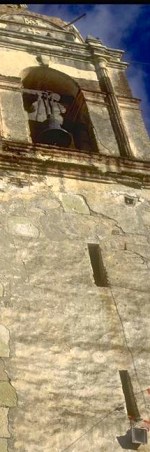
Church towers,
strong when terra firma shakes,
quiver insubstantial.

Mescal melts the morning:
a quiver of shimmering air.


Water Falls

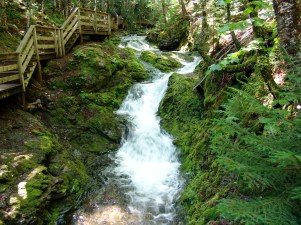
I will leave the magic and mystery of Mexico for a moment in order to look at something that lies much closer to home: running water. New Brunswick is famous for its waterfalls. Here is the video poem I created after visiting Dickson Falls in Fundy National Park. Sometimes they are almost dry, but on the day these pictures were taken, the waters flowed in marvelous abundance. Don’t forget to click on the video link at the end of the poem. Clare took the pictures while I conjured up the words. Water Falls was published in Triage (2015).

DSC01067.JPG

 Water Falls

    “What is it about running water
that it explodes like long, blonde
hair over moss and rock
frothing with sunlight the diamond
sparkle, the freckling sound,
light flickering downwards,
fine threads of angel hair
tumbling from above, falling,

DSC01073.JPG
white, over earth’s rocky shoulders,
pillowed across soft green quilts

DSC01045.JPG
poured down from heaven’s skies
watering the earth’s dark throat,

DSC01058.JPG
sinking through the soil
emerging in rivulets and brooks
until all waters are one
and the rains join hands
to splash, rejoicing,

DSC01055.JPG
dryads and naiads bathing
together in deep, cool pools,
nymphs reborn, acrobats over rocks
as water falls to seek the sea.

https://moore.lib.unb.ca/poet/VP5_Waterfall.html


Obsidian’s Edge 5

Obsidian’s Edge 5

9:00 am
Mescal and Memory

IMG_0135 2

1

Frail old men
huddled under hand-woven blankets
sipping their morning mescal:
each face
a note book seamed with memories.

Crab apples
hastening to autumnal crispness,
their wrinkled faces,
their minds ready to tramp
the snow of today’s blank page.

Unwieldy limbs
bursting back to bloom,
flower by unyielding flower,
they squat in the square
beneath blossoming trees.

IMG_0136.JPG

2

Códice
characters lifted from the pages
of their pre-Columbian chronicles
and Mickey-Moused on modern walls:

Ocho Venado
framed on a restaurant menu,
Cuáthemoc
recalled on a hunded peso bill.

Cuáthemoc
has forgotten how to walk
on the burned, broken feet
that Cortés held to the fire.

Ocho Venado,
a king in his own right,
bows and bobs to tourists
in the restaurant that bears his name.

3

Colibri,
an errant, feathered knight,
whirs his wings and charges
at the sun’s twin windmills:
sun-dog ear-rings
tethered to a golden flower.

IMG_0137

4

Sweet flutter-by of yesterday’s butterfly:
Mescal

fragments the memory
holding it bitter between tooth and tongue.

Obsidian’s Edge 3

7:00 am
Breakfast

1

Yesterday,
I sacrificed a chicken.

Unborn,
it lay within its calcium cocoon,
dormant,
a volcano sleeping deep beneath thick snow.

IMG0077_1.jpg

Tap, tap, tap,
the silver spoon bounced
off the hairless shell:
a sudden crack,
a spurt of orange blood.

Today,
I tap with my silver hammer
on the grateful grapefruit’s paper skull.

Silence.
No movement
within the honeyed
comb of pith and cell.

2

High in the church tower,
a hammer blow falls on an echoing anvil:
the cracked bell lurches into life.

IMG0048_1.jpg

 Rooster crows his thick rich cocoa rico:
blackened torsos of fire-roasted beans.

3

Squeezed orange, racked by the inquisition,
its pale yellow robe spent and exhausted;
wasted disc of a worn-out, decadent moon.

4

  Naturaleza muerta:
the orange expires on the table.

Still sticky its carcass,
its life blood is a sacrifice:
thick, rich, golden liquid,
as fierce and sweet as
sunshine on a branch.

5

   Tabled motion:
my hand reaches out.
Arthritic fingers clasp,
but cannot hold
the golden glass.

6

The tequila’s wrinkled worm
tickles my fancy.

Grasshoppers
fried in garlic
no longer make me squirm.

7

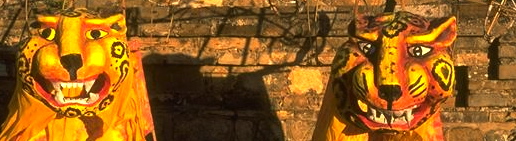
Two Tigers
rage in my head.

IMG0034_1 2.jpg

They crave mescal
at this hour of the day.

Comments: A Beginner’s Guide

Comments: A Beginner’s Guide

(for Al, again;
written tongue in cheek
as a follow-up to
Winning not Whining
to be read cum grano salis)

When a poet enters a poetry competition, comments are sometimes offered as part of the fee for entering. These may be made by the judge(s) or by a pre-selection committee. The pre-selection committee, in large poetry competitions, will sometimes filter the many entries, sending a filtered short list through to the judges.

Filtering Committee

IMG_0150.jpg

Basic rules of commenting (1):

Say nothing negative. Always find something positive to say. Whatever you do, do not turn the competitors away from future competitions. The organizers need the money the hopeful entrants provide.

Rhyme:

When faced with an entry that rhymes, the judge is encouraged to encourage the entrant to think of alternate forms of writing. Comments like: “Have you considered writing this poem in free verse?” or “This might work as a prose poem. Have you tried that format?” are considered better than “Your verse sucks”or “Your rhyming words make no sense except as rhyme words. Couldn’t you find anything else?” Equally abrupt and dismissive is “Read more rhyming poetry: your almost non-existent rhyme scheme needs national assistance.”

Free verse:

When faced with an entry in free verse, stick to the alternate approach “Have you considered making the poem rhyme?” or “This might work better as a prose poem.” Such comments are considered more acceptable and polished than “Stick to essay writing” or “Read more free verse: you need to understand where to put words in appropriate places on the page.” or “Blank spaces must have meaning.”

Judge Mark I

IMG_0146.JPG

Individual words:

As soon as an unacceptable word is found, and in some cases the sooner the better, the entry may be rejected. Examples: Adverbs ending in -ly “Stephen King advises against the use of adverbs ending in -ly.” or less used words like upon or amongst   or “Upon / amongst — so out of fashion: use your computer’s Thesaurus for contemporary expressions.” The commentator is advised against using chic continental expressions like very passé or très outmoded as they create a sense of absolute inferiority in the competitor. Latin and things like that should, ipso facto, never be countenanced as they may upset the competitor’s  status quo.

Meaning:

If the judges cannot understand a word of what is before them, then phrases like very cryptic style or highly personal language are preferable to “Total nonsense.” or “Absolute Jabberwocky.” or “Never heard of Fowler?” or “This needs Footnotes.”

Punctuation:

The rules here are simple. If there’s punctuation, then suggest dropping it. If there is no punctuation, suggest adding it. Same thing with capital letters.

Judge Mark II

IMG_0147.JPG

Length of submission:

Short poems can be dismissed with a comment like “You have some potential here: the poem could be lengthened in order to develop that potential.”

Long poems can be dismissed with comments like “The judge(s) find this a little bit wordy. You should consider shortening it.” Avoid attempted wit along the lines of “Nice: have you tried writing rhyming telegrams” or “This could (avoid should) be reduced to a rhyming couplet.”

Basic rules of commenting (2):

Find something positive to say and remember, sincerity has nothing to do with it; in fact, forget sincerity, unless you wish to end your comments with a phrase like “in sincerity”.  If the judges are really at a loss for something positive to say, then a warm general comment will always be welcome. For example: “I love your use of the definite article.” “You have a wonderful way with small words.” or “All your commas are in the right places.” Such positivity will probably keep the competitor competing and the entrance money rolling in.

Winning not Whining!

Winning not Whining:
For Al

To be taken with a large pinch of salt.

Judgement by Committee:

IMG_0130

The committee gathers and sorts through the evidence: whatever will they find? Piece by piece, they sift the data. Some take it to great heights and drop it on the rocks to see how fragile it is. Will it break like a clam or a mussel released at the sea-side? Others use the Christmas Cracker technique. For this you need two judges: each holds an end, and both tug as hard as they can. When the evidence rips apart, then the opinion of the one with the larger segment of the manuscript holds good. They take care to avoid the cracker-jack bang in case the item is explosive, but more often than not it is good, solid fodder for thought, endless thought, and the longer they think, the more the liquids flow and more good food goes down, and the more their camaraderie strengthens. Finally, when all the energy is spent and the manuscripts are reduced to tiny shreds, a winner appears. If the last fragment of evidence is still large enough to be read, this is then showcased and the winner is announced. That is why those precious manuscripts are never returned and that’s why competitors should always send a copy, because the original, especially when dropped from a great height or caught by the explosion of cracker-jack, might be lost in the tidal wave of anguish that sweeps the sea-shore clean.

“What is the definition of a camel?”
“It’s a horse designed by a committee.”

Anonymous, or Aristotle, I don’t know who said it first; but it’s very true. And manuscript selection by committee can bring about some interesting selections. On several occasions I have received the damning note: “We really liked this: but one person on the committee said they didn’t like how you used this word …    (insert word in blank space after dots).”
Judgement by committee is judgement by consensus … and, as the TV game-show host so often repeats: “… And the survey says …”

There is only one way to deal with committee decisions in a writing competition: lots of laughter, a large pinch of salt, and water off a duck’s back.

Judgement by a single judge

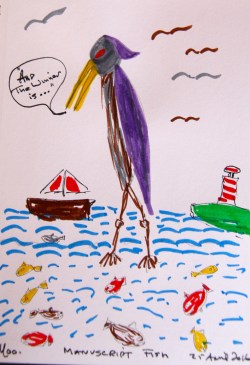
This is probably much better than judgement by a married judge who will always pick his partner’s work, if it has been submitted. With only one judge circumstances change and the chances of winning operate under different rules. Imagine that one judge as a Great Blue Heron standing in tidal water, beak poised, incoming tide, and the manuscripts swimming past. Some swim too fast, some too slow; some are too heavy and sink to the bottom; some are too light and float to the top. But look, the judge is tense, the perfect manuscript at the perfect depth glistens silver beneath the surface then … swift jab of the judge’s beak and we have a winner … and the judge holds it aloft to glisten in the sunlight while the losers swim happily away to survive as honorable mentions or silent witnesses that can be entered in another competition on another, perhaps happier day, when they can be judged by a committee of Great Blue Herons.

IMG_0131

It’s not always easy to be a good loser. However, as you swim freely away from the Great Blue Heron (GBH) remember you have avoided Grievous Bodily Harm (GBH) and that may be better than you think for: “It’s often good to not be a winner: you might end up as the judge’s dinner.”

And if you win? IMG_0130.JPG

And if you win? Well, the judge (or the judges if you survived the survey), was very good, very intelligent, very hard-working, and just perfect; in fact, the very model of a wise old bird who knew just what it was looking for, and found it.

And as for the winner: “The winner, he was a wise old bird. The more he spoke, the less he heard. The less he spoke, the more he heard. There never was such a wise old bird.” (Anonymous or Aristotle)