Juggler

IMG_0038


Juglar /  Juggler
(from Land of Rocks and Saints)

1

 In the beginning was the word,
and the word was tossed in the air:
a dove over dark water.

It grew as it descended,
turned into tongues of flame,
each of them licking
at the listeners’ hearts,
tearing them apart.

Sleight of hand:
this deck of words, tossed skywards;
jacks and queens tumbling,
caught, tossed up again;
words, nothing but words,
this pack of wolves descending.

2

 Lips part as words draw blood;
red wound of the open mouth,
a rose in spring’s garden
bears us down with crimson scents.

The spirit is trapped in its cage,
flesh and bone binding those wings
with their urgent urge to be free and fly ….

“… you would have seen …” he says.

And so we see: the sea, white horses cresting,
St. James riding over the mountains,
bone on lance point, spear bloodied,
Moorish chain mail bursting asunder,
El Cid advancing on his foes.

Words join with words,
become joint with gesture;
they plunge into our chests,
grow tight round heart and lungs.

Juglar: In Spain, the mediaeval juglar was musician, singer of songs, juggler, and general entertainer. The oral tradition still thrives in Avila and in places where the rhythmic and musical emphasis of the spoken word is still important.

Talking 4

IMG_0185


Talking with my mother in an empty house

4

the room is alive with light
a halo of sunny sainthood
gilding old furniture

rich gold sunlight
sparkling with dancing dust
enhances silk flowers

polished scarlet tongues of fire
call for your presence
yet you are absent now
I am the one who dusts them
and adds to their gloss

 do they still throb vibrant
 in the early morning light?

 indeed they do
dust rises from your poinsettias
and dust angels dance in the sun

how many to each leaf?

 I bend my head to look
and sense dry leaves brushing
rough lips against my face

In Absentia 5

img_0141-2
In Absentia
5
The Undiscovered Self
has sat on my shelf, just gathering dust.
Written by Jung in 1956, I see from my notes
that I bought it in 1976, read it then,
and re-read it in 1985, 1987, and 2009,
all years of mini-crises.  It is on the table
before me now and finally I have time
to sit and read the pages, not speed reading
for information, but to digest them, one by one.

Time on my hands: so precious these moments
alone, with the sun filtering through the kitchen
and the autumn leaves storing up sunlight
like an old precious wine before they fall.

I sip slowly at this bottle filled with life,
knowing that my friends are there, knowing
I can call them on the phone or knock
on their doors to be greeted with warmth,
an arm round the shoulder, the offer of a meal …

but really, I prefer this solitude, my adventures
with the cat, my slow stroll, not through the autumn
woods, but through the leaves of this book.

This poem is dedicated to my good friend Judy Wearing who challenged me to write a positive poem about my experiences alone in the house looking after the cat. I would like to thank Judy for thinking of me at this time and encouraging me to be positive!

Talking 3

IMG_0185

3

our conversation this morning
a sun-dried Roman aqueduct
no longer capable of carrying water

I envision brown sacking
lagged around leaking pipes

your words are lifeless kites
earthbound: too heavy to rise
each sentence: wasted
movements
 of lips tongue teeth

dead soldiers gone over the top
my thoughts hang like washing
pegged out on the Siegfried Line
on a windless day

I am afraid of this enormous barbed
wire fence growing daily between us

Talking 1

IMG_0185


Talking with my mother in an empty house

1

pale and delicate
much too frail to survive

an early butterfly
blows against your rose bush
and is caught on a thorn

the white of its shredded wing
a sudden shriek
bleeding snow over the garden

did you write those words to disguise my voice?
am i the butterfly?
 does your writing echo my cry?

thoughts pound through my head
like waves on the shoreline
each spoken word
a grinding of tiny pebbles


In Absentia 4

img_0141-2

In Absentia 4
Kibble

I pick up the cat’s bowl with the claw and place the bowl by the cat food. No kibble. So, holding the blue plastic measuring spoon in one hand I take my two canes and balance the spoon between my right thumb and the cane handle. Then I limp down the corridor to the laundry room where I store the kibble. I fill the measuring spoon from the packet, reseal the bag, pick up my canes and wedge the now full measuring spoon back between thumb and cane handle. The cat mews happily and runs out between my legs. I lurch and … disaster … the spoon slips from my arthritic fingers and the kibble forms neat, rolling patterns on the floor.

What can I do? I think immediately of the Dyson and limp into the hall where I have left it. I extend the handle, hold the handle with my right hand, cane and all, and push the Dyson down to where the cat is feasting. I plug the Dyson in and switch it on. One rumble from the Dyson and the cat abandons the kibble and seeks the safety of the basement. I manoeuvre the Dyson toward the cat food but the Dyson is in carpet mode. It beats the floor and will do nothing but push the kibble before it. I push the kibble into a neat pile and leave it there. As I turn the Dyson off, the garden kneeler catches my eye. I go to fetch it and balance it against my leg, kicking it forward so it won’t catch against my canes and trip me.

I have brought the cat’s bowl with me this time and I kneel before the kibble. Then I start picking the pieces up, one and two at a time. My back aches from the slow bending and twisting and my heart is breaking as I consider my own stupidity. Hot tears of frustration prick at my eyes and I blink them away. This operation is so long and so slow. I slip forward and place my hand palm down on the kibble. My palm is sticky with sweat and I raise a handful of kibble as I push myself up. This I scrape into the cat bowl. Using this new technique, I transfer the kibble stuck to my hand first to the cat bowl and then to the measuring cup.

It’s time to get to my feet. I cannot heave myself up on the garden kneeler’s handles and hang on to the cat food: too much risk of a second spill. I have leaned the claw against the all with my sticks so using both hands on the kneeler handles I struggle to my feet. As I do so, I knock both canes over. Now they are lying flat on the floor with the claw. The canes have a rubber tip and if I stand on the edge of it, the cane will rise in the air like magic. I do this twice. Then I use the canes to grasp the claw and the claw, now in my possession, to raise the cat food. Success!

I struggle my unbalanced way down the corridor, place my sticks on the counter, put the right amount of kibble into the cat’s bowl and, with the cane, lower the cat’s food to the floor. I glance at my watch. This operation has taken me fifteen minutes, half of which I have spent kneeling on the floor. I call the cat. The cat appears. I reach for my canes. The claw falls to the floor. I grab for it and knock down one of my canes. The cane strikes the cat who is greedily feeding. The cat jumps away and spills her water all over the floor.

I stand there, horrified. Hot wet tears of humiliation trickle down my face.

Fall


IMG_0193 (1)


Fall

Just one leaf dropping from the tree
and the fall a call of nature and no freak
chance of fate. What throw of the dice
eliminates Lady Luck? None at all,
or so the poet says, lying there, indisposed,
his ribs cracked hard against the wooden
boards of the porch and his right foot
caught in such a way that the hip slips
slightly from its socket and try as he may
he cannot stand but lies there in the chill
evening wind, a lone leaf, getting on in age,
plucked from his tree and cast to the ground.

Accents: Wednesday Workshop

img_0177

Accents
Wednesday Workshop

We began last night with an absentee — John Sutherland, who was in Nova Scotia for Thanksgiving — and a guest writer — Allan Hudson who, in addition to his fiction maintains a blog called the South Branch Scribbler. This is accessible at http://allanhudson.blogspot.ca/

We introduced ourselves and talked about our writing and our writing styles. Kevin Stephens, for example, thinks of himself as a structuralist who plans his writing, in advance, down to the last detail. He uses an Excel spread sheet, with photos of all his characters, heroes and villains, a detailed time line, and notes on all their major characteristics. Chuck Bowie is much looser with his structure and allows his characters to think and plan “on the hoof” so to speak. As a result, he rewrites great chunks of his action as the characters change their minds and tell him what they want to do. Roger Moore is primarily a poet. He works out most things in his head (Think before you Ink) and writes them down when he is ready. He uses notebooks and pen and ink for preference. Allan Hudson spoke of his difficulties as a writer of short fiction. However, the group praised his abilities as the owner of an excellent blog that really supports writers in the region. Chuck and Roger have both appeared on Allan’s blog and both will be happy to feature there again while Kevin and John are both hoping for a first appearance. That is the sort of presence that Allan inspires. In addition, he has some 400-500 visitors to the Blog each week and has recorded a weekly high of over 1,000 visits. These are powerful figures and speak so highly of his blogging talents.

Allan came to the group with a specific question: how do we, as writers, handle dialog? We spoke briefly on this topic, having handled it before. See these two blogs that we summarized in our discussion.

https://rogermoorepoet.com/2016/09/30/he-said-she-said-writing-dialogue/

https://rogermoorepoet.com/2016/08/24/wednesdays-workshop-dialogue/

From dialogue we moved on to the use of accents in our writing. We began by stating that it is almost impossible to generate a spoken accent in written print. In part, this is because what we write in our own heads may not be what the reader receives in his or her own head. Then we broke “accent” down into its component parts: (1) the accidents of spoken speech – almost impossible to imitate in writing. (2) the accidents of syntactical change, where a different style of grammar already suggests an accented speaker – this is most certainly achievable and Kevin has managed it in particular with his Russian speakers. (3) the accidents of vocabulary choice – and this too is achievable with relative ease, as Chuck has shown in his Mancunian and Rumanian speech patterns (Steal it all). And (4) the insertion of selected colloquial phrases – boyo, and warra teg, for the Welsh; och aye, for the Scots; mon ami, for the French … such phrasing coupled with elements of 2 and 3 above help overcome the difficulties expressed in 1 above.

We then moved on to discuss the function of writing groups. Some groups exchange writing and commentate on member submissions. We do this from time to time, usually on a one on one basis. More important, perhaps, we submit questions to each other, as with the dialogue / accent examples above. Then we discuss moments of difficulty in the writing with which we are currently engaged. From the many open suggestions placed on the table, the author can then figure out his preferred options. Above all, we see ourselves as a support group for writers, ourselves and others. This means that at one level, we rejoice at the good news and lament the bad news. However, at another level, we help each other in very specific ways. One concrete example, John came over to my house and helped me create my account on CreateSpace. Then he talked / walked me through the placing of Monkey Temple online at Amazon and Kindle. I now have seven books online available worldwide at Amazon and Kindle. Without his help, I might never have taken this step.

We began at 7:00 pm and at 9:50 pm the gentleman in charge of The Second Cup announced that they were closing in ten minutes. Such is the power of friendship, group ethics, and the spoken word. I don’t think we counted the seconds or the passing time. “And a great time was had by all.”

THE END.
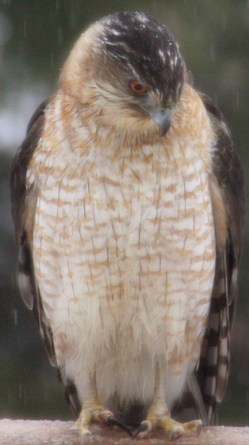


Golden Angels

IMG_0189.jpg

Golden Angels
(
from All About Angels)

They stand beneath guardian trees
their saffron garments glossed with gold.

Hands cupped, bodies bent,
they softly swell as they dip
beneath the rain.

They speak to me:
wild prophets from an ancestral book
that I believed in when I was a child,
but no longer understand.

I try to read the aroma of their lips,
their slow, small growth of gesture.

Their wings are traps
tripping my tongue
preventing me from flight.

Run, Monkey, Run!

IMG_0184.jpg

Monkey Turns Down Promotion

 “I hereby appoint you head of the asylum.”
The young office monkey with the plastic stethoscope
was dressed neatly in a white sheet.

“Dr. Freud, I presume?” Monkey held out his hand
but his witticism was lost in a flood of water
flowing from the flush and over the floor.

 Monkey stood there, paddling in piddle.
Inmates with crowded heads and vacant faces,
fools grinning at a universe of folly, paddled beside him.

He wiped a sick one’s drool from his sleeve.
The office boy spat on his hands,
slicked down his hair, and placed his stethoscope
on monkey’s heaving chest.

 “You have no pulse.”

“How do you know I have no pulse?
Surely, you cannot hear my heart
for you have a banana stuck in your ear.”

“Speak up!” said the office boy, “I cannot hear you:
I have a banana stuck in my ear.”

 Then monkey felt fear.

Daylight diminished and waters closed over his head.
He spurned the proffered paw,
the life belt thrown by the offer of a new position.

Exit monkey left, pursued by a chorus:

“Run, monkey, run!”