Thursday Thoughts: Why I Write III

IMG_0027

Thursday’s Thoughts
Why I Write III
Intertextuality
29 March 2018

            In exile, in La Torre de Juan Abad, the Spanish poet Francisco de Quevedo wrote a sonnet entitled Retirado en la paz de estos desiertos / Withdrawn into the peace of these deserted lands. The first quatrain reads:

            Retirado en la paz de estos desiertos, / con pocos pero doctos libros juntos, / vivo en conversación con los difuntos, / y escucho con mis ojos a los Muertos. Reduced to an instant rough and ready English translation, this reads: ‘Withdrawn into the peace of these deserted lands, / together with a few quite learned books, / I live in conversation with dead men, / and listen to them speaking through my eyes.’

Talking to the dead by reading their live words on the page: this was my first introduction to the theory of intertextuality, written words speaking to written words across the medium of written texts. Intertextuality, then, living texts talking to living texts, be it in print, be it in digital form on the computer.

How does this relate to Why I Write? Orwell writes an article entitled Why I Write. Joan Didion reads that article, replies to it, and also writes an article entitled Why I Write, and her article is, in certain measure, an intertextual dialog with George Orwell. I read both these articles and I, in my turn, join in the conversation, responding, in my own way, first to George Orwell, and then to Joan Didier. Now I have introduced Francisco de Quevedo (Spain, 1580-1645) into this tripartite series and he too has joined the conversation linking why I write intimately to the theme of why I read. For a fuller discussion of Why I Read, consult the full version of Quevedo’s sonnet, particularly the final tercet. As you read these words, you too are drawn into this intertextual conversation, one that has gone on for much longer than we realize.

So, why do I write? In part, it is to join in and continue these conversations and thus to honor the memories of those who have gone on before, Quevedo writing to González de Salas, Joan Didion responding to George Orwell. However, I see writing not only as a conversation, a sharpening of arguments, a learning process in which speaker (writer) and spoken to (reader) exchange ideas, but also as a construction, like the well-wrought urn of Cleanth Brooks (new criticism), or the polished work of art of the phenomenologists. I see the written work of art as a construction, and I want that construction to be as polished and as well-made as I can make it. In addition, I have things I want to say, poems I want to write, stories I want to tell, and I want these things, poems, stories (constructs all) to be the best that they can be. I want to reach out to my reader (readers, if there are two or more of you) and say “Hey, stop awhile. Read this. What I have written is well-worth reading.”

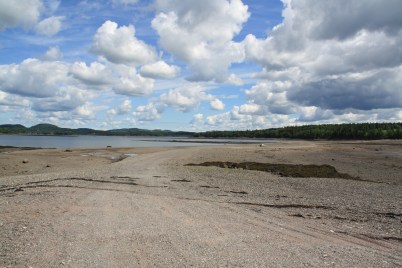
Mikhail Bakhtin uses the term chronotopos, referring to ‘man’s dialog with his time and his place’. I write so that I too may dialog with my time and my place. More, I write in part to establish my time and to cement myself in my place. Time and place are both variable. Is Quevedo (Spain, 1580-1645) a part of my time (20th / 21st Century) or my place (currently Island View, New Brunswick, Canada)? The moment I draw him into the intertextual conversation, as I have done here, he shares time and place with me, and with you, as you read this. So, among other reasons, I write to establish my place not only within this time in which I live, but also within the great chain of intertextual writing that flows backwards and forwards from the earliest times. Only I can do that for myself. Nobody else can do it for me. Is it important that I do so? For me, yes, it is very important. Sometimes, in this life, we walk a long way across a very lonely shore. But we leave footprints behind us, footprints that the wind will fill with sand, footprints that the tide will wash away … we are aware of that but we still walk on, and we still leave footprints.

Reading as dialog, dialog as a means to establish ourselves, writing as a way to cement our ideas, to polish them, to craft them into the shape of that well-wrought urn, that well-wrought urn placed in public where it can be viewed, or in a private place where only close friends can see it and admire it … but something tangible, something solid, something well-wrought, something that will say, ‘yes, I have walked this way’ and ‘yes, I have left footprints’, however dainty, however small, however temporal, however fragile in light of wind and tide … but a footprint, the footprint of Man Thursday, on an otherwise deserted shore … to leave footprints …  to sketch the silver points of Lucifer, the light-bearer, the evening star, as he stands strong against the encroaching night … that is Why I Write.
Wednesday Workshop: Why I Write II

IMG_0055

Wednesday Workshop
Why I Write II
28 March 2018

Joan Didion’s autobiographical note did not appeal to me in the same way that George Orwell’s did, but then, I was born on the same side of the Atlantic as Orwell, and yes, that does make a difference. So much in Orwell is familiar, so much in Didion is alien.

For Didion, Why I Write (borrowed from George Orwell) is composed of three short words, each of them emphasizing the first person singular I + I + I. She sees writing as an ‘aggressive, even a hostile act’ in which she, as writer, imposes herself on other people (her readers) saying ‘listen to me, see it my way, change your mind’. From this idea of imposition springs the second idea of the ‘aggressive, hostile act’. This, in some ways, can be seen as a sort of combination of Orwell’s first, third, and fourth points (1) sheer egoism; (3) historical impulse; and (4) political purpose with possibly the first dominating.

That said, I like the idea Didion presents of ‘pictures in the mind’. She carries these pictures with her and then writes from them. She writes from the physical, the tangible, the ‘taste of rancid butter’, the ‘tinted windows on the bus’, the concrete nature of these things and her desire to describe them as accurately as possible, led her to discover herself as a writer.

When I apply her descriptions to my own writing, I gaze at my own memories of my childhood. They are like photographs, still, black-and-white photographs, like those we used to see when I was a child at the entrance to movie theaters. The skill for me in writing is to allow these pictures to spring back into life. Much of my writing, especially my stories about Spain, Mexico, or Wales, is autobiographical in its beginnings. However, as the pictures move and speak they tell me things and I write them down. What starts out as a story is very rarely the story that ends up on the page. A metamorphosis takes place. Words slip and shift and change their shapes and meanings according to the whims of characters and the situations in which they find themselves. In the beginning was the picture: that, I guess, is what Didion and I hold in common. But my writing is not her writing, and her pictures are not my photos, how could they be?

Interesting in my own original photos is the lack of sound, the lack of movement, the lack of taste and touch. First the figures are stiff and stolid. When I study them, they shift and move, and next they begin to speak. Alas, what they tell me when they speak to me in the shiftless shadows of my dreams at night is not necessarily what they lazily lisp in the full sun of my waking mind. A long time ago, I struggled to recall the exactness of that dream world and I tried to pummel the words and thoughts on my mind’s anvil and to hammer them into shape aided by the heat of my seemingly inexhaustible creative energy. Now I am more relaxed: I just listen to the daylight voices and allow them to shape themselves and their situations in their own way.

When I do this, background sounds and the tell-tale smells of time and place slip slowly in. Boarding school: the unforgettable stench of burned porridge. My auntie’s house: the whir of the cuckoo clock as it coiled itself up in preparation for the little bird to whip out and enchant the hours. My grandfather’s grandfather clock: the metallic lightness of the clock hands as I adjusted the minutes and the hours when the clock ran down and I sensed the tautness in the piano wires as I turned the key and wound the heavy brass pendulums back into their starting positions. My grandmother’s house: the bubble of water boiling on the hob, the warmth of constantly brewed tea, strong as a farrier’s horse and quite undrinkable without the second, third, or fourth watering and, of course, always the smell of boiled white fish cooling for the cats’ supper.

My best writing comes from deep inside myself. I find it  in the midnight coal mine of my mind where ghost-like figures drift and roam as they seek that special person, the one who will drag them to the surface and bring them back to life. Poor, pale, thin imitations of a reality that never was, I do my best to revive them. Often, my best is just not good enough and I must cast them away and drop them back into the depths to ghost away and prepare themselves for another day when perhaps, they and I will each be ready to deceive each other.

Monkey Teaches Sunday School


IMG_0040 (2)

Monkey Teaches Sunday School on Mondays
(With apologies to Pavlov and his dogs)

Younger monkeys e-mail elder monkey
and expect an answer within two minutes.
Elder monkey drools and writes right back.

He is turned on by the bells and
whistles of his computer.
“Woof! Woof!”
His handlers hand him a biscuit.

Elder monkey has grown to appreciate
tension and abuse:
the systematic beatings,
the shit and foul words hurled at his head.

The working conditions in his temple
kennel are overcrowded.
Elder monkey is overworked.

Yet he has managed to survive,
to stay alive and fight
what he once believed was the good fight.

Now he no longer knows:
nor does he drool anymore
when bells and whistles sound
and his handlers bait him with
an occasional, half-price biscuit.

Catching and Caging

IMG_0375 2

Catching, caging, and making them sing

We track them through their courting ceremonies

hunt them down by the noise they make

clutch them tight between anxious fingers

We weave glass jails

sentence them one by one to green imprisonment

At day’s end we ferry them to city apartments

incarcerate them like canaries in their cages

and wait for them to sing

At first they are silent in this strange environment

we feed them with bread dipped in brandy and wine

and sooner or later they sing in their captivity

Now they will not eat

they await the liquor that burns them

into fiery tongues of song

Our midnights are haunted by their spirituals


Friday Fiction: Gringos

img0137_1

Friday Fiction
23 March 2018
Gringos

            By day, I sit in the shade beneath the grapefruit tree and watch as the sun turns each globe of fruit into a shiny planet. The hummingbirds visit me. They whir their wings, bow their heads, and pay homage with their ruby throats.

            On warm days, the sun decks me out in a shining cloak of sumptuous colors, red, blue, yellow, green. When it rains, my captors quickly confine me in a small dark place: no moon, no stars, no worshipers, no forest canopy, no grapefruit planetarium to shape my dreams. Just night and silence. I tuck myself in and hope for the occasional dream to reach out its hand and extract me from my cell.

            Fine weather today. I sit beneath the grapefruit tree and the gringos buzz around me. They push grapes, raisins, bananas, crusts, cigarette butts through the bars of my cage. I scorn them. Gringos, I cry with contempt. Gringos. They clap their hands. Bray with laughter. Sway from side to side splitting their sun-red faces with gold-capped teeth. I eat very little of what they offer. An occasional grape. A chunk of banana. I never take food from their fingers: the temptation to bite the hand that feeds is far too great.

            I am learning their language. The compound guards who allow the gringos in and out of the gates that lead to the outside world teach me gringo words. I can now say gringos go home and this makes for much merriment. The gringos slap their sides and double over with strange cackled cries of laughter. Sometimes tears come to their eyes.

            I drowse in the sun and recall my childhood on the building site. The workers took me from my forest home, placed a chain on my leg, and tethered me to the broken branch of a leafless tree. At first, I couldn’t understand their speech, but they persisted and bit by bit, I picked up their words. When I repeated them, they laughed. Now, I rarely use them and when I do, the compound guards throw a blanket over my head and carry me back to jail.

            I am very careful with what I say. Gringos go home. That is fine. But I rarely say what I really want to say. I want to tell the world how much I love the sunlight as it pierces the leaves and filters down to me, sparking fragmented colors from my frame. My greatest desire is to move in a cloud of many colors, all my family together. I love being part of the crowd-cloud, a voice among voices, all of us in counterpoint and tune. Instead, I sit here, isolated, alone, pining for my brothers and sisters.

            Gringos, I want to say, gringos, let me go home.

          Today, a great event. One of the gringos has picked up my prison and moved it from under the shade of the grapefruit tree to a new spot beneath the balcony. I now sit directly beneath the geraniums. The gringa who lives long-term on the second-floor waters her flowers regularly.

            The gringa grows old and forgetful. She knows she must not water her plants during the day, especially when I am around, but today she is out in the sunshine, forgetful, without her hat, dressed in her dressing-gown and grizzled slippers, with her hair in steel curlers, and a watering can in her hand. Water. It is the symbol of my baptism. It is the element that will release me from my bondage. Water will quench my thirst and free my soul.

            I hear the water, the blessed water, falling on the flowers. I hear the water filtering down through the flower pots. I feel the water bouncing off the geranium leaves threading its way down to settle on my back. My mind returns to the building site of my youth.

            I remember my childhood friends. Their faces flood back and grow like flowers as the waters flow and I remember every word those old friends said as they ran from the building site to take shelter from the rain that stole their money, stole their livelihoods, and stopped them from working.

            Fucking rain, I screech, as the water hits me. Fuck this fucking rain. Fuck this mother-fucking rain.

            I hear the sound of running feet followed by voices.

            “Gertrude’s watered the parrot as well as the geraniums. He thinks it’s raining.”

            “ Quick, fetch his bloody blanket. Shut up, you foul-mouthed parrot.”

        Alas, my moment in the spotlight is over. The play is done. The curtain falls. Darkness descends. I tuck my head beneath my wing and before I fall asleep, I squawk one last feather-filled word:

Featherless-muffer-fuckers.

Thursday Thoughts

IMG_0027

Thursday Thoughts
22 March 2018

Washroom

Locate the nearest washroom …  I am growing old. Maybe I am the only one who needs the consolation of the proximity and known whereabouts of this item, but I am so much happier when I have located it and know where it is.  For me, it’s part of the pre-reading, ‘scouting out’ process that I wrote about yesterday.

The other thing I should have mentioned: work out for yourself a simple relaxation exercise that helps you to concentrate and brings your nerves back under control very quickly. Closing your eyes and breathing deep, one in, one out, does it for some. When uptight, I use a simple exercise from my early piano lessons. (1) Shrug your shoulders, relax your arms and let them hang down, then roll your shoulders, forwards and backwards; (2)  shake out your forearms and fingers; (3) close your eyes and breathe deep. This takes about five – ten seconds.

A personal anecdote: the first time I was due to read a paper at a major academic conference (in Laval University, Quebec) I was standing outside the lecture room listening to the chatter of a group of friends. I opened my mouth to join in and … squeak … no sound … speaker’s block … my voice had disappeared.

I eventually found a washroom,  did a series of  relaxing routines, including this one, sipped some water, and just like that, my voice came back. I returned to the conference and was able to read my paper, five minutes later, without further embarrassment.

Such narrow margins between success and failure.

Apologia

weir 2

Apologia pro vita mea
(for Ana)

          Late last night, I opened Alistair Macleod’s book The Lost Salt Gift of Blood and I re-read the first story. I was soon dabbing my eyes with a tissue and blowing my nose.

This morning, I want to destroy everything I have written. I know I don’t possess the verbal and emotional genius of the great writers and I sense that I cannot write like them. Graduate school taught me to be passive, not active, and to write impersonally, choking every emotion when I write. Academia also taught me how to kiss and how to run away with my thirty silver pence. “Never challenge the status quo,” my professors told me. “Learn the rules and disobey them at your peril.”

But here, in this private space where I create and re-create, there are no rules. The enemy is not clear any more and the fight is not one of black against white. It is rather a choice between diminishing shades of grey, and all cats are grey in the gathering dark that storms against my closing mind. Should I destroy all my writing? I won’t be the first to do so; nor would I be the last. And I won’t be the first or the last to destroy myself either. Intellectual, academic, and creative suicide: as total as the suicide of the flesh.

I carry on my back the names of those who have gone on before me as if they were a pile of heavy stones packed into a rucksack that I carry up a steep hill, day after day, only to find myself, next morning, starting at the bottom once again. But this is not the point: the point is that if I cannot write like the great writers, how can I write?

I think of Mikhail Bakhtin and his cronotopos, man’s dialog with his time and his place. I have no roots, no memories, and that is where my stories must start: in the loss of self, the loss of place, the loss of everything. I was uprooted at an early age, soon lost my foundations, and only survival mattered.

I look at the first page of one of my manuscripts. My writing manifesto is clear before me: “And this is how I remember my childhood,” I read. “Flashes of fragmented memory frozen like those black and white publicity photos I saw as a child in the local cinema. If I hold the scene long enough in my mind, it flourishes and the figures speak and come back to life.”

I am aware of the words of T. S. Eliot that “every attempt / is a wholly new start, and a different kind of failure / because one has only learnt to get the better of words / for the thing one no longer has to say, or the way in which / one is no longer disposed to say it” (East Coker).

Are these stories an exercise in creativity or are they a remembrance of things past? How accurate is memory? Do we recall things just as they happened? Or do we weave new fancies? In other words, are my inner photographs real photographs or have they already been tinted and tainted by the heavy hand of creativity and falseness?

The truth is that I can no longer tell fact from fiction. Perhaps it was all a dream, a nightmare, rather, something that I just imagined. And perhaps every word of it is true.

I no longer know.

Herring Bones

IMG_0177 2

Herring Bones

Last winter, a heavy snowfall
toppled the garden wall.
Bricks and mortar now litter
the grass in untidy piles.

I take my child by an arm
and a leg and swing her round,
faster and faster till, dizzy,
she calls ‘no more’,
and I let her go.

She can hardly stand,
staggers like her grandfather
who lurches around the garden
leaning on a walking stick.

 He jabs at the red-brick wall
he wants me to rebuild
and claws,
with twisted fingers,
at words,
bricks laid
like herring bones
and
caught in his throat.

Tangled Garden

img_0274

Tangled Garden

Forget-me-nots twine
intricate designs,
periwinkle fantasies
dancing between
green pods,
red flowers:
runner beans.

Every night,
I pull them apart
with clumsy fingers,
yet they knot again,
fresh each day,
like tangles
in my daughter’s hair.

Onions push through
a pride of trumpeting
daffodils.
They were all
just bulbs
last fall
when my mother
planted them.

The painting that introduces my poem is by my good fried Jane Tims, a multi-talented creative artist. Her poetry and art work can be found on her blog. Please take time to look at her work on New Brunswick’s Covered Bridges and the wonders of our local foods that are all Within Easy Reach.

Braids

IMG_0080


Braids

All thumbs,
I can manage
two bunches,
one on each side.

But now,
with her mother gone,
it’s much more difficult
to part my daughter’s hair
neatly into three.

I work hard to perfect
that one thick plait
she loves down her back.

As for fish-bones
and French braiding…
she begs me to try

and I promise
that when my thumbs
turn into fingers,
I’ll give it a go.