Obsidian’s Edge 28

IMG_0188.jpg

El sueño de la razón produce monstruos.
When reason sleeps, monsters are born.

Francisco de Goya.

4:00 AM

… scrabble of agile ruminants goats their basket weave ribs alive on the grass roof of the neighboring azoteas or wandering these cobbled pathways with knife-edge stones and broken all ten of those sea-faring bottles that managed to reach this land though they came floating from a distant shore each with its message lost now and he waded through the incoming waves this god-like ghost emerging from his white-cap snow bank to stagger in the moonlight where a child’s world lay buried like a bone as sharp as this black knife that slices the mind into two twin towers of tall sunflowers trapped in this wet clay rag of a body that binds itself in a fine film of glacial fire where incarcerated birds strut in the rib cage their robin red crests as distant as the light of a hurricane lamp in that moment of silence before an opening door snaps its sudden match of light and the tick of the death watch beetle gnaws at the beams of the worn out house that the earthquake cracked into a thousand pieces though one wall stood still and the alarm clock over the fireplace clicked a death mask for that anonymous face that raised both hands and threaded the black lace of the mantilla through the golden wedding ring as a finger nail of moon shredded the clouds and the body’s house slowly broke down in an unending dance round and round the garden where the teddy bear trod on his partner’s toes and the undergrowth tickled the china doll’s fancy but the garbage can intervened and dust stained the vagaries of a brutish existence both sharp and nasty as a devil’s scissors severed angel wings and tangled this skein of wool that pulled the church bells pounding their celestial hammers into a sea of wind while the sea parrot spoke in a tongue thick with anonymous flames that flickered a trigger of song while flashes of sound sparked twigs from the tree that flamed a joyless overflowing river of unknown light while the brown bear danced to a pipe and drum dance across bamboo marimbas that shimmered and shone and lay fine layers of music and dust that grew beneath bare feet as new flowers stoked a confessional of dust and gave it new life in a resurrection of the body into a world where everything is remembered and nothing is forgotten or forgiven … for how can we forgive if we cannot forget … or forget if we cannot forgive …

Obsidian’s Edge 25 (revised)

IMG_0185.jpg

El sueño de la razón produce monstruos.
When reason sleeps, monsters are born.

Francisco de Goya.

1:00 AM

… threshing from side to side panting and pouting mouths open at pillow’s edge with tongues flapping fiercely as the sharp hook pierces the dry upper lip and drives its root canal into the roof of the mouth where shadows walk and talk to silk worms wrapped in their ghostly cocoons and memories race through tumbledown alleys where shuttered windows wave white hands with silver rings sparkling on gnarled arthritic fingers and doleful uncertainties rush upwards in a cloud of bubbles to cover the sun and blot out daylight as dark descends and grief lies still on dawn’s distant altar where long-forgotten crimes stir and return each night to hunt and haunt the poor and pour fierce tears as a tap pours water and offers subliminal ablutions as the victims on their knees wear wild widows’ weeds as they kneel at each hand-carved wooden station where that dark cross flourishes with its black beads dangling from outstretched nails as necklaces clack and rosaries gnash the falseness of teeth that are white and bright and spotted with fool’s gold that reflects in a counterfeit mirror of surrogate corpulence with fleshed and bloodied hands handcuffed like some rabbit in the headlights of an oncoming crash and the car’s bones lie beached like great white whale bones on the bleached shores of an illusion that moves in time to the continuous clicking of claws and the clacking of needles knitting outwards to build a monstrous guillotine topped like a dictionary with red bonnets that move in the air as a knife edge carves night winds that slice the body’s earthbound cage of skin and bone and strip it of the fur that the white rabbit sheds as it climbs its golden staircase back to the moon from which it descended on this night of nights when sleep is a mystery revealed only to initiates who have mastered their duties and milked this market where a caravan of camels humps its way skywards like dark gibbous moons that burrow a tunnel and seek the fly’s high-pitched note with its angry black mote stuck to the cobweb that nests in whatever brain awaits the wind’s clean broom that wipes the slate clean of wild words and wars that are waged across scars that hack tracks and cross roads over this wilderness wherein we are all star-crossed and lost …

Obsidian’s Edge 27

IMG_0140.JPG

El sueño de la razón produce monstruos.
When reason sleeps, monsters are born.
Francisco de Goya.

3:00 AM

… often the imprisoned heart pinned like a butterfly and chloroformed into silence like a resurgent Guy Fawkes sitting on his bonfire and waiting for the universe to roll its coloured dice a captive and that heart singing as the dark rum of freedom bites into its jackdaw dreams of bright silver rings married to a bird’s leg and the round open eye of a cat staring at a Queen of Hearts as champagne bubbles burst in the mouth and dash on the tongue as they wash against the tooth’s white rock as it waltzes with the white caps that crest into broken ghosts who shuffle in and out like a pack of cards filled with knaves and the joker is belled with a red fool’s cap and a bladder on a stick as a tom cat’s tom fool grin melts in the mirror when the moon’s face skids and bounces off a snow bank where tranquil midnight mysteries trap trembling worlds in hand-blown glass bubble dreams that distort all distances clasped beneath clutching fingers while the crystal raindrops serve as an eye to behold the crimson glory of the hibiscus with its blood red stains where the baby fell from the rocking horse and confessed to a crime it never committed though speckled like a fresh trout it was drawn from deep water and blamed for the rainbow fire that flickered flames to the harsh crisp sound of the candle licking at its waxen jail where flower faces float framed against the white-washed wall as the wide-open staring eyes of the snowy owl speckle a yellow madness and its feathers are nails to be fired into  a pottery tree in this harsh somniferous light that breathes fear and fire into shavings of dry bark and a beaver gnaws at the roots of the world as an accusatory beak points at the funneling snow and puffed up feathers plump out a body so thin it is unfit to fight these flames of ice or withstand these snow stones cast by blameless flint-eyed innocents who have never themselves done anything wrong though they spark at the trough with one eye clouded by a spider web of hate and the other a sharp sun peering through clouds condemned like a donkey to walk round and round crushing the heart out of the maguey in an interior world of  dust and stone where the mote in another person’s eye is larger than the beam in one’s own and slant-eyed dogs eat dust and shadows of dust as they prowl through the courtyard and bark at the full moon blazing above this world that is sacrificed to a madwoman’s madness and an ancient flesh-devouring god who lives in a nearby volcano and is stoned all day on tequila and mescal …


Obsidian’s Edge 26

IMG_0188.jpg

El sueño de la razón produce monstruos.
When reason sleeps, monsters are born.
Francisco de Goya.

2:00 AM

… waves of people wandering the streets a hammer blow falling on an echoing anvil and the cracked church bell lurching into its hourly cry of grief dogs barking at the fleshy red crest some playful deity has placed on the heads of domestic fowls and other gallinaceous birds beaks digging for the dawn in parched earth with thin cracks spanning out from its egg shell crazy paving the yellow yolk of sunshine creeping out from cobbles and the Russian egg cup doll after doll unfolding as the hammer’s silver spoon descends on egg shells as thin as a shattered dream of moonlight raked from a pond with its life blood filling a crystalline goblet with a thick rich callous liquid as fierce and sweet as sunshine sacrificed on a branch as rain from the clouds speckles the tree with radiance an arco iris with its semi-circular scarf this deer head mocking pulling back velvet lips white teeth grinning through the wind screen’s shattered glass and man a string quartet of flesh and bone created from a ball of dough and baked in the oven in an earthenware dish with currants for eyes a raisin for a belly button lemon rind for a mouth orange peel for hair while white storks with swaddled babies are scared away by thrown stones and the man in the mirror his hand held up to trap the wind as a falling leaf settles in the secret web between index and thumb puzzles bind like a bird bound in a metal cage the sparrow’s mighty choir chirping at the roof of the circus tent and animals running wild all gone and the smooth grass brown with its withered distorting mirrors of stark staring eyes driving through black paintings of Satanic witches spooning soup between wrinkled lips dark open holes mouths and eyes gouged in slatted wooden faces and Anonymous Bosch’s bourgeois hell of furnaces and factories swarming with sparks of black imps falling from the heavenly meadow and the devil impaired on his black wooden horse …


Selecting a Selected

IMG_0194.JPG

Last Year in Paradise, my first book of poetry, was published by Fiddlehead Poetry Books (Fredericton, NB) in 1977. I am once more re-reading Last Year in Paradise  in search of some early poems to include in the Selected Poems that I am putting together.

As I leaf through the pages, the words of T. S. Eliot come to my mind: “every attempt / is a wholly new start, and a different kind of failure /  because one has only learned to get the better of words /  for the thing one no longer has to say, or the way in which / one is no longer disposed to say it.”

So: how do I select from poems that no longer say what I want them to say or that are expressed in a way that I am no longer disposed to use? I keep struggling with these ideas. Are my selections signposts along the way of my poetic development? Do they say ‘this is what I was, where I came from’? Or should I re-write, revise, and bring thoughts and poems up to date to fit in with my current way of thinking and expressing?

The first poem in the book illustrates this quandary in metaphoric fashion.

Renovating

The carpenter swings
His bell-faced claw hammer
The closet’s gyproc sides
Tremble
Shiver into dust

Each splintered layer
Reveals
The closet’s secret skeleton

Memories
Spill out flood in
Shake grinning skulls
Like jacks of this box-room

Released from sloughed skins
We stand knee-deep
In a debris of recollections

As I re-read this poem, the scene comes back to me in vivid detail. An old closet cluttered the small room downstairs in our first house, an old army home. We needed more floor space, not another small room. As we tore the closet down, different layers of wall-paper showed up and we found ourselves knee-deep in memories of other times, other places, other renovations.

As I re-read, I also remember working with my first editor, Fred Cogswell. I recall the typed manuscripts going in to his office and the pencilled suggestions and corrections coming back out. What I no longer remember is how much of this poem was actually mine and how much was his. Re-reading it, I find I have no desire to re-write it, to resurrect those memories that the poem preserves. But I do feel an urgent need to trim the poem, to weed it as if it were a flower-bed. I notice repetitions, a doubling of statements, an excess of adjectives … I would like to suggest more with less words. The poem needs minor readjustments. As I rethink, I come up with the following.

Renovating

The carpenter swings
his hammer
The closet’s gyproc sides
shiver into dust

Each splintered layer
reveals the closet’s
secret skeleton

Memories spill out
shake grinning skulls
jacks in this box-room

Released from sloughed skins
we stand knee-deep
in a debris of recollections

I find this sharper, less cluttered, and perhaps a good poem with which to begin my Selected Poems. I need a title for the Selection and will share some thoughts on that later. A Debris of Recollections springs to mind as a first possibility, but there are many other possibilities. In the meantime, I will begin a new journey on this blog and along the way I will read, re-read, commentate, and occasionally re-write the poems that I select.

I invite you to accompany me on this journey. I look forward to any conversations we may start and any comments you may care to make along the way.

Obsidian’s Edge 24

IMG_0259.JPG

12 AM
Envoi

1
Night’s incoming waves,
flickering candles,
yellow flames,
altar-white table cloth
with its cross of flowers;

evensong:
an ebb tide dangling its flotsam
at the end of a long white string.

Mala madre,
the spider plant,
an evil mother
abandoning
her unwanted children.

2

I clasp your hand in a confessional of dust:
your fingers knit themselves with mine.

Each wrinkle
on your hand
as fine as
a silk spun web.

IMG_0133.JPG

3

Yesterday

I tapped
with ardent spoon
on the graceless grapefruit’s
golden skull.

When we awake
I will boil us
each an egg.

Squeezed orange:
as warm as
this fierce embrace,
as sweet as
sunshine,
moonlight,
starlight;

silent bird:
midnight branch.

IMG_0263.JPG


My Top Ten Books

IMG_0062.JPG

My Top Ten Books

For Tanya Cliff
https://postprodigal.com/2016/07/14/top-ten-books-that-changed-my-life/

It sounds so easy, doesn’t it, to choose your ten favorite books? But really: it isn’t.

Clare’s great aunt made the best sponge cakes and rock cakes I have ever tasted. Her formula? Not weights and measures but a simple scale: the egg on one side, the flour on the other — and balance them.

How do I weigh a book?

I think in terms of authors rather than their individual books. For example, on one side of the scale place Les Fleurs du Mal of Baudelaire and on the other, his Petits Poèmes en Prose. Literary and cultural history would opt for Les Fleurs du Mal, and quite rightly so. My own personal preference, and I love them both, is for Petits Poèmes en Prose. De gustibus non est disputando / there is no arguing over taste. My choice is for Baudelaire, the author, rather than for one of his works, selected above the other.

If I apply this theory to other authors, what happens to, for example, William Shakespeare? Must I choose MacBeth over Henry the Fifth,  King Lear over Julius Caesar or A Midsummer Night’s Dream over The Merchant of Venice? And what if I refuse to do so? I would much rather choose Shakespeare over any of his plays, the Complete Works, including the sonnets, over any single play. And why shouldn’t I?

By extension, should I choose Shakespeare over Lope de Vega? Corneille over Molière? Racine over Calderón de la Barca? Mira de Amescua over Jean Anouilh? Bernard Shaw over Samuel Becket or Beaumarchais or Ionesco? And look at how Euro-centric (English, French, and Spanish) I am, especially when I am not familiar with the great playwrights of other Western nations: the Russians, the Norwegians, the Germans … and yet they are all Europeans. Are there no other literary nations in the world? Of course there are, but I am not that familiar with their literature and culture, and there is only so much a reader can read in its original form.

So, blessed and privileged as I admit I am, I can read books in English, French, and Spanish … lucky for me. However, I admit to difficulties with books written in Portuguese, Italian, German, Catalan, and Galician. As for Chinese, Hindi, Japanese, Russian, Arabic … I can only offer my apologies, but for me, these are closed books and I can only reach them in the translations, however good, however bad, that are placed before me. This is true too of the Pre-Columbian Mexican codices, the Zouche-Nuttall, the Vindobonensis et. al. These are also books and they outline the peoples and cultures of Mexico as they were before the arrival and conquest orchestrated by Cortés. And let us not forget Bernal Díaz del Castillo, the man who, in later life, wrote the true history of  Cortés’s conquest. And speaking of conquests, how about Julius Caesar’s Bellum gallicum, his personal account, in the third person, of his conquest of Gaul? As a school boy, long ago, I struggled through it in Latin, but I enjoyed it later, in translation.

Translation: traductor / traidor, according to Cervantes, who was undoubtedly following someone else, means translation / betrayal … or does it? Translation: the reverse side of a tapestry (also Cervantes) from which we may through a glass, darkly, glimpse only shape and shadow while stumbling over all those knotted threads … so here’s another question:  why would we choose a translation, with all its flaws, over a work we can read and enjoy and hopefully understand in the original?

So far, I have mentioned mainly playwrights; Cervantes was a playwright and wrote a goodly number of plays (Ocho comedias y ocho entremeses). I should also mention novelists. Charles Dickens, for example; or Honoré de Balzac or Gustave Flaubert or Marcel Proust or Pío Baroja or Benito Pérez Galdós or Gabriel García Márquez or Carlos Fuentes or William Faulkner or Kurt Vonnegut or William Golding or Chuck Bowie or John Sutherland or Kevin Stephens … not to mention Charlotte Bronte … Emily Bronte … Jane Austen … Virginia Woolf … Should I then choose just ten novelists and forget the world’s playwrights? And how can I choose just one book from a single novelist’s vast production, think Trollope, think Balzac?

What about poetry? My ten favorite poems? My ten favorite books of poetry? My ten favorite poets? Perhaps the latter is more achievable. If that is so, I must then choose between Quevedo … Góngora … Antonio Machado … Juan Ramón Jiménez … José Hierro … Wilfred Owen … Dylan Thomas … Gerard Manley Hopkins … Baudelaire … Verlaine … Rimbaud … Prévert … R. S. Thomas … Federico García Lorca … Miguel Hernández … T. S. Eliot … Seamus Heaney … Pedro Salinas … José María Valverde … and how do I choose between the writers I know and love … Patrick Lane … Richard Lemm … Fred Cogswell … Norman Levine … Donna Morrissey … Susan Musgrave … Joan Clark … Erin Mouré … and the ones I work with on a regular basis … Jane Tims … Kathy Mac … Shari Andrews … Michael Pacey … allison Calvern … Ian LeTourneau … Judy Wearing … Rachelle Smith … Cheryl Archer … Judith Mackay … Julie Gordon … ten poets … ten books … ten poems … ten fingers … ten toes … ten commandments … only ten?

Hold on a second: I have forgotten St. John of the Cross / San Juan de la Cruz, one of the western world’s great mystics. I must also mention St. Teresa of Avila, a Doctor of the catholic church, and Fray Luis de León, and now I am about to enter a great cloud of unknowing in which mystics, some named, some unnamed, have blessed us with their life thoughts and works.

Things fall apart, the centre cannot hold … and I have also forgotten W. B. Yeats and James Joyce and I have failed to remember the Poema de Mío Cid and the anonymous epic poems and ballads of the European middle ages, some of which are so deliciously delightful. Alas, I will be forced to abandon so many of my teachers and my friends … ten books, ten speeches, ten lectures, ten words … my life in literature reduced to ten teaspoons of instant coffee, instant tea, instant knowledge.

“My friends, we will not go again
nor ape an ancient rage;
nor let the folly of our youth
become the shame of age.”

Oh yes, that’s G. K. Chesterton. I had forgotten him. When asked what book he would take with him to read in exile on a desert island, he replied: “Green’s Practical Manual of Ship Building and Ship Sailing.” Now that’s a book that should be in everybody’s top ten, especially with the seas rising and disaster lurking round every corner of the suspicious, weather-warmed mind.

However, as I look back on my reading life, believe it or not, some books do stand out. When I entered graduate school and realized the enormous amount of reading that was being thrust upon me, I took a speed reading course. Over the ten weeks of that course my reading speed rose sharply from about 200 words a minute to 800 words a minute. Without that one book, I would have been unable to read so many of the others. Where is it now? It is not on my shelves: ah yes, I gave it to my daughter when she went to law school.

The second special book is the Spanish text book that, in regularly updated versions, I relied on for teaching basic Spanish grammar throughout my academic career in Canada. Without that textbook and the employment it ensured me, I would not have been able to put my family’s bread on the table. I guess you might call it influential. Perhaps the third special book is my own doctoral thesis: that allowed me to gain academic employment and is so very, very special to me, but for all the wrong reasons.

Ladies and Gentlemen and Fellow Bloggers, here I am, marooned in Island View, with not an island in sight, and no reason, as yet, to build a librarian’s arc. I will now replace my selected books and authors back on the shelves from which, one by one, I have taken them down, dusted them off, and glanced through the pages. I admit my inadequacy. I cannot for the life of me choose ten books, let alone ten authors. I lay down my pen. I remove my fingers from the keyboard. I abandon my task. Soon I will leave the room with one of my favorite books in my hand. Will it be Jane Tims’s Within Easy Reach or Chuck Bowie’s Steal it all or John Sutherland’s master work, The Two-Shot Compendium. I think I’ll go with Two-Shot and re-read the first story, Two-Shots Lands in Trouble, as I sip my mid-morning coffee. Meanwhile, I will leave you with this thought from Guillaume Apollinaire.

Je voudrais dans ma maison
une femme ayant sa raison,
un chat passant parmi les livres,
et des amis en toute saison,
sans lesquels je ne peux pas vivre.

DSC02576.JPG

Lily: Flash Fiction

DSC02020.JPG

Lily
Bistro 14

One morning, in the Jeu de Paume, LJ found his own true love. The sun rose in Giverny and cast rose colored petals across the lily pond. And there she was, his Lily Marlene, floating in that watery space, her face framed among the lilies.

He remembered what she used to wear as she waited for him, standing beneath the lamplight where he could see her. He recalled their tender whispers and felt once again that wave of love sweeping over him. His tongue touched base on his lips and he swallowed his saliva: so sweet, her resurrection. She lazed there among the blossoms, each flower gigantic beneath the Japanese footbridge. LJ gazed on her, that Lily who toiled not, nor did she spin, and sighed as she rested there, cushioned among the lily pads, a work of wonder in a watery labyrinth of fragmented light.

He remembered the night they sent him away. “All troops confined to barracks,” the notice said. He thought of her standing out there, waiting for him. He remembered too that first encounter with the enemy when fortune rattled its poker dice leaving them to fall haphazardly, never to be recalled, yet not falling by chance, and the cast dice turning into flowers, red flowers, that stained his knife crimson. He gazed at her as she lay there, a conjurer’s trick her floral eyes pulled from a dark sleeve and floating in a pantheon of mysterious magic, a thicket of flowering water.

Each day he came to the Jeu de Paume to pay tribute and to see her reclining on her lily-pad. Very soon he saw her everywhere, coy in shop windows, languid in pavement puddles where raindrops rippled her eyes, couched among the floating clouds as evening stole color from the day. She became once more his Lily of the Lamplight and, as dusk’s shadows stalked street and square, he kept watch at street corners, from dusk to dawn, hoping to see her again, highlighted in the early morning by the rising sun.

LJ dreamed that one day they would walk together, hand in hand, at noon, perhaps, when the cathedral wears its strawberry suit, or in late afternoon when a blueberry blush descends with prayers and bells to sound the magic of Vespers. But it wasn’t to be. One evening, in a fit of despair, he threw myself into those clinging waters and sought her side. Dark bells rang out their bull-frog chorus as he plunged through shadowy waters in search of the light of her countenance there, where dusk is a violent bruise, scoured purple and red across the horizon. Yes, he followed in her footsteps, his Lady of the Lake, and became one with those waters.

LJ still doesn’t know who drew him forth; but when he emerged, he sensed that all had changed and that nothing had changed more than the viewer, this once-young man, now old and arthritic, typing away, one finger at a time, battering his key-board to recreate the wanderlust of those day-dreams wrought sous le Pont Mirabeau, along the banks where the Seine flows, or up by the bouqinistes and the Marché aux Fleurs, and past the Marché aux Esclaves where he searched for her, but he didn’t find her and raindrop words bounce off the page as photos of Monet’s Lilies bewitch with the staring madness of her drifting hair that floats through the cathedral’s eye, through the great rose window of Notre Dame reflected in the waters where his Lily still waits and holds a place in the rippling river for his un-drowned heart.

Writing or Re-Writing? 6

IMG_0130


A Question of Thematic Unity

 The question for today concerns thematic unity: should one strive for thematic unity or should one present thematic contrasts? This question is provoked by today’s blog post, Obsidian’s Edge 22 10:00 PM, in which the narrator, sitting alone at the table in his apartment in Oaxaca is filled with memories of home, a home that is very different from the daily reality of life in Oaxaca.

The contrast with the sights and sounds of Oaxaca is obvious and immediate: outside in the street, a world of sunshine and shadow, darkness and fireworks, singing and dancing, people and poetry; yet within the room, alone, the narrator is challenged by that other world in which he is also immersed, the world of home and memories from home. This other world contrasts cold with warmth, the coast with the interior, memories of home with the immediate presence of Mexico.

I keep asking myself, would it be better to keep the thematic unity of Oaxaca, rather than to try and contrast the past with the present, thus creating a contrast between the distance there-sense and the immediate here-sense? The insertions try to emphasize the strangeness and immediacy of the new world (Oaxaca) that is in truth already so old. My worry is that I have not done so, certainly not in the way that I wanted to. As a result, I am worried that these “home visits” are intrusive and break the thematic unity that I would also like to establish.

The same question arises with earlier posts, Obsidian’s Edge 17 (Home Thoughts) and 16 (Siesta and Dream). These three poems (or sets of poems) break the thematic unity of the Oaxacan presence. They work as a contrast to that present, a reminder of the origins of the foreigner who observes and writes. But do they intrude, do they break the unity to such an extent that they stick out, a sore thumb hitching a ride to nowhere in particular?

My feeling right now after scanning the rewrite yet again is that they are intrusive and should be excluded from the final text. I have other poems and scenes from Mexico that would fit the Oaxacan themes much better. I give an example below. So, fellow followers and fellow bloggers: the rabbit is out of the trap and the greyhounds are primed and ready — I would appreciate your thoughts.

First: Today’s Post

10:00 PM
Alone at the Table
Memories of Home

1

Salt on the sea wind sifts raucous gulls in packs,
breeze beneath wings, searching for something
to scavenge. Seaweed. The tidemark filled with
longing. A grey sea crests and rises. Staring eyes:
stark simplicity of that seal’s head filling the bay.
Next day, his body stretched dead on the beach.

The river runs rocky beneath the covered bridge.
Campers have created first nation’s rock people,
heaping stone upon stone. At low tide, on the dried
river bed, there is no easy way to say no. White foam

horses in the farrier’s forge stamp and surge. A cold
wind blows at Cape Enrage. Wolfe Point sees late
gales transform the beach: the sandbar carved:
a Thanksgiving turkey, stripped to bare rib bone.

Dead birds sacrificed, so I can lie here in comfort:
my eiderdown is stuffed with dull dry winter coats.

2

Gold and silver, the last breath going out of him,
this warrior destined to dance before a cruel sun.

His ultimate spoken threads, so delicate, so thin,
they run, blood and water, through his pierced side,
sorrowful beneath the spectator’s stare. Ice cold,
this water on which he no longer dares nor cares

to walk. Rich silk: this tapestry woven with another
man’s words. Ghosts shunt back and forth across ice.
Late autumn mists confuse the paths, leading nowhere.

And now the alternate post on which I am still working.

10:00 PM
Alone at the Table
Memories

(Alternate Take)

1

Last year,
limed in a wedding
suit of white,
the grand tree of Tule
escaped from its compound.

Waving its branches wildly,
stumped down the road
to Teotitlán
in search of a bride.

2

It found instead,
on the Day of the Dead,
a carpet weaver
who interfaced its spirit
with fine lamb’s wool
shot with silk.

Next morning,
the tree came back,
its soul intact.

Now you can’t take photos:
the locals have imprisoned it
in a straitjacket of rusty iron railings.

3

The tree will not escape again.

It wanders round its pen,
hiding in corners,
never quite what you expect,
nor where you expect it to be.

Child prisoners,
escaped from their schools,
flash tin mirrors
at the underside of its branches.

Their dancing lights
set ancient spirits
free from their incarceration.

4

Serpiente lies along a lower limb,
waiting for some gossip to walk his way.

Mono swings from branch to branch
and is never still.

The quetzal bird preens
the emeralds of his feathers;
mirrors pursue him
with their liquid light.

5

Wandering eyes need time to rest.
They need time to discover
the old wrinkled man,
face like an ancient manuscript
all lines and creases,
his dark skin dried by the sun:
coarseness of furrowed bark.

Half buried in the trunk,
he nurses a fiery flame.

6

Convinced by the eloquence
of his hand-carved map,
I strive to follow
my troubled heart
struggling on its journey
across earth’s sea.

7

Conjured in the mirrors’
confusing crossfire,
blood flowers
dot the poinsettias
eyes and cross their Ts.

Sunshine engraves my name
on the sacrificial pelt
I bought at the abastos.

A blazing sun
dries the cries of shock
coursing through my victim eyes.

Obsidian’s Edge 19

7:00 PM
Wingless in Gaza Street

IMG_0177 2

1

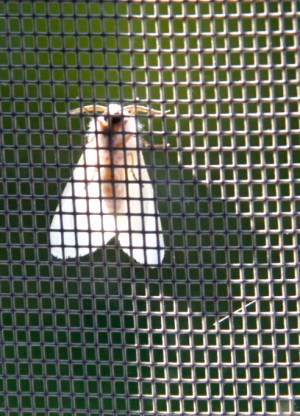
amputees
they buzz an unending dance
in the dusty gutter

galley slaves
chained to broken oars
they ply rhythmic
blunt stumps

shorn of strength and beauty
their once coloured shuttles
weave dark circles

my mouth is a full moon
open in a round pink circle
shadowed by a skull

IMG0030_1.jpg

bone and its marrow
settle in subtle ice

2

futile fragility
of the demented heart
pumping the same frequency

fragmented messages
panicked veins

frail beauty
torn from its element of air

this brightness of fragile moths
wing-shorn
drowning in the inky
depths of the gutter

IMG0007_1.jpg

the seven o’clock news brought to you
from an otherwise deserted street