New Brunswick Book Awards

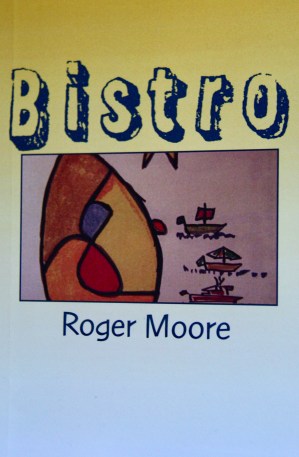
It was quite the surprise, but I am very happy to see that my book of Flash Fiction Short Stories, BISTRO, is one of the three finalists in this year’s New Brunswick Book Awards, organized jointly by the Writers’ Federation of New Brunswick (WFNB) and The Fiddlehead. It’s great to see that self-published books can get recognition at the highest (for me) level. Thank you to all who are involved in organizing this annual book award.

Bistro Cover.jpg

Bistro is available online at

https://www.amazon.com/Bistro-Flash-Fiction-Roger-Moore/dp/1537254405/ref=sr_1_2?ie=UTF8&qid=1490464520&sr=8-2&keywords=Roger+moore+Bistro

Here’s the link to the Writers Federation of New Brunswick / Fiddlehead New Brunswick Book Awards short list page

https://thefiddlehead.ca/content/announcing-finalists-new-brunswick-book-awards


Monumental Madness


img_0181

Monumental Madness

                  A long time ago, at Niagara Falls, I dressed in yellow oilskins, walked behind a tumbling wall of water, and knew I was close to the edge. Back outside, everything changed and beside that brightness of grass and rock, water screamed like shorn hair as it tore down the precipice. Have you been there? Have you walked to the end of the world, stood at the edge and peered into the starless, foam-speckled darkness that beckons below?

                  The deed leaves a bleakness dangling at the end of your wrist. Silent, you fear to dip your toes into an icy bucket of fire. Sun through dark clouds: a candle illuminating the scene. You cannot see your breath, but you know that it hangs there on the air before you. A spider web of smoke strings its impenetrable cloak between you and reality.

                  An animal urge to surge and run makes your muscles twitch but your feet are trapped in sand as crazy glue binds your limbs and banishes flight. Beads of sweat pearl on the upper lip and below the eyes. There is a melting at the temples’ edges where the short hairs tense and prickle. Now your back is on fire. Sparks fly from your hair as you prepare, Roman Candle in this unlit bonfire’s gloom, to explore a subterranean cave of unknowing.

                  The walls around you slowly congeal and your sweat flows thick then dries.  Your toes sink back into their frosty oblivion. There is no movement from your knees down. Your fingers stiffen and arthritis steals movement from inflamed joints. A voice inside your head tells you to punch the emergency numbers on your frozen cell phone, but wisdom is drowned in the mind’s dark urgings and your fingers cannot respond. You sense that this will not bring the beginning of the end. It will be the continuing of the same, torment without end, until a century of centuries stands in your mind like a single day. Eternity stretches before you with its long, dark, endless winter night: no stars, no sun, no moon, no spark, no hope, just this eternal cold that suspends all motion.

                  Within you, an animal rages carnivorous against the bone bars of its cage. It can see you; it can sense you; it can smell the atoms of fear that rise from between your toes and flow out of your armpits. Your own nostrils flare and stiffen and you too can smell that fear; you can taste the bestial desire that flesh holds for fresh torn flesh. A black velvet band binds your eyes and pulls itself tighter and closer across your chest. Your heart is a stone thrown into an icy pond. Down, it plunges, down and down, and as it descends it bumps the bodies of other beings locked there in the deep pool of your chest.

                  Somewhere in this Arctic night there is a shuffle of white pads. Sleek feet move across the snow. The polar bear’s snuffle is a whimper of hope that the end will come swiftly in the bright light of midnight descending, all red in tooth and claw. You shiver. You bite your hand. You quench your chattering teeth and hope they do not wake the nightmare. Yet still you sense it drawing close with an acquiescent dragging of slow feet.

                  The illusion, the dream, the nightmare, the chimera, the dragon that dwells in the depths, the ice cold sucker of souls that emerges in a sudden gasp of bated breath, the red hot air that flees from the anthracite when the door of the dream world flies open and the devil dances on the hot coals of his promised hell and condemns your ice to melt in those sinister flames.

                  Your pale face floats through the gloom: yellowed teeth, frail lips curved, a Cupid’s bow that will shoot sweet darts of poisoned love, dry mouth, desiccated words, sounds that form into sinister sequences, their meanings misunderstood, false hope dangling by its neck from a choking rope, the bare words pacing, naked bears across a chain of dancing memories strung out like good times, past and dead, and dangling stiff from their skeletal chains.

                  Your flightless fancies flit through a darkness of despair, as awkward as auks, as clumsy as penguins stranded in zoo cages far from their native seas, as meaningless as the dodos, as dead as the ashes lying cold beneath the crematorium’s fire.

                  A sudden bucket clatters down the well. But there is no water. This ice will not melt. These desert sands may burn your feet but they will not warm your glacial heart. The manner of your third or fourth coming brings forth no nourishment.

                  A mirror grows from a spider web on the wall. Face to face, the present and past are ambulant tenses that foretell no conditional. There is no future, let alone a future perfect. A dislocation of infinitives stretches into the infinity of an invisible futurity.

                  To be: and now you are permitted to see the depth to which you will descend. Now you see yourself sinking lower and there is only one exit. A rope and a beam appear before you; a tin of Ant Trap; the silver tusk of an open razor; that bottle of pills; that steering wheel, one twitch of which will veer you into the path of that passing truck; that bridge which crosses into the fog and ends half way across the river; the mystery and madness of that final plunge into an even longer night.

                  Or not to be: lips move and promise an end to heat and cold. Here, they say, is darkness without memory; here is sleep bereft alike of nightmare and dream; here is oblivion; here is the cessation of strife and struggle; here is peace.

                  If you take that step, you leave your present hell and enter into another hell leaving behind you family and friends to suffer without you in their own living hell.

Those Almost Perfect Hands

IMG_0385.jpg

Those Almost Perfect Hands

            In my dream, my father’s rough brown hands deal me six cards: 2 3 7 7 8 8. I cast away the 2 & 3. My father cuts a six. After the pegging, my father watches as I score: 15/2, 15/4, 15/6, 15/8, and 2 are 10, and 2 are 12 …

I turn on the mini-flash light that I clip each night to my Teddy Bear’s ear and I check my watch. Three o’clock in the morning: half way through another difficult night.  Do I really I need to get up and pee? I rub my eyes with the backs of my hands. Surely the walk to the bathroom, the cool night air, the movement will be better than lying here, dozing and dreaming. I take the flashlight from Teddy and pin it on to my nightie. Supporting my bad leg with one hand and hanging on to the bottom sheet with the other, I haul myself to a sitting position, legs over the bed. Then I reach for my walking sticks and stump towards the bathroom.

Still half-asleep and wandering in dreamland, I push my left foot forward only to stub the little toe against the cane. A sudden shock of pain wakes me and I stumble forward and jam the middle toe of my right leg against the other stick. This is my bad leg, the one gripped by sciatica, and I swear out loud as a knife blade splits my flesh and sends electric shocks down my leg, through my buttock, and into my spine. Fifteen days now: when will it ever end, this attempting to sleep on my own, these nights of restlessness.

My neighbor has left his garage lights on and they cast wind-blown shadows of dancing trees and waving limbs across the bedroom walls. Hands reach out to grasp me then fade away as more shadows dance and shift. The shadows on the wall remind me of Plato’s Cave: a wonderland of myth and adventure and what if any of it were true? Falsehoods flash their alternative realities and reality and dream clash in my half-awake mind. Crazy patterns continue to trace their waves across the walls. They form and march their silent jack boots, turning them into ballroom pumps that caress unwitting partners in an eternal yin and yang of light and shade.

I look out of the window. Three deer stand in the yard beneath me. They wander through our garden each night, journeying alternately from west to east and from east to west. I think of them as a family of Hobbits, traveling there and back again. Tonight they are headed west, in search of something, somewhere, but I know not what or where. They gather round our bird feeder and the wind chimes clatter as their long black tongues lick out to feed on bird seed. My flashlight beams into the baby deer’s eyes. She snorts a warning to the others and jumps ten feet backwards, turning in mid-air, to land facing away from the house.  The other two deer follow the baby and leave reluctant steps across the snow. So beautiful: I wish I hadn’t frightened them. I wish they didn’t have to go.

In the bathroom, I reach for the analgesic balm to ease my pain. My mind is numb with all those drugs I have been taking. The alcohol hasn’t helped. It makes me clumsy and I stand thick-tongued, dull-witted. The pain in my hip is gnawing away at my mind. I know I won’t go back to sleep. My fingers fumble across the counter and I unscrew the top of the first tube I encounter. I rub toothpaste into my back and leg and now I smell of spearmint.
 
I wander back to bed, sit on the edge, and raise my perfectly scented dead leg with a helping hand. I pin my flashlight back on Teddy’s ear. He’s a good Teddy and doesn’t make a sound. Unlike me: I wince and moan and groan. Mars, the red planet, stalls for a moment and is framed as a circular dot at the center of my tic-tac-toe window panes. I watch as an overnight flight seeks the sun and looks for the right spot in which to place its flickering cross of sparking flame. I enter a hollow dream of scarecrows reaching with twig fingers to thumb a carrot nose at leaping deer. The old raccoon gnaws at the moon and soon it is a pared rind floating its narrow lemon boat across the sky. I snuggle in beneath the blankets that Teddy has kept warm and I enter a wonderland of half-awake dreams. My childhood lies down in a primrose hedgerow and falls asleep to the tinkling of blue bells and the wafting, newly minted scent of lily of the valley.

            … and 12 are 24.  My father checks my hand and grimaces. I take the cards and shuffle them. My father cuts. His hands are as white as fresh-brushed teeth glowing in the moonlight. My hands and the deck bear the rich scent of spearmint.

Contract: Flash Fiction

IMG_0178 3

Contract

The door to the Principal’s office opened just as Tammy approached, hurrying because she was late for class. Tom, her Department Head, stepped out and stood in her way.

“Tammy,” his tongue swiveled around his thin lips in nervous fashion. “I’m just talking with the Principal about your new contract. Come in,” he extended his arm and shepherded her towards the open door.

“Not now,” Tammy replied.  “I’m late for class. “Can’t it wait?”

“Strike while the iron’s hot,” Tom showed teeth yellowed from tobacco. “We’ve got a great deal for you. Come in, come in.”

Tammy found herself face to face with the Principal.

“Tammy, my dear, we’re so proud of you,” the Principal flashed a row of crocodile teeth, two of them gold-capped. “I have some papers for you to sign.”

“But, I’m late for class and …”

“I know, don’t worry. This won’t take a moment,” Tom winked at her as he and the Principal led her towards a typewriter that sat on the desk with a blank page and two carbon copies inserted in it.

“Here, at the bottom of the page, just sign here,” Tom pointed.

“But it’s a blank page. I can’t sign a blank page,” Tammy stammered in response.

“You’ll see it when it’s typed and signed,” the Principal assured her. You can always change it later.”

“Can’t I come back after class?”

“I’m afraid not,” the Principal frowned. “I have an important meeting in half an hour, with the school board, and you’ll still be in class. This must be signed now if it’s to get board approval.”

“But you said … you said I’d only be here for a year …”

“We’re very pleased with you,” the Principal flashed the sunshine of his teeth. “We want to keep you here.”

“Very pleased,” said Tom. “This is a first class, independent school run, as you well know, on a non-profit basis. Only the children of the rich and privileged come here to study,” he paused. “And some of them come here because of you. That’s why I’m recommending you for this new and improved contract. I signed my first three-year contract this way, didn’t I?” he looked towards the Principal.

“You did indeed,” said the Principal. “And just look where you are now: Head of your Department.”

“A three-year contract …” Tammy blinked and ran her tongue over her lips. “I wasn’t expecting that. I thought a year … thank you … but …”

“No buts. Jobs are scarce nowadays, particularly in your field,” Tom looked at his watch. “Time’s getting on. You don’t want your students walking out of your class, do you? Here you are now: just sign here,” he handed her the pen he held in his hand.

“You’d better be quick,” the Principal said. “This offer may not be here tomorrow and … my goodness, look at the time. You are running late.”

“Sign,” Tom told her. “I signed and I never regretted it. Remember, we can always change the wording later.”

“Drop in after class,” the Principal smiled. “It will all be approved by then and you can read it and we’ll modify what you want.”

Tammy sighed and signed.

The Principal and the Department Head ushered her to the door.

“Hurry,” they exhorted. “Run. You don’t want to be late.”

Tammy ran to her class.

The two men watched her go. Then they went back into the office, shook hands, and grinned at each other.

Tammy never saw that contract. She stayed at the school for three more years, as she had promised, but in all that time she never got a pay raise and the not-for-profit school board never allowed her to join the employees’ health and pension plan.

Were you the one … Flash Fiction

IMG_0240

Were you the one …

… were you the one who awoke that morning at my side and heard with me the hammer blow fall on an echoing anvil in Oaxaca, in the central square when the rope slipped off the church bell and the priest and an altar boy, an acolyte dressed in black and white with a nut brown face, climbed into the church tower and when the priest said “now” the little boy struck the hammer against the bell’s anvil and “again” said the priest, and “again” and the cracked church bell lurched into its hourly cry of grief and morning, seven blows on the anvil, and a stray dog barked at those domestic birds whose beaks dug deep for the sun at dawn on our neighbor’s rooftop …and a cockerel cried out in the early morning, “cock-a-doodle doo, wake up you sleepy heads, wake up, do,” and the roosters found daylight buried in parched earth, and brought it skyward shining on their beaks, as thin cracks sprang out from the egg-shell sun like crazy paving as the yellow yolk of sunshine crept out from the cobbles down in the street and the Russian egg cup, doll after doll, unfolded daylight as the hammer’s silver spoon descended once more on this frail, egg shell world as our dreams shattered … and where now are those dreams of moonlight raked from a village pond as the orange spilled its life-blood to fill our crystalline goblets with its thick rich morning liquid as fierce and sweet as sunshine sacrificed on a branch and rain from a far-off cloud speckled the tree outside our window with radiance and a thousand rainbows all held in tiny diamonds that balanced and swayed at the branch’s edge then trickled and fell to form freckling pools between the cobblestones and even there the arco iris was multiplied, again and again, a thousand times … and the restaurant next door, with its semi-circular rainbow scarf and below it a painted deer on a decrepit wall, and Cuauthemoc was here, his burnt feet held to the fire that burns within us all, and that mangled man was nothing more than a string quartet of flesh and bone created from a ball of dough and baked in the oven in an earthenware dish with currants for eyes, a raisin for a belly button, lemon rind for a mouth, orange peel for hair, while the white bones stared stark naked from the burnt-out flesh at the end of his perished feet … and the man in the mirrored moon held up his hand to trap the wind as a falling leaf settled in the secret web between index finger and thumb and the cat’s cradle on his fingers bound us together like birds in a spun metal cage … the sparrow’s mighty choir chirped at the roof of the circus tent and animals ran wild all goosey, goosey gander, up and down, and nowhere can I now find my lady or her chamber, for they have gone, and with them went all hope, and hope being lost I ran in circles on the sand, my one foot dragging me inwards, and drawing me closer, ever closer to the rising tide, as night overwhelmed day, and dark soldiers invaded the shadowed beach, and where, oh where, did my little dog go, the dog I lost when he chased a seagull out into the bay and into the quicksand and he never came home and here I am alone in my loneliness wandering like a lost dog in ever-decreasing circles, round and round the central square, without you now, one step, two steps, and who will now tickle me under the chin with a buttercup, and who knows if I’ll ever eat butter again, as the tide climbs higher and the sea grass on the dunes is smooth and brown and cuts like glass with its withered, distorting mirrors of stark, staring eyes standing out in welcoming doorways with dark hands and even darker voices calling me in, again and again “are you looking for love, my love?” and yes, I am, I do seek love, I have always sought it, but I have sought it out in the open street, in the open square, in the fresh air, or indoors, where incense and candles burn, and the sun of god is nailed to his lump of wood or chained to his pillar and the Roman soldiers raise their whips to their lips and their kiss is the kiss of death, and I still search for love and my long lost dog as black eyes penetrate from the blackest paint where Satanic witches spoon salt soup between wrinkled lips, dark open holes for their mouths, and their eyes gouged pits in slatted, wooden faces, and they hover over the deaf man’s table in La Quinta del Sordo or stand shoulder to shoulder with Adam and Eve next door in Hieronymus Bosch’s bourgeois hell of furnace, flame, and factory, where the hot flesh catches fire as the feet are turned to the flame and Cuauthemoc burns, the whole world burns, and my soul catches fire as factories swarm with sparks of black imps, burning, dropping from the skies like fire-flies tumbling in a satanic dance, falling away from the heavenly meadow, lighting a way to the skies and the devil, too, is lost and bewildered, a Guy Fawkes impaled on his wooden stake at the bonfire’s tip and it’s November the Fifth, and the whole world is full of spinning star-sparks burning their Van Gogh holes through the black velvet fabric of the dark night of my still-suffering soul …

Comment:
This is a re-write of what I posted earlier today. It is the same piece but it is slightly shorter, more polished, and better focused. It also now has a clearer narrative line with less jumping between metaphors and a cleaner, clearer sequence.

Claustrophobia

IMG_0291.jpg

Claustrophobia

“I’ve got to get out of here.”
“Why?”
“I can’t breathe.”
“Where are we going?”
“Anywhere.”
“Are we going to Gran’s?”
“Why not? Yes. Pack your bag.”
“What about Dad?”
“What about him?”
“Aren’t you going to tell him where we’re going?”
“No.”
“Why not?”
“Because he doesn’t care. If he cared, he’d be here.”
“Maybe he’s had an accident?”
“He didn’t have one last night, or the night before. He just doesn’t care.”
“We can’t just go …”
“We can.”

She called a cab and when it came, they turned the lights out in the house, and shut the front door behind them. Then they got into the cab. The cabbie turned to her and spoke over his shoulder.

“Merry Christmas, and where would you be going, Ma’am?”
“The station.”
“Bus or train?”
“I don’t care. They’re both the same.”

The cabbie shrugged and pulled away from the kerb. The bus station was closer and that’s where the cabbie left them. Mother and son stood there for a moment, under the station lights, looking at the coaches that squatted there, parked in regular lines. Then, mother and son, they walked into the ticket office.

“What time does the next bus leave?”
“Where do you want to go?”
“Home.”
“Where’s home?”
“Swansea.”
“The next bus for Swansea leaves in twenty minutes.”
“We’ll take it.”
“Single or return?”
“Single. Two tickets.”
“You should buy a return ticket; it’s cheaper.”
“We’re not coming back. Not this time.”
“How old’s the boy?”
“Seven.”
“He can travel half price.”
“One and a half then, singles.”

It was December 23rd, her own mother’s birthday. Mother and son sat together on the dark, empty bus. The cold seats chilled them as they waited  in silence. The boy looked out the window and coughed.

“Will Grampy be there to meet us?”
“No.”
“Doesn’t he know we’re coming?”
“No.”
“Does granny know?”
“No.”
“Mum, why are we going?”
“It’s granny’s birthday today. We’re going to give her a surprise.”

Two hours later, the bus deposited them in Swansea. The night had filled with heavy clouds and promised snow.

“Can we take a cab. mum?”
“There’s none here. We’ll have to walk.”

They walked side by side down the well-known streets. Christmas lights adorned the shops and they walked through alternate pools of light and darkness.

“Mum, I’m tired.”
“Give me your bag. We’re nearly there.”
“But mum …”
“I can carry both. Hold on to my arm.”

They kept on walking. After a while, they stopped beneath the streetlight outside the old family home and looked up into the street light’s glow. The first snow-flakes danced down.

“Can we go in now, mum? I want to see Gran and Gramps.”
“You go in. I’ll be with you in a moment.”

She watched her son climb the steps to the front door. He lifted the old brass knocker and banged it down. After a moment, the front light came on and the door opened a crack. She stood beneath the street lamp, inhaling, taking the chill air deep into her lungs. She felt the tight bands in her chest start to loosen. For the first time since this time last year, she felt free

Warning to the reader:
Raw material, still under revision, and probably needs lots of revising. I look forward to your comments. In some ways, this is my take on A Child’s Christmas in Wales. Not quite how Dylan Thomas saw it; more a sort of … well, you work it out for yourself!

Structure in the Short Story

img_0177

Structure in the Short Story
Wednesday Workshop
30 November 2016
Posted: 4 December 2016.

I just attended, with one of my writers’ groups, a writing workshop offered by a guest speaker. Our speaker threw out some interesting ideas on structure in general and structure in the short story in particular. The first comment he made was “Are you sure that your novel is not a short story and vice versa?” He then suggested that often beginning writers run out of steam because their novels are not really novels but are short stories that need cutting, rather than expanding.

He followed this up by suggesting, and I made no notes so I write from a memory that fails me more often than it used to, that a short story should have a structure that runs something like this:

stasis > key occurrence > end of old world (stasis broken) > beginning of new reality (the world upside down) > quest (the search for  new balance) > climax (when all the events of the crisis come together) >  the moment of truth (when the central character is faced by a decision) > the choice (the protagonist chooses) > pay-off for protagonist (order is restored and the protagonist is changed or confirmed by his choice) > pay-off for readers (who see that change and are themselves changed by looking at the same old world through different sight and a new knowledge or insight gained).

 One of the group members circulated his notes from the workshop and summarized the idea rather more succinctly:

The first thing I remember … in any story, the main character has to be changed at the end from what s/he was in the beginning.

The other item was the list of elements in a story: Stasis, Trigger, Quest, Surprise, Critical Choice, Climax and Resolution.

            Clearly this is a theoretical structure, but many short stories follow it or versions of it. Through this structure, our speaker suggested, there often runs a leitmotiv and this can provide a thematic unity that also holds the story together. Returning to this thematic unity and writing selectively from within it, can often produce the desired change in reader and protagonist. Equally clearly, there is no length to this structure and the resulting story may be very brief or suitably enlarged.

According to our speaker, the character of the protagonist is very important and the key aspects of the protagonist’s character must be clearly drawn, right from the start. The protagonist must also go through some sort of change as the story and the protagonist’s character both develop. Place is also important and the protagonist should be linked into a place and preferably a time. The protagonist in the short story is, after all, in a dialogue with his time and his place (his chronotopos, as Bakhtin would phrase it).

This is certainly a prescription for short story writing, one of many prescriptions, I might add. A quick search turns up another definition, this time of a five-point narrative arc offered by Mark Flanagan:

“Sometime[s] simply called “arc” or “story arc,” narrative arc refers to the chronological construction of plot in a novel or story. Typically, a narrative arc looks something like a pyramid, made up of the following components: exposition, rising action, climax, falling action, and resolution.”

            Flanagan continues with a definition of each moment in the story. Exposition reveals the characters and the setting. Rising action is a complication that hinders the protagonist. Climax is the point of highest stress or tension. Falling action is a releasing of the pressure and the resolution ties up all the loose ends. (Taken from this site)

http://contemporarylit.about.com/od/literaryterms/g/Narrative-Arc-What-Is-Narrative-Arc-In-Literature.htm

Lope de Vega, the Seventeenth-century Spanish playwright, suggested a simplified three-part structure: situation > complication > unfolding / dénouement. Of course, the complications may be multiple, resulting in an action that runs situation > complication > further complications > complicating the complications > even more complications > even more complicated complications > and then the final unraveling of the ‘by now very twisted’ plot. An even simpler two-part definition, also from Spain’s Seventeenth-century, offers us the dual structure of a ‘world in disorder’ > ‘a world in order’ — how the characters progress from disorder to order is up to you as a writer.

Of course, the author may decide NOT to tie up all the loose ends and re-order the world to perfection. When this happens, we may have a dystopia: the disaster continues; or we may have an open ending that prompts the reader to wonder what might happen or what might have happened. As for ‘beginning at the beginning,’ there are also stories that begin in the middle (in media res) and then go backwards in time before going forwards again. This raises the awkward question: how short is a short story? I won’t attempt to answer that one here.

Whether you describe or prescribe, there are many possibilities in the world of short story telling and it is always the story that counts. If it is good, then perceived structural flaws that go against these prescriptive methods may well become a prescriptive structure for another future writer. Interior monologue and dream, for example, linked thematically but not necessarily linked in time and space, may well distort or destroy yet another structural format, that of the three classic unities of time, place, and action. these, incidentally, are expanded into four by the great Spanish playwrights (among others, I am sure) who add unity of theme to the other three.

Robin Grindstaff, in an online article entitled “Narrative Arc: what the heck is it?”, available at

http://robbgrindstaff.com/2012/03/narrative-arc-what-the-heck-is-it/

suggests yet another simplification and reshaping, of the narrative arc idea.

“Think of narrative arc as a bell curve. It starts at a point on the lower left hand side of a graph, rises in a curve to a peak, and then drops back down again. The standard narrative arc is often referred to in terms of the three-act play: a beginning, a middle, and an end.”

            This is not unlike the structure outlined by Lope de Vega, except for the fact that ‘middle’ is a rather inadequate term for the multiple complications outlined in the Lope de Vega model. This statement may be a little unfair as Robin Grindstaff goes on to outline the complications that may occur in the second act in the following fashion:

“In act two, the main character must try to overcome the conflict presented by the inciting event. The character wants something, has a goal in mind. The conflict and tension of the story rise, and obstacles are thrown in the path of the character to prevent her from achieving her goal. The character faces these obstacles on her way to overcoming the conflict. The obstacles get bigger, more difficult, and the character may be on the verge of defeat or surrender. At this point, the character must make a critical decision or a moral choice that changes the direction of the story.”

            Clearly the ‘obstacles that are thrown’ compare favorably with Lope’s consistent throwing of obstacles and ‘middle’ therefore becomes a euphemism for ‘complications.’ Act three allows for the climax and resolution of the story and this includes character change or ‘death in defeat’ and tragedy. I recommend this article very strongly, as it goes way beyond the outline I have offered thus far and clarifies many features of the narrative arc.

In fact, Grindstaff then references Nigel Watts, Write a Novel and Get It Published, and outlines an eight-point narrative arc that runs

stasis > trigger > quest > surprise > critical choice > climax > reversal > resolution.

 This runs a close parallel to the circulated list (quoted earlier) of seven elements:

 Stasis > Trigger > Quest > Surprise > Critical Choice > Climax > Resolution.

 The main difference being the insertion of a reversal between the climax and the resolution.

So, we have now established an narrative arc, or a pyramid, with 2, 3, 4, 5, 6, 7 or 8 steps included within it. This is all very prescriptive: do it and you will succeed. My greatest fear then becomes the gate-keepers, those anonymous figures who sit on shadowy selection committees, place ticks in appropriate boxes, and judge the quality of writing by consensus in committee. I can hear them now: “#7 is missing. There’s no reversal. Reject!” “I don’t like #5. The choice isn’t critical enough. Reject!”

As writers, we must remember that all these arcs and numbers are just theories. The most important thing is the command ‘Take up thy pen and write’! All the theory in the world does not produce a good short story or a good novel. In fact, the opposite may be true: too many rules may stifle our narratives at birth or choke them to death My advice: know your theories, then smash them into little pieces and create the new structures, the new formats, the next new great piece of writing that will lead you, as a writer, to boldly go where no writer has gone before.

 Blessings, happy writing, and follow your creative instincts.
Dream of Oaxaca

IMG_0165.JPG

Dream of Oaxaca

I can bring you a Bird of Paradise, but I cannot bring you the sounds and smells of Oaxaca. The pungent odour of the first drops of rain falling into dry dust, the tang of waxen candles burning in the cathedral’s dark, the high notes sung at the altar by the old woman, dressed in black, who sings each day, on her knees, before the golden images in Santo Domingo: these sounds and smells defy any words I can pen. Nor can I place on the page the bustle of the abastos, the bickering of rooftop goats, the barking and growling of the dogs who patrol the azoteas at head-height and snap at your ears.  Other things escape me: the salty taste of sweat, the heat and heaviness of the midday sun as its hammer falls vertical from the sky, the sandpaper touch of hand-hewn stone, cobbles hard beneath the feet, the visual impact of the revolutionary bullet holes still scarring the church where Benito Juárez got married and reminding the tourists that violence in Mexico is never far away. The silk smooth threads that run through the vendor’s carpets contrast violently with the harsh sharp tares still lodged in hand carded wool. Colors and scents: coffees and chocolates blending and blended in the open air-market, the spice stall with a hundred different kinds of peppers, the golden yellow flower of the gourd — flor de calabaza — as it floats on the surface of spiced soup or lolls luxurious upon Oaxacan cheese or tortilla and quesadilla. Such things are the substance of daily reality: I remember them well, but I cannot gift you with their taste, nor their smell, nor their sound. At night, strings of fireworks hang down the cathedral’s towers and, at the spark of a match, these castillos as they call them, burn. Cataracts of light flicker and flow as rockets claw upwards into the sky to knock on the doors of the slumbering gods. A bull’s head, attached to a wooden frame, bears fireworks that crackle and spurt fire as the bull charges at the gathered crowd. Sparks char cotton and wool, young girls shriek and flee, a striped, carved tiger emerges sparkling from the shadows and his eyes light up with another set of fires … But there is always something missing from these words. How much can I describe? How much am I forced to leave out? How close can I get to an imagined reality that is more imagined than real, more creation than memory? I live in a world that has forgotten poetry. I live in a world that has laid aside the great myths and replaced them with a media that misleads and falsifies. I live in a world in which the power and glory of words is used not to delight and educate, but to manipulate. I live in a treacherous world of lies and deceit, the world of Descartes’s evil genius, for not everything is as it seems to be and the people have been misled. But this world of ours is old, and older, darker powers than ours still dwell on this earth: a pinch of salt thrown over the shoulder, index finger and thumb pinched into a magic circle that wards off the evil eye, the traditional hunchback – el jorobado –, carved from jade, who packs our cares and troubles into his hump and carries them away … as I have been carried away, on this tide of creation that ebbs and flows, a virtual sea, a wave of autumn leaves that washes up to my door, then falls asleep, golden, brown, peaceful in the vacuum that is left by the wind’s sudden absence. So, for a while, after you have read these words, avoid all shadows, do not step on the black lines that divide sidewalk and pavement into squares, do not crush the elf’s dry bones hidden in a fallen leaf, avoid black cats, make sure the crow flies on the correct side of the road …  then find a quiet corner of the street where the leaves dance to the wind’s tune, and fall asleep to re-create your own life in dreams.

Questions

img_0141-2

Questions

I hear her voice, delicate, distant and I run to the sound, jump on the table, and sit in my usual spot just beside her play thing, but she isn’t there. He’s there, damn it, talking away on that little black thing with buttons. I can see him, smell him. I hate him, his other sex perfumes, his heavy-footed shuffle, his loud voice, his walking-sticks. I run when he approaches, run and hide myself away, making myself small, fitting under furniture where he can’t get at me, trying new places, new spaces …

Downstairs in the basement is good. He has problems with the stairs – shuffle, shuffle, clump, clump – and I get plenty of warning. Not that he ever comes downstairs to the basement. There’s nothing down here for him and I can sit here and snooze and dream and wait for my darling to come back. She will come back. I know she’ll come back. I know she’ll never abandon me, like she’s abandoned him. I am faithful, I can wait.

Besides which, I am training him. It takes time, but he’s beginning to understand that he must do things my way now. I chat him up for food and whisk myself around his legs and down comes the kibble, like manna from heaven. He often spills the food, so I get extra bits, nipping in quickly while he searches for a broom or a dustpan, or that noisy sucking thing I hate so much. That’s not just him, I run when she uses it too: it hurts my ears. And my feelings: I think they’re shooing me away because they don’t want me near. Not that I want to be near him, oh no.

I stay away from the upstairs and the bedroom while he’s here alone. Sometimes we meet on the stairs when I have completed my ablutions, but I give a little shimmy and scoot and leave him star-struck and stranded. He’s just not quick enough. He’s not cruel, mind. He doesn’t kick me or hit me with his stick or anything like that. I just don’t like men. I remember that other man, the one that beat me before she came to the place with all the other cats and cages and took me home. I think all men are like that first man, if you give them the chance, and I’m not giving this one a chance, not until I’ve trained him properly. And he isn’t trained yet. I wonder how long I’ve got?

There he is, hanging on to that little black thing, and when he stops talking, I can hear her beloved voice. It’s distant and a little bit tinny, with a sort of echo, and there are other sounds in the background that I can’t quite make out, but it’s her, I’d know her anywhere, and I whimper and scratch, and he puts down a hand in my direction, but he doesn’t tempt me, and then he holds that black thing down and she calls me by my favorite names and I sit there, silent, and gaze into space, remembering her touch, her gaze, her hand upon my neck, my back … no, I won’t let him that near me, not yet.

Yesterday, he sat at her place by the table and turned the picture machine on. Then shadows appeared and her voice came out of the machine. The shadows moved and played and people chatted back and forth and I didn’t understand it, I just didn’t understand. My whiskers stiffened and I sat there and bristled. The machine was warm and I snuggled up to it, behind the flat piece, where I could listen but he couldn’t quite touch me, even though he stretched out his hand. And she called my name, again and again, but I didn’t move, I just sat there and sat there, waiting.

Then I came to the front of the machine where the shadows danced and her voice was stronger. A shadow, I couldn’t make it out, then her voice again, my whiskers stiffened, I leant forward and sniffed, but no smell, it was her voice, and the shadow shifted the way she does, but they had no smell, and scentless, I could not really sense her, I bristled and she called me, called me by my favorite names, and mewed, I mewed back.

But I couldn’t smell her, and there was no sense of touch … is this the hell all pussy cats will suffer … shadows on a screen, a haunting voice, memories shifting and dancing, no touch, no hugs, no sense of smell … and nothing solid … just shadows and absence … and a sense of chill … forever and forever?