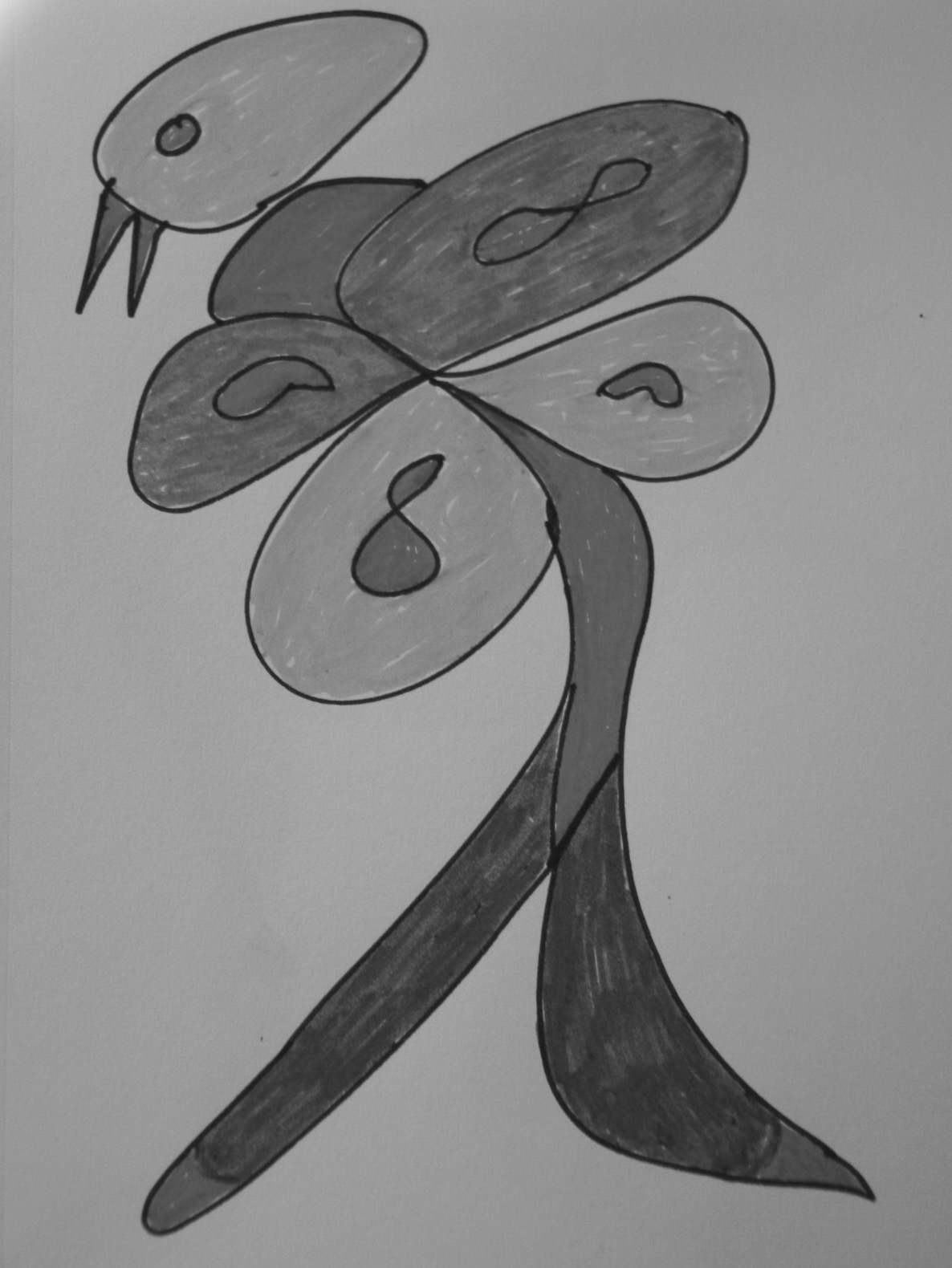
To be Welsh in the Rhondda


IMG_0147

To be Welsh in the Rhondda Valley
 
To be Welsh in the Rhondda Valley
is to change buses at the roundabout in Porth;
it’s to speak the language of steam and coal,
with an accent that grates like anthracite —
no plum in the mouth for us;
no polish, just spit and phlegm
that cut through dust and grit,
pit-head elocution lessons hacked from the coal-face
or purchased in the corner store at Tonypandy.

And we sing deep, rolling hymns
that surge from suffering and the eternal longing
for a light that never breaks underground
where we live out our lives and no owners roam.

Here flame and gas spell violent death.
The creaking of the pit-prop
warns of the song-bird soon to be silent in its cage …
… and hymn and heart are stopped in our throats,
when, after the explosion, the dust settles down,
and high above us the black crowds gather.

Last Day

IMG_0167 2

LAST DAY

Cardboard boxes stand stacked against the wall.
The basement is already empty.
There is no spare time.

We must clean and polish and make things shipshape.
The latest owners will be soon here
claiming their keys and their rights of entry.

Empty bottles of old memories stand disordered:
quarrels, wild words, making friends again;
my mother’s body slumped at the bottom of the stairs,
or lying senseless in front of the television;
her bloodless face pale above the stretcher
as they carry her away.
We launch a last desperate hunt through the empty house.

How many memories must we leave behind
with that one last look through the closing door?

How much of our former lives can we capture?

NOTE:
Another Golden Oldie from the last century, the last millennium. This one appeared in The Antigonish Review. I dedicate it to all those who are about to sell their houses and move, and particularly to my friends David and Ana.


Capella dos Ossos

IMG_0137.jpg

CAPELLA DOS OSSOS
(Chapel of Bones, Evora )

They drew blood from the bull’s body, stretching him,
broken, over golden sand: a playground for the gods.
His one horn, splintered, plowed into the arena,
his other horn pointed skywards: a finger of wrath.

Cannibal red and carnival yellow, his blood and urine
spilled for the drunken pleasure for which we had paid.
We had also paid for bands and martial music; a Mexican
wave swept rhythmically over the bullring to enliven us.

Later that day we gave warm coins to the tour guide.
She counted the whites of our astonished eyes and divided
the total by two as we stepped from the air-conditioned bus.

The chapel’s slaughterhouse stench overcame us.
Bone after human bone thrust out from the ossuary walls:
a generation of tarnished hands held out to greet us.

Note:
This poem is a golden oldie, published way back when, not only in the last century, but in the last millennium, courtesy of the Nashwaak Review. Sometimes, it’s fun to explore that past and see where it led us. This is from my Milton Acorn, almost about to rhyme, Jackpine Sonnet mode. The poem does have 14 lines.

Metalanguage

Avila 2007a 157.jpg

Metalanguage I

I wonder what I’m doing here, so far from home, sitting
at the bar, with my beer before me, my face distorted
in half a dozen esperpentic mirrors, surrounded by
people half my age, or less, all smoking, cursing, using
foreign forms of meta-language, gestures I no longer recall:
the single finger on the nose, two fingers on the forehead,
the back of the hand rammed against the chin with a sort
of snort of disapproval. It’s way beyond my bedtime; yet
I am held here, captured, body and soul, by foreign rhythms,
unreal expectations of a daily ritual that runs on unbroken
cycles of time: morning coffee, pre-lunch wine and tapas,
home for the mid-day meal, a brief siesta, back to the café
for a post-prandial raising of spirits, more coffee, then back
to work at four and struggle on until seven or eight when
the bar routine begins again with pre-supper tapas and wine.
Time, divorced from this cycle now lacks meaning.
Time within this cycle is meaningless too.

El Rincón
03 VIII 2005

Metalanguage II

I wonder what I’m doing here,
so far from home,
sitting at the bar, my beer before me,
my face distorted in half a dozen
fairground mirrors,
surrounded by people half my age,
or less, all smoking, cursing,
using foreign forms of meta-language,
gestures I no longer recall:
the single finger on the nose,
two fingers on the forehead,
the back of the hand rammed against the chin
with a sort of snort of disapproval.

It’s way beyond my bedtime;
yet I am held here,
captured, body and soul,
by foreign rhythms,
unreal expectations of a daily ritual
that runs on unbroken cycles of time:
morning coffee,
pre-lunch wine and tapas,
home for the mid-day meal,
a brief siesta,
back to the café for a post-prandial
raising of spirits,
more coffee,
then back to work at four
and I struggle on until seven or eight
when the bar routine begins again
with pre-supper tapas and wine.

Time,
divorced from this cycle
now lacks meaning.

Time
within this cycle
is meaningless too.

Idlewood
24 IX 2016

People Poems 2

IMG_0202 (1).jpg

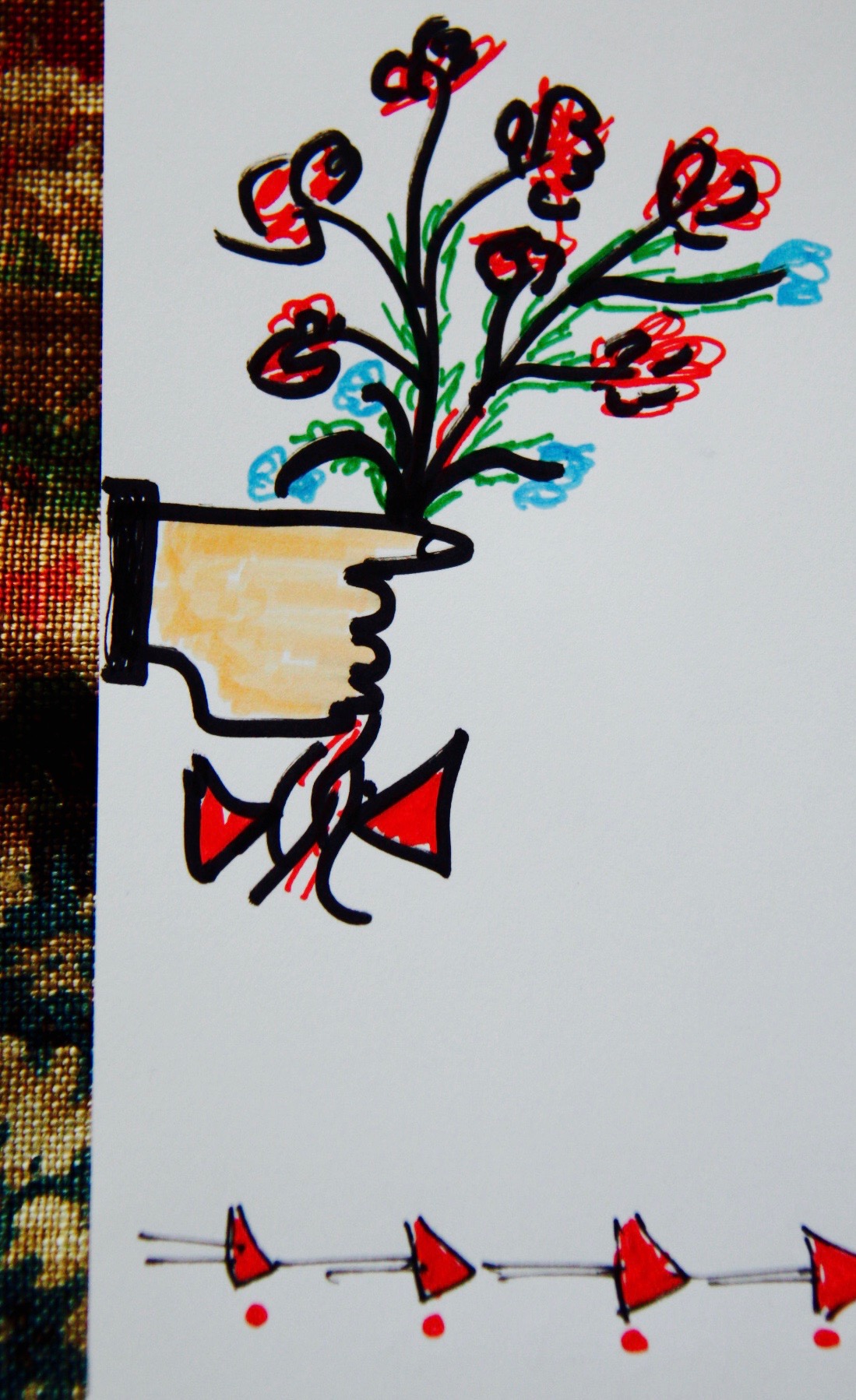
People Poems are dedicated to people who, for one reason or another, have distinguished themselves in my life. People Poem 2 is dedicated to Pearl Kirkby who persuaded me — in one sentence — to change my signature from that of a backward looking former academic to that of a forward looking creative writer. ID, from Granite Ship rewritten as Land of Rocks and Saints, and liked by Pearl, reminds me of my time in academia. However, the final image of the USB states clearly the forward-looking aspect of my creativity. I am now a full-time creative writer. Thank you, Pearl, for pointing this out to me. Please accept this poem and this bouquet of e-flowers as my tribute and acknowledgement of my debt to you.

ID

Within this bookstore are many books, yet none
with my name on the cover or my life blood inside.
Deeper I dig, and deeper. Now here is a name I know,
and there in the bibliography, at last, I find my name:

two books, a dozen or so articles, a thesis, and I am
vindicated. All that study, that work, has led to this:
my name in a foreign book in a foreign bookstore. Nice
work: now I know that wherever I go, I can establish

my identity, set myself free from anonymity’s pangs.
Plug in the computer, turn it on, and there I am on the web,
smiling back at me. There is no better passport, no better

sense of being, of identity, than that contained in these
images of self, these self-reproductions that I carry with
me, always, in a memory stick looped round my neck.

Plaza de Santa Teresa
26 VII 2005


People Poems 1

IMG_0202 (1).jpg

People Poems are dedicated to people who, for one reason or another, have distinguished themselves in my life. The first poem, People Poem 1, is dedicated to Meg Sorick who is the very first person, ever, in history, to purchase one of my books, Sun and Moon, online from Amazon. To be Welsh on Sunday pays  tribute to Meg’s adventures with Michelada, among other things! Congratulations, Meg! Many thanks, and I do hope you enjoy your new book. Meanwhile, please accept this poem and this bouquet of e-flowers as my tribute and acknowledgement of my debt to you.

To be Welsh on Sunday

(This poem should be read out loud, fast, and in a single breath!)

To be Welsh on Sunday in a dry area of Wales is to wish,
for the only time in your life, that you were English and civilized,
and that you had a car or a bike and could drive
or pedal to your heart’s desire, the county next door,
wet on Sundays, where the pubs never shut
and the bar is a paradise of elbows in your ribs
and the dark liquids flow, not warm, not cold, just right,
and family and friends are there beside you
shoulder to shoulder, with the old ones sitting
indoors by the fire in winter or outdoors in summer,
at a picnic table under the trees
or beneath an umbrella that says Seven Up and Pepsi
(though nobody drinks them) and the umbrella is a sunshade
on an evening like this when the sun is still high
and the children tumble on the grass playing
soccer and cricket and it’s “Watch your beer, Da!”
as the gymnasts vault over the family dog till it hides
beneath the table and snores and twitches until “Time,
Gentlemen, please!” and the nightmare is upon us
as the old school bell, ship’s bell, rings out its brass warning
and people leave the Travellers’ Rest, the Ffynnon Wen,
The Ty Coch, The Antelope, The Butcher’s, The Rhiwbina Deri,
The White Rose, The Con Club, the Plough and Harrow,
The Flora, The Woodville, The Pant Mawr, The Cow and Snuffers
— God Bless them all, I knew them in my prime.

On Being Welsh

IMG_0146.jpg

On Being Welsh

I am the all-seeing eyes at the tip of Worm’s Head;
I am the teeth of the rocks at Rhossili;
I am the blackness in Pwll Ddu pool
when the sea-swells suck the stranger
in and out, sanding his bones.

Song pulled taut from a dark Welsh lung,
I am the memories of Silure and beast
mingled in a Gower Cave;
tamer of aurox,
hunter of deer,
caretaker of coracle
fisher of salmon on the Abertawe tide,
I am the weaver of rhinoceros wool.

I am the minority,
persecuted for my faith,
for my language, for my sex,
for the coal-dark of my thoughts;

I am the bard whose harp,
strung like a bow,
will sing your death
with music of arrows
from the wet Welsh woods;

I am the barb that sticks in your throat
from the dark worded ambush of my song.

The Thin Man

IMG_0183.jpg

The Thin Man

The thin man
looks out of his window
and watches the leaves
as they twist and fall
like they did last autumn.

Golden carpets
spread across the grass
while under the lindens
the slender hands of children
crush flowers into perfume
and interlace bright
threads into tapestries
woven with light.

Will the thin man
give up his secret?

It cannot be clutched
by the camera’s artificial eye,
by the painter’s red squirrel brush,
nor by the tail of the dog fox
held over bandaged eyes.

Cows in the thin man’s
fields are scrawny.

They once walked
wary of the thin man
with his fistful of stones,
his pointed stick,
his sharp knife
and his slant-eyed dogs
that showed off
the basket weave of their ribs
with a rash of gravelly nipples
rippling against the skin
when they ran
snapping and slashing
with ivory fangs
at the frightened cattle.

Now the thin man is dying.
His cattle graze in peace.
His spirit wants to slide
through a gap in the cactus fence
and wander celestial pastures.

“I will light a fire,”
the witch doctor says.

He begins with the glow-
worm of a match.

That small flame smolders
as he breathes life into
shavings and dry bark.

Stars reach out
with tender hands.

A new spark walks
among the constellations.

The goats on the roof
grow grey with age.

Beside them,
a dappled donkey brays
as the thin man’s spirit
sets out on its journey to the stars.

A herd of seven goats, the Pleiades
rise above the sacrificial mound.

The witch doctor’s heart
shrinks to the size of an orange pip
when he cradles the thin man’s
body in his arms.

On the horizon,
Tochtli
gnaws at the moon’s
white skull.

Murciélago

exits his cave with evening
wrapped beneath his wings.

Tezcatlipoca
holds a stone
knife in his iron hand.

The thin man
dreams of Santo Domingo
where the golden tree
bends like a rainbow,

exposing its roots
as the end draws near.

Man from Merthyr

IMG0040_1.jpg

Man
from
Merthyr

 Memory loss punched
holes in your head
and let in the dark,
instead of the light.

Constellations faded,
erased by the arch-
angel’s coal-dust wing.

 “I’m shrinking,” you said,
the last time I saw you,
you who had been taller
were now smaller than me.

 Tonight,
when the harvest
moon shines bright
and drowns the stars
in its sea of light,
I will sit by my window
and watch for your soul
as it rockets its
way to eternity.

My eyes will be dry.
I do not wish
pink runnels to run
down this coal-miner’s
unwashed face.

“When the coal
comes from the Rhondda
down the Merthyr-Taff Vale line,
when the coal
comes from the Rhondda
I’ll be there.”

With you,
shoulder to shoulder.

Farewell, my friend,
safe journey.

Teddy Bears FFF

Empress 077.jpg

Teddy Bears
Friday Fast Fiction

Now they sleep in separate rooms in single beds each tucked in with a monogrammed teddy bear.
He likes to cuddle his, keeping it warm, tucking it carefully under the bedclothes. He calls it Ready Teddy, and his favorite game, especially in summer, is to hold his teddy bear by one back leg and say in a loud voice “Ready, Teddy, GO!”
At the word “GO” he hurls his teddy bear skywards and takes great delight in the fate of a sleeping fly, pinned against the ceiling and squashed. His delight doubles if one of the pointed waves of ceiling paint impales the fly and leaves it squirming there, buzzing impotently. This means target practice and he hurls Ready Teddy, “GO, GO,” skywards again and again until the unfortunate fly, falling like a condemned angel, tumbles back to earth.
She still follows the same ritual as when they were sleeping together in the same bed. First she pummels the pillows, fluffing them up with sideways movements of the hands. Next, she lays them on the bed and beats them flat. Then she picks them up and plays them like a concertina, pushing them together then stretching them out again. As for her teddy bear, she likes to discipline it, to beat it into shape. Once upon a time, it made noises and let out little squeals and squeaks, but the constant violence has silenced its sound box.
When they slept together she often took her teddy and beat it against her husband’s head. He would wake from the deepest dream head a-throb, ears and cheeks stinging, as she flailed him with her teddy and struck him blow after blow. When his headaches grew worse, they decided to sleep apart. He felt it was better and safer that way.
Last night, she sleepwalked into his room, and sat on the side of his bed. She clasped her teddy by the feet, a rabid Rottweiler with a rag doll, and thumped her teddy’s head against her husband’s face again and again.
The sleeping tablets had made him drowsy and slow to wake. His wife kept up the barrage until he finally woke, eased the teddy bear from her grasp, and walked her back to bed
On the way back to his own room, he checked into the bathroom and examined his face in the mirror. Blood seeped from his nostrils. He had bruises under his left eye and his cheeks glowed red where veins had broken near the surface
Next morning, he sat at the breakfast table, his grandfather’s First World War magnifying mirror in his hand, and examined his face. The ice pack had taken effect and he looked less damaged now. He reached for the color correction cream in the packet beside him and read the directions with care. Then he placed a tiny drop of the magic serum onto the paintbrush and worked the correction cream over the marks on his face. He watched them disappear one by one. Now he would be ready to face the world.
He stared into the magnifying mirror gazing deeply into his own eyes. Was that how it had happened? Or had their first child really fallen downstairs, banging her little head on each wooden step at eighteen months old?
The inquest had been inconclusive, his wife held blameless. They had remained childless after the trial.
Was that a blessing or a curse?