Writing Groups: Thursday Thoughts


img_0186

Writing Groups
Thursday Thoughts
11 May 2017

We write in solitude.

We cannot group-write with a second person suggesting the second word and a third person, the third word. This leads only to the Third Word War or the Third Word Whore, as some would express it.

To write is to be alone. It is to sit alone before a blank page and watch it slowly fill with the black ants that we form into thoughts. With pen or pencil we trace the Morse Code SOS of our Mayday signals. We gather them into groups, press them between cardboard covers, and we send them out to sea in little bottles. Then we sit back and wait, hoping to contact intelligent and compatible life that will approve our efforts and perhaps offer to publish our writing.

We must not confuse the act of writing with the act of sharing.

In many cases, to share is to seek approval. But this is not always true. We sometimes share in the hopes that a listener will suggest improvements to our writing. I think of this as ‘sharing from weakness’. We are unsure of our sharing self and we seek confirmation and reinforcement. We also seek the reassurance that the second person or the third actually has a better vision than the writer and can improve that writer’s offering. How confident are we in our own writing when we constantly look for approval?

Sometimes, our sharing is in an act of defiance. We organize our black ant army. We form it into battalions. We launch them at the enemy and “Take that you bastards,!” we think as we read out our thoughts. Occasionally, our sharing is an act of self-praise. We know it’s good and we want others to realize just how good this piece is and how good we are. Auto-homenaje (Spanish): an act done in praise of oneself.

The act of sharing can be private and confidential. This is when we gather with a group of friends to share our thoughts and creations. This is most useful, in my opinion, at the beginning of a writer’s career. Writers have to become independent. They have to learn to shake off the shackles of doubts, second and third opinions, and the rewriting that comes from the mind of an outside reader. Writers have to learn to stand alone and to write alone. This is where the public reading comes in.

To read in public, as in an open reading given before an audience of unknown faces, is a different proposition. We are relatively confident when we share with our friends. We are not so confident when we read in public. We must be confident in ourselves and our words if we are to stand before strangers and expose ourselves, our strengths and our weaknesses, to those who may not love us and some who may actually hate us, looking for any defect, any chink in our written armor.

Beyond writing, yet enclosed within it, is the writer’s desire to be recognized and published. If we are writers, we want our works to be known and read. We want to be published. Even when we know we are not ready to be published or worthy to be seen in print, we like to imagine ourselves preparing that great tome or slender volume of verses that one day will project us into the realms of glory when it finally sees the light of day.

Yet we cannot publish alone. Or can we? Desk-top publishing on our own computer is easy to do. Format the work, print it out, take it to the photocopy machine, copy it multiple times, staple the resulting pages together and we have … a book. But are we satisfied with those morsels of paper that we hand out to our friends? Some people are, many are not.

Let us look at an alternate route: we hand the book over to a press that edits the writing, does all the copying work for us, chooses a cover, binds the book, gives us twenty free copies, and hands us an enormous bill … some are happy with that; again, others are not.

Let us examine another route: we find an online company that will do all (or most) of that for free. All we have to do is market our work … again, some are happy with that; others are not.

Mal de todos, consuelo de tontos. This is a delightful Spanish phrase. It means that when everyone is travelling in the same ship of sorrows, only fools are consoled by the fact that we all share the same fate. Perhaps that’s why writers gather together in groups and perch, like autumn swallows preparing to migrate, on chairs in a drawing room at somebody’s house or gather together in a disreputable, but cheap, coffee house to read, discuss, share, and endlessly talk about the works that never get published.

“You just got rejected? What a pity. I just did too. Let’s compare rejection letters. Paper your walls with them, my friend.”

The carrot that we all seek is the pot of gold at the rainbow’s end that contains the winning lottery ticket: a letter from a publisher offering to publish the book we have written. An Old Welsh Recipe for rabbit pie begins with these wise words: “First catch your rabbit.” The same wisdom must be applied to writers: “First, write your book.”

When the book is written, to the satisfaction of the writer, then, only then, let the networking begin. Then we can reach out to the community. Then we can read in public. Then we can seek out that elusive publisher and follow our own thirty-nine steps to success.

Bu, in the meantime, remember, never forget, we write in solitude.

Help!


img_0372

Help!

The world turns full circle
and my mother is on the phone.
It’s four AM. “Help me!” she cries,
from the far side of the Atlantic.

Her ship is sinking fast and she’s
nine sheets to the wind.
“I’ll stick my head in the oven,”
she says, “and turn on the gas.”

What can I say? What can I do?
She makes so many threats.
She’s crying “Wolf!” and her words
now bounce off this duck’s back.

Yet still I wake at night to hear
her whispered words, and they still
chill with their razor’s edge of
“Help me! Help! Please help!”’

Cramp

Chaos

Cramp
(Jackpine Sonnet)

Late last night, lying in bed,
cramp laid siege to my lower limbs.
I crawled out of that bed and stretched,
left leg, right leg, in the bathroom.

Aching still, the fear of more cramp
to come weighed heavy on my mind.

I didn’t want to wake my wife
with panic and alarums, so I slept
in the spare bed in the other room.

A great round moon sailed its pale-
faced boat on a sea of silent clouds.

I lay on the life raft of my bed
and prayed for cramp to stay away
and for the mattress to keep me afloat.

Lost

img_0363

Lost

My body’s house has many rooms and
you, my love, are present in them all.
I see you here and there, glimpse your
shadow in a mirror, and feel your breath
brush on my cheek when I open a door.

Where have you gone? I walk from room
to room, but when I seek, I no longer find,
and when I knock, nothing opens. Afraid,
sometimes, to enter a room, I know you are
in there. I hear your footsteps on the stair.
Sometimes your voice breaks the silence.

It whispers my name in the same old way
I remember … how can it be true, my love,
that you have gone, that you have left me
here alone? I count the hours, the days,
and snatch at sudden straws of hope,
embracing dust motes to find no solace
in the sunbeams, salacious as they are,
that drag me from my occasional dreams.

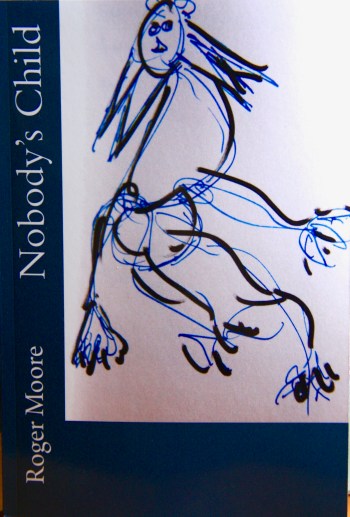
Nobody’s Child

IMG_0466.jpg


I ordered Nobody’s Child on Monday and it arrived on Thursday, two days after A Cancer Chronicle. Two books, two days apart. Wow. Nobody’s Child is a collection of short stories and Flash Fiction that deals with some difficult topics. A couple of the shorter pieces have appeared on these pages and will be familiar to the followers of this blog. Most of the material is new, some of it, very recent. Some of the stories have been published, others have received awards and honorable mentions. A shortened version of the collection, under the same title, was given an Honorable Mention in the David Adams Richards Fiction Prize of the Writers’ Federation of New Brunswick in 2016.

Let the fiction begin: “… so this is earth day and we light candles in our house and turn off the telly and the computers and sit there reading and writing, watching each other through the flicker of the candle flames, and listening to the sounds of the house, such subtle sounds, the creak of the siding, the click of a door, a blind moving in the room overhead, the tick of the grandfather clock in the hall … and the smoke rises from the candles and makes dark patterns in the stillness of the air … and yet, through the blackness, the bleakness of the candle smoke, a hand reaches out and holds me by the nape of the neck, and thrusts me back into a past which once again has come back to haunt me …”

Nobody’s Child    is available on Amazon.

Moonshine: FFF


fundy-05-mistwolfepipers-081

Moonshine
Flash Fiction Friday
Friday, 5 May 2017

Here, on the wharf, in Santander, I stand in the shadow cast by the Customs House and gaze at the moon path sketched out over the water. “Over the mountain, over the sea, that’s where my heart is longing to be.” I taste the bitter salt of homelessness and know that I will never belong in this world and that I will never find a place to call my own. Back home, I have a black and white television and a black and white dog. Here I have nothing. Back home, when I am home, I am a latch key kid. My parents leave for work at seven in the morning and my mother gets home about five every night. Those ten hours on my own are mine to do what I like with: but I must account for them. “What did you do today, dear?” And everything I say I do is checked. Did I make the beds? Did I do the laundry? Did I finish the ironing? Did I wash and dry the breakfast dishes? Did I clean the house from top to bottom?

Sometimes I strip and stand in front of the mirror in their bedroom and look at my naked body. It’s not much to look at. Once I stood there with the carving knife in my hand and deliberately cut myself across the ribs, just to feel the pain and watch the blood flow down. Other days I play cards against myself. That way one part of me always wins, but then the self I play against is always doomed to lose. Sometimes I wage battles with toy soldiers, moving them up and down across the carpet in front of the fire. Occasionally, I throw a soldier in the fire, just to watch him perish.

Sometimes I just sit on the back of the settee and press my forehead against the cool window. The rain is cold and cools the window pane. I know the sky is crying and sometimes I think I know why. I’ll go back to my boarding school soon. There, we are taught to be isolated and to live in isolation. The bullies will come and they will bully me. I have not grown much over the holidays and I know they will be even bigger, and even stronger, and even faster. I don’t want to go home. I don’t want to go back to that school. I don’t want to be bullied and abused. The masters cane me and the older boys beat me and the bullies force me to do things, unspeakable things, things that I don’t want to do. I have tried to run away but someone always brings me back and then they beat me for running away. “Don’t be a coward,” they say, “take it like a man.” And I do.

I look across the water. How beautiful is the Bay of Santander beneath the moon. I look up at the hills, at Peña Cabarga, at the hills from whence cometh my salvation. My grandfather walks towards me over the waves. He helps me choose stones and pebbles, helps me to fill my pockets with them. He takes me by the hand and gives me courage. He and I walk down the slip way, hand in hand, and then we walk out across the moon path and into the sea.

Le mot juste


img0137_1

Le mot juste

Searching for what exactly?
For the exact word, le mot juste,
the word that sums it all up,
catches the essence of the thing
and holds it in the mind forever.

Le mot juste? Think color.
Think color blind. Think blind.
Think of the world we see
reduced to grey scale.
Think of the seven colors
that stripe the rainbow sky,
each with a unique name:
it seems so easy, so simple.

But the world has changed.
Think now of the computer,
its screen more accurate
than the human eye and color
coordinated by a million or more
tiny little pixels that multiply
the seven rainbow colors
by a million or two and every
color numbered beyond
the recognition point
of the human eye: le mot juste
reduced to precision of number.

Think flowers. Think scent.
Think of the limited ways
we describe the smell of things.

I look across the breakfast table
and see my wife of fifty years,
a teenager reborn, walking into
the café where we first met.
I search my memory and my mind
for the words to describe that beauty,
that surge of excitement,
but I cannot find les mots justes.

Three Bears Wood

IMG_0156

Three Bears Wood

Nobody has seen them,
those three bears,
nor naked nor clothed.

So who now walks
in
Three Bears Wood?

Who now stands
where he once stood
in
the shadow of the trees?

Sometimes
he walks there
in
his dreams.

What magic power
puts him back there
beneath the trees?

What ghosts does he see,
what words does he hear,
what dreams does he dream
in
Three Bears Wood?

May Day

IMG_0464.jpg

May Day

March 1, St. David’s Day:
the daffodils grow free
around Cardiff Castle keep;
they cluster in Roath Park,
while Blackweir Gardens
flourish with their flowering.

March 17, St. Patrick’s Day:
it’s the traditional first practice,
out of doors, for the Toronto Irish
Rugby Club and the players stand
round and shiver in weak sunlight
as shadows lengthen over the grass.

April 23, St. George’s Day:
International Book Day
and we celebrate the lives
of earlier writers … Shakespeare,
Miguel de Cervantes, El Inca
Garcilaso de la Vega, great,
but so little known outside Peru.

May 1, May Day, May Day:
the Morse Code call goes out,
Save our Souls, for we have sinned.
We have left so many days and lives
behind us now, as we move into spring.

I recall so many familiar faces,
now gone for ever. Today, I’ll gift them
virtual flowers, a bouquet of May bought
from the wise old women who know its secret
hiding places in the wet spring woods
and bring its early sunny scents,
wrapped in foil, to my breakfast table.

Comment: Raw poem. I wrote it this morning with our winter geraniums sitting on the back porch, in the rain, glistening and damp. Every fall, we bring the best plants into the house and they survive the winter warmed by the fire. Then in the spring, we release them to the outdoors once again. So many things released this spring, friends departed over the winter, their exit so sudden. Wrapped in the scents of early May, I dream of salvation for them and for me and for all who survive.

CROCODILE TEARS: FFF

img_0184

Crocodile Tears
Flash Fiction Friday
28 April 2017

The crocodile lives in the wind-up gramophone. The gramophone lives in the top room of the house. The boy winds up the gramophone with a long brass handle, round and round, till the spring is tight. A tight spring frightens the crocodile and he sits quietly in his cage. But as the record goes round and the spring loosens up, the crocodile roars and demands to be freed. He’s the Jack that wants to jump out of the box. His long-term dream is to eat up  the witch who looks out of the window and watches the boy as he plays in the yard.

Last week the boy decided to dig. He picked up a spade and dug a deep hole that went all the way down to his cousin in Australia. The little dog laughed and joined in the fun, scraping with his front paws and throwing earth out between his back legs like happy dogs do. The witch in the window cackled with laughter and the rooks in the rookery rose up in a cloud and cawed in reply. Only the boy is able to see the witch and he only sees her when she sits in the window. But he knows she wanders through the house, and the air goes cold when she enters and exits the rooms, especially when she brushes past the boy and sweeps his skin with her long, black gown.

When the boy got tired of digging, he drove the spade into the ground and left it standing by the hole. When his father came home it was well after dark. He didn’t see the hole but he saw the spade. So he didn’t fall in to the shaft of the coal-mine that went down to Australia. No free trip to the Antipodes for that lucky dad. He beat the boy for that, for digging that hole. Then he beat him again for lying: the hole didn’t go to Australia. Australia was too far away and the angle was wrong. The boy laughed when he saw that his dad didn’t know where Australia was.

“Ha-ha,” he laughed. And his dad beat him again, this time for laughing.

Sometimes at night the boy can hear rats running through his bedroom walls. They scuttle and scuffle as they hunt through the guttering. The crocodile growls from time to time in that upstairs room. The witch cackles with laughter. The boy puts his head under the blankets and cries himself to sleep. Sometimes he wishes the crocodile would come and eat up his dad. But he loves his dad like the dog loves his dad even though his dad beats both the boy and the dog. Sudden beatings, they are,  that arrive without warning: hail and thunder from a sunny summer sky.

“Well, you’re not laughing now,” his father announces. “A beating a day keeps disobedience away.  There will be no disobedience in this house.” When the father beats the boy, the dog cowers beneath a chair. The boy hears the crocodile growl and smiles through the tears as he wipes salt water from his eyes.

“Are you laughing at me? I’ll make you laugh on the other side of your face,” the father taunts the son and beats him again.

The crocodile growls. The old witch cackles. The rooks in the rookery rise up in the air and the father’s hair stands up on end like it does when lightning lights up the sky, and thunder rolls its drums, and the sky’s wheels rattle like an old warrior’s chariot whose wheels have not been greased. The veins stand out in his father’s cheeks as the old man raises his hand to the boy.

The old man tells the same old jokes again and again. The boy must always remember to laugh at them as if he had never heard them before. If he doesn’t laugh, his father gets angry. Some of the jokes are good, and the boy likes the one about the Catholic who goes into the bar in Belfast and asks the barkeep if they serve Protestants. Or  is it the one in which the Protestants go into the bar and ask the barkeep it they serve Catholics … anyway … whatever … one night, the boy dreams and it happens like this. The crocodile escapes from the gramophone. The witch hands the boy a leash and a collar and between them they restrain the crocodile.

“Walkies?” says the boy.

The crocodile nods his head and crocodile and boy walk down the street to the Kiddy’s Soda Fountain on the corner.  When the boy walks in with the crocodile, the waitress raises her eyebrows and opens her mouth.

“Do you serve grown ups in here?” the little boy asks her.

“Of course we do,” says the waitress.

“Good. I’ll have a glass of Dandelion & Burdock for myself and a grown-up for the crocodile. Please.”

The witch says grace, the boy sips his Dandelion & Burdock, and they all shed crocodile tears as the boy’s pet crocodile chomps on the fast disappearing  body of the boy’s dad.