Writing or Re-Writing? 6

IMG_0130


A Question of Thematic Unity

 The question for today concerns thematic unity: should one strive for thematic unity or should one present thematic contrasts? This question is provoked by today’s blog post, Obsidian’s Edge 22 10:00 PM, in which the narrator, sitting alone at the table in his apartment in Oaxaca is filled with memories of home, a home that is very different from the daily reality of life in Oaxaca.

The contrast with the sights and sounds of Oaxaca is obvious and immediate: outside in the street, a world of sunshine and shadow, darkness and fireworks, singing and dancing, people and poetry; yet within the room, alone, the narrator is challenged by that other world in which he is also immersed, the world of home and memories from home. This other world contrasts cold with warmth, the coast with the interior, memories of home with the immediate presence of Mexico.

I keep asking myself, would it be better to keep the thematic unity of Oaxaca, rather than to try and contrast the past with the present, thus creating a contrast between the distance there-sense and the immediate here-sense? The insertions try to emphasize the strangeness and immediacy of the new world (Oaxaca) that is in truth already so old. My worry is that I have not done so, certainly not in the way that I wanted to. As a result, I am worried that these “home visits” are intrusive and break the thematic unity that I would also like to establish.

The same question arises with earlier posts, Obsidian’s Edge 17 (Home Thoughts) and 16 (Siesta and Dream). These three poems (or sets of poems) break the thematic unity of the Oaxacan presence. They work as a contrast to that present, a reminder of the origins of the foreigner who observes and writes. But do they intrude, do they break the unity to such an extent that they stick out, a sore thumb hitching a ride to nowhere in particular?

My feeling right now after scanning the rewrite yet again is that they are intrusive and should be excluded from the final text. I have other poems and scenes from Mexico that would fit the Oaxacan themes much better. I give an example below. So, fellow followers and fellow bloggers: the rabbit is out of the trap and the greyhounds are primed and ready — I would appreciate your thoughts.

First: Today’s Post

10:00 PM
Alone at the Table
Memories of Home

1

Salt on the sea wind sifts raucous gulls in packs,
breeze beneath wings, searching for something
to scavenge. Seaweed. The tidemark filled with
longing. A grey sea crests and rises. Staring eyes:
stark simplicity of that seal’s head filling the bay.
Next day, his body stretched dead on the beach.

The river runs rocky beneath the covered bridge.
Campers have created first nation’s rock people,
heaping stone upon stone. At low tide, on the dried
river bed, there is no easy way to say no. White foam

horses in the farrier’s forge stamp and surge. A cold
wind blows at Cape Enrage. Wolfe Point sees late
gales transform the beach: the sandbar carved:
a Thanksgiving turkey, stripped to bare rib bone.

Dead birds sacrificed, so I can lie here in comfort:
my eiderdown is stuffed with dull dry winter coats.

2

Gold and silver, the last breath going out of him,
this warrior destined to dance before a cruel sun.

His ultimate spoken threads, so delicate, so thin,
they run, blood and water, through his pierced side,
sorrowful beneath the spectator’s stare. Ice cold,
this water on which he no longer dares nor cares

to walk. Rich silk: this tapestry woven with another
man’s words. Ghosts shunt back and forth across ice.
Late autumn mists confuse the paths, leading nowhere.

And now the alternate post on which I am still working.

10:00 PM
Alone at the Table
Memories

(Alternate Take)

1

Last year,
limed in a wedding
suit of white,
the grand tree of Tule
escaped from its compound.

Waving its branches wildly,
stumped down the road
to Teotitlán
in search of a bride.

2

It found instead,
on the Day of the Dead,
a carpet weaver
who interfaced its spirit
with fine lamb’s wool
shot with silk.

Next morning,
the tree came back,
its soul intact.

Now you can’t take photos:
the locals have imprisoned it
in a straitjacket of rusty iron railings.

3

The tree will not escape again.

It wanders round its pen,
hiding in corners,
never quite what you expect,
nor where you expect it to be.

Child prisoners,
escaped from their schools,
flash tin mirrors
at the underside of its branches.

Their dancing lights
set ancient spirits
free from their incarceration.

4

Serpiente lies along a lower limb,
waiting for some gossip to walk his way.

Mono swings from branch to branch
and is never still.

The quetzal bird preens
the emeralds of his feathers;
mirrors pursue him
with their liquid light.

5

Wandering eyes need time to rest.
They need time to discover
the old wrinkled man,
face like an ancient manuscript
all lines and creases,
his dark skin dried by the sun:
coarseness of furrowed bark.

Half buried in the trunk,
he nurses a fiery flame.

6

Convinced by the eloquence
of his hand-carved map,
I strive to follow
my troubled heart
struggling on its journey
across earth’s sea.

7

Conjured in the mirrors’
confusing crossfire,
blood flowers
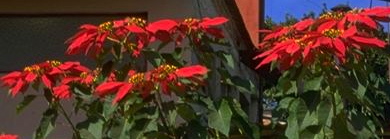
dot the poinsettias
eyes and cross their Ts.

Sunshine engraves my name
on the sacrificial pelt
I bought at the abastos.

A blazing sun
dries the cries of shock
coursing through my victim eyes.
Obsidian’s Edge 16

4:00 pm

Siesta
&
Dream

IMG0051_1.jpg

1

Sweet wet bark bleeds until sack-
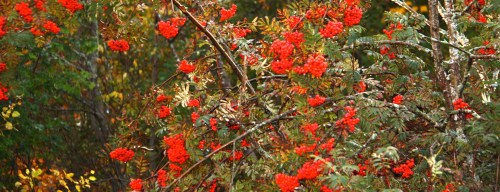
cloth binds the wounded rowan.

Claws trapped in the sacking, the sap-
sucker family points accusatory beaks.
They have fluffed up their feathers.

Red beads on the mountain ash: the young girl
offers me a rosary of bright red berries.

IMG_0157.JPG

Bitter on the tongue,
sunset’s first flourish tinting my dream.


2

Tochtli gnaws at the moon’s white skull.
Murciélago exits his cave with night
tightly wrapped beneath his wings.
Tezcatlipoca: a stone knife in an iron hand.

At the cathedral’s shallow edge,
the golden tree bends like a rainbow,
exposing its roots as the end draws near.

Cycle upon cycle: dead men’s gifts,
these spirits walking over night’s waters.

The dream cat’s round green eye
staring out of the window,

willing this willow pattern world

cat and bat 094.jpg
to end its cat and mouse game:

IMG_0177
darkness within darkness.

Obsidian’s Edge 13

2:00 PM
In the zócalo

IMG_0236.JPG

1

Three brujas:
one spins the yarn,
one measures the cloth,
one wields the black obsidian knife,
trimming each tiny thread.

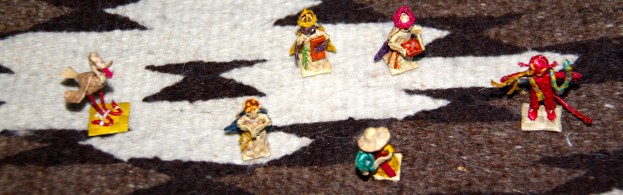
Infinitesimal clockwork figures
balancing on wool,
their mouths opening
and closing, silent, like goldfish.

IMG_0252.JPG

Wooden teeth comb each thread,
the shuttle always moving,
weaving whose fate?

Interlaced castillos,
scintillating cities,
grecas floating lighter
than this relámpago
lightening the air.

IMG_0240.JPG

2

Or you can start with the glow-
worm of a match – luciérniga,
Lucifer – the bringer of light.

High flames flickering
on zopilote’s wings
bring an end to darkness.

Women at their chimeneas
breathe fire into shavings,
a red glow into charcoal,
flame into fire hungry bark.

Watch the new life kindle the clouds,
the new day walking its plank of fire.

IMG0005_1.jpg

Your shadow on the wall:
a new star rising
among star-crossed generations.

Obsidian’s Edge 6

10:00 am
Dark is her Shop

IMG0014_1.jpg

1

I buy two liters of white mescal,
cheap and rough,
without the second brewing:
fire water, not smooth.

Two liters:
she sells them in
an old Coke bottle
she’ll seal with cellophane,
and a rubber band.

Six worms I buy.
Bedraggled fighters
dragging smoky trails
as they plummet
through a yellow sea.

2

In the shop next door
I buy poinsettias.
When I get home,
I put them in a vase
and watch them watching me.

Red poinsettias:
bloodstains scratching
a white-washed wall.

IMG0034_1.jpg

Misshapen gems
in a ceramic prison,
their beauty
breaks me down:
decimated words,
worlds
born from mescal.

3

The eyes I see
are not eyes
because I see them:
they are eyes because

… twin brown ovals …

they watch me
as they float in a liquid mirror
within the upraised glass.

4

Outside,
beyond the balcony,
sun blood melts
like sealing wax.

The bougainvillea
strains sharp stains
through a lonesome
slice of sunlight
giving birth to
flamboyán and tulipán.

5

My lemon tree
leans over to listen.
Glistening pearls of dew
embellish its morning throat.
Christmas decorations
these postage stamp songbirds
thronging each twitching branch.

18 June 2002 butterflies in ditch 014.jpg

Butterflies,
winged flakes of archaic paint,
flutter from temple walls
leaving them barren and bare.

Church towers,
strong when terra firma shakes,
quiver insubstantial.

Mescal melts the morning:
a quiver of shimmering air.


Obsidian’s Edge 5

Obsidian’s Edge 5

9:00 am
Mescal and Memory

IMG_0135 2

1

Frail old men
huddled under hand-woven blankets
sipping their morning mescal:
each face
a note book seamed with memories.

Crab apples
hastening to autumnal crispness,
their wrinkled faces,
their minds ready to tramp
the snow of today’s blank page.

Unwieldy limbs
bursting back to bloom,
flower by unyielding flower,
they squat in the square
beneath blossoming trees.

IMG_0136.JPG

2

Códice
characters lifted from the pages
of their pre-Columbian chronicles
and Mickey-Moused on modern walls:

Ocho Venado
framed on a restaurant menu,
Cuáthemoc
recalled on a hunded peso bill.

Cuáthemoc
has forgotten how to walk
on the burned, broken feet
that Cortés held to the fire.

Ocho Venado,
a king in his own right,
bows and bobs to tourists
in the restaurant that bears his name.

3

Colibri,
an errant, feathered knight,
whirs his wings and charges
at the sun’s twin windmills:
sun-dog ear-rings
tethered to a golden flower.

IMG_0137

4

Sweet flutter-by of yesterday’s butterfly:
Mescal

fragments the memory
holding it bitter between tooth and tongue.

Obisidian’s Edge 1

At the Edge of Obsidian

“everything burns, the universe flames,
nothingness burns itself into nothing
but a thought in flames: nothing but smoke”

Piedra de sol
Octavio Paz

IMG0004_1.jpg

“todo se quema, el universo es llama,
arde la misma nada que no es nada
sino un pensar en llamas, al fin humo:”

At the Edge of Obsidian is the second book in The Oaxacan Trilogy. It was published in 2005 and outlines the events of a single day in the City of Oaxaca (Mexico). I have always loved the Medieval Books of Hours and wondered if they would transfer themselves into a book of hours based on a day in a place with which I was familiar. This is my effort to do just that. I will publish regularly from this book, beginning at the beginning with the church bells and the early morning light that waken the sleeper from his dreams.

IMG0001_1.jpg

6:00 am
church bells

1

The alarm clock shuffles
its pack of sleeping hours:

a clicking of claws,
needles knitting outwards
towards dawn’s guillotine;

a knife edge
sharpened on this keening wind
sets my blood tingling in my toes.

Bright jungle parrot,
its querulous caged voice glimpsed
darkly through dawn’s looking glass.

2

Tochtli was caught by the ears
then thrown against the second sun
sizzling in the sky.
His sharp teeth burrowed,
burying themselves deep in the fire’s red light.
The second sun turned into the moon;
now we can see Tochtli’s face,
simmering in its dwindling pool.

Old myths, like languages,
grow legs and wander away.
They gather in quiet corners,
in village squares
where the night wind weaves
dry leaves in endless figures of eight.

 An old man now,
I dream of white rabbits,
running down tunnels,
escaping the hunter’s hands.

 3

When my dreams break up,
they back themselves into a cul-de-sac:
a wilderness of harsh black scars.

Dream words:
scalpels carving
red slashes on white-washed walls,
trenchant shadows, twisted dancers,
old warrior kings
bent into pipe wire shapes.

IMG0056_1.jpg

 Suddenly, beneath my balcony,
the handy man
tumble-dries a tv ad
in the washing machine
of his song sparrow throat.

Codices

Re-reading the Códices

The Mixtec Códices, indigenous screen-fold books written on deer hide, 
are Pre-Columbian pictographs that record the history of the Mixtec peoples. 
There are no words: only brightly coloured scenes 
containing information about rituals, gods, heroes, and ceremonies. 
Only a few very precious documents 
(Zouche-Nuttall, Vindobonensis, Borgia etc) survived the ravages of time
 and the continued purges of the Spanish Inquisition. 
This prose-poem, self-explanatory for the main part, 
verbalizes typical symbols from the códices. 
Clearly, such symbols, as the poems suggest, are ambiguous 
and open to radically different interpretations.

IMG_0144 (1).jpg

“Two breasts: one green, one yellow, symbolic of the hill where the church stands; the church itself bi-colored, strong stone walls, a spire. A large red heart symbolic of the love we bear for you, our masters. Two feet walking the path of enlightenment you opened before us; two hands pointing the way. The feet below the heart; the hands above the heart, like wings; and the heart becomes the body of the new place you have built for us. And in the heart is our sacred symbol: the Earthquake, a sign of leadership and power used only by those of Royal Stature and the Noblest Blood. Attached to the heart is the Numeral One which means Lord of the Earthquake; for you are Number One in our Hearts. Attached to the heart is a speech scroll showing felicitous words of praise; below it is the sacred earthworm, and beneath that the serpent head of wisdom and the flint knife promising strength through sacrifice.

But be wary: for our symbols are double-edged!

The colors of the hill are divided, as the hill is divided, showing strife and division. The church is on top of the hill, for the symbol has conquered the people, and the people are starving, subject, and destroyed. The feet are pointing in opposite directions, for the people are stalled. They have no forward movement, nor will of their own. For they are conquered by the sword and not by love. And the hands are pointing in opposite directions; for the right hand knows not what the left hand is doing. And the hands are reversed showing anguish and distress. The sign of the heart is the sign of the disembodied heart, torn from the heaving chest of the vanquished and thrown to the dogs. The sign of the earthquake is also the sign of movement. And that movement is a bowel movement. And one movement in the middle of the sacrificed heart is the victor excreting on the vanquished and treating them with scorn and contempt. The scroll protrudes from the nether part and says that the victors are speaking words of excrement, that verbal diarrhea issues from their lips. And the serpent has no feathers; it cannot fly. It is as a snake treacherous and bitter, crawling on the ground. The head of the serpent is two tongued and tells of treachery and of deceit. The flint is attached to a heart; it speaks of the heart that is as hard as flint, knowing no mercy.

IMG_0146.jpg
And at the end that heart will receive no mercy in its turn.”