An old song …

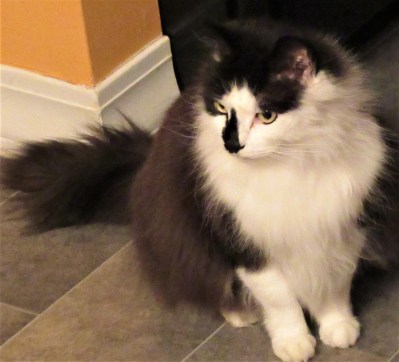
img_0448


An old song … 

            … words wrapping themselves around your neck, the tune a loose scarf, brilliant in the sunshine, and so warm, flapping as you walk the street … people see frayed ends … wave back at you … the sun picking out gold spots in your hair … all’s well with the world … a marching song … the world walks over the hills … and far away … you march to work or play … every day is a new day … blood stirring with this call to arms … to alarms … everything up for grabs … tunes in your head … words wrapped around you  … warming you …

            … a sad song … rain drops falling … mist or mizzle … you walk through damp, low clouds … you are sad … but comforted … wrapped warm in a verbal comforter … the sun breaks through … throws its arms around you … hugs you …. until raindrops radiate … gathering on eye-lash … at leaf’s end … twinkling on an abundance of radiant flowers …

            … a Nor’easter … snow in the air … on the trees … on the ground … a steady accumulation … you know how it is, East Coast Canada … down by the Fundy …  a fire in the fireplace … warm heart … warm hearth … no travel today … books and computer beckon … a time to read … to write … to remember the old ways … the old days … those memories … a warm scarf wrapped around the neck … and the comforter … so comforting … so much to wrap around you … so much to wrap your head around …

Death’s Angel

039

Death’s Angel, also known as the Angel of Death, or the Black Angel, is probably the most important figure that we will meet, face to face, here, in the evening of our lives. He appeared at my bedside the other night, and spoke to me. Bright moon. The Angel stood there, haloed, blazing in a spotlight of glory.

“Everything you have, I own,” he announced, taking my hand. “Your house, your wife, your children, your cat, your dog, your car, your books, your flowers, your garden, they are all mine. And one day I will return and take you  from them.”

Cold, the moonlight. Frigid, that waking from my dreams. My hand burned with his fire, yet I shivered.

“When will you call for me?” I asked?

“Soon,” he said. “Very soon. And remember: it will always be much sooner than you think.”

“What can I do?”

“Nothing. I will lend you all these things that you think you own, for a  little while longer, but you must never forget that I am lending them to you. You do not possess them. They are only borrowed.”

“And then?”

“And then they will be mine As you will be mine.”

“There must be something I can do to …”

“There is always something. Embrace me now. Hold me. Breathe in my breath. Know me for who and what I am.”

I did as he asked and his warmth filled me. I looked into his eyes and no longer knew fear.

“There is no past,” he said. “No future. All that you own is this precious moment, the magic of the now, this breath you inhale, this air you release. That is what you own. Understand that, and let everything else go. Live in the moment, for the joy of the day. Seize each second, as you live it. Enjoy it, for that alone is yours. Knowledge, foreknowledge, and understanding: these are my greatest gift to you.”

Then, for a moment, I knew and  came to terms with the gifts he gave me.

“Sleep now,” he said. “But remember, I will be back.”

I fell asleep and dreamed of the man who met Death in Cairo. Death looked surprised to see him. “What are you doing here?” he asked. Fear filled the man. He ran, packed his bags, left Cairo with its vision of Death, and traveled as swiftly as he could to Baghdad. where he met again there with Death, who welcomed him.

“Why were you so surprised to see me in Cairo?” the man asked.

“Because we had a meeting here in Baghdad, tonight,” Death replied. “And I didn’t know if you’d show up.”

When I awoke, a joyous sun illuminated the world. What I had heard and seen rang out with splendor of church bells calling across green fields and leafy woods on a summer morning. I also knew that what the Angel told me, was not for me alone. It was for everyone I knew. A message, not of sorrow, but of joy, not of despair, but of hope.

This wine I sip, this bread I break, this ray of sunshine, this raindrop glistening, that nervous deer peering shyly from the woods, that chickadee feeding, those crows that bring the world back to life with their daily chorus, each is instant of life held, for the briefest of moments, and then released.

My greatest joy, gained from reading Don Miguel Ruiz, The Four Agreements,  is to pass his wisdom on to you who read my words, for this message will change your life, as Don Miguel Ruiz’s message has changed mine.

Carpe diem: seize the moment. Deus est in nobis: it is the world soul alive and living within us, unique to each of us. While it is with us, our joy will live forever, and, even though we perish, that joy once shared will never die.

img_0122


Cricket

IMG_0236


Cricket

            Street cricket. Played on ancient, cracked tarmac. The wicket: three sticks whitewashed on to the high stone wall of the cul-de-sac where my grandmother lived. It backed onto the wall that cut us off from the railway yards that led into High Street Station. That wall was the boundary, as were the neighbor’s front yards. Six and out if you hooked the cricket ball and hit it behind the wicket and over the railway wall. And you had to retrieve that ball. Lost ball stopped play and play stopped until you went across the bombed buildings at square leg, for a right-handed batsman, climbed the railway wall at its lowest spot, looked down at the rail yards forty feet below, and shouted until someone emerged from a workman’s hut to find the ball and threw it back.

            No worker … no ball … no game. Then you had to run out of your street, down the main road, up the hill for two streets, beg permission at the locked railyard iron gates: “Please, mister, can I get my ball?” Then run all the way back to where the waiting cricketers hung over your own street wall, by those bombed buildings, shouting and cheering. Search for the ball among shiny rails, shunting rails, rusty rails, dandelions, thistles, and nettles. Avoid the occasional shunting engine, with the driver leaning out of the cab and screaming warnings as the steam hisses out from the engine, brakes squeal, and wheels slowly clack on crossing tracks. Find the ball. Try unsuccessfully to throw it back over the wall. Try again. No good. Wall too high. Carry ball back to iron gates. Thank gateman politely so you can come back next time. Return ball to game. Game continues, rain or shine. Unless it’s real rain. The pissing down type. If so, run for nearest house and shelter by fire in kitchen.

            Other rules. Six and out over the railway wall. Two runs and fetch the ball yourself if you hit it into the bomb buildings at square leg, next to that railway wall. No fielders there. Too many loose bricks and too much scattered debris. Fragile walls still wobble or crumble warning you of cellars that might open up. Low walls that might collapse. You score four and out if you hit the ball into neighbor’s front yard. Some neighbors are nice and don’t mind. But watch out for the old witch whose fenced off garden is guarded by a gate.  If you hit her window, even with a tennis ball, she’ll be out quick as a flash, and steal your ball or stick a knitting needle in it, old spoil-sport. Otherwise, it’s single batsmen. You run your runs and walk back from singles. One hand one bounce, and tip and run once you’ve scored twenty. Much more difficult to stay in and everyone gets a chance to bat. One hand off the wall if you don’t clear it for a six and out. Dog stops play if your fox terrier gets the ball and runs around in circles, chasing its tail, with the ball getting soggy in his mouth. Damned dog. Damn difficult to catch. Lost ball stops match if dog runs back into the house and gives the ball you stole in secret back to your gran who was saving it for tennis.

            Cricket, in those days, was civilization. It had survived the bombing raids that missed the railway yards and bombed the bomb buildings. It had survived the machine-gun fire from the fighter-bombers that had strafed the street leaving bullet-holes, still unrepaired, in walls and shattering now-mended windows. It gave us a sense of rule and law, for the rules were strict and nobody broke them and stealing runs, touch and go, in tip and run was a skill and never a crime.

            Cricket: a small, bright window on the back-street where I lived, a window filled with happiness and light, even when it’s over the wall and six and out, or the dog runs away with the tennis ball, or the ball vanishes down a mysterious rabbit-hole in the bomb buildings and slides down to someone’s ruined cellar.

            Game’s over. The real Test Match is on, England versus Australia, though we live in Wales. The one primitive, tiny black-and-white tv screen in the street lights up with flickering figures and we sit around on the floor watching real men playing the real game on a sunny field in another world, the world, the world of black and white that many of us, us backstreet children from a ruined neighborhood, will never be allowed to know or see.

Rejection

IMG_0023.JPG


“Oh no, another rejection!”

“And rejection equals dejection, or doesn’t it?”

“Only if you let it get you down. I wait until I am in a foul mood and ready to tear things to pieces because my mean streak is surfacing. Then I go to my rejections pile, re-read the rejection letters, then read again the pieces that have been rejected.”

“Why on earth would you do that?”

“Above all to work out why the work was rejected. What did the editors see that I didn’t? When I write, I wear rose-tinted glasses and all my little babies are the prettiest, the strongest, the fairest in the land, especially when I give them the ‘mirror, mirror on the wall’ test.”

“I’ve never heard of that.”

“It’s simple: you look in the mirror and ask ‘Who’s the fairest writer of all?’ and the mirror answers ‘Why, you are, of course.’ If you believe that, and as writers, we often do, then rejection becomes a hard realistic rock, shattering both Ego and Id. The immediate response is to deny the editor’s taste and judgement. It is amazing how many stupid, dumb, and uncultured editors there are out there. They hate us and don’t understand us.”

“That’s true.”

“No it isn’t. The fault, dear Brutus, lies in ourselves, not in our editors, that we are not great writers. Understand that, and you have a chance to succeed and to improve. Re-reading allows me to try and understand what went wrong, why the mirror lied, how the rose-tinted glasses distorted the actuality of the written page. Understand the other and how the other perceives what and how you write and maybe, just maybe, you can condition yourself to improve. Many budding writers are dropped on stony ground and fall by the wayside. Others land in the desert and their things of beauty bloom where nobody sees them. Some fall on seemingly fertile ground and earn an immediate immortality that fades in a season when the fad wears off. A few writers, an occasional few, go back to the drawing board and water their flowers with the sweat of their brow. Eventually, if they are lucky, their work may be accepted.”

“You always preach the bus story, Julius.”

“Of course I do. Get off the bus early, and you’ll never finish your journey. Remember Sir Walter Raleigh: ‘it’s not the beginning, but the continuing of the same until it be thoroughly finished that yieldeth the true glory.’ He didn’t sail the Golden Hind around the word by setting up house in Cadiz and living in luxury on a beach in the south of Spain. He continued on and on, always forward, until he arrived back in his home port.”

“So we must just keep going, then?”

“Of course. But never blindly. Take criticism to heart, remembering that it comes from another’s heart. Learn from your mistakes. Correct them when you find them. Never give up.”

“You’re always happy, Julius. I bet you never get rejected.”

“Oh I do, Brutus, I do. And each rejection is a dagger to the heart. But I keep going. For example, last week I received my fifteenth consecutive rejection. So much work, so much genius, and all denied.”

“But you’re still smiling.”

“Indeed I am. I have just received my second acceptance in two days. I no longer feel betrayed by my editors.”

“I’ll never betray you, Julius.”

“You will, Brutus, you will. Never fear, et tu, Brute.”

Anniversary

Empress 048


Anniversary

Kicked him out, she did, just like that. Told him to sleep in the spare bedroom. She couldn’t take it any more. She couldn’t sleep. He had to go.  It was the diuretic that did it, mind, the diuretic.

After the radiation treatment, they gave him hormone injections, told him he’d put on ten to fifteen per cent of his current body weight, but not to worry. It was quite natural. It was the hormones, see?

He stood on the bathroom scales without a care in his heart. Watched his weight rise, five per cent, ten per cent, fifteen per cent. When he reached twenty per cent, he started to worry. Swollen ankles. Swollen knees.

At twenty-five per cent, he was really worried. Socks no longer fitted. Couldn’t put on his shoes. Couldn’t bend to tie his laces. Had to wear sandals and slip-ons.

At thirty per cent, he started to cry. He was ugly, so ugly. He was down to one pair of shoes and one pair of sandals that fitted. He went to the pharmacy. The pharmacist took one look at his feet and gave him a long list of Latin names. Told him he’d need a perscription, from his doctor, to get pressure socks, and medical shoes that would help him walk.

“It’s the feet, see, the feet. Once they start to swell, you’re in big trouble. There’s nothing we can do. Go see your doctor.”

“I’ve seen the doctor.”

“Go see him again.”

So he did. Broke down crying when he entered the surgery.

“I’m down to one pair of shoes. You’ve got to do something, doc.”

So the doctor wrote him out a perscription for pressure socks, medical shoes, appointment with a psycho-something, attendance at a clinic, everything he wanted. Then, just as he was about to leave, the doc stopped him.

“Hang on a sec,” he said. Sat at the desk. Checked the computer. Wrote out another perscription. “New tablets,” he said. “Take these yellow ones. Stop taking those brown ones.”

He went away happy. Stopped at the pharmacy. Got the new pills. Went home. Took them. And straight away started to pee. He peed all day and he peed all night. Every 15 minutes. That’s when his missus kicked him out of bed.

“Go,” she said. “Every fifteen minutes. I can’t stand it.”

So he went. Grabbed his faithful Teddy Bear and went to the spare room with its cold, lonely bed. Except he had his Ted.

Lost four pound that first night. Twelve pound the first week. Twenty pound the first month. God, he felt good.  Tried to get back to his own bed. Missus wouldn’t let him in.

“Go sleep with your Teddy,” she said. So he did.

He’s looking pretty good now. Back down to ten per cent body weight up. Says he can live with that. Likes sleeping with his Teddy. Says it doesn’t snore. Or kick. Or punch him. Unlike his missus. It’s the first anniversary next week. He says he and his Teddy are doing fine. They’re going to have a Teddy Bears Picnic to celebrate.

No, sorry, I don’t know what his missus thinks about that.

Coat of Arms

coatofarms.png


I’ve never yearned for a coat of arms. All those advertisements for this and that, DNA tests to prove your ancestry, where your family name comes from, how many famous people were in your past, how many convicts … and the convicts were often poorer family members, wallowing in poverty and forced into theft, money, a loaf of bread,  a chicken, a lamb, some eggs, something to feed the children, to pay the bills … the possibility of blue bloods and royalty outweighed by the probability of some dark skeletons swinging on gallows somewhere in the distant past.

Yet when I got my online advent calendar this year, there was the coat of arms game … make your own coat of arms. So I did. The choices were very limited, not too original, and came with a ‘clan history’ that has absolutely nothing to do with me. A bear and a dog … I can live with those, especially as the bear is apparently my Canadian spirit animal. A Welsh dragon draped round the top of the frame … wrong color and definitely not Y Ddraig Coch, the blood Red Dragon of Wales, but still a symbol I can happily live with. Down below, we have Sun and Moon, the symbol of Oaxaca and title of the first book in the Oaxacan Trilogy (first published in 2000). Unfortunately, I have reversed the symbols to give us Moon and Sun. Oh dear. Such things happen.

Then we have a snowman and a beer tankard. Sounds good to me. I have now lived in Canada for more than fifty years in Canada and I know all about snowmen, and the taste of beer, sometimes mulled, to take away the cold. I am not so sure about ‘my clan’ as I don’t really think that I have one. I feel it is a very foreign term  like Hi there, gang. I can take Robin Hood and his Merry Men, but Roger and his Merry Gang, no thank you, that’s not for me. Sorry. As for ‘throughout the land’, I wonder which land they are referring to: Wales, England, France, Spain, Mexico, Canada … I don’t really feel that any of these stand up as my ‘land’ … except possibly for Canada, and as for Canada, well, this land is enormous. I have certainly visited some of it, but by no means all, and there is so much more to see and hear.

‘In Battle’, well, I have never been in a battle. I dislike violence and fighting, and I cannot imagine how a phrase like that got in there. ‘Fierceness’ same thing, I am as mild as milk and very easy-going. ‘Loyalty’, yes: that’s what the bear and the dog are famed for. ‘Us bears never forget’, or words like it, from the Chronicles of Narnia. Oh dear, there I go … I can hear mother bear now … ‘Stop sucking your paw’.

Seize the day is goodCarpe Diem … but never in battle … in poetry, maybe, or else in gathering old age where every moment of every day seems more and more precious. I wold have preferred Horas non numero nisi serenas, but they didn’t have that one, even though, nowadays particularly, it is the happy hours that I count, and not all of them spent in a local bar, or home alone, with my own beer mug.


Happy Hours

IMG_0126 (2).JPG


As the inscription on the old Roman sundial announced: Horas non numero nisi serenas / I count only the happy hours. And, of course, the sundial is right. When the skies are cloudy and the rain and snow are falling, the sundial sleeps and refrains from marking the passage of time. But when the sun prances brightly through those heavenly meadows and casts shadows across the numbers on the clock, then the sundial counts the hours, precisely because they are happy.

I try to do the same. I try to avoid the shadows that are cast across our planet and I try not to count them. Alas, like the grains of sand on the beach and the countless stars in the sky, they are innumerable, though the latter are being named, numbered, and counted, much to their chagrin.  Who wants to be called Welsh by foreigners, with all the negative connotations they associate with the epithet, when our real name is Cymraeg? And no, we don’t live in Wales, we live in Cymru, or better still, in Canada when we (e)migrate. Canada: I wonder what the real name is for this huge and wonderful land? And what about the local indigenous peoples? I can accept that they are First Nations. No problem. But who are our hosts and neighbors when they call themselves Wolastoqiyik (or Maliseet) and we call them Aboriginals (or worse)?

What’s in a name? North, South, East, West … simple, eh? How about Upstream, Downstream, Away from the River, Towards the river? Think names of the months, names of the days of the week. Now think guidance, think signposts, think culture, think separate cultures, think different ways of living, think different ways of life. Think possessive pronouns: my book, my house, my cat, my dog, my son, my daughter, my Wifi, my wife.  Or as le grand Charles de Gaulle expressed it, in Le Canard enchaîné: “Ma France, mon coup de frappe, mon Europe … mon Dieu.” Maybe we would be better off without possessive adjectives. But then …

“Taffy was a Welshman,
Taffy was a thief,
Taffy came to our house
and stole a leg of beef.”

Taffy: a generic name for the Welsh. Any male person from Wales is automatically a Taffy from the moment he opens his mouth and speaks with anything like a Welsh accent. Taffy, from the River Taff that flows through Cardiff,  aka Caer Dydd, the fort on the Dydd. There are many rivers in Wales, many regions. Men from the Isle of Mona, Llanberis, Caernarfon, Brecon, Abertawe, Aberavon, Castell Nedd, Caerfryddin, Pen-y-pont, Caer Isca, Usk, Cas Newydd, Pen-y-Bryn, Sgetti, Uplands, Trebanog, Llanelli, Llanfairpwllgwyngilldrawbwllchllantiisilioggogogoch, Cwm Parc, Trebanoc Cwmbwrla, Cwmrhyddiceirw  … Taffies one and all, even if they were born miles away from the River Taff and rarely visited Cardiff, the very name of the river and the city anathema to them.

I once had a friend, a very good friend, or so I thought, educated in Harrow, Oxford, secret member of the ultra-secretive, fabulously expensive, well-endowed and super-privileged, ultra-elite Bullingdon Club. He had a triple barreled name of course: Somerset-Trilby-Frisbee or something like that, I forget now. Whenever I arrived at a reunion or a meeting, he would greet me with a bullhorn, bullfrog chorus that reached into the far corners of the room: “Lock up the silver spoons, the Welsh have arrived.”

Humor? His laughter would rock the rafters and shake the room once more. Racism? What racism is there in mocking the Welsh when you are English? Bigotry? No man with a three part surname, an English public school background, and a list of ancestors longer than your arm could possible be a bigot.  Idiot? He was very intelligent, slightly unbalanced, and totally oblivious to any social norm or indignity, unless he was the threatened person, and watch out for vicious mousetraps if you made him the butt of your own humor and he took umbrage at the slight. Criminal? No way: the Welsh were always the criminals, for back in the legendary mists of time they had stolen a leg of beef and now they were here to steal the precious plastic spoons and knives and forks that masqueraded as silver …

… what’s really in a name? What’s in a grey day or a blue day? What’s in a cloudy day or a sunny day? What’s in our hearts when we denigrate our friends and doubly degrade our enemies and those we declare to be our enemies, sometimes on a gut feeling or a whim? Horas non numero nisi serenas … Time to look on the bright side, to walk on the sunny side of the street, to reject the shadow and live in the sunshine. Time, in fact, to turn the whole day into a succession of Happy Hours. Study the cartoon above. Now that is a portrait of someone who really enjoys a Happy Hour. And not a glass or a bottle in sight.

P.I.S.S.

IMG_0170.JPG

I found the acronym PISS in the below the line comments section in the Guardian. I love it: apparently it stands for Post Imperialist Stress Syndrome, another lesser buzz-word from the referendum and its aftermath. It refers to the idea that a whole (and elderly) generation of Brits cannot get over the fact that they no longer have an Empire and yes, they want their Empire back. How that is going to happen is anybody’s guess.

So, here’s the weather forecast: heavy rain over Britain during Brexit. In fact, to use a local saying the rain will indeed be “pissing down”. For a while, everybody can wear rose-tinted glasses (you can see them in the cartoon), but soon enough reality will return and then the reconstruction of British Empire 2.0 can begin. The rich won’t suffer: they never do. But what will happen to those who are currently staggering under the current burdens of austerity? Nobody knows and the only ones who really care are the sufferers themselves.

Eau Canada: it’s great to live in a bilingual country where such fractures can be faced and overcome. Yet who knows what fractures face us in the future as we predict fires, floods, high winds, ice storms, power losses, and a host of climate change adaptations that will be as difficult to surmount as the political changes voluntarily sought by a small majority of 2% in a referendum where only 60% of the people voted.

As the Chinese curse would have it: “May you live in interesting times.” Whatever your beliefs, your faith, your vote, your IQ factor … interesting times are indeed upon us. But keep them at a safe distance from me, s’il vous plaît … And let’s watch it all unfold in virtual reality on the telly … I prefer to live my life that way.

Snovember

IMG_0133.JPG

The snow came early this year, hence the above cartoon: Snovember. The deer came early too, and we saw three of them wading through the bottom of our garden, about fifty feet from this tree, where the now-bare trees separate our lot from our neighbor’s. It was just after lunch, and quite the surprise, as the deer usually arrive just before dawn or just after dusk, and much, much later in the year.

So it’s clearly a season of firsts and readjustments. Yesterday, we went wild and invested in an early Christmas tree. It’s a six foot tall white birch (plastic and ever-lasting) with 120 led lights and we will plug it in the corner of the dining room by the computers.

In the short dark days of winter, we are affected by Sun Absence Depression (so SAD) and keep a set of lights burning in the corner of the dining room by the computers. These lights are particularly effective in the early winter mornings, before sunrise, when the world is dark and we need warmth and comfort. Turn the computer on, and on come the lights shedding joy to welcome us as we read the enormous amount of bad news that seems to be circulating through our world right now.

Light in the dark: I think of it as a pair of rose-tinted glasses that allow us to reject the bad news and to look for the bright side, the silver lining that blesses every seeming cloud. That’s why the snow falls in bright flakes in my cartoon. The tree appears to be bare, but a couple of birds and some scrag ends of leaves adorn the branches.  The days may appear to be dark, but the bright lights on the tree are a silver lining to the cloud of unknowing that hangs in the air like a black umbrella.

The cloud of unknowing, the dark night of the soul … so much mystery, so much joy and despair, in life around us, yet it is a mystery to be grasped and savored, to be tested and tasted … and what is life without uncertainty, challenge, faith, belief, and lights, colored lights, a festival of lights, and humor, even in this darkest of all seasons?


Moo Cow

IMG_0080.JPG

Moo Cow
for Geoff Slater

It’s his story to tell, not mine, but I’ll tell it anyway, since he told it to me.

We were talking after lunch, de sobremesa, as they say in Spain, sat around the table. Chewing the fat, or the cud. The subject turned to farming in Wales and how Welsh farmers were sometimes trapped in the stall with the bull and crushed against the wall when the bull leaned its great weight upon them.

“It nearly happened to me,” he said. “But it was with a cow, not a bull. I was nine years old. One of our cows got into the manger and couldn’t get out. My father sent me in, hoping that I could shoo it out, but instead of leaving, the cow turned and trapped me against the wall. I couldn’t move, couldn’t breathe,” he paused.

“Go on.”

“I carried a pocket knife at the time. I had just enough room to pull out the knife, open it and … ”

I watched him shrink, grow younger. He returned to nine years of age. In his hand, he held an imaginary knife. The room shrank around us until it became the size of a manger. The cow loomed large, filled the room.

” … I stabbed, stabbed, stabbed … ”

His eyes tightened. His face grew grey. A sea-change came over him: white-caps whipped over his flesh. Storm clouds threatened. I watched his clenched hand stab … stab … stab … at empty air.

” … I stabbed it again and again and it turned and moved away … and finally I could breathe. I was lucky.”

He relaxed, started to breathe again. The room returned to its normal size. The cow vanished. The sun shone through the kitchen window, high-lighting us as we sat there, breathless,  in silence.