Don’t tell me

IMG_0624 (3)

Don’t tell me your troubles …

… words wrapping themselves around your neck, the tune a loose scarf, brilliant in the sunshine, and so warm, flapping as you walk the street … people see frayed ends … wave back at you … the sun picking out gold spots in your hair … all’s well with the world … a marching song … the world walks over the hills … and far away … you march to work or play … every day is a new day … blood stirring with this call to arms … to alarms … everything up for grabs … tunes in your head … words wrapped around you  … warming you …
… a sad song … rain drops falling … mist or mizzle … you walk through damp, low clouds … you are sad … but comforted … wrapped warm in a verbal comforter … the sun breaks through … throws its arms around you … hugs you …. until raindrops radiate … gathering on eye-lash … at leaf’s end … twinkling an abundance of radiant flowers …         … a Nor’easter … snow in the air … on the trees … on the ground … a steady accumulation … you know how it is, East Coast Canada … down by the Fundy …  a fire in the fireplace … warm heart … warm hearth … no travel today … books and computer beckon … a time to read … to write … to remember the old ways … the old days … those memories … a warm scarf wrapped around the neck … and the comforter … so comforting … so much to wrap around you … so much to wrap your head around …

Morning in Island View

IMG_0262

Morning in Island View

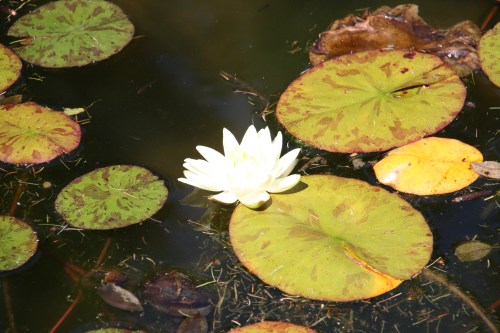
             Morning in Island View and I dream of warm lips rising from stone cold waters. Somewhere, the early sun floats petals across a lily pond. Framed among lilies, my beloved’s face drifts through a watery space. So sweet, her embodiment: she lies languid among the lilies, beside herself in bloom after bloom, each flower gigantic in its frame beneath a wooden footbridge.

            I envision her as she was, this lily who will toil not, nor spin, and who sighs with the morning breeze that ripples her smiling countenance into a thousand fragments. She lies cushioned amid the lily pads, a work of wonder in a liquid impression of fragmented light.

            Fortune rattles its poker dice and they fall haphazardly, here and there, wherever they will. Once thrown, like the spoken word that can never be recalled, they lie there, still on the table’s green baize. They fall, but not by chance and chance itself blossoms with their falling. Like Venus born from the waves, my beloved rises from the waters, born in a conjurer’s trick of blossom turned flesh and pulled from the stream’s dark sleeve to flash her mysterious magic in a thicket of flowering water.

            Now, I see her everywhere: a model in a window, languid in a pavement puddle where raindrops ripple her eyes, couched among the floating clouds as evening steals color from the day. Dusk’s shadows draw their curtains across street and square and now she becomes my lily of the lamplight and I frame her anew in the streetlight’s afterglow, night’s figment dreamed alive beneath distant stars. I walk with her, hand in hand, at noon, when the cathedral wears its strawberry suit, and again in the late afternoon when a blueberry blush descends with bells.

            One evening, in a fit of hope, or is it despair, when my heart pants for a cooling stream, I tread the lily pad path across the pond’s untroubled waters. Dark bells ring out their jug-o-rum chorus as I seek the light of her countenance. Dusk is a violent bruise, scoured purple and red across the waters as I try to become one with my lady of the lake.

            I still don’t know what drew me out. But when I emerged, I sensed that all had changed and that nothing had changed more than I had, the viewer, that once-young man, now old and arthritic, typing away, one finger at a time, battering my key-board to recreate the wanderlust of those day-dreams wrought sous le Pont Mirabeau, along the banks where the Seine flows, or up by the bouqinistes where bridges span the river, words bounce off the page, and painted lilies in the Marché aux Fleurs bewitch the viewer with a staring madness that mirrors pondweed and drifting hair. Now my beloved’s face floats through the cathedral’s eye that ripples in the river. I see the great rose window of Notre Dame, and I seek her once again in those dark waters where she holds out her hands, a place mat for my un-drowned heart.

Time Flies

mistec4

Time Flies

… bends like a boomerang,
flies too rapidly away,
limps back to the hand.

Endless this shuffle of unmarked
days dropping off the calendar,
extinct so many animals
that exited Noah’s Ark.

Hands stop on the clock.
The pendulum swings:
time and tide stand still,
do not move.

‘As idle as a painted ship
upon a painted ocean.’

The print in my grandma’s house:
seemingly moving seas,
sails swelled out,
the ship stays firm in its frame.

Our garden fills with birds
and squirrels, light and dark.
Morning ablutions: each day
a twin of the day before.

The TV screen fills up its washbasin:
tired, shadow faces boring us
with endless wit and wisdom.

Time flies:
an albatross around the neck,
an emu, an ostrich, a dodo,
all flightless,
an overweight bumble bee,
too clumsy, too heavy to fly.

Avila 2007a 102

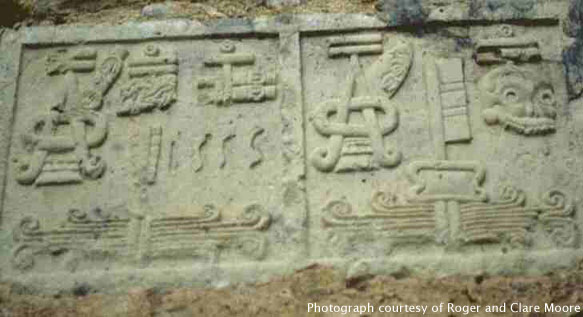
Comment: The top photograph shows the year 1555 marked in standard figures and in glyphs from the Mixtec calendar (Oaxaca, Mexico). … time flies you can’t they fly too fast … This is a conundrum from the General Knowledge Paper in the school leaving exams (1961). Punctuate this sentence: time flies you can’t they fly too fast … Proposed answer: Time flies? You can’t. They fly too fast!”  I seem to believe there were about ten of these on that paper. However, never trust your memory.

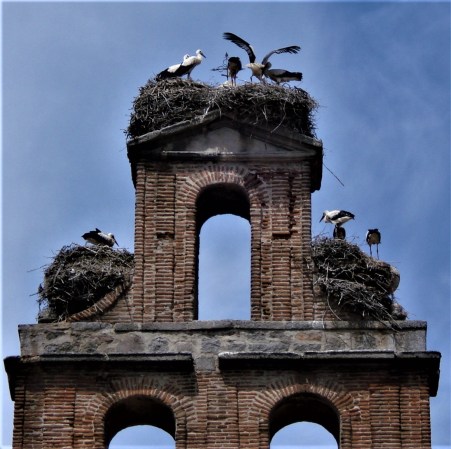
The second photograph shows fledgling storks in Avila, Spain, trying to fledge, to fly, to leave their nests. Some will succeed earlier than others. Those who do not manage to fly, who are not brave enough to leave their nests, will sit there. After a while, their parents will not feed them. And then they must fly or starve. Sometimes, time flies. Sometimes, time sits on its hands and the clock hands refuse to move. Think: time enjoying yourself (it just flows by). Think: time in the dentist’s chair with a root canal, time lying prone having an anal biopsy for prostrate cancer, time spent, those everlasting ten minutes, while a cataract is being removed and a new lens is inserted.

Oh yes, time is flexible. Not only is it flexible, it is insistent, inexorable, unstoppable. Those clocks tick on, whether we are awake or asleep. The seconds lull us with their security, the minutes lull us with their monotony, hours lull us with their harmony, days faze us, daze us … hours: each one wounds, the last one kills. Time marches on. We can rewrite the past (revisionism), but we cannot relive it, except in our dreams.

Avila 2007a 150

 Doors close.
We can never go back.

The Journey

IMG_0681 (3)

The Journey

I sense the rust in her mind’s clockwork
clogging her brain, slowing down thought.

I watch her search for words, stumbling through
sentences.  “Wind up the flowers,” she says
handing me the key for the grandfather clock.

When she says “water the clock” I receive
the plastic watering-can meant for the flowers.

Fellow travelers, we journey side by side on life’s
train. I watch her as she looks out of the window
at the passing countryside with its tiny stations.

She frets as she clasps her weak hand in her strong
one and I realize she’s worried because she no longer
knows when, where, or how the journey will end.

Comment: I wrote this originally in memory of my grandmother. However, as I have been involved in the rediscovering / revision / rewriting of older poems, I have come to realize that, as our visions change,  our poems become more accessible to a wider audience. In other words, given what is happening right now with the pandemic, none of us know when, where, or how the journey will end. This leads directly into the twin themes of the fragility of life and the nature of memory. What do we remember? Why do we remember a particular incident? Did it happen just as we remember it or have we already doctored our memories, re-creating them, so to speak.

I have a clear memory of seeing Sir Frank Worral batting at St. Helen’s in Swansea, when I was about 11 years old. A close friend of mine, an outstanding cricketing historian, checked the details in Wisden and told me that Frank Worral wasn’t playing in that match, so I couldn’t have seen him batting. And then there was Sir Everton de Courcy Weekes: I swear a saw him score a century at Bristol, yet, again according to my friend who checked the records, he only got fifty in that game! Games: what mind games the mind plays with us as we age. So, do I go with the fantasy land of my memories in which much has been (re)-invented? Or do I go with the world of truth and checkable reality? As an academic, I lived in the latter world: research, check, double check, avoid expressing personal opinions, facts, facts, facts, and exact dates. As an ageing poet, I would much rather live in that former world where truth and reality march hand in hand with fairy-tale and fiction, a little bit of one and a smattering of both.

How far is from fairy-tale and fiction to the dream world we inhabit at night? Just a short step, I reckon. Sometimes I remember my dreams and write them down when I wake up. Sometimes they vanish and I can only recall some vague feelings of joy and anguish. And what is life, that fragile, dream-like reality? Is it really a dream, as Segismundo tells us in Calderón’s La Vida es Sueño? Or is it a real world? And if it is real, do we create that reality or do we dream it? And if we dream it, do we sleep walk, sleep talk, sweet talk our way through it? Or do we portray it just like it really is, with no creativity, just a factual repeat of reality as we know it?

¿Qué es la vida? Un frenesí.
¿Qué es la vida? Una ilusión,
una sombra, una ficción,
y el mayor bien es pequeño,
porque toda la vida es un sueño,
y los sueños, sueños son.

What is life? A frenzy.
What is life? An illusion,
a shadow, a fiction,
and the greatest good is small,
because life is a dream,
and dreams are nothing
but dreams, after all.

 

Empty

IMG_0228 (2)

Empty

Empty now the house, clean the floors where she
spattered food and scattered her toys, polished

the tables, grubby no more, where small hands
clattered fork and spoon, her breakfast not wanted.

Empty the bathroom, the tub where she bathed.
Dry the towels, full the toothpaste tubes she

emptied in ecstasy. Where now her foot
-prints, her laughter and tears, the secret

language she spoke that we never understood?
Empty too my heart where, a wild bird, she

nested for the briefest time, then flew, yet
I possess her still, within my empty hands.

Commentary: The lead painting is the one Finley painted for me. I received it as a Christmas present, a couple of years back when she was 3 or 4. When asked if she wanted to add some more to the painting as the canvas wasn’t full, she replied: “No, it’s finished. That’s just how I want it.” Picasso once said that he spent the first half of his life learning to paint and the second half learning to see again as children see. Sometimes we complicate our art so much that we kill our inspiration and our vision. Some poets necessitate a dictionary in order for a reader to understand their words, yet when the meaning emerges, we find that the poem is convoluted, stilted, almost meaningless and even emptier than it was before.

Question: why do we try to gild the lily? Why do we lead to the slaughter the gift of the goose who lays the golden eggs? Are we writers or assassins? Are we not capable of putting meaning on paper with the directness and simplicity of a child? Good questions all. Sometimes I think that poets are like the existentialists of Albert Camus’s novels: they are the assassins of language and the murderers of direct and clear writing. And who are the victims? The words, images, metaphors, feelings that are strangled in the cradle or forced into captivity behind prison bars of jumbled lines and scattered thought.

Original ideas? No, not at all. This is the basic argument that Francisco de Quevedo (conceptismo) had with Luis de Góngora (culteranismo) in the Spanish literary salons of Madrid between 1613and 1627. The literary insults they wrote to each other are still a scandalous joy to read. These two seemingly separate styles of writing, which are actually very similar on many levels, eventually blended together and led to a total renewal of the Spanish literary language.  This in turn was bastardized by second-class imitators who did not have the skills of the original ‘super’ artists. And thus the pendulum swings: innovation > standardization > parody and satire of a worn out language > fresh inspiration and innovation.

As for me: how I would love to regain the clarity of vision and the joy of words that I experienced when I was a child. Back then, the world was a magic place, the pen and pencil were magic wands, and the empty page was a blank canvas to be filled with wonder. Alas: then I was sent to school. Rules were set. Bars were installed. Blinkers were inserted. Doors and windows were locked. Creativity ended. I will say no more.

KIRA Creative Quarantine

image1 (53) - Copy

KIRA Creative Quarantine

The Kingsbrae International Residencies for Artists (KIRA) requested its alumni to consider creating a ten minute video of themselves offering an instructional lesson based  on themselves working in their specialist areas. You can click on the above link to see all the creative videos currently available. Note that two more are added each week. Here is a link to my own video on Writing a Poem. It is designed for people of any age and I hope that anyone who sees the video will enjoy it and be inspired to start putting together their own poems.

The photo above was taken by Geoff Slater, the Artistic Director at KIRA. He placed a selection of my books on the beach at Holt’s Point and Bingo: instant art from a master artist. My book Fundy Lines now sunbathes on a beach that has ready access to the beautiful Bay of Fundy.

Her Shadow

IMG_0063

Her Shadow

“Birds, birds,” she shrieked with delight.
“The drab one is a girl like you,” I told her,
“but the bright one is a little boy.”

“Yellow,” she cried again with joy, “Yellow.”
Tiny hands plucked at air, catching nothing.

I can still see her standing there, her nose,
all wet and runny.  She left damp, snot-stained
marks, a sort of signature, on the cold wet glass.

She’s long gone now, way back home, but still
the window stays unwashed and her shadow
often comes between me and the morning sun.

Midnight

IMG_0225

Midnight

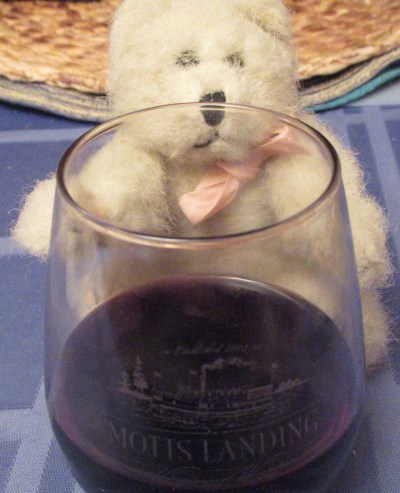
Primary red, this label, and the wine, fresh-drawn,
plucked from the bottle, tumbling tinto, into the glass.

Swirled, streaked ruby by overhead lights, bubbles
bright with hints of garnet, purple, brick at meniscus.

Sniffed, it smells of warm autumn days, scintillating
leaves, just crisping, turning color, and fruit all ripe.

Tasted: fruit bursts into hints of raspberries,
strawberries, spices, a touch of garrigue, mysterious.

Wine descends like water on a dry, hot, dusty day,
or rain after drought, when thirsty lands lap up

liquids, and rejoice in moisture’s blessings.
Raised now the glass, vineyard and vintners toasted,

midnight greeted, saluted the old day past and gone,
welcomed the fresh day walking in, swaddled, new born.

Pots and Pans


F1020017.jpg

Pots and Pans
St. Teresa of Ávila

A dusty highway. This woman riding
side-saddle on a hard, wooden seat, eyes
turned heavenward for inspiration. Frail,

fragile, she has never been strong, yet has
had enough strength, shoe-less, not soul-less,
to create her order of Discalced Carmelites

and found a hundred convents, safe havens
where woman can live in poverty, peace,
and prayer. Snow falls in high mountain passes.

Rivers rush downhill in springtime spate.
Mules rebel against cold waters. Bed bugs
bite … her God created them, so she suffers

in silence their indignities. Wounded heart
and soul, often doubting, faith always backing
her thoughts, words, deeds, she believes,

and that belief, as strong as this mule, as
solid as the San José corner-stone she laid.
She knows all too well that God often walks

and works his wonders for her faithful nuns
in convent kitchens cooking and washing
doing the small things, among pots and pans.

Comment:También anda Dios en la cocina entre las pucheras / God also walks in the kitchen among the pots and pans.” St. Teresa of Avila (1515-1582). It’s funny how, in times of stress, the little things in life come back back to haunt and help us. I have written of St. David, “Gwnewch y pethau bychain mewn bywyd / do the little things in life,” and here is St. Theresa of Avila saying more or less the same thing, nearly a thousand years later, this time in Spanish, not in Welsh. Intertextuality: in this way, I am able to talk, through my eyes, with Dewi Sant and Santa Teresa. And, through me, you too can indulge in this saintly dialog.

Avila 2007a 035 (2).jpg

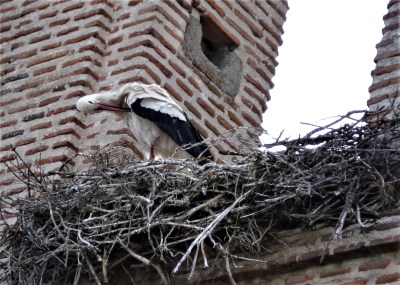
In my blog post, Triumphs, I wrote about how doing the little things in life can be so rewarding and so important for us as we age. No, I will never climb Mount Everest, but climbing up the stairs to my bedroom every night is, for me, a journey to the roof of my world and every ascent is a personal triumph, as is a safe descent each morning. I will never compete in a marathon, even though, back in my youth, I raced over ten miles and completed a half marathon. None of that now matters. What does matter is that I get my daily walk around the house, around the garden, around the block. My Olympic Goal is not to “own the podium”, a phrase I have always found slightly odious, but to win my daily wrestle with myself to just get my exercise done. Do the little things in life. In these troubled times, routine is important. Belief is important. Doing the little things that keep us alive is of paramount importance. And here’s a photo of a magnificent stork, in Avila, doing the little things in life.

Avila 2007a 087 (2).jpg


Triumphs

Avila 2007a 105 (2)

Triumphs
Luis de Góngora

Waking to birdsong in the morning,
making it safely to the bathroom
without tripping on the rug in the hall,
shaving without cutting my face,

getting in and out of the shower
with neither a slip nor a fall,
drying those parts of the body
that are now so difficult to reach,

especially between my far-off toes,
pulling my shirt over wet and sticky
patches still damp from the shower,
negotiating each leg of my pants,

tugging the strings of the plastic sleeve
that helps my socks to glide onto my feet,
forcing swollen toes into under-size shoes,
hobbling to the top of the stairs,

lurching down them, cautiously,
one step at a time, on guard for the cat,
the edge of the steps, the worn patches
where my stick might catch or slip …
one more step, triumph, I’ve made it.

Comment: “Cada pie mal puesto es una caída, cada caída es un precipicio / Each ill- place footstep means a fall, every fall is a precipice.” Luis de Góngora (1561-1627). I have reached the age of fragility and futility: every day that passes without an accident or a fall is a triumph. I re-read Luis de Góngora with increasing pleasure, the Polifemo (1613), above all, but also the later poems about the difficulties of ageing. When I read them I realize that I am not alone, that others have aged before me, and then I think of Jorge Manrique dead at the age of 39. And what poems he wrote, as did Góngora with a whole poetry movement named after him.

As for the photo: young storks in Avila, Spain, ready to fly. The one at the top is bouncing up and down, waiting for the breeze to get under his wings and lift him to sun and stars. High in the sky above him, almost unseen, his parents wait, ready to swoop down and assist him when he gets lift off. Uncertain he may be in those first few triumphant wing strokes, but down they come, place their wings below his wings and show him how it’s done. For him, it is the world that awaits him.

For me, and people my age, the world shrinks, walls close in, the daily process of living becomes more difficult. My joy: not in the lift off, but in the painstaking processes, getting up, getting washed and shaved, getting dressed, going downstairs, the early morning taste of fresh-brewed coffee, each sip a pleasure … and out in the garden, spring robins calling, a phoebe whistling, rose-breasted nuthatches, American Goldfinches, and the wondrous joy of just being here, sitting in the sunshine, lapping up the warmth, and every moment of every day a triumph renewed.

IMG_1060 (2)