Rapping the Blues

Rapping the Blues
(for Julie G.)

Have you ever felt blue?
Blue  like a Smurf,
I mean totally blue,
so blue that the blues
were all made for you?

IMG_0182 2.jpg

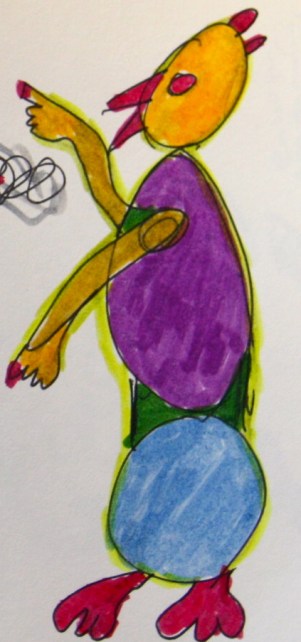
 Wittgenstein
that wise old man
gives the blues a rap.
He says anyone can
change his point of view
and stop feeling blue.
It all depends
on your point of view.

IMG_0178.JPG

He says “face the music,
take a chance,
teach yourself
to sing and dance.”

IMG_0178 2.JPG

“Don’t look in the mirror,
don’t look inside:
the things in there
are why you cried.
Take a look at life
from another side.”

IMG_0178 3.JPG

“Talk to yourself,
make the point:
don’t let your nose
get out of joint.”

IMG_0178 4.JPG

“Inside us all
there’s a trinity:
a you and a me
and a he and a she.
But three’s a crowd
when they shout out loud
even when they say
‘No Blues allowed.'”

But I’m telling you
what he said to me
and that’s the way
it’s gonna be.

IMG_0181.JPG

There’s a silver lining
to every cloud,
and when the sun shines
we sing out loud.

So dance in the rain
when you’re feeling blue
and make that sun
come shining through.

Masks

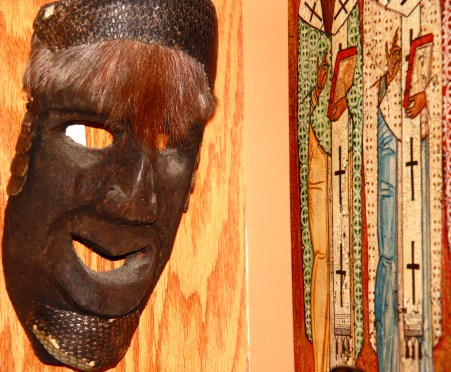
Sometimes they frighten us
tap us at midnight on the shoulder
bring nightmares to our sleep

IMG_0114.jpg

Dead warriors rising from the battlefield
grave their faces hollow eyes seeing nothing
open mouths flapping soundless

IMG_0112.JPG

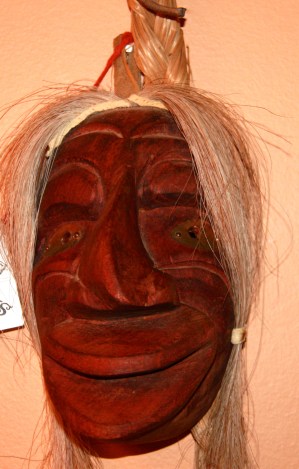
Sometimes they bring life to us
sometimes they keep it at bay
forcing us to move away from what
we know and love and to face life
unmasked in an unfamiliar way

IMG_0113.JPG

Exile

a black-robed devil wielded a whip of wind
with a sea wave for a hammer he broke down our houses
drove us from our fields and struck down our temples

dark was the sky rage
deep was its anger
the sea god rose on stormy wings
his chariot was taller than our tallest house

who will wade in this river of mud?
who will ask for a blessing
now the sky has fallen?

homeless helpless
we seek our living abroad

beyond our hills:
a land where no man speaks our language
and every man’s hand is turned against us


Danzantes

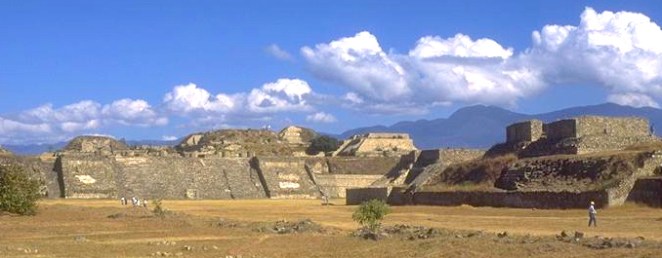
My poem, The Dancers and the Dance, refers both to the danzantes and to Monte Albán. Monte Albán was the capital of the Zapotecs and the principal city in the Oaxaca Valley (Mexico) between its foundation in approximately 500 BCE and its abandonment in approximately 750 CE. The White Mountain, thus named by the Spanish conquistadores, is justly famous for its temples, its tombs, and its carvings.
IMG0041_1.jpg

IMG0013_1

Two natural phenomena affected Monte Albán and its population. The first was drought and the dried earth with its brown and yellow tinges is clearly visible in these photos. The second natural problem came from earthquakes, for this is indeed an earthquake zone with active volcanoes causing tremors at regular intervals. The temples, even today, sometimes need repairing as earthquakes have been known to destroy even the reconstructed temples.

IMG0034_1.jpg

IMG0035_1.jpg

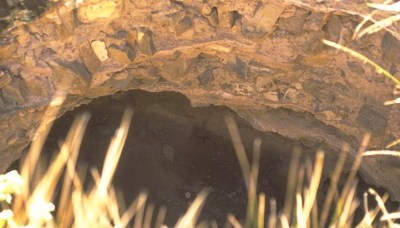
In fact, the abandonment of Monte Albán may well have been caused by an earthquake that cracked the enormous natural cistern in which the population’s water supply was stored.
IMG0031_1.jpg

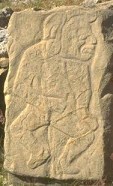
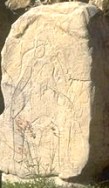
The Danzantes are strange, grimacing characters that have been carved into prisons of stone. They may be captured warriors awaiting sacrifice or the chieftains of conquered tribes humiliated, perhaps tortured, and then flash frozen into stone photographs where for centuries they have danced out their torment. Whoever and whatever they may be, they still dance on  Monte Albán.

IMG0038_1 2.jpgIMG0047_1.jpgIMG0039_1.jpgIMG0038_1.jpgIMG0047_1 2.jpgIMG0045_1.jpg

My poem, The Dancers and the Dance, captures a different form of dancing. It is taken from my book Sun and Moon: Poems from Oaxaca (2000) and contains echoes of the vibrant folkloric culture that thrives to this day both in the city of Oaxaca and in the Oaxaca Valley. Here, traditions are remembered and relived. Each year, on the Day of the Dead, for example, families place food and drink alongside photos of the dearly departed on altars inside their houses and their doors are thrown open to welcome their deceased family members as they return along the marigold paths that lead to their former homes.

The Dancer and the Dance

 1

she comes here to dance for me
only for me does she dress this way

 she shows me her dreams
unfolding them one by one
silk and cotton garments
drawn fresh from her scented closet

thin copper bracelets
carved wooden mask

 only her eyes reveal
subversive flesh and blood

 2

she orchestrates her story
skin drum
rattle of seeds in a sun-dried pod
single violin string
stretched across an armadillo’s shell

 I too am tense like an instrument
waiting to be played

 the bones of my love
reach out towards her

3

when she makes her music
familiar spirits return to the earth
dancing in a sash of moonlight

 she recreates an ancient spell
gold letters plucked from dark scrolls
no wands no words
just water’s purity
flicked fresh
across lips and face

 she binds me with the string of notes
she undoes with her hair
our bodies form an open altar
we worship with mysterious offerings
drawn from wells set deep within us

4

rain falls from the sky
Moon turns his face away
suddenly in darkened alleys
clouds hold hands and dance

dense streamers of light
dangle from street lamps
shadows remember their forgotten steps

gently she draws me to her
I try to follow
frail whirlpools of withered leaves
fragment weak sunshine
in light’s watery pool

 5

her magic grows
I take my first step
an unmapped journey
into desert space

we move to old rhythms
across moon flecked clouds

raindrops fall more slowly
faltering drum beat
diminishing water

6

high above us
the ghost of a melody
shaking its head
wringing its hands

 we return at last
to light and air
the moon’s vacant face
scowls in an empty field

someone has plucked the stars
one by one
and threaded them like a chain of daisies

 now there are no sky flowers
to adorn the night

7

noche de rábanos
someone has taken a knife
and peeled an enormous radish

this cartoon moon face
this full skull hanging from nothing
this lantern lighting from above

 now my lover sculpts time
and space
into small chunks

 each sacrifice
a jewel between her fingers

 I pin to my chest
three small notes
and a skeleton of words

8

inside my dancing head
the fires have gone out

 without her hands to guide me
my feet have turned clumsy

 scars layer my wrists and ankles
star crossed bindings
cutting against the grain

 I gather a harvest of stars
she holds them in her eyes

 her fingers are grasshoppers
making love in my hair

when she kisses my fingernails
one by one
we both know our bodies will never be the same

9

together we weave a slender cage
she cuts out my heart with her tongue
placing it on an altar inside the bars

she locks the tiny door
a silvery key wrought from moonstone

 my fluttering heart grows miniature wings
next time the door is opened
my wings will fly me to her lips

my heart is a caged bird on a tiny perch
it chirrups a love song
its image in the mirror answers back

breathless it scrapes its wings on the moon
its body striving upwards to the stars

10

on Monte Albán the danzantes
sway to soft music
their shadows dance in and on stone
as they have danced for centuries

wind rustles the grass
moon casts sharp shapes

darkness ascends the temple steps
huge fingers grasping upwards
an owl’s feathers clutching at the skies

at dawn tomorrow
the sun will rise beneath our feet
we will squint down on its majesty
we will pluck the ripeness of its orange
in our outstretched hands

11

our last night together
I pluck a blossom from the tulipán tree
a final offering of my love

 she gives it back
I place it in the pocket of flesh
where I once kept my heart

 tomorrow when the flower breaks
it will stain my shirt
a damp splash of blood
no longer running in my veins

 the scent of our happiness
will cling forever to my fingers

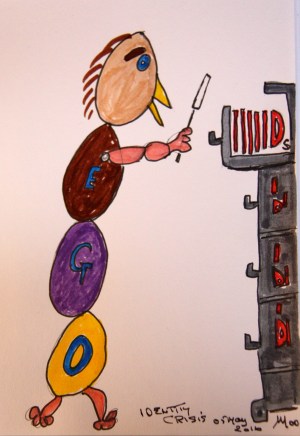
W5 Identity Crisis

The EGO Searches for its ID

IMG_0130.JPG

W5: Identity Crisis

W5: who, what, where, when, why am I? It happens to all of us and sometimes it’s overwhelming: a tidal wave of doubt that sweeps us off our feet and we ask but we have no answers.

Who am I? I know my name and I repeat it to myself like a mantra but I still don’t know who I am. Know thyself: easily said, but not so easily done and sometimes the mantra is a praying mantis that tries to bite off my head.

What am I? Good question: locked in the White Tower of the Academy, I knew who I was and what I did. But what happens when the White Tower crumbles around you and you are left picketing the sidewalk: no classroom, no students, no lecture hall, no lectures, no timetable, no marking, no nothing to tell you who and what you are?

Where am I? In retirement, of course, locked in a landscape of weeds and gardens, of growing grass that encroaches on the house and rises like the tide that threatens to surge into a tidal wave of sharp green blades. Death by mowing: and a still body lying out by the mower, waiting to be visited by crows.

When am I? Chained to the here and now and locked to my computer in a voiceless monologue with a faceless, dialogic screen that mirrors each word and moves a relentless line of print across a virtual page. The grandfather clock chimes the half hour and, for a moment or two, I break from computer face time  to enter the circular space time of the clock’s repetition. “See you tomorrow, sir, same time, same place,” the clock speaks out and, hopeful, I nod in response.

Why am I? Sometimes I think I am here just to give the grandfather clock someone to speak too. If I were to go, the clock would cease to exist, for me, but others would hear its chime. Is there no rhyme nor reason to my existence other than to sit here typing and listening to the Westminster Chimes and me so far from Westminster that my mind must travel three thousand miles east just to imagine it. And what does Westminster now mean? To you, to me, to the clock in the hall that endlessly repeats its Westminster Chime?

On Re-reading Quevedo’s Poetry

Was that where my life went,
a spent candle trailing dark studies
among the packed lines of your poems?

And you, was your life gutted by that
same guttering candle by whose light you
scrawled your tight black spider rhymes?

Were they all meaningless, your insights
and my words? So few now know who
you were and what you represented
and I, your scholar, a mere shadow of your
shadow struggling in the straggling
light of a far-off continent, far from content
at knowing so much about you. Intent
I was on spreading light and the word
to a world that thinks the two of us absurd.

Our world is spinning on its edge, placed
on the perimeter of space, and going nowhere.
Specks of dust we sit and contemplate
the vastness of what exactly: our fortunes,
our spirits, our houses, our power, our lands?
Out there, in the vastness that surrounds us,
worlds without end will never know we existed.

Bleak and blank our names, our deeds, our status,
the statues they raise in our praise. And what of
our thoughts, those sparks of electricity
that link us lip to ear and mind to action
and each of our actions transformed by a dance
performed by circling planets that shape our wills?

Who programs that universe now? Who plays
what trivial games of snakes and ladders
in which we are the dots and dashes, pinballs
among a million trillion strings of flashing lights?

IMG_0190

Maybe there is an answer, this maybe:

ID

Within this bookstore are many books, yet none
with my name on the cover or my life blood inside.
Deeper I dig, and deeper. Now here is a name I know,
and there in the bibliography, at last, I find my name:

 two books, a score or so articles, a thesis, and I am
vindicated. All that study, that work, has led to this:
my name in a foreign book in a foreign bookstore. Nice
work: now I know that wherever I go, I can establish

 my identity, set myself free from anonymity’s pangs.
Plug in the computer, turn it on, and there I am on the web,
smiling back at me. There is no better passport, no better

 sense of being, of identity, than that contained in these
images of self, these self-reproductions that I carry with
me, always, in a memory stick looped round my neck.

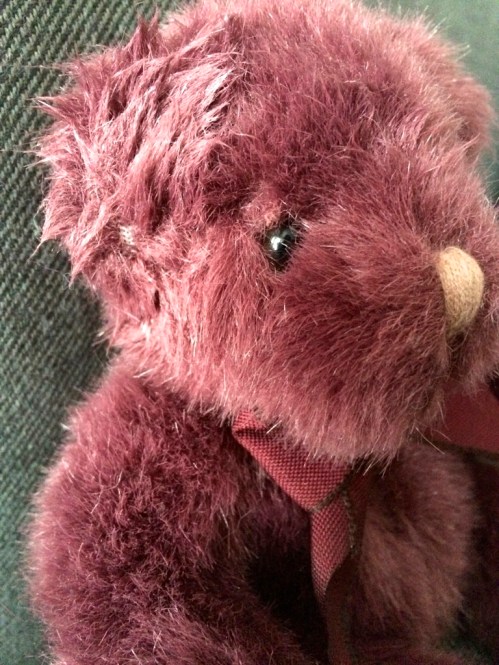
Or even this, the Teddy Bear planet just off the Red Nose of the Cat Constellation:

IMG_0013.JPG

Teddy Bears and Kitty Cats

Five reasons why a Teddy Bear is much better for you than a Kitty Cat.
I know, I know: cat lovers will go wild. They think cats are such lovely cuddly things. And they believe strongly that nobody can resist a warm, loving, darling, purring bundle of fur.

IMG_0015.JPG

Well, I can. And I can give you five good, sound, solid, 25 carat reasons why Teddy Bears beat Kitty Cats any day of the week.

One
Teddy Bears do not need to be fed on a regular basis. In fact, one piece of kibble will last a Teddy Bear for a very, very long time. And you can’t say the same for your cat. So less expense, no need to feed, don’t have to put that fresh water down every day, no constant fawning attention when hungry or just plain greedy, don’t have to worry about treading on the cat’s tail … In fact, a Teddy Bear wins out every time.

IMG_0036.JPG

Two
“Don’t mention cleaning out the kitty litter.  Promise?”
“I promise. I won’t mention it.”
“Word of honor?”
“Word of honor. Fresh Walnut and all that.”
“You just mentioned it.”
“Mentioned what?”
“The kitty litter.”
“I didn’t.”
“You did: you said ‘Fresh walnut.'”
“So?”
“So that’s what keeps the kitty litter from smelling.”
“Does it smell much?”
“Quite a bit. I hate cleaning it out.”
“Why?”
“It’s so smelly, filthy, grainy, lumpy, stinking …”
“So, why do you do it, then? What you need is a nice, clean, environmentally friendly Teddy Bear. There’s no cleaning up after a Teddy Bear. Who’s ever heard of Teddy Bear Litter?”
“You said you wouldn’t mention it.”
“Mention what?”
“Kitty litter.”
“I didn’t, you did.”

SORRY.
NO PICTURE AVAILABLE OF CAT IN KITTY LITTER CLOVER BOX.
Nor of Teddy Bear playing in Sand Box.

Three
Teddy Bears don’t have off-spring. You don’t need to neuter them, and they don’t need taking to the vet. Nor did they sit and wait in family groups for their photos to be taken. What we have below is a fake photo placed there by the unscrupulous enemy for their own pro-cat propaganda purposes.

Empress 048.jpg

Four
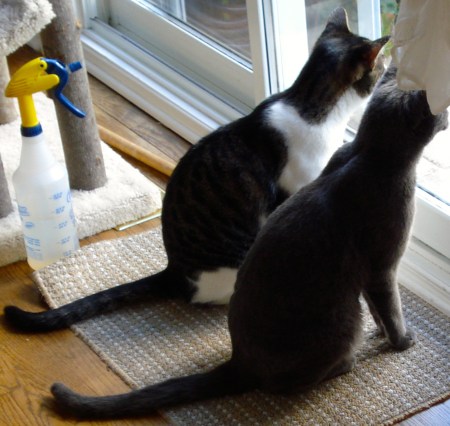
Teddy Bears are very obedient. If you tell a Teddy Bear to “sit” or to “stay”. He does so. Immediately. And he stays where you put him. There’s no clash of wills and egos, no conflict at all. Teddy Bears are easily trained and very obedient. Also, they don’t want to go out in the garden and wander beneath the bushes to shriek and whine when the moon is full. Now, if you have cats and you want them to sit and stay still, you must give them something to watch or to play with.

DSC02125.JPG

Chipmunks and garden birds aren’t cheap, you know, and they are less trainable than cats. How long do you think it takes to train a chipmunk to just sit there quietly to entertain your cat? Especially when it’s being hissed at and the cat is bouncing the window with anguish?

IMG_0069.JPG

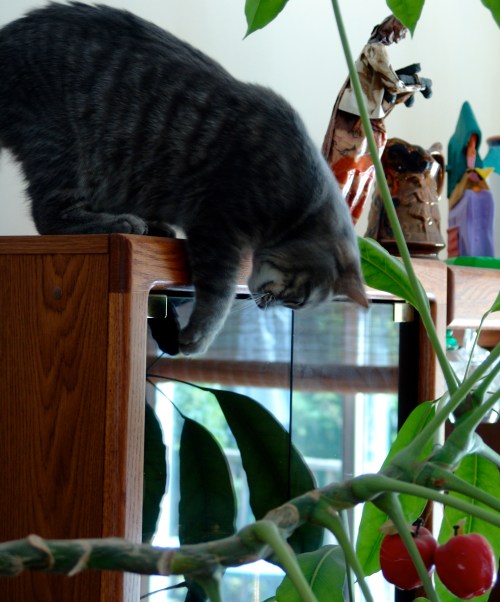
Also, Teddy Bears don’t climb on furniture, nor do they break ornaments, nor sink their claws into your hair as you pass beneath them, nor do they drop on you, unexpectedly, from great heights.


kiki and butterfly 075.jpg


Five
Five and finally, when there’s a moth, a fly, or a mosquito on the ceiling at night, you can’t train your kitty cat to fly into the air and snatch it off the ceiling. But as for Teddy: grab him by one leg, preferably the back one; give him his commands “Ready, Teddy, Go!” and hurl him skywards. With a little practice, he’ll nail that nocturnal buzzing monster every time.
No: all things considered — and I promise I won’t mention, you know what, that little box the cat sits in — there’s nothing better than a Teddy Bear.Wise, silent, friendly, cuddly, obedient, friendly (did I say that?), needs no training, always there when needed, waits patiently for you when you’re away, never stalks off with tail in air, never gets out and hides in the garden where you can’t find him, adorable, cuddly (did I say that already?) …

IMG_5811_2.jpg


Give me a Teddy Bear anytime.


The Twain

“And never the twain shall meet.” This was the chorus that my grandparents often chanted at me when family members started rowing with each other over one trivial incident or another.
“But what happens when the twain do meet,” I used to ask.
“Don’t be silly,” they said. “The twain never meet. Ever.”
But I know very well that they do.
I know.
I’ve seen them together.

IMG_0157.jpg

Funny things, they are, the twain, and opposites in so many ways. But so nice, in spite of what some people, especially my grandparents, used to say about them.

Not only do they meet, but they can be happy together and very, very friendly.
“Long time, no see,” the twain say, and embrace quite warmly with a bunch of flowers held between them.

IMG_0164.jpg

Mind you, the twain can also be quite awkward and occasionally very abusive towards each other. I remember my mother and father fighting “like cats and dogs” as my grandparents used to say.

Now, my grandparents had a cat. It was black and white and striped like a zebra. They called it Spot. My parents had a dog. It was an English Cocker Spaniel, gold in color, and off-spring to a famous sire. They called it  Wimpy but it was by no means a wimp and fought with everything in sight, especially the cat.

So when my father and mother fought and the family cat and dog fought, I thought, quite reasonably in my opinion, that dogs (with their short hair) were male and cats (with their long hair) were female, and that was the reason why they fought like cats and dogs. And “never the twain shall meet” as my grandparents used to say about my mother and father and the cat and the dog.

I guess it was too early to learn about the birds and the bees when, young and all too innocent, I was learning about the cats and the dogs.

IMG_0152.jpg

And of course it’s only natural that the twain should meet. My mother and my father, the cat and the dog, had to meet somewhere, didn’t they? How else would I be here? We weren’t the sort of family that practiced contraception by throwing stones at the storks to keep the babies away. But I could never work out why the cat always had female kittens while the dog had all-male off-spring. That was a bit too much for me, and nobody ever explained anything in those days.

And look, in spite of the differences between them, even cats and dogs can sometimes live together in peace. And opposites can and do attract, don’t they? Look at these two, coming together like a pair of magnets.

IMG_0175

Or, as the King of Rock and Roll might have phrased it:

“I’m so square.”
“Baby, I don’t care.”


Water

Water: such a precious commodity, and more than a commodity, the very substance of life. Without it, we shrivel and die. Vegetation struggles to survive, the desert shifts its boundaries outwards, and a high tide of sand rises to engulf the cultivated land.

In Oaxaca, Mexico, the Atoyac, the Green River, often runs dry. When it does, women kneel on the sand and pebbles and dig little holes into which the water seeps. They wait for the holes to fill and use little cups to pour that water into their buckets. These water holes are also used to wash their clothes and they hang them out on the riverbank bushes to dry beneath a burning sun.

Twice I have been in Oaxaca when the rains have not arrived. I have seen the reservoirs sink lower and lower as the sun laps up the precious liquid and no rain falls. Oaxaca, with or without rain, is a land of dry toilets, chemical toilets, chemicals to put in the tap water when you wash and peel fruit and vegetables. You drink only bottled water. It is sold to the households in forty litre bottles and hawked round the street by boys on tricycles who cry out their wares.

In Oaxaca, almost every house has its own supply of water. The flat roof, azotea, catches the rain when it falls and channels it into large internal cisternas that trap the water and keep it cool.  Water to waste is a luxury that few can afford and most water is recycled when possible in one way or another.

The rules are strict: drink nothing direct from the tap; do not clean your teeth in tap water;  beware of ice cream and ice cubes; drink only water delivered from trusted hands. In addition: eat food only from establishments with running water and a reputation for safety. Avoid street vendors, especially the little ladies in the street who cook over open fires and and change their babies’ nappies only to return to their cooking with unwashed hands … There are so many things you learn if you want to be safe and streetwise. Above all, close your nose to the delights of those wonderful street side cooking smells.

Peragua

Water seeks its final solution as it slips from cupped hands.
Does it remember when the earth was without form
and darkness was upon the face of the deep?

The waters under heaven were gathered into one place
and the firmament appeared.
Light was divided from darkness
and with the beginning of light came The Word,
and words, and the world …

… the world of water in which I was carried
until the waters broke
and the life sustaining substance drained away
throwing me from dark to light.

The valley’s parched throat longs for water,
born free, yet everywhere imprisoned:
in chains, in bottles, in tins, in jars, in frozen cubes,
its captive essence staring out with grief filled eyes.

A young boy on a tricycle bears a dozen prison cells,
each with forty captives: forty fresh clean litres of water.
“¡Peragua!” he calls. “¡Super Agua!”

He holds out his hand for money
and invites me to pay a ransom,
to set these prisoners free.

Real water yearns to be released,
to be set free from its captivity,
to trickle out of the corner of your mouth,
to drip from your chin,
to seek sanctuary in the ground.

Real water slips through your hair
and leaves you squeaky clean.
It is a mirage of palm trees upon burning sand.

It is the hot sun dragging its blood red tongue across the sky
and panting for water like a great big thirsty dog.

Every afternoon, in the rainy season, as regular as clockwork, the clouds build up and by five o’clock, the rain comes tumbling down. Nothing can describe the welcome smell of cool rain on dry dust and hot sand, the sound of raindrops pittering through the trees to splash on dry leaves, or the hiss of water on hot cobbles.

When the rain doesn’t come, then the Oaxacans who believe in the ancient traditions resort to sympathetic magic. They ask the brujos for help and the witch doctors bring out their rain sticks. Sympathetic magic: the sound of the sun-dried  cactus thorns falling through the hollow rain stick imitates the sound of the rain falling on the rain forest leaves. The clouds gather in sympathy and, sooner or later, the skies fill up with clouds, and down comes the rain.

Rain Stick

The bruja turns her rain stick upside down.
Rain drops patter one by one,
then fall , then faster and faster
until her bamboo sky fills
with the welcome sound of rushing water.

An autumnal whirl of sun-dried cactus
beats against its wooden prison walls.

As we look heavenwards, clouds gather,
rain falls in a wisdom of pearls,
cast from dark skies.

The scales fall from my eyes
and land on the marimbas,
dry beneath the arches
where wild music sounds,
half-tame rhythms,
sympathetic music
like this rainstorm
released
by the bruja‘s magic hand.

(bruja: witch, witch doctor)

Alebrijes

Alebrijes

alebrije2


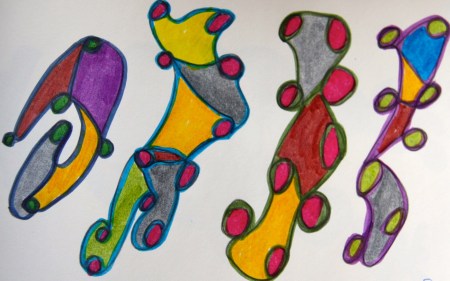
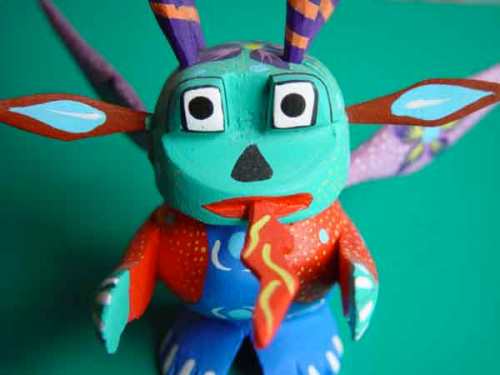
     Alebrijes step out from dried wood and stand in the shower of paint that falls from the brush’s tip. Yellow flash of lightning, pointillistic rain, garish colors that mirror those of the códices. The carvings take the form of fantasy figures, anthropomorphic animals,
 and mythological creatures.
Sometimes one individual selects the wood, carves it, then covers it in paint. Occasionally an entire family takes part in the work of making the alebrije. One person collects the wood and prepares it for carving. Another carves and sands it. A third works on the undercoat, and a fourth applies the final patterns of paint.
The great debate: does the form in the wood 
reveal itself to the carver
 or do the carvers impose their own visions on the wood? In the case of the team, do the family members debate and come to a joint conclusion?
These thoughts, exchanged with wood-carvers in Oaxaca, have led to a series of interesting conversations. What exactly is creativity? Where does it come from? Do we, as artists, impose it upon our creations? Or do we merely observe and watch as new ideas float to the surface of our minds? How does the creative mind really function? And, by extension, how much of the sub-conscious creative sequence can be placed into words?

 Alebrijes

 Are they half-grasped dreams
that wake, wide eyed, to a new day’s sun?

Or are they alive and thriving
when they fall from the tree?

Does the carver fish their color and shape
from his own interior sea,
or does he watch and wait for the spirit
to emerge from its wooden cocoon
to be reborn in a fiery block of color?

Daybreak:
in a secluded corner of my waking mind,
my neighbor’s dog greets the dawn with sparks
of bright colors born from his bark.

My waking dream: dark angels with butterfly bodies,
their inverted wings spread over my head to keep me warm.
In the town square, the local artist plucks dreams
from my head and paints them on carved wood.

 IMG_0299

Poema de Amor

Poema de Amor / Love Poem


Mitla is a sacred burial place in the Oaxaca Valley.
 The caves in the hills above the town
 are said to lead directly to an underworld from which demons and devils emerge at night and by means of which humans can communicate with the souls of the dead. Mitla, in fact, is often called the city of the dead.
 Legend has it that if you embrace  a certain magic column in the Palace at Mitla, 
the time left for you to live can be measured by the distance 
between your fingers as they reach round the pillar and almost touch.
 The pillar, they say, grows and shrinks according to the length of the seeker’s life. Petrus,  a rock, in Latin, evolves into piedra, 
a rock or stone in Spanish: upon this rock will I build my church.

1
We walk on tiptoe round the garden
peeling free the sunlight cloud by cloud

sometimes the heart is a sacrifice of feathers
bound with blood to an ornate altar

petrus
this rock cold against my chest
piedra
centuries of glyphs alive in your face

if our arms meet round these all too human columns
what will become of us?

2
beneath your skin the woad lies as blue as this evening sky
yellow light bends low in the fields below us
each darkened pool a warrior fallen beneath the scythe

the moon paints a delicate circle
its great round open eye stands out
above the rooftops
tonight it bears an eye lid carved from  cloud

our teeth are diadems of whiteness
we tie shadows to our heels
and dance in triumph through street and square

3
daylight bends itself round rock and turns into shadow
we flourish in blocks of fire

dreaming new selves from roots and branches
we clasp each resurrection with greedy fingers
will the moon rise again tonight and will we watch?

dark angel bodies with butterfly wings
our shadows have eloped together

we can see them sitting side by side
bumping knees at a table in the zócalo

4
church bells gild the barrio‘s rooftops
our fingers reach to the skies and hold back light
we draw shadow blinds to shut out the day
night fills us with stars and silhouettes

we dream ourselves together in a silent movie
closed flesh woven from cobwebs
lies open to a tongue-slash of madness

the neighbor’s dog wakes up on the azotea
he barks bright colors as dawn declares day
and windows and balconies welcome the sun

can anyone see the dew-fresh flowers
growing from our tangled limbs?

your fingers sew a padlock on my lips
“Listen to the crackle of the rising sun!”

Sometimes

IMG_0130

Sometimes the road seems uphill all the way. Lungs burn. Breath comes hot and hard and chunky in the throat. Legs hang heavy, muscles will not obey the owner’s instructions.

Consult the operating manual: “Take a break,” it says. “Rest now. Don’t push too hard.” But to rest is to give in, to come to an abrupt halt, or to drift backwards down the hill.

What stubborn streak is painted so deep in us that it shouts ‘never surrender’ when our most urgent need seems to be to throw in the towel? Is it the urge to get to the top, to see the lower lands stretched out below us? Or is it the mantra of fight the good fight?

Many things can drive us on: a need, a desire, a whim, an urge, or merely a refusal to stop fighting. Some of us will never give up. We will never lie down and curl up in a corner, a dead leaf to be blown hither and thither by the cold night wind.

Look carefully: there are no drugs, no needles, in the biker’s uniform. There is no small accessory motor hidden in the back wheel to help when times get hard.

The mouth is open, the eyes are set on the target, the legs still move, the sun still shines, and three smiling heart-shaped faces cheer the cyclist on.

Who can they be, these three angels at the road side, who can they be? Yet they are there and we are here and the bike is there and the hill is there and sometimes … yes, sometimes, the road IS uphill all the way.

But we keep the pedals turning and we don’t get off our bikes … and that’s life.