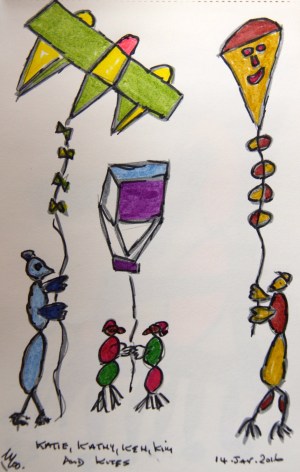
Needles

Needles

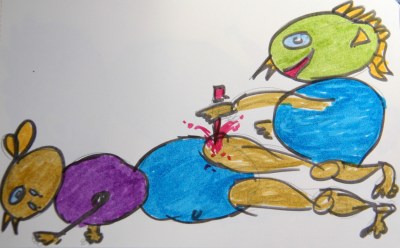
You won’t come
to very much harm
when nurse sticks a needle
in your arm.

The nurse is nice,
the needle’s bright
and you know things
will turn out right.

IMG_0032.JPG

Sometimes, things go
a little bit wrong,
but side effects
don’t last too long.

You needn’t fret,
you needn’t frown
until they ask you
to lie down.

IMG_0161.JPG

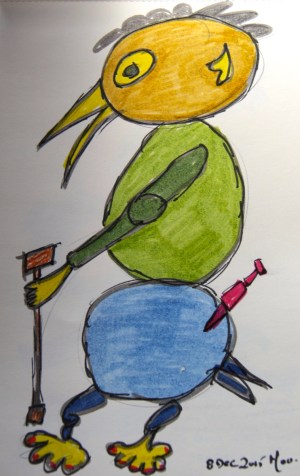
If nurse’s eyes
light up with glee,
if she strops the needle
on her knee,

if she sneaks up to you
from behind,
the needle’s blunt
but never mind.

IMG_0162.JPG

You’ll be out of there
before you can squawk
and a walking stick
will help you walk.

Li-(n)-es

Li-(n)-es
. ________________________ .

A straight line:
the shortest distant between two points,
as the crow flies, but what if it’s spring and the crows
loop the loop and fly claw to claw and wingtip to wingtip
tumbling up and down in an aerial game of snakes and ladders
with wind-thrown dice
un coup de dès n’abolira jamais le hasard
and a throw of the dice will never abolish chance
and is it by chance that their wingtips whistle in the wind
as they somersault over the house and tumble down
the tiles never touching anything, but carving
and painting the air with broad, feathery strokes
and oh the power in those oh so gentle wings …
… floating, flaunting their shiny blackness
like kites held back by the colored
li-(n)-es and strings that restrain them
even when released to their elemental sky-
-dance among cloud and wind

 IMG_0171.jpg

And what is drawing except taking a line for a walk
–and I don’t know who said it, but he’s probably
dead, so I can’t give him the credit he deserves —
but the pencil point, pen point, is a dog on a leash
sniffing the ground and following its nose,
here, there, anywhere the wind blows its magic
sense of scents and the pooch-world reduced
to a nose like a pencil point that draws the dog on …

IMG_0177.JPG

And
“My ambition,” said Henri Matisse,
as he wielded his scissors,
“is to liberate color, to make it serve
both as form and content.”
I too am content with colors and a line
attached to a wandering dog
and my spirit unleashed
to make colors flourish and flow
wherever they want my mind to go.

IMG_0025.JPG

Danzantes

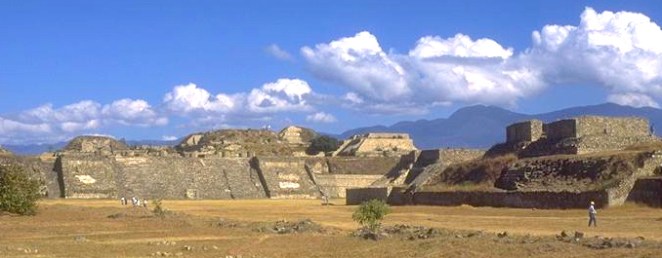
My poem, The Dancers and the Dance, refers both to the danzantes and to Monte Albán. Monte Albán was the capital of the Zapotecs and the principal city in the Oaxaca Valley (Mexico) between its foundation in approximately 500 BCE and its abandonment in approximately 750 CE. The White Mountain, thus named by the Spanish conquistadores, is justly famous for its temples, its tombs, and its carvings.
IMG0041_1.jpg

IMG0013_1

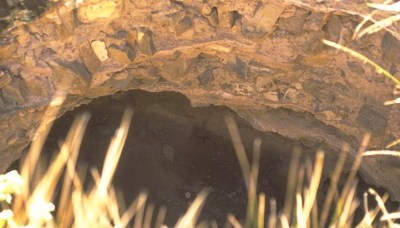
Two natural phenomena affected Monte Albán and its population. The first was drought and the dried earth with its brown and yellow tinges is clearly visible in these photos. The second natural problem came from earthquakes, for this is indeed an earthquake zone with active volcanoes causing tremors at regular intervals. The temples, even today, sometimes need repairing as earthquakes have been known to destroy even the reconstructed temples.

IMG0034_1.jpg

IMG0035_1.jpg

In fact, the abandonment of Monte Albán may well have been caused by an earthquake that cracked the enormous natural cistern in which the population’s water supply was stored.
IMG0031_1.jpg

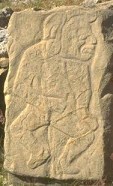
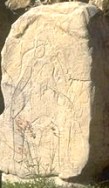
The Danzantes are strange, grimacing characters that have been carved into prisons of stone. They may be captured warriors awaiting sacrifice or the chieftains of conquered tribes humiliated, perhaps tortured, and then flash frozen into stone photographs where for centuries they have danced out their torment. Whoever and whatever they may be, they still dance on  Monte Albán.

IMG0038_1 2.jpgIMG0047_1.jpgIMG0039_1.jpgIMG0038_1.jpgIMG0047_1 2.jpgIMG0045_1.jpg

My poem, The Dancers and the Dance, captures a different form of dancing. It is taken from my book Sun and Moon: Poems from Oaxaca (2000) and contains echoes of the vibrant folkloric culture that thrives to this day both in the city of Oaxaca and in the Oaxaca Valley. Here, traditions are remembered and relived. Each year, on the Day of the Dead, for example, families place food and drink alongside photos of the dearly departed on altars inside their houses and their doors are thrown open to welcome their deceased family members as they return along the marigold paths that lead to their former homes.

The Dancer and the Dance

 1

she comes here to dance for me
only for me does she dress this way

 she shows me her dreams
unfolding them one by one
silk and cotton garments
drawn fresh from her scented closet

thin copper bracelets
carved wooden mask

 only her eyes reveal
subversive flesh and blood

 2

she orchestrates her story
skin drum
rattle of seeds in a sun-dried pod
single violin string
stretched across an armadillo’s shell

 I too am tense like an instrument
waiting to be played

 the bones of my love
reach out towards her

3

when she makes her music
familiar spirits return to the earth
dancing in a sash of moonlight

 she recreates an ancient spell
gold letters plucked from dark scrolls
no wands no words
just water’s purity
flicked fresh
across lips and face

 she binds me with the string of notes
she undoes with her hair
our bodies form an open altar
we worship with mysterious offerings
drawn from wells set deep within us

4

rain falls from the sky
Moon turns his face away
suddenly in darkened alleys
clouds hold hands and dance

dense streamers of light
dangle from street lamps
shadows remember their forgotten steps

gently she draws me to her
I try to follow
frail whirlpools of withered leaves
fragment weak sunshine
in light’s watery pool

 5

her magic grows
I take my first step
an unmapped journey
into desert space

we move to old rhythms
across moon flecked clouds

raindrops fall more slowly
faltering drum beat
diminishing water

6

high above us
the ghost of a melody
shaking its head
wringing its hands

 we return at last
to light and air
the moon’s vacant face
scowls in an empty field

someone has plucked the stars
one by one
and threaded them like a chain of daisies

 now there are no sky flowers
to adorn the night

7

noche de rábanos
someone has taken a knife
and peeled an enormous radish

this cartoon moon face
this full skull hanging from nothing
this lantern lighting from above

 now my lover sculpts time
and space
into small chunks

 each sacrifice
a jewel between her fingers

 I pin to my chest
three small notes
and a skeleton of words

8

inside my dancing head
the fires have gone out

 without her hands to guide me
my feet have turned clumsy

 scars layer my wrists and ankles
star crossed bindings
cutting against the grain

 I gather a harvest of stars
she holds them in her eyes

 her fingers are grasshoppers
making love in my hair

when she kisses my fingernails
one by one
we both know our bodies will never be the same

9

together we weave a slender cage
she cuts out my heart with her tongue
placing it on an altar inside the bars

she locks the tiny door
a silvery key wrought from moonstone

 my fluttering heart grows miniature wings
next time the door is opened
my wings will fly me to her lips

my heart is a caged bird on a tiny perch
it chirrups a love song
its image in the mirror answers back

breathless it scrapes its wings on the moon
its body striving upwards to the stars

10

on Monte Albán the danzantes
sway to soft music
their shadows dance in and on stone
as they have danced for centuries

wind rustles the grass
moon casts sharp shapes

darkness ascends the temple steps
huge fingers grasping upwards
an owl’s feathers clutching at the skies

at dawn tomorrow
the sun will rise beneath our feet
we will squint down on its majesty
we will pluck the ripeness of its orange
in our outstretched hands

11

our last night together
I pluck a blossom from the tulipán tree
a final offering of my love

 she gives it back
I place it in the pocket of flesh
where I once kept my heart

 tomorrow when the flower breaks
it will stain my shirt
a damp splash of blood
no longer running in my veins

 the scent of our happiness
will cling forever to my fingers
Teddy Bears and Kitty Cats

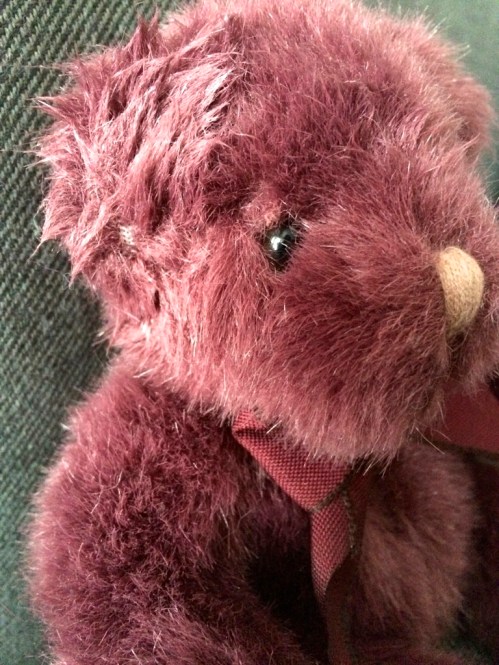
Five reasons why a Teddy Bear is much better for you than a Kitty Cat.
I know, I know: cat lovers will go wild. They think cats are such lovely cuddly things. And they believe strongly that nobody can resist a warm, loving, darling, purring bundle of fur.

IMG_0015.JPG

Well, I can. And I can give you five good, sound, solid, 25 carat reasons why Teddy Bears beat Kitty Cats any day of the week.

One
Teddy Bears do not need to be fed on a regular basis. In fact, one piece of kibble will last a Teddy Bear for a very, very long time. And you can’t say the same for your cat. So less expense, no need to feed, don’t have to put that fresh water down every day, no constant fawning attention when hungry or just plain greedy, don’t have to worry about treading on the cat’s tail … In fact, a Teddy Bear wins out every time.

IMG_0036.JPG

Two
“Don’t mention cleaning out the kitty litter.  Promise?”
“I promise. I won’t mention it.”
“Word of honor?”
“Word of honor. Fresh Walnut and all that.”
“You just mentioned it.”
“Mentioned what?”
“The kitty litter.”
“I didn’t.”
“You did: you said ‘Fresh walnut.'”
“So?”
“So that’s what keeps the kitty litter from smelling.”
“Does it smell much?”
“Quite a bit. I hate cleaning it out.”
“Why?”
“It’s so smelly, filthy, grainy, lumpy, stinking …”
“So, why do you do it, then? What you need is a nice, clean, environmentally friendly Teddy Bear. There’s no cleaning up after a Teddy Bear. Who’s ever heard of Teddy Bear Litter?”
“You said you wouldn’t mention it.”
“Mention what?”
“Kitty litter.”
“I didn’t, you did.”

SORRY.
NO PICTURE AVAILABLE OF CAT IN KITTY LITTER CLOVER BOX.
Nor of Teddy Bear playing in Sand Box.

Three
Teddy Bears don’t have off-spring. You don’t need to neuter them, and they don’t need taking to the vet. Nor did they sit and wait in family groups for their photos to be taken. What we have below is a fake photo placed there by the unscrupulous enemy for their own pro-cat propaganda purposes.

Empress 048.jpg

Four
Teddy Bears are very obedient. If you tell a Teddy Bear to “sit” or to “stay”. He does so. Immediately. And he stays where you put him. There’s no clash of wills and egos, no conflict at all. Teddy Bears are easily trained and very obedient. Also, they don’t want to go out in the garden and wander beneath the bushes to shriek and whine when the moon is full. Now, if you have cats and you want them to sit and stay still, you must give them something to watch or to play with.

DSC02125.JPG

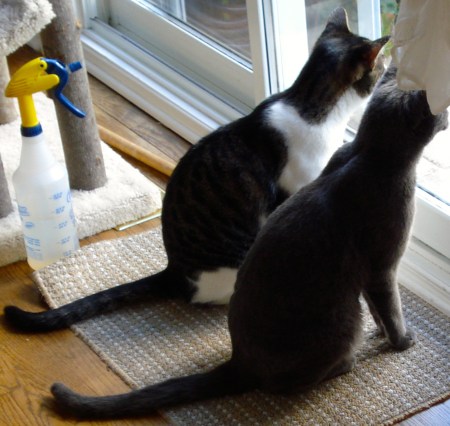
Chipmunks and garden birds aren’t cheap, you know, and they are less trainable than cats. How long do you think it takes to train a chipmunk to just sit there quietly to entertain your cat? Especially when it’s being hissed at and the cat is bouncing the window with anguish?

IMG_0069.JPG

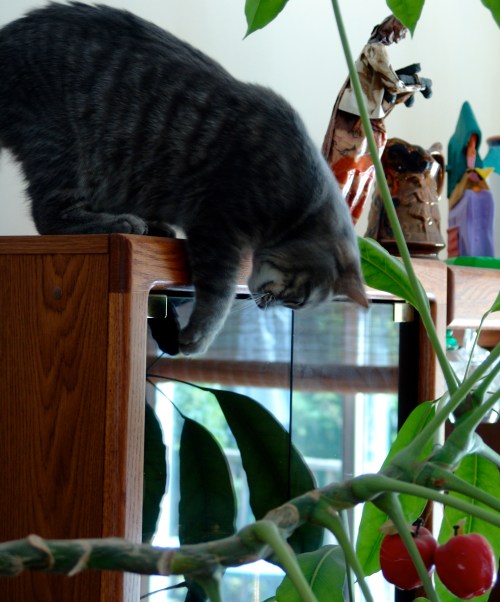
Also, Teddy Bears don’t climb on furniture, nor do they break ornaments, nor sink their claws into your hair as you pass beneath them, nor do they drop on you, unexpectedly, from great heights.


kiki and butterfly 075.jpg


Five
Five and finally, when there’s a moth, a fly, or a mosquito on the ceiling at night, you can’t train your kitty cat to fly into the air and snatch it off the ceiling. But as for Teddy: grab him by one leg, preferably the back one; give him his commands “Ready, Teddy, Go!” and hurl him skywards. With a little practice, he’ll nail that nocturnal buzzing monster every time.
No: all things considered — and I promise I won’t mention, you know what, that little box the cat sits in — there’s nothing better than a Teddy Bear.Wise, silent, friendly, cuddly, obedient, friendly (did I say that?), needs no training, always there when needed, waits patiently for you when you’re away, never stalks off with tail in air, never gets out and hides in the garden where you can’t find him, adorable, cuddly (did I say that already?) …

IMG_5811_2.jpg


Give me a Teddy Bear anytime.


Alebrijes

Alebrijes

alebrije2


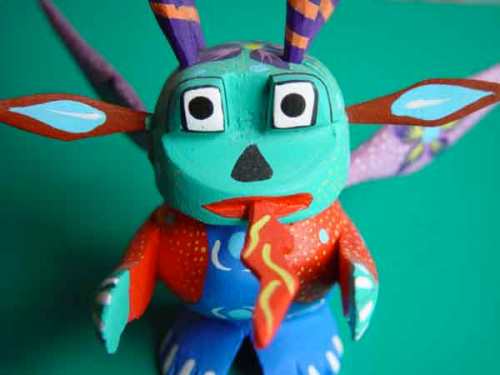
     Alebrijes step out from dried wood and stand in the shower of paint that falls from the brush’s tip. Yellow flash of lightning, pointillistic rain, garish colors that mirror those of the códices. The carvings take the form of fantasy figures, anthropomorphic animals,
 and mythological creatures.
Sometimes one individual selects the wood, carves it, then covers it in paint. Occasionally an entire family takes part in the work of making the alebrije. One person collects the wood and prepares it for carving. Another carves and sands it. A third works on the undercoat, and a fourth applies the final patterns of paint.
The great debate: does the form in the wood 
reveal itself to the carver
 or do the carvers impose their own visions on the wood? In the case of the team, do the family members debate and come to a joint conclusion?
These thoughts, exchanged with wood-carvers in Oaxaca, have led to a series of interesting conversations. What exactly is creativity? Where does it come from? Do we, as artists, impose it upon our creations? Or do we merely observe and watch as new ideas float to the surface of our minds? How does the creative mind really function? And, by extension, how much of the sub-conscious creative sequence can be placed into words?

 Alebrijes

 Are they half-grasped dreams
that wake, wide eyed, to a new day’s sun?

Or are they alive and thriving
when they fall from the tree?

Does the carver fish their color and shape
from his own interior sea,
or does he watch and wait for the spirit
to emerge from its wooden cocoon
to be reborn in a fiery block of color?

Daybreak:
in a secluded corner of my waking mind,
my neighbor’s dog greets the dawn with sparks
of bright colors born from his bark.

My waking dream: dark angels with butterfly bodies,
their inverted wings spread over my head to keep me warm.
In the town square, the local artist plucks dreams
from my head and paints them on carved wood.

 IMG_0299

Spring Birds

Each day sees another spark of brightness in the grass, in the trees, or at the feeder. Where, I wonder, have they been? In whose back yard did they winter?  Some, stray thoughts perched for a moment on a branch in the mind, fluttered last fall in the falling snow and melted away. Others, I know, stayed here with us and we fed them throughout the short cold days.

IMG_0017.jpg

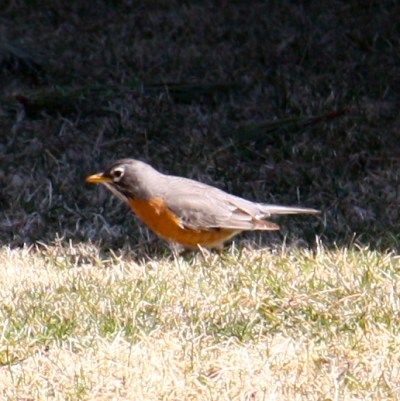
The robins, even though they are not my English robins, are my favorites, perhaps because they remind me of my childhood home. Less bold than those of my youth, they fly when we draw near and do not sit on the spade handle watching for worms as we turn the early earth and shake the garden back to life.

IMG_0033.jpg

Sentry duty: and they march up and down the lawn pacing their quicksteps, then standing to attention. They strut their stuff, turn their heads, listen, and look like guardsmen on parade outside our pastoral palace.

IMG_0014.JPG

With the guardsmen come the workmen, the busy birds, the ones who tap on the trees in search of insects or to set the juices running. Shy, they turn away and hide behind the trunk. But if we are quick, we can catch them, heads turned, when absorbed in their work, they forget to fear us.

IMG_0063.JPG

And the song-birds, shiest of all, often heard, their melodies, but their quicksilver spirits seldom seen except by chance and the artist’s luck and speed of finger. But listen: other songs throb their melodies on the wind and most days now we wake to music. A calling in the trees in the evening’s glow also tells us the world has turned once more and the birds, the glorious birds, the dwindling flocks of endangered birds, less this year than last year or the year before, are back. We must welcome them and cheer them while they are still with us.  Neither we nor they may  endure much more.


Black Angel

039.JPG

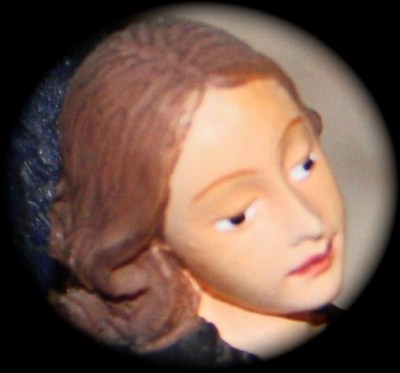
I first saw the Black Angel in Aldebarán’s cultural store in Ávila (2006). She sat there, in the shop window, along with several other angels, and I worshiped her from the distance of the street. Her image was taken from an original painting from Rogier van der Weyden (1399/1400-1464). This was turned into a 3-D image and then converted into the statue I saw in the shop window.

I brought the statue back to Island View, placed it on the shelf above the fireplace, where it still rests, and wrote several poems on the theme of Angels. I gathered them together in a chapbook entitled All About Angels that I self-published in Fredericton in 2009. The chapbook was dedicated to Clare’s great-aunt, D. E. Witcombe who departed this world on October 15, 2008.

All About Angels was also based on a book of a similar title, Sobre los Ángeles, written by Rafael Albertí, one of the poets of Spain’s Generation of 1927. I avoided the ambiguity of the Spanish title — Sobre (in Spanish) can mean Above or Beyond as well as About — by limiting my own title to All About Angels.

For Carl Jung, angels are the messengers sent to inform people of the state of their world. For me, they are also the wild creatures that inhabit the world around me and often take the form of birds and other spiritual creatures. They can be best seen in those moments of solitude when we are most open to the natural world around us. Then, and sometimes only then, we can hear the urgent messages they bring.


Black Angel

You cannot hide
when the black angel comes
and knocks on your door.

“Wait a minute,” you say,
“While I change my clothes
and comb my hair.”

But she is there before you,
in the clothes closet,
pulling your arm.
You move to the bathroom
to brush your teeth.

“Now,” says the angel.
Your eyes mist over.

You know you are there,
but you can no longer see
your reflection in the mirror.

Angel Choir

(on seeing the Northern Lights at Ste. Luce-sur-mer)

listen to the choristers with their red and green voices
light’s counterpoint flowering across this unexpected son et lumière
we tremble with the sky fire’s crackle and roar

once upon another time twinned in our heavenly prisons
we surely flew to those great heights and hovered in wonderment
now our earthbound feet are rooted to the concrete
if only our hearts could sprout new wings and soar upwards together

the moon’s phosphorescent wake swims shimmering before us
the lighthouse’s fingers tingle up and down our spines
our bodies flow fire and blood till we crave light and yet more light
yet when the lights go out we are left in darkness

close up.jpg

 Croaking Angels

Their tunes are one note symphonies,
croaks of joy
moving their fellows to ecstasy,
exhorting them to share
the splendors of ditch life,
in a springtime bonding
that will loft them to the skies.

There’s an ancient magic in this calling:
love and laughter,
moonlight and water,
all the joyous things
one links with spring.

Moonlight swings its cheerful love lamp.
New leaves and buds are also known to sing.

Patience

IMG_0228

   ‘Paciencia y barajar,” / Patience and shuffle the cards Miguel de Cervantes wrote, a long time ago, in the early seventeenth century. I think of it as watching and waiting. We must learn to observe, to stand still and watch the world around us. Who knows what lies there, just beneath the surface, waiting for us to find it?
We know our work is lonely and we thrive in the loneliness of the blank page, the blank screen. We stare at the water’s surface and wait and watch and then we shuffle the cards, the keys, the letters on the page, and something emerges. What will it be?

IMG_0233

   Carpe diem / seize the day: with the moment seized, we have time now to think, to polish, to work at it until it is ready. And yes, there is pride in that amber eye, pride and a sense of satisfaction.
We know our work is never done. We worry at it, work around it, gnaw it as a dog gnaws at a bone. Little children gathered round our grandma’s stove as the cookies cook we ask impatiently “are they ready now?”
Impatience is our enemy. We must wait in silence: wait and watch. Sooner or later that silver flash of inspiration will light up whatever page we happen to be decorating.


Tuesday’s Child

IMG_0220

Tuesday’s Child

Thursday’s Child has far to go …
so too does Tuesday’s child,
especially this one, when he sets out
on a Tuesday on a long journey.

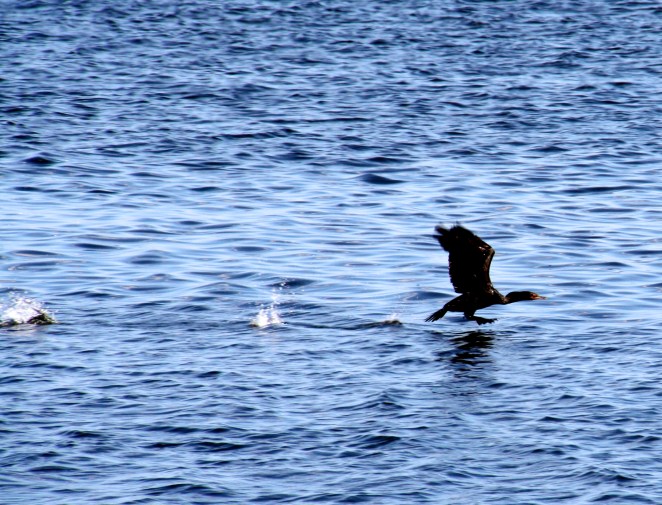
Just by chance, I caught this cormorant.
“Behind you, quick,” said Clare.
I turned and ‘Click!’

Such a miracle:
the first steps of flight
taken over water.
That first step heavy,
the second one lighter,
and the third one
scarcely a paint brush
pocking the waves.

The need for Tuesday’s Child
to take flight lies deep within me.
Fleeing from what?
Running towards what?
Who knows?

All I know is that the future
lies to the right of this photo
and the past lies to the left,
and I don’t know
what either might contain.

But I do remember the words
of Antonio Machado:

‘Caminante, no hay camino,
sólo hay estela sobre la mar.’
traveler, there is no road,
just a wake across life’s sea.

We may not know what lies ahead
but, like a ship at sea,
we leave white water behind us
and that wake tells us
where we have been
and what we have done.