All About Angels


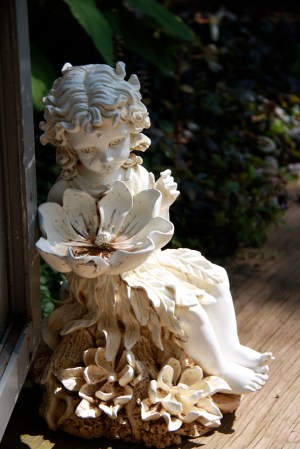
img_0618


All About Angels

Angels: many people believe in them, some people don’t. ‘What are they really like?’ you ask. Well, the ones I have seen, and they are the only ones I can talk about, are nothing like the angels we see in old church paintings.

 Angels visit me regularly. They speak to me through the mouths of innocent birds and beasts and I listen to them carefully, for they are the messengers of Gaia, the earth goddess. If we do not listen to the earth goddess, if we don’t pay attention to her words, the earth and the people who live on it will be in serious trouble, sooner or later.

 So, go out into the garden and the woods. Walk softly. Stand beneath autumn trees. Watch for footprints in the winter snow. Above all, watch out for the living creatures with which we share our world. Listen to them when they speak to you. Pay attention to their words. Do not ignore them, and remember St. Francis of Assisi who called them his brothers and sisters, for that’s exactly what they are. They are our extended family and as we treat them, so will we ourselves be treated when Gaia, the earth goddess, calls us home.

Pensive Angel

 “A penny for your thoughts!”

 The pansies turned their heads,
gazing at her with great disdain.

 They are the lowest of the low,
yet grow again, each year,
from their own scattered seed,
like weeds.

 Their faces are beautiful,
bursting suddenly from winter’s
white dream.

 They create pastel thoughts and fill
the flowerbeds with secret dreams
that they alone can see.

All About Angels, my next book of poetry,  will soon be available on Amazon and Kindle.

To be Welsh in the Rhondda


IMG_0147

To be Welsh in the Rhondda Valley
 
To be Welsh in the Rhondda Valley
is to change buses at the roundabout in Porth;
it’s to speak the language of steam and coal,
with an accent that grates like anthracite —
no plum in the mouth for us;
no polish, just spit and phlegm
that cut through dust and grit,
pit-head elocution lessons hacked from the coal-face
or purchased in the corner store at Tonypandy.

And we sing deep, rolling hymns
that surge from suffering and the eternal longing
for a light that never breaks underground
where we live out our lives and no owners roam.

Here flame and gas spell violent death.
The creaking of the pit-prop
warns of the song-bird soon to be silent in its cage …
… and hymn and heart are stopped in our throats,
when, after the explosion, the dust settles down,
and high above us the black crowds gather.

Man from Merthyr

IMG0040_1.jpg

Man
from
Merthyr

 Memory loss punched
holes in your head
and let in the dark,
instead of the light.

Constellations faded,
erased by the arch-
angel’s coal-dust wing.

 “I’m shrinking,” you said,
the last time I saw you,
you who had been taller
were now smaller than me.

 Tonight,
when the harvest
moon shines bright
and drowns the stars
in its sea of light,
I will sit by my window
and watch for your soul
as it rockets its
way to eternity.

My eyes will be dry.
I do not wish
pink runnels to run
down this coal-miner’s
unwashed face.

“When the coal
comes from the Rhondda
down the Merthyr-Taff Vale line,
when the coal
comes from the Rhondda
I’ll be there.”

With you,
shoulder to shoulder.

Farewell, my friend,
safe journey.

St. Christopher: Flash Fiction


F1040003.jpg

St. Christopher

“Well,” I said to Luis, “if you wade through that river and get yourself soaking wet when there’s a perfectly good bridge to walk on, you’re stupid. That’s all I can say.”
He didn’t reply and we both stood there, glaring at each other. Then I looked down at the cobbled road that led to the bridge. The stones, turned on their edges and woven into herring bone patterns, looked as though they had been there since the beginning of time. The bridge was clearly the work of the Romans rather than the Devil, the Devil’s Bridge, as the locals called it, built by the Devil himself and joining the two banks of a river that God had placed there to separate one side from the other.
“I’m going over the bridge,” I said.
“And I’m wading through the river, however deep it is.”
“It’s not that deep,” I replied. “It’s only up to the waists of the fishermen in their waders. You’re not taking that much of a risk.”
“It’s not a question of risk. It’s a question of honor and loss of honor.”
“What do you mean, loss of honor?”
“You know what I mean. I have lost my honor and somehow I must win it back.”
“By wading across a river, barefoot, with your clothes on, when there’s a perfectly acceptable bridge set here especially for pilgrims?”
“If necessary, yes; that’s what I must do.”
“Necessary?” I exclaimed. “There’s nothing necessary about it. You’re just being stubborn; and stupid.”
“I don’t think I’m being stupid.”
“I’m beginning to wonder if you are even thinking.”
Luis looked at me, hard, then started down the little path that led to the river.
“I give up,” I said. Then I turned away and walked to the bridge. I stopped when I was half way across and looked back. Luis had descended to the riverbank. He was talking with a young child who stood there, gazing at the moving water. Then I watched him as he picked up the child, placed him on his shoulders, and waded slowly into the river.
There was a sudden shout from one of the fishermen, and a washerwoman, washing her linen on the far side, to which Luis was headed, ran to where Luis was forcing his way slowly through the waters with the child on his shoulders.
“My son,” she cried out. “¡Hijo mío! Where is he taking you?”
“Everything’s fine,” Luis shouted back. “He just wants to visit his mother and I’m bringing him across.”
Just then, Luis stepped into a pothole in the river. He stumbled and the child almost fell from his shoulders. Luis staggered for a pace or two, then straightened up and continued across the river.
“A saint,” the child’s mother called out. “You stumbled yet did not fall: you must be a saint.”
“St. Christopher has come back to us,” another washerwomen crossed herself and the two of them knelt. I looked at Luis, wading through the river, and I knew for certain that if he wasn’t mad now, he soon would be. I watched as he reached the shore and handed the child over to its mother. She asked for his blessing, but he shook his head and refused to bless her saying that he was neither a priest nor a saint but just a poor sinner who could give a blessing to no one.
I walked down to the end of the bridge and waited for Luis to catch me up. Ahead of us, the cobbled road led to the church and to another cruz de harapos. We walked forward together, him with his wet clothes and his watery footprints, and me with my clothes all dry. When we got to the stone cross in front of the church, Luis stopped and gazed at it, raising his eyes up from the base and looking up towards the heavens. Then he moved forward, climbed onto the cross’s plinth, and stood there, just below the level of the stone arms. Three of the washerwomen had followed him. One was the mother of the child that Luis had carried across the river and her child was beside her.
Luis turned to face the cross. Then he raised his arms above his head, jumped upwards into the air, and clung on to the cross with both hands, his feet suspended about six inches above the ground.
“What do you think you’re doing?” I asked him.
“I’m hanging myself out to dry.”
“You can’t just hang there.”
“Why not? Jesus did.”
“You’re not Jesus.
“And the cross isn’t wooden and nobody has nailed me.”
“You’re going mad,” I told him.
He raised his eyes skywards muttering a prayer and refused to look down at me.
“Father,” he said. “Father: why hast Thou forsaken me?”
The three women stood at the foot of the cross, gazing at Luis who was hanging there, dripping his drops of water onto the stone.
“Send someone to fetch the local priest or the doctor,” I said to one of them. “This man’s gone mad.”

Shadow Flash Fiction

IMG_0147.jpg

Shadow
Bistro 23

             The janitor said he saw LJ’s shadow lying down at midnight on the corridor floor. He dialed 911 and a police car came with a bucket and a mop to sweep the evidence under the carpet. LJ wasn’t there. He had climbed to his feet and scuttled away, a peregrine crab clicking his pincers over dry moonlight on a sanded floor.

He migrated to the elevator and the janitor watched as the needle jerked to a stop at every floor. Now they feared him in the washrooms. They stared at themselves in the mirrors and saw him as a kind of devil looking out with an offer of work for idle hands.

LJ is horned and hoofed and he breathes heavily as the customers clean their teeth and leave the cold tap running. When the water’s turned off, LJ’s long, thin fingers pluck the strings of their hearts and a quaint fibrillation fills the silence of this haunted house that breathes in and out, moving fine membranes of memory.

Upstairs, downstairs, a lonely route he treads while the wind at the window scratches tinkling notes. Something breaks loose in the confines of his mind and walks beside him. His twin brother stalks through this silvery sliver of splintered glass, this simian mirror wrinkling their troubled suits of skin.

LJ glimpses the old moon’s monkey face through a broken window. Jagged and coarse, it wanders like an itinerant snail, cobbled with clumsy clouds. A vagabond in a paving stone sky, it rumbles across metal cracks, a knapsack of nightmares humped on its old man’s back.

When the snail moves house who stores the furniture he leaves behind? The hermit crab lurks naked on the beach, seeking new lodgings. Two eyes in limbo watch LJ roll his snowman’s belly of flab across an unknown, clouded room. Who killed the candle and left him in the dark where a fallen star grazed by the lamppost?

A bouquet of golden sparks flew from an iron tree and sanctified the gutter. The gas lamps sputtered patiently in uniform rows. A scarecrow stuttered into the limelight and shook LJ’s hand. The skeleton was wearing LJ’s grandmother’s Easter bonnet, with all the flowers renewed, but she couldn’t keep his heart from last winter’s left over crumbs.

When a tulip thrust its tongue through the concrete. It became as red as a robin and flew into the lounge bar of a public house. The bronze leaf necklace circling LJ’s throat filled with a flow of springtime song. His heart stood upright like a warped piano and the skeletons in his cupboard emerged to tarry at the corner to play knucklebones with the wind.

Torn butterflies of news fluttered round the neighborhood. Yesterday’s horoscope winked its subversive eye and called to the hermit in his lonely cell: “Look out for the stranger with the tin can alley smile. Sharpen your knife and tie your heart to the tail of the first albino dog, white as a lily, that comes whistling down the street.”

Though Lovers Be Lost 4-7 /7

Empress 070.jpg

“Though lovers be lost, love shall not;
and Death shall have no Dominion.”
Dylan Thomas 

Though Lovers Be Lost
4-7 /7

4

Who carved my future
in each sliver of bone?

A scratch of the iron pen
jerks the puppet’s limbs
into prophesied motion.

Who mapped in runes
the ruins of this heart?

Above me,
a rag tag patch of cloud
drifts here and there,
shifting constantly;

like this body of water,
this flesh and blood
ship in which I sail.

5

Eye of the peacock,
can you touch
what I see when
I close my eyelids
down for the night?

Black rock of the midnight
sun, rolled up the sky,
when will you release me
from my daily bondage?

 Last night, the planet
quivered beneath my body
and I felt each footfall
of a transient god.

6

Thunder knocks
on the door of my dream
and I am afraid.

I no longer know my way
through night’s dark wood.

Who bore her body
out in that rush of rain?

Could she still sense
the sigh of wet grass?

 Could she still hear
the damp leaves whisper?

7

A finger of fog
trickles
a forgotten face
down the window.

The power of water,
of fire, of frost;
of wind, rain, snow,
and ice.

Night’s incoming tide:
stark waters.

Rising.


Suite Ste. Luce 11-14 /14


fundy 05 mist+wolfepipers 081.jpg

“Though lovers be lost, love shall not;
and Death shall have no Dominion.”
Dylan Thomas 

Suite Ste. Luce
11-14 / 14

11

The beach compacts
smaller and smaller.

The tide jostles
sand pipers
into a dwindling world:

this shrinking pocket
handkerchief
of sand.

12

Happy the kite’s face
with its child
dangling far below.

Kite bounces up and down
on a tight-rope of air.

Below it, the child
walking the beach,
nose to the wind,
obedience on a leash.

The kite wags
its long, bright tail.

13

When the mist thickens,
it closes a window in the sky.

The church on the headland
steps plainly into sight,
and fades again.

The old man wraps himself
in a cloak of rain.

Suddenly, the sun
drapes itself,
a golden sou’wester,
over his head.

14

Summer lies abandoned
under rain-soaked umbrellas.

Red bucket, bright blue spade.

Childhood,
cast away:
a pair of sandals
on this cold, damp sand.

Suite Ste. Luce 5-10 /14

15 May 2002 Pre-Rimouski 277.jpg

“Though lovers be lost, love shall not;
and Death shall have no Dominion.”
Dylan Thomas 

Suite Ste. Luce
5-10 / 14

5

Early morning mist:

a shadow heron
clacks its beak
at a ring of mobbing gulls.

6

When the mist clears,
heron draws
his neck into a bow
and fires
the arrow of his beak
into a fish.

The gulls run wild,
clawing up the sky
on a ladder of sound.

7

Seagull:

a coat-hanger, hanging from
a blue sky-rail,

white wings braced
against the flow of air.

8

Herring gulls hovering,
white doves
round the old man’s head;

a halo
of clacking red-ringed beaks
livid against the sky.

Brazen voiced,
these peace doves,
mewling for their daily bread.

9

Black
cormorants pinning
their wings to dry
on the wind’s
rough cross-beams.

10

The dead crab,
alive an eye blink ago:

 body exit left
(with the black backed gull)

legs exeunt right
(with herring gull attendants).

Crowd scene:
a chorus
of crows-in-waiting.


Suite Ste. Luce 1-4 /14

Empress 068.jpg


“Though lovers be lost, love shall not;
and Death shall have no Dominion.”
Dylan Thomas 

Suite Ste. Luce
1-4 / 14

 1

Black backed gulls,
nature’s alarm clocks,
waking the seaside
with their glaucous rattle.

High tide? Low tide?
We have drifted on our life raft
far from the grasping hands
of city clocks.

Gulls breakfast on the beach.
Day’s rhythm all at sea.

 2

6 am? 7 am? 8 am?
What do they mean?

The planet’s slow revolution?
This sun arc sketched in its stretch of sky?

Salt spray combing seaside fingers
through a young girl’s hair.

A man in a red boat, fishing.

3

Bare toes grip
damp wrinkled sand.

 Worms have written
runes in their arcane
wriggling script.

What do they tell us,
these secret messages?

Sunburned now,
the bare beach itches:
like tanned leather,
like salt on a fish skin
nailed drying to a frame.

4

The salt air drives its freshness,
needles knitting through my chest.

Slowed heartbeat of the dormant beach,
the tide’s blood flowing,
in and out,
inflating, deflating
the beach’s sandy lung.


Lily: Flash Fiction

DSC02020.JPG

Lily
Bistro 14

One morning, in the Jeu de Paume, LJ found his own true love. The sun rose in Giverny and cast rose colored petals across the lily pond. And there she was, his Lily Marlene, floating in that watery space, her face framed among the lilies.

He remembered what she used to wear as she waited for him, standing beneath the lamplight where he could see her. He recalled their tender whispers and felt once again that wave of love sweeping over him. His tongue touched base on his lips and he swallowed his saliva: so sweet, her resurrection. She lazed there among the blossoms, each flower gigantic beneath the Japanese footbridge. LJ gazed on her, that Lily who toiled not, nor did she spin, and sighed as she rested there, cushioned among the lily pads, a work of wonder in a watery labyrinth of fragmented light.

He remembered the night they sent him away. “All troops confined to barracks,” the notice said. He thought of her standing out there, waiting for him. He remembered too that first encounter with the enemy when fortune rattled its poker dice leaving them to fall haphazardly, never to be recalled, yet not falling by chance, and the cast dice turning into flowers, red flowers, that stained his knife crimson. He gazed at her as she lay there, a conjurer’s trick her floral eyes pulled from a dark sleeve and floating in a pantheon of mysterious magic, a thicket of flowering water.

Each day he came to the Jeu de Paume to pay tribute and to see her reclining on her lily-pad. Very soon he saw her everywhere, coy in shop windows, languid in pavement puddles where raindrops rippled her eyes, couched among the floating clouds as evening stole color from the day. She became once more his Lily of the Lamplight and, as dusk’s shadows stalked street and square, he kept watch at street corners, from dusk to dawn, hoping to see her again, highlighted in the early morning by the rising sun.

LJ dreamed that one day they would walk together, hand in hand, at noon, perhaps, when the cathedral wears its strawberry suit, or in late afternoon when a blueberry blush descends with prayers and bells to sound the magic of Vespers. But it wasn’t to be. One evening, in a fit of despair, he threw myself into those clinging waters and sought her side. Dark bells rang out their bull-frog chorus as he plunged through shadowy waters in search of the light of her countenance there, where dusk is a violent bruise, scoured purple and red across the horizon. Yes, he followed in her footsteps, his Lady of the Lake, and became one with those waters.

LJ still doesn’t know who drew him forth; but when he emerged, he sensed that all had changed and that nothing had changed more than the viewer, this once-young man, now old and arthritic, typing away, one finger at a time, battering his key-board to recreate the wanderlust of those day-dreams wrought sous le Pont Mirabeau, along the banks where the Seine flows, or up by the bouqinistes and the Marché aux Fleurs, and past the Marché aux Esclaves where he searched for her, but he didn’t find her and raindrop words bounce off the page as photos of Monet’s Lilies bewitch with the staring madness of her drifting hair that floats through the cathedral’s eye, through the great rose window of Notre Dame reflected in the waters where his Lily still waits and holds a place in the rippling river for his un-drowned heart.