The Thin Man

IMG_0183.jpg

The Thin Man

The thin man
looks out of his window
and watches the leaves
as they twist and fall
like they did last autumn.

Golden carpets
spread across the grass
while under the lindens
the slender hands of children
crush flowers into perfume
and interlace bright
threads into tapestries
woven with light.

Will the thin man
give up his secret?

It cannot be clutched
by the camera’s artificial eye,
by the painter’s red squirrel brush,
nor by the tail of the dog fox
held over bandaged eyes.

Cows in the thin man’s
fields are scrawny.

They once walked
wary of the thin man
with his fistful of stones,
his pointed stick,
his sharp knife
and his slant-eyed dogs
that showed off
the basket weave of their ribs
with a rash of gravelly nipples
rippling against the skin
when they ran
snapping and slashing
with ivory fangs
at the frightened cattle.

Now the thin man is dying.
His cattle graze in peace.
His spirit wants to slide
through a gap in the cactus fence
and wander celestial pastures.

“I will light a fire,”
the witch doctor says.

He begins with the glow-
worm of a match.

That small flame smolders
as he breathes life into
shavings and dry bark.

Stars reach out
with tender hands.

A new spark walks
among the constellations.

The goats on the roof
grow grey with age.

Beside them,
a dappled donkey brays
as the thin man’s spirit
sets out on its journey to the stars.

A herd of seven goats, the Pleiades
rise above the sacrificial mound.

The witch doctor’s heart
shrinks to the size of an orange pip
when he cradles the thin man’s
body in his arms.

On the horizon,
Tochtli
gnaws at the moon’s
white skull.

Murciélago

exits his cave with evening
wrapped beneath his wings.

Tezcatlipoca
holds a stone
knife in his iron hand.

The thin man
dreams of Santo Domingo
where the golden tree
bends like a rainbow,

exposing its roots
as the end draws near.

Ownership: Whose poem is it anyway?

IMG_0231 (3).jpg

Whose poem is it?
Fictional Friends
Saturday, 17 September 2016

Ana, Anna, BettyAnne,
David, Jane, Lachlan, Margaret, Neil,
Roger

            I spent a happy two hours on Saturday afternoon in a literary workshop with a group of Fictional Friends. We were work-shopping a colleague’s story. It had been circulated to us the week before and we had all had a chance to read it and offer our responses. The author joined in the discussion quite freely and the conversation was in depth and very pointed.

Without giving away any intimate details, I believe that the general points that arose in the discussion are well worth opening up to a wider audience. I will leave them in question form.

1. The narrative voice: Is it stronger than the voice of the characters and should it be? To what extent should the narrator dominate the story? Should the characters have pride of place? How do we seek and find a balance between narrator and characters, especially when the author’s own voice, in real life and literature, can be so strong?

2. The focal point: What is the focal point of the story? Should it have a single focus, a single slug line, a sentence that can sum it up? Is it about the conflict between two characters in a dysfunctional marriage? Is it about a tit-for-tat relationship with secrecy and revenge at the heart of it? How should the story be focused so the spotlight falls on one of these elements or highlights the potential conflict among all three?

3. The characters: Is the narrator a third character? Are the two main characters evenly balanced? Do they have to be likeable? Are they likeable? Can they be strengthened? If they are not likeable, can their unlike-ability be softened in any way so the reader draws closer to them? Can the points of conflict between them be sharpened or focused more clearly? Should the story be lengthened to include more background detail? Should it be shortened and made more incisive? Are there non sequiturs, false trails, red herrings that can be eliminated?

4. Dialog: Is the dialog genuine and believable? Do people really speak like this? Is the couple communicating or are they merely talking at each other without listening? Is their lack of communication, via the dialog, a key component of the story? Can this lack of communication be strengthened? Is their language unique to them, each of them? Are the ‘he said’ / ‘she said’ necessary when there are only two characters? If their speech and points of view are distinctive then dialogic pointers are not necessary, surely? All ‘saidisms’ should be removed, ‘she squeaked, he sighed’, shouldn’t they? Such ‘saidisms’ can be paraphrased within the text, can’t they?

5. Punctuation: Does the punctuation need a copy editor to sort it out? Does the punctuation enhance the meaning or confuse the reader? Do the traditional forms of punctuation hold good in the age of texting and twitter and tweet? Surely the punctuation should be standardized, possibly for the narrator and the two main characters? Standardized, perhaps, but according to whose rules? Or does the narrative create its own rules?

6. Dramatic Irony: How much does each character know? How much should the reader know? How do we let vital information become available to the reader while keeping it secret from the other characters? Do we achieve this via dialog? How do the various narrators work in this context omniscient, narrator as character, narrator with partial knowledge etc?

Two writing tips:

1. Stay in the mood: We work hard as authors to create a mood for our characters and our readers. Once we have created that mood, we must stay in it. Anything that breaks the audience’s attention must be avoided: punctuation mistakes, spelling mistakes, authorial intervention, ‘saidisms’, sudden changes in character, words that are obtrusive … avoid too, those little jokes that we love so much, especially if they do not contribute to the story  … they distract the audience from what’s happening … avoid our favorite repeated phrases … non-essentials must be left out … get in the mood … stay in the mood.

2. Read your work aloud: This is one of the best ways of concentrating on what you are writing. Two techniques: (1) record your work, close your eyes, play it back and really listen to it, perhaps more than once. This allows you to focus on rhythm, structure, and movement. (2) Read your work aloud as you are writing and after you have written. For me, in poetry, this includes the finger-tapping, syllable counting, rhythmic mode — a sílabas contadas, as Fray Luis de León, one of Spain’s most rhythmic writers, used to say.

At the end of the session, the author responded to the commentaries and then invited each of the work-shoppers to offer a condensed suggestion in a line or two. My own went like this: “You have heard thirty-five to forty different suggestions. You are the author, only you. You most focus clearly on your story and choose those recommendations that suit you best and move your story forward in the way that you want.”

Waking in the early hours of the night to converse with the Harvest moon that still drifted through the night sky, the following very different thoughts came to me. They come from my long-term experiences with work-shopping, schools of creative writing, and editors who decide what parts of an author’s work they will publish, and then ONLY with appropriate and editor-approved changes.

Whose poem is it anyway?
When we workshop a poem or a short story and
when we receive all this feedback,
what is our role?
Is the poem or the story still ours?
Whose story is it?

  1. Editors.

            My first editors insisted on re-writing my texts. They wanted me to say and write things this way, not that way. “Here’s your poem,” one wrote back. “Resubmit it like this and I’ll publish it.” It wasn’t the way I wanted it, but I did what he said and my poem was published. House editorial style: same thing. Whose poem is it? Mine, because it bears my name … but did I want it written that way? Good question.

2. El Poeta-Pueblo.

I have mentioned this concept before. It comes from Ramón Menéndez Pidal who suggested that in the best oral tradition Medieval and Renaissance Spanish poetry passed through the mouths of a series of anonymous polishers who chose the best verses and strengthened them as they went along. If the poet is the people, whose poem is it? I think of soccer chants, bumper stickers, certain repeated jokes, especially old jokes that are recycled again and again with merely a change of victim. So much is in the air, so much is heard, over-heard, half-heard … where does creativity start and where does it end?

3. Originality, Copyright, and the Right to Copy.

Some of the thoughts expressed above question the meaning of ownership, originality, creativity, and copyright. How original are we? Who actually creates the ideas in the film based on the book based on the idea based on the suggestion of the anonymous voice overheard on the commuter train? When we work in a workshop, to whom does the end result belong? When we work in a creative writing program with tutors and commentators and a thesis director who rewrites, corrects, and approves the final product, whose work is it? When we work in a team, is it the final voice that determines the final structure of the entity, that is the creator and bears the label of creativity? By extension, to what extent do we have the right to listen in, to copy, to borrow, to re-create? Is a re-creator a creator and to what extent does the re-creator really create?

Just some thoughts to share with my fictional and other friends for the joy of creation never ends — and yes, we have the right to copy (with acknowledgement), to borrow (with a tribute), to change, and shuffle, and cut … for me it’s all a form of creativity. If our friends and writing groups want to join in and help us write, then why shouldn’t they? But never forget the role of el pueblo-poeta and don’t forget to ask: whose poem is it?

Man from Merthyr

IMG0040_1.jpg

Man
from
Merthyr

 Memory loss punched
holes in your head
and let in the dark,
instead of the light.

Constellations faded,
erased by the arch-
angel’s coal-dust wing.

 “I’m shrinking,” you said,
the last time I saw you,
you who had been taller
were now smaller than me.

 Tonight,
when the harvest
moon shines bright
and drowns the stars
in its sea of light,
I will sit by my window
and watch for your soul
as it rockets its
way to eternity.

My eyes will be dry.
I do not wish
pink runnels to run
down this coal-miner’s
unwashed face.

“When the coal
comes from the Rhondda
down the Merthyr-Taff Vale line,
when the coal
comes from the Rhondda
I’ll be there.”

With you,
shoulder to shoulder.

Farewell, my friend,
safe journey.

Teddy Bears FFF

Empress 077.jpg

Teddy Bears
Friday Fast Fiction

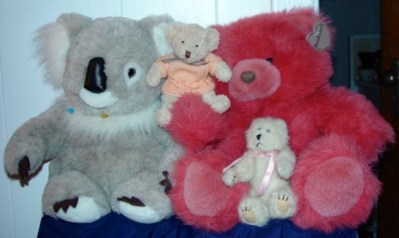
Now they sleep in separate rooms in single beds each tucked in with a monogrammed teddy bear.
He likes to cuddle his, keeping it warm, tucking it carefully under the bedclothes. He calls it Ready Teddy, and his favorite game, especially in summer, is to hold his teddy bear by one back leg and say in a loud voice “Ready, Teddy, GO!”
At the word “GO” he hurls his teddy bear skywards and takes great delight in the fate of a sleeping fly, pinned against the ceiling and squashed. His delight doubles if one of the pointed waves of ceiling paint impales the fly and leaves it squirming there, buzzing impotently. This means target practice and he hurls Ready Teddy, “GO, GO,” skywards again and again until the unfortunate fly, falling like a condemned angel, tumbles back to earth.
She still follows the same ritual as when they were sleeping together in the same bed. First she pummels the pillows, fluffing them up with sideways movements of the hands. Next, she lays them on the bed and beats them flat. Then she picks them up and plays them like a concertina, pushing them together then stretching them out again. As for her teddy bear, she likes to discipline it, to beat it into shape. Once upon a time, it made noises and let out little squeals and squeaks, but the constant violence has silenced its sound box.
When they slept together she often took her teddy and beat it against her husband’s head. He would wake from the deepest dream head a-throb, ears and cheeks stinging, as she flailed him with her teddy and struck him blow after blow. When his headaches grew worse, they decided to sleep apart. He felt it was better and safer that way.
Last night, she sleepwalked into his room, and sat on the side of his bed. She clasped her teddy by the feet, a rabid Rottweiler with a rag doll, and thumped her teddy’s head against her husband’s face again and again.
The sleeping tablets had made him drowsy and slow to wake. His wife kept up the barrage until he finally woke, eased the teddy bear from her grasp, and walked her back to bed
On the way back to his own room, he checked into the bathroom and examined his face in the mirror. Blood seeped from his nostrils. He had bruises under his left eye and his cheeks glowed red where veins had broken near the surface
Next morning, he sat at the breakfast table, his grandfather’s First World War magnifying mirror in his hand, and examined his face. The ice pack had taken effect and he looked less damaged now. He reached for the color correction cream in the packet beside him and read the directions with care. Then he placed a tiny drop of the magic serum onto the paintbrush and worked the correction cream over the marks on his face. He watched them disappear one by one. Now he would be ready to face the world.
He stared into the magnifying mirror gazing deeply into his own eyes. Was that how it had happened? Or had their first child really fallen downstairs, banging her little head on each wooden step at eighteen months old?
The inquest had been inconclusive, his wife held blameless. They had remained childless after the trial.
Was that a blessing or a curse?

Imitation and Creation: Wednesday Workshop

IMG_0177.jpg

Imitation and Creation Wednesday Workshop

 Martes y trece, mal día / Tuesday the 13th, bad day.

Imitation:

In our age of instant and spontaneous creativity, imitation is almost always bad. And yet, as John pointed out to me on Tuesday evening at our weekly meeting, imitation is the best form of flattery. We flatter other writers when we borrow from them and imitate their styles. I don’t mean wholesale plundering and plagiarism, but a nod here and there surely does no harm.

We also discussed the idea of imitatio / imitation, in ancient and medieval (and later) rhetorical texts.

Imitatio: the ideal of the good man, of the blessed spot, of the Golden Age — in rhetoric not all imitation is bad. Moreover, imitation can be doubly good when the “remake” is more original than, and betters, the original production.

Orality

From imitation we moved to orality: how much do we see and hear and overhear and then repeat? And, by extension, how accurately do we repeat what we hear?

If we go back to Roman times, the marching songs of the Imperium spread throughout the Roman Empire (Holy or not), and catchy songs, tunes, and words they were with thousands marching to them and singing them in taverns and on the road.

Think the Re-conquest of Spain (la Reconquista) and the romances noticieros, the news ballads, songs that circulated orally and were transmitted throughout the Iberian Peninsula. It is hard to imagine a society with little writing, no newspapers, no radio, no television, and everything transmitted by foot, horseback, and word of mouth. Yet that describes the situation in Spain in the 14th and 15th centuries. News was sung, and imitated, and circulated by song and word of mouth.

Ramón Menéndez Pidal coined the phrase el poeta pueblo / the poet as people, a concept that suggested an anonymous series of authors and contributors, many nameless, speaking and revising, remembering and re-polishing, verses and songs. This leads to a true oral authenticity of authorship where everyone joins in to create and re-create and we end up with a literary process of natural selection (oh yes, we discussed Darwin, and Wilberforce, and Huxley, and Mendel, and Marx, and many other things and people as well, we don’t do things by halves on Tuesday nights).

Think now of the literate, those who had letters and could write and read, and the illiterate, those who could neither read nor print their names. For us, the illiterate come down to us as crosses or ticks or thumbprints in history or as a stonemason’s mark on a cathedral, perhaps. But nevertheless, the illiterate heard, they memorized, they repeated, and they spoke. And no, in spite of all our assumptions, they were NOT stupid.

Think Napoleonic Wars and the songs that were sung on board ship in the various navies and don’t forget the marching armies. Many of these songs, words changed, are still with us. The words change, the tunes change, the rhythms change, but so many, oh so many, are recognizable when we go to their roots and examine them.

Orality and Literacy

Now think of a society in which some people can read and some can’t. Cervantes presents us with a world in which the literate and the illiterate mingle in a changing society. He shows us how they interact in his novel Don Quixote. The closest we can come today is to a world in which some are computer literate and some aren’t; some can text and some can’t; some are totally at home in social media, and some aren’t. Often this is a case of education and money. It can also be a question of privilege. But wealth and circumstance enter into the equation as well.

Now think of how this world of ours is expanding exponentially with its many forms of instant media and also how it is contracting exponentially as it becomes, in the words of the Spanish, a pocket handkerchief / el mundo es un pañuelo.

Originality

Into this mixture we must now throw originality: how creative are we? How original are we? What does it mean to be original, to be creative? I was always horrified when I heard students and professors repeating the “best” adverts they had heard on television the night before. Alas, I can still sing many of the early ads I heard on black and white television in the fifties. How much room is there in the human brain? How original is the mind that regurgitates the tv ads of so long ago and how, just how, do we incorporate them into our own version of creativity? Is creativity then warped tradition and reconditioned memory? Then think jokes, re-cycled jokes, with an ever -changing victim subjected to a never changing punchline: I don’t want to go there.

Let us think Atlantic Canada: how do we deal with Milton Acorn’s Jackpine Sonnets? Are they failed sonnets with fewer lines and falsified rhymes and rhythms? Or are they true poetic creations that reflect the True North Strong and Free that is the Jack Pine growing frivolous and free in Atlantic Canada? I will never forget my first encounter with Milton Acorn. He borrowed my photocopier code and photocopied himself, literally, on the department photocopier, limb by limb. Now is that original or not? I still remember him carrying his photocopied features across campus …

Imitation and Creation, from my computer, our Wednesday Workshop, a day late … so Euro-Centric, for that is my background, and I do apologize. For I am well aware of the influence of the tales that spread from China and India and the Arabian Peninsula into Greece and then Rome and then places further west. A small world ours, a veritable handkerchief, a literary handkerchief with repercussions across time and space, repercussions that have breadth and depth and that may come to us in so many different ways.

Imitation? Originality? Creativity? Talk to us about them, next Tuesday, at our regular weekly meeting.


Old Man from Tlacochahuaya

IMG_0202 (1).jpg

Old Man from Tlacochahuaya

His skin
is heavy and thick:
the leathery pelt
of a working animal.

His bare feet
poke from the scratchy
leather of rough-hewn,
home-made sandals
carved from auto tires.

His toenails are iron claws
gripping the earth:
a climber’s spikes.

When I examine them
they seem cut off from the man
as if they protruded
from a bestial hoof.

I imagine him horned,
tailed, and bearded,
leaping in a bright red
devil’s suit
through black smoke
and orange flames.

Water is the bond
that binds the earth’s poor,
so I offer him
water from my bottle.

Then I see him sparkle
and his eyes are as clear
as the water he drinks
from the bottle I gift him.

Brothers across
artificial frontiers
we shake hands,
and now we are one.

Watered,
he is my friend,
my true amigo.

“Where are you going next?” I ask.

“Nowhere,”
he shrugs.

“I am just happy to be here,
squatting in this line of shade
that protects me from the fierce
knife-blade of the sun.”

Don Nadie

IMG_0200.jpg

Don Nadie
walks past the Jesuit Church
where the shoe-shine boys
store their stands at night.

He walks past
the tiny seat where
the gay guys sit
and caress each other
asking the unsuspecting
for unexpected dates.

Nobody asks him
for a match,
for a drink,
for money,
for charity,
for a walk down the alley
to the cheap hotels

The Yalalag witch
doctor sees things
other men don’t see.

He stretches out his hand
and brushes the mosquito
from Don Nadie‘s nose.

“Brother,” he smiles.
“I too have lost the way.”

Don Nadie is the one
who stops the hands
on all the clocks
at midnight.

He’s the one who leaves
this place and comes to this place,
all places being one

Don Nadie thinks
he knows who he is,
but he can no longer
sense his blood in the mirror
as the razor blade draws
its thin red scratch
across the dry husks of his soul.

Don Nadie,
my lookalike, my twin,
stares back at me
from the shop window
and I gaze into his eyes

In the back of the weavers’ shop,
three witches watch us.

One spins the yarn,
one measures the cloth,
one wields
the obsidian knife,

that will one day
sever the thread of our lives:

gimiendo gemelo,
hipócrito rector.

Small Corner

IMG_0160.jpg

Small corner

 And this is the good thing,
to find your one small corner
and to have your one small candle,
then to light it, and leave it burning
its sharp bright hole in the night.

 Around you, the walls you constructed;
inside, the reduced space, the secret garden,
the Holy of Holies where roses grow
and no cold wind disturbs you.

 “Is it over here?” you ask: “Or over here?”

If you do not know, I cannot tell you.

But I will say this: turning a corner one day
you will suddenly know
that you have found a perfection
that you will seek again, in vain,
for the rest of your life.

Gaia Sun & Moon

IMG0073_1.jpg

Gaia

Worshipping the Earth Goddess, Gaia,
before the great altar in Santo Domingo

If the goddess is not carried in your heart
like a warm loaf in a paper bag beneath your shirt
you will never discover her hiding place.

She does not sip ambrosia from these golden flowers,
nor does she climb this vine
to mount to her heavenly throne,
nor does she recline in majesty
a pantocrator in a mandala frowning down.

In spite of the sunshine trapped in all this gold
the church is cold and overwhelming.

Tourists come with cameras
not the people with their prayers.

My only warmth and comfort:
not in this god who bids the lily gilded
but in that quieter voice that speaks within me,

bringing me light amidst all this darkness,
bringing me poverty amidst all this gold.


Apologia FFF

IMG_0146.jpg

Apologia
Friday Fast Fiction

                   Late last night, I opened Alistair Macleod’s book The Lost Salt Gift of Blood and I re-read the first story. I was soon dabbing my eyes with a tissue and blowing my nose.
This morning, I want to destroy everything I have written. I know I don’t possess the verbal and emotional genius of the great writers and I sense that I will never be able to write like them. Graduate school taught me to be passive, not active, and to write impersonally, choking every emotion when I write. Academia also taught me how to kiss and how to run away with my thirty silver pence. “Never challenge the status quo,” my professors told me. “Learn the rules and disobey them at your peril.”
But here, in this private space where I create and re-create, there are no rules. The enemy is not clear any more and the fight is not one of black against white. It is rather a choice between diminishing shades of grey, and all cats are grey in the gathering dark that storms against my closing mind. Should I destroy all my writing? I won’t be the first to do so; nor would I be the last. And I won’t be the first or the last to destroy myself either. Intellectual, academic, and creative suicide: as total as the suicide of the flesh.
I carry on my back the names of those who have gone on before me as if they were a pile of heavy stones packed into a rucksack that I carry up a steep hill, day after day, only to find myself, next morning, starting at the bottom once again. But this is not the point: the point is that if I cannot write like the great writers, how can I write?
I think of Mikhail Bakhtin and his cronotopos, man’s dialog with his time and his place. I have no roots, no memories, and that is where my stories must start: in the loss of self, the loss of place, the loss of everything. I was uprooted at an early age, soon lost my foundations, was sent into exile, and only survival mattered.
I look at the first page of one of my manuscripts. My writing manifesto is clear before me: “And this is how I remember my childhood,” I read. “Flashes of fragmented memory frozen like those black and white publicity photos I saw as a child in the local cinema. If I hold the scene long enough in my mind, it flourishes and the figures speak and come back to life.”
I am aware of the words of T. S. Eliot that “every attempt / is a wholly new start, and a different kind of failure / because one has only learned to get the better of words / for the thing one no longer has to say, or the way in which / one is no longer disposed to say it” (East Coker).
Are my stories an exercise in creativity or are they a remembrance of things past? How accurate is memory? Do we recall things just as they happened? Or do we weave new fancies? In other words, are my inner photographs real photographs or have they already been tinted and tainted by the heavy hand of creativity and falseness?
The truth is that I can no longer tell fact from fiction. Perhaps it was all a dream, a nightmare, rather, something that I just imagined. And perhaps every word of it is true.
I no longer know.