Kingsbrae 1.1

IMG_0464

Conference Call
(for Anne, Carlos, Elise, and Ruby)
Kingsbrae 1.1
1 June 2017

Face to face, the five of us,
a gallery of artists, meeting
together for the first time
in a virtual reality unlike
the ones we ourselves create.

Our opening words simulate
a game of chess, slow and
hesitant, then speeding up,
slowing down, accelerating
as we gain more confidence.

Faces become names, voice
and tone take on deeper
meaning, one of us smiles,
some of us smile back. Then
smiles turn to laughter as
formalities break down.

In growing fellowship, we work
on the where, how, and why,
of what we will be doing
when we meet at Kingsbrae.

Journal: Anne organizes two conference calls in May and we are able to talk online and discuss what we intend to do when we gather together at Kingsbrae. It is a little slow at first, but we soon warm to each other and the ideas flow.  It’s not easy for us to pull everything together, for we are so different. Our group contains an artist in multi-media (Anne), a musician from Peru who plays the pan pipes (Carlos), a sculptor, (Elise), a painter (Ruby), and a poet (Roger).

Now the First of June has arrived. Anne and Elise are already on the road. Carlos is in the air, flying in from Lima to Toronto, and then on to Fredericton, where he will be met later today by Roger. Ruby is all packed and about to set out. She will probably head right past my house as she travels to St. Andrews. Depending on the actual time of arrival of Carlos’s flight, we will either meet tonight in Kingsbrae or else early tomorrow.

Expectation is high. My own artistic antennae are twitching, and I am sure that everybody else feels the same: fortunate, lucky, charged up with artistic energy, in a single word: blessed. Soon the creative adventure will start. Then let the magic wand wave and a fecund creativity will set in.
Phoenix

IMG_0158

Phoenix

The wool shop has gone.
It survived the winter storms
that whipped the bay ice
into waves of mashed potatoes
that hardened and crashed
against the quay, splintering
its timbers, tearing it down.

It survived the spring time
freeze and thaw that cracked
the sea wall, split foundations,
and wobbled the shop
as if it were yellow jelly.

It survived the carpenters,
the stonemasons, the police,
the insurers that came
with their cameras and their
oh-so awkward observations.

It survived everything
except the lightning bolt
that lit the fire that reduced
the old shop to dust and ashes
from which, unlike the phoenix,
it would never be born again.

Reversing Falls

IMG_0158

Reversing Falls
Saint John, NB

Quietly, the tide turns,
holds back the river’s flow,
pushes fresh waters
backwards, holds them up
against their will.
The river builds and gains
in strength. The tide water
weakens, its muscles can
no longer support
the river’s weight. The tide
ebbs, flows out of the bay,
slowly at first, then with
ever quickening steps.
The river grows strong,
pushes back against the tide
and renews its seaward flow.

Comment: Just back from Saint John, New Brunswick and the WordSpring meeting of the Writers’ Federation of New Brunswick (WFNB): theme … Finding Your Voice. I gave two seminars, one on Friday night (30 participants) about choosing your text for a literary reading and the other on Saturday afternoon (25 participants) about meeting your metaphor and finding your voice. I had a great time and I hope the other participants did too. We finished the Saturday afternoon seminar with a sing-song, so I guess a good time was had by all. Oh yes, and I did a Blue Pencil Café and several one-on-ones that were wonderful. I attended some very fine sessions, too, heard some great people read, play the piano, and sing. Oh yes, the hospitality and food in the Harbour Hilton was excellent. It was a fabulous weekend and I would like to give a big thank you to all who made it possible, especially my guide, the poet Annette, and the chief organizers, Andrea, Cathy, Gwen, and Rosalyn. If I have missed anyone out, forgive me. The omission is by accident, not design.

Ticks

img_0177-2

Ticks

Ticks, as a student, are never to be feared.
They are good for you,
mark your rites of passage,
never catch on your skin
or bite into your beard.

Ticks in the woods creep and crawl,
people really don’t like them at all.
They fall and they climb,
bring diseases like Lyme.

Leeches are bad and suck at your blood.
They swell up with your juices
as you well knew they would.
But leeches don’t kill, as tick bites might.
So get out your tweezers and squish ticks on sight.

Comment: Ticks are about. Watch out for them and be very careful with them. Announcement on CBC Radio, 19 May 2017.

Punctuation in Poetry

img_0177

Punctuation in Poetry

Gardeners

when three bearded men
unbury winter’s bones they pick
at old wood scars dead trees and
their limbs now lying there lifeless

they dig deep at flowerbeds
uprooting a riot of Japanese
Knot Weed untangling roots
all tangled and twisted with
Bees’ Balm and perennials
that stray across borders
unwelcome immigrants neither
barriers nor fences can possibly hold

they probe between flag-
stones where wintering birds
and squirrels and chipmunks
cracked the seeds and wild weeds
that grow there and flourish

but where would the land be
and what would it accomplish
without helping hands
and the power of strong fingers
and fresh eyes that spot those
intruders who diminish
the space where good flowers
grow strong with fresh herbs
chives and oregano basil
and parsley peppermint sweet
crushed beneath feet

Comment: I posted this poem yesterday. It’s another raw poem. On re-reading it, I found it confusing. To punctuate or not to punctuate, that was my question. I decided to rewrite it and use punctuation. Here’s the new version.

Gardeners

Three bearded boys unbury
winter’s bones. They pick
at old wood scars, dead trees and
their limbs now lying lifeless.

They dig deep at flowerbeds
uprooting a riot of Japanese
Knot Weed, untangling roots
all tangled and twisted:
Bees’ Balm, Cape Daisies,
and quick-growing weeds
that run across borders,
unwelcome migrants
that barriers can’t hold.

They flourish between flag-stones
where wintering birds,
squirrels, and chipmunks
cracked seeds from the feeders.

Where would the land be,
and what would it accomplish
without helping hands,
the power of strong fingers
that pluck out the intruders
that infringe on the spaces
where proper plants grow
unthreatened by weeds?

Second Comment: Both versions work, but in different ways. The first version is more spontaneous and less logical. It allows thought and image to freely flow, but there’s some repetition and a certain lack of clarity. It does allow the  reader to be creative and to seek for alternate meanings and choose the combinations that please the most. The second version is more logical and expresses a slightly different train of thought. Punctuation forces revision and a revision that punctuates demands good grammar, less freedom of speech. The result is a tighter, much closer expression. By extension, the need to punctuate also demands more thought, more concision. Needless words are eliminated. Better combinations are possible. In addition, I find the rhythm becomes more prominent, but less spontaneous. To punctuate or not to punctuate: only the poet can decide, but any comments will be most welcome.

.

Gardeners

IMG_0486.jpg

Gardeners

when three bearded men
unbury winter’s bones they pick
at old wood scars dead trees and
their limbs now lying there lifeless

they dig deep at flowerbeds
uprooting a riot of Japanese
Knot Weed untangling roots
all tangled and twisted with
Bees’ Balm and perennials
that stray across borders
unwelcome immigrants neither
barriers nor fences can possibly hold

they probe between flag-
stones where wintering birds
and squirrels and chipmunks
cracked the seeds and wild weeds
that grow there and flourish

but where would the land be
and what would it accomplish
without helping hands
and the power of strong fingers
and fresh eyes that spot those
intruders who diminish
the space where good flowers
grow strong with fresh herbs
chives and oregano basil
and parsley peppermint sweet
crushed beneath feet

Comment: This was the day for Thursday Thoughts, but I don’t have any, save for those in the poem. How does Mother nature manage without us? What is the difference between a weed and a flower? Why do the dandelions dance in my garden and why so many, fresh every spring? What happens when the gardeners no longer garden and nature takes over? Is the wilderness that arrives really a wilderness? The garden that grows, does it really need us? Do we own the land, or does the land own us? The same with development: do we shape the land or does the land shape us? Was the wilderness a wilderness before we arrived? I watch the deer drifting past the trees in the garden. They are so tolerant, so aware of my presence. “Beware of the possessive,” my teddy bear tells me. “I’m not your Teddy and you’re not my master. The world exists without you possessing it. It will continue without you. And yes, I can hear you: ‘my flowers, my garden, my bees and my deer, my house and my grounds, my groundhog and my Teddy.”‘ “My God,” says the Teddy Bear who sits on my bed and hears me snore and watches me dreaming … “Whatever are you thinking?”

Rain

Empress 005 (2)

Rain

Rain walks thick lines
down the window pane.
They wander into the garden
and slip out again,
sliding down to the river.

The waters below the dam
churn like white shirts
tumbled up and down
in nature’s laundromat.

The radio calls for rain,
more rain, four inches,
they say,
in the next two days.

The moose have already
migrated to higher,
drier ground.

They stand on the highway,
head to head with cars,
stubborn and steaming
in the never-ending rain.

May Day

IMG_0464.jpg

May Day

March 1, St. David’s Day:
the daffodils grow free
around Cardiff Castle keep;
they cluster in Roath Park,
while Blackweir Gardens
flourish with their flowering.

March 17, St. Patrick’s Day:
it’s the traditional first practice,
out of doors, for the Toronto Irish
Rugby Club and the players stand
round and shiver in weak sunlight
as shadows lengthen over the grass.

April 23, St. George’s Day:
International Book Day
and we celebrate the lives
of earlier writers … Shakespeare,
Miguel de Cervantes, El Inca
Garcilaso de la Vega, great,
but so little known outside Peru.

May 1, May Day, May Day:
the Morse Code call goes out,
Save our Souls, for we have sinned.
We have left so many days and lives
behind us now, as we move into spring.

I recall so many familiar faces,
now gone for ever. Today, I’ll gift them
virtual flowers, a bouquet of May bought
from the wise old women who know its secret
hiding places in the wet spring woods
and bring its early sunny scents,
wrapped in foil, to my breakfast table.

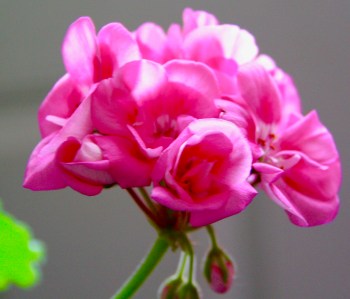
Comment: Raw poem. I wrote it this morning with our winter geraniums sitting on the back porch, in the rain, glistening and damp. Every fall, we bring the best plants into the house and they survive the winter warmed by the fire. Then in the spring, we release them to the outdoors once again. So many things released this spring, friends departed over the winter, their exit so sudden. Wrapped in the scents of early May, I dream of salvation for them and for me and for all who survive.

MiA

IMG_0447.jpg

MiA

The things you didn’t see:
the cat, this morning, ginger,
coiled like a spring and ready
to pounce on an unsuspecting junco;
five crows perched on the same
side of the tree, and the tree leaning
over on account of their weight;
the smile on my granddaughter
when we Skyped.

The things you didn’t hear:
the squawk of the bird
as the cat misjudged her jump;
those same five crows cawing,
cracking the day open like
an egg boiled for breakfast;
the joy in my granddaughter’s voice
when she spoke to me: “Hi Moo.”

And you didn’t hear the robin’s shriek
as the hawk’s claws pierced,
nor the tears in my voice
as I called out your name.